Sunday 25th June, 2023 – Copenhagen, Denmark
Sunday got off to a slowish start, probably because Saturday had been pretty full on. We decided we would go and visit Rosenborg Castle and see what else we fancied doing around the area if we had time. After another outdoor breakfast we walked from the hotel (around 20 minutes) and arrived to find quite a long queue, and members of staff asking if you had booked a ticket or not. If you hadn’t, they suggested it could be done online and even provided a QR code to expedite the process. We couldn’t get in until the afternoon, so we booked, took a stroll around the garden, and then headed over to the David Collection for a nose around.
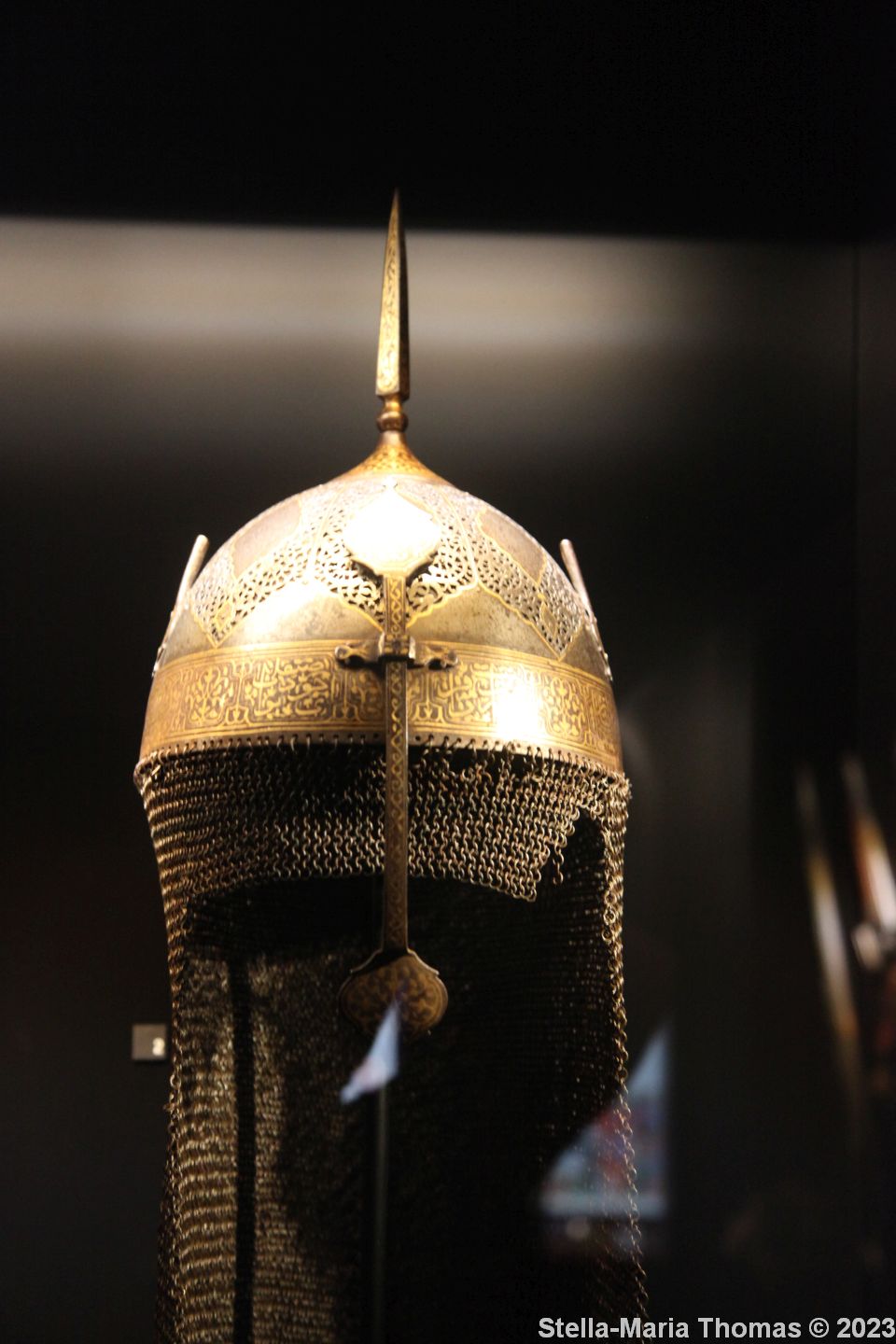
The collection was started by Christian Ludvig David (1878–1960), a lawyer and businessman. This was his private art collection which fills two buildings and was opened to the public even before his death. He never married and seems to have devoted most of his spare time – and a good proportion of his considerable income – to collecting fine and applied arts from the 18th century, art from the Islamic world based around medieval ceramics, and contemporary Danish art from the first half of the 20th century. In 1948 he opened what had been his townhouse to the public, two years after he had moved out himself. He died in 1960 and was buried at his country house, Marienborg, which he gave to the Danish state in his will, to be used as the summer residence of the country’s prime or foreign minister. The State officially took over Marienborg in January 1962. The collection is still growing, and there are now around 4,000 Islamic works of art housed there. I would urge you to visit the collection simply because I know of nothing like it anywhere else in Europe.

I have been before (twice actually) but for what is quite a small museum, the collection contains a great deal of interesting material, particularly the extensive Islamic art collection. It’s free to get in, there’s an audio guide that you are automatically given to help you find your way and understand what you are looking at, and it’s often very quiet. It’s also open until 9pm on Wednesdays, all of which make it quite unusual. Lynne hadn’t been before, so we concentrated on the Islamic art, which I think is the most interesting of the collections.
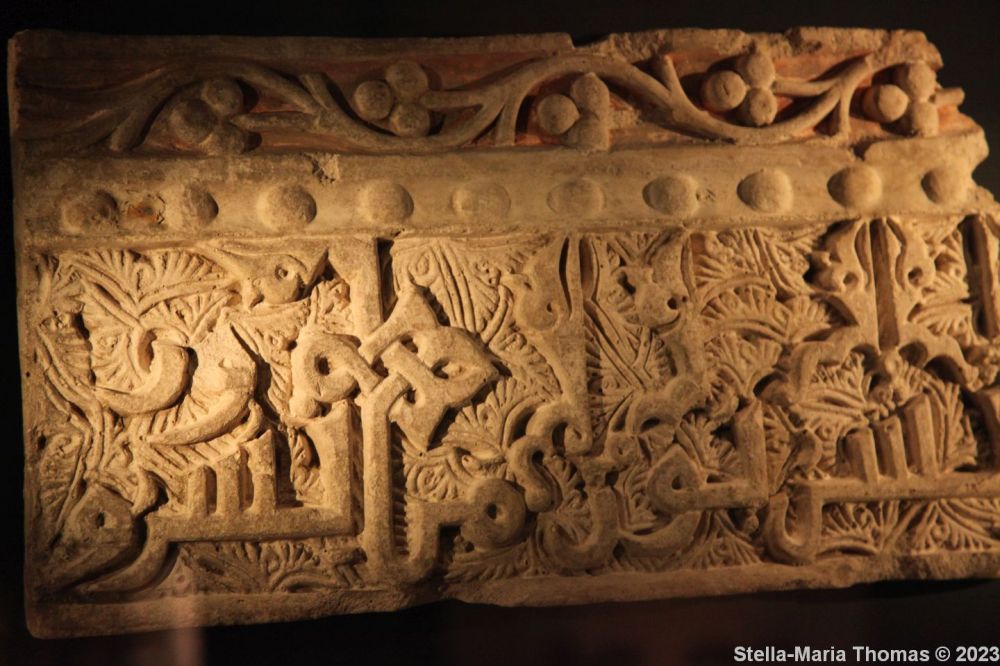
The collection is very wide ranging, and we were more than happy to while away a couple of hours, opening drawers to look at the contents, studying the fine detail of much of the work. Realising that we would run out of time if we didn’t get a shift on, we left the collection for another time, and went in search of a light lunch. The most sensible (and fastest) option was to head a couple of blocks over to the Torvehallerne market, where there was almost too much to choose from. A sandwich and an iced coffee was the answer. Suitably fortified, we returned to Rosenborg and joined the very short queue for ticket holders.
To join it we once again made our way through the Castle Gardens (Kongens Have) which are lovely, and were proving to be massively popular on a hot sunny Sunday afternoon. They make up the oldest park in Copenhagen and claims to be the most visited. There certainly wasn’t much in the way of unclaimed space, both in the shade and out in the fierce sun.
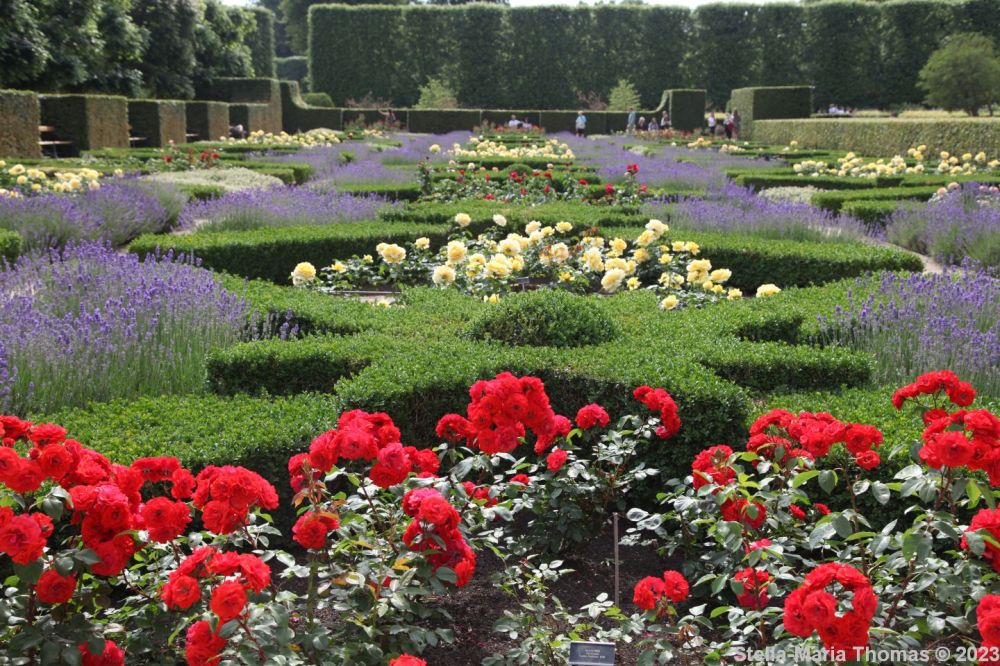
The park dates back to 1606 when King Christian IV acquired the land and had himself a pleasure garden built that also provided fruit, vegetables and flowers for the royal household, with trees and plants that supplied mulberries, wine, apples, pears, and lavender. In 1669 the garden was given a makeover in the fashionable Baroque style with a maze of paths and a central summerhouse. From around 1710, after Frederiksberg Palace was completed, the royal family moved out and the gardens were opened to the public. It was redesigned again in the mid-1700s, and seems to have had a number of different uses over the years. A strip of the garden was completely repurposed after the fire of 1795 when new housing was needed. This strip of garden was where Kronprinsessegade (which contains the David Collection) now stands. By 1806 14 small shop pavilions had been erected, selling everything from stockings to cakes. Apparently, they are now rented out by the Palaces and Properties Agency on two-year leases to businesses doing something relevant to the site’s history. They are very small but very cute.
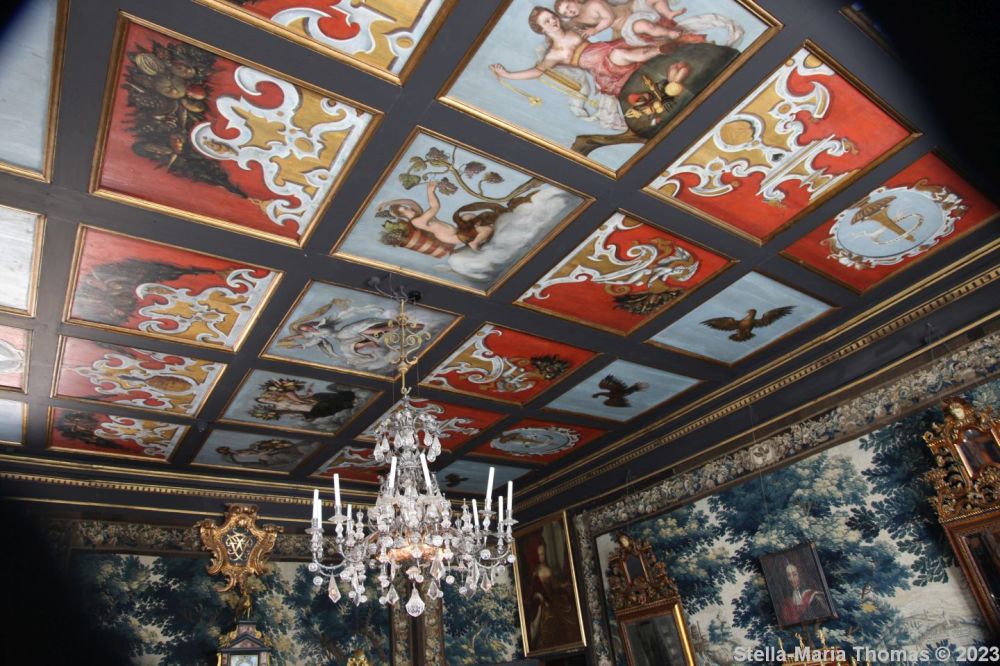
The castle was initially intended as a summerhouse and was just one of Christian IV’s many architectural projects. It’s a superb example of the Dutch Renaissance style, and is typical of Danish buildings of the period. It took around 20 years to be completed and remained a temporary home for the summer, only becoming a permanent residence when it was used by Danish regents as a royal residence. After the reign of Frederik IV it was only a royal residence in emergencies, after Christiansborg Palace burned down in 1794, and during the British attack on Copenhagen in 1801. There are a lot of small rooms inside, presumably because it was easier to stay warm in small spaces. However, the piece de resistance is the Long Hall up on the third floor. It was initially the ballroom, completed in 1624, and pretty much runs the length of the building. Around 1700 it was used as a reception room and banquet hall and is now known, inaccurately, as the “Knight’s Hall”. The hall also houses one of the main attractions of Rosenborg, the king and queen’s coronation chairs complete with three silver lions that stand in front of them.

There’s something of an element of “Ooh! Shiny!” about the furniture in there, though not at anything like the Augustus “Ooh! Shiny!” The Strong’s levels. Then again, he came later and had presumably learned from earlier examples!
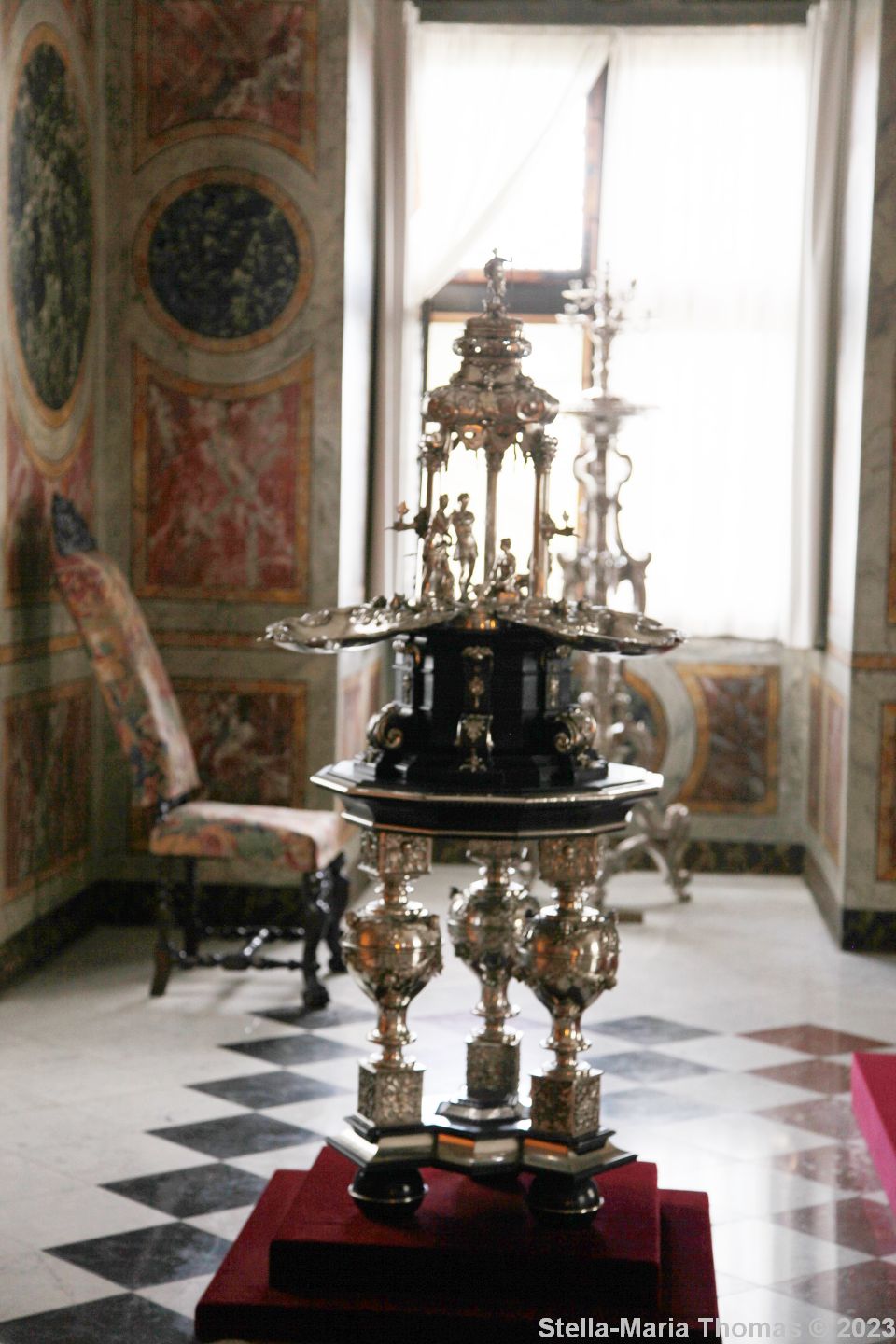
It is, unsurprisingly, even shinier down in the treasury, which contains the Danish Crown Jewels and regalia. Very splendid they are too. Unlike some monarchies, the various Crowns and the Crown Jewels are not often used and there are rules, or at least conventions, that apply to their use now. Since 1848 the King’s crown is only used once the king is dead and is placed on his coffin when it is on display in the Palace Church at Christiansborg.
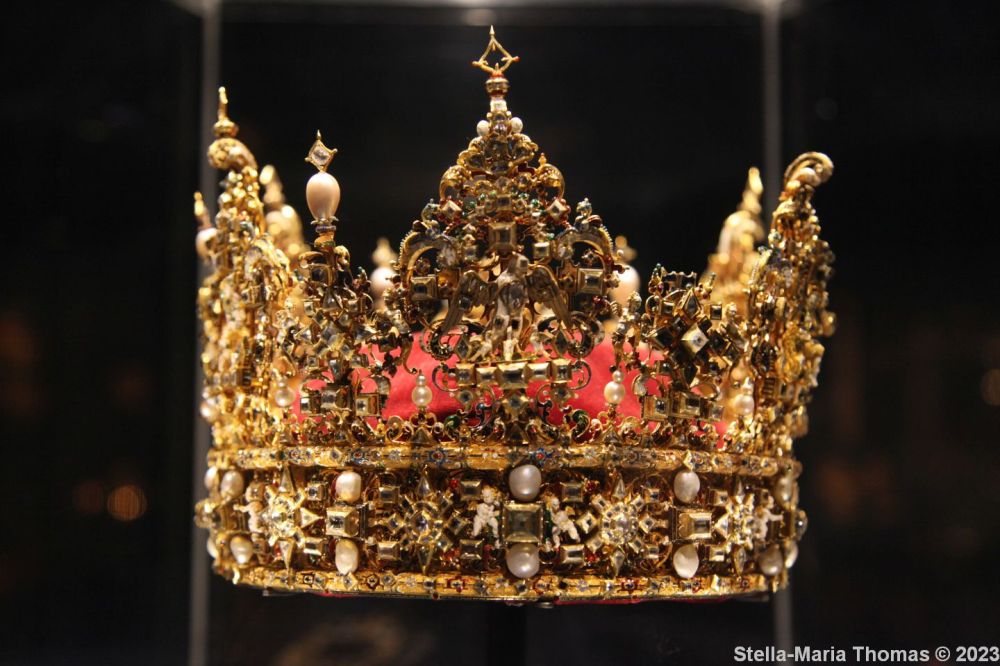
The jewels use dates from Christian VI’s queen, Sophie Magdalene, who specified that her jewellery was not to be given to a specific person on her death but should always be “with the crown”. so that the current queen would always have a magnificent item of jewellery available. There are four sets of jewellery called Crown Jewels at Rosenborg and they were all redesigned by Christian VIII’s queen, Caroline Amalie. “The Crown Jewels may only be used by the Queen and only within the country’s borders. They are typically used a couple of times a year. The Crown Jewels are always worn at the New Year Reception, and otherwise usually during state visits, special family events, and similar occasions. For example, the large pearls and rubies, the emerald set, and the brilliant set were all worn on the occasion of the Crown Couple’s wedding in 2004.”


By the end of the tour, we figured it was time to go back to the hotel. We were meeting my colleague K for dinner that night, and after another hot sweaty day it was most definitely time for a shower and change of clothes. We walked back slowly and sorted ourselves out. The graduation day lorries were still circulating, the youngsters seemingly surgically attached to their new hats, the noise levels still as high as they had been on Friday. I have no idea how they kept going in that heat but keep going they did.
That evening we started with a drink at the new Villa Hotel which occupies the old central post office building next to the railway station. It was OK, but nowhere near as good as Nimb, and the facilities certainly weren’t as well kept. The drinks were quite a lot cheaper, but they also took forever to arrive.


After that we made our way through the Meat Packing District to the restaurant, Jah Izakaya and Sake Bar. However, we were too early, and the place is very small, so they suggested we’d be better off waiting somewhere else nearby. We retraced our steps until we found a streetside bar nearby and waited there, returning to the restaurant just in time to meet K.
The three of us decided to take the tasting menu and were very glad we did. It brought us a wide range of very tasty food and meant we didn’t have to decide what we wanted from a menu with more choice than we thought we could deal with! It’s hard to pick a highlight, but the sashimi trout really stood out, as did the beef. There was nothing that wasn’t delicious though.
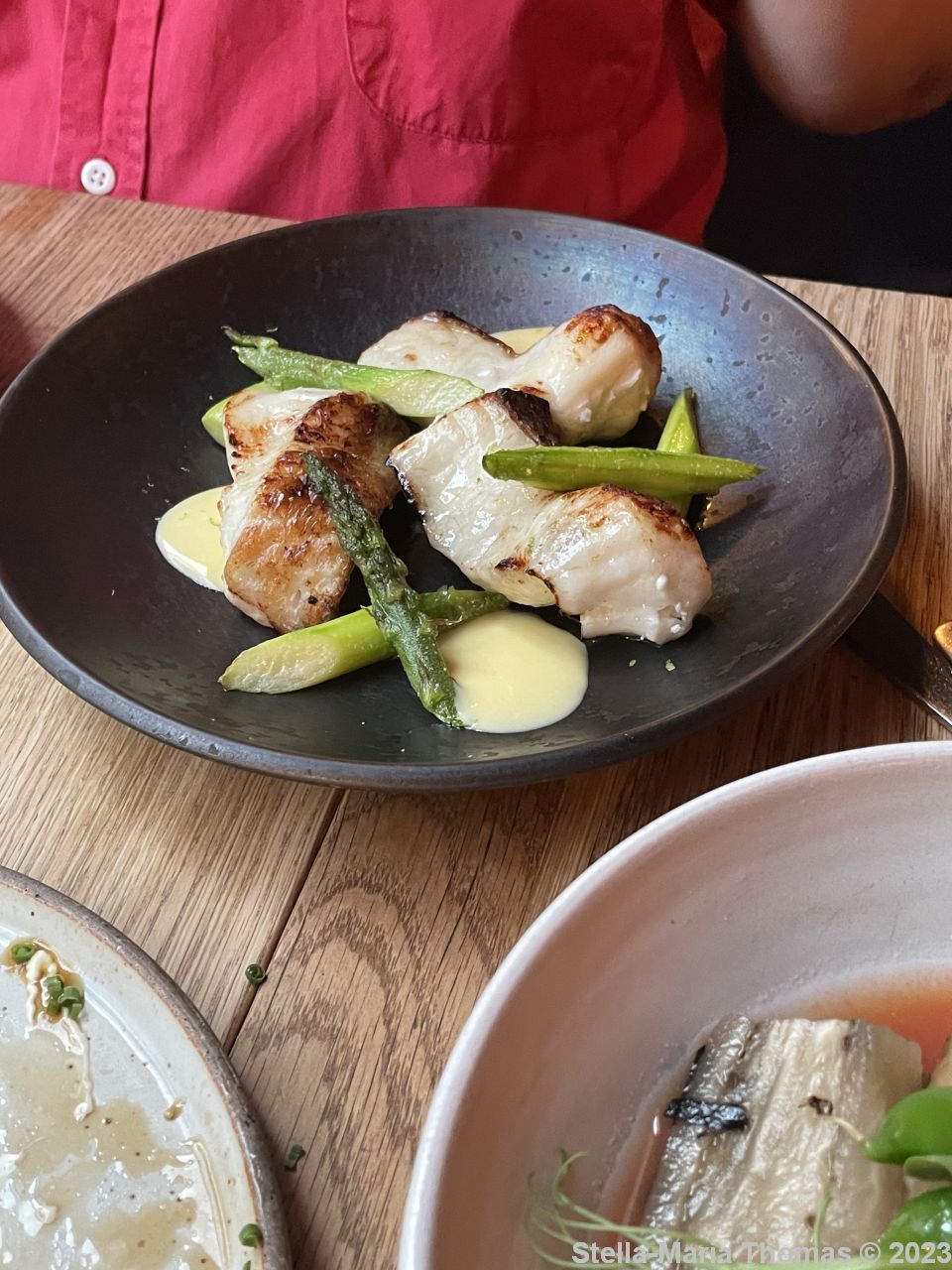
After we finished our meal and we’d put the world to rights, it was time to go back to the hotel, this time getting there just in time for the Nightcap Hour, another very civilised innovation that the entire group now does. And then it was time for bed.


 Smtfhw's Travels