Monday 30th September, 2024 – Windermere, Tebay
Distance driven: 301.0 miles,
Time at the wheel: 5 hours 56 minutes
Heiland coos spotted: 0
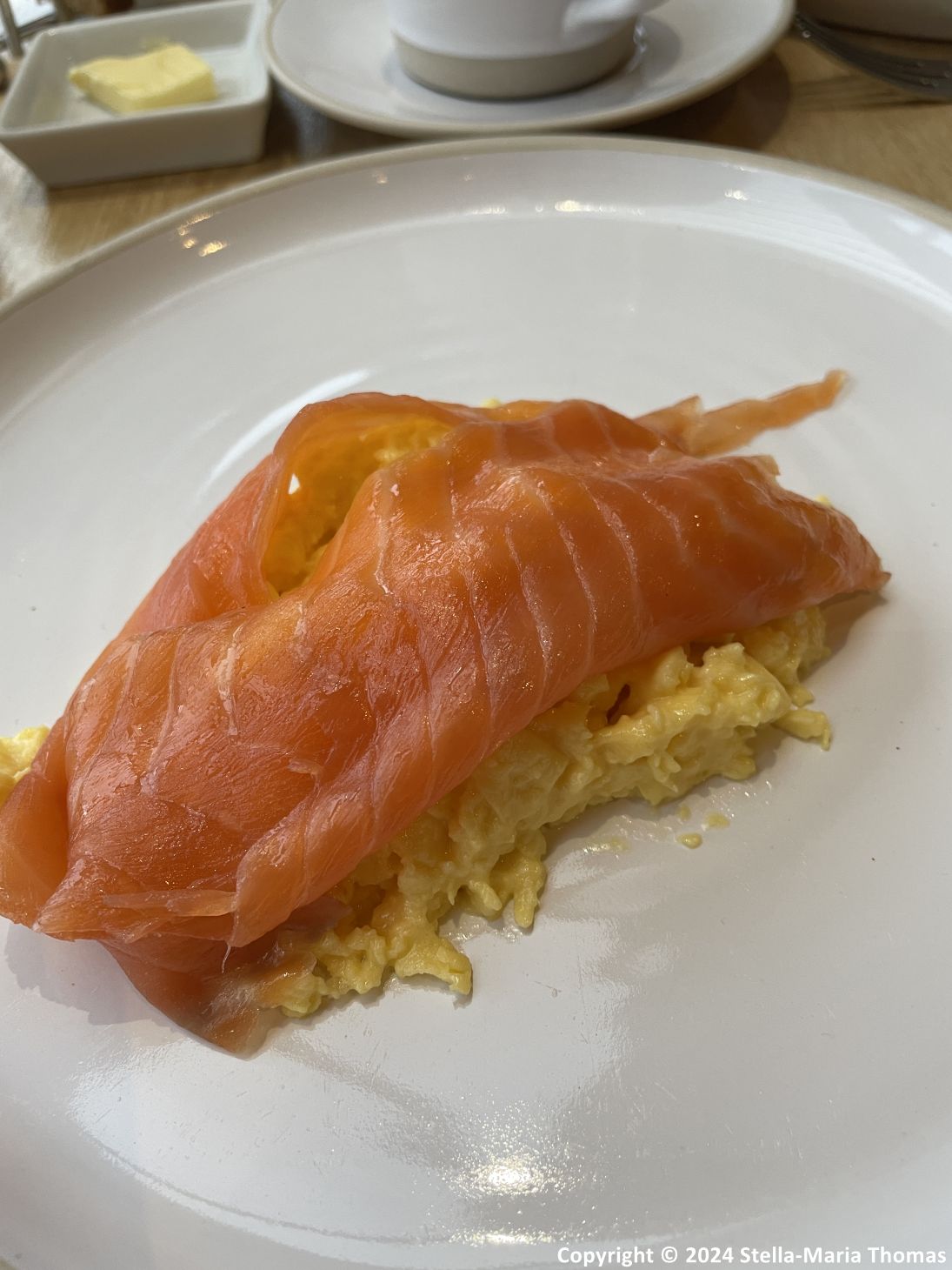
And so finally to Scotland. But not before a very good breakfast at the Westmorland Hotel. We’d had a good night’s sleep and been well fed before getting on our way (after wrangling the luggage back down the stairs and into the car.
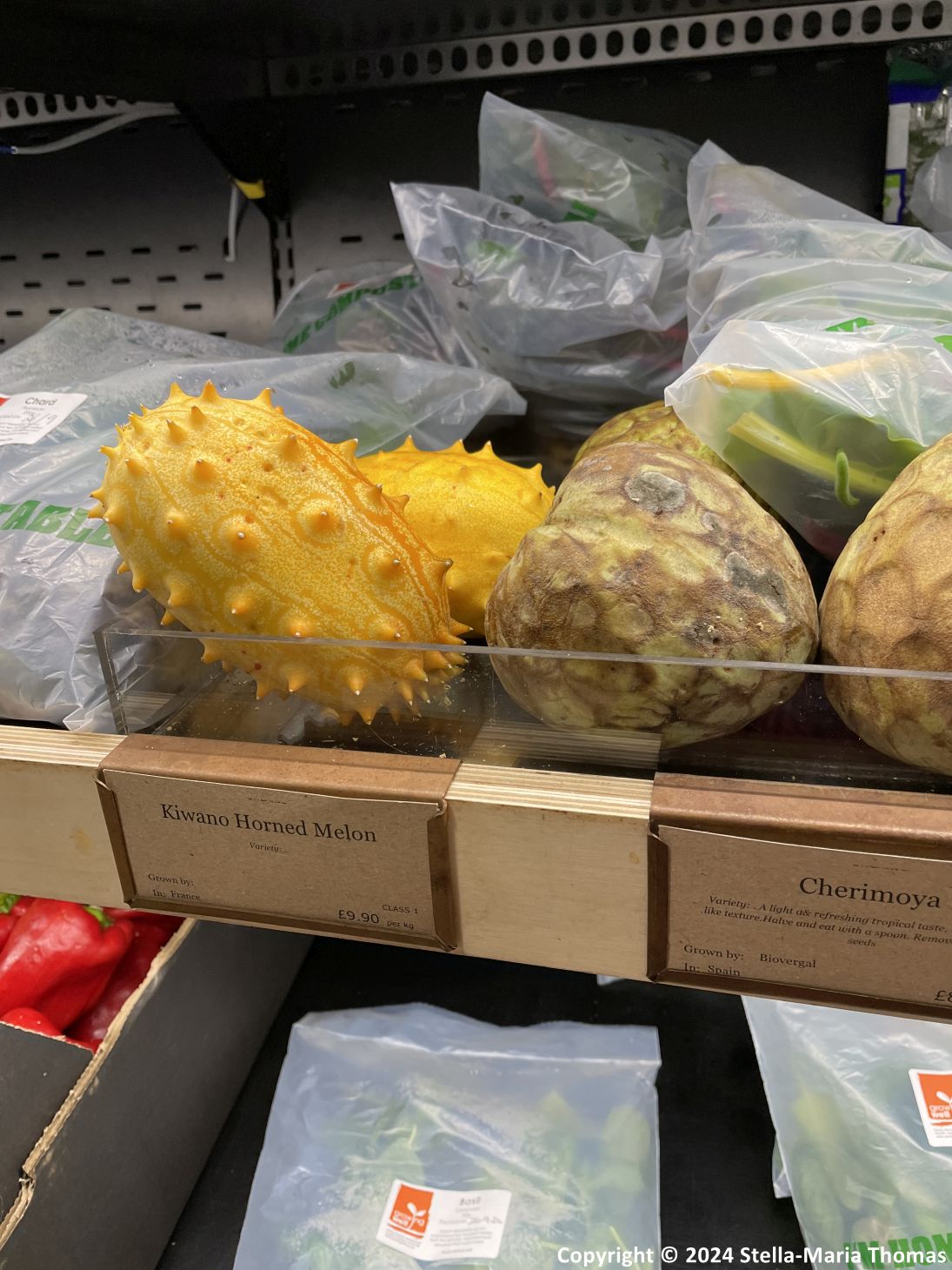
As part of the deal when you stay, you get a 10% off voucher for the Farmshop which is well worth having. We were self catering for part of the trip, we had a small portable fridge in the car, so we bought some supplies for later in the week before setting off to drive 300 miles to the start of the NC500. Even I had to double check one of the fruits on sale in the shop. I’m pretty sure I’ve never heard of a kiwano horned melon before, never mind seen one.
Shopping done, we set off. There were other routes we could have taken (and would take in reverse when heading back home the following week) but we opted to head up the west coast and simply keep going instead of sticking with motorways as far as possible. Instead the plan was to drive through Glen Coe and then the Great Glen. That way we’d get some Scottish scenery and history even before Inverness, and if we had time we might even get an interesting stop off or two on the way. Once we got to the start of Glen Coe it became obvious that we were definitely going to get that scenery in abundance!

And the history is also there if you stop to look. The Massacre of Glencoe took place on 13 February 1692, following the Jacobite uprising of 1689–92. An estimated thirty-eight members and associates of Clan MacDonald of Glencoe were killed by government forces billeted with them, with others later alleged to have died of exposure, on the grounds they had not been prompt in pledging allegiance to the new monarchs, William III of England and II of Scotland and Mary II. Needless to say there us a lot more nuance to what happened than that, but the gist is there. Clan MacDonald eventually sold off most of their estates and the National Trust for Scotland (NTS) now own most of what is now a vast nature reserve. I’d been here before back in 1965, but as I was about 6 years old at the time, there’s not a great amount that I can recall. I did stand under a sign signifying the site of the massacre though. I know this because I have photographic evidence.

I have been to Glen Etive, which leads out of Glen Coe towards Fort William when I worked in Edinburgh in the 1980s and the works ski club used to go up there fairly frequently. It’s a pretty bleak place to ski, and I would only recommend it to the most committed (or insane) skiers. We’d been driving for quite some time now, and when the NTS’s visitor centre signs appeared we opted to pull in and at least takes a short walk around the car park. As it turned out, there was a cafe with some very good soup on offer. A spot of history, a comfort break, and a short read up on the history of the place was just what was needed right then.

The Great Glen, also known as Glen Albyn or Glen More is around 62 miles long and runs from Fort William to Inverness in pretty much a straight line following the Great Glen Fault. Once you get north of it you are in the Northwest Highlands. It’s basically a whole other landscape up there where the Laurentia and Baltic tectonic plates once collided. Roads get less frequent simply because of the terrain so logically the road from Fort William to Inverness (the A82) runs along side the various bodies of water including Loch Ness. There was also once a railway (the Invergarry and Fort Augustus Railway) which was built in 1896 and ran from the southern end of the glen to the southern end of Loch Ness, but never extended to Inverness and was closed in 1947. As a main route across Scotland it was of strategic importance in controlling the Highland Scottish clans, particularly around the time of the Jacobite. That is why the towns of Fort William, Fort Augustus and Fort George exist. We were glad of that because Fort William provided the opportunity to fill up on fuel, something you should do whenever you can out in the wilds.
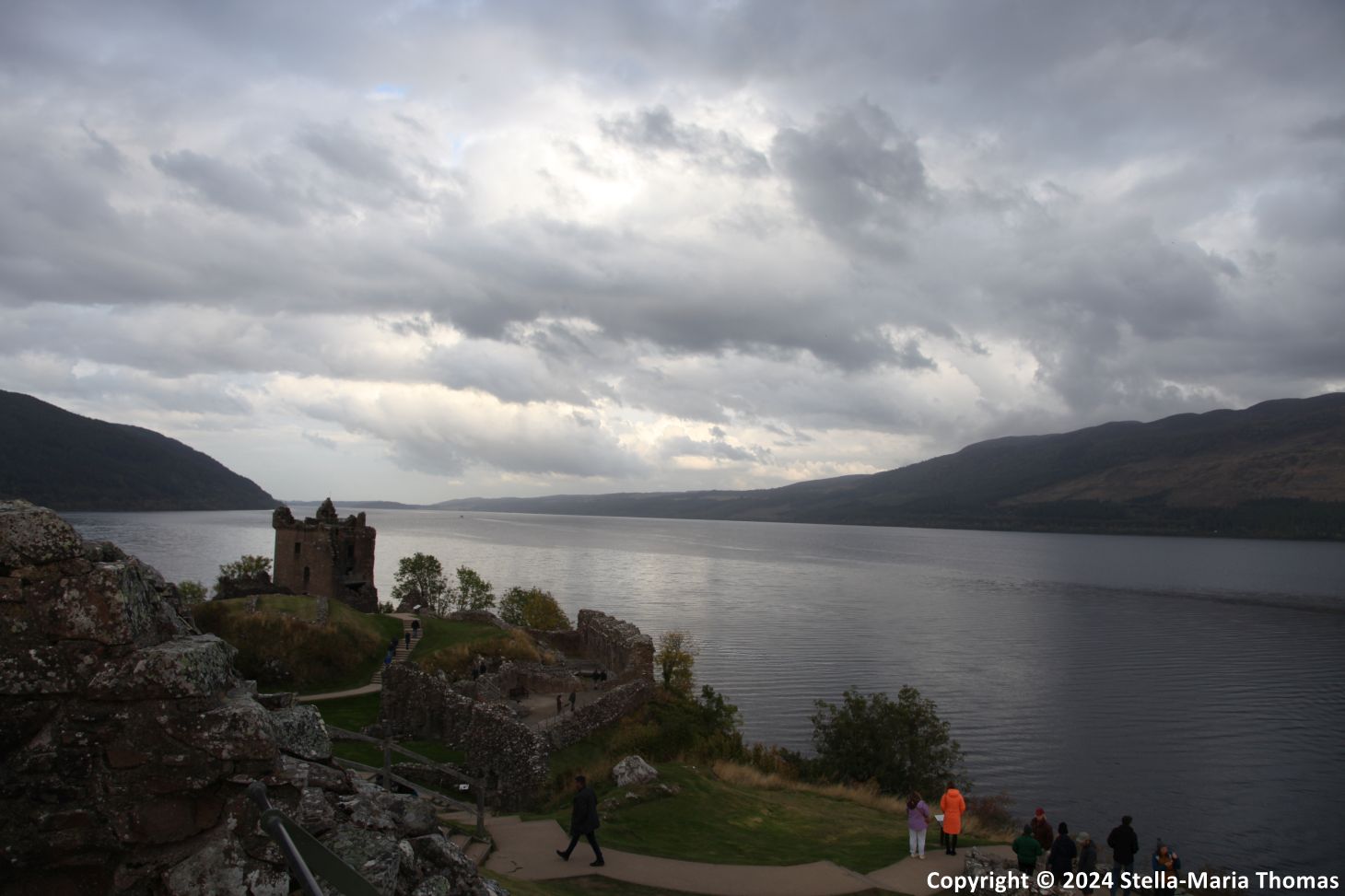
Another remnant of that history is Urquhart Castle, now ruined but clearly once upon a time extremely grand. It looms above Loch Ness, and was partially destroyed in 1692 to prevent its use by Jacobite forces. It was left to fall into decay, though I suspect there may be local domestic buildings that used it as an impromptu quarry before it came into the care of Historic Environment Scotland. There is now a visitor centre, gift shop, café, and a landing point for pleasure boats on Loch Ness. It is among the largest – and most visited – castle in Scotland, and even at 4:30 on an October Monday it felt that way. We were told they were full if we hadn’t booked in advance, but that we could go ahead and look for a parking space if we wanted to. That being the case they were open until 6pm and we were welcome to visit. We nabbed one of the handful of empty spaces and had a nose around.
The present ruins date from the 13th to the 16th centuries, and are built on the site of an early medieval fortification. Founded in the 13th century, Urquhart played a role in the Wars of Scottish Independence in the 14th century. It was subsequently held as a royal castle and was raided on several occasions by the MacDonald Earls of Ross. The castle was granted to the Clan Grant in 1509, though conflict with the MacDonalds continued. Despite a series of further raids the castle was strengthened, but then largely abandoned by the middle of the 17th century.

It was well worth a visit, though it was now getting late and we wanted to find our accommodation. This proved slightly trickier than we liked, largely because Inverness seems to be full of roadworks. We finally found Stag Head Studio and unpacked only what we needed. With useful off road parking, I was happy to leave the big heavy stuff where it was and only take what we needed upstairs to the apartment.
A shower, clean clothes, and we were ready to go out for dinner. I’d booked us in to the Inverness branch of MacGregor’s, partly because the menu sounded damn good, and partly because it’s owned by a musician, Bruce MacGregor, fiddle player and co-founder of the highly entertaining Blazin’ Fiddles. And on Monday nights, if he’s not out on tour, Bruce plays a set in the bar. In fact, he was scheduled to play alongside Ewan MacPherson (guitar & song) that very night. The cocktail list was most pleasing as we quickly discovered, and the food didn’t let us down either. Haggis pakoras to start are a mighty fine thing. I could have happily demolished several more of them, but we did need to move on to the mains. The fish and chips was nicely done, and the venison burger was just fabulous. It was also accompanied by one of the best coleslaws I have ever eaten.
And then we settled down in the bar just as the music started. We drank a couple of very good whiskies, we danced, and then headed back home for the night, a walk of all of 7 minutes.


 Smtfhw's Travels
Thanks for the memory nudge of my visit there in 1980. Just love that old photograph.
LikeLike
Ooh! I’d like to hear about that.
LikeLike
Sadly I have no pictures of that trip. We were in a camper van, one of those with the concertina roof. We walked into Glen Coe, I remember that it was an awful long climb.
I am enjoying thr trip so far.
LikeLike
Sounds like you have an excuse to go back then!
LikeLike
Maybe one day. Kim has a yearning to go to Wales.
LikeLike