Wednesday 1st October, 2025 – Tromsø
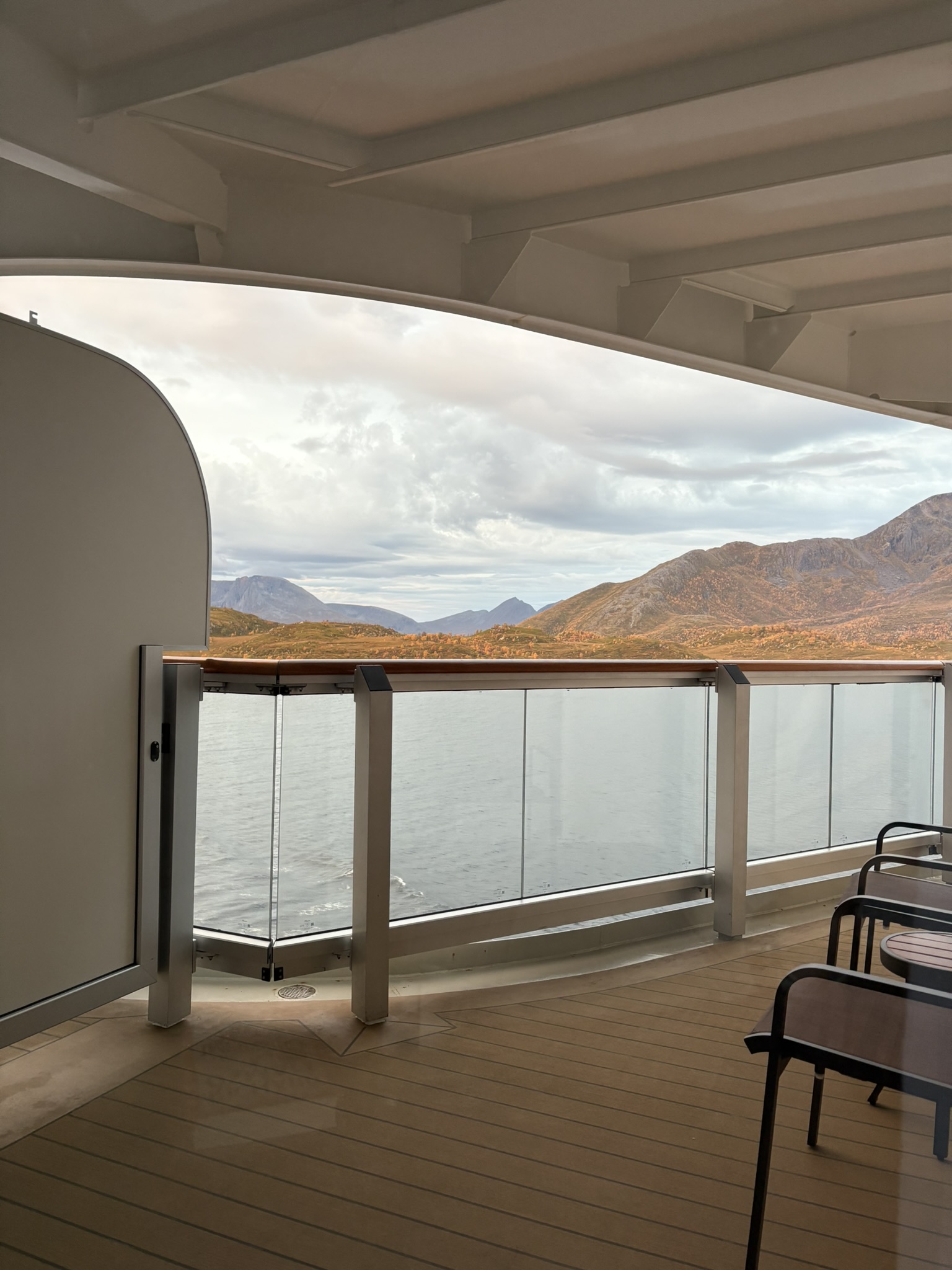
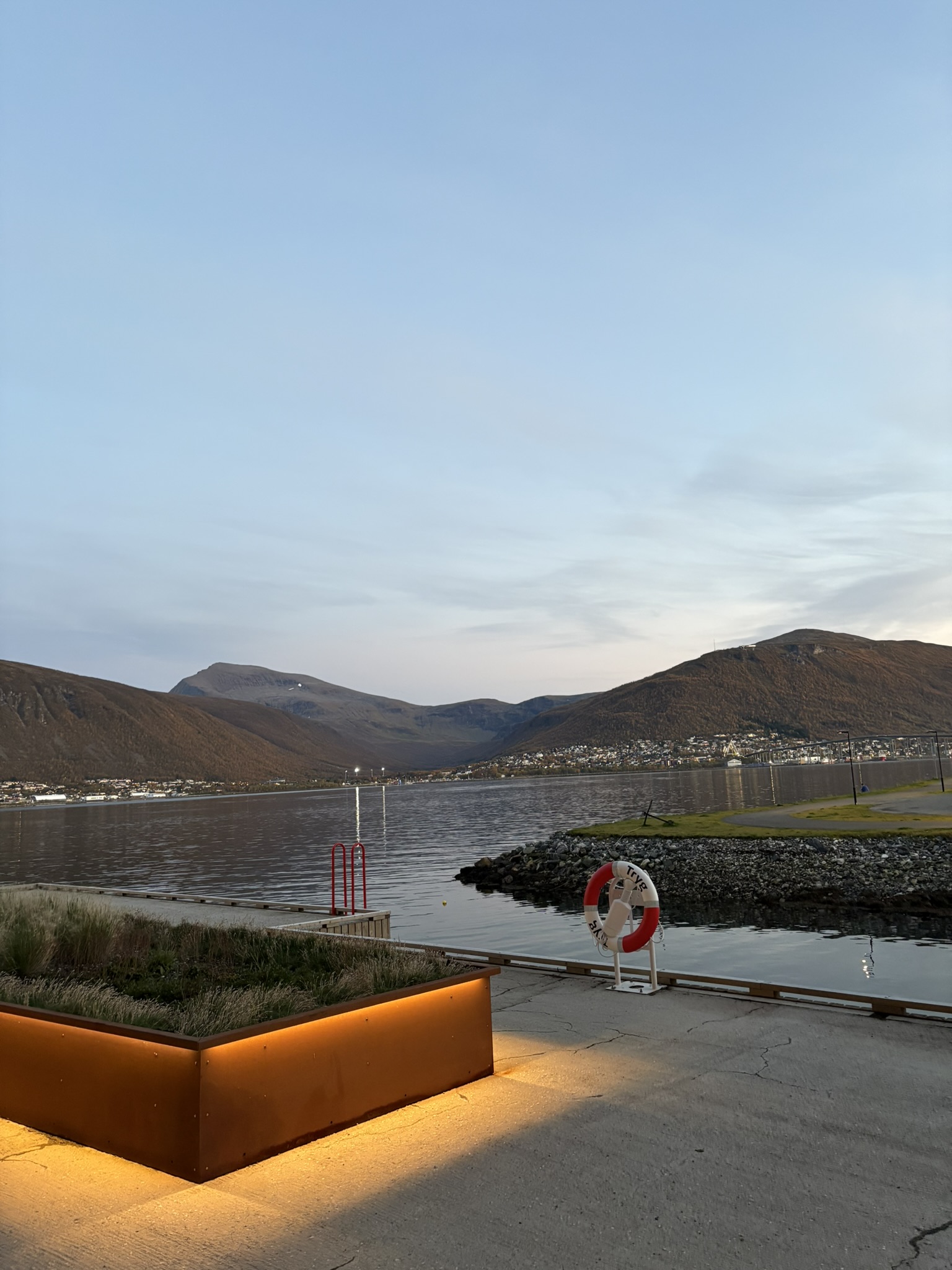
Arrival time in Tromsø was scheduled for 10:00 so we had plenty of time for a leisurely breakfast and to watch from our balcony to see if the shuttle buses were in place to take us into the centre or not (and once they were, to see if the queues were bad or not). Before that I had been awake quiet early and had spent some time out on our very sheltered balcony enjoying the passing scenery. “Whilst sailing to Tromso, you’ll encounter Mother Nature at her most spectacular. Surrounded by unspoiled wilderness, glass-like fjords, and towering snow-capped mountains, every vista here offers something else to savour” Cunard informed me. They weren’t wrong.
The queue for the free shuttle didn’t look too bad at all so we quickly got ourselves together, this time not making the mistake of adding lots of layers, because the forecast was pretty much the same as it had been in Ålesund, which was to say starting at 10°C and rising to around 14°C in the afternoon. It was beginning to seem as if the thermals would remain unworn. The bus journey was very short so we soon found ourselves in the centre of town, and opted to locate the tourist information office and a coffee, not necessarily in that order. Kaffebønna offered the latter and served really good coffee. We were amused to be mistaken for locals twice while we were in there, in both cases by people from the same ship as us. When asked why they thought that, we were told “well, you just look like you belong!” Perhaps it was the moose bag! Anyway the tourist information office was just round the corner where they very helpfully explained the best ways to get to the places we wanted to visit, and that the best way to one of them would be to get a bus. Bus tickets, the nice lady told us, could be bought from the 7-11 shop round the corner.
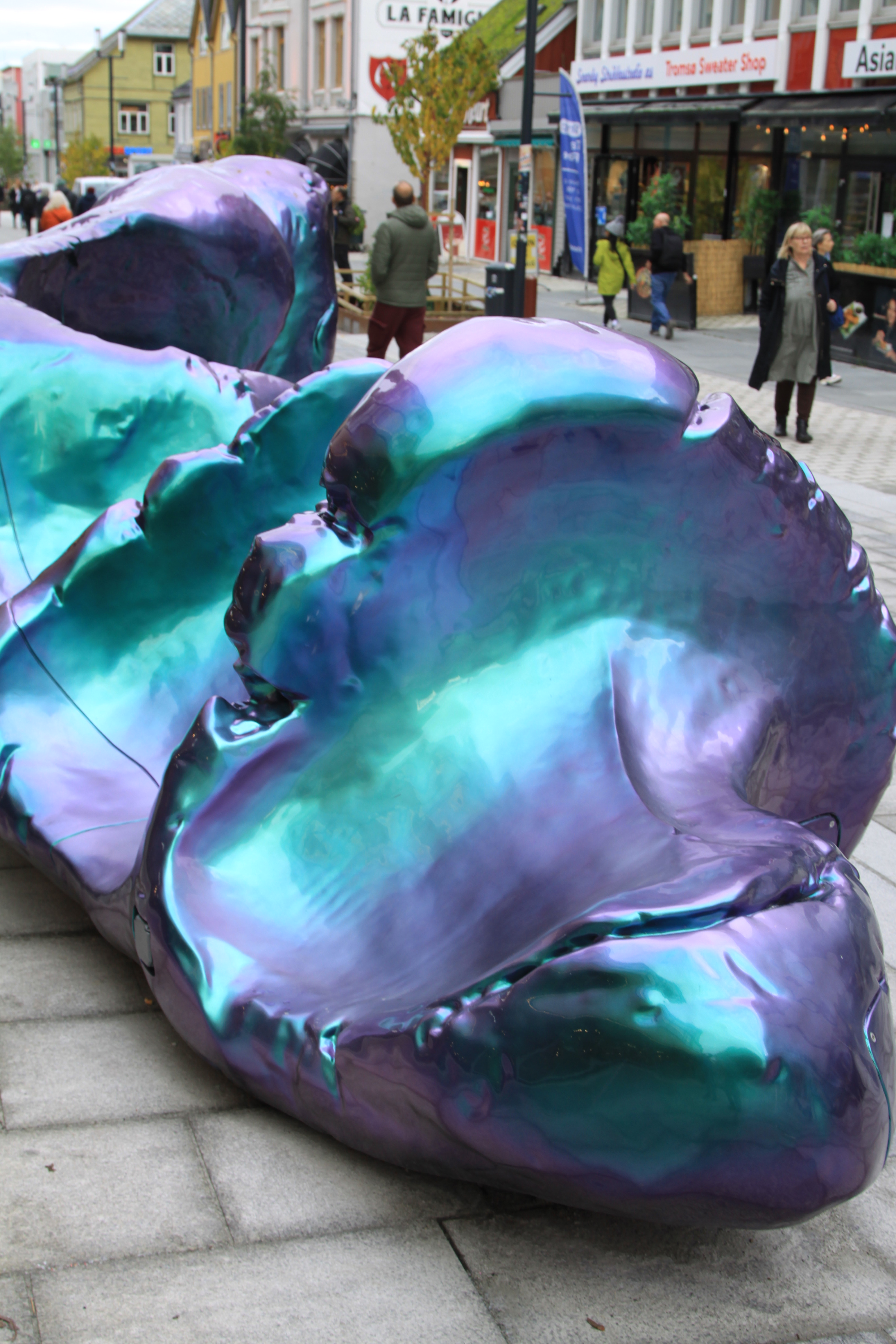
Armed with a one-day bus pass each, we took a very pleasant stroll along one of the main streets through I think the description of the place on Cunard’s website might be slightly over-egging it: “With a perhaps surprisingly active cultural scene and exciting nightlife for a city as compact as this, Tromsø is a glittering Norwegian gem, nestled on the western side of the island of Tromsøya. Located roughly 350km north of the Arctic Circle, amongst the crystal blue waters of the two great fjords, Balsfjord and Malangen, Tromsø maintains its ancient Norse roots, tastefully welcoming the modern world without spoiling the natural beauty that surrounds it. Home to a former whaling station and the world’s northernmost university, Tromsø is an eclectic mix of old and new. Here you’ll find historic traditional wooden houses coexisting amongst striking modern architecture. Sometimes referred to as “the Paris of the North”, you’ll have a unique opportunity to immerse yourself in the vibrant culture, excellent restaurants and cosy cafes, as well as explore a region draped in breath-taking natural scenery.” Of course it’s not just the northernmost university in the world, there are a number of other institutions and businesses claiming to be the “northernmost whatever” as well, to our quiet amusement.
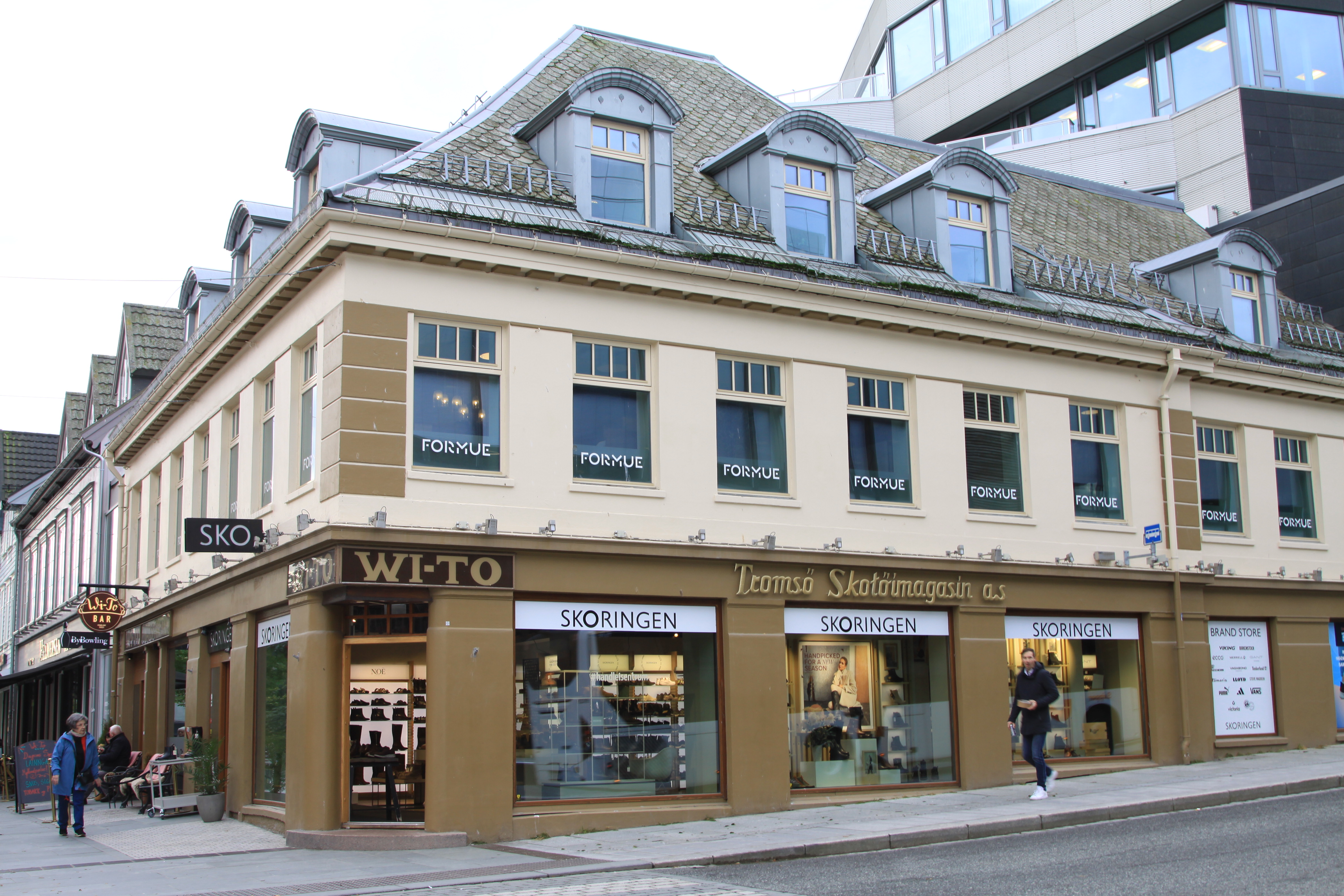
For a bit more context, the city was established (as Kjøpstad) in 1794, and is located on the island of Tromsøya which sits in the Tromsøysundet strait. It’s the third largest city inside the Arctic Circle with a population of around 80,000, and I am told it has the highest number of old wooden houses in Northern Norway, with the oldest dating from 1789. There have been people in the area though for the at least 9,000 years. I was in intrigued the fact that the first church was built in 1252 and called the “The Church of Saint Mary in Troms near the Heathens”. It’s less amusing when you realise tat the heathens means the Sámi who really deserved better even then. On the other hand, I bet you’ll never guess that it was once the northernmost church in the world though! The city is also home to the world’s northernmost botanical garden and planetarium…
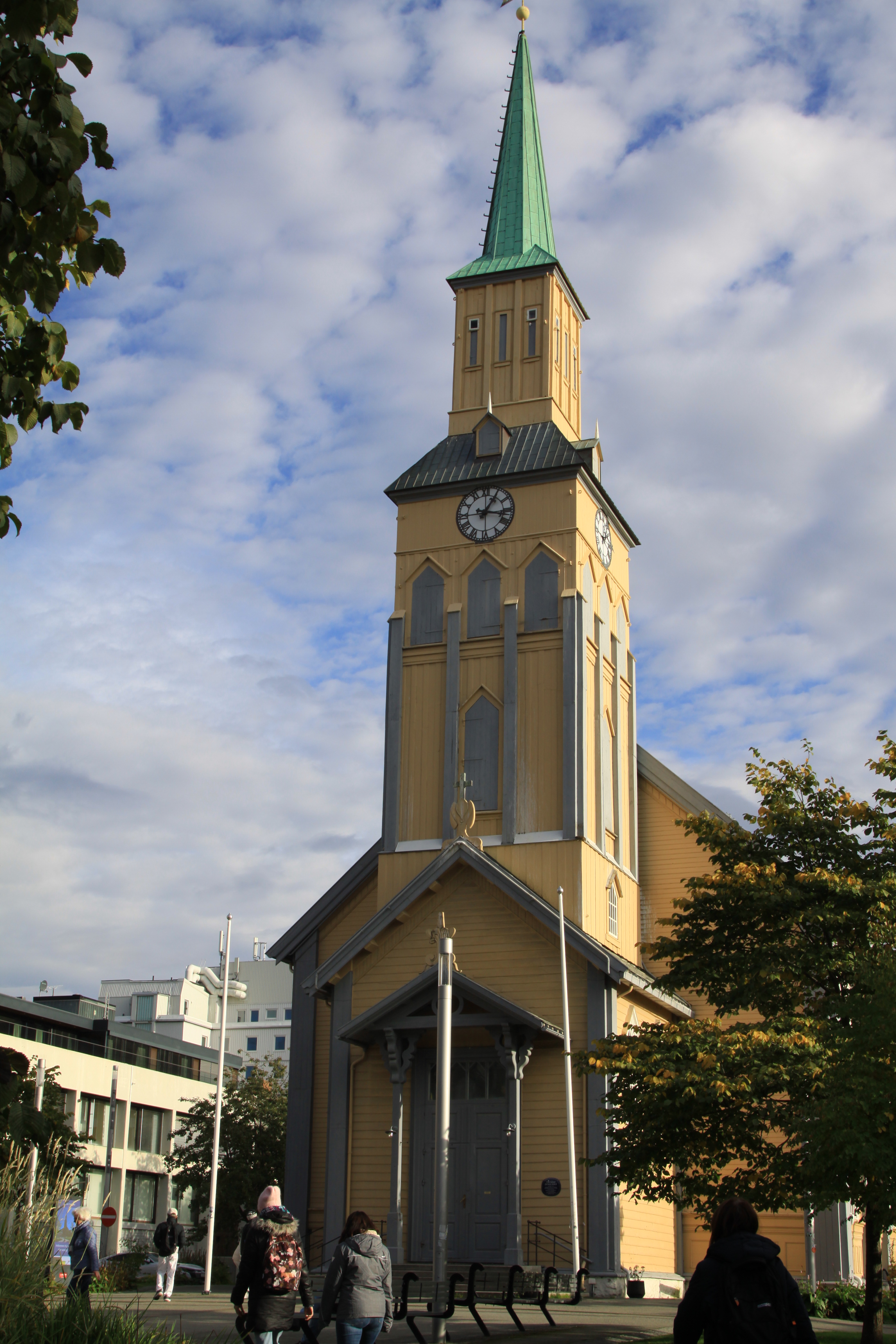
We walked down to the cathedral which was frustratingly closed until the following day (despite Cunard claiming we were in port for two days all onboard time was 2 o’clock the following morning which to my way of thinking doesn’t really count) so all we could do was walk around the outside and admire the rather splendid structure. This should not be mistaken for the building referred to as the Arctic Cathedral, which actually is NOT a cathedral at all and which is on the other side of the strait that separates Tromsø from the mainland. We kept walking to locate the Northern Norwegian Art Museum which was one of the two places we were determined to get to.
It proved to be well worth the time – and we discovered that if you’re over 67 you get reduced price tickets, which meant I had to pay full price but Lynne got a reduction. The same applied with the bus tickets, and every other museum we went to in Norway. The “To Nature” exhibition was probably the least interesting of the events going on, looking, as it did, at the nature of the North through a selection of artworks from the Nordnorsk Kunstmuseum’s collection. This leant heavily on Romanticism, though the modern pieces scattered throughout were more visually arresting to me.
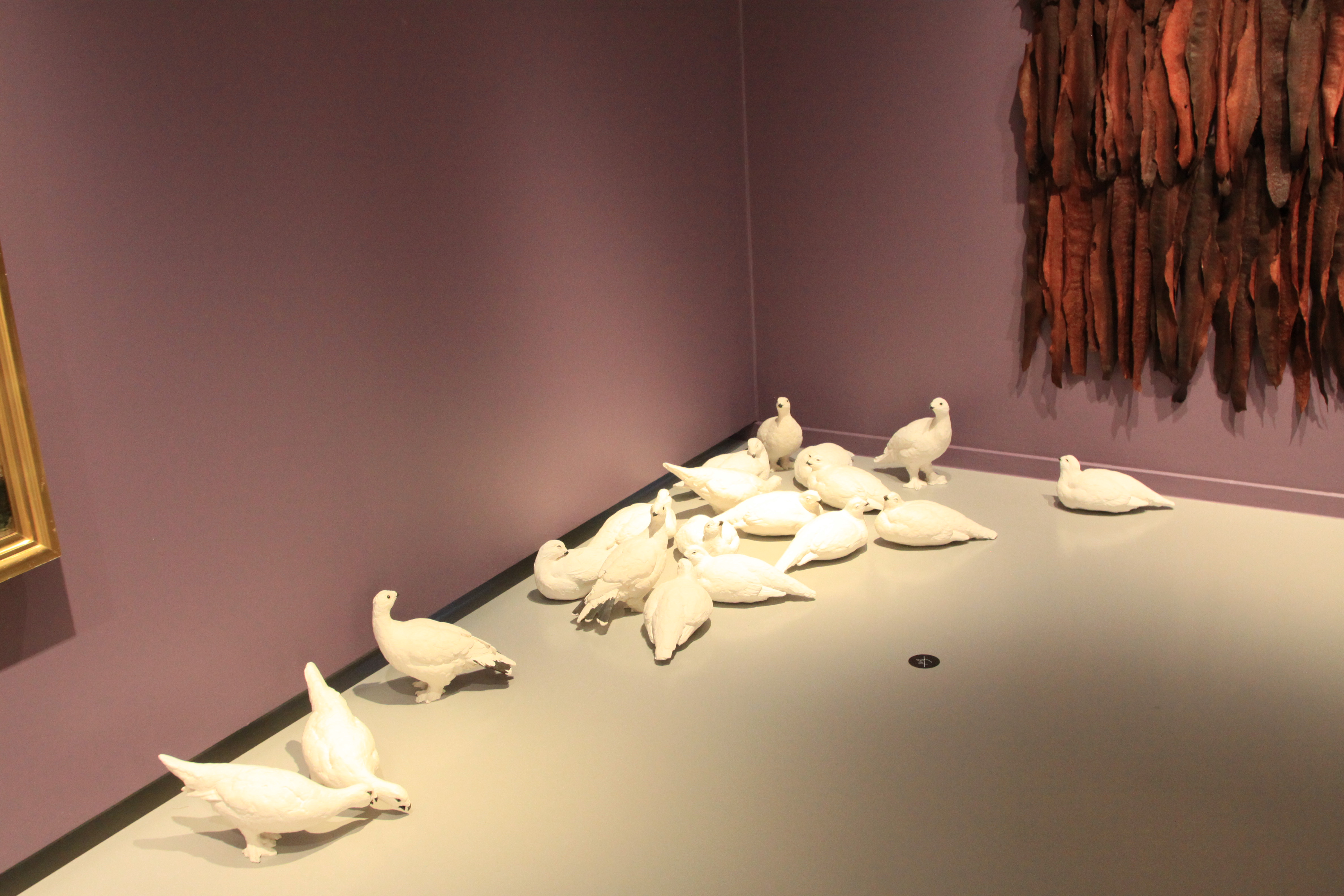
Far more interesting was the photography from Svalbard on show with photos taken in the 1960s and 70s contrasting with modern photos, often of the same scenes, taken by the photographers (Herta Grøndal Lampert and Leif Archie Grøndal) daughter Eva Grøndal, and with music composed by her daughter, Aggie Grøndal Peterson. These were fascinating and provided an intriguing elision into the Høysalen (the High Hall) which is intended to “regularly house new works from the collection and function as a kind of project space, with complicated installations from the collection that mainly highlight female artists in the collection from Sápmi/Northern Norway.”
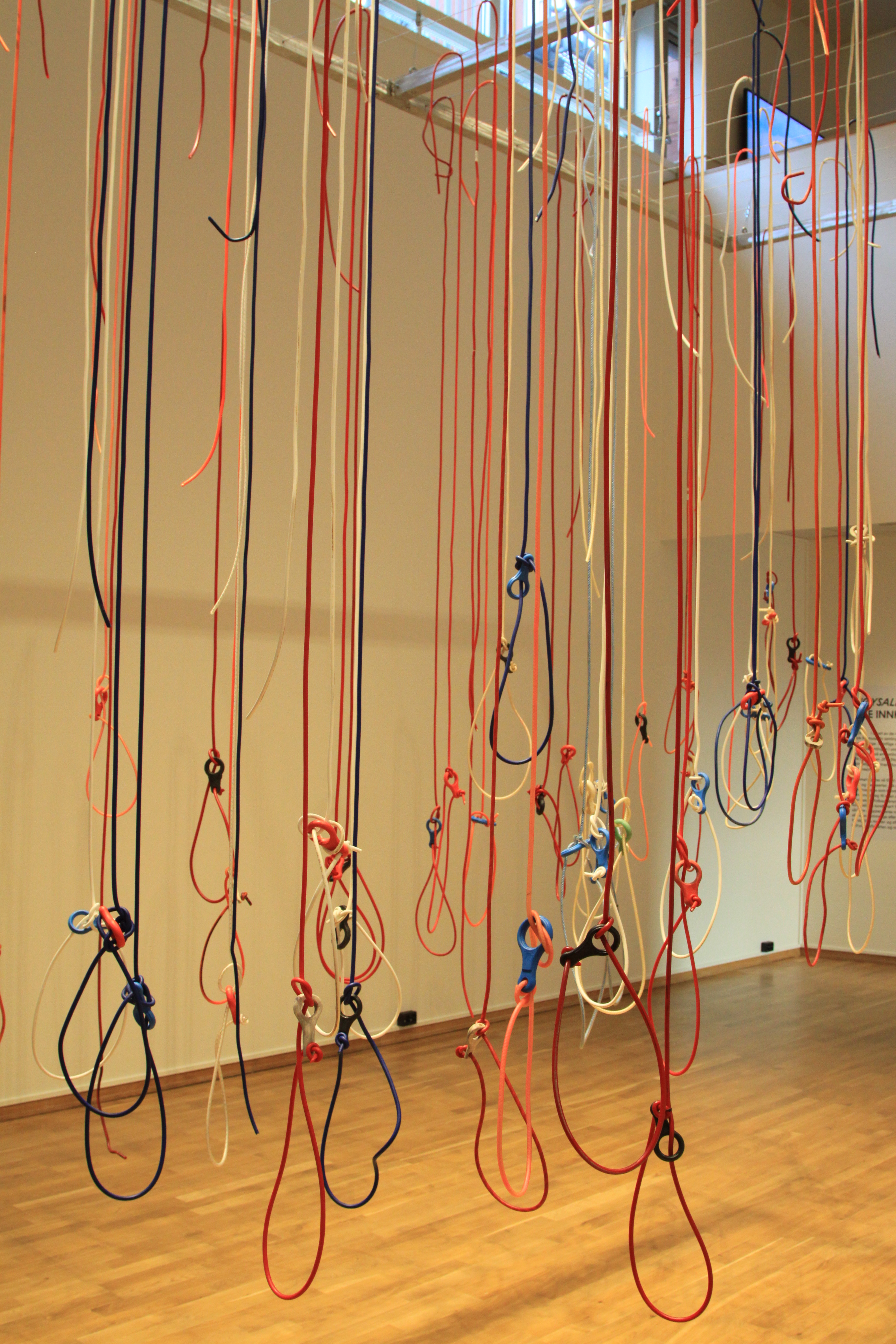
On display when we were there was a work by Máret Ánne Sara, who currently has an exhibit at the Turbine Hall at Tate Modern in London. The work, Gielastuvvon consists of Sámi lassoes – made from all sorts of materials from plastic to carved reindeer bones and antlers – collected from reindeer herders in Guovdageaidnu/Kautokeino and the surrounding area. “Each «suohpan» bears the mark of its use and former owner and as such, is a reminder of the hard work, weather and wind each herder faces as they tend to their herd. Not least, they represent the fight to protect their right to reindeer herding as a Sámi livelihood, right and tradition.” It criticises the Norwegian state for imposing a reduction in reindeer numbers and forcing herders to cull their herds.
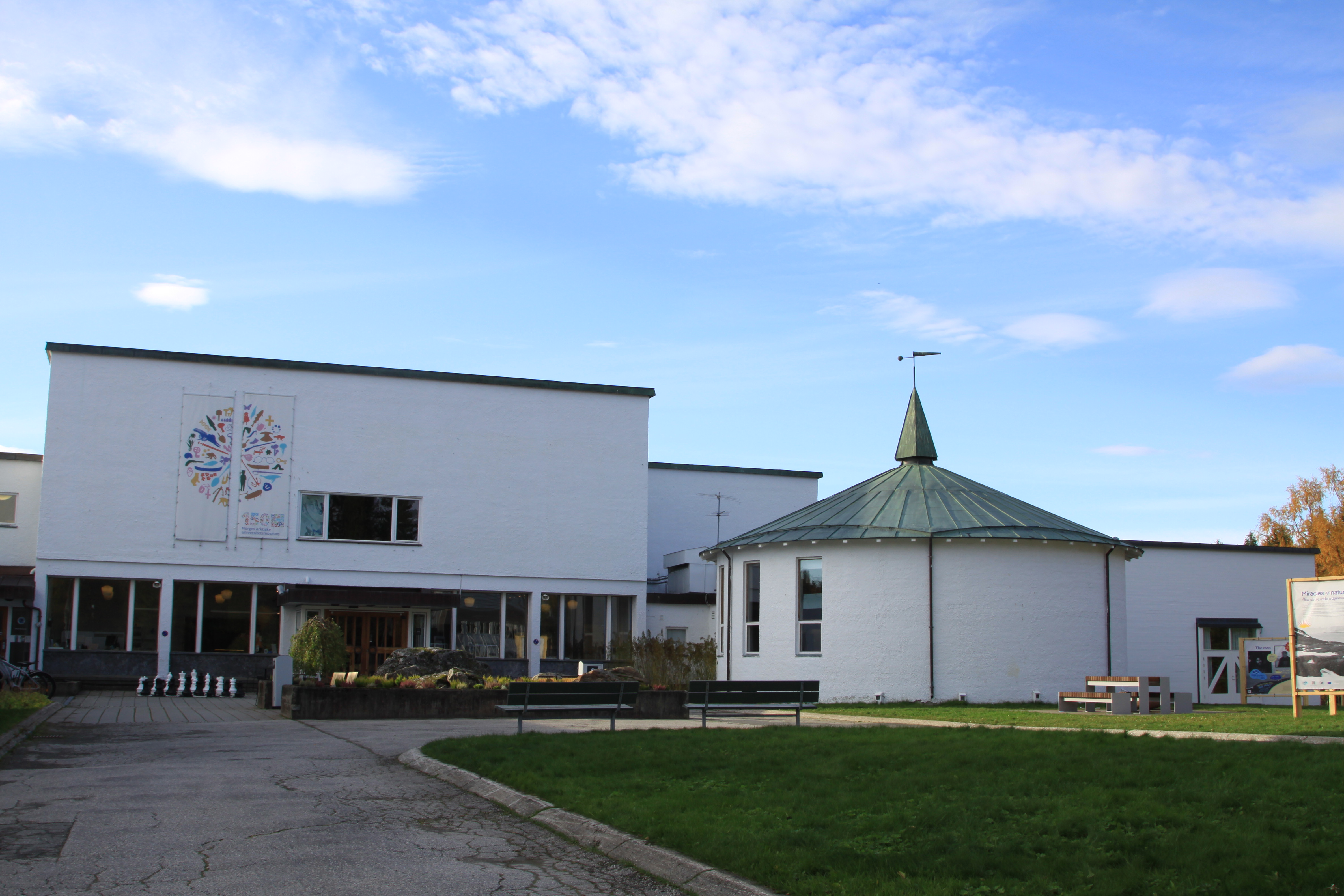
After all that we needed another refreshment stop and found another branch of Kaffebønna for a hot chocolate. We figured we’d head for our second “must see” and located the bus stop to get us to the Norges arktiske universitetsmuseum (the Arctic University Museum of Norway).
The permanent exhibition “TellUs – from stardust to modern technology” took us through geological history with a look at global processes and the traces they left in the rocks around Tromsø and set out the shifting positions of the continents to show where Tromsø was 500 million years ago and how it go to where it is now. There was a lot about the activity of bacterial lifeforms and how you can see those changes in Banded Iron Formations, the source of nearly all the iron used by humans today. There were fossils from the collection, and samples of oil, coal, and dinosaurs. I think we could have done with more time to take it all in but there was a lot more to see.
There is also an interactive exhibition “Under the lights” where you can immerse yourself in the Aurora and all things related to it, including creating your own aurora. The exhibition also explains how it happens, and the effects it can have on things we rely on in the modern world. Oh, and did you know if you want to see it you should wave a white scarf… Also permanent are two exhibitions about the Sámi, the first one covering Sámi culture, and the second setting out how the Sámis of the 20th century started to organize to gain influence on their own society and went from being an oppressed minority to a modern indigenous people. Though I would argue they still have some way to go…

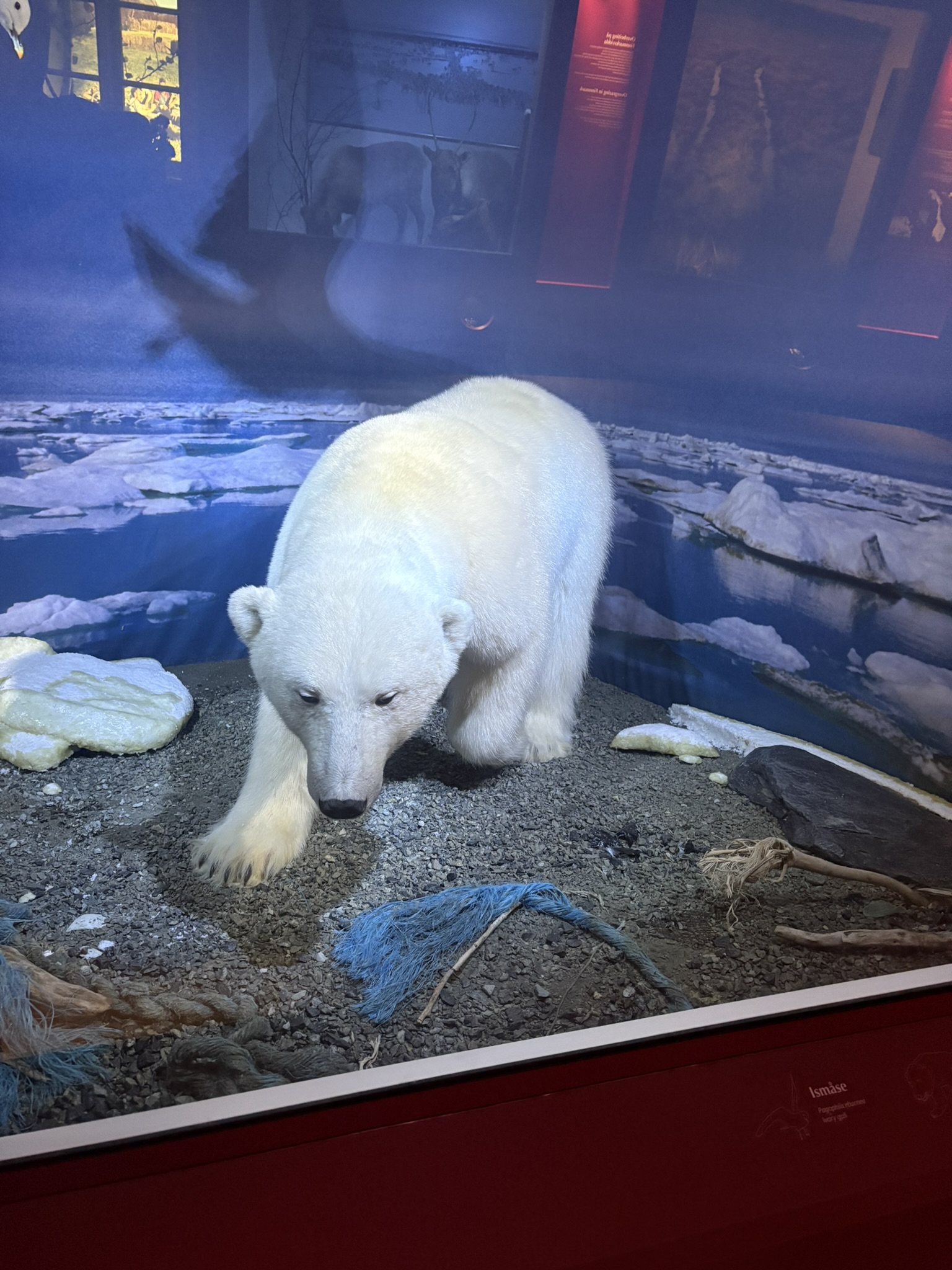
The exhibition “Sapmi – becoming a nation” set this out in some detail although you have to use an app to get the English text. The last of the permanent exhibitions we managed to get round was “UNnaturally”, which was all about natural and man-made changes to nature and how they have affected Arctic wildlife, and contained some quite startling animal exhibits.
“Dig a Grave, Bury a Boat” was a temporary exhibition about boat graves from the Viking period in Northern Norway and would have been fascinating if it had not been entirely in Norwegian. Luckily I knew something of the subject, but I would love to have learned more. Though I did learn that with time and patience I can read some Norwegian (on a very elementary level though). We also managed to swiftly pass through the section on ecclesiastical art, most of it either medieval works from Germany, pointing to the close connections between Norwegian and German towns in the Hanseatic League, or Norwegian-made Lutheran era pieces, most of which were not especially good.
Two museums in we were about ready to call it a day. We’d bought the obligatory fridge magnets, picked up a couple of museum books, and were booked to go out to dinner later that evening it Tromsø. We caught a bus that took us back to the centre of town and jumped on board a shuttle back to the quay.
Showered, changed, and all shiny, we headed back out to go for dinner in town because we don’t really feel we’ve been somewhere unless we eat somewhere (and it puts money into the local economy). We’d been booked in to Restaurant Smak since realising that we would actually have time to go out in Tromsø. There was a handy taxi waiting by the quay so we grabbed that, although given how close it was, we could have easily walked from quay to door. As a result we arrived slightly too early. It didn’t matter because there is a separate but associated bar/bistro Ruda, so we settled in there for a pre-dinner drink while we waited for the restaurant to open.
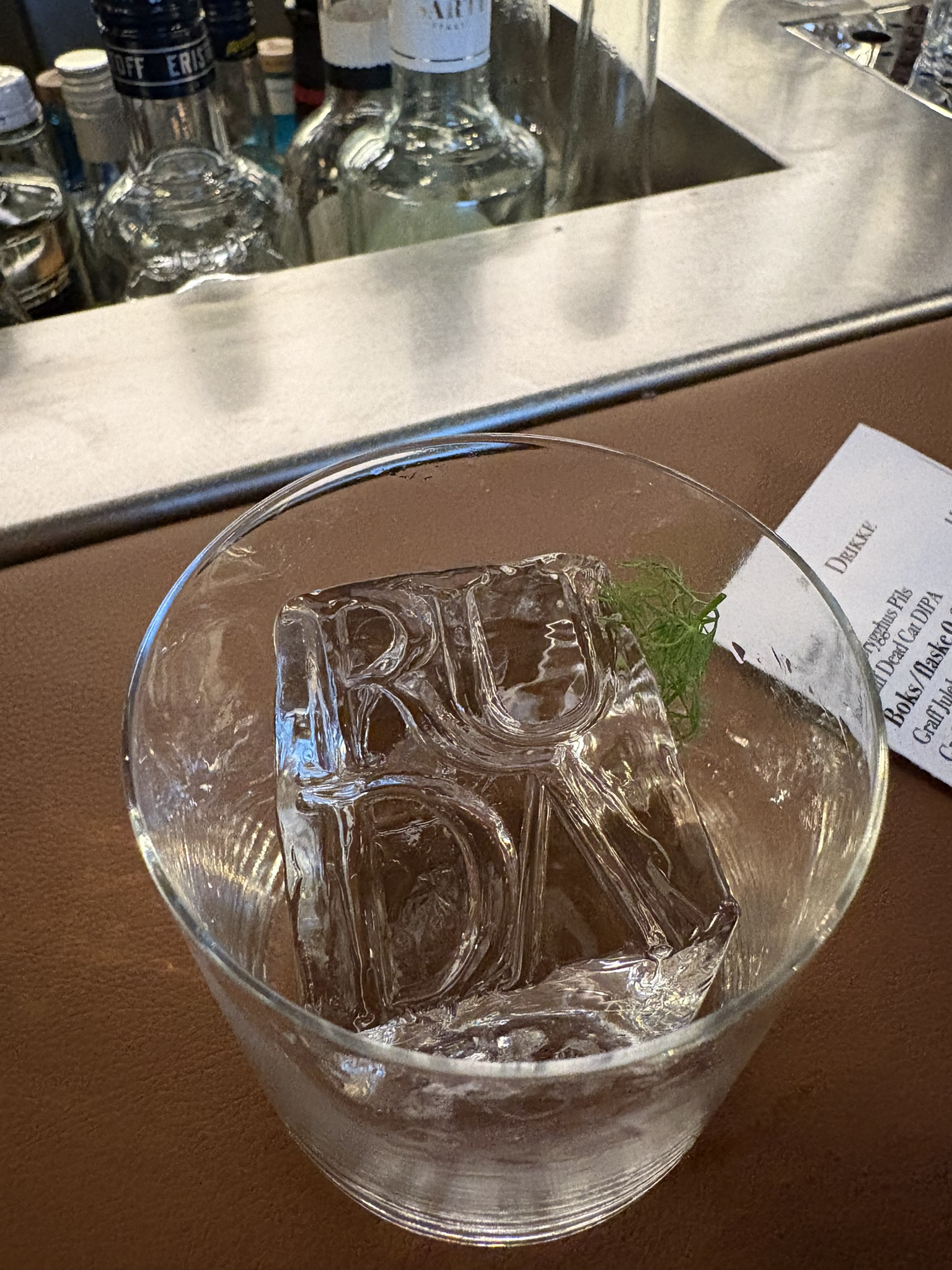
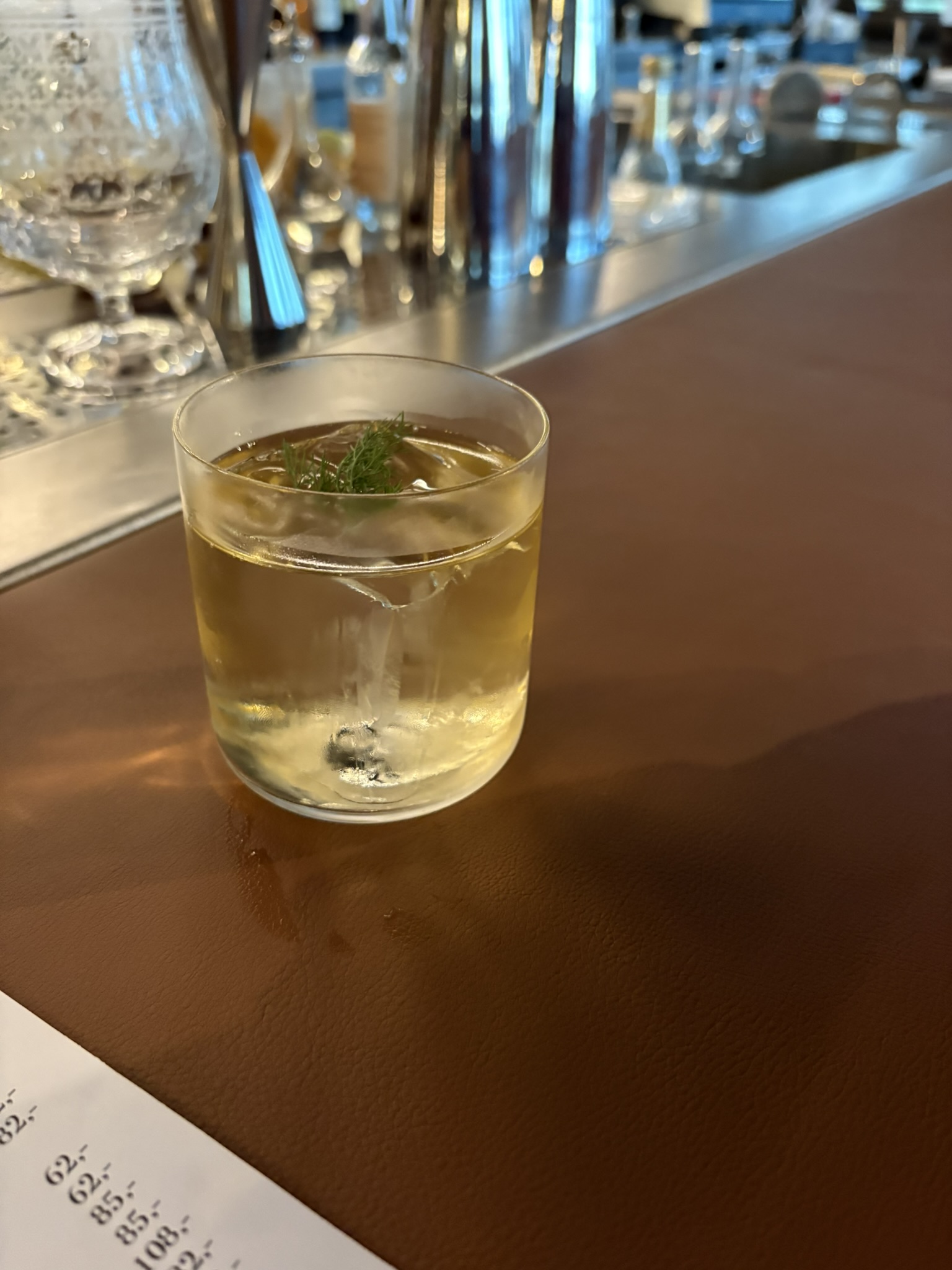
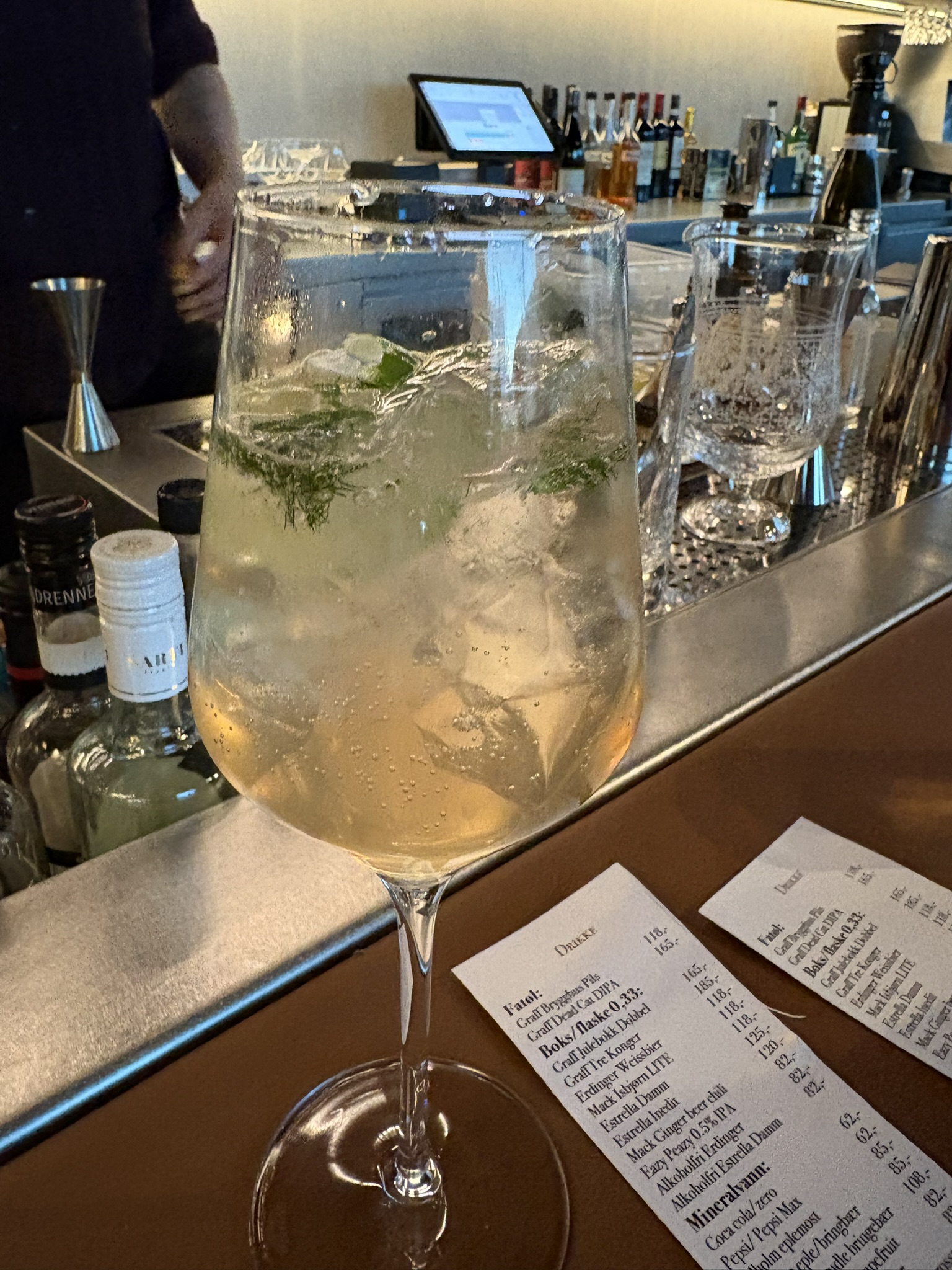
Ruda do interesting things with Nordic ingredients, including a cocktail with clarified yogurt and dill in it. I almost wished we’d had time for a second round, but we were soon moved on to Smak itself. The restaurant website states that they “celebrate the authentic, northern Norwegian flavors, served in a warm and intimate atmosphere here at Kræmerkaia in Tromsø. With us, every meal becomes a journey of discovery through flavors and textures, with ingredients sourced from the ocean, local farms and unique producers… Together with our dedicated team, we invite you to a culinary experience that exceeds expectations and brings you closer to the gastronomic heart of Northern Norway.”
When I booked, I was warned that “Both lunch and dinner consist of 16-18 delicious dishes, and the entire experience should take approximately 4-5 hours. It will not be possible to announce the menu’s contents in advance – as it is constantly changing depending on the season and the availability of ingredients.” That sounded like it was right up our street, especially if it was going to be the only meal out in Norway.
It got off to a very promising start as we were shown into a lounge where drinks orders were taken and a large trolley was wheeled in and three chefs began finishing various amuse bouches for service.

It was a lot of fun watching them as they worked through each delicious morsel, and we were intrigued to try each of the tasty treats. In order, we were served prawns from Lyngen; halibut, smoke and Norwegian pastry; organic salmon, smoke, pickled vegetables; lamb, lovage and cabbage; mushrooms from Tromsø and coppa. Everything was fabulous, especially the lamb!
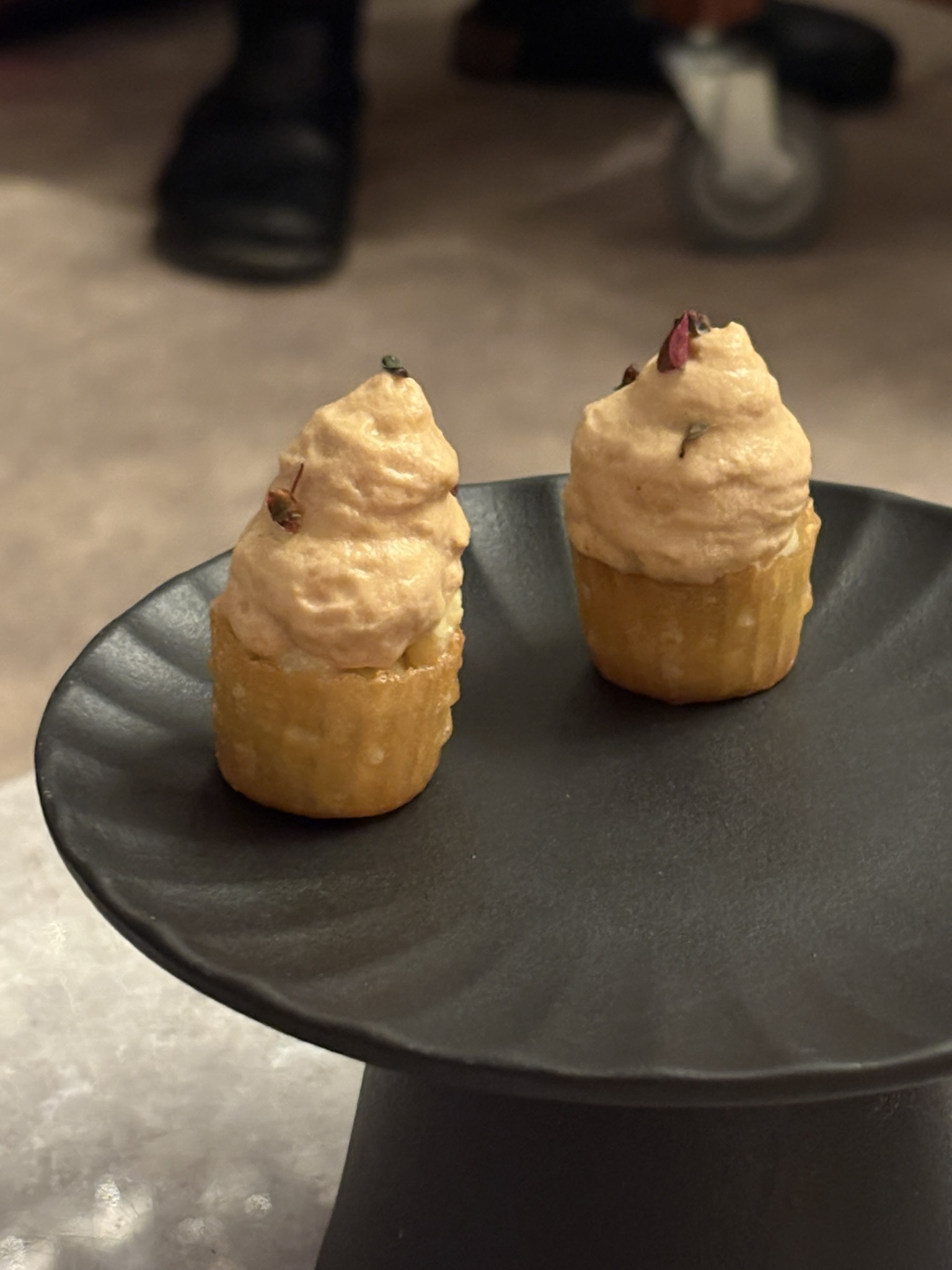
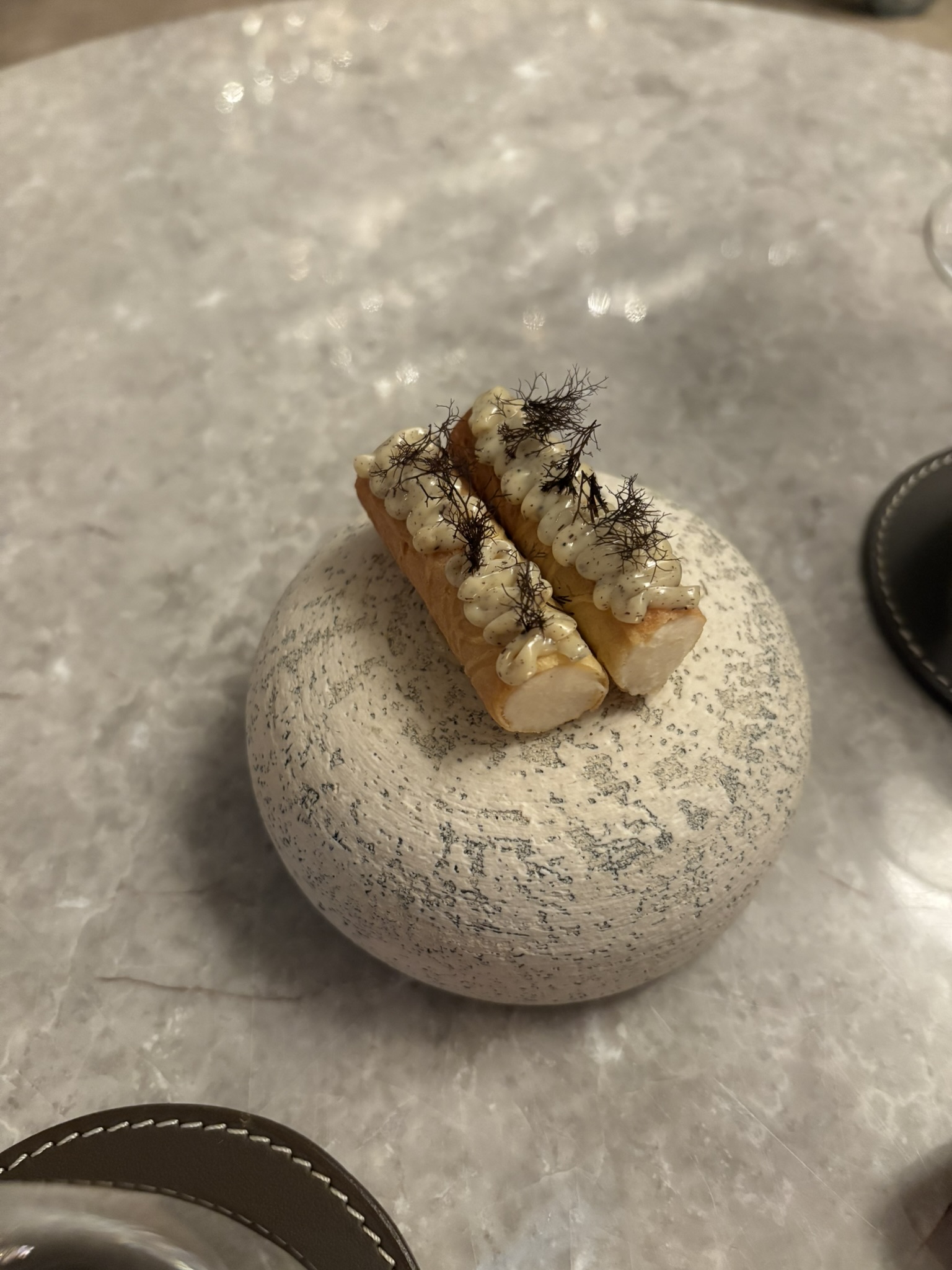

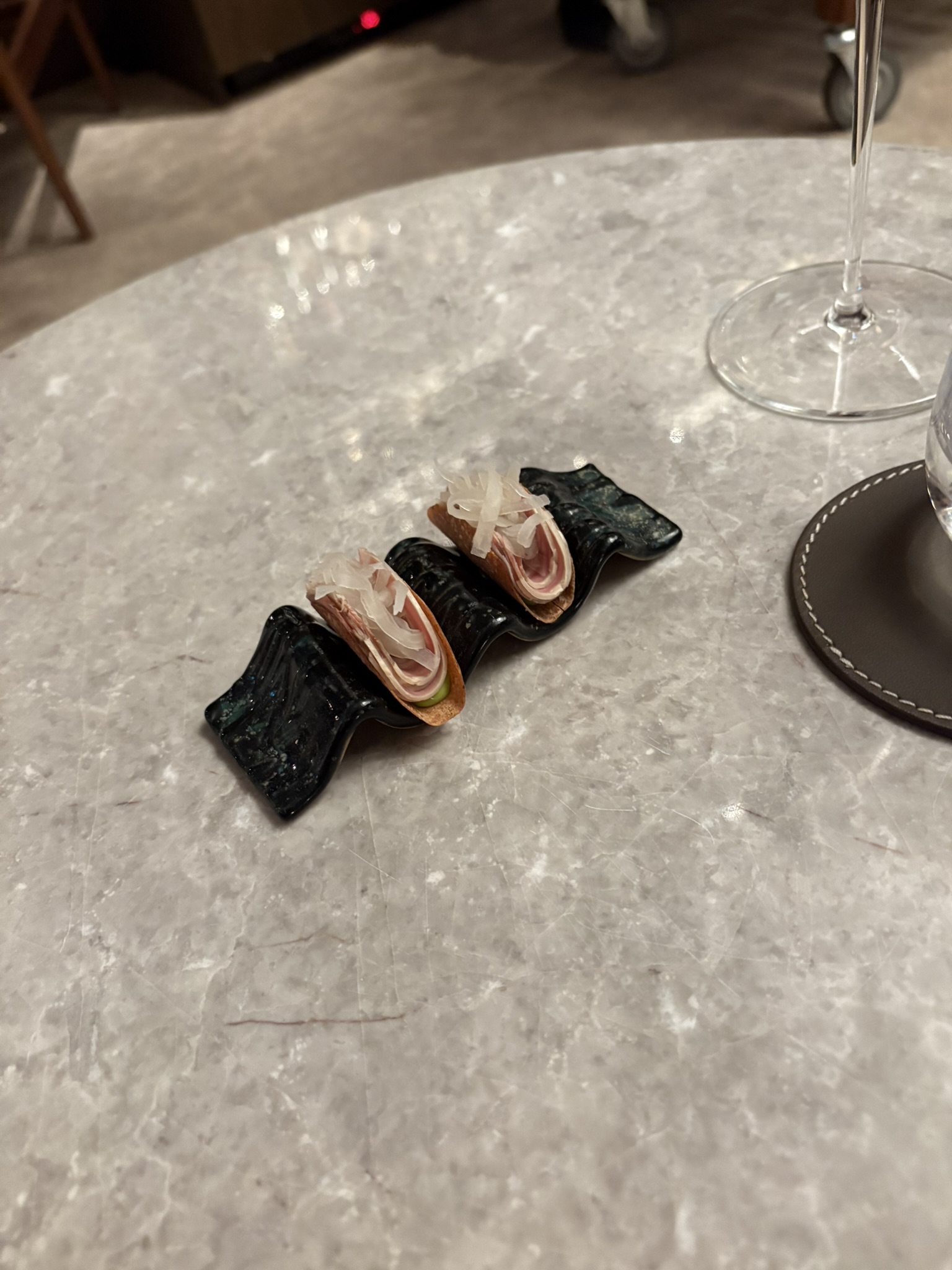
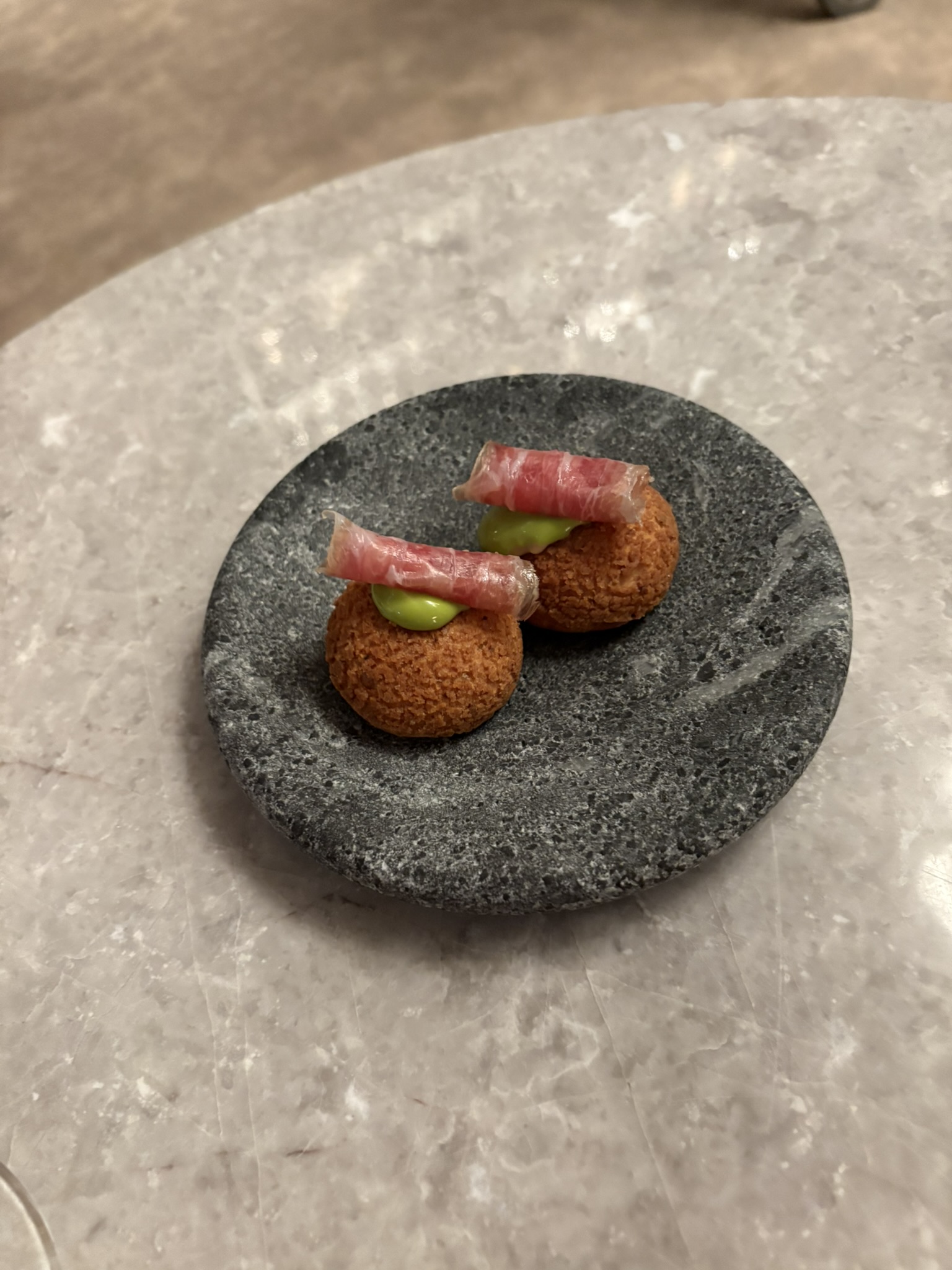
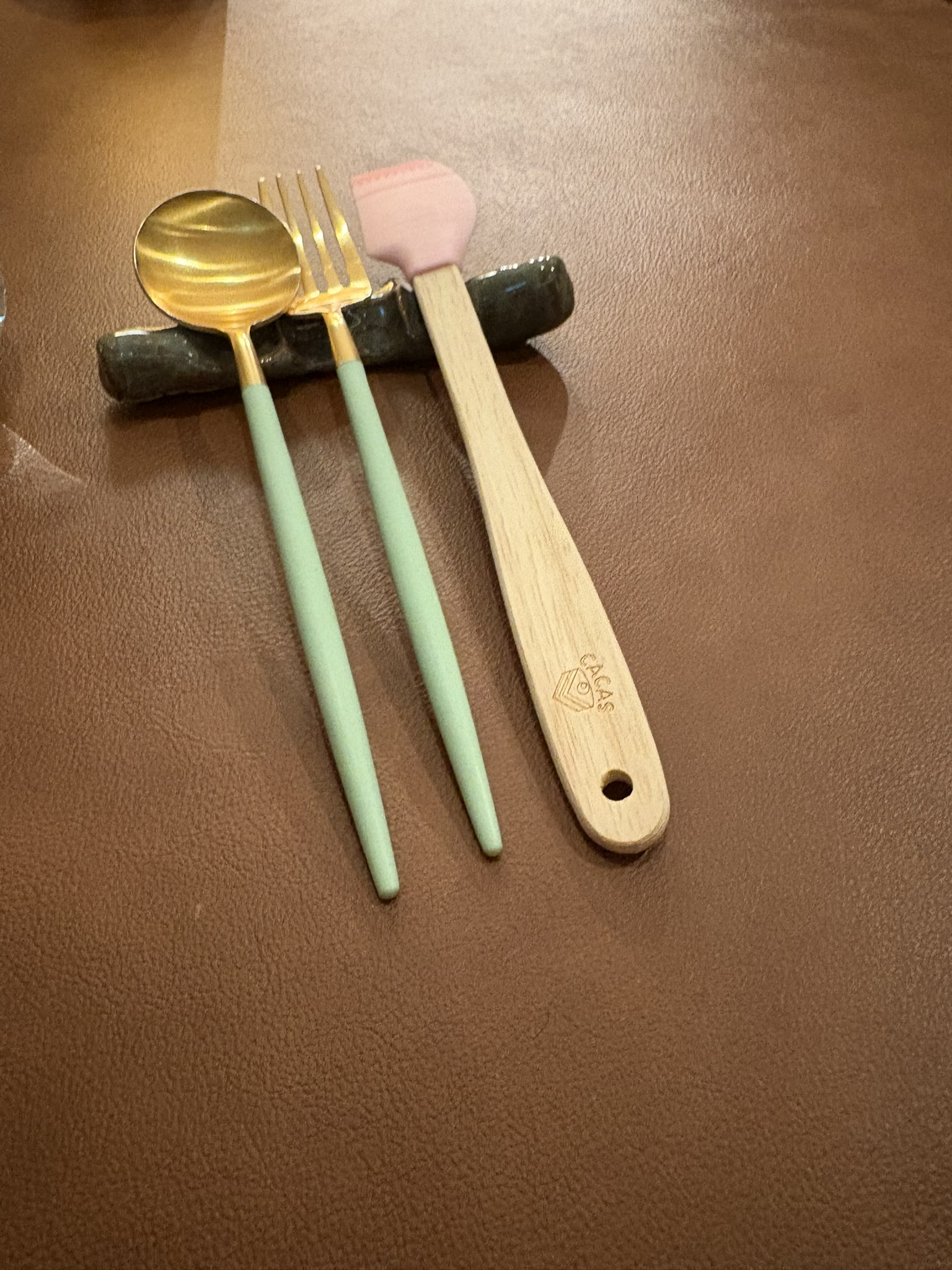
Oh and I loved the fact that along with the more usual items of cutlery we were given a tiny Norwegian sweater-patterned spatula so we could “make sure you get all the sauce”. It saved licking the plates I guess!

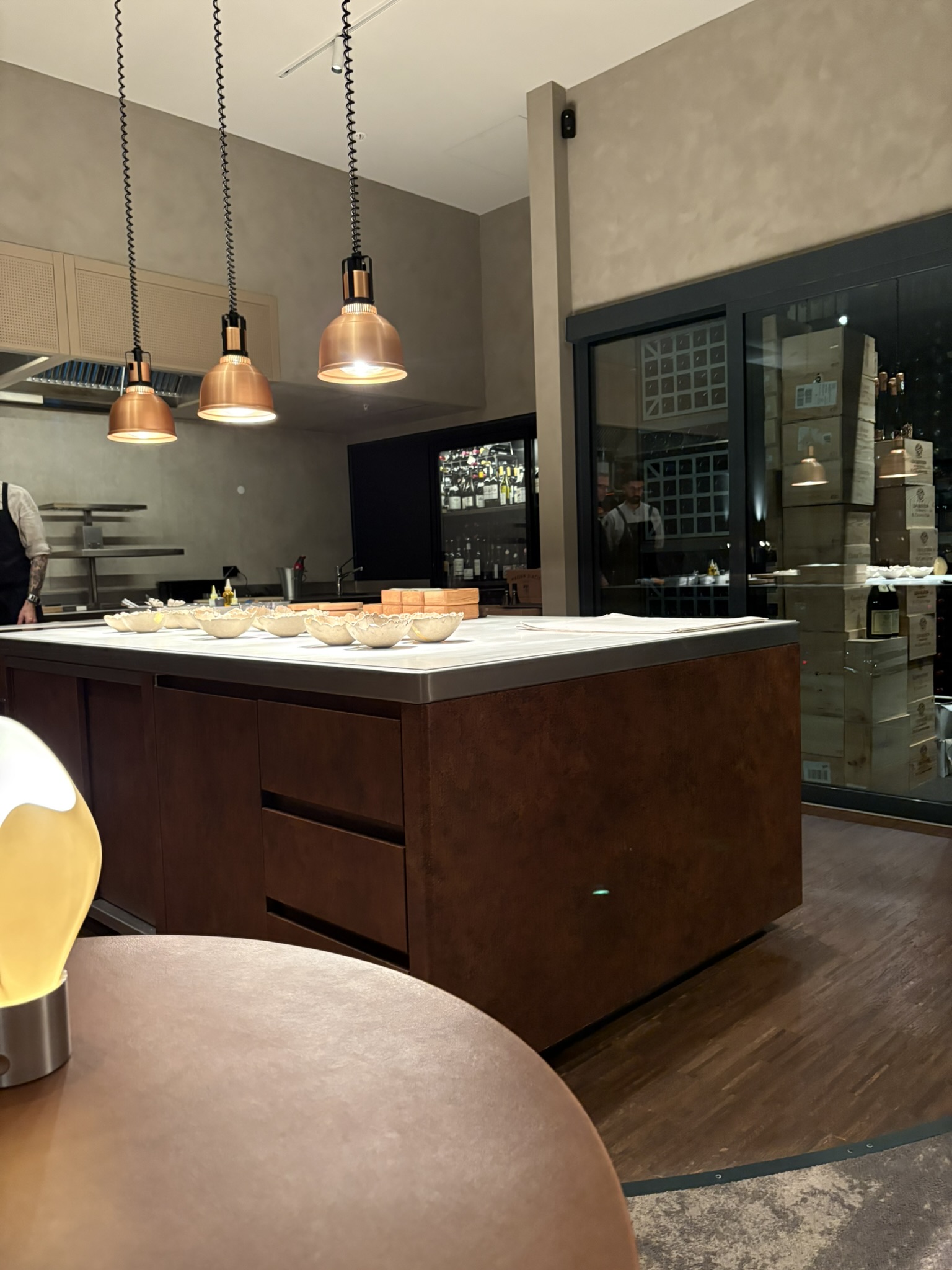
Afterwards we were shown into the dining room, which also had a great preparation area where we could watch as scallops were seared, and beef was finished. It made for a sense of theatre and was intriguing because it’s not something you normally get to see in real life, only on TV.
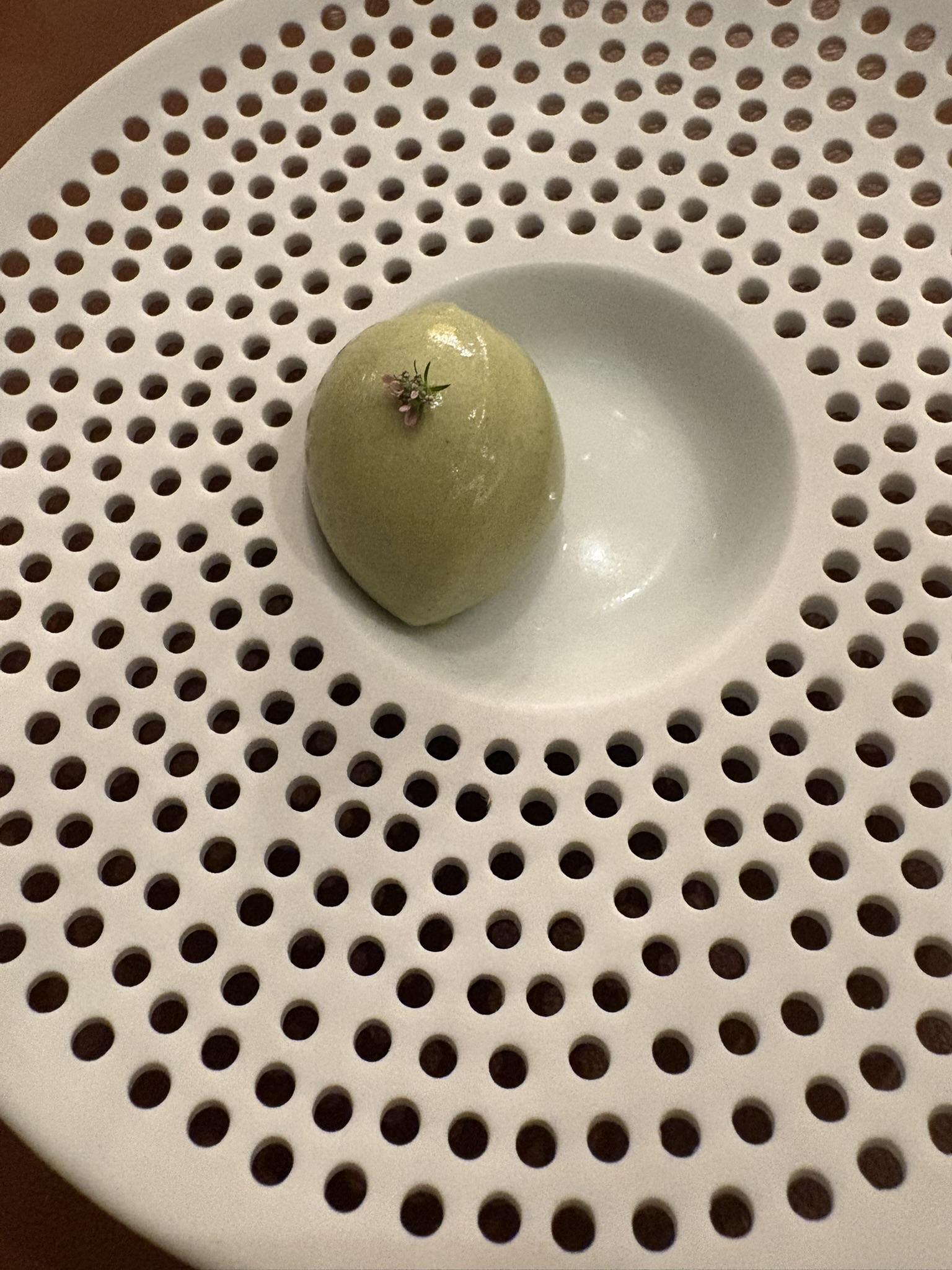
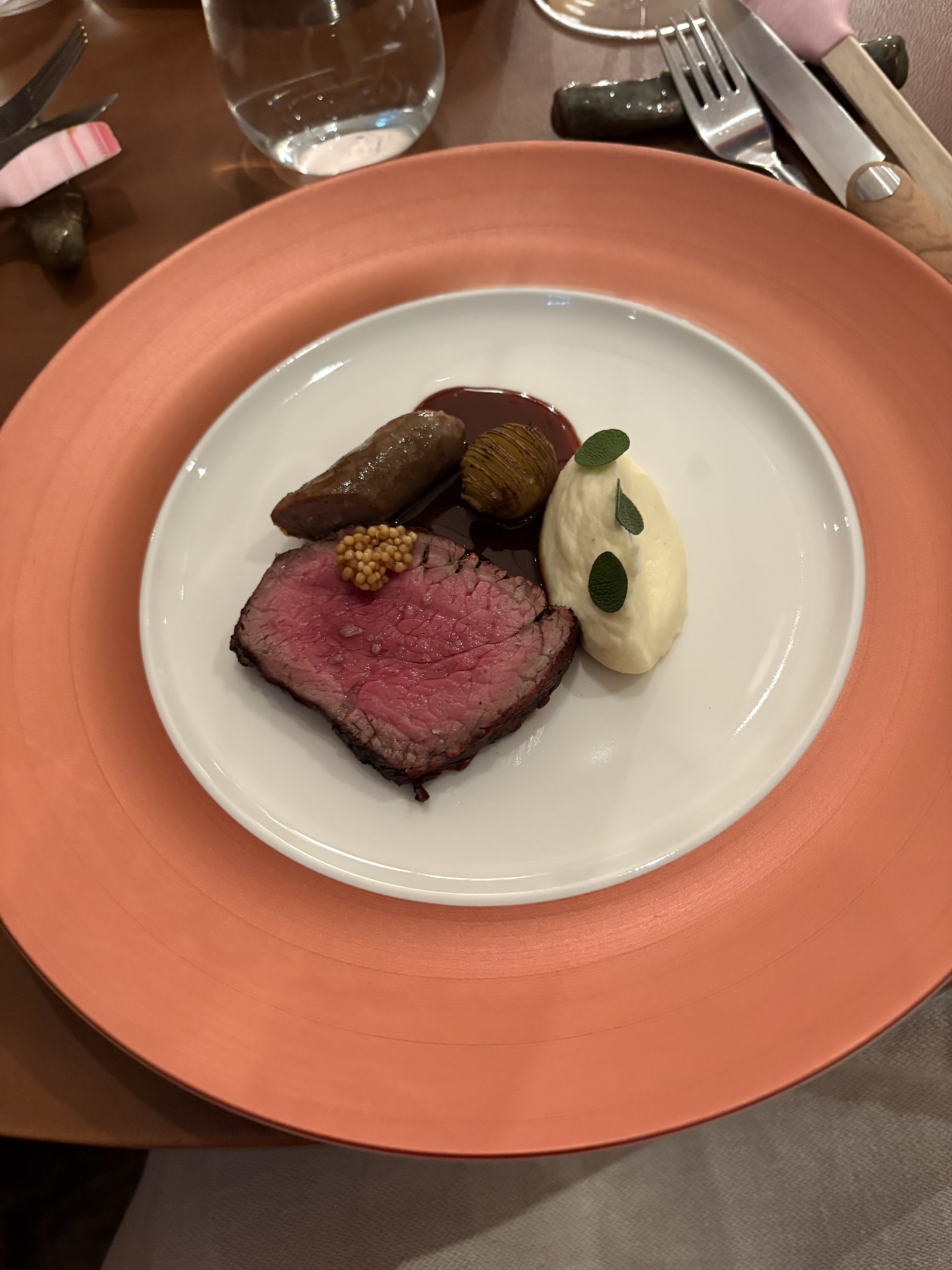
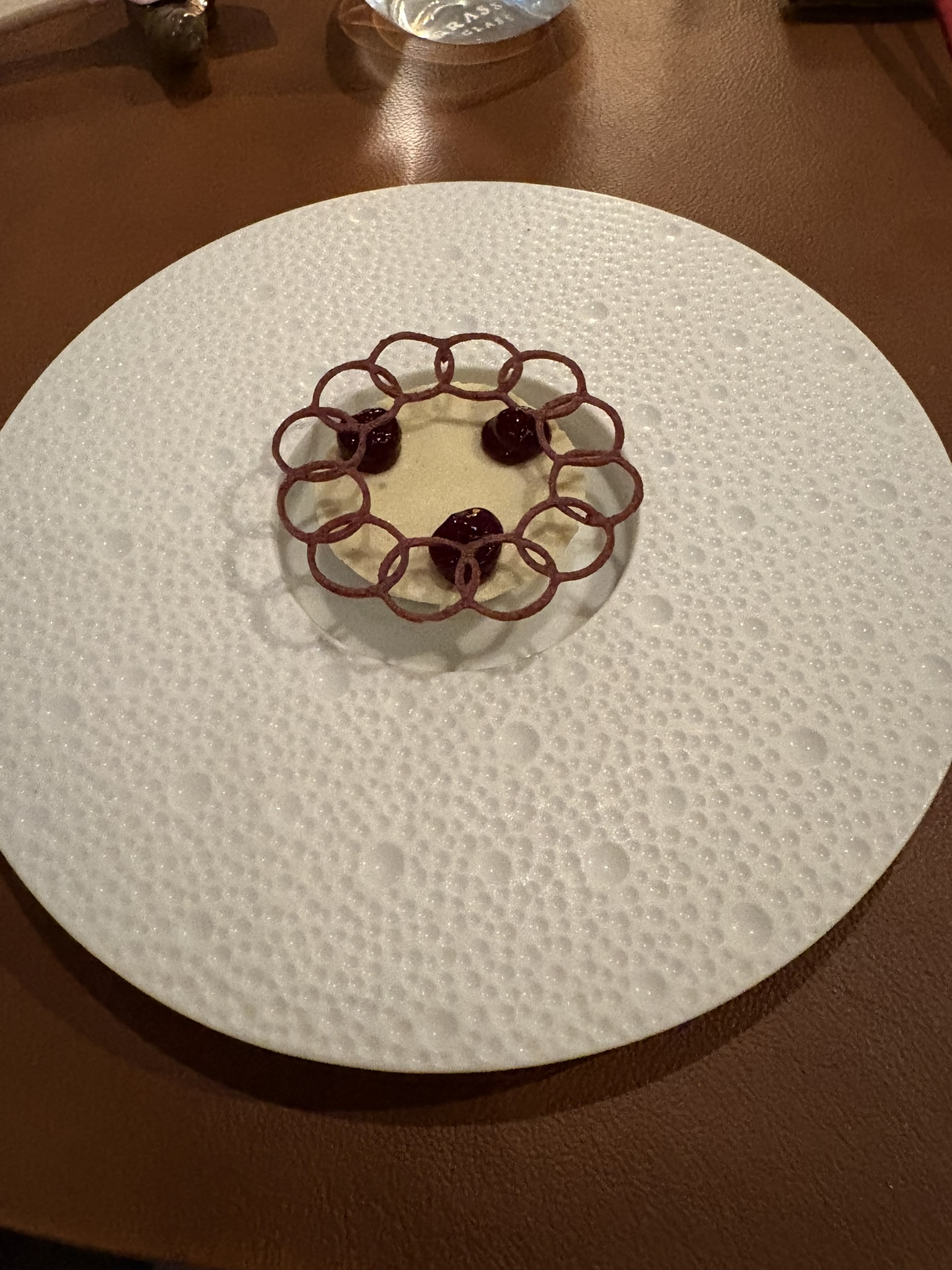
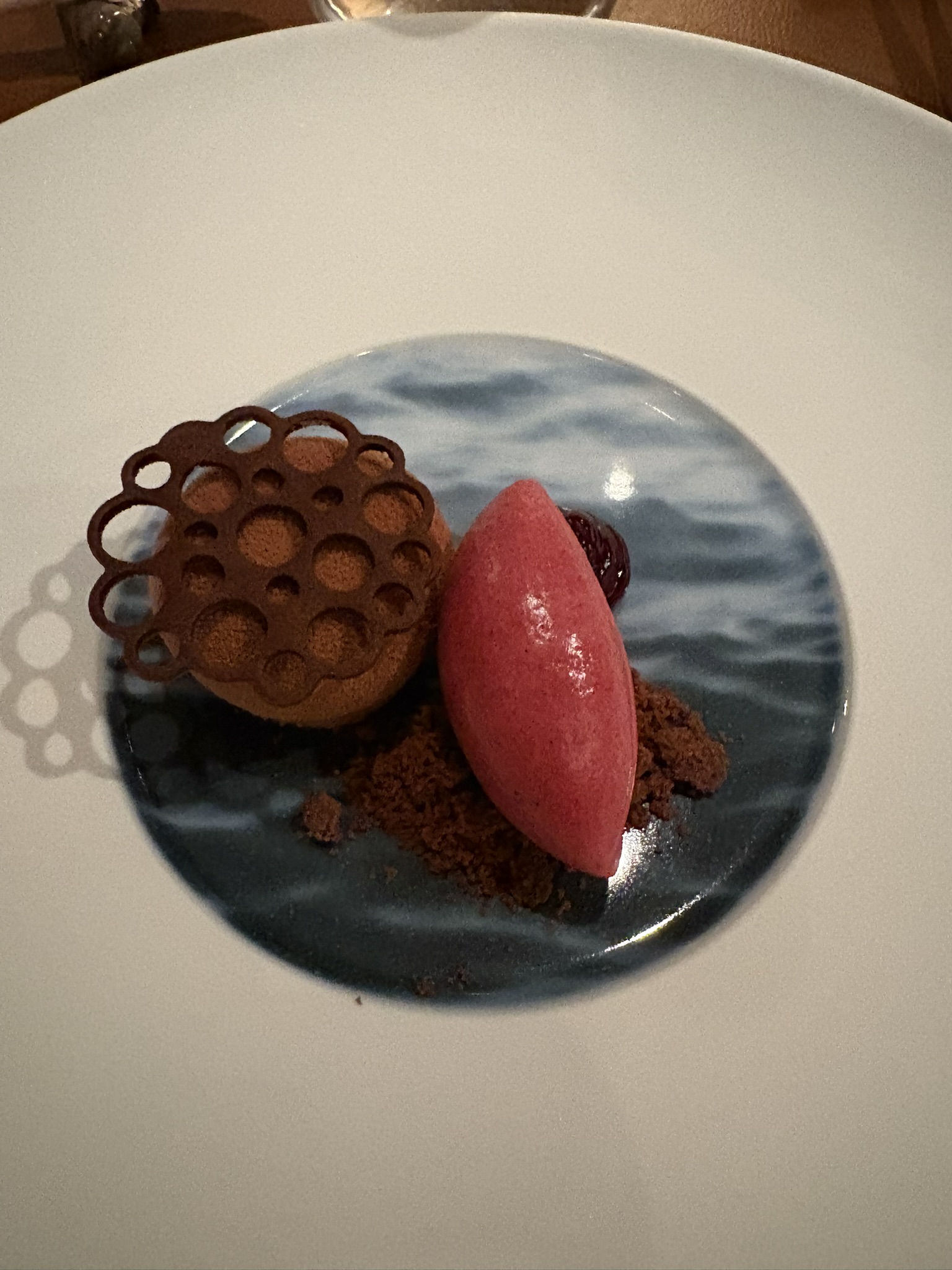
There followed 10 more courses (not counting the sourdough bread), each beautifully presented, and served with well-chosen matching wines. In order of service, we had:
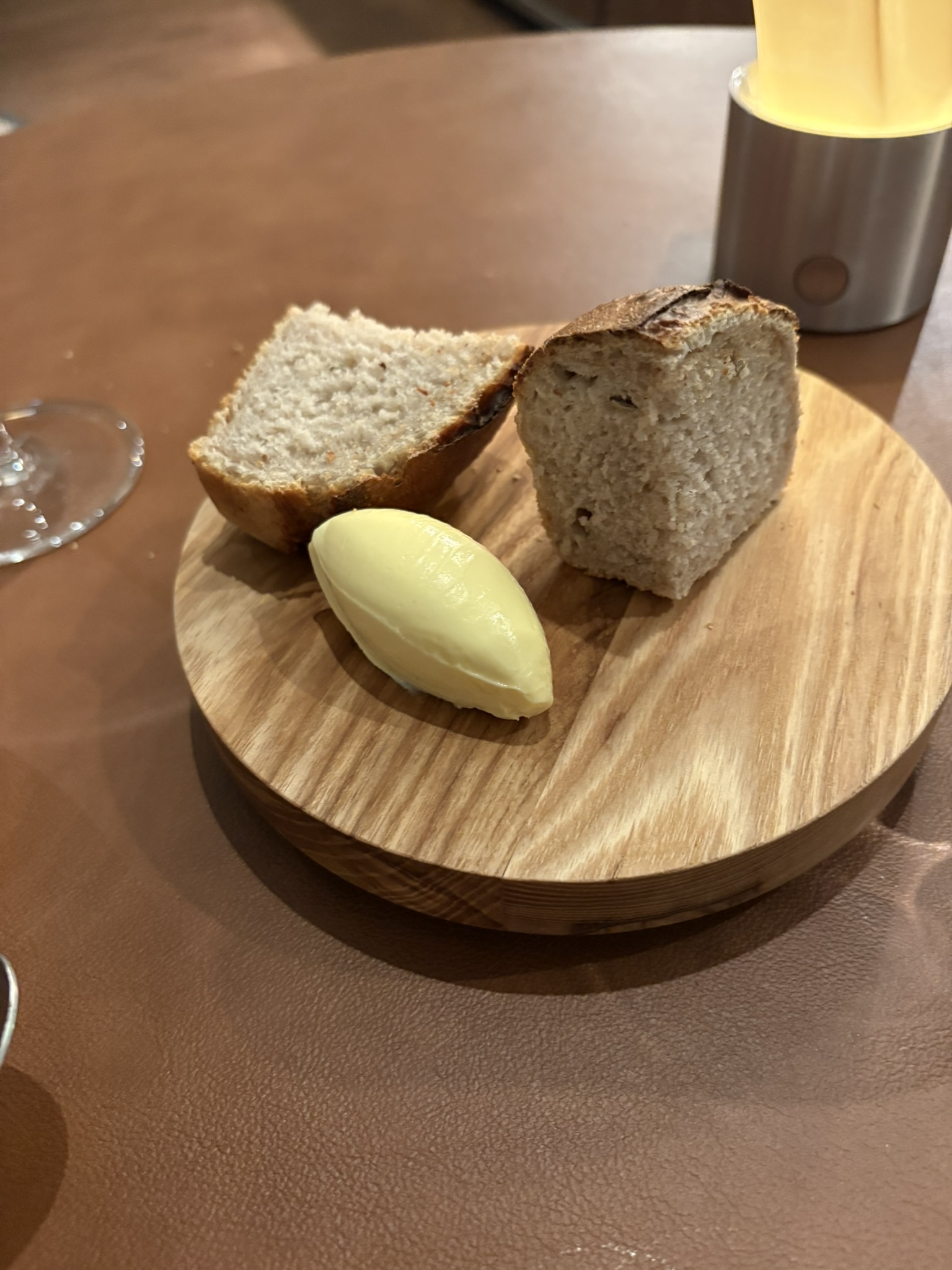
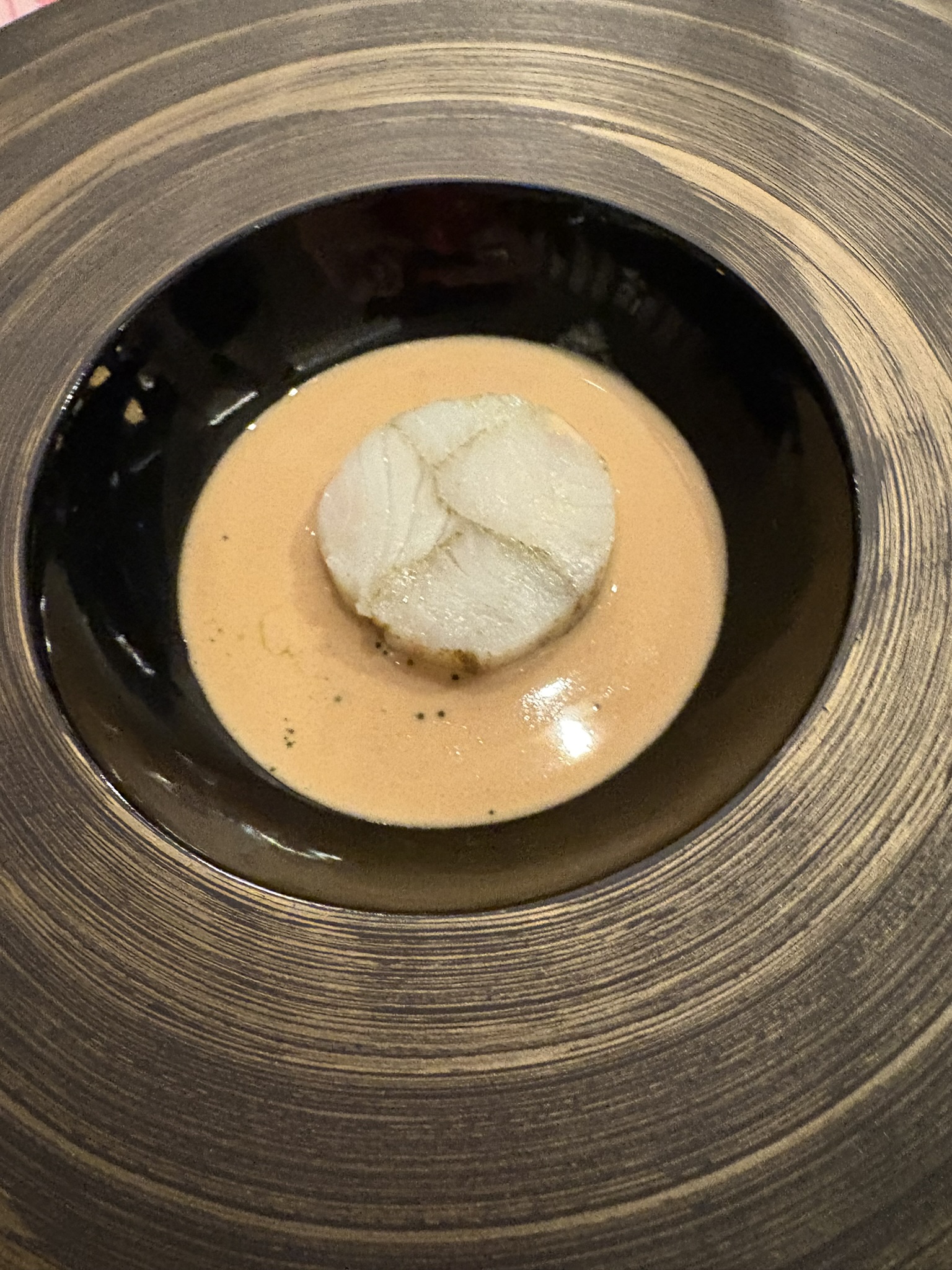
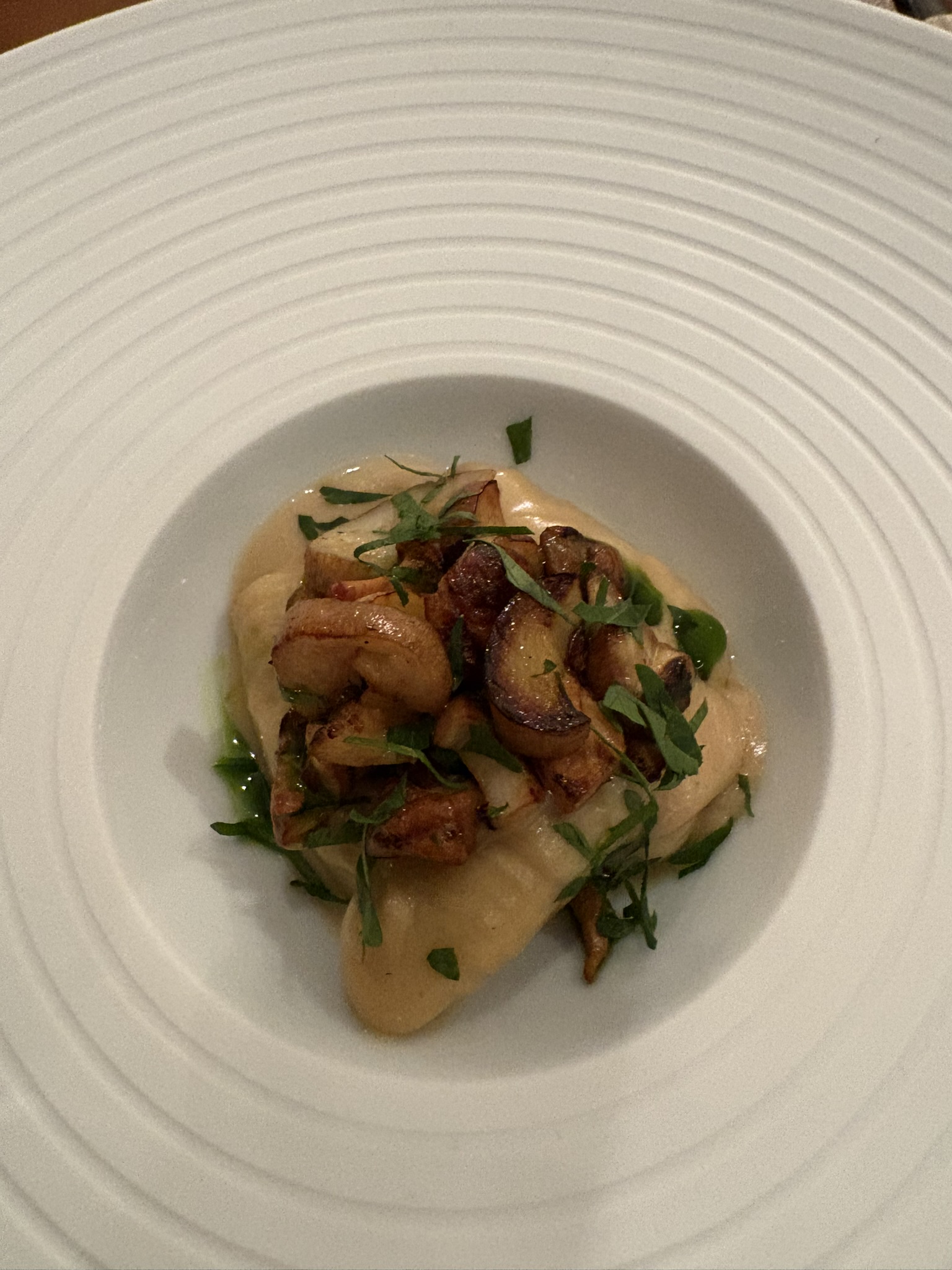
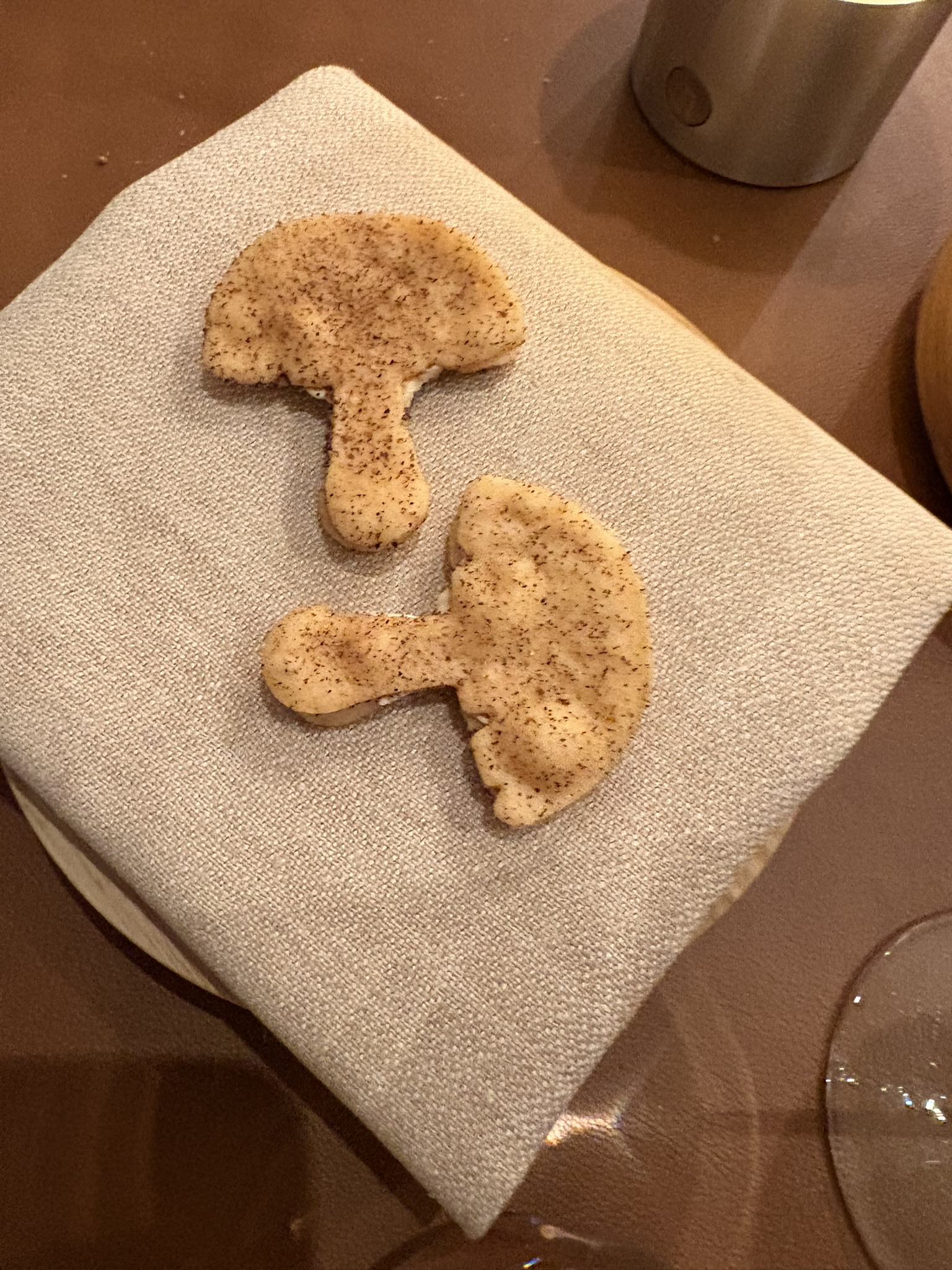
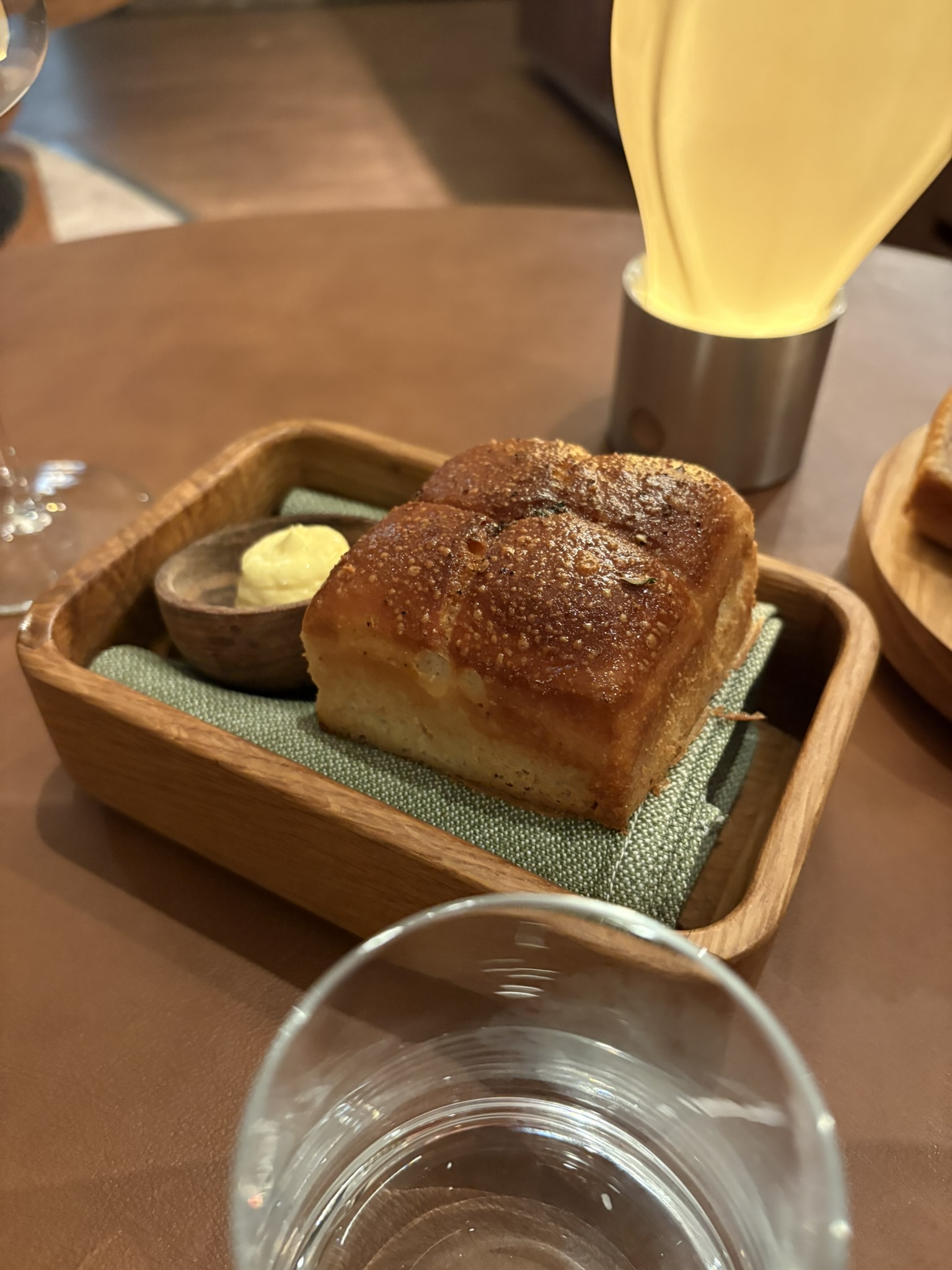
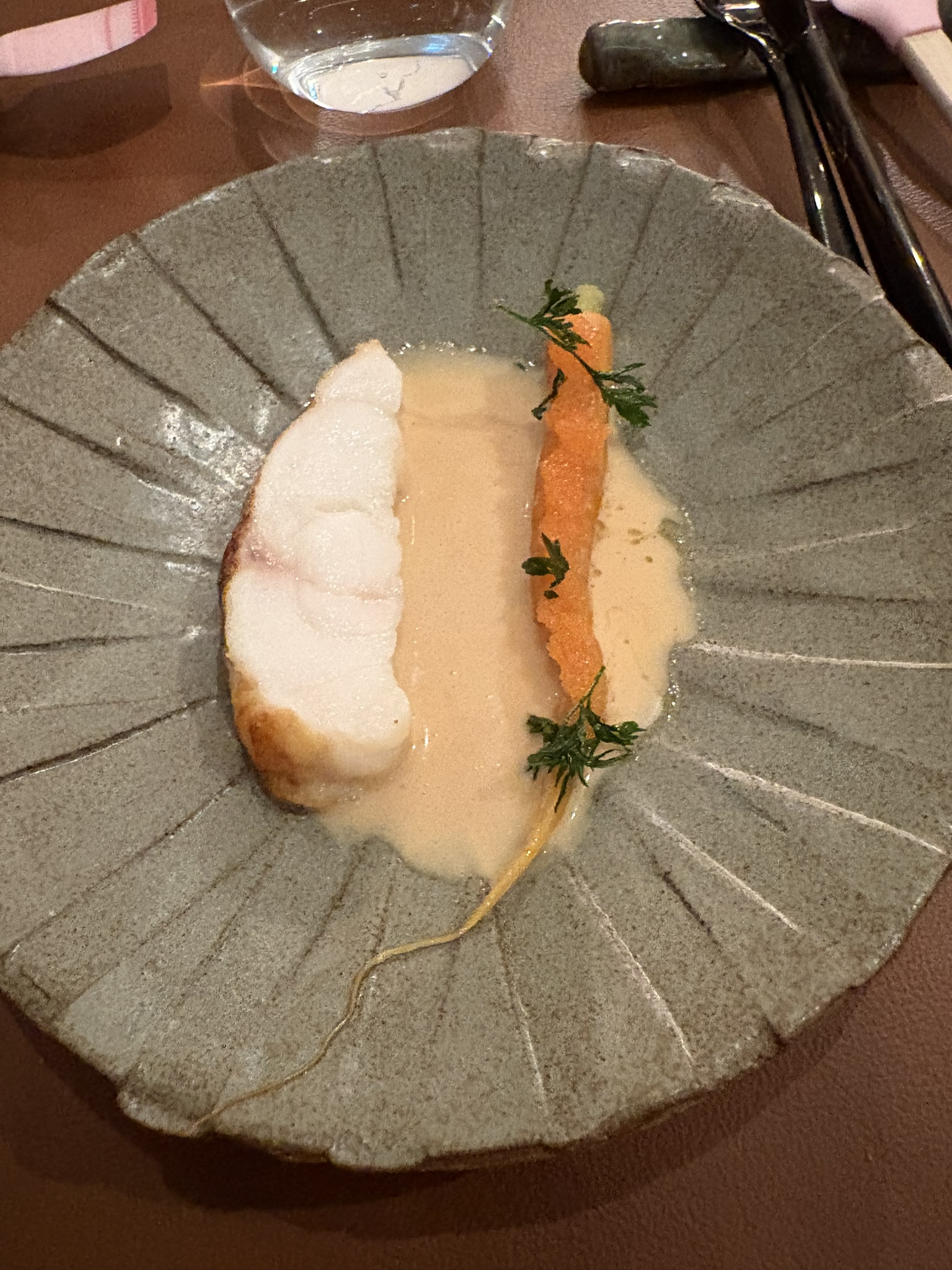
Scallop and scallop; sourdough and butter; lobster bisque, halibut and Norwegian garlic; mushrooms and parsley with a fabulous mushroom cookie; milk bread and smoked butter; fish, vin jaune sauce, our first carrots and Swedish roe; a herb sorbet; beef from Målselv, smoked sausage and celeriac; Nidelven blå (blue cheese) from Gangstad ysteri, and blackcurrant from Nordvoll Gård; dill, yogurt and caramel; chocolate and blackcurrant from Toften Gård. The beef was an absolute stand out, so tender you could have cut it with a spoon. There was nothing I would not have been happy to eat again.


The matching wines were:
- François Chidaine, Les Argiles 2022 (Chenin Blanc (Pineau de Loire)
- Mathern, Weisser Burgunder Trocken 2020
- Albert Sounit, Bourgogne Chardonnay “Les Vignes de la Roche” 2023
- Marjan Simčič, Ribolla 2022
- Jour de Soif, Cabernet Franc 2022
- Chateau Montifaud, Pineau des Charentes Vieux Rouge
- Reichsrat von Buhl, Forster Jesuitengarten, Riesling Spätlese 2011
- Weinlaubenhof Kracher Beerenauslese Zweigelt 2021
After that we could hardly move so we sat in the lounge once again where teas and coffee were on offer along with petit fours. We packed up the ones that could be transported and took them back with us for the following day, ordered a taxi, paid up and left, well fed and very happy.
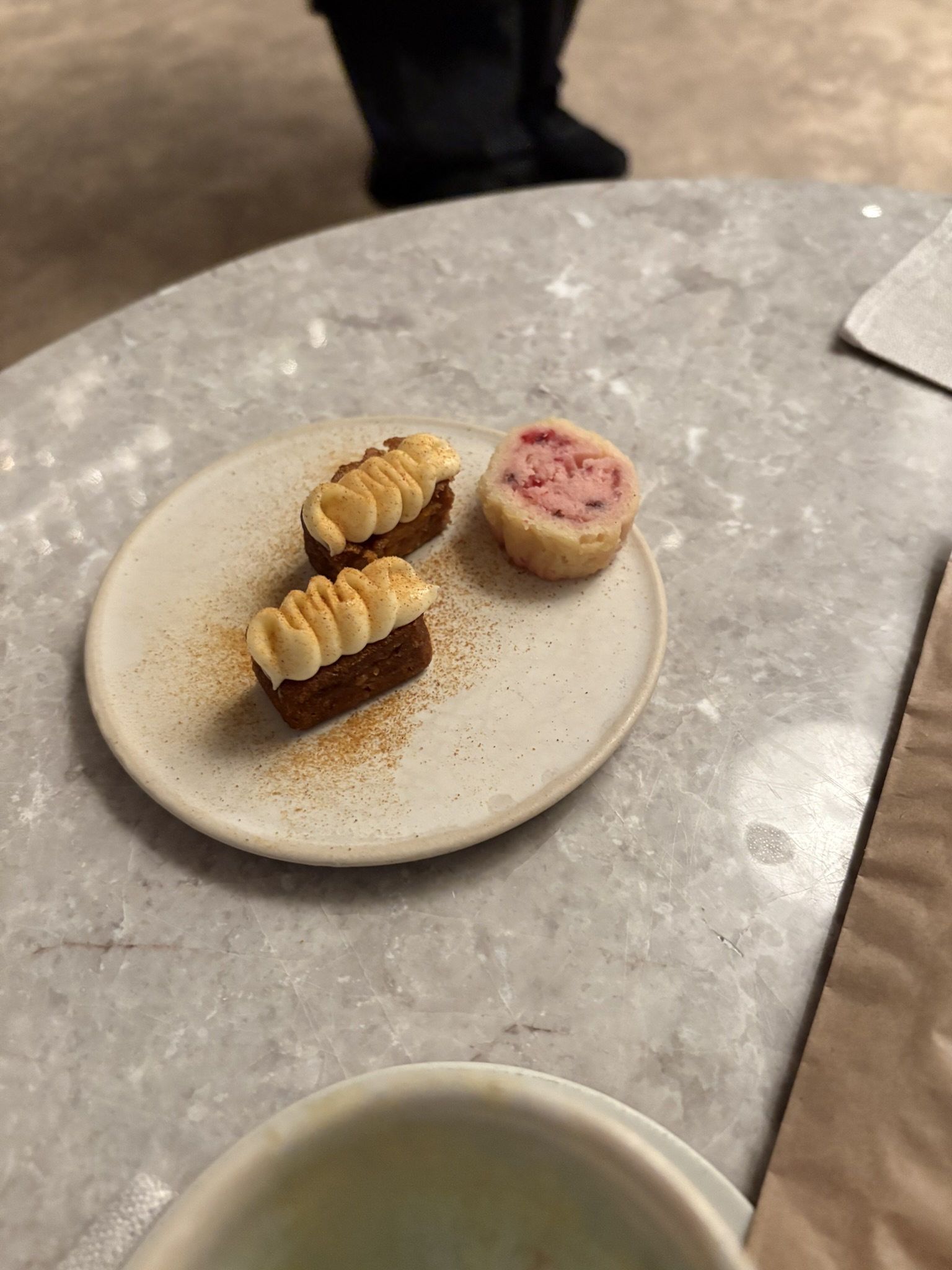
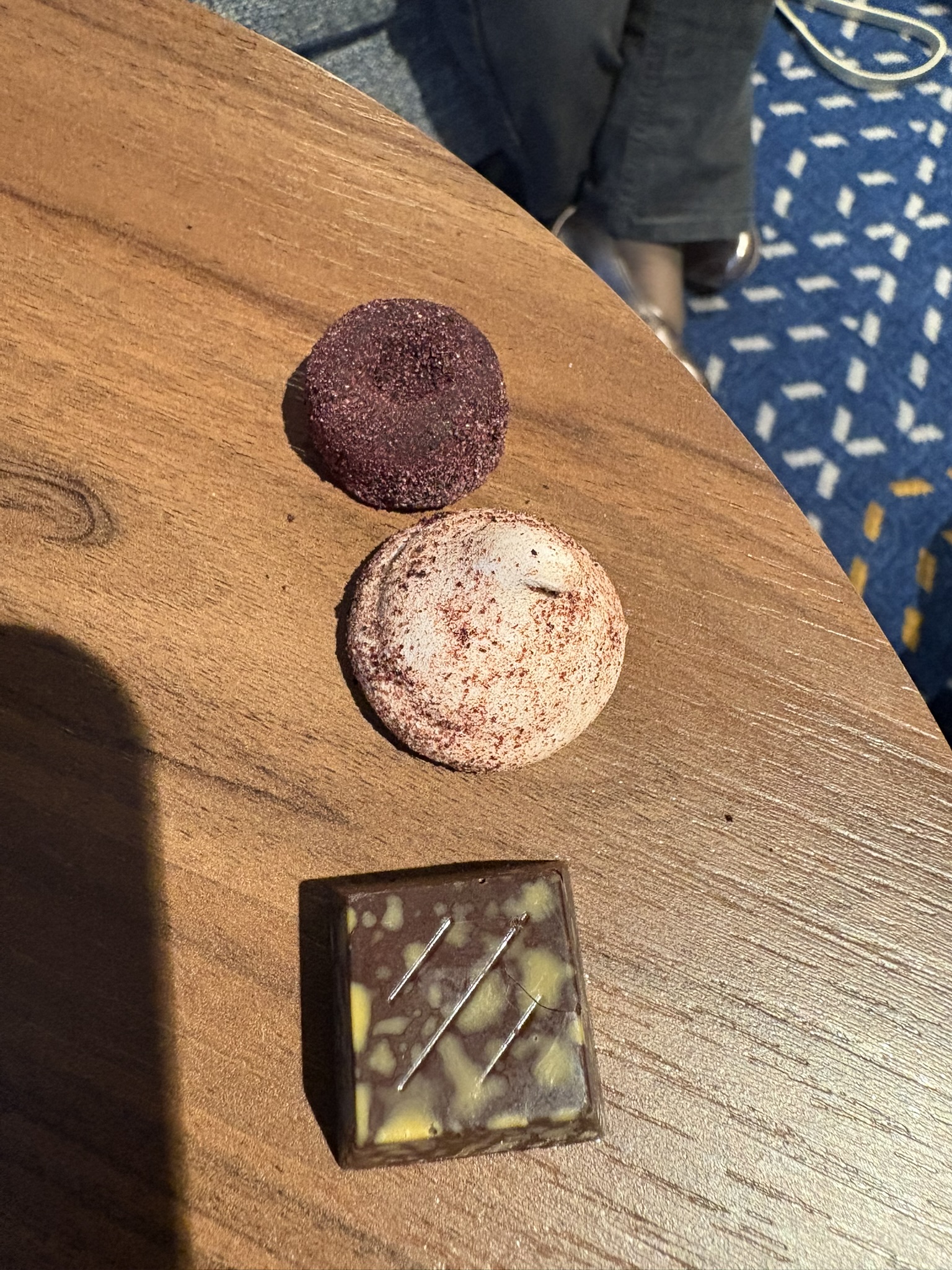
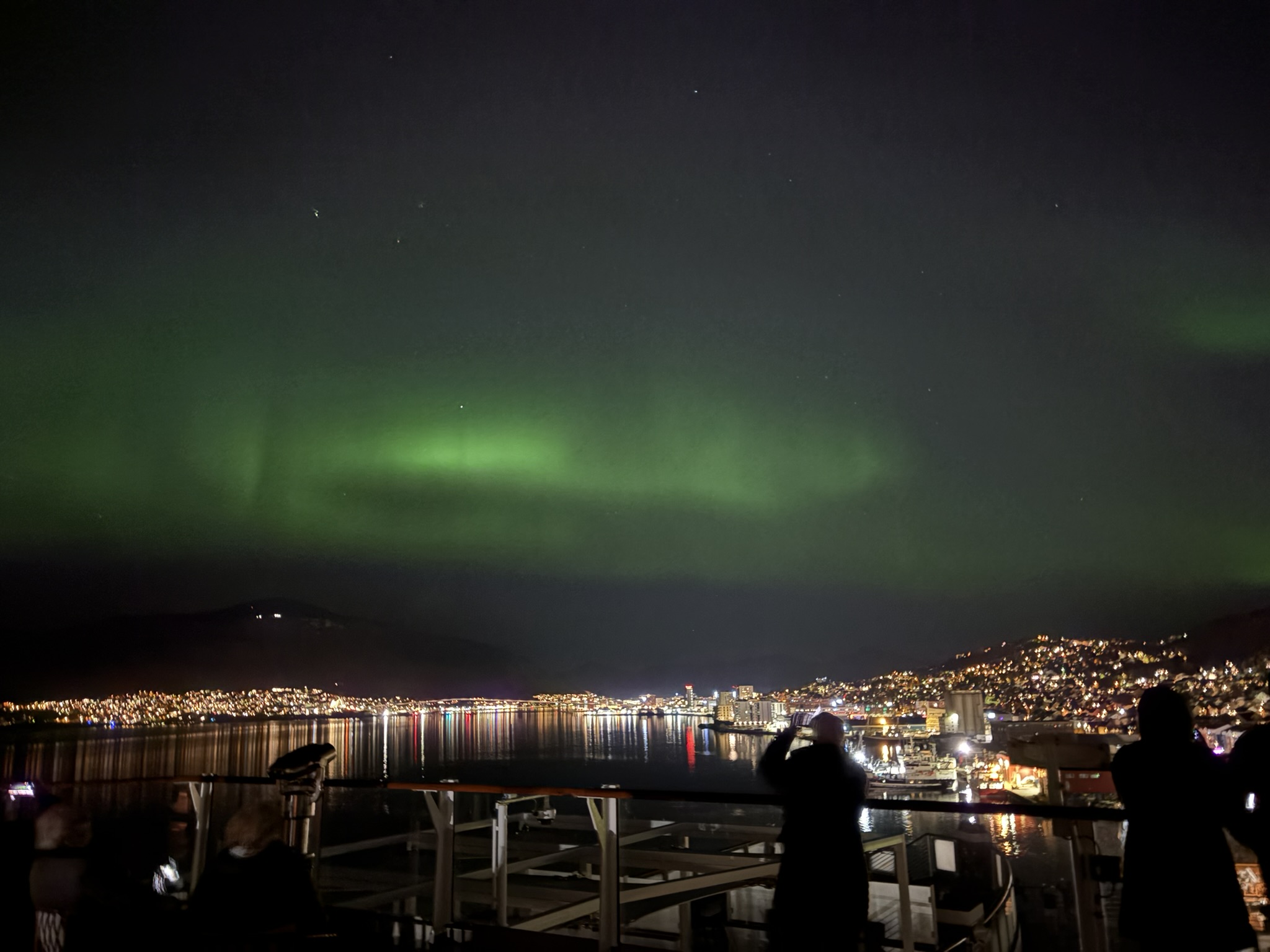
Back on board we thought we’d chance a visit to Deck 10 where Howard, the onboard astronomer, was running an aurora spotting session. It didn’t look promising despite Cunard’s suggestion that “the sky above Tromso can also be a truly breathtaking spectacle when the dramatic northern lights dance across the sky during dark winter nights” and we wondered if there would be too much light pollution. But just when we thought we’d had as good a day as we could, the sky seemed to shift and what at first looked like wispy white clouds streaking the heavens resolved into the green dancing lights of the Aurora Borealis to complete our day with sheer joy. I could not have been happier.



 Smtfhw's Travels