We had a plan for Day 5, because I do my research. And so we set out to attempt a circular drive around our little slice of heaven, despite the day having dawned cloudy and grey, with the hills almost invisible as we ate breakfast. And so to the plan, which like many a plan didn’t stand up to contact with reality.
The intended route was a loop of the area taking in the Barbegal aqueduct and watermill, the Abbaye de Montmajour, Les Baux-de-Provence, Tarascon, Beaucaire, Châteaurenard and Barbentane, a perfectly doable run for a relatively gentle day out it seemed when I looked at it on the map and added it to the SatNav. We set off around 10, and stopped of first of all at the Moulin de Calanquet, just down the road from St. Remy, because we wanted to visit an olive oil producer somewhere along the way, and this one didn’t even require us to leave the main road we were on.
It was fascinating, even if we did have to try and keep out of the way of a coach tour group that were also being shown round. Oh, and a dog that no one recognized that kept trying to get into the shop. She was very friendly but she clearly didn’t belong there.


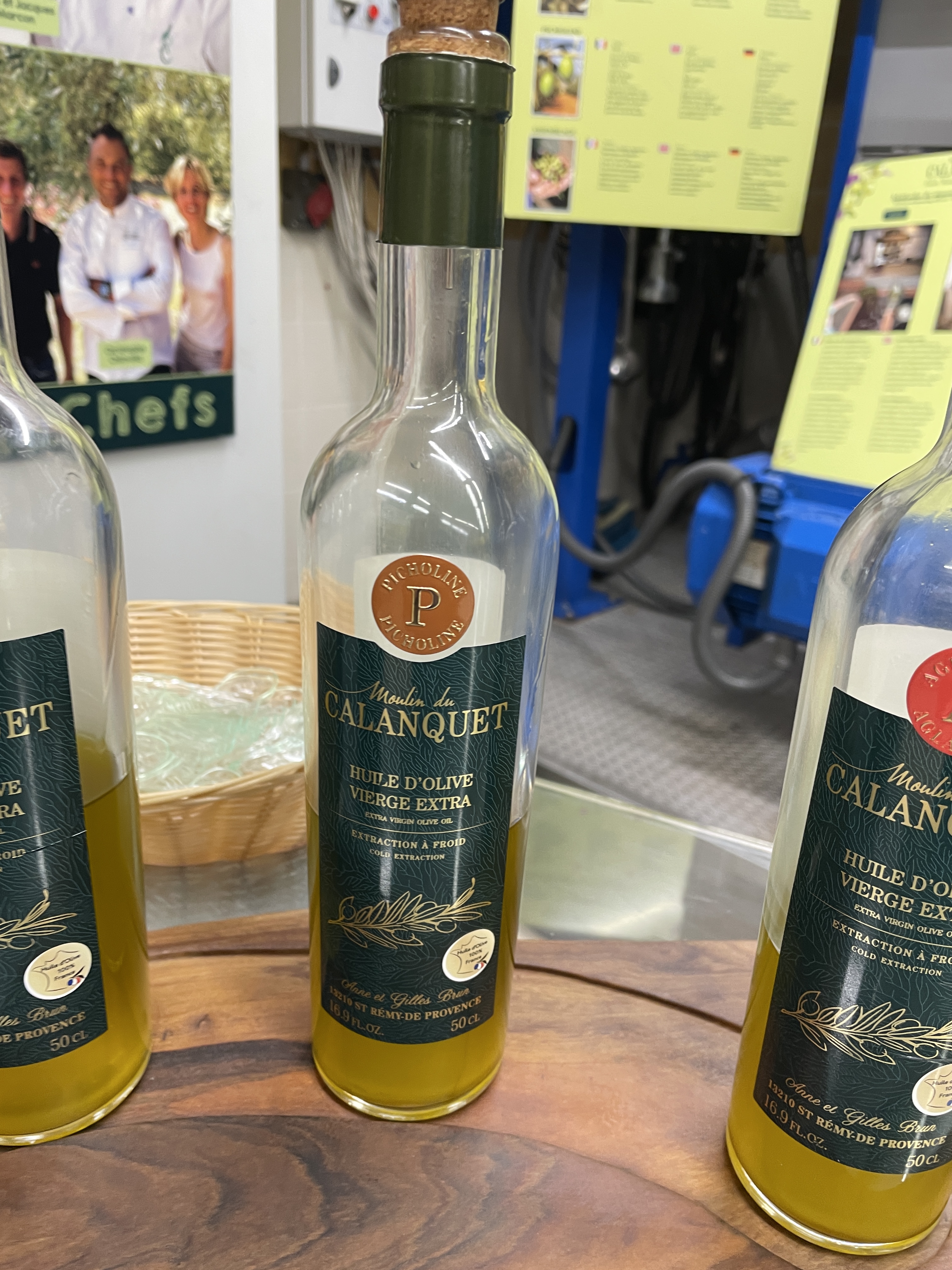


A enjoyed the science of it all, though we did all wonder how anyone ever makes a living growing olives, given that it’s around seven years before a tree so much as fruits, only around 5-10% of the flowers actually end up as olives, and after 35 years you pretty much need to replace the tree! I’m not sure why you’d take it up in the first place, but I’m glad they do. We tasted a number of different oils from different types of olive, as well as a lot of the other delicious things (jams, mustards, honey) that they make or produce there. We left the shop thoroughly loaded up with goodies, as well as some lovely shower gel, and some lip balm. If only exporting to the UK was not now prohibitively expensive thanks to the idiocy of Brexit.
From there, we headed towards Les Baux, which was supposed to be the first stop on our planned loop for the day. The weather was bit dubious, the initial fog having dissipated but with low cloud and grey skies replacing it. It didn’t stop Les Baux from suddenly looming out of the gloom as we rounded a bend in the road.

Les Baux-de-Provence is in the Alpilles, to the northeast of Arles and is named after the Provençal word “bauç” (a rocky spur). It’s why aluminium ore is known as Bauxite because it was first discovered here in 1821. Around 350 people live in this delightful medieval village, but it’s not short on people because it gets rammed with visitors. It took us a while to find a parking space, and we then had quite a climb to get to the entrance to the village. That, of course, is something of a given for such a defensible location. It’s so defensible that there are traces of human habitation there going back around 8000 years. The main evidence of human hands though, lies in the narrow streets and the whacking great big ruined castle, the Chateau Les-Baux-de-Provence, at the very top of the outcrop.
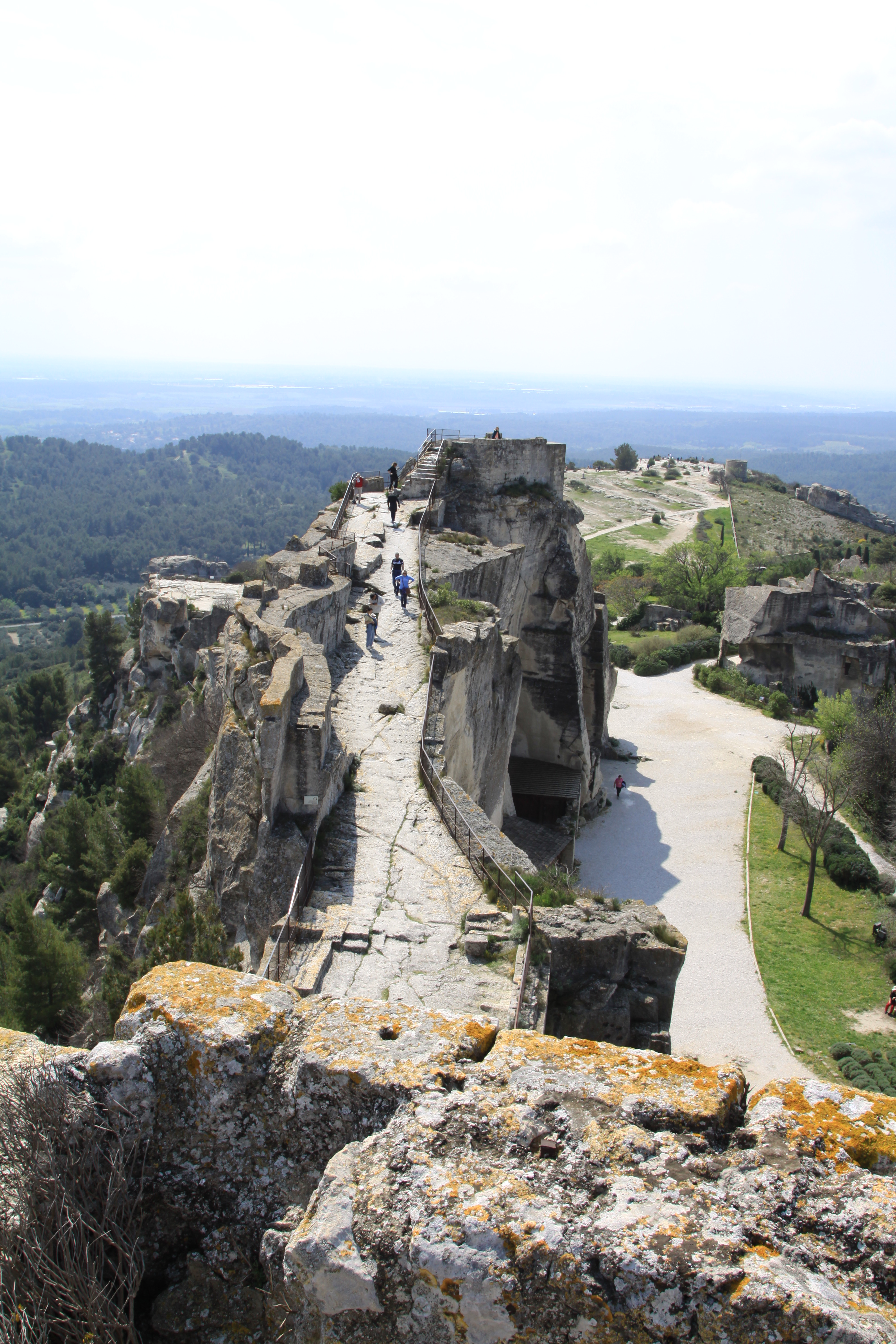
The Greeks and the Romans also settled here and limestone quarries have been in action since then at least. However, it was the middle ages when it became a major stronghold. “The fortress was built from the 11th to the 13th century over seven hectares. The princes of Les Baux controlled Provence for many years and they gained a formidable reputation. They were said to be descended from the Biblical Magi Balthazar and their coat of arms was a silver star with sixteen branches as a reminder that, according to the Gospel, it guided the three wise men to Bethlehem.”

Despite the fortress there were numerous skirmishes and the place had a turbulent military history, sitting as it did on the border of three different factions. “At the end of the Baussenque Wars in the 12th century the princes of Les Baux were defeated. After this the large castle began to be renowned for its highly cultivated court and chivalrous conduct. The estate finally came to an end in the 15th century after the death of the last princess of Les Baux. And thereafter it changed hands numerous times before ending up in the hands of the Hercule de Grimaldi, Prince of Monaco. The title Marquis of Les Baux is still traditionally given to the heir to the throne of Monaco.” Well there’s a surprise.
We strolled into the tiny town and were soon sidetracked into the Santon Museum, despite our reservations about how interesting it might – or might not – be. Actually, it was fascinating though small.

We made our way towards the castle, sidetracked briefly by the medieval pillory, and the gelateria, before reaching the entrance. Once inside it turned out to be even bigger than we had expected, and we were soon clambering around to enjoy the stunning views down to the Mediterranean. No one was going to sneak up on these guys without being spotted miles out. Things to see include a Romanesque chapel dedicated to Sainte Blaise, the Quiqueran Hospital and garden which was built in the 16th century during the Wars of Religion, and only ceased operation in the late 1780s. The garden has been restored and features full of local shrubs and other plants, and explains the medicinal, culinary, and decorative uses of the plants at the time.

It was while A and I were climbing the keep that things got a bit overly dramatic when, out of nowhere, a French air force Mirage flew over so low that we could see the whites of the pilot’s eyes! How we didn’t fall off, I don’t know. We returned to terra firma with alacrity after that.
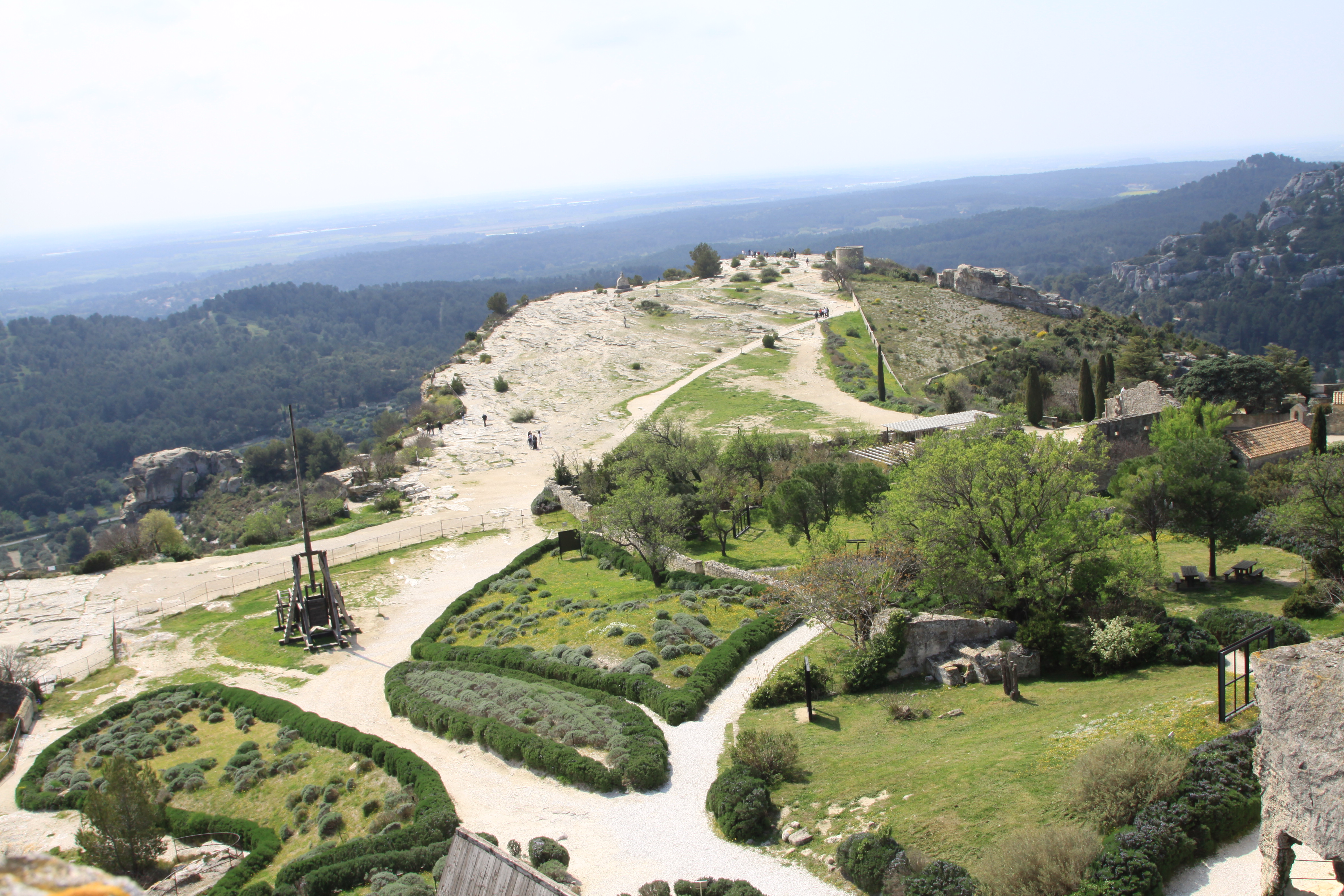
Elsewhere there are traces of the fine work done during the Renaissance period, and the remains of the castle’s bakery can also be seen, and then there’s the “Flamboyant Gothic” chapel with is 12th century at least, although it has been restored with the last 500 years. And if all of that’s not enough there are the troglodyte houses, carved out of the rock, with shelves carved into the walls, and fireplaces dug into the rock.

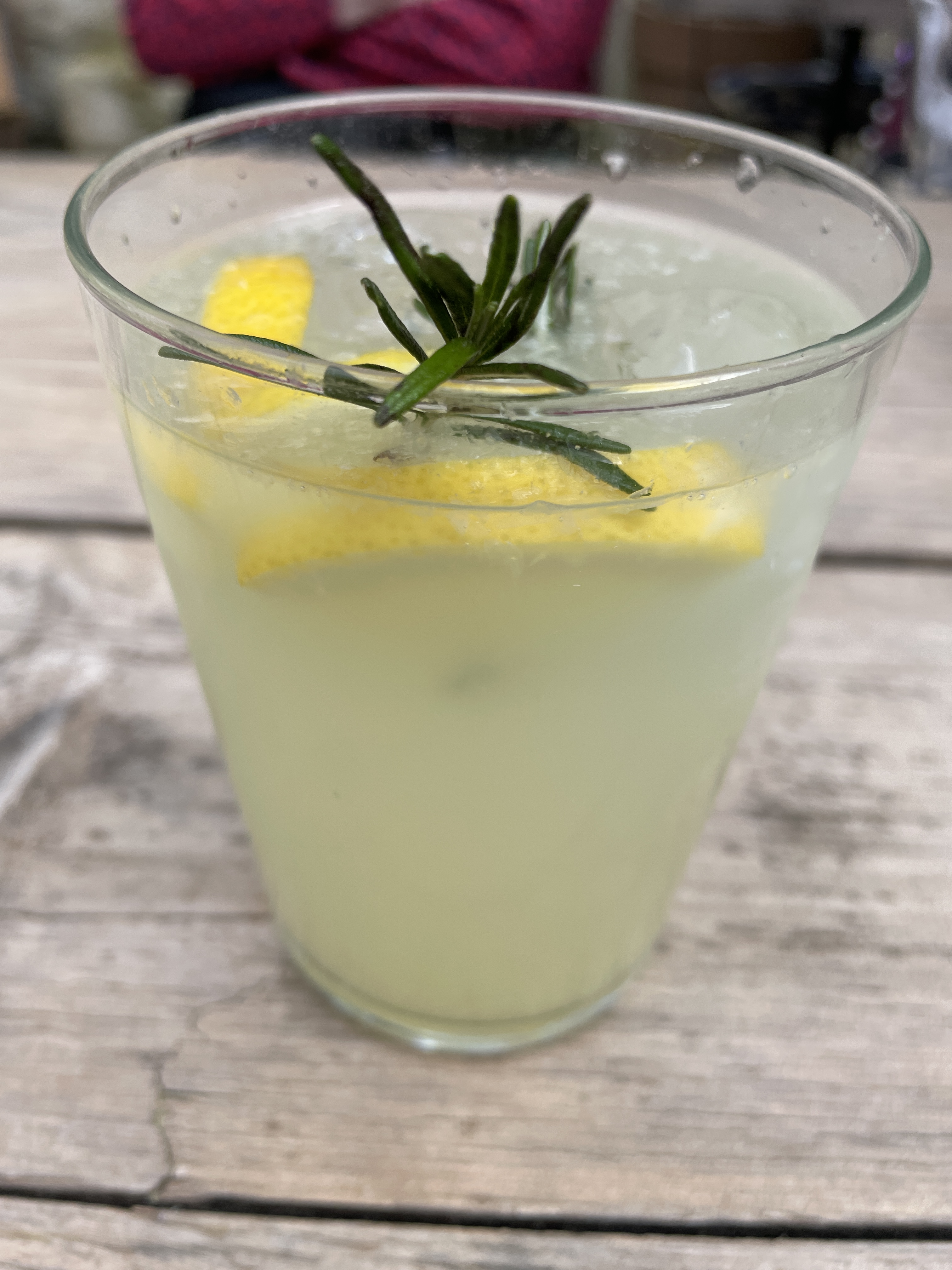
Before we knew it it was mid-afternoon and we’d not got anywhere near the other places on my proposed loop. It didn’t matter. Les Baux was fascinating. It was also thirst inducing so we stopped for a cold drink at a lovely little café set into the walls, before returning to the car and heading towards Saint-Remy.


On the way we stopped off at a vineyard I had wanted to check out, the Mas de la Dame, where we bought a couple of bottles of the wine we’d drunk the night before, and planned to go back to collect more bottles towards the end of the trip. And then we stopped off at the supermarché and bought supplies for dinner back at the apartment.

 Smtfhw's Travels