Wednesday 18th March, 2026 – Athens
Having spent a lot of time looking at the Acropolis, it was now time to get up close with the cradle of democracy. We had not booked in advance, assuming (correctly as it turned out) that it would be fine to just fetch up and buy tickets on the day, given that March is not busy in tourism terms. First, however, we had to find our way through the maze of sidestreets that separated us from our target. Assuming we’d be walking a lot, we caught the tram to Syngrou-Fix, and then started wending our way upwards and sideways from the main road. The pavements are not always the best, and parked cars often mean you need to walk in the road, keeping a very wary eye out for moped riders, to whom it seems the rules of the road do not apply!
Anyway, after about 20 minutes we found ourselves on a wide, car-free boulevard, Dionysiou Areopagitou Street, which runs aorund the south slope of the Acropolis. It is named after Dionysius the Areopagite, who is supposed to have been the first Athenian convert to Christianity after Paul’s sermon. We didn’t walk all of it (it apparently runs from somewhere near the Arch of Hadrian and ends near Philopappos Hill where it continues as Apostolou Pavlou Avenue which we’d been on the day before. The layout of the city, and just how close together everything is, was becoming a lot clearer now. It was also a relief to be away from traffic.
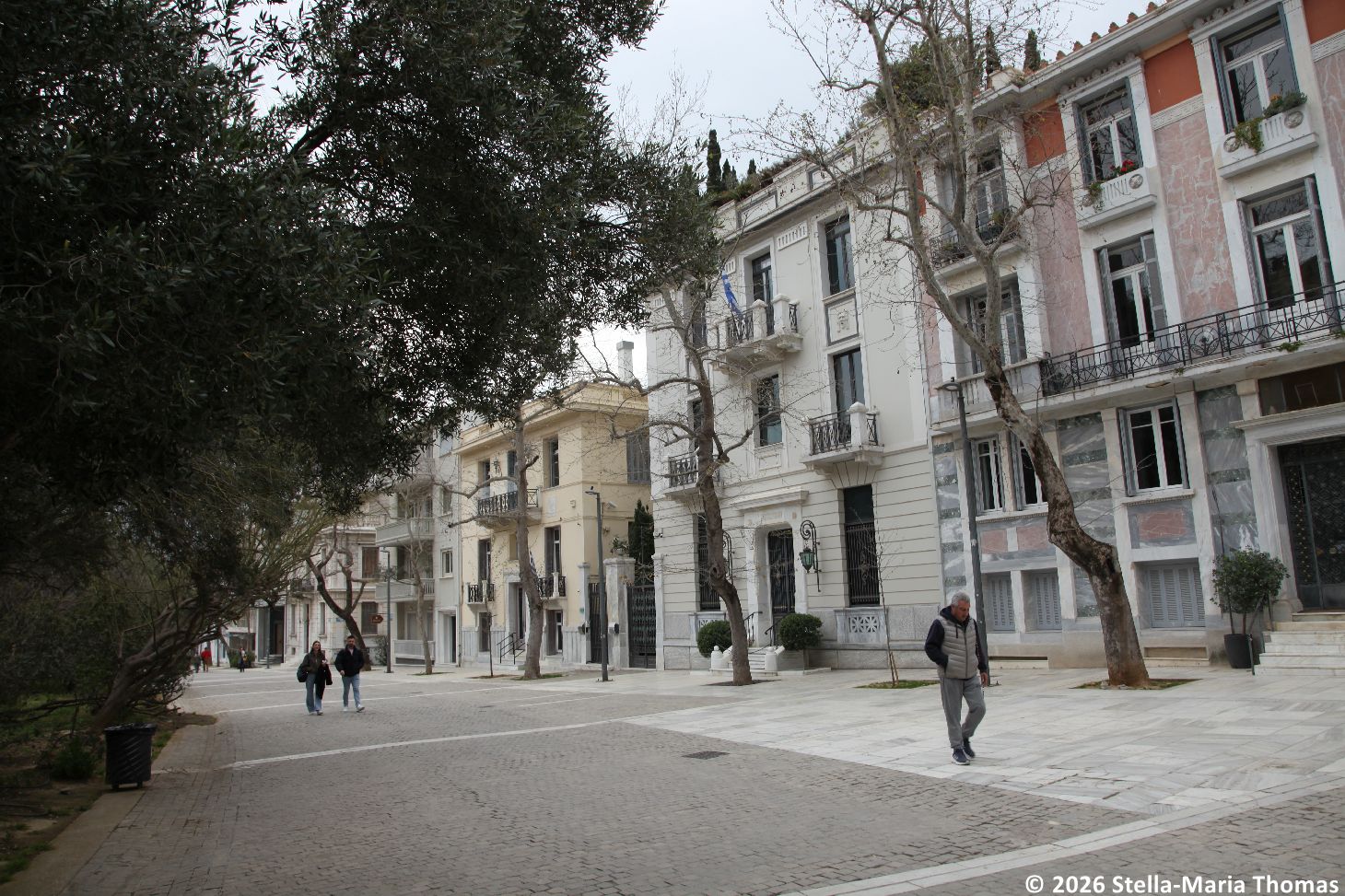
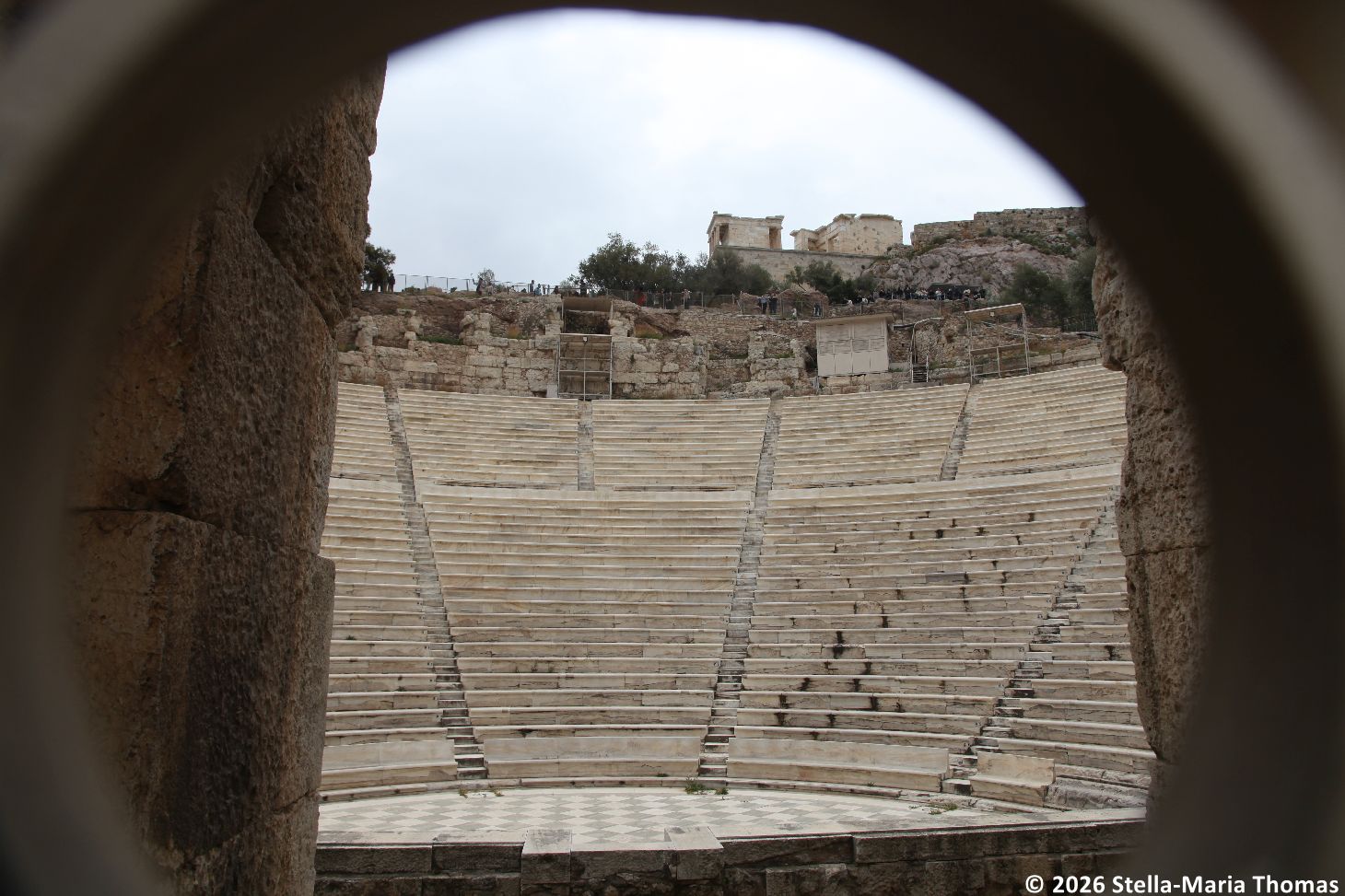
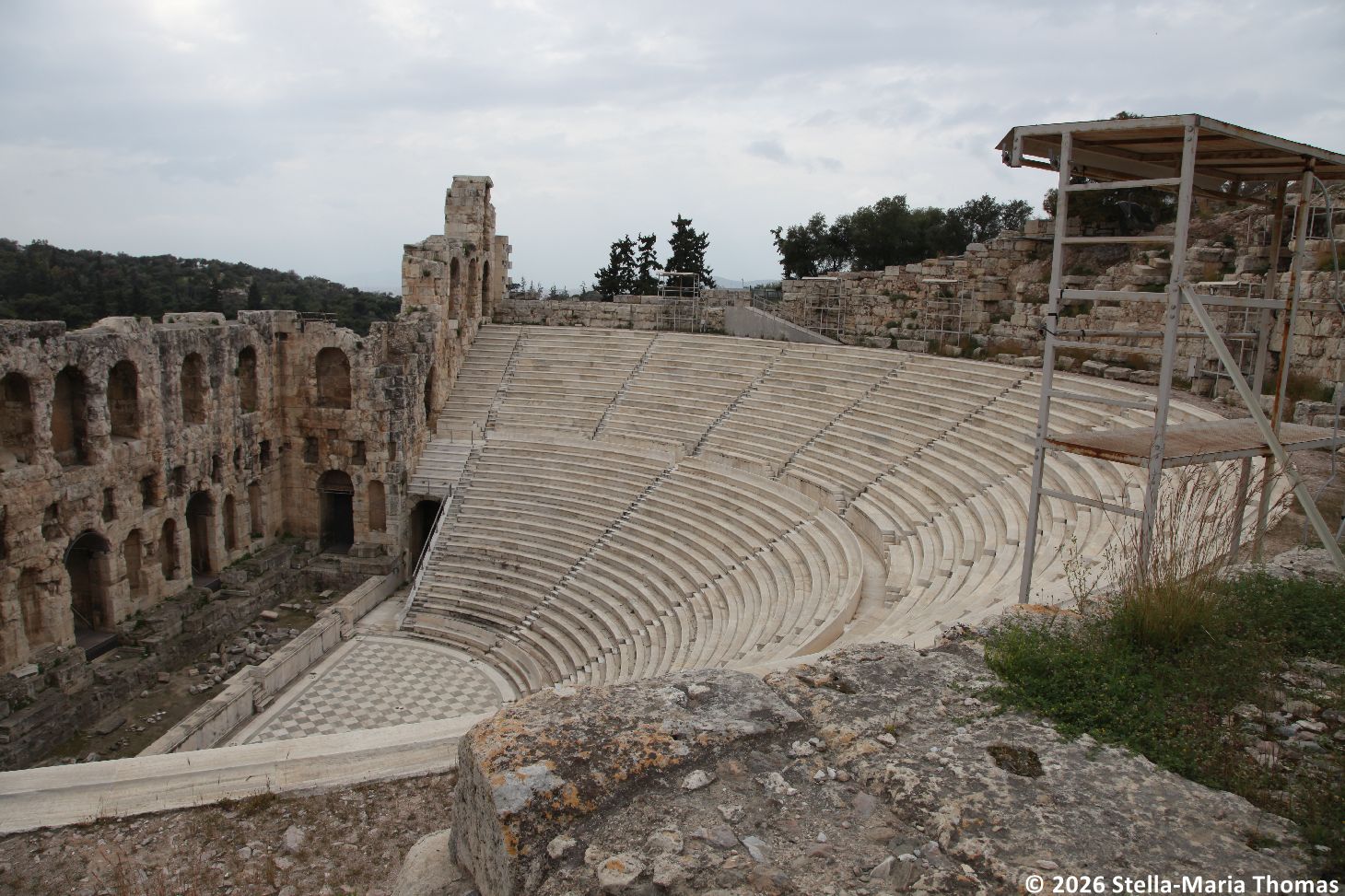
There are some very fine houses along the southern side of the street, and there is also a good close up view of the Odeon of Herodes Atticus, built in 161CE by the orator Herodes Atticus in memory of his Roman wife, Aspasia Annia Regilla. Despite it being a ruin, you still get a good sense of how it must have looked back in its heydey, complete with a cedar roof. It’s still used and I am told that “on September 28th, 2024, the Greek symphonic death metal band Septicflesh performed a live set with an orchestra.” I’m not sure I would have wanted to hear that, and I’m also completely unable to get my head around the idea of “symphonic death metal”.
Further down the street is the Acropolis Museum where we planned to start our day. Here we ran up against yet another of the “benefits” of Brexit, in that there is a discount for visitors who are 65 or over, but not for us, because it’s only for EU citizens…
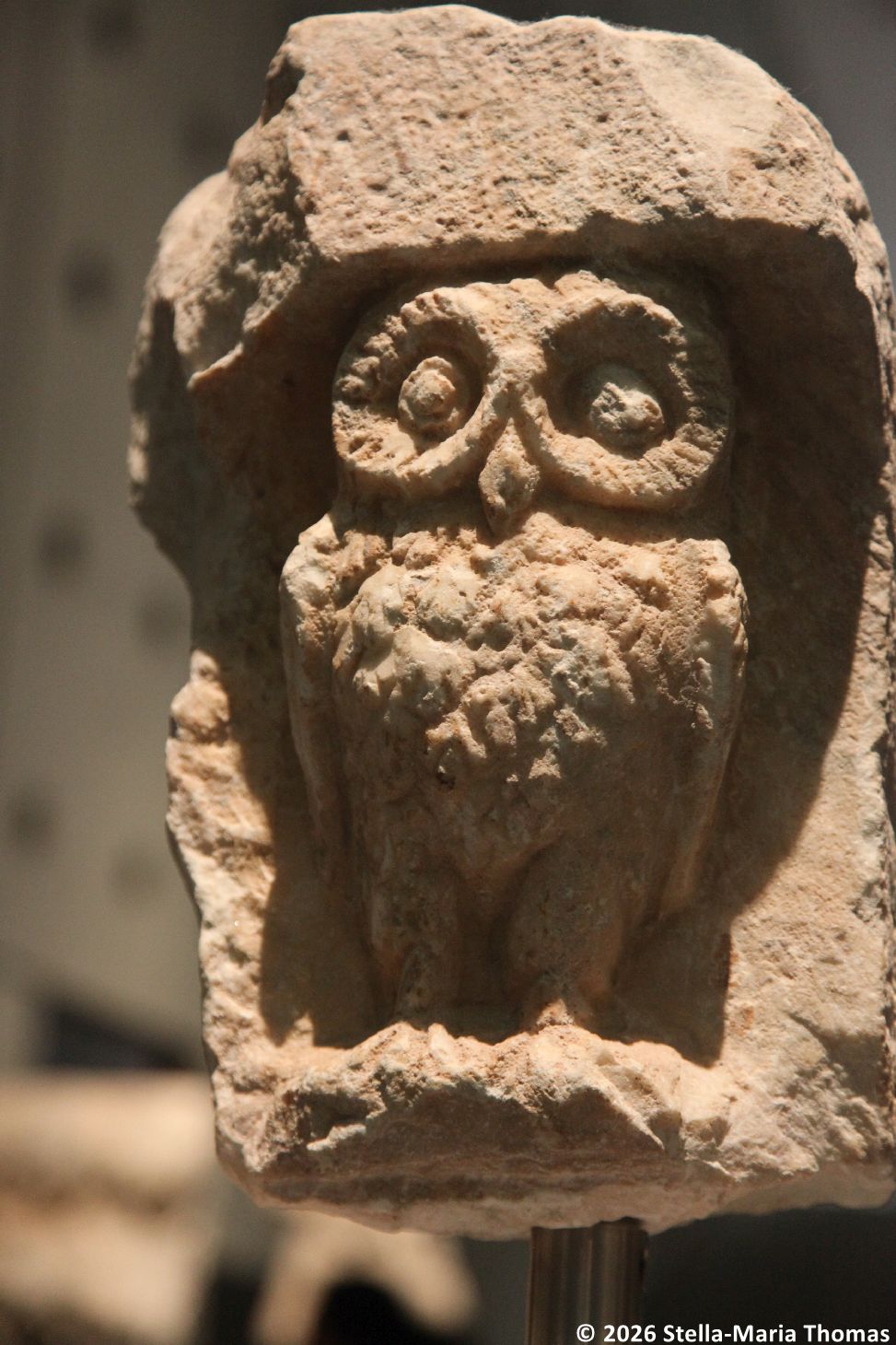
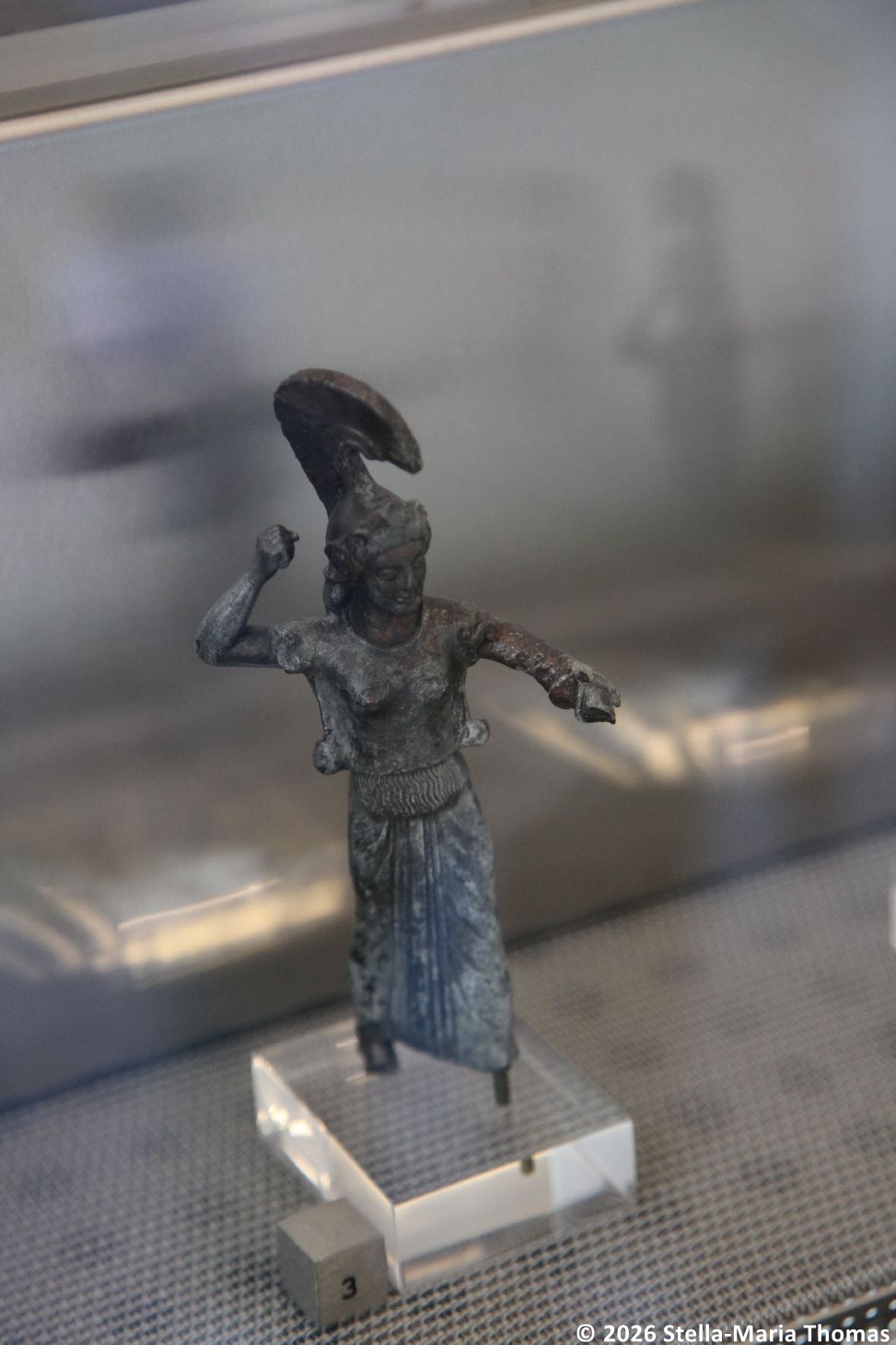
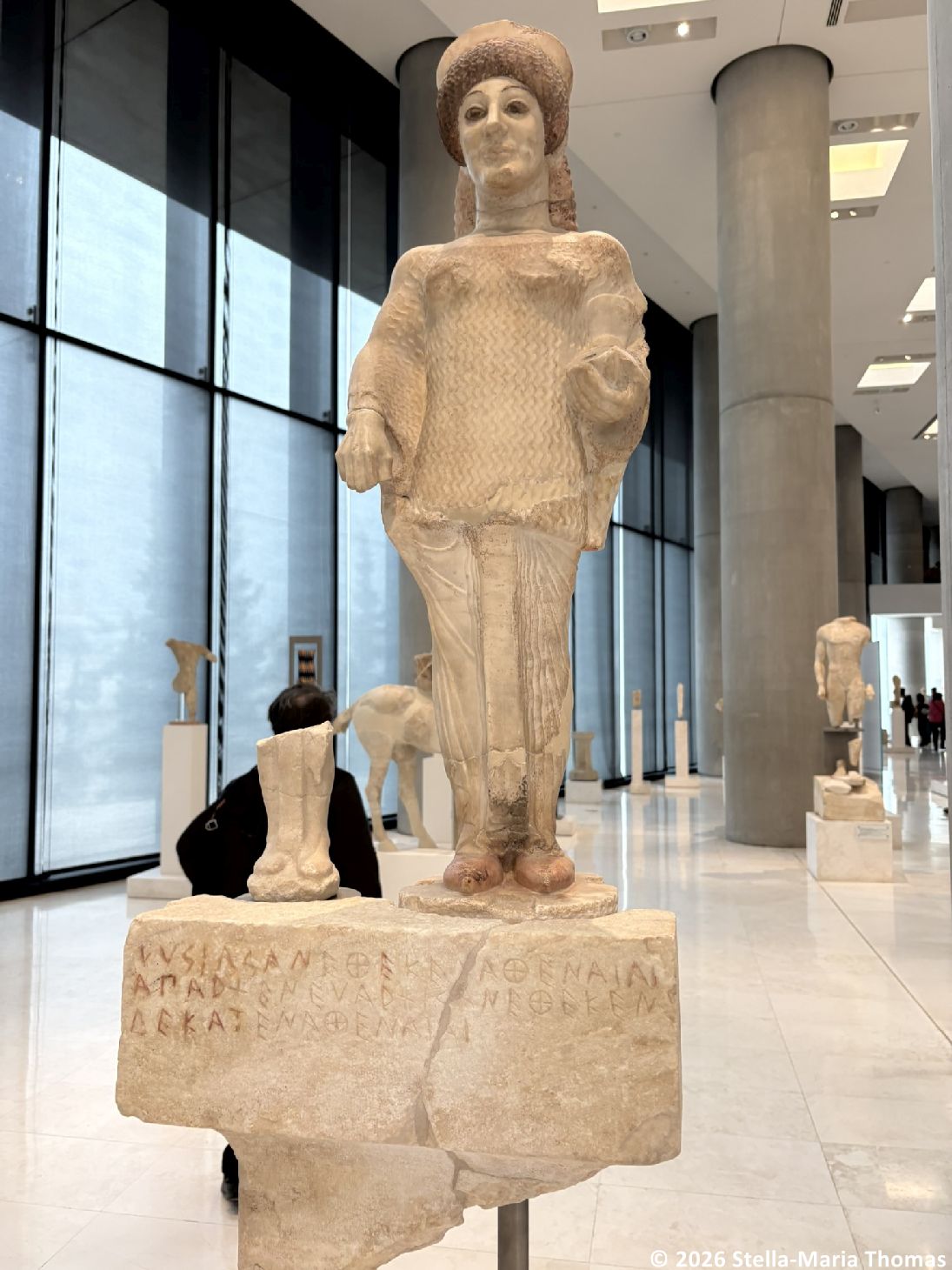
We paid up and grumbled about the stupidity of Brexit, but then got stuck in to the museum itself. It’s a sensible option if you want to understand the context when you actually climb up to the Acropolis. It’s also a fantastic museum in its own right. Bear in mind that you can take photos inside, just not in all the sections. This is not especially clearly signed, but rest assured a museum guard will hiss fiercely at you if you contravene the rule. It matters not. There is so much to see in there that you can easily lose several hours just looking closely at everything there is to see. If you’re pushed for time, then just go straight to the top floor to get an understanding of what the Parthenon would have looked like before the marbles were variously dispersed (and yes, as Brits, we’re sorry and really think the “Elgin” marbles should be returned from the British Museum now). The exhibits start with the Bronze Age settlements that sprang up on the hill, and goes on from there. It’s incredible just how many artefacts, some of them very very delicate and finely wrought, have survived, often intact or at least very substantially in one piece, for example, this statue of Athena (who is everywhere in the collection).
I’m pretty sure we missed some of the highlights (a handy guide is provided by the museum website – https://www.theacropolismuseum.gr/en/exhibit-highlights) but what we saw was fabulous. I was much taken with the pointy red shoes on this statue.
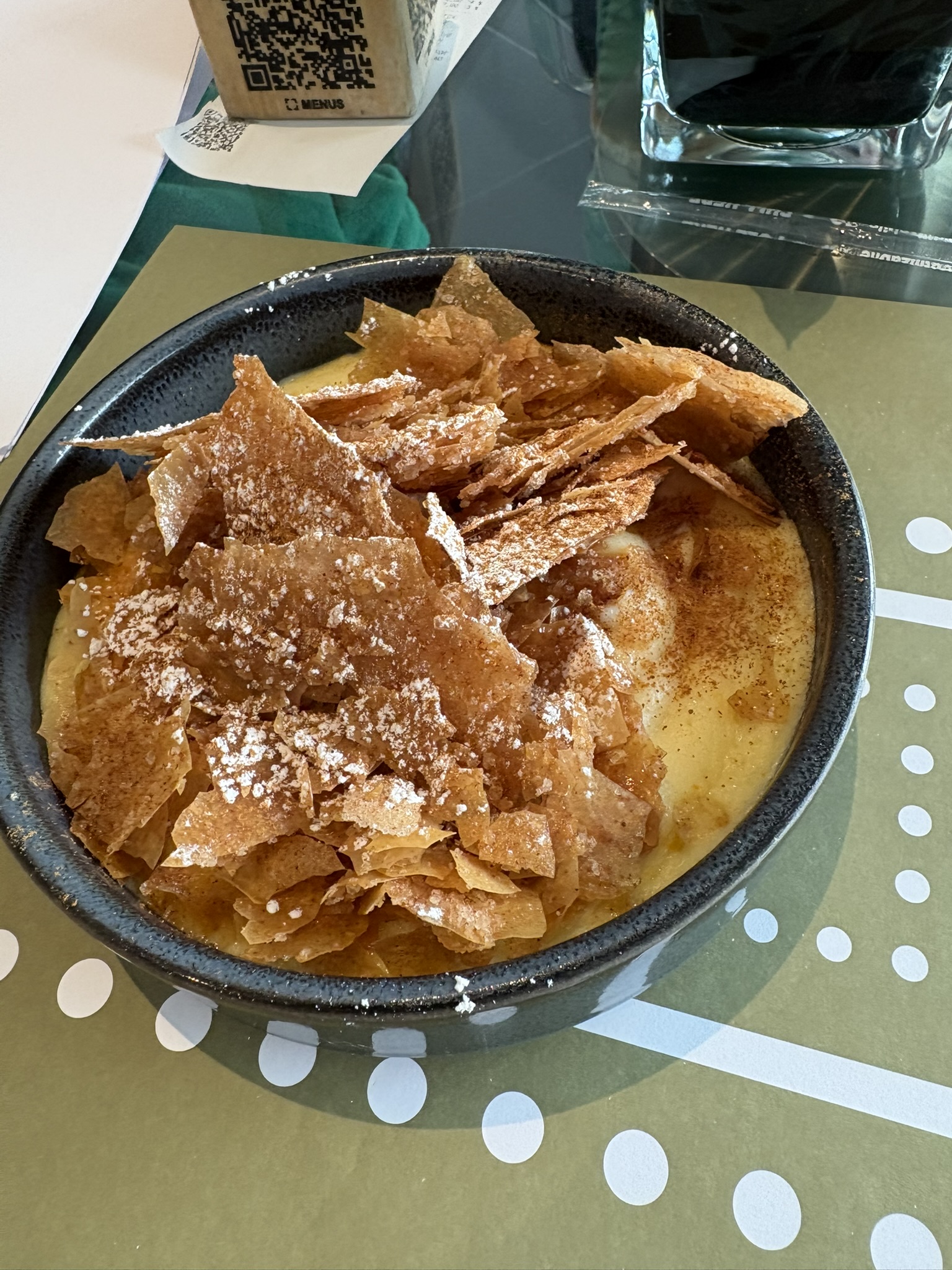
It had taken us the best part of two hours to get round the first two floors, and it was clearly now time for a coffee break. We made our way to the 4th floor where the restaurant was already busy even though it was early for lunch in Greece (just past noon when most people don’t lunch before 1pm or later), but we managed to get a table and enjoy the view. There is an terrace outside but the weather was cold and it was blowing a hooligan out there, so inside it was. The view is no less spectacular for being confined indoors. We ordered a cappucino each and a bougatsa, which is basically an excuse for custard. It was enormous and very, very good. It was also very sticky!
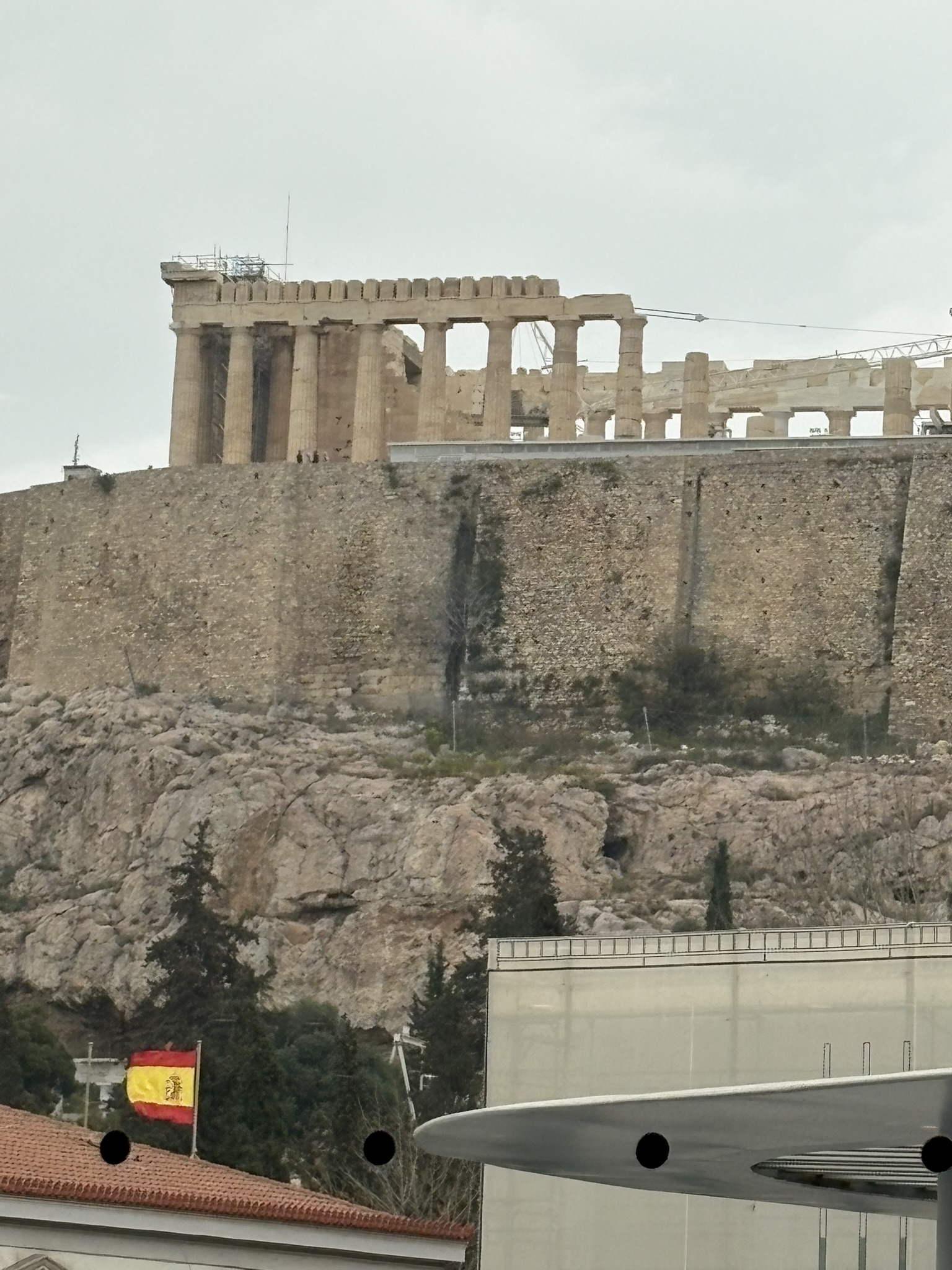
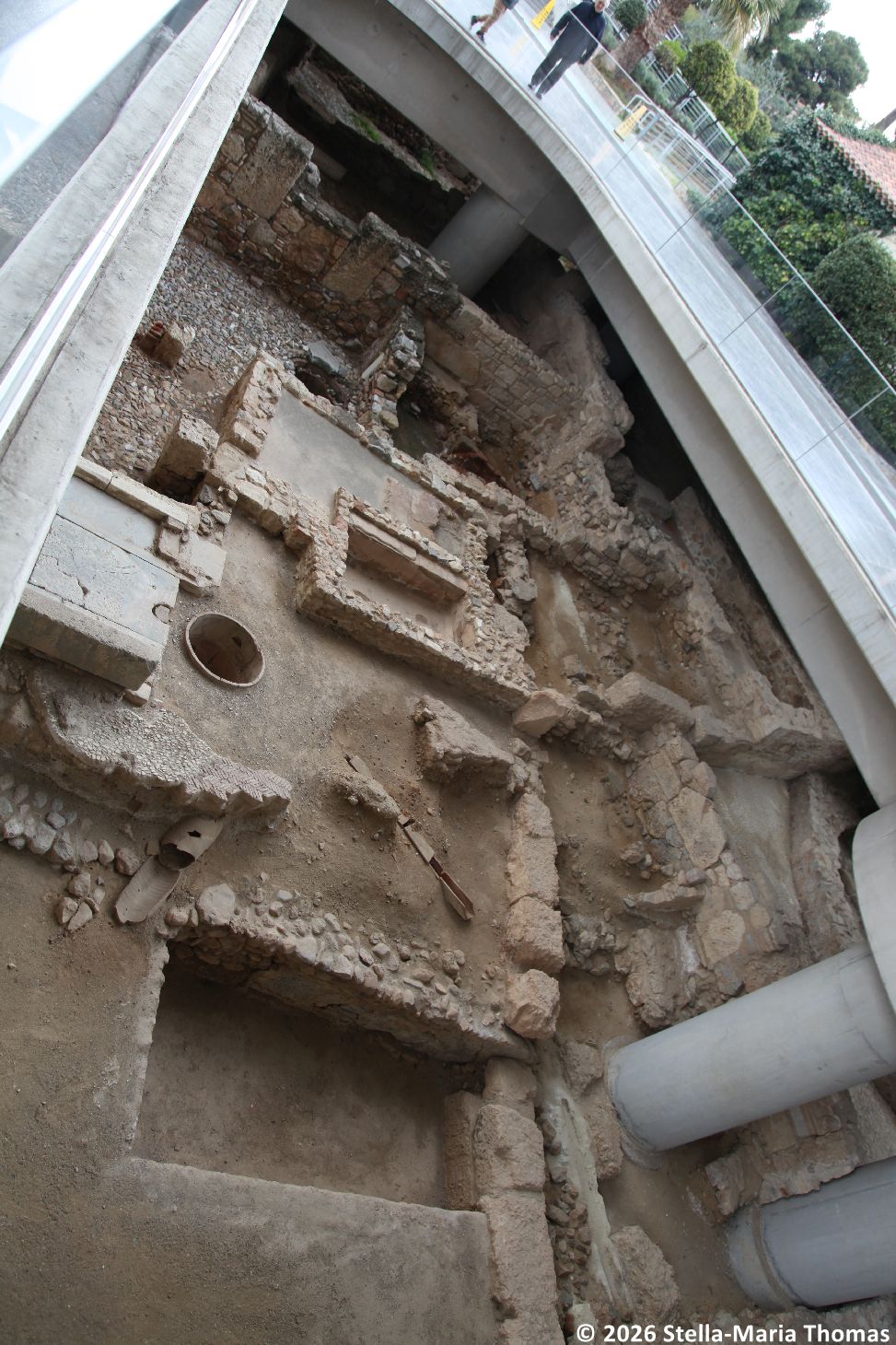
After that we went up to the top floor, before heading over the street to the entrace to the Acropolis. There is an excavation site underneath the museum, where you can walk through an ancient Athenian neighbourhood that survived from the Classical era to Byzantine times. We shelved that as a possibility after we’d dealt with the Acropolis, but accepted that we might not have time, especially as opening times are much shorter during the winter months with some places even closing at 3pm. It looked interesting though.
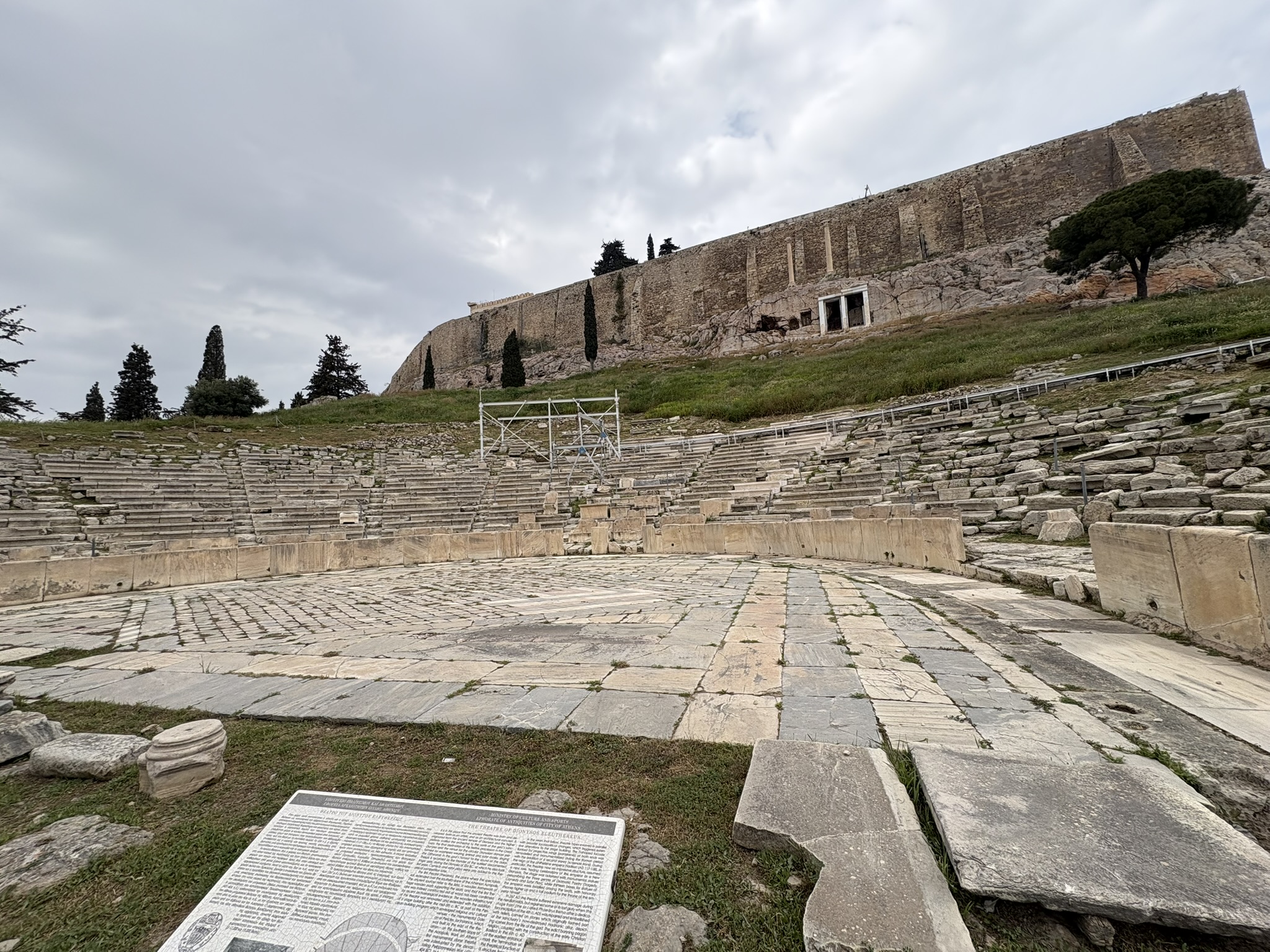
At the entrance to the Acropolis we once again found that we couldn’t have a discounted ticket… Stupid Brexit struck again. We’d been right about the lack of a need to buy in advance in March though. There were three people in front of us and that was all. When I’d been doing my research prior to the trip I’d been really struggling to get a handle on what was where, so, to save anyone else unnecessary effort, the Acropolis is the hill on which the Parthenon stands. The site also includes more than a handful of other buildings, to whit: Old Temple of Athena, Erechtheum, Statue of Athena Promachos, Propylaea, Temple of Athena Nike, Eleusinion, Sanctuary of Artemis Brauronia, Chalkotheke, Pandroseion, Arrephorion, Altar of Athena, Sanctuary of Zeus Polieus, Sanctuary of Pandion, the Odeon of Herodes Atticus, Stoa of Eumenes, Sanctuary of Asclepius, Theatre of Dionysus Eleuthereus, Odeon of Pericles, Temenos of Dionysus Eleuthereus and Mycenaean fountain. So just a few. You probably won’t manage to see all of them but we started at the Theatre of Dionysus Eleuthereus, where there are some very splendid posh seats with names engraved on them!
You also get an even better view of the Odeon of Herodes Atticus from inside the compound than from outside. Presumably we’d found the Ancient Greelk equivalent of Covent Garden!
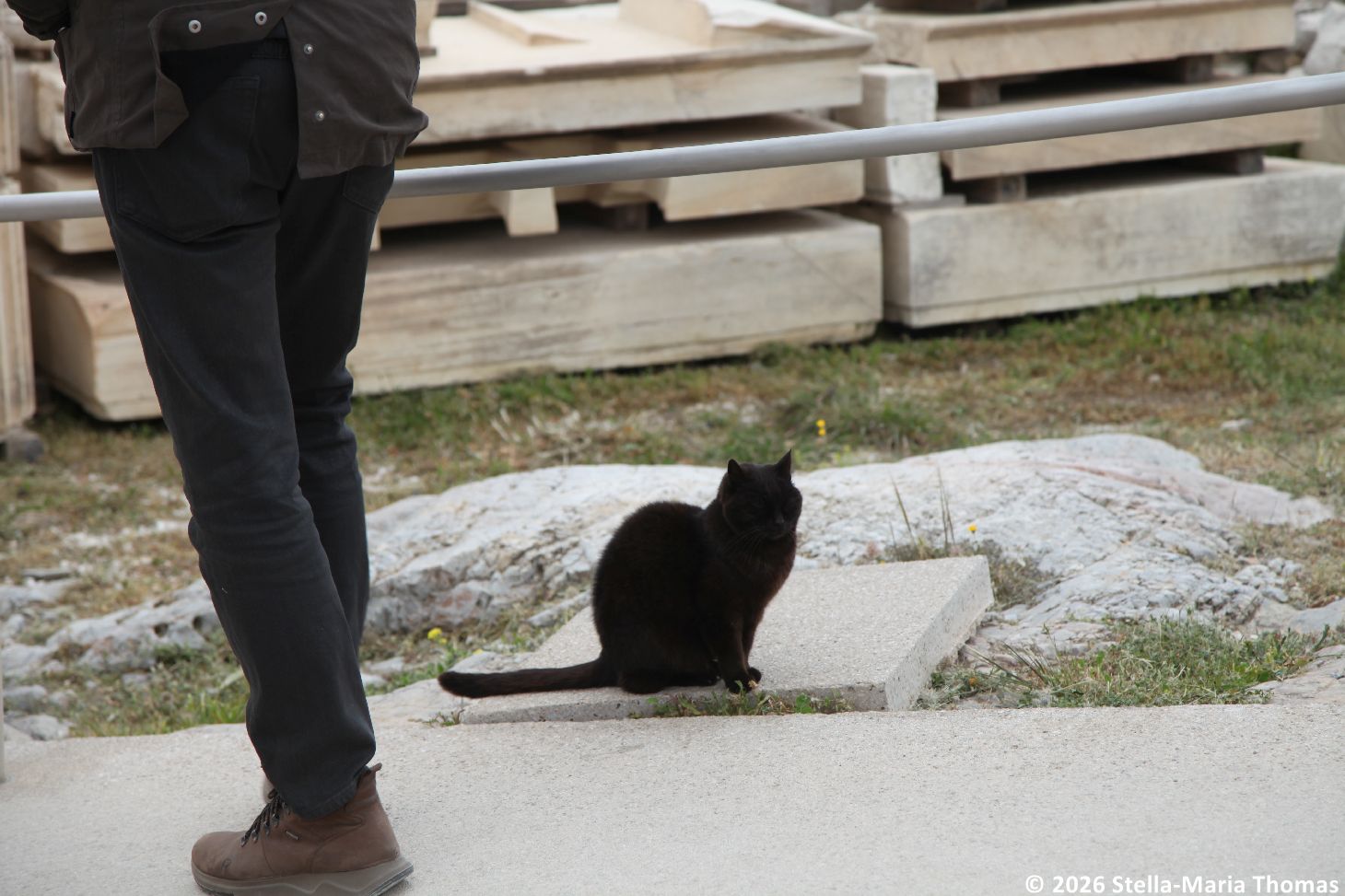
The climb was steady and was interrupted more than once by many of the “neighbourhood” cats, one of whom seemed to have adopted one of the site attendants and followed him around like a small black furry shadow. There were cats and parakeets everywhere, the parakeets wheeling around and squawking like bashees. They’re noisy little buggers but colourful and entertaining too. Quite often you can only hear them, not see them as they lurk in the depths of the many citrus trees that line the streets of Athens. We turned our attention back to the archaeology though, refusing to be sidetracked by the avian pests.
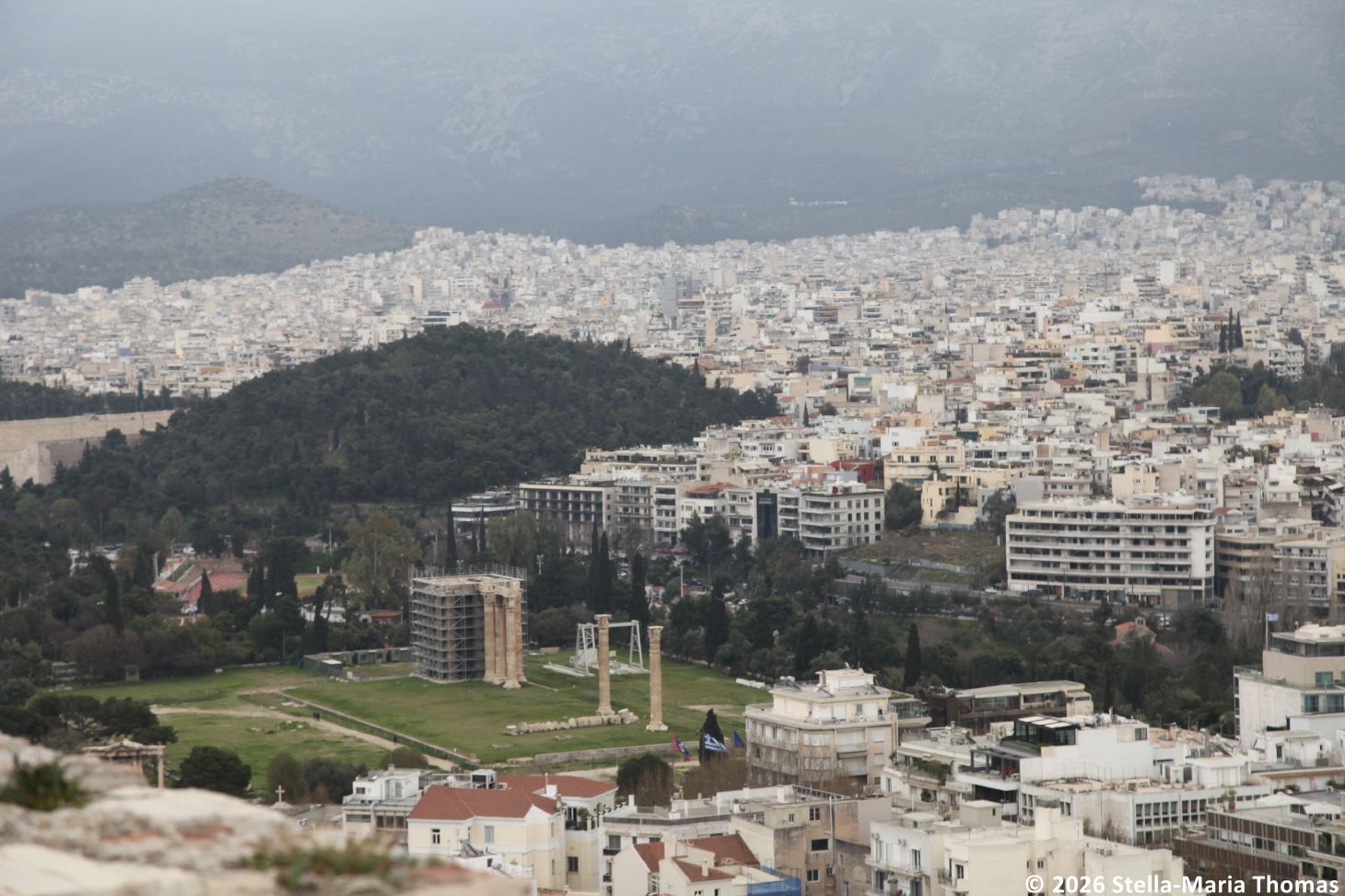
As you climb higher the views over the city become ever more impressive, with the sightlines stretching down to the sea. It’s fabulous and well worth the energy needed to get up there. You can also see many of the other sites you’ll want to visit, doe example the Temple of Olympian Zeus here.
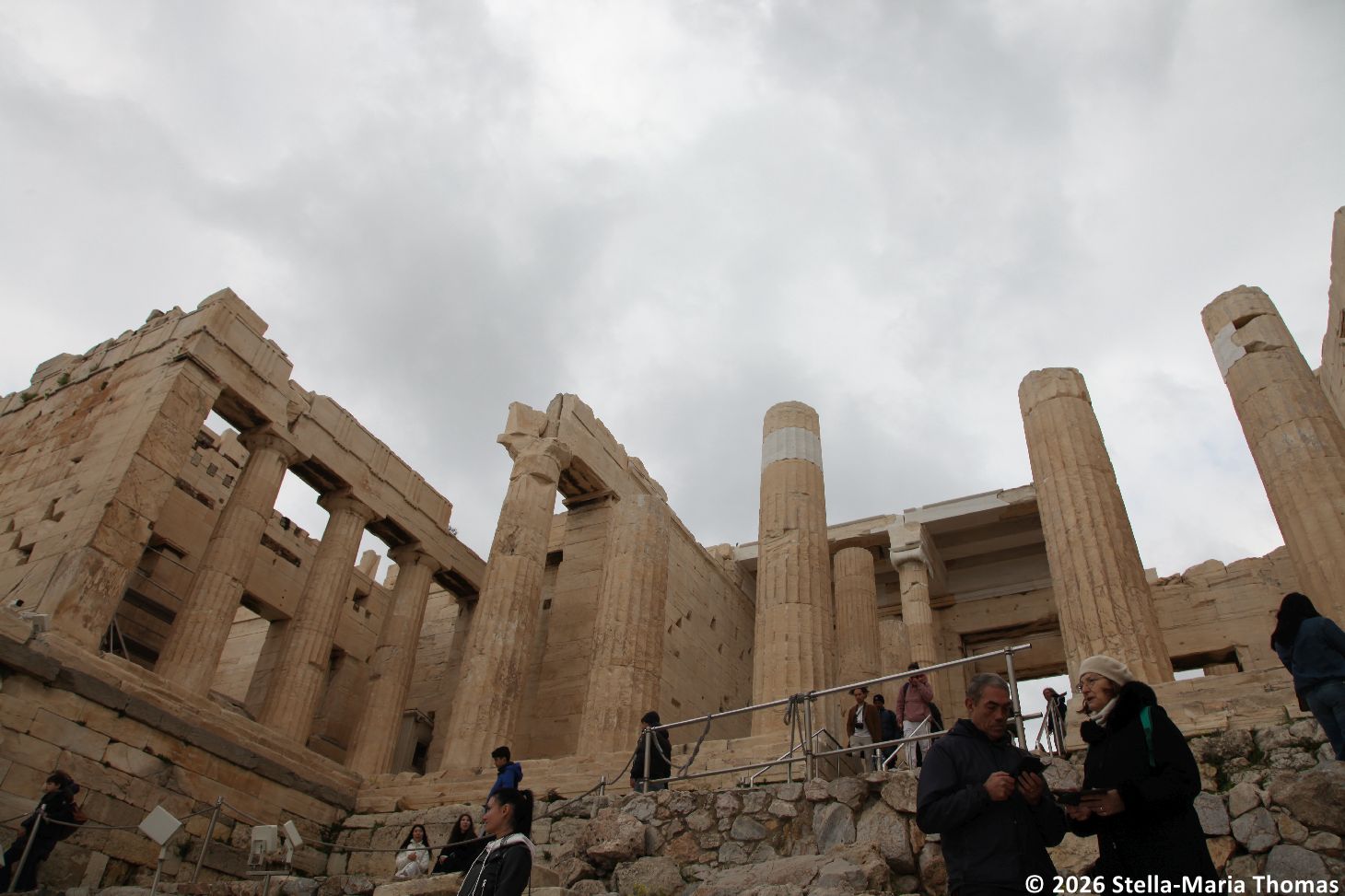
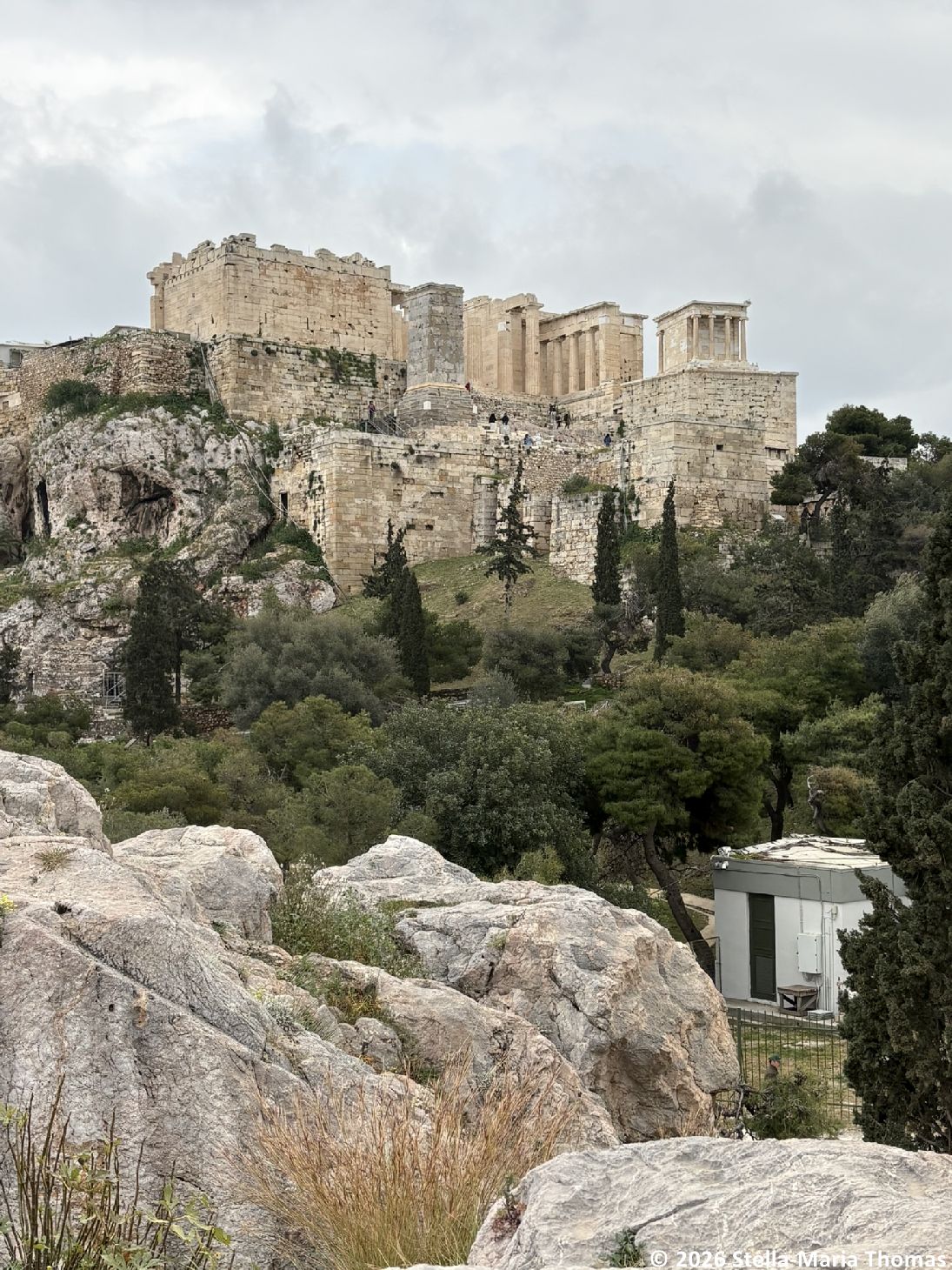
The climb continued, until we reached the Propylaea, the monumental entrance to the sanctuary, built between 437 BCE and 432 BCE. I can only imagine just how impressive it was in its prime, when everything was complete and painted in bright colours. As a traveller you’d have been able it see it for miles, and once you got up close and looked through it into the main part of the sanctuary it must have been overwhelming. Even on a cold, blustery day it looked stunning.
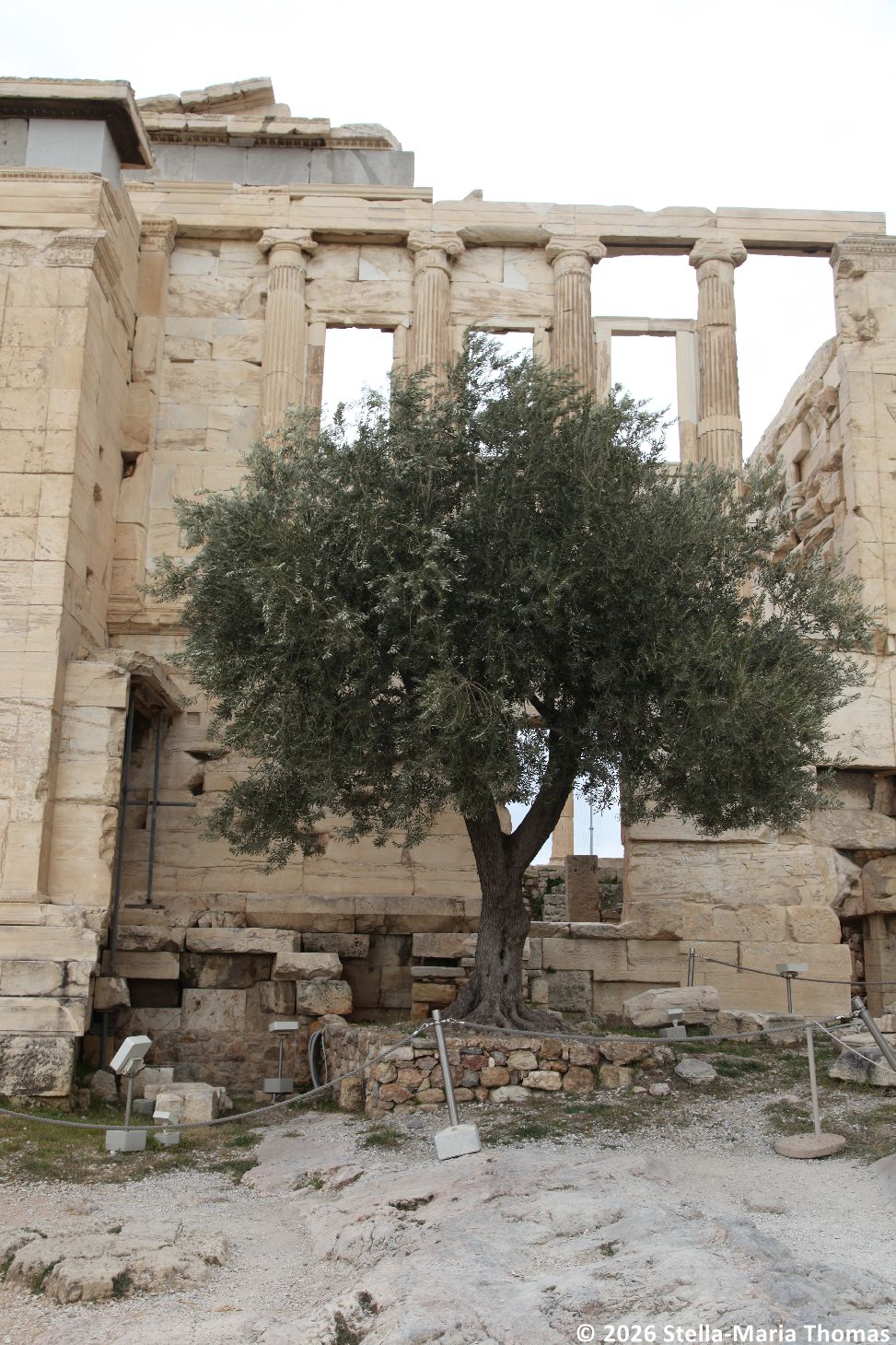
Once inside we were fighting not to get blown back down again. Walking down beside the Erechtheion at least provided a few moments of respite from it, and enabled us to find the sacred olive tree of Athena. Whether it’s really that old, I can’t say as I’m no expert in the aging of trees! It’s a lovely tree though.
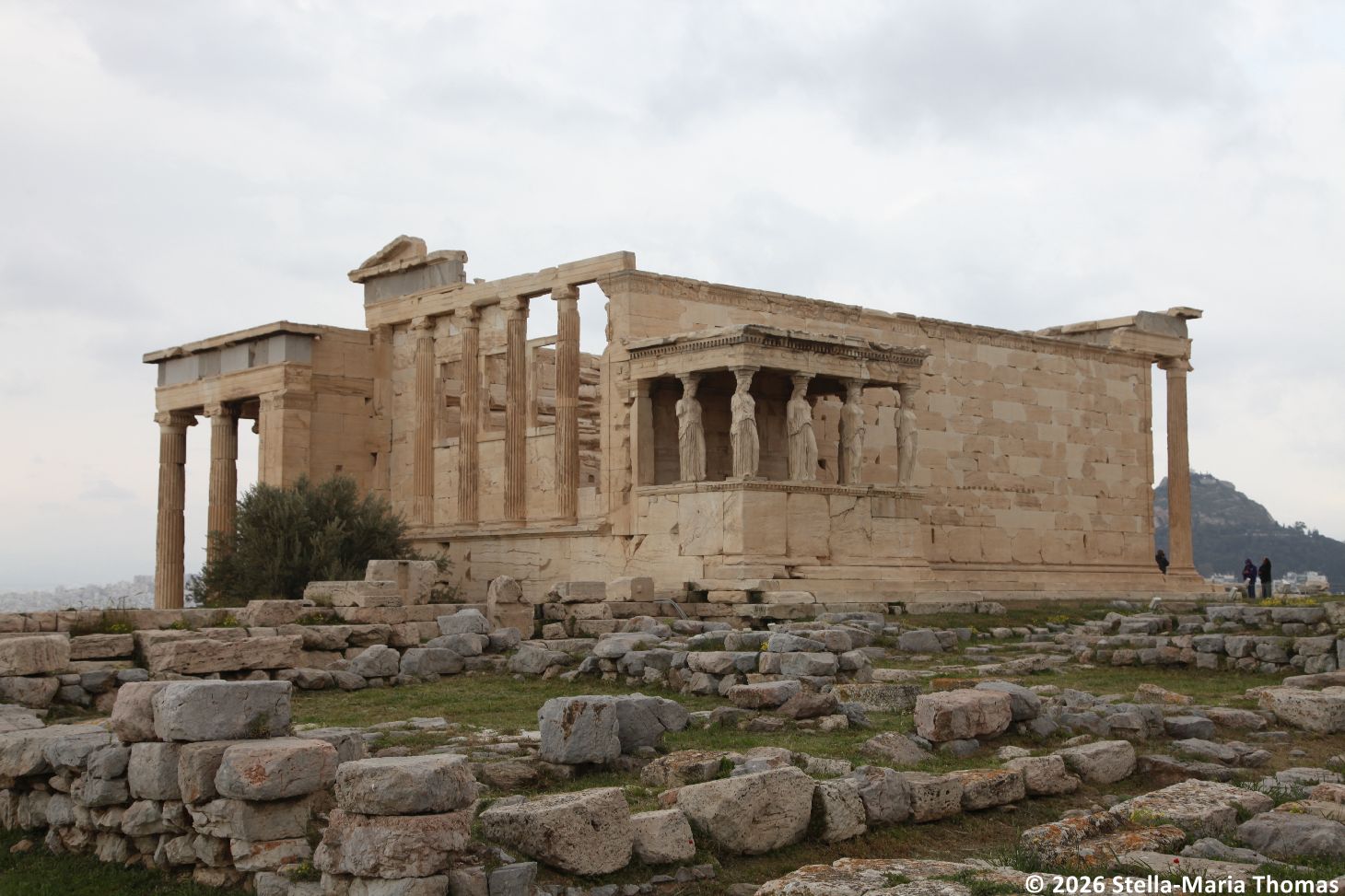
The temple itself is still splendid despite being in ruins.
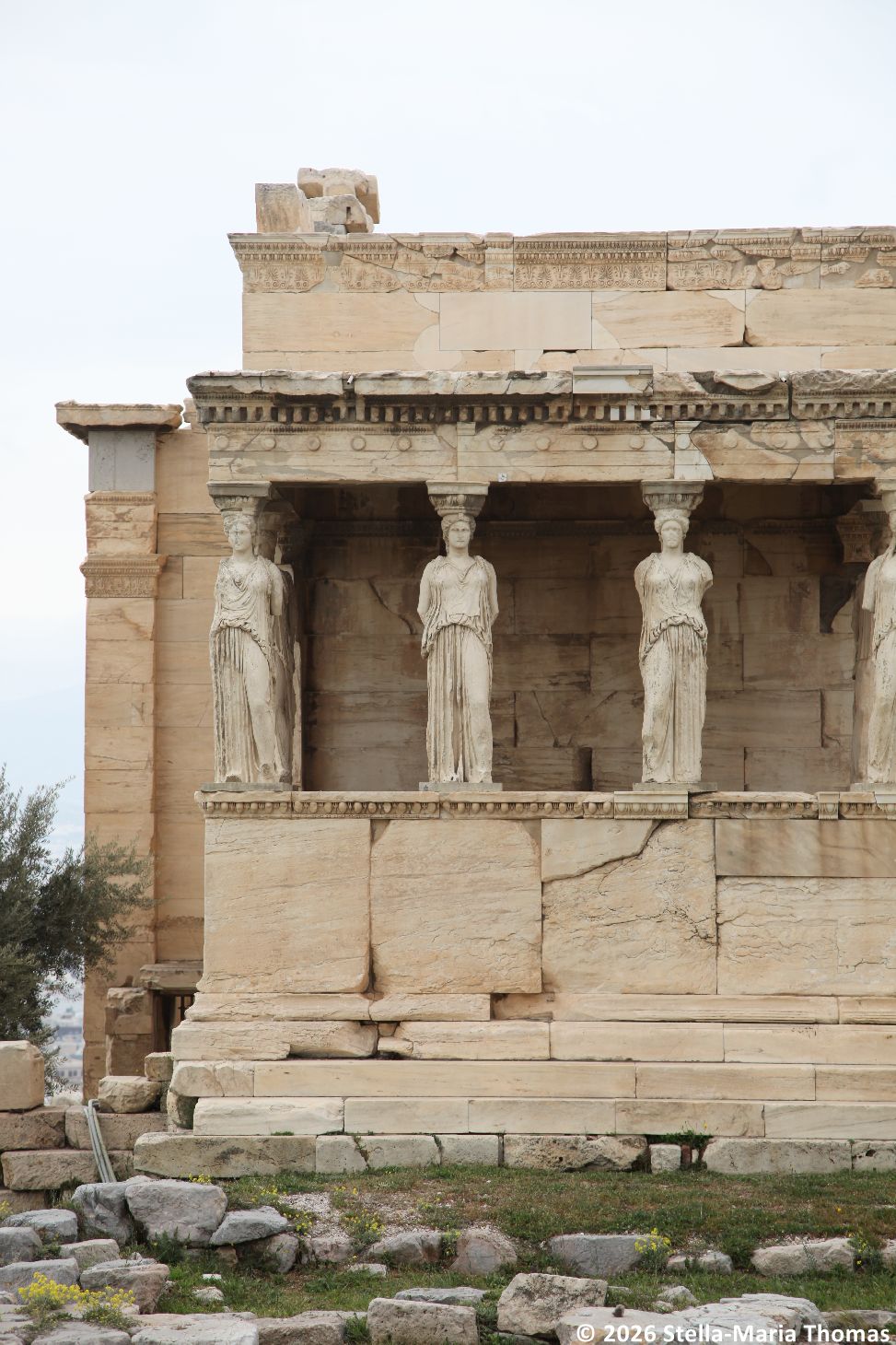
The maidens (Korai) or caryatids are quite wonderful, even though Elgin made off with one of them as well, and it’s now in the British Museum.
At least we didn’t feel the need to apologise to anyone for the tree. We did for the Parthenon itself though. The Parthenon was a temple dedicated to Athena parthenos, and is the one structure that everyone thinks is the Acropolis, and is probably the building most associated with Athens. Again it was built between 447 BCE and 438 BCE, though the decoration wasn’t completed for another 6 years. It has 8 columns on each short side and 17 on each long side, and was of course richly decorated with many, many sculptures. It’s pretty amazing even now, especially now a lot of the scaffolding that was holding it up during restoration work (needed to remedy the restoration work done in the mid-1900s that actually did more damage than good). The building material was Pentelic marble, which is very white and which came from a quarry cut into a hill that is now on the outskirts of the city, and the same stone is being used to replace some of the parts that need urgents restoration. Consequently, it pretty much glows in the dark if the conditions are right.
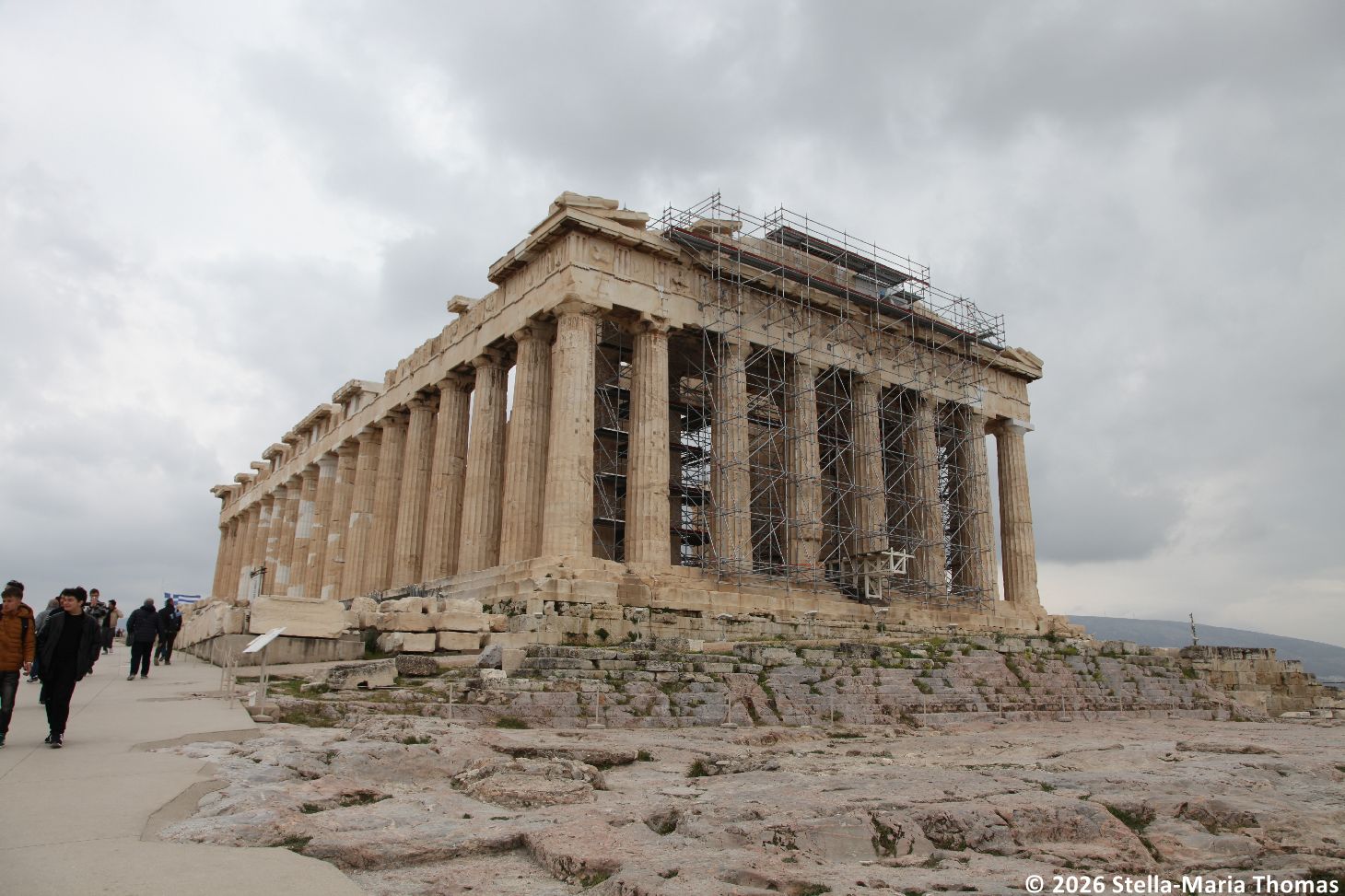
We started to wend our way back down, aiming for the north exit/entrance as opposed to the south one we’d used to get in. Before that we walked along the path towards the bottom of the hill which gave us some interesting perspectives on the hill and the positioning of the buildings. From there we went out and I decided I needed to investigate the Aeropagus hill. The Areopagus was one of the principal councils of ancient Athens, mainly responsible for judging cases of homicide, wounding, and certain religious offenses and it met here on the “Hill of Ares”, where the god Ares was supposed to have been tried by the other gods for the murder of Poseidon’s son Halirrhothius. Fictionally, as oppoised to mythically, Aeschylus (458 BCE) has the Areopagus as the site of the trial of Orestes for killing his mother Clytemnestra and her lover Aegisthus. And as if that’s not enough, it was also supposed to be where the Apostle Paul gave a sermon as mentioned earlier. Obviously there’s not a great deal of evidence for any of these events, but who cares? The stories are good. It’s a bit scruffy, with people seemingly happy to leave litter all over the outcrop, but again it provides views that are worth the clamber.
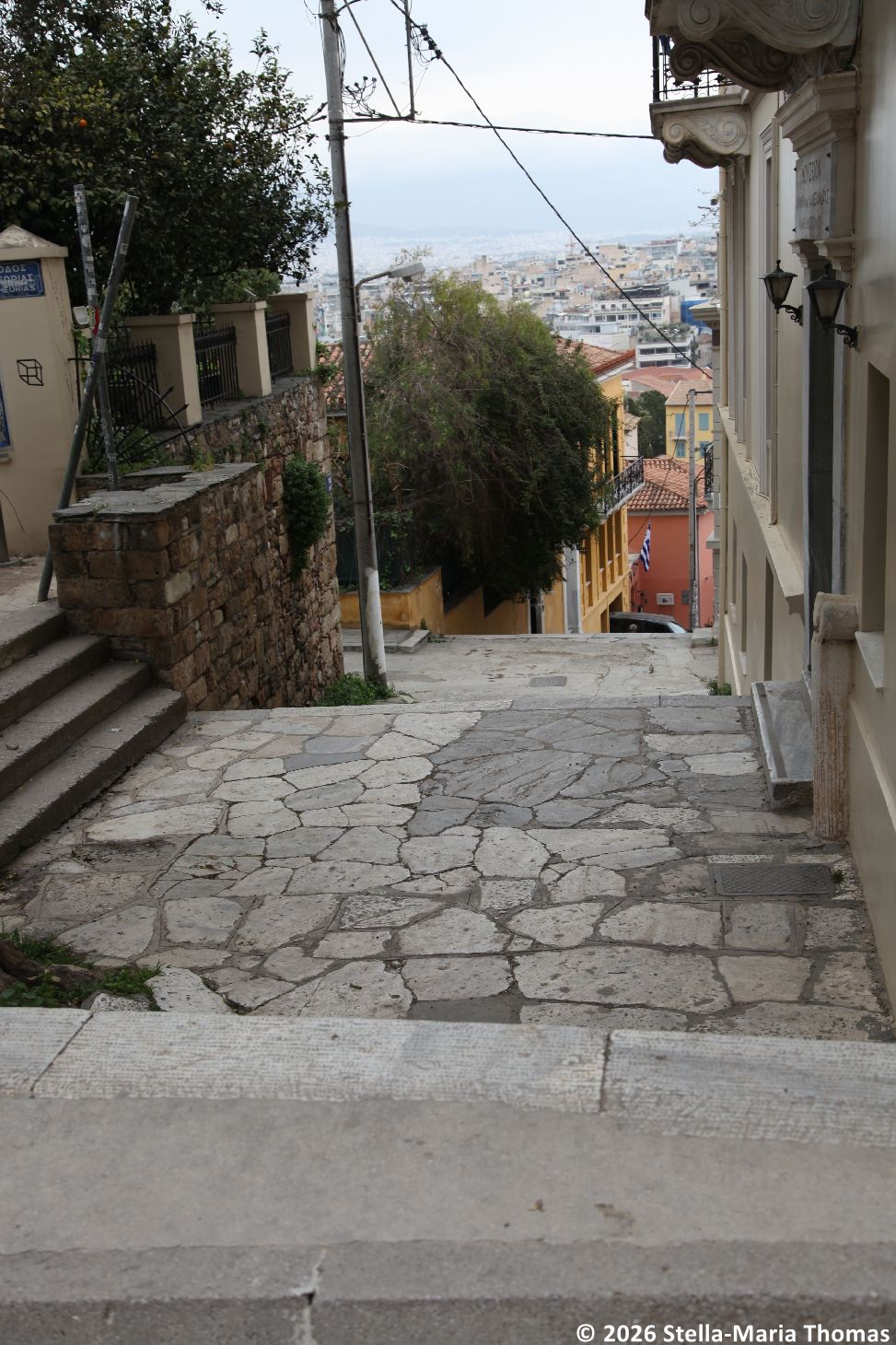
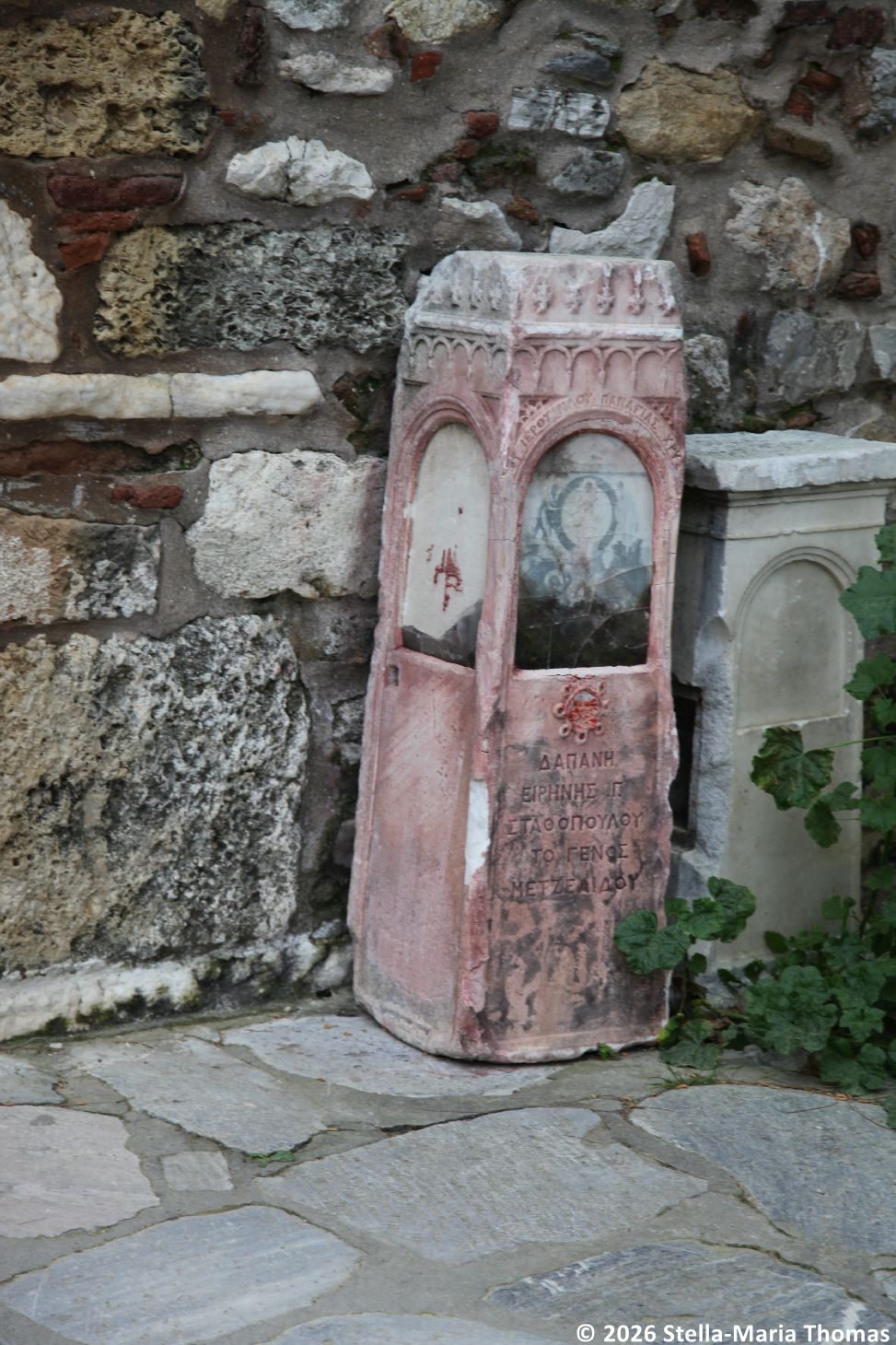
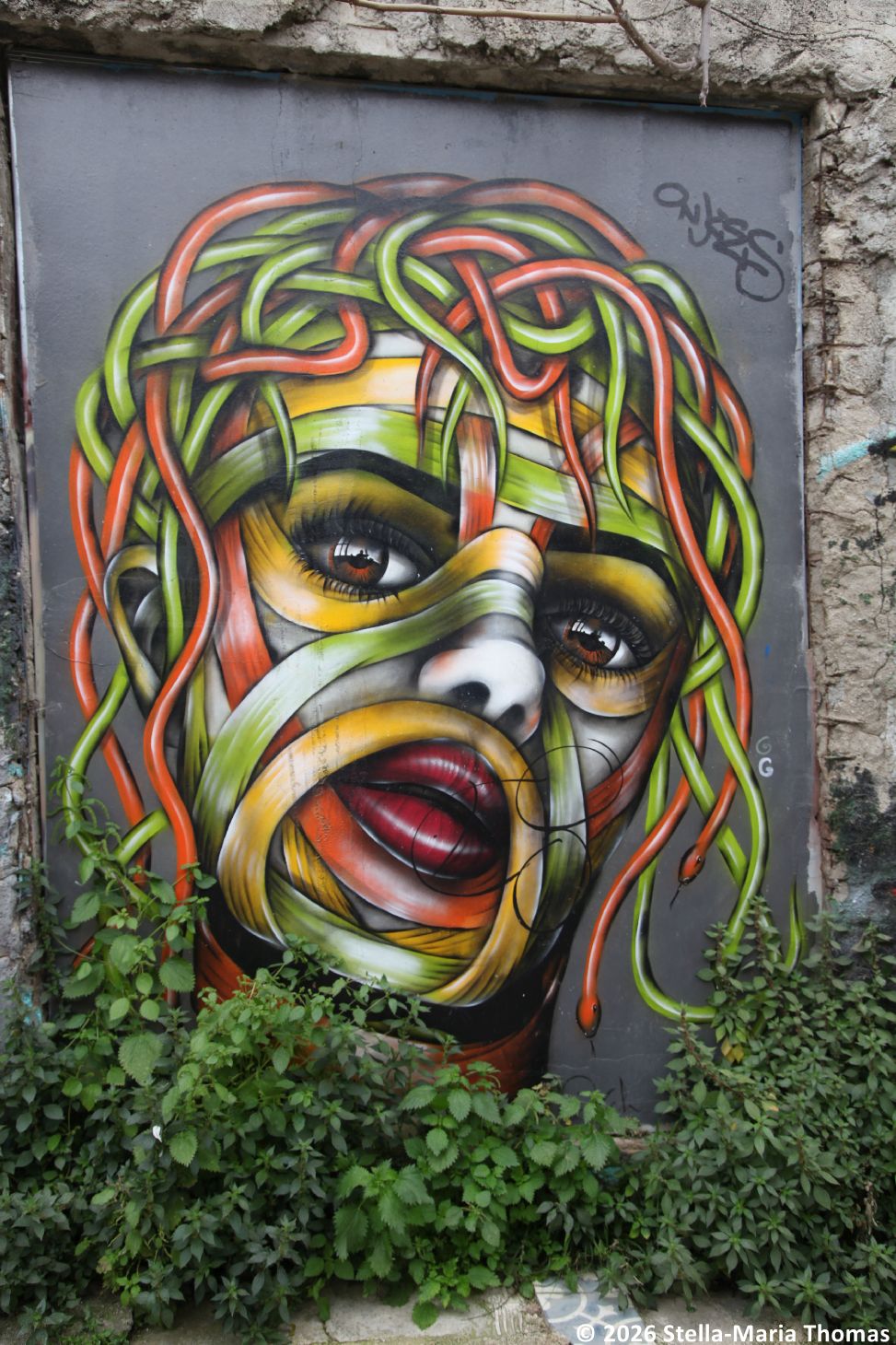
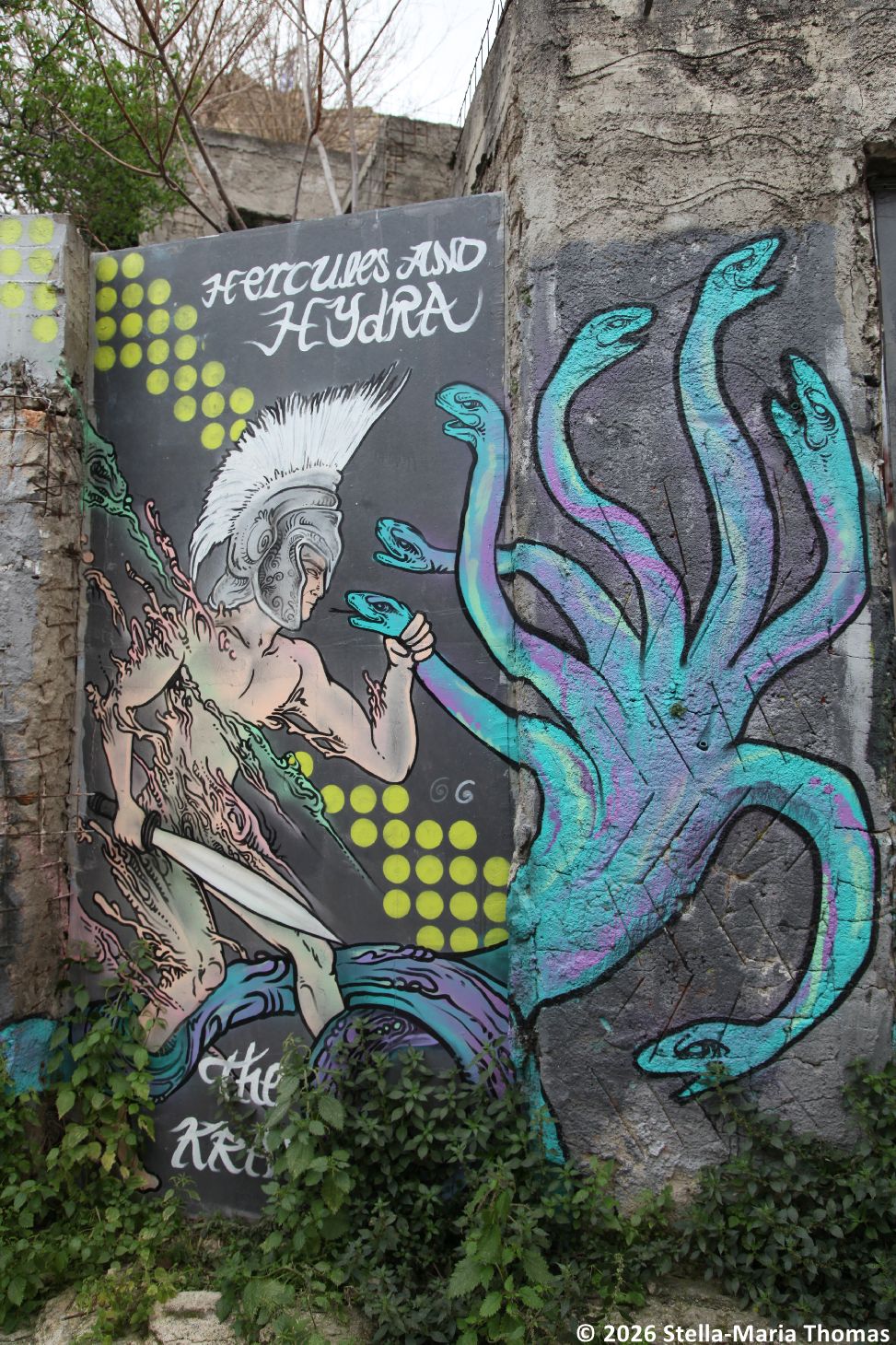
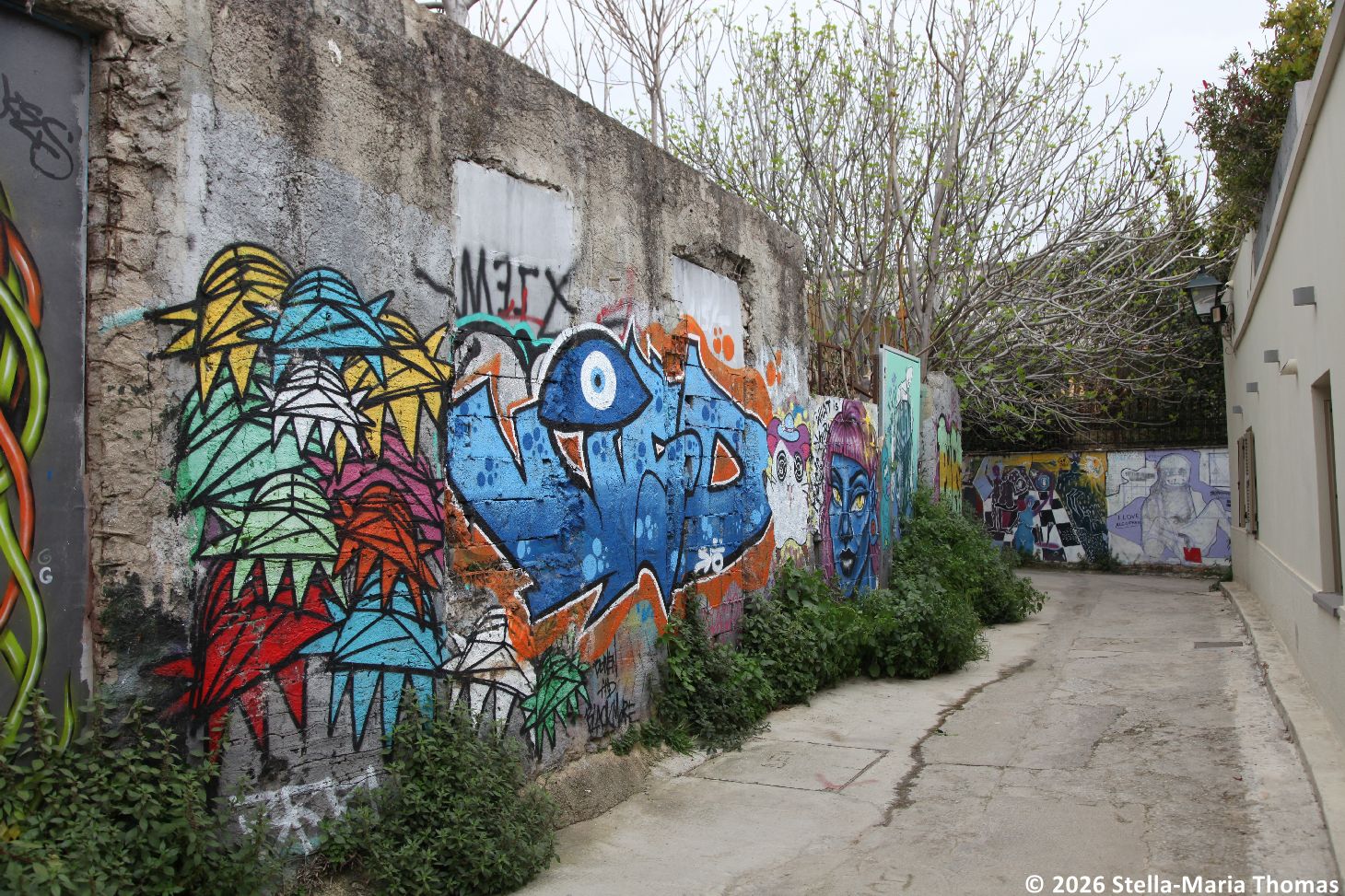
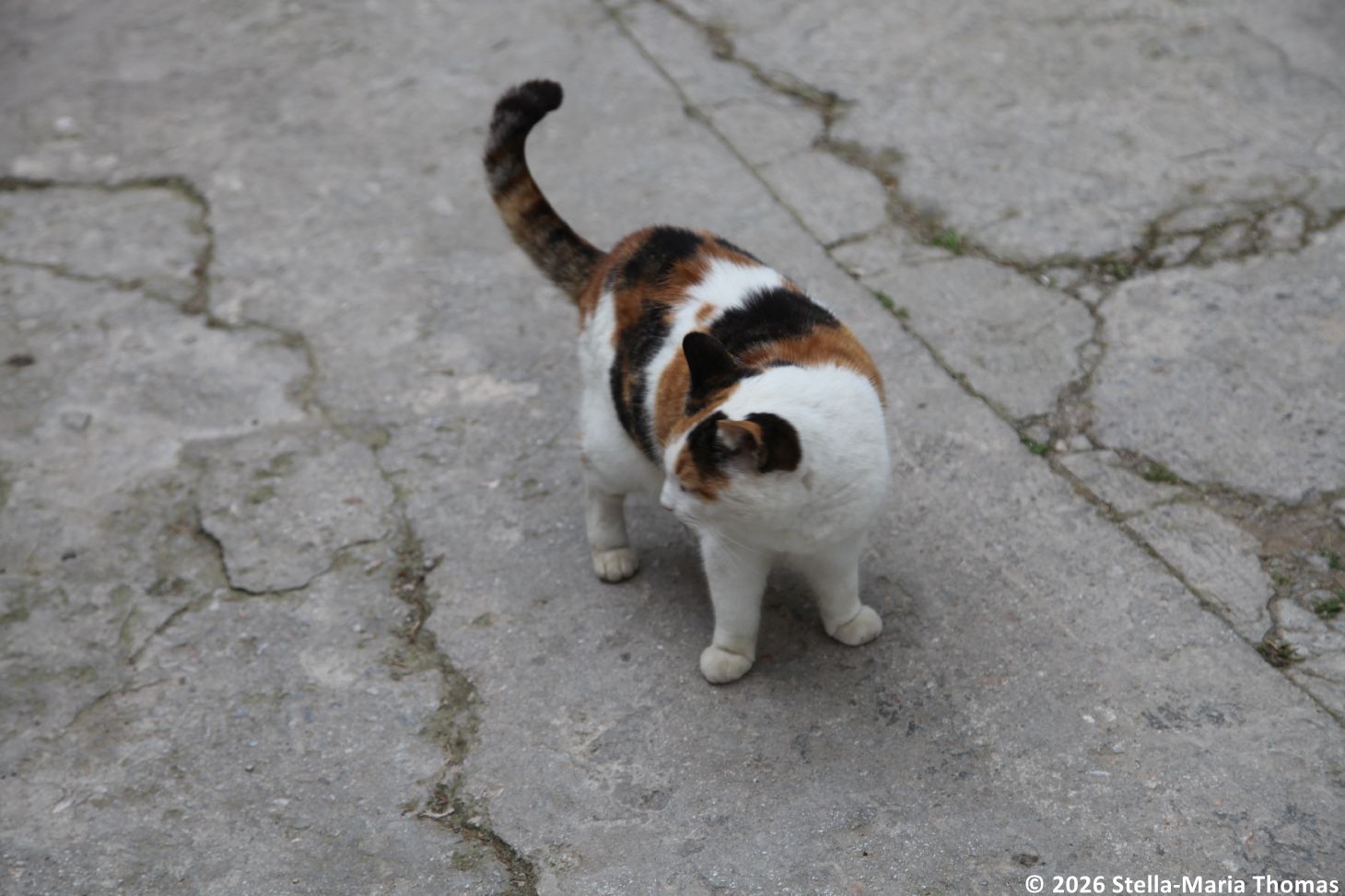
The afternoon was moving towards a close and we were ready to start heading back towards the hotel to get ready for dinner. First though we walked down through the lovely old neighbourhood of Anafiotika. It was built by workers from the island of Anafi who were working on the refurbishment of King Otto’s Palace. They built houses in the typical Cycladic style, and if visit at the right time of year there are bougainvillea flowers all over the white-walled buildings. In 1922, Greek refugees from Asia Minor fetched up here but the houses remained the same. In 1950, part of this neighborhood was demolished to enable archaeological research, which seems a touch short-sighted, and in 1970 the state started to buy the houses. There are only 45 of these tiny houses left now, but the streets are still without names, and the postal addressed are therefore “Anafiotika 1”, “Anafiotika 2”, and so on. It was quiet and calm and full of cats, most of them with greater or lesser amounts of ginger fur. We only needed to stand still for a second before they emerged to see if we had anything interesting for them. I am assuming they are all related more or less going back to the original house building phase when it was worth them colonising the area. There’s also a great deal of street art of varying styles.
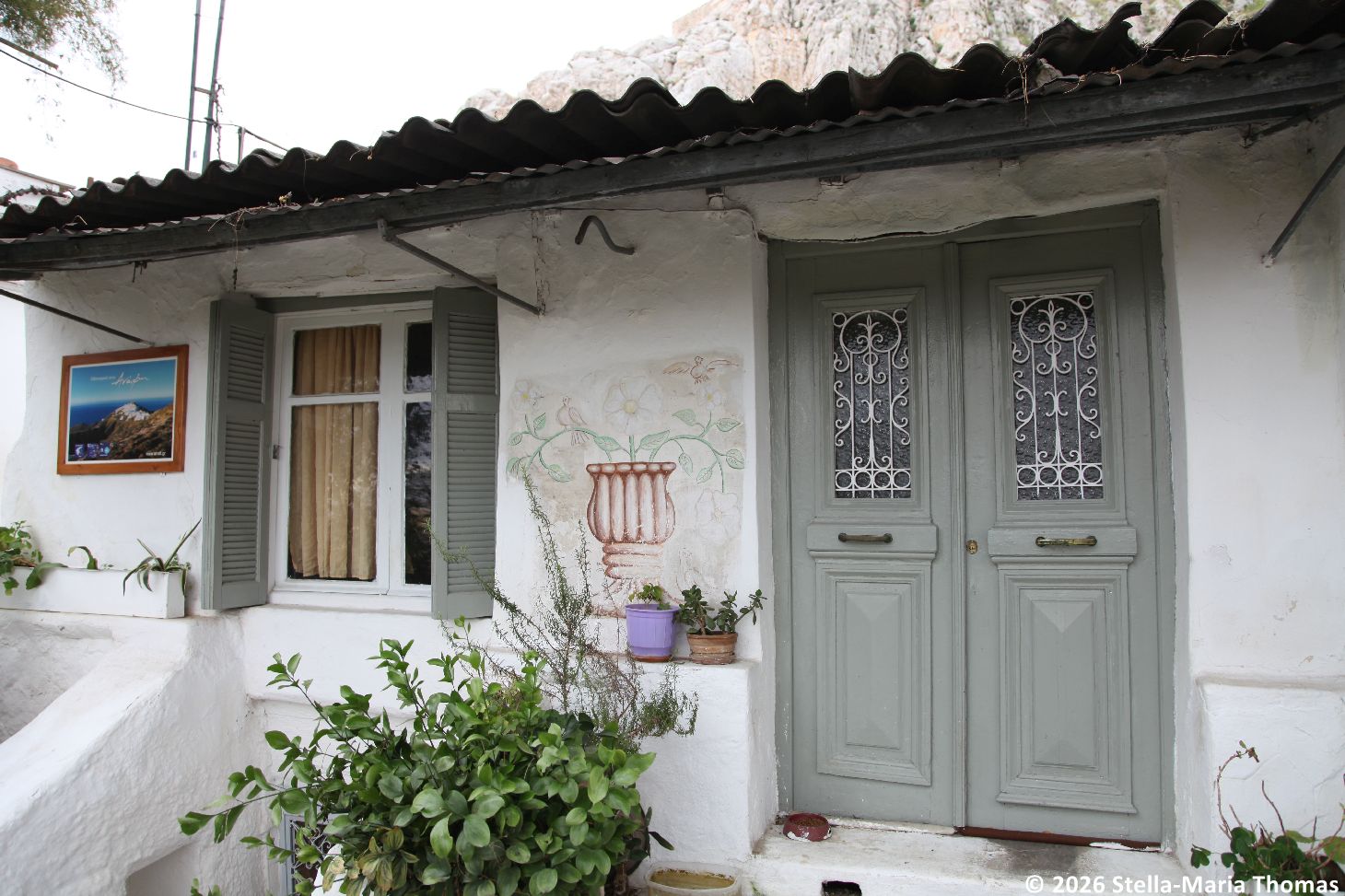
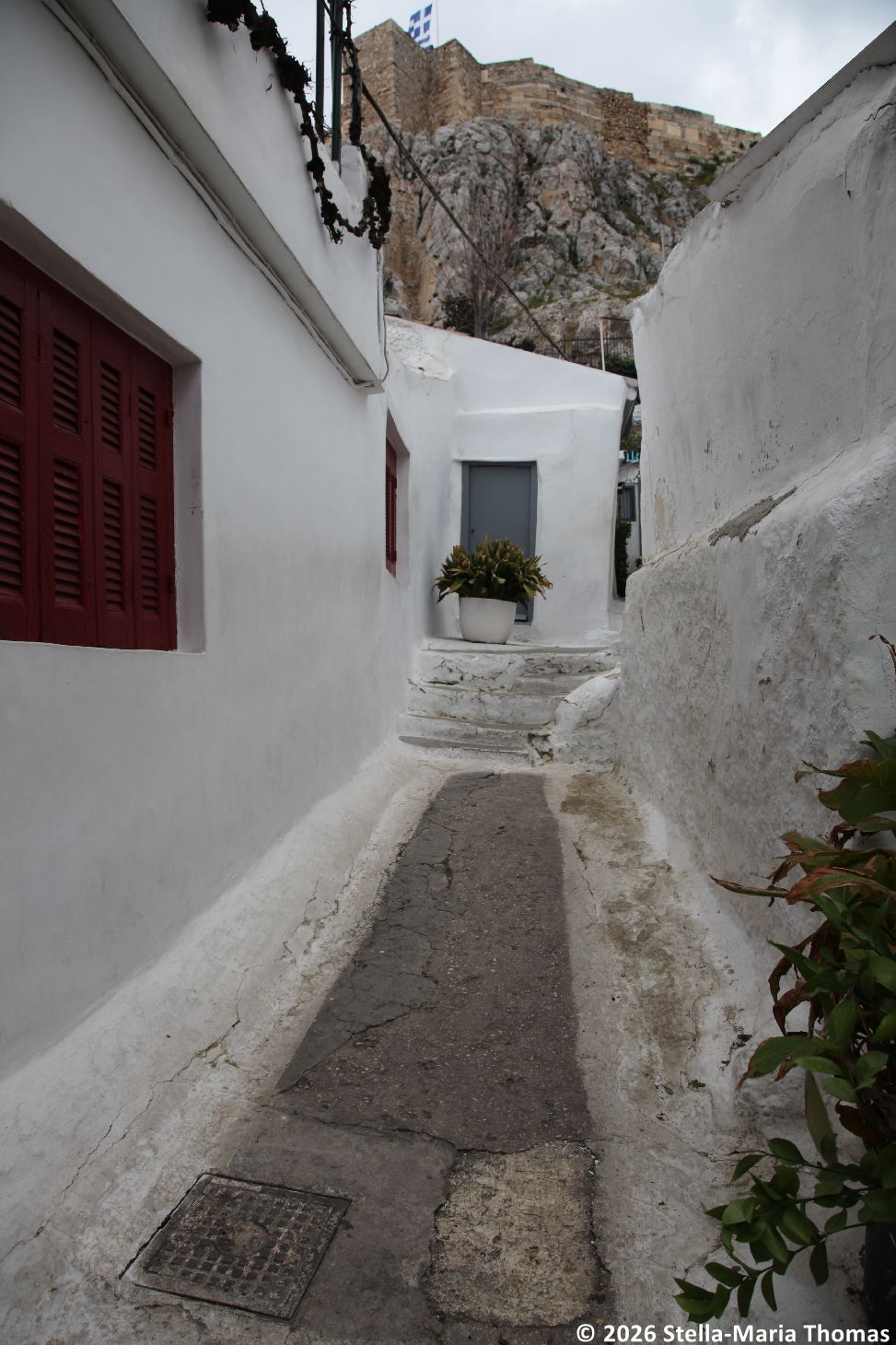
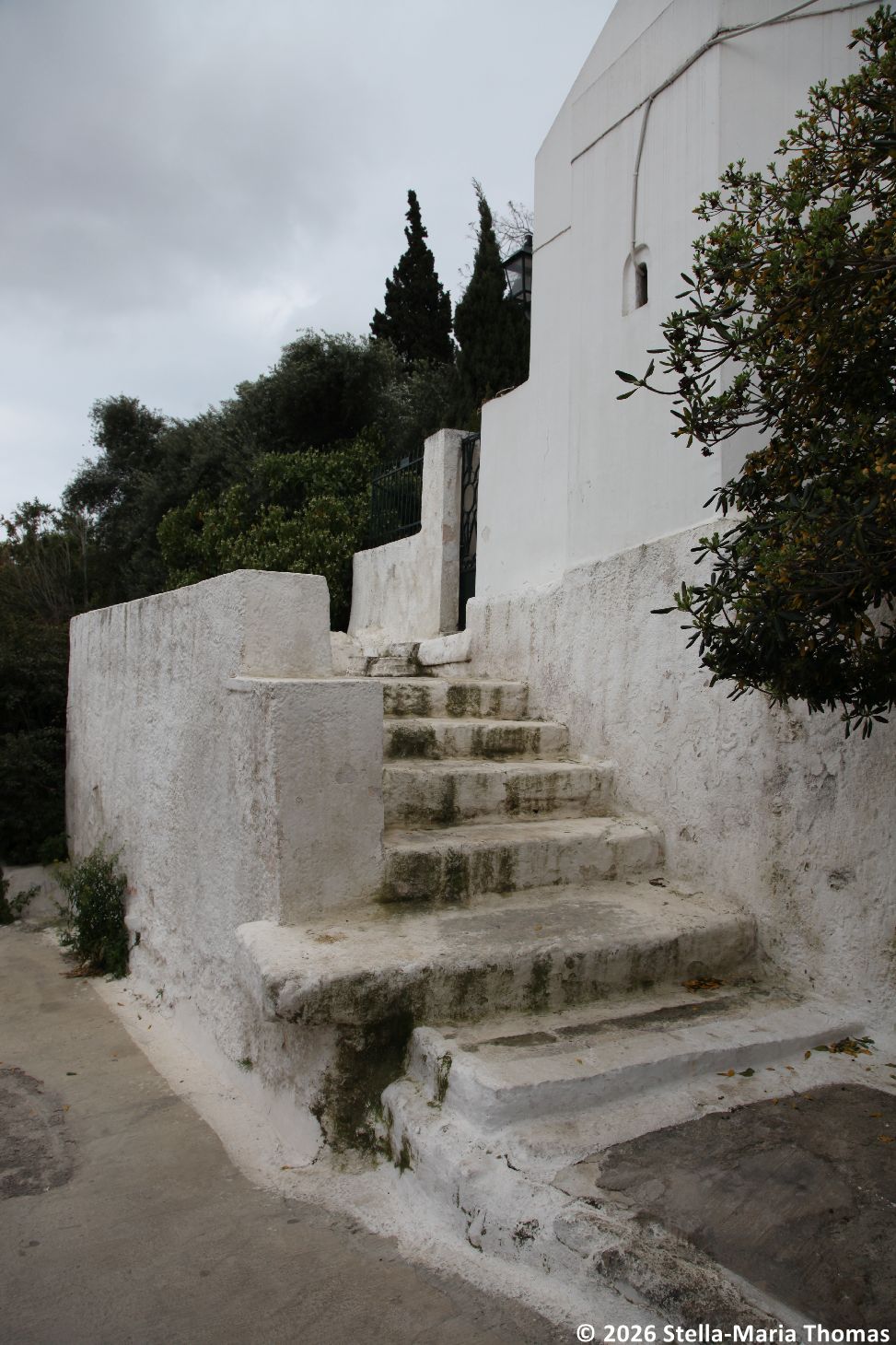
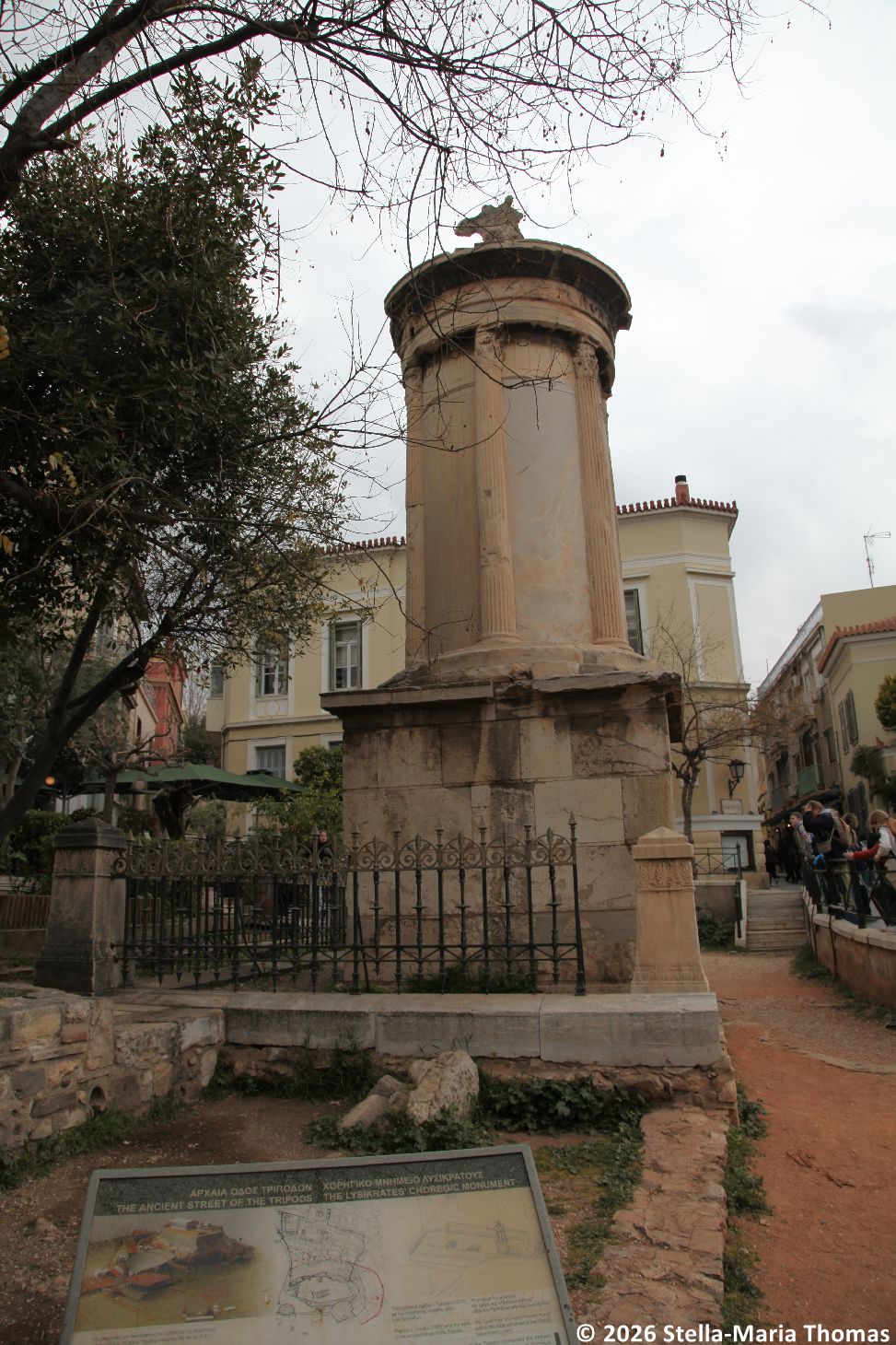
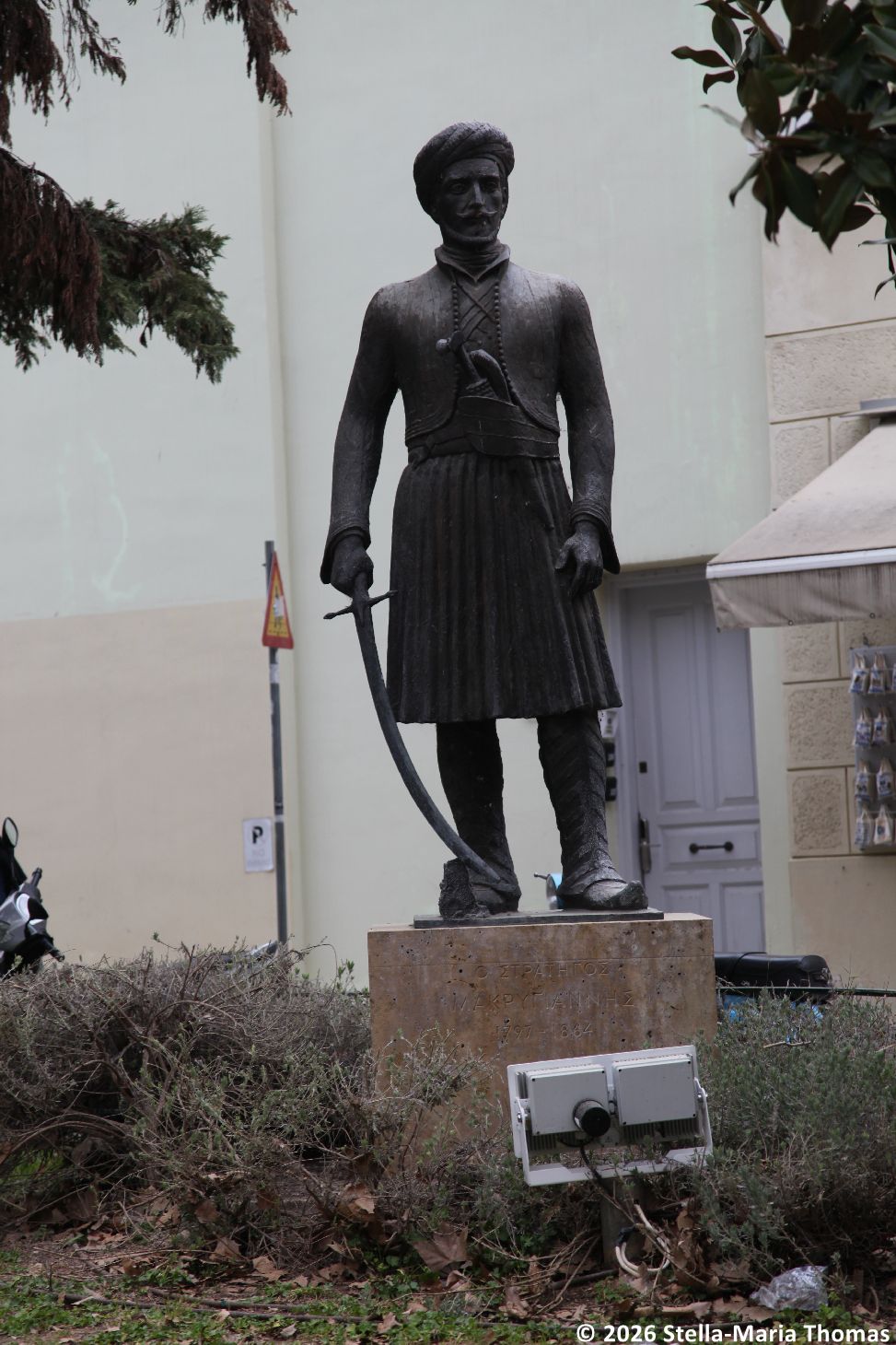
After a bit of confusion we found a street that led us down the hill and back towards the main city. It wasn’t long before we found ourselves back in busy city streets, and looking at the Choragic Monument of Lysicrates. Lysicrates, who was a wealthy patron of musical performances in the Theatre of Dionysus built it to commemorate the prize in the dithyramb contest of the City Dionysia in 335/334 BCE, of which performance he was liturgist. It’s thought to be the first use of the Corinthian order on the exterior of a building and there are copies of it in the most unexpected places, including on the Burns’ Monument on Calton Hill in Edinburgh, on top of St John the Evangelist’s Church in Chichester (a “preposterous miniature”), and in the Royal Botanic Gardens in Sydney among others. “The most prominent example is the Soldiers’ and Sailors’ Monument designed by architects Charles and Arthur Stoughton and erected on Riverside Drive in New York City in 1902”. The monument became famous in France and England through engravings of it, and Lord Byron stayed at the monastery on the site during his second visit to Greece. In 1821 the convent was burned down by the Ottomans during the Greek War of Independence, and subsequently demolished, and the monument was later offered to an Englishman on tour, but was too cumbersome to disassemble and ship. Lord Elgin then tried to buy it but was thankfully unsuccessful or presumably it too would now be in London in the British Museum.
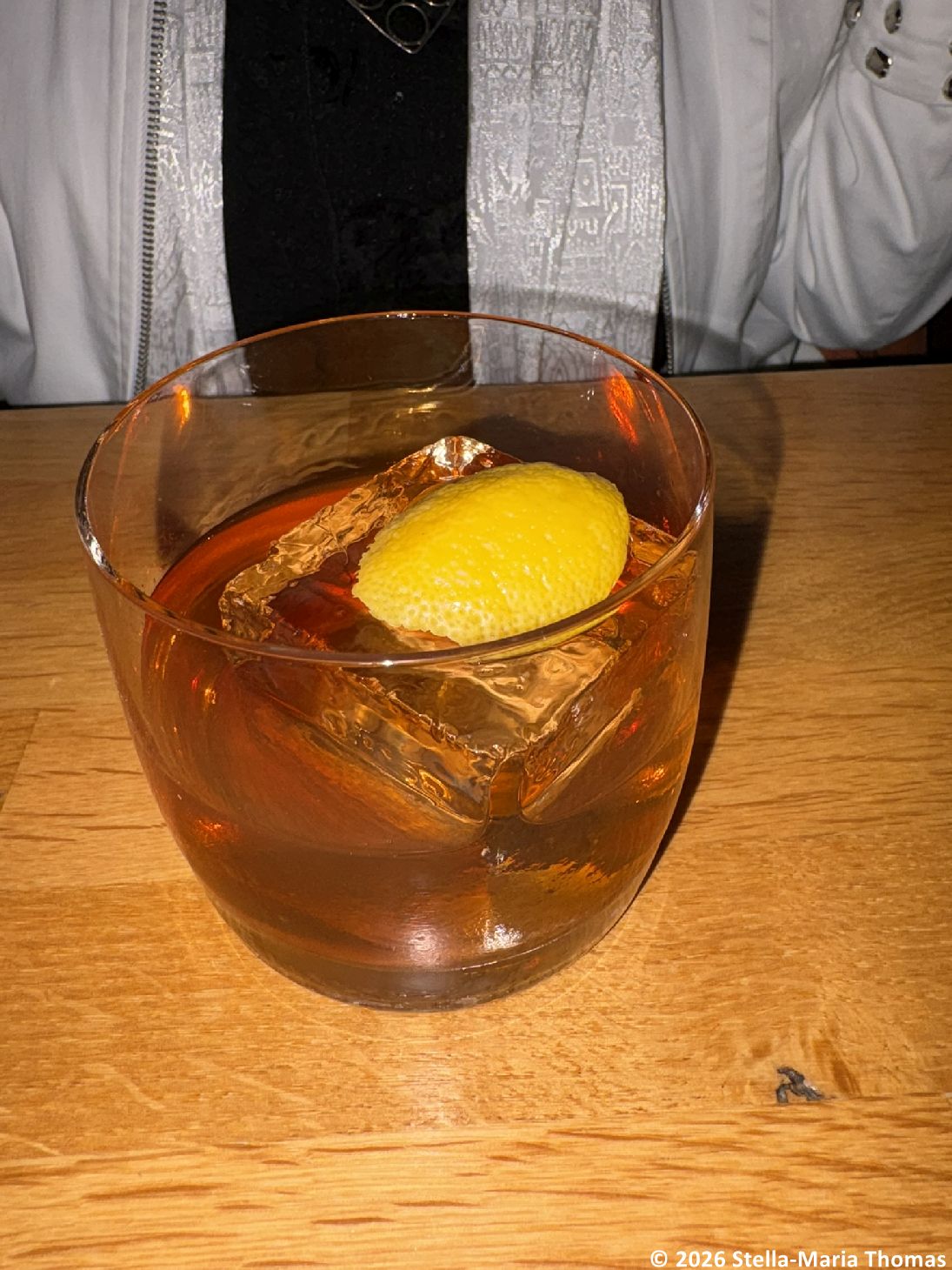
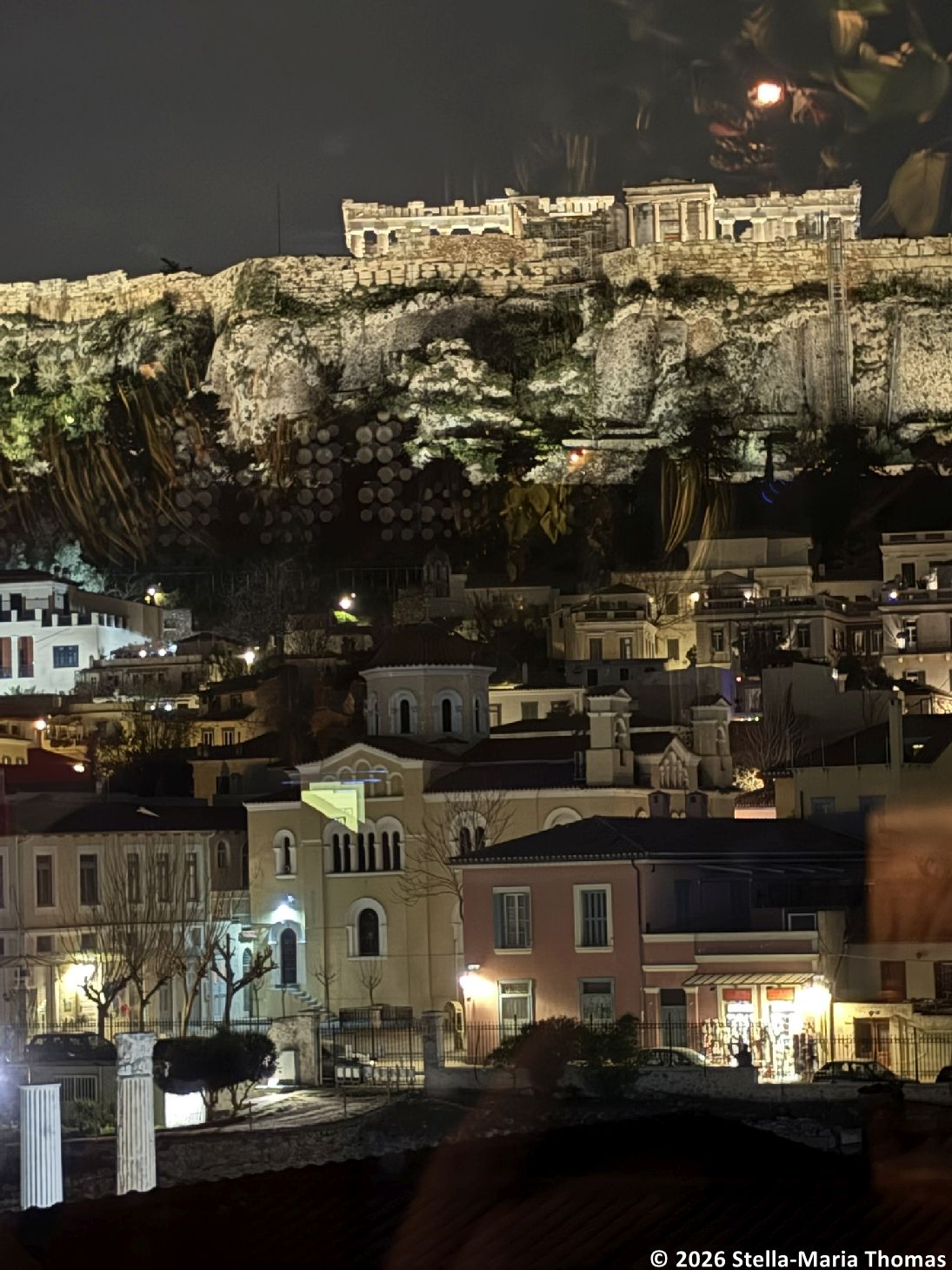
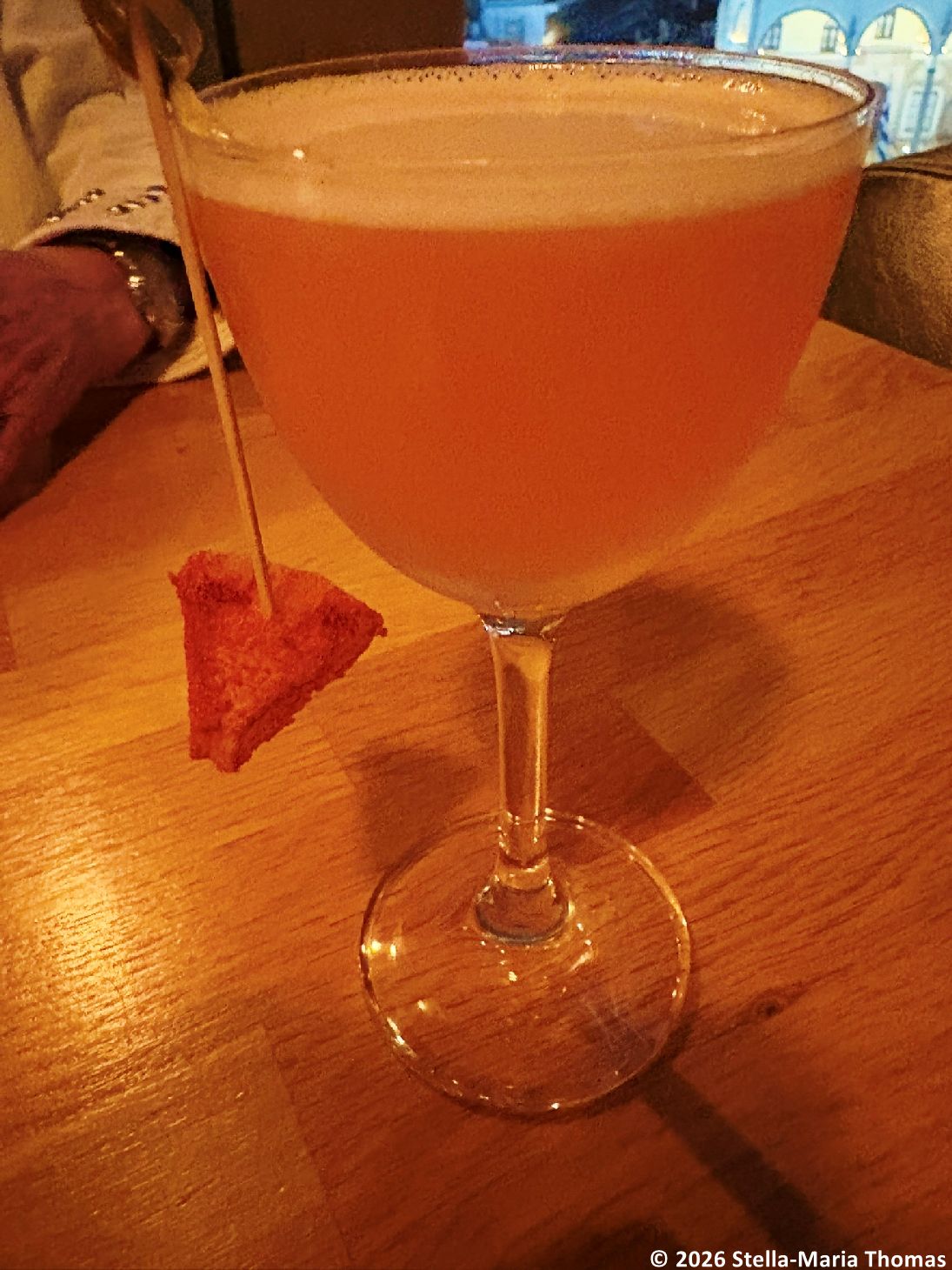
All that remained was to walk back to Syngrou-Fix and hop on a tram to save a few minutes walking. That evening we had a fresh restaurant lined up, over towards Thisseo so the plan was to try out one of the cocktail bars recommended to me, the 360 in Monastiraki. We got there around 7:30 pm and once we found our way in, we were able to snag a table by one of the windows so we could enjoy the night-time views of the area and the inevitable Acropolis. It was worth it – the cocktail list runs the gamut from adventurous to classic, so Lynne ordered an Old Fashioned and I went for something called La Muerte. What could possibly go wrong.
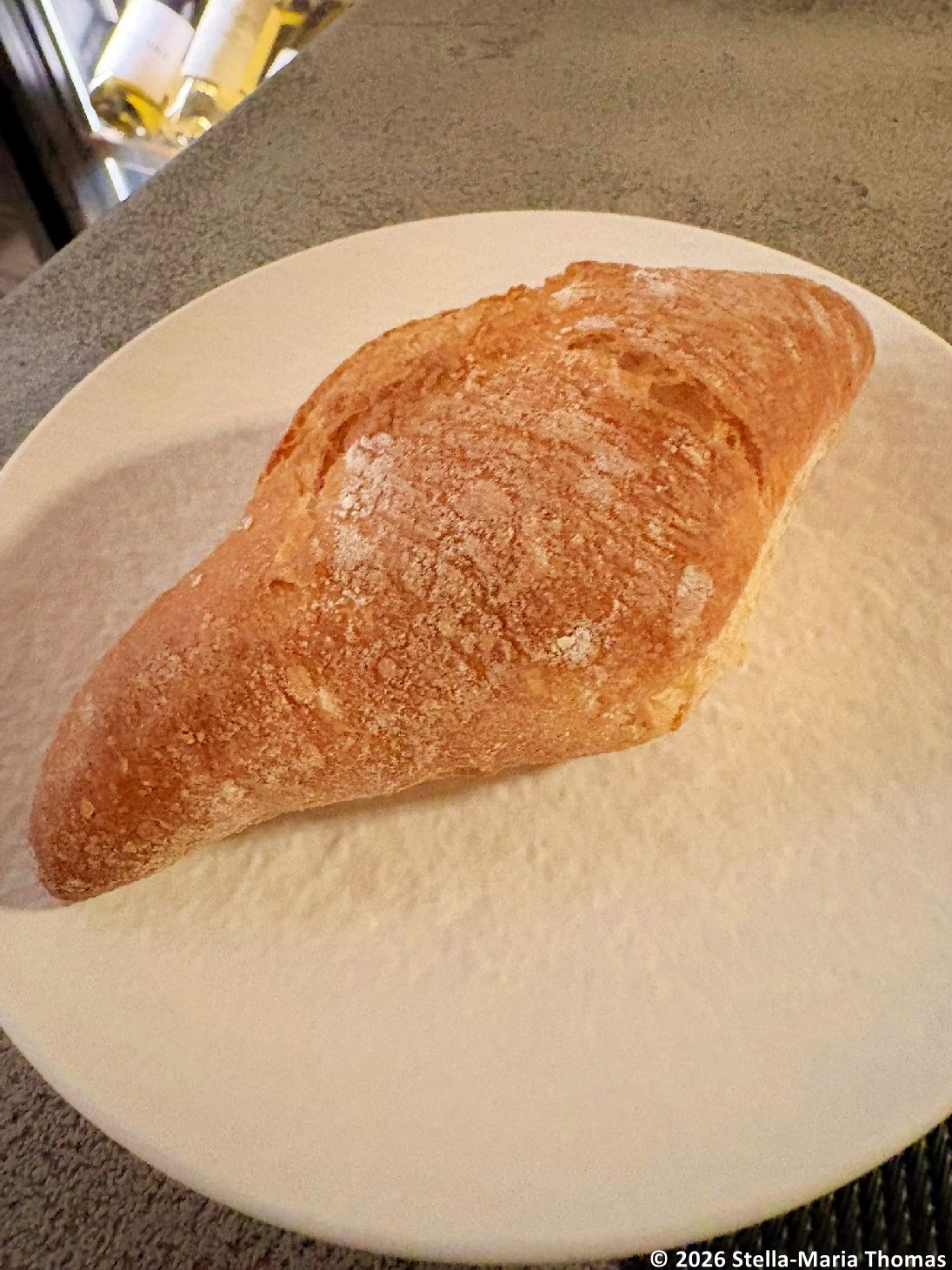
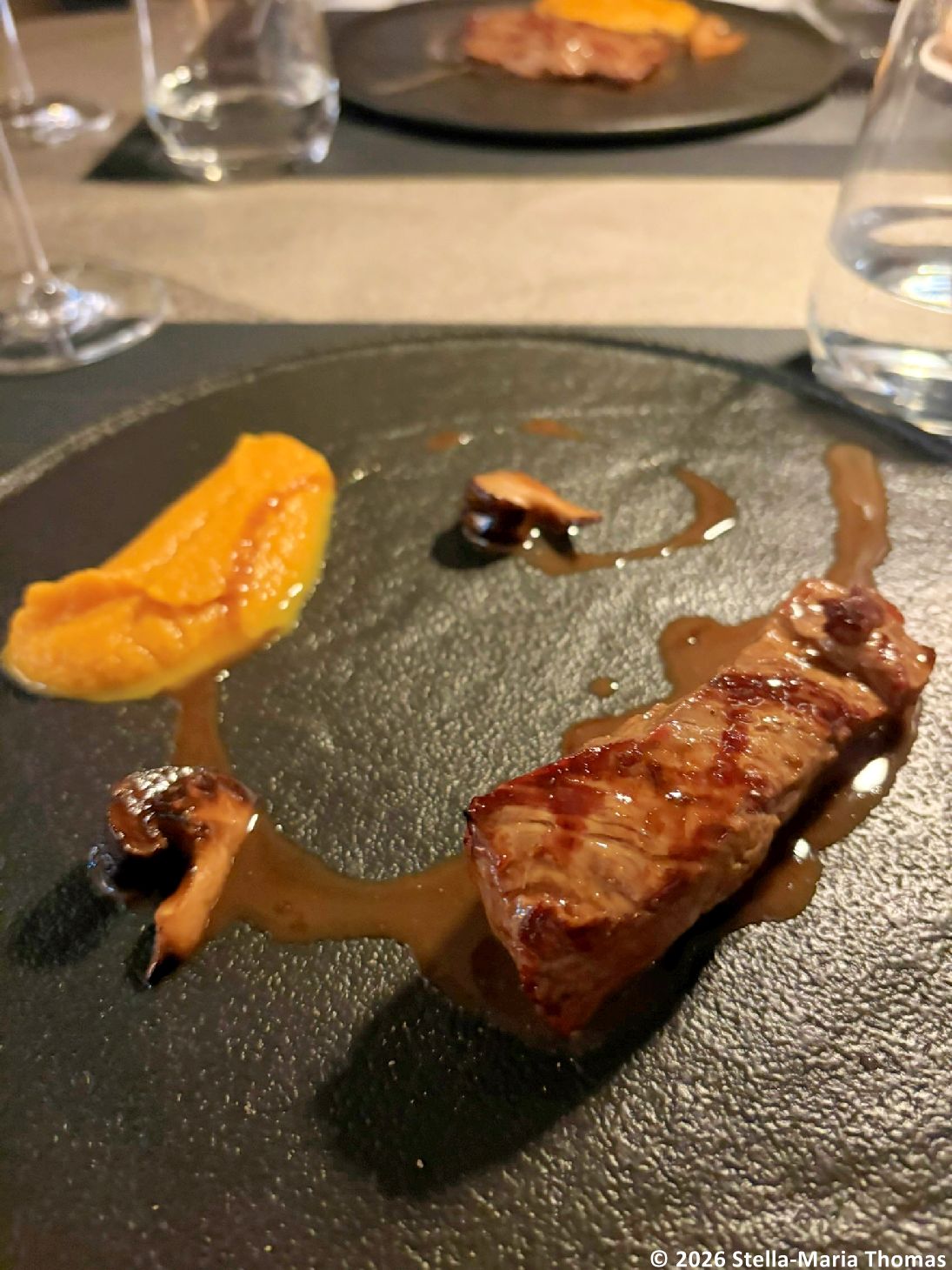
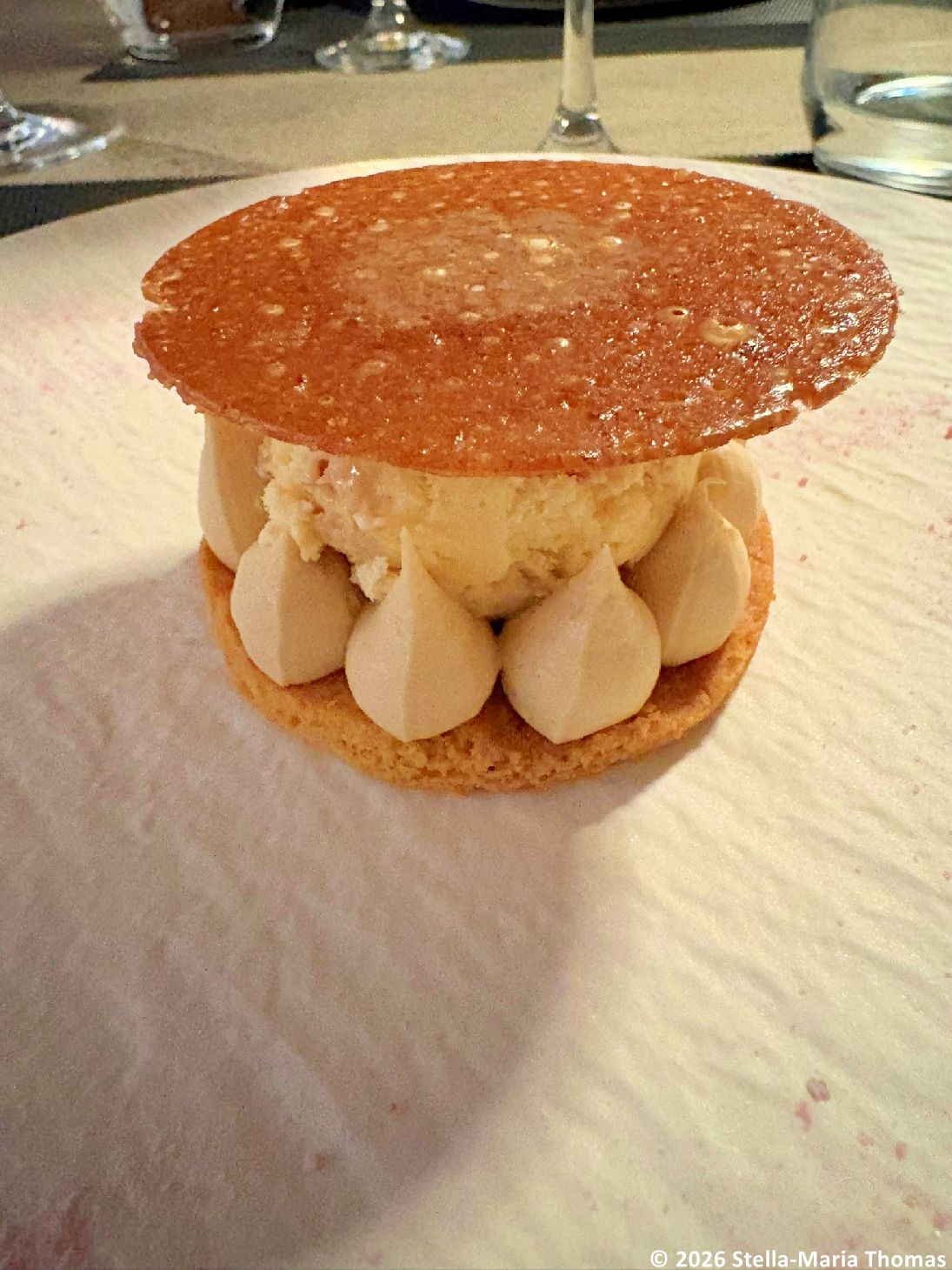
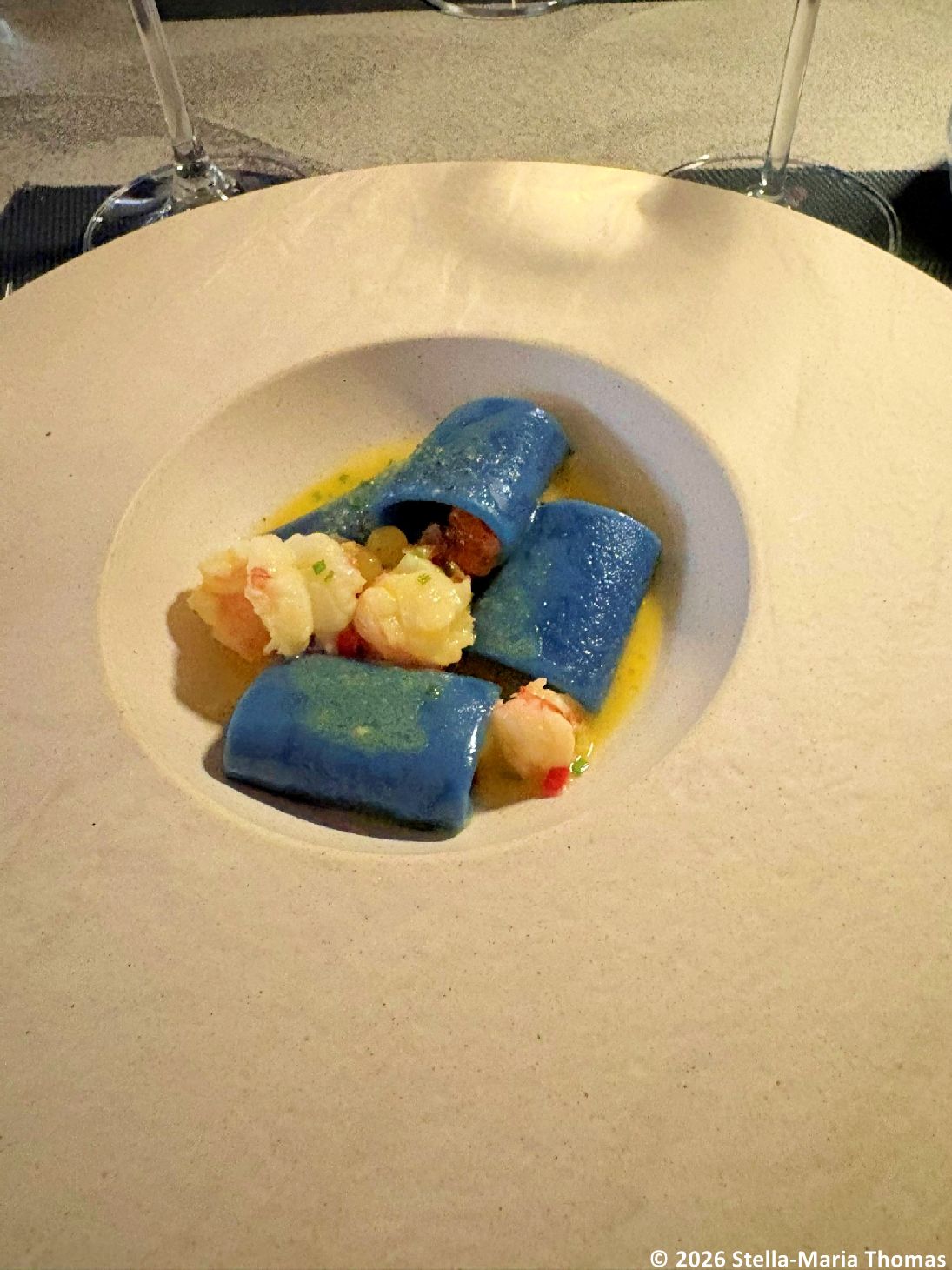
From there it was one metro stop to Thisseo and then a short walk to Merceri. This is a “welcoming bistro, close to the Herakleidon Museum is run by two chefs with experience gained at luxury hotels on the island of Santorini.” The cooking is contemporary but Greek based, and they also offer two wine pairings of Greek wines. We opted to tackle the tasting menu in what was a very quiet room with just two other diners (two American women), and one of the neighbourhood cats who was determined to get in if it could (it couldn’t and it eventually went off in search of easier pickings elsewhere). Bad luck for the cat; the food that we humans got was delicious, beautifully cooked and presented, and thankfully nothing was too big. For €70 we had sashimi of tuna, with chilli, lime, wasabi and homemade pickled ginger. It was followed by scallops with leek, spinach, vongole and fennel. Next came shrimp rather than the advertised langoustine, with a glorious beurre noisette, a cauliflower cream, white truffle, and avruga caviar. Pasta was next and was oddly blue but still delicious, accompanied as it was by more shrimp, black pork pancetta, orange, bergamot, and trout eggs. The first “main” was sea bass, with fava from Feneos, mussels, lemongrass, and pickled rock samphire. The second was a meltingly good flap steak (or a bavette steak to us), with mushrooms, Ecuadorean chocolate, and a pumpkin puree. It was sensational. We finished with a honey parfait, caramelised Valrhona chocolate, almonds, and aniseed. There were also some terrific bread rolls.
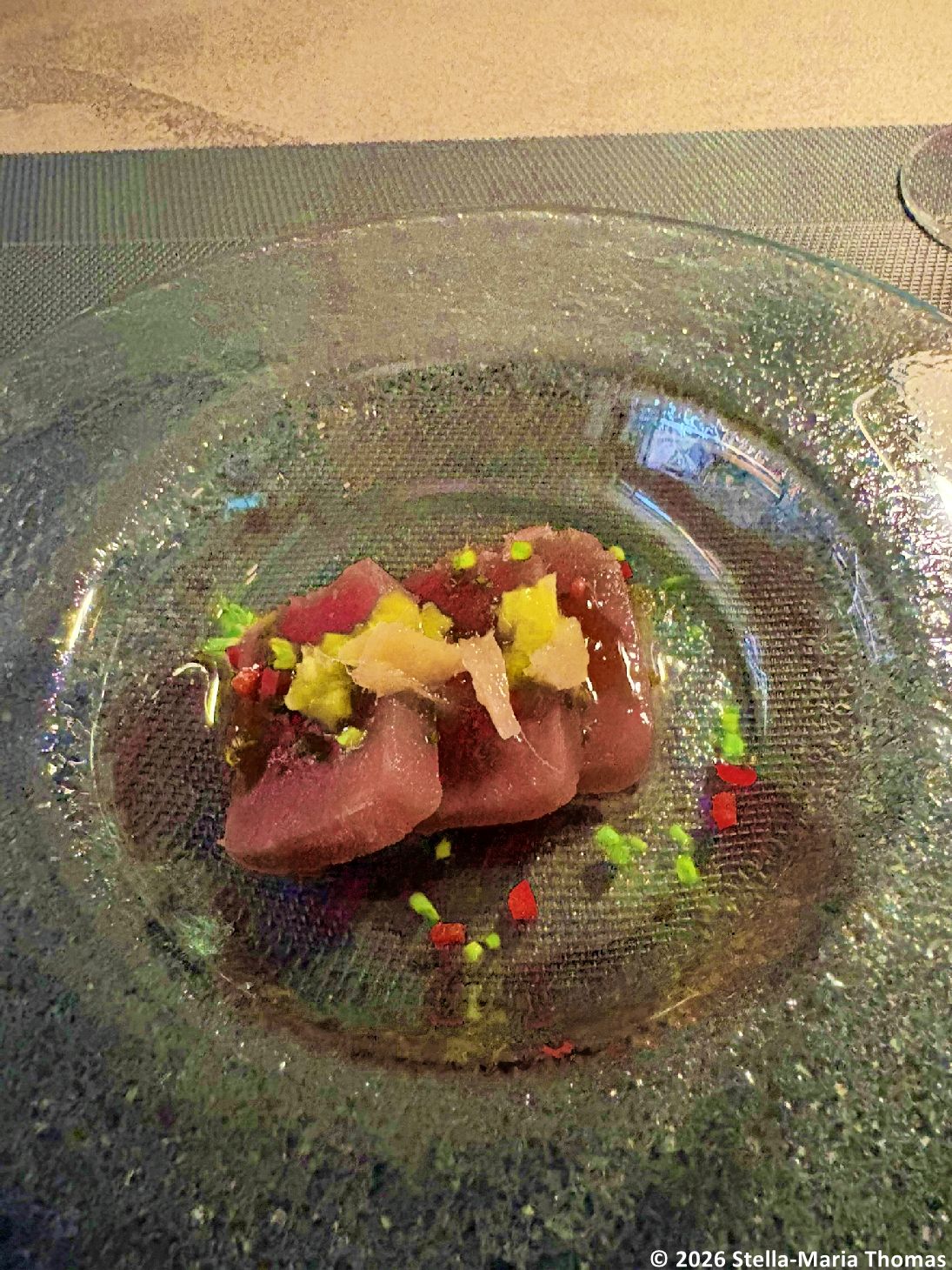
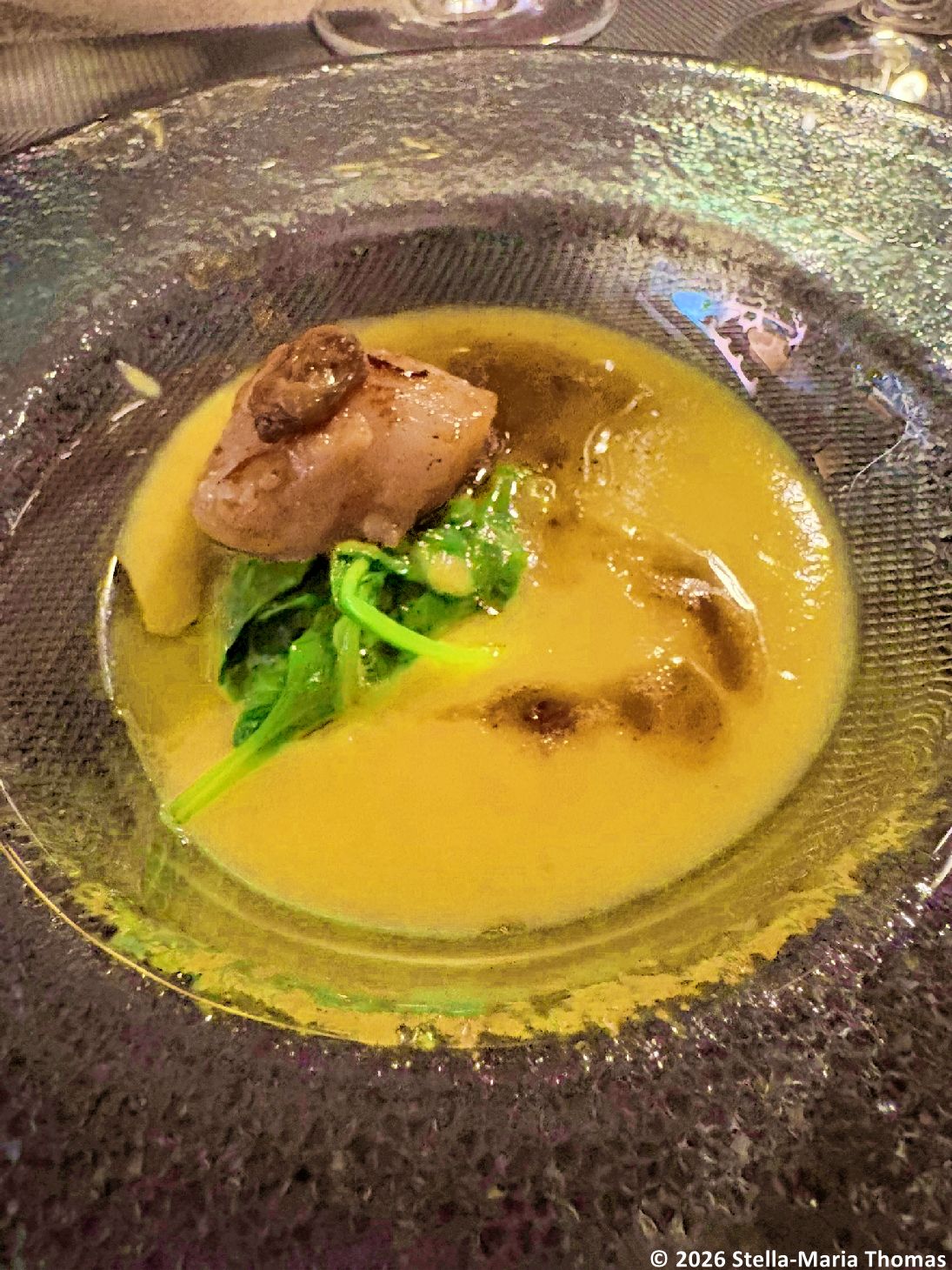
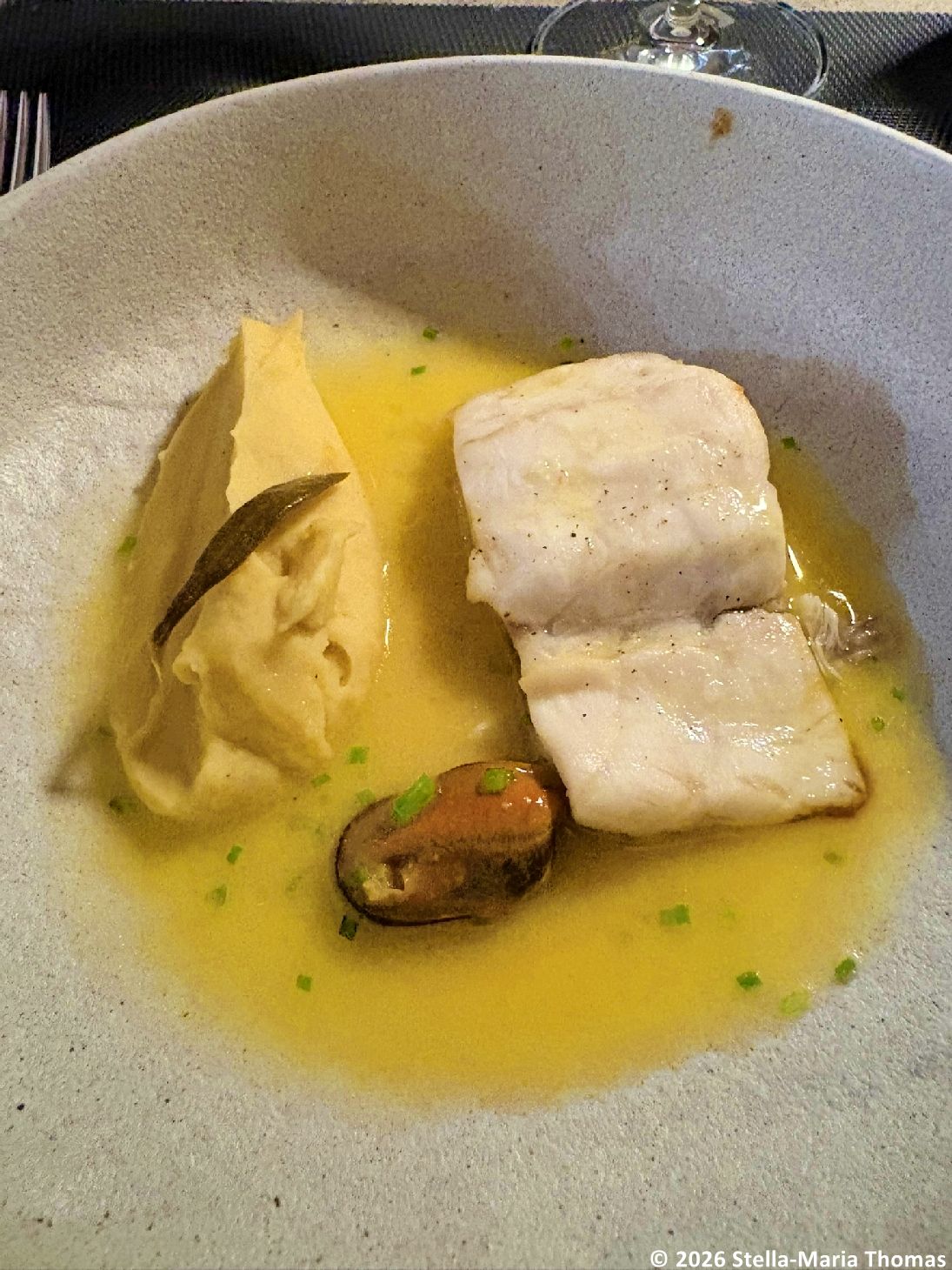
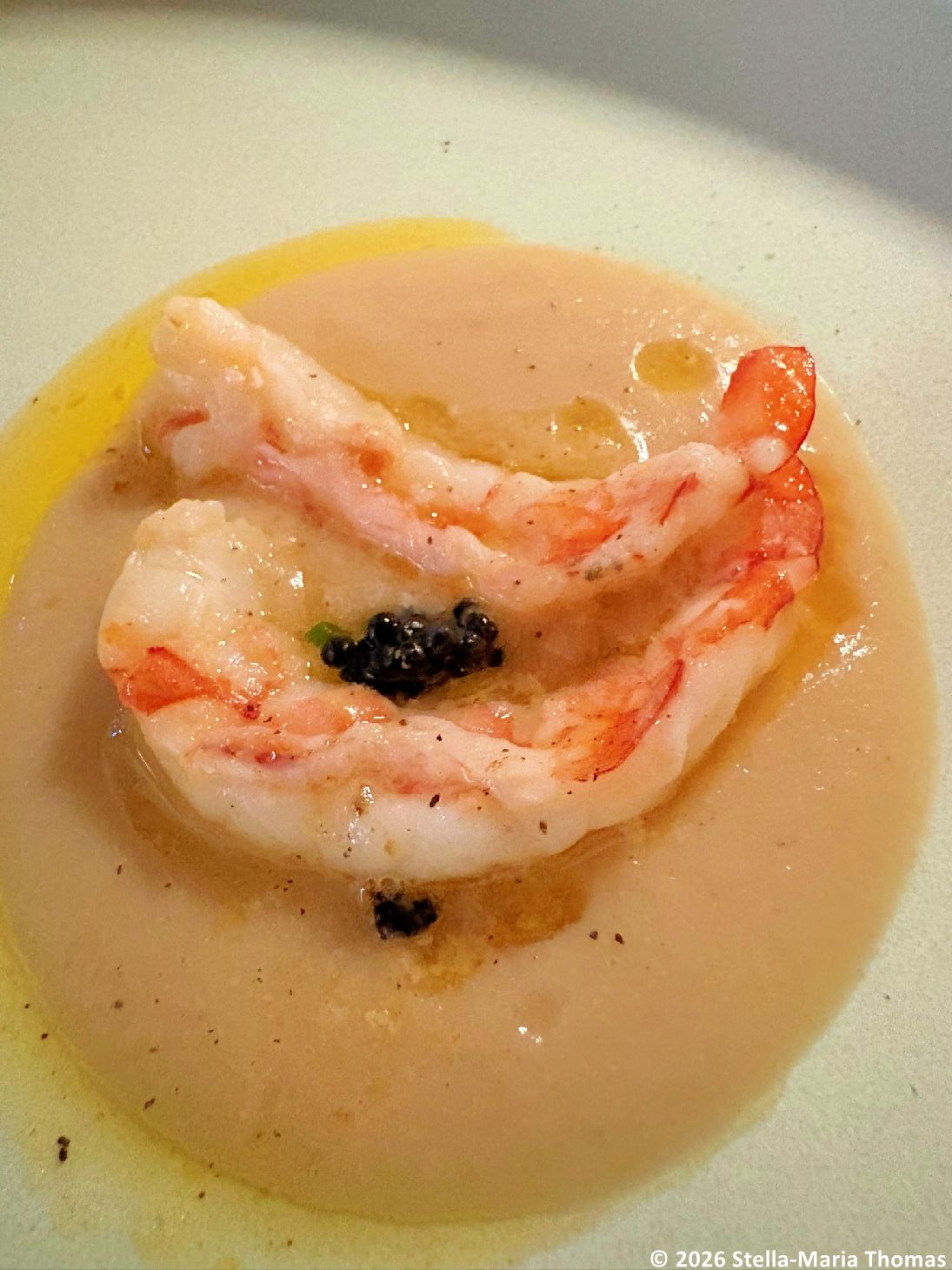
For the wines, we had the premium Greek vinyard wine pairing at €68 per person. The wines were:
– An Alpha Estate, Sauvignon Blanc Fume, Amyntaio P.D.O.
– A Domaine Costa Lazaridi, Semillon, P.G.I. Drama
– A Ktima Kir Yianni, Palpo Single Block Chardonnay, P.G.I. Florina
– An Anhydrous Winery, Grace Mandilaria/Aidani, P.G.I. Cyclades
– A Domaine Sigalas, Aidani, P.G.I. Cyclades
– A Domaine Zafeirakis, Limniona (Bio), P.G.I. Tyrnavos
– A Parparoussis Winery, Muscat Rio Patras, P.D.O. Patra
And so, happily full of food and wine, we headed back to the hotel, only to be hampered by a metro closure that meant we had to walk from Syntagma Square to Syngrou-Fix where we only just managed to catch the last tram of the day. Which was how we manged to cover 19,204 steps, 14.4 km apparently, and burn off over 3,071 calories.

 Smtfhw's Travels