Thursday 19th March, 2026 – Athens
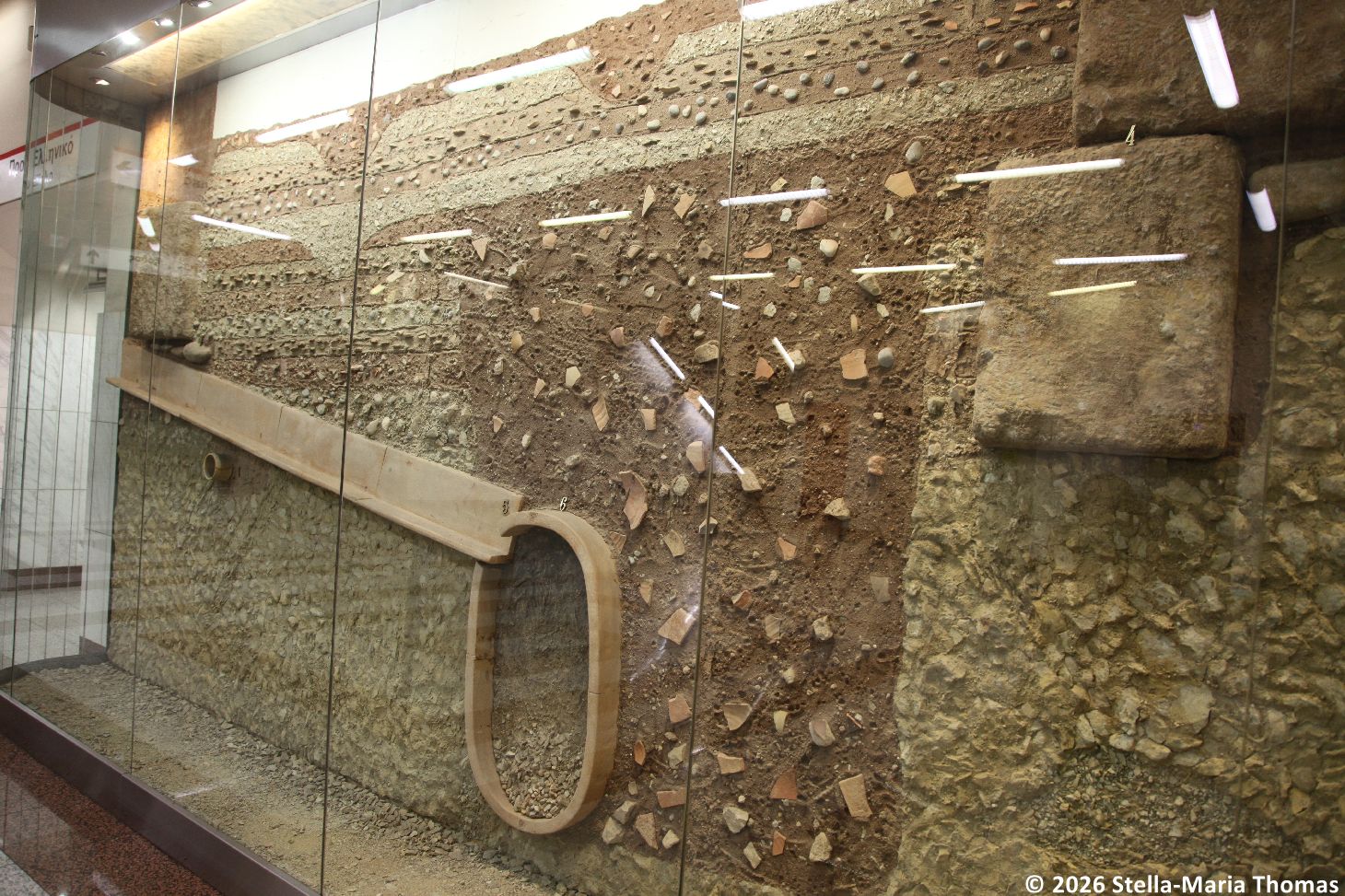
On day 4 we aimed to get to the various sites that we’d missed the day before because we’d pretty much concentrated on the Acropolis. This was the day we figured out that a) the trams were now not terminating at Syngrou-Fix but the line was fully open again and we could go all the way to Syntagma Square which would have been b) very convenient for what we had planned. Unfortunately the point at which we realised this was when we’d got off at Fix and headed underground to get to Syntagma. To be fair, the absence of a thin length of plastic “tape” signifying that the line was closed wasn’t exactly obvious. From Syntagma we crossed over towards Hadrian’s Arch (or Gate), but not before we’d been distracted by the archaeology on show in the metro station. If you are visiting Athens, you must go down into the stations and keep your eyes open to see whatever is on display. There’s a helpful article here – Archaeology in the Metro Stations.
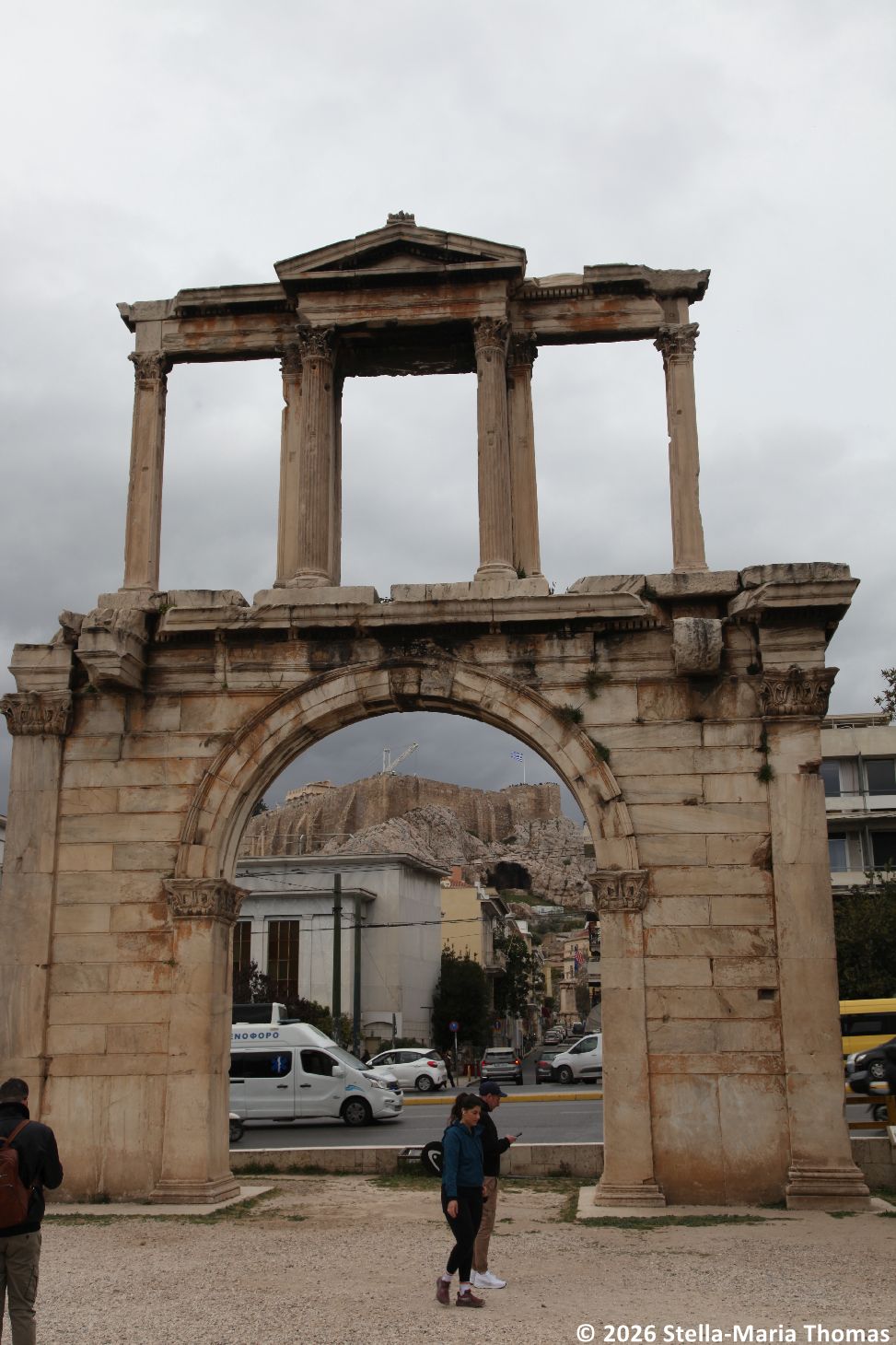
Hadrian’s Gate is a monumental gateway that spanned one of he main roads leading from the centre of Athens and the Acropolis to the important buildings on the eastern side of the city. It may or may not have been built to honour the emperor Hadrian, who certainly seems to have had a major impact on Athens, but it does have inscriptions naming both Theseus and Hadrian as founders of Athens. Like the Parthenon, it is also built from Pentelic marble, from Mt. Pentelikon, though the guidebooks tell me it’s not as high quality. Whatever its initial purpose, it was definitely adjusted in the 1800s, on the instructions of Queen Amalia, for whom the avenue running past the arch was named, apparently to improve the view. It’s also one of the few free sites in Athens.
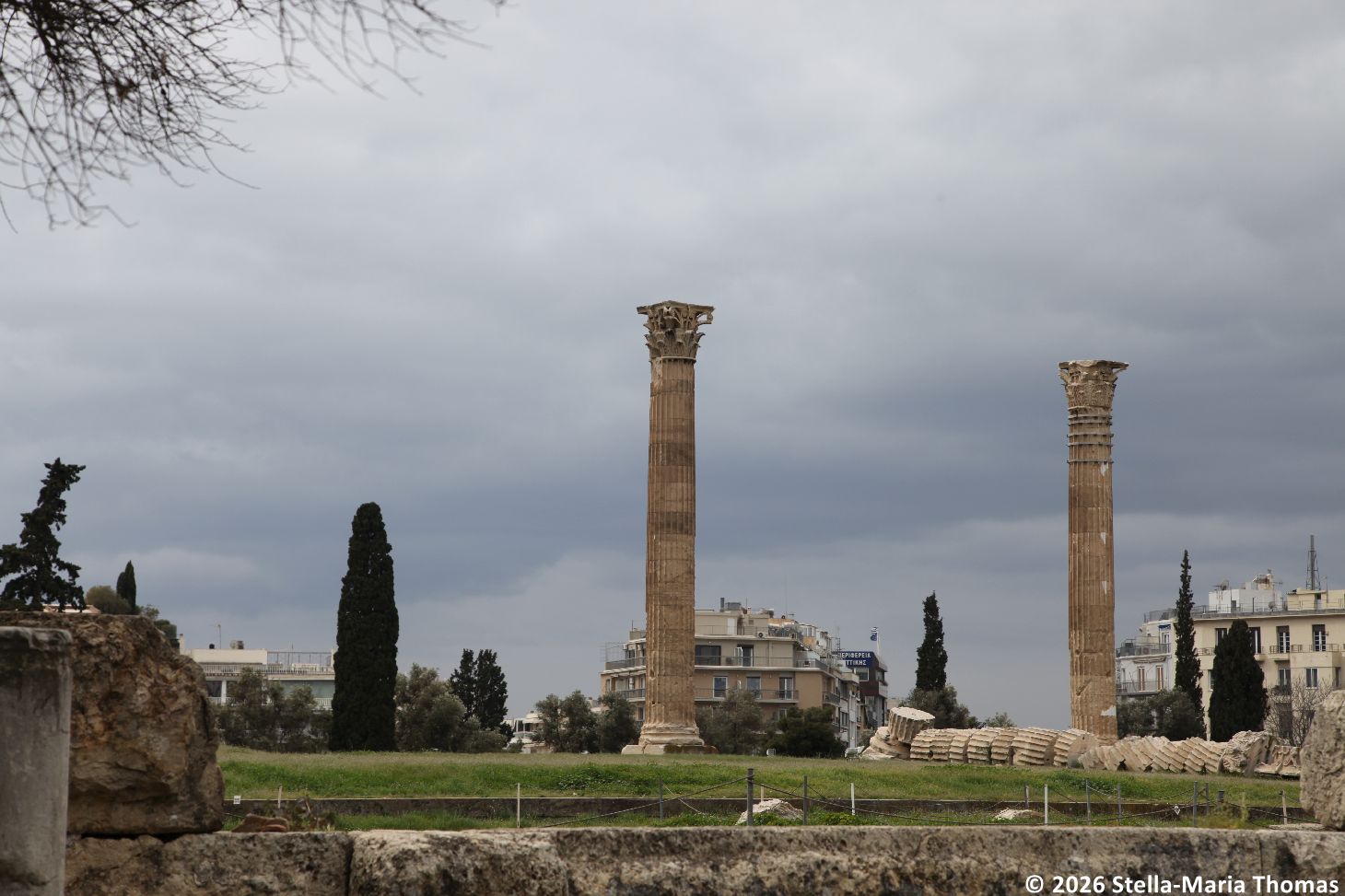
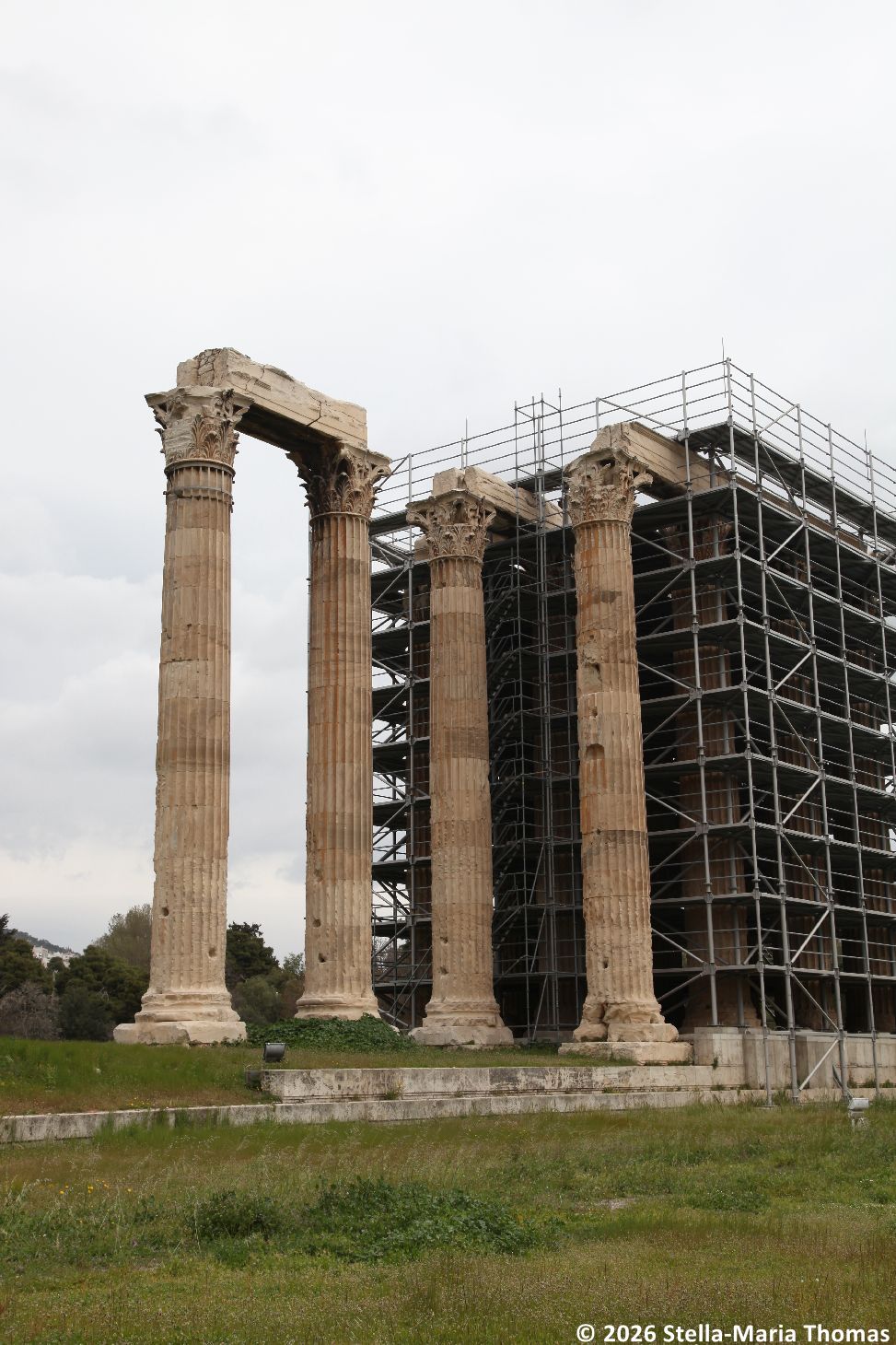
From here it was a short walk to the Temple of Olympian Zeus, of which not much now remains standing. What it does tell you is that it must have been massive when it was complete. You can see most of it from the street but we chose to get closer. There are piles of stone that used to be columns lying around, but with a little imagination you can start to understand the sheer scale of the place.
In its heyday, the temple was colossal, but it could also serve as a dire warning about building projects that run out of control. Construction began in the 6th century BCE but it was only completed during the reign of Roman Emperor Hadrian in the 2nd century CE, 638 years later! When finished it included 104 columns, and was the largest temple in Greece, with one of the largest cult statues in the ancient world. After all that effort, it fell into disuse after being pillaged during a Germanic invasion in 267 AD, and was then destroyed by an earthquake in the 5th century CE. Thereafter the locals seem to have regarded it as a very handy quarry where a lot of the work had already been done and all you needed to do was pick up what you needed! Only 16 of the original gigantic columns remain intact, and one of those is no longer standing after a storm took it down in 1852.
The temple and the surrounding precinct were adorned with numerous statues depicting Hadrian, the gods, and personifications of the Roman provinces and a colossal statue of Hadrian was raised behind the building by the people of Athens. We’re told that “before the entrance to the sanctuary of Zeus Olympios – Hadrian the Roman emperor dedicated the temple and the statue, one worth seeing, which in size exceeds all other statues save the colossi at Rhodes and Rome, and is made of ivory and gold with an artistic skill which is remarkable when the size is taken into account – before the entrance, I say, stand statues of Hadrian, two of Thasian stone, two of Egyptian.”
Our next stop was the Panathenaic Stadium, which I really felt I needed to see, both as a runner and as a lapsed historian. We found ourselves passing a number of statues as we walked along the now car-free road that the tram travels along between Syngrou-Fix and Syntagma.
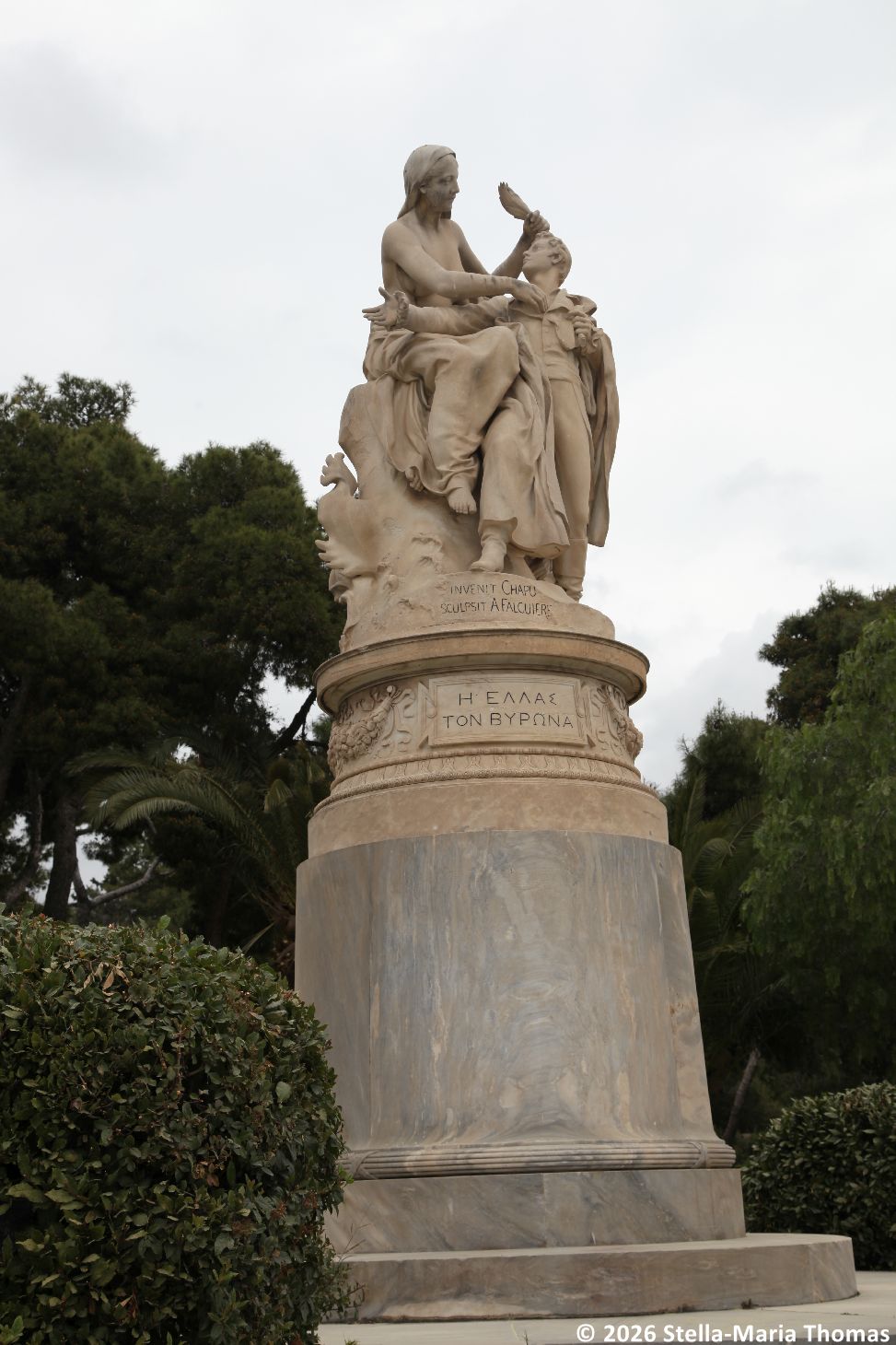
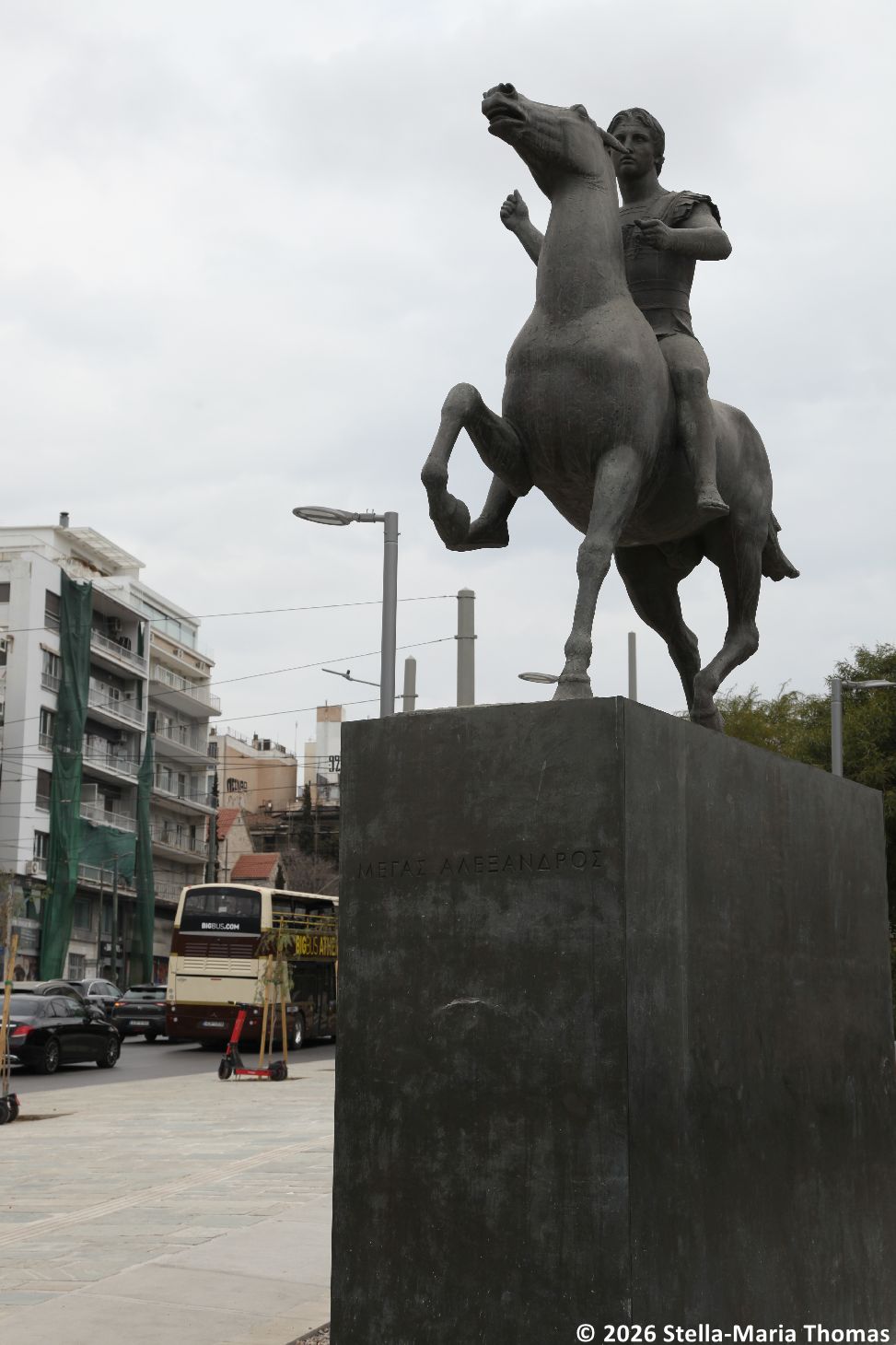
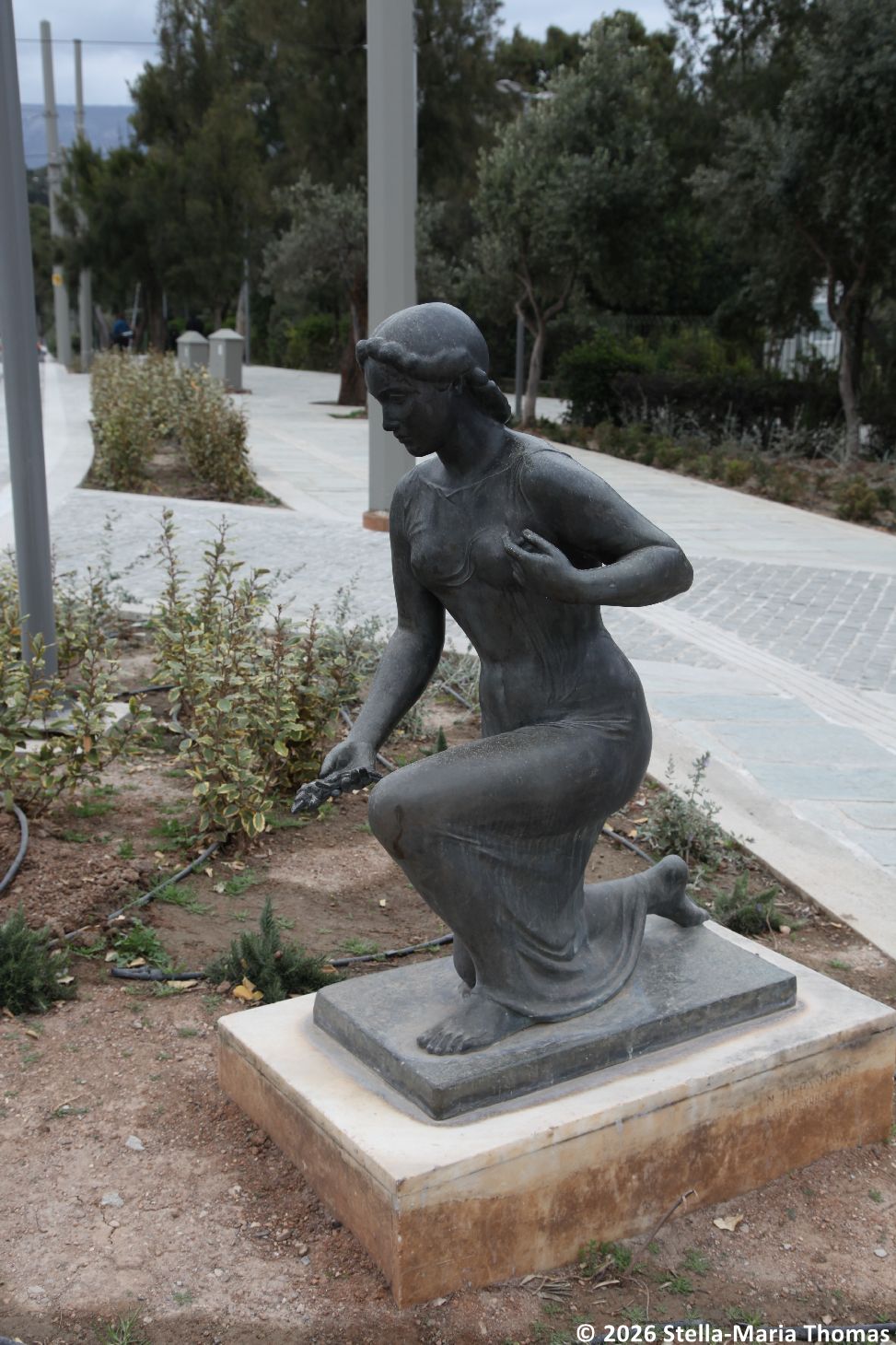
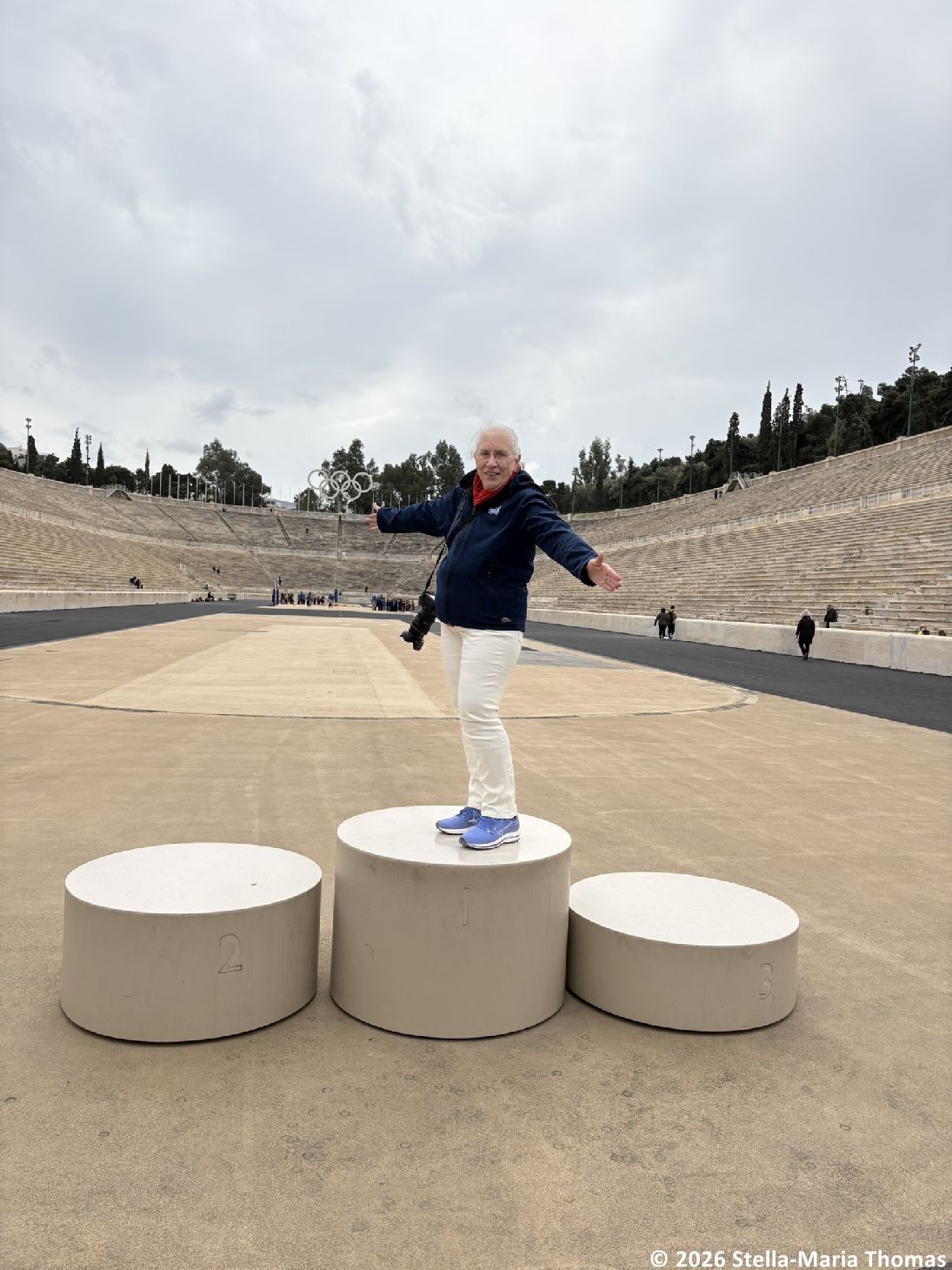
I had been planning to run the stadium (which can be done between 07:30 and 09:00 after you sign a waiver form saying if anything happens to you while you do it, it’s your own fault) but that was put on hold due to the late hours you need to keep if you want to eat dinner at a time deemed civilised by the Athenians. It didn’t matter – it was well worth making the effort to get there during the day. The stadium (also apparently known as Kallimarmaro, which means beautiful marble) is the only stadium in the world built entirely of marble.
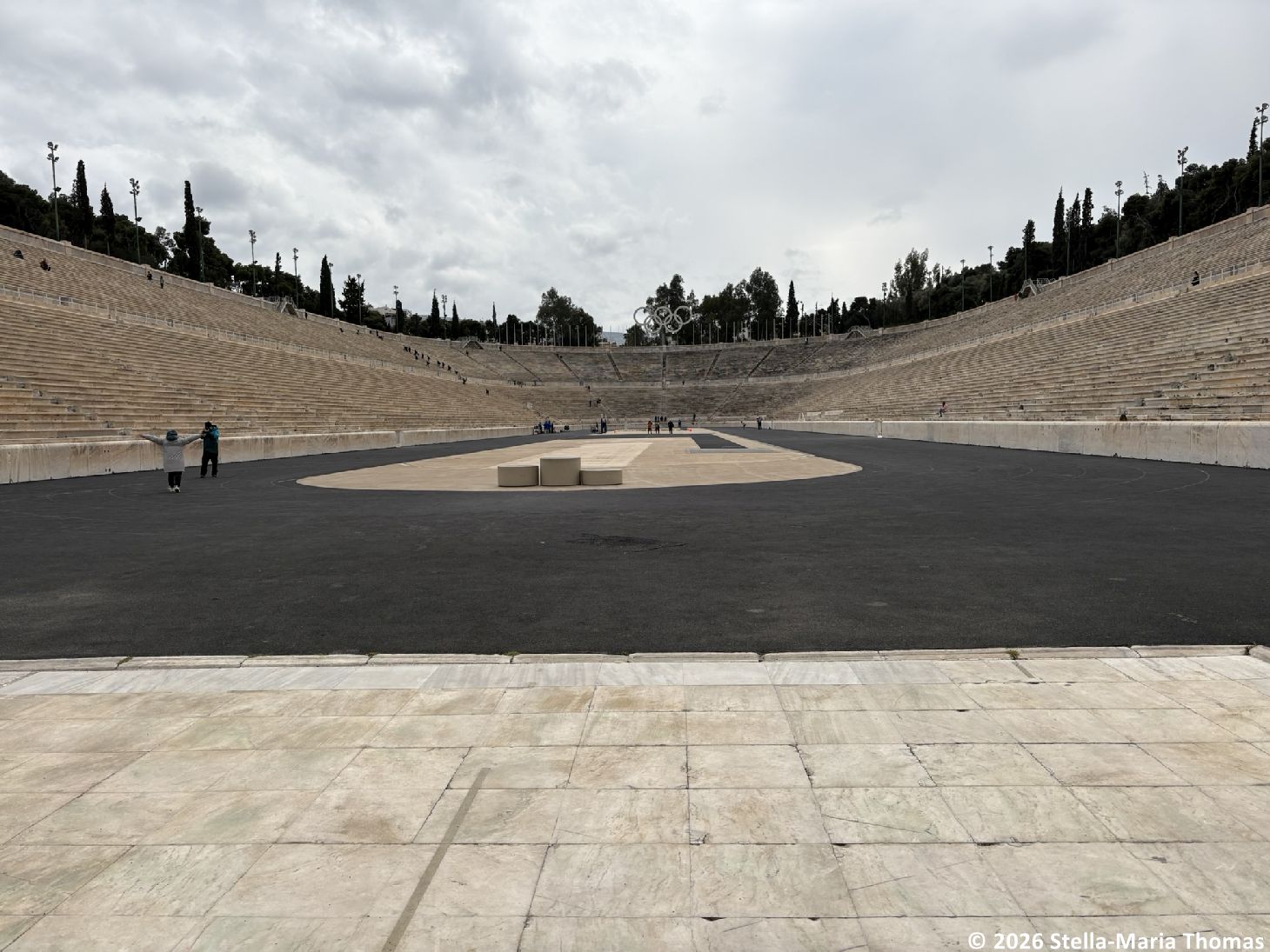
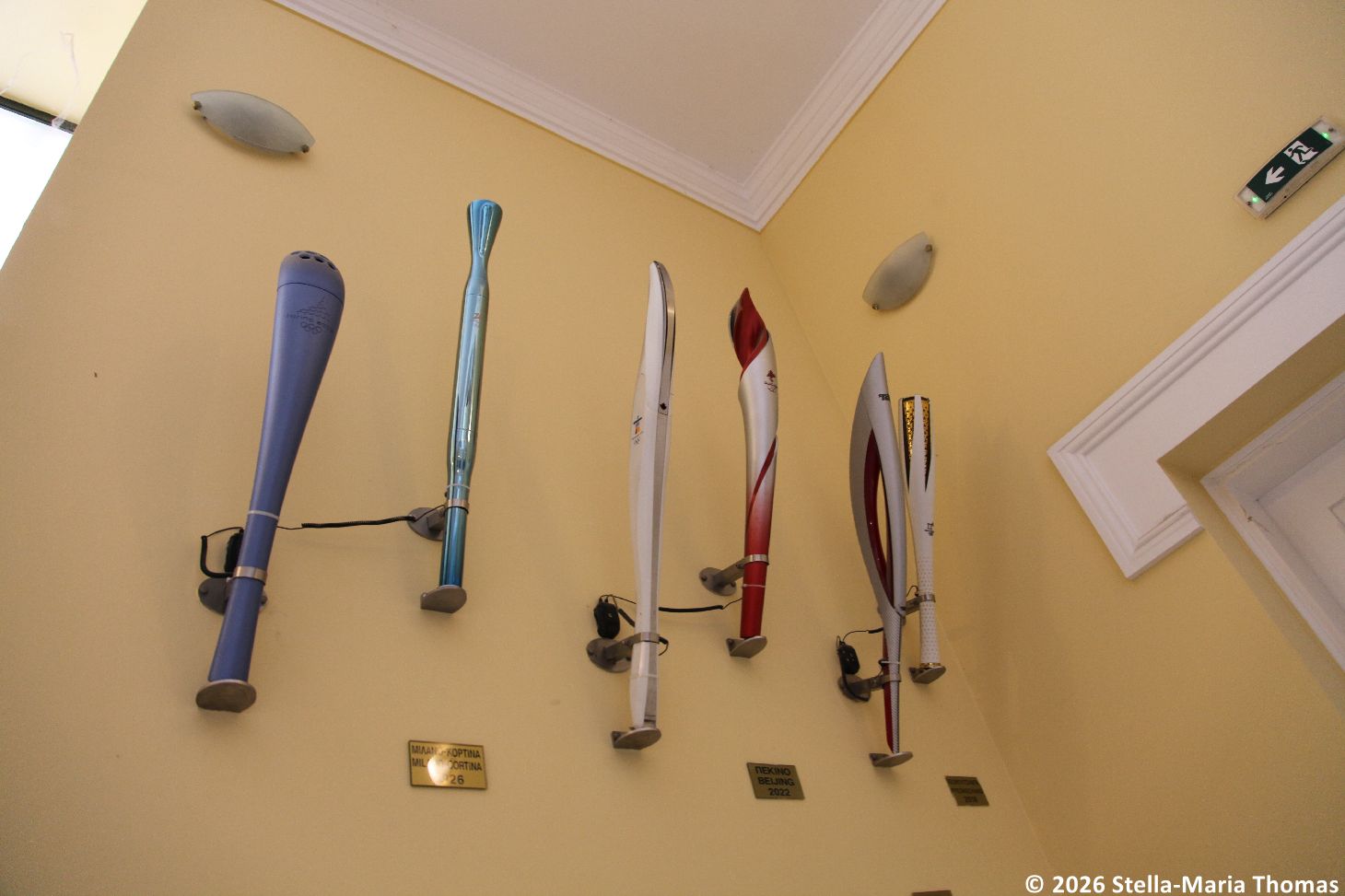
On a sunny morning it looked particularly impressive as we battled our way across the road to get to it. It is on the site of a “simple racecourse” and was built by Lykourgos around 330 BCE for the Panathenaic Games. It was then rebuilt in marble by Herodes Atticus, he of the theatre by the Acropolis, an Athenian Roman senator by 144 CE. It could seat 50,000 spectators, but drifted into disuse and abandonment with the coming of Christianity in the 4th century CE. It was excavated in 1869, hosted the Zappas Olympics in 1870 and 1875, and then the opening and closing ceremonies of the first modern Olympics in 1896. It was used again as an Olympic venue in 2004 and is the finishing point for the Athens Marathon. These days it is also always the place in Greece from where the Olympic flame is handed over to the host nation. We walked the track and then headed indoors to take a look at the small but fascinating museum, housed towards the curved end of the stadium. It won’t occupy you for long, but is worth a look because of the collection of Olympic torches and posters on display.
The venue provides a podium for anyone wanting to pretend to be an Olympian and needless to say I couldn’t resist. The speed I run at, this is the closest I’m ever going to get to winning anything (though now I’m in my late 60s I often find I’m the only participant in my age category at parkrun – I’ll take it)!
Our next planned stop was the National Gardens, which are just over the road from the stadium, and opposite the Temple of Olympian Zeus. Everything is incredibly close together in central Athens, and you can’t throw a stone without hitting an archaeological or historic site of significance. It’s wonderfully compact. In the gardens we were squawked at by parakeets, and by peacocks, though they mostly tried to hide from us in the foliage or undergrowth.
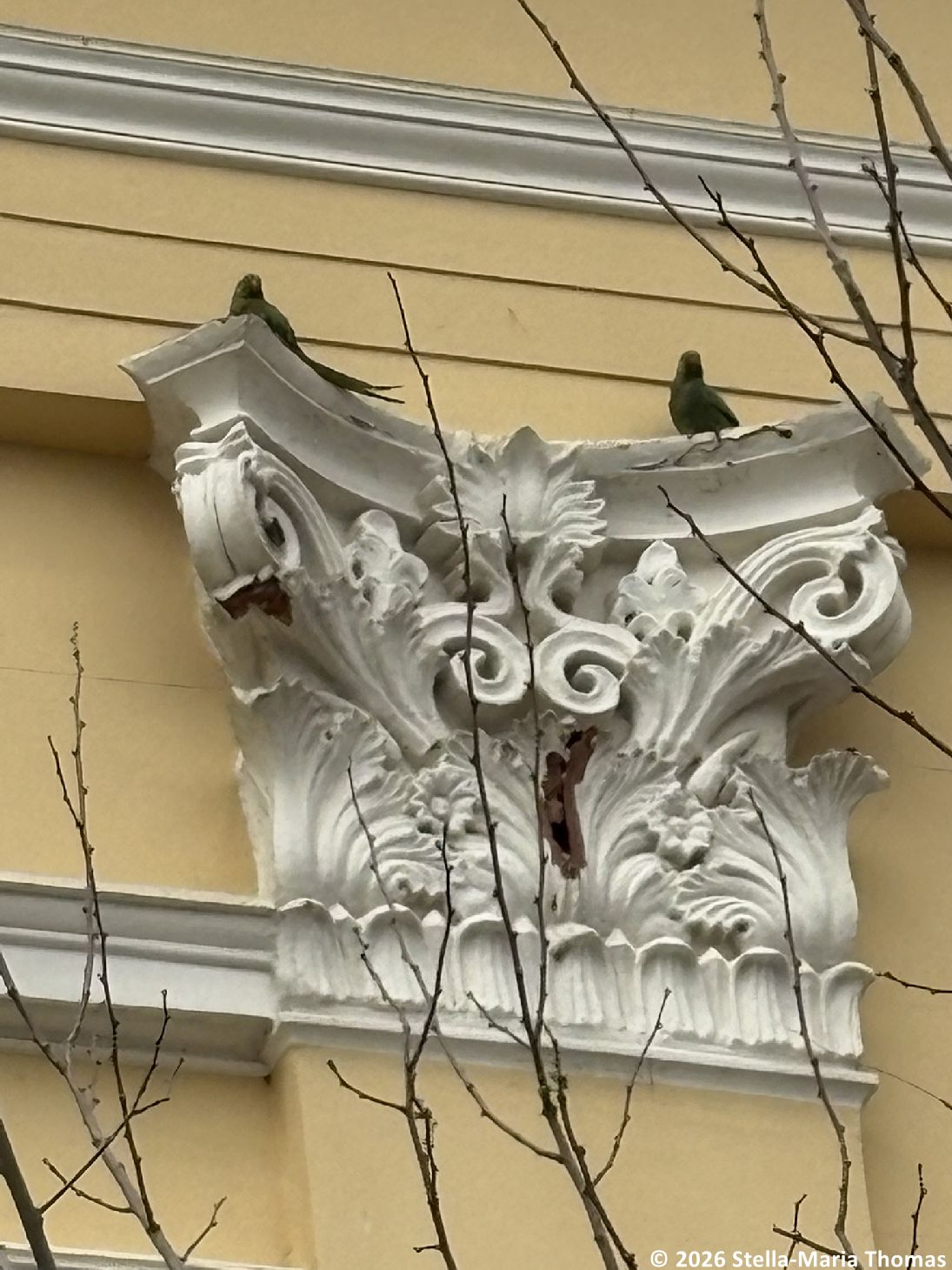
The National Garden started life as the Royal Garden, and didn’t get off to the best of starts, probably because Queen Amalia commissioned a German agronomist, Friedrich Schmidt, to design it. He imported over 500 species of plants, a lot of which did not thrive in the dry climate, and animals including peacocks, ducks, and turtles, which did. Presumably the parakeets found their own way to the garden.
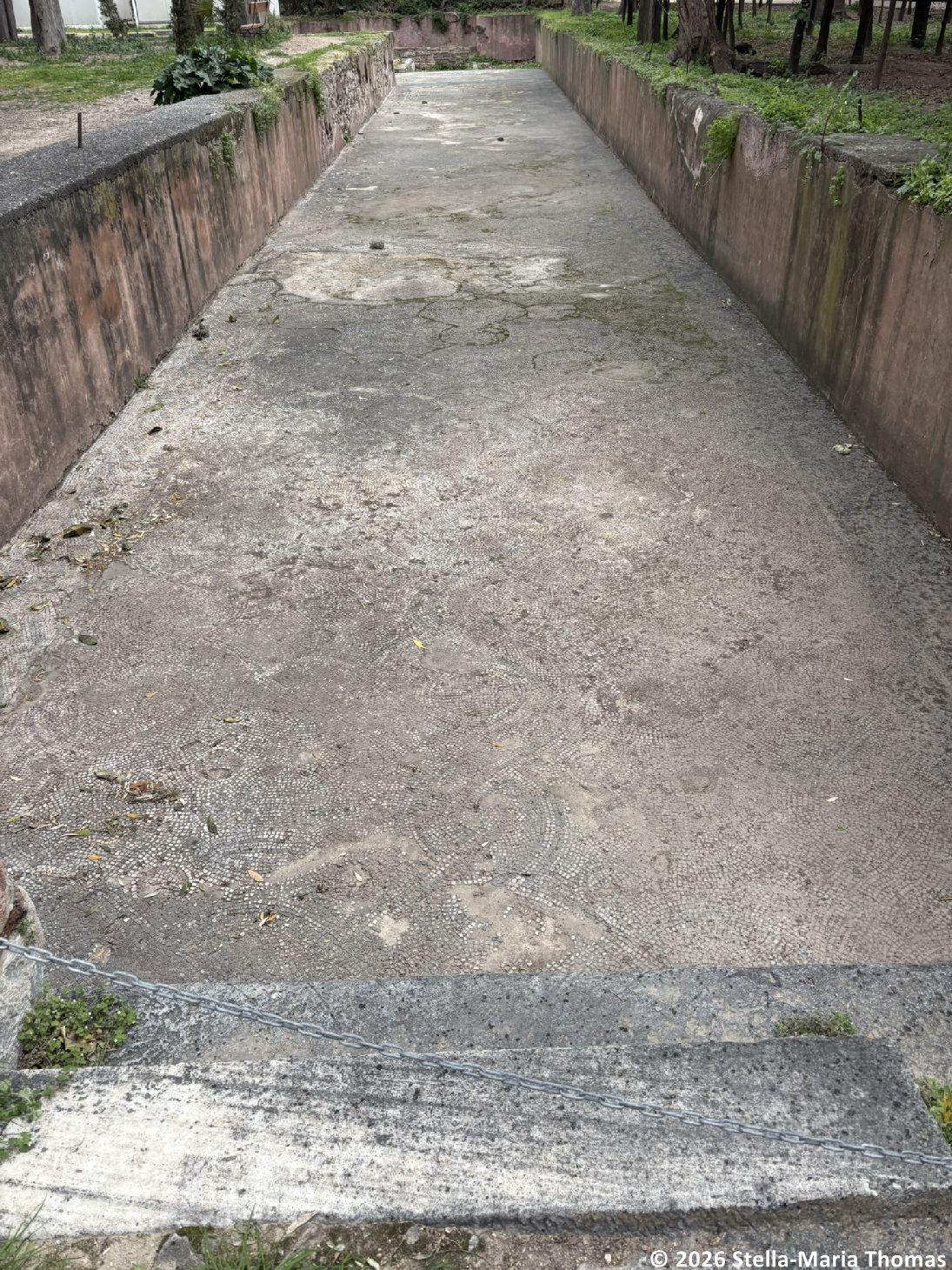
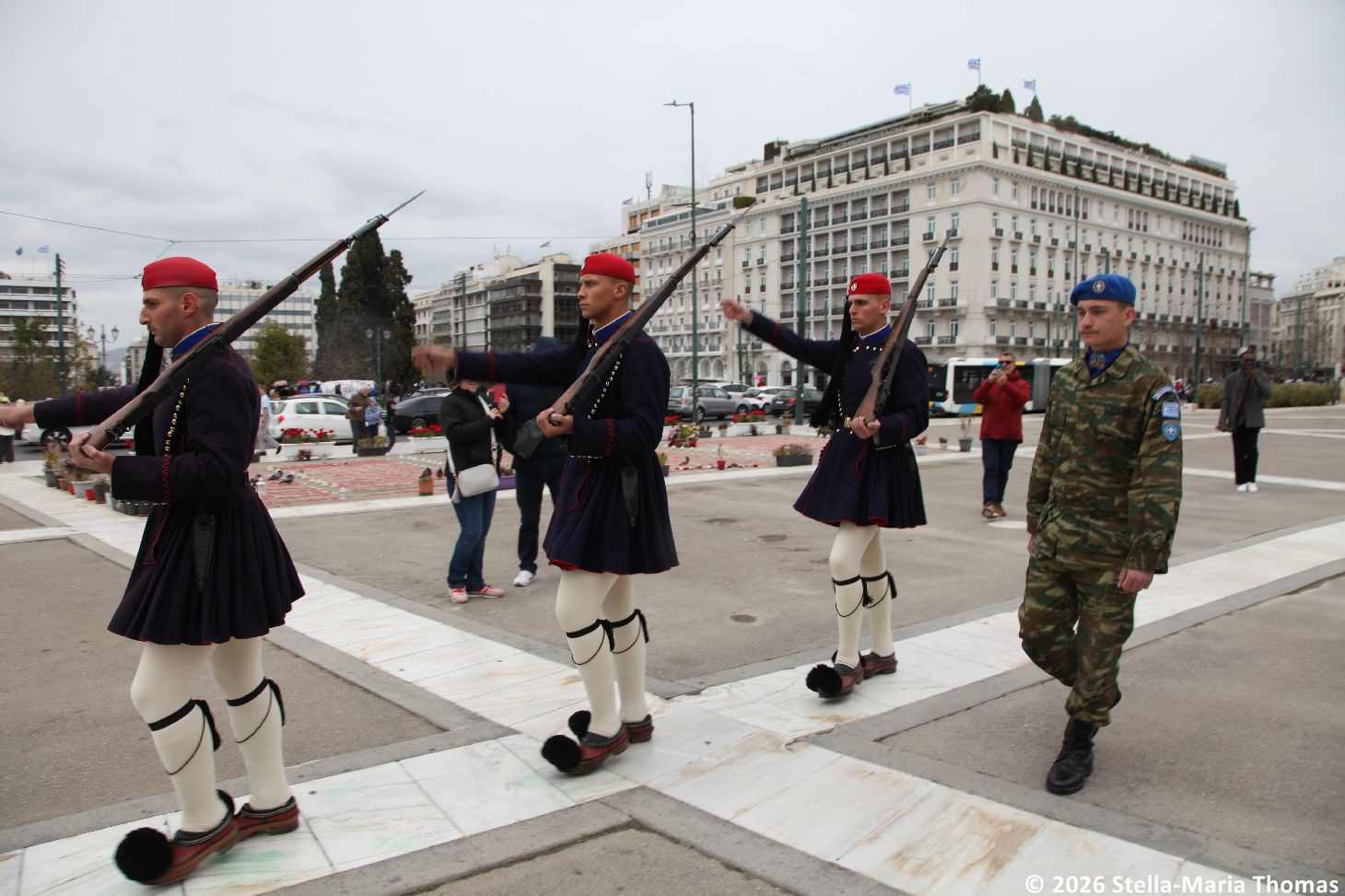
The garden also contains several archaeological remains, and butts up against the back of the Greek Parliament building. It also leads to the Lycabetus Hill if you keep on going and you’re happy to walk up hill. We opted to leave the hill till later and instead headed to Syntagma Square to see if we could figure out when the changing of the guard might happen. The guidebooks say on the hour, but something was happening at 12:45 so we stayed put to see what they would do.
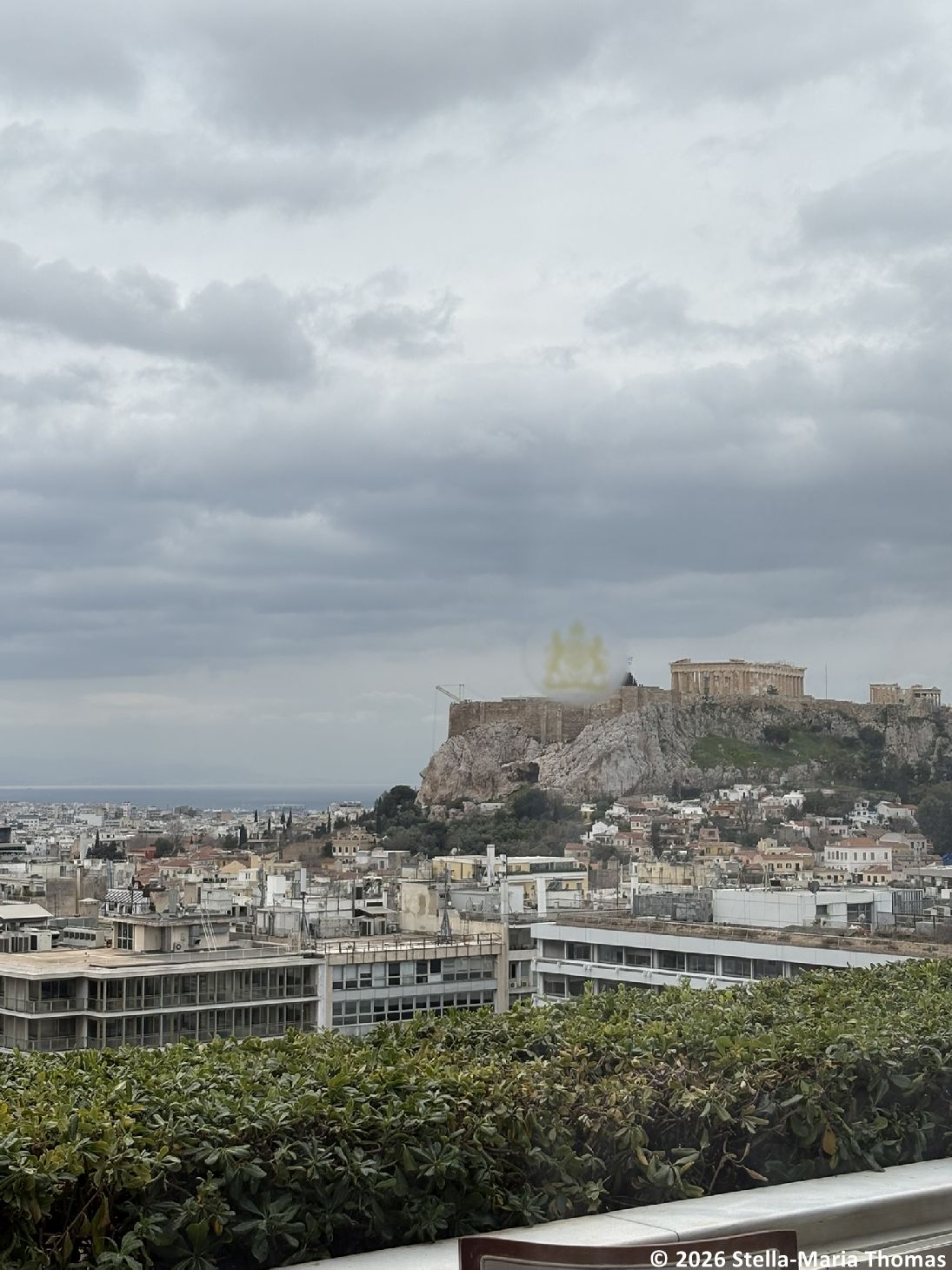
After all that excitement, we needed a proper break so we decided to try out the Hotel Grande Bretagne, a splendidly old-fashioned establishment of the old school of hotel. We established that the restaurant on the 10th floor would open at 13:00 and so we waited for 10 minutes and then headed up. The menu suggested lunch wouldn’t be cheap but it was utterly worth it for the view from the terrace and from inside through the massive picture windows.
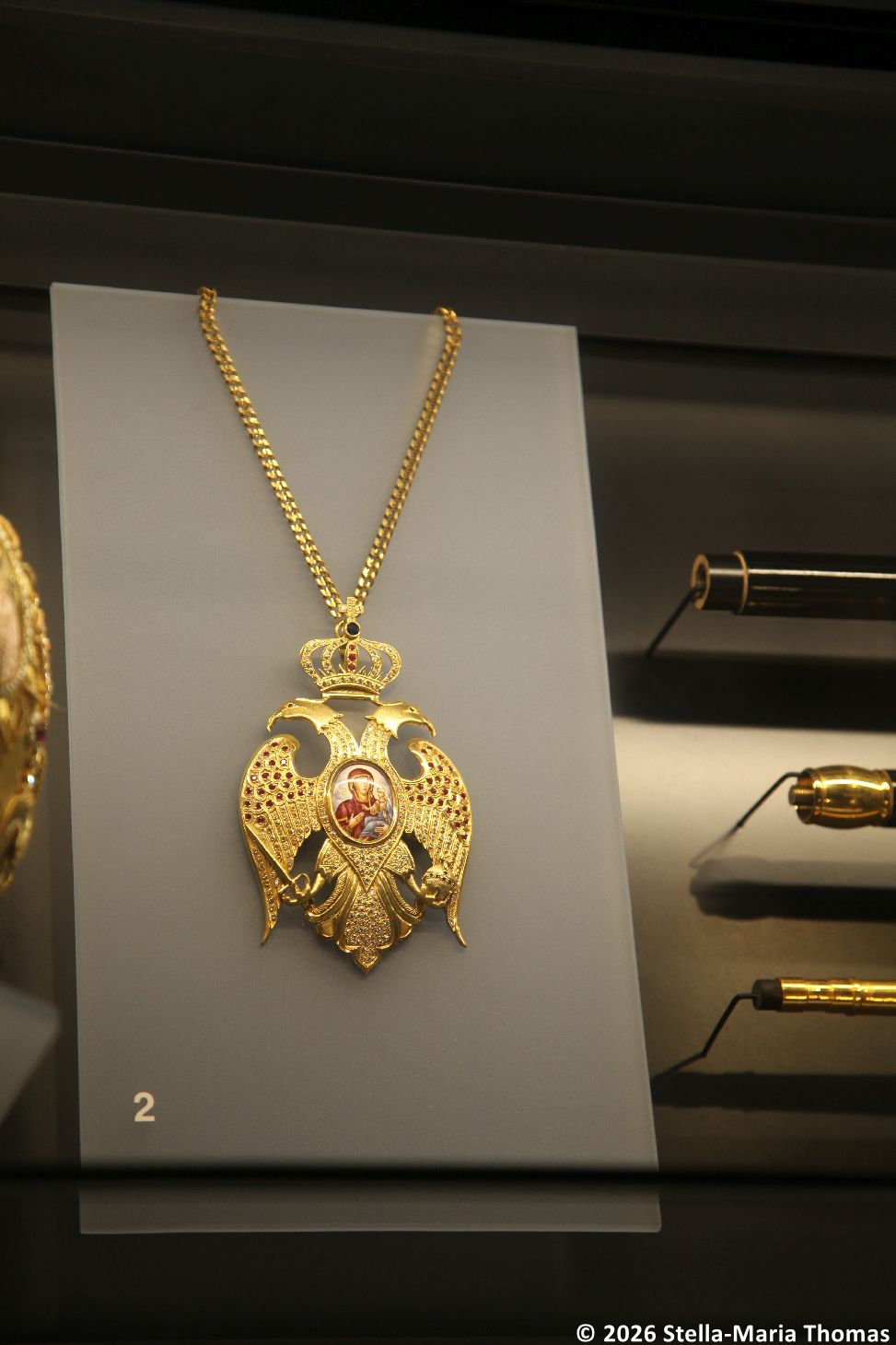
Fortified by a plate of the pasta of the day (with shrimp), we discussed the afternoon. The National Archaeological Museum was on the plan but time was moving on and on Thursdays in March it closes at 4pm, so we recalibrated and decided to tackle the Friday afternoon plan instead, which meant we headed back into the old town around Monastiraki, and looked for the churches listed for that part of the plan. First up was the Metropolitan Cathedral of the Annunciation, popularly known as the Metropoli, is the cathedral church of the Archbishopric of Athens and therefore of Greece. As such, it’s surprisingly modest, though the collection of items in the crypt is anything but, being as terrific a case of “Ooh! Shiny!” as I’ve seen in some time.
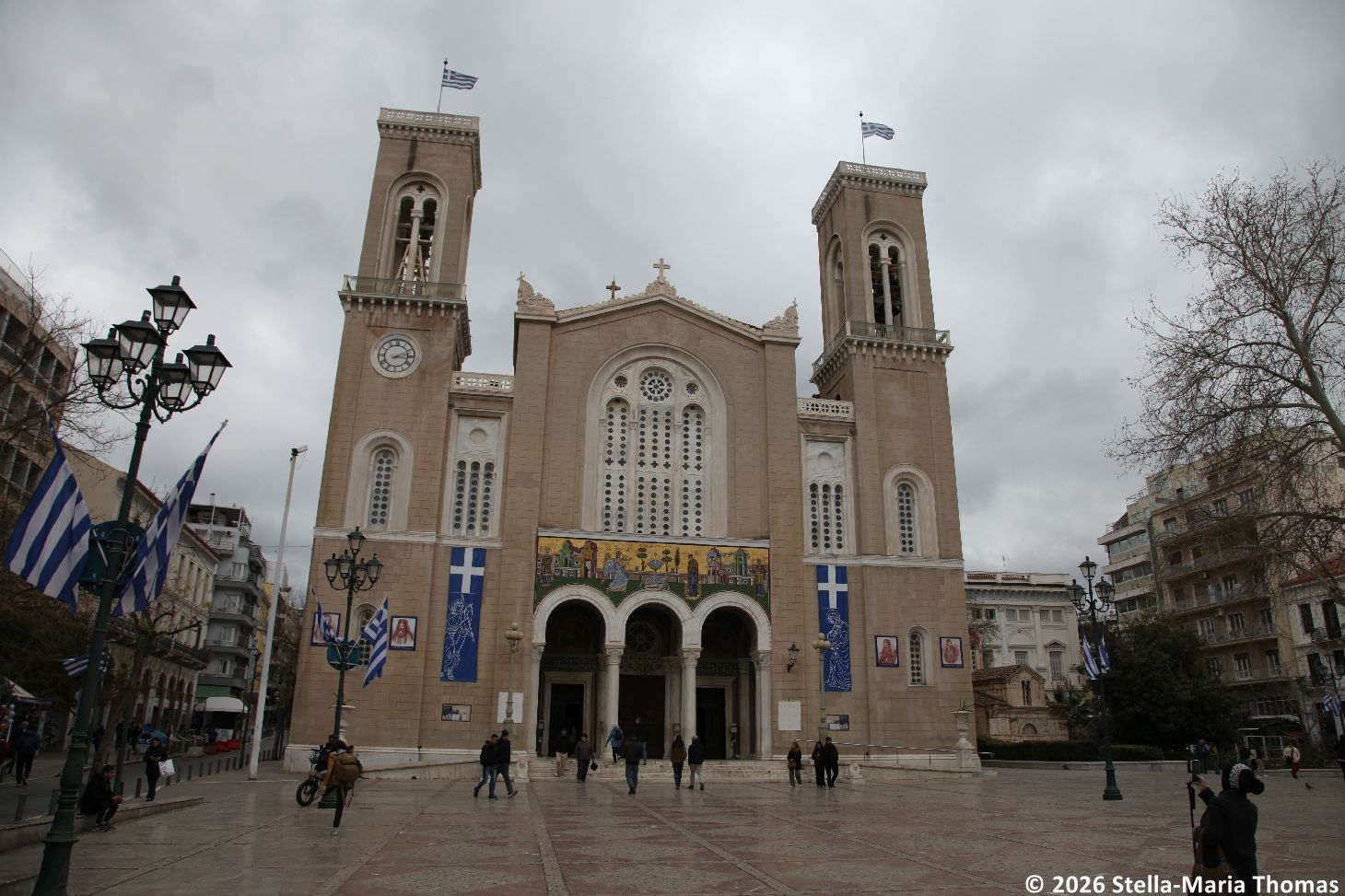
Construction of the cathedral began in 1842 with the laying of the cornerstone by King Otto and Queen Amalia, and they used marble from a large number of demolished churches for the walls. It is “dedicated to the Annunciation of the Mother of God, and is a three-aisled, domed basilica that measures 130 feet long, 65 feet wide, and 80 feet high. Inside are the tombs of two saints killed by the Ottoman Turks during the Ottoman period”. These are Saint Philothei who was martyred in 1589, and is honoured for ransoming Greek women enslaved in Ottoman Empire’s harems, and the one the chap in charge was very keen to point out, Gregory V, Patriarch of Constantinople, who was “hanged by order of Sultan Mahmud II and his body thrown into the Bosphorus in 1821, in retaliation for the Greek uprising on 25 March”. This led to the Greek War of Independence and a lot of displacement of people. It is said that his body was rescued by Greek sailors and it now sits in the cathedral to the great devotion it seems of the local population.
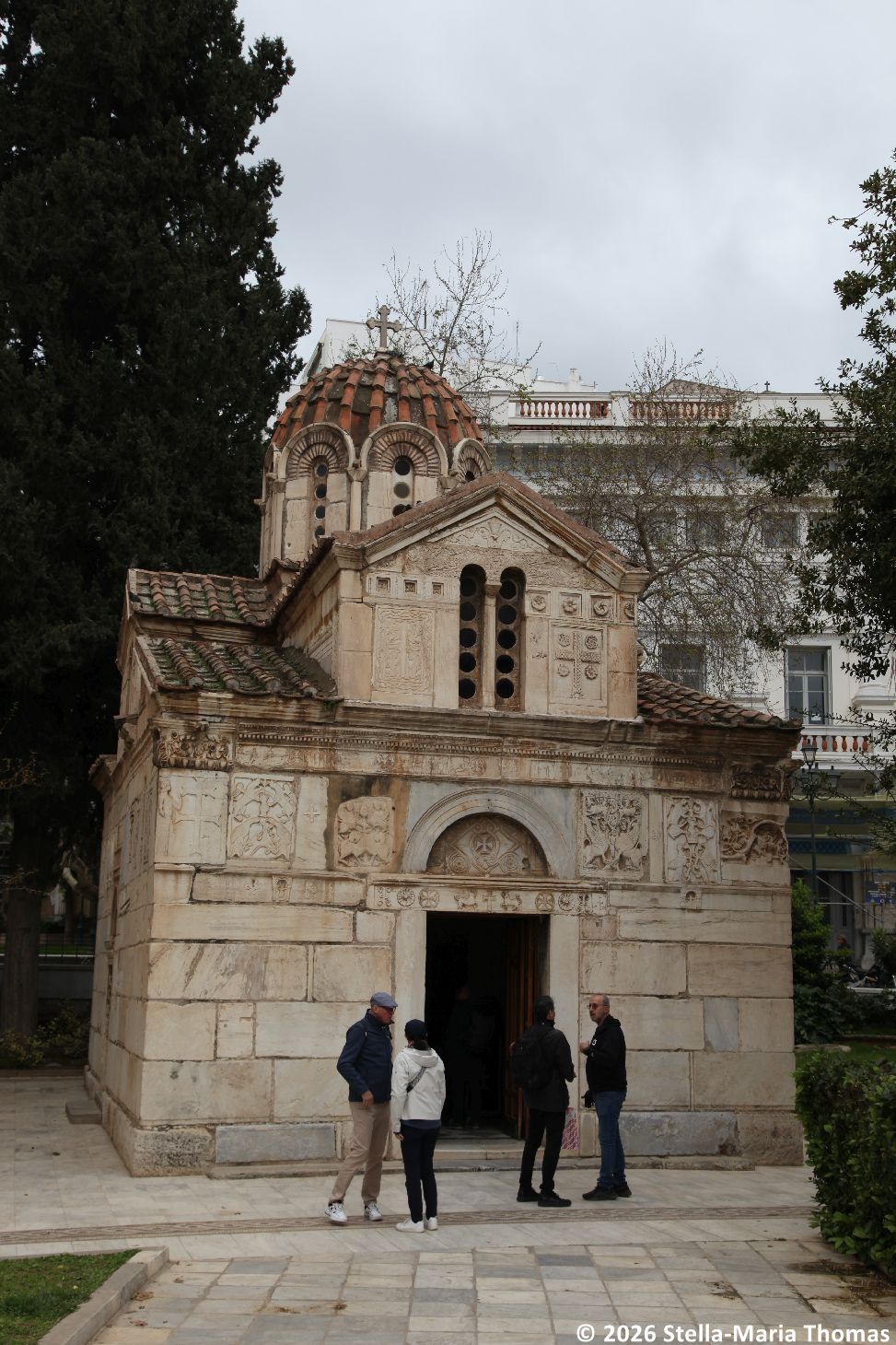
More interesting, though conspicuously short of ecclesiastical bling, is the tiny Church of St. Eleftherios, which is by way of contrast known as the “Little Mitropoli”, and is positively austere in comparison. It is built on top of the ruins of an ancient temple dedicated to the goddess Eileithyia. After much speculation, it seems to be generally agreed that it’s not as old as was additionally thought and it now seems certain that it was built after 1436. It was originally dedicated to the Panagia Gorgoepikoos after a miraculous icon of the Virgin Mary housed there. Following the Greek War of Independence, it was abandoned, and after that it housed the public library of Athens from 1841 until 1863, when it was re-dedicated as a church, first to Christ the Saviour, and then to Saint Eleutherios.It is indeed tiny at 25 feet long and 40 feet wide, and the walls are made of reused marble spolia, with no bricks whatsoever except for the dome.
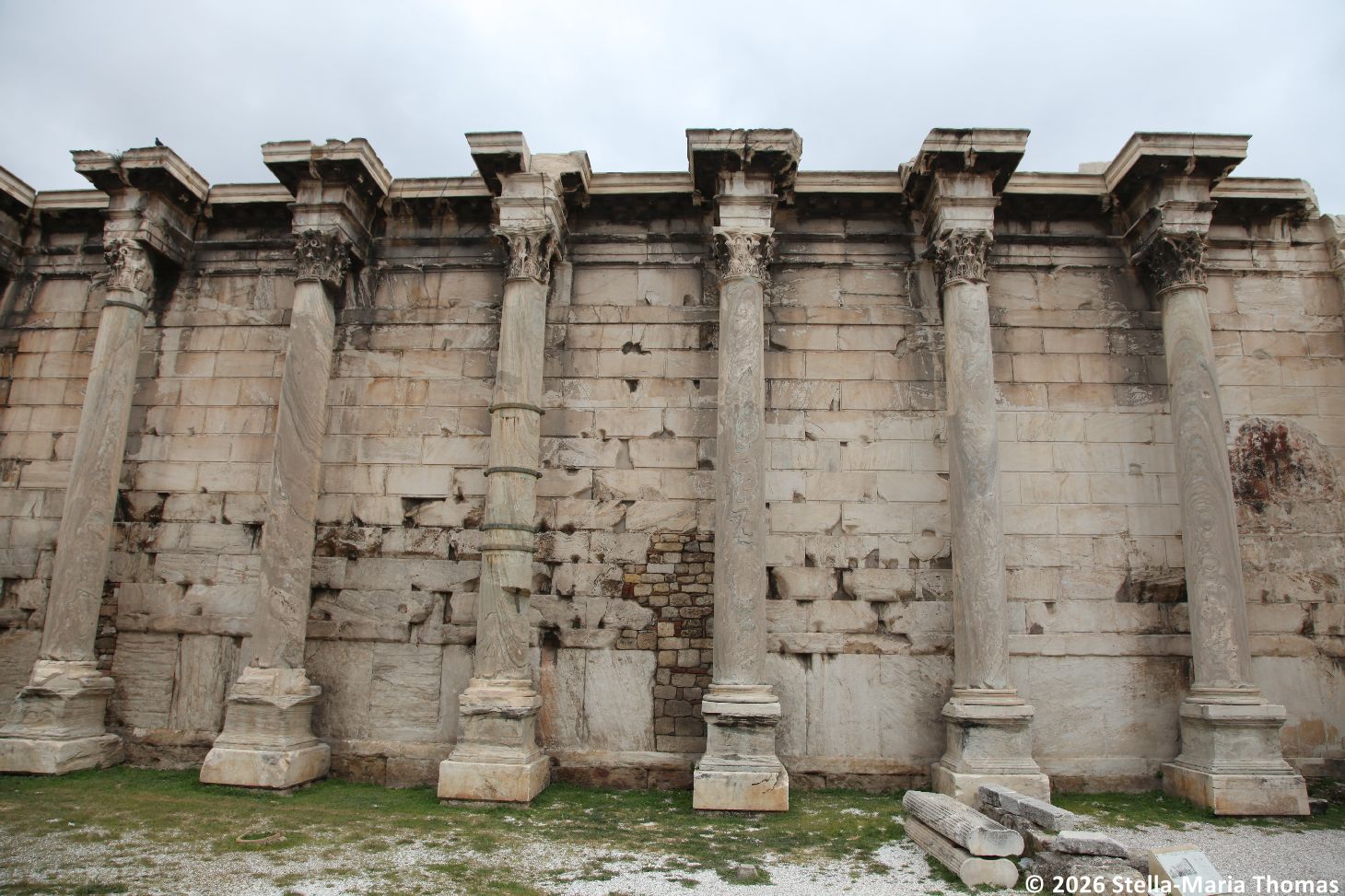
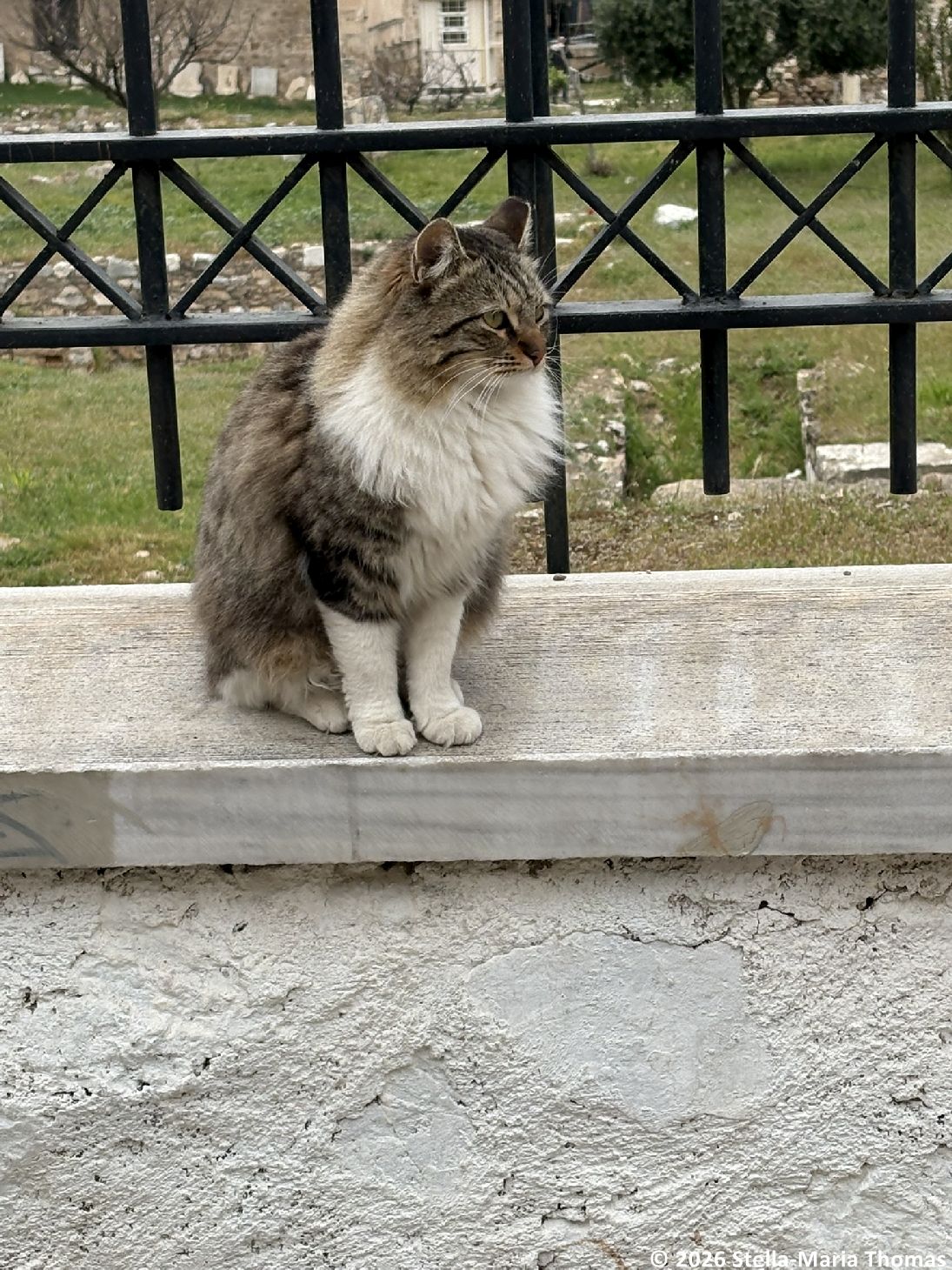
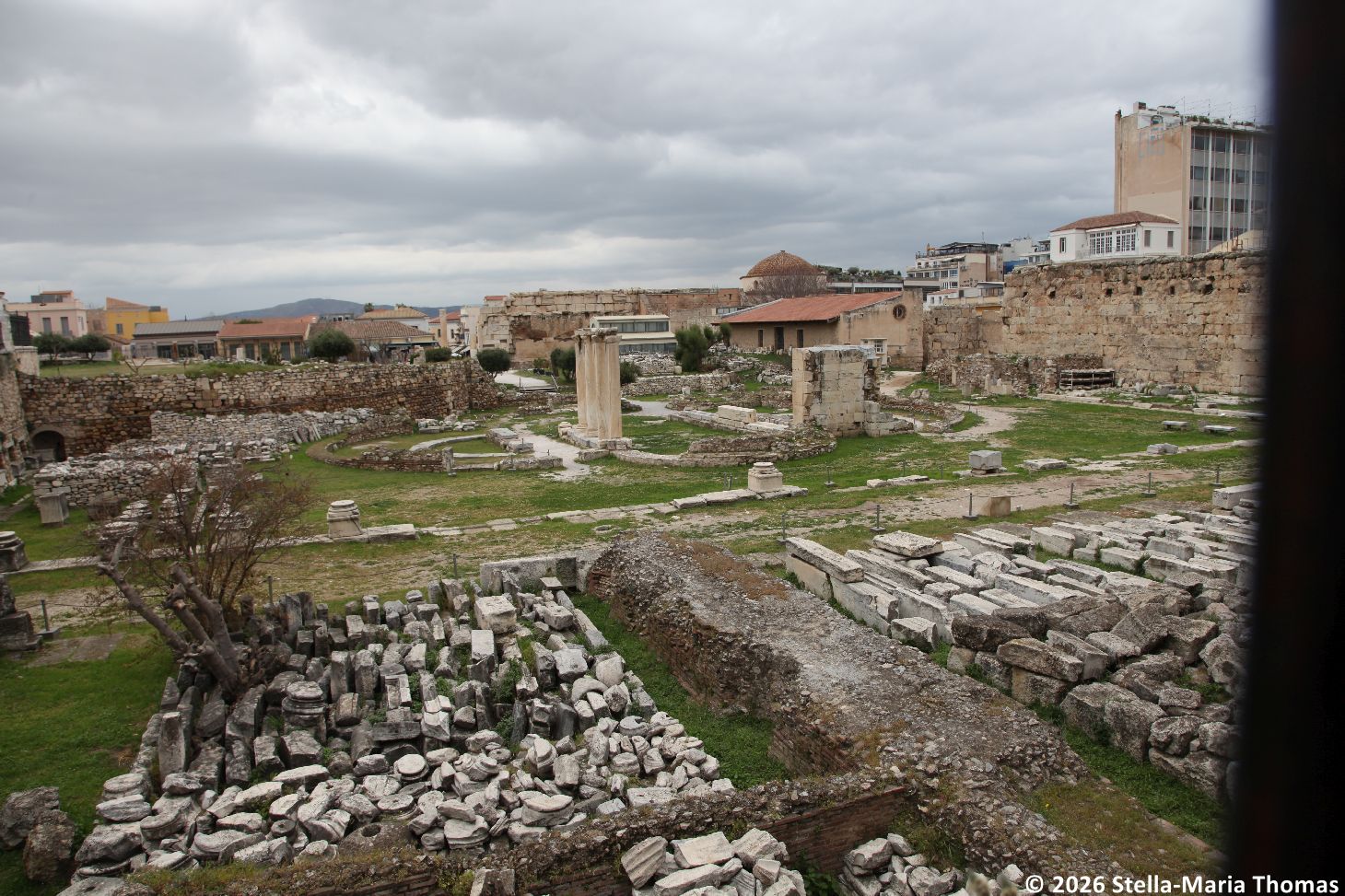
And by now we were running out of steam so it was back to the hotel to freshen up before going out for dinner, but not before we swung past Hadrian’s Library, in keeping with the themes of the day. It closes early in March, so we were too late to go in, but there’s a very good view of it just by walking around the outside. Out of hours, it’s well guarded by two fierce looking dogs, and several dozen fluffy cats, who are mostly in it for the treats it seems and who regard the dogs with utter contempt.
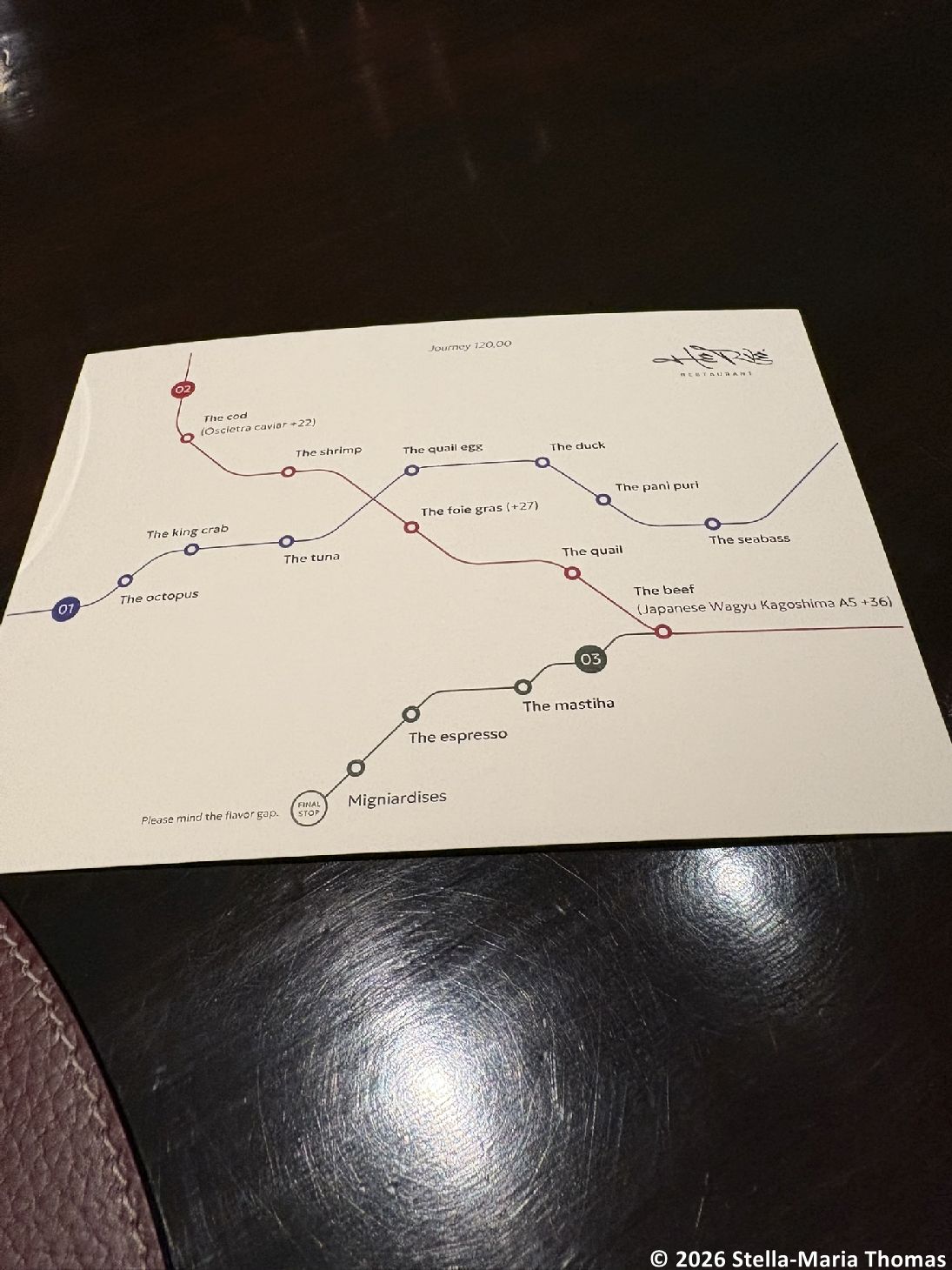
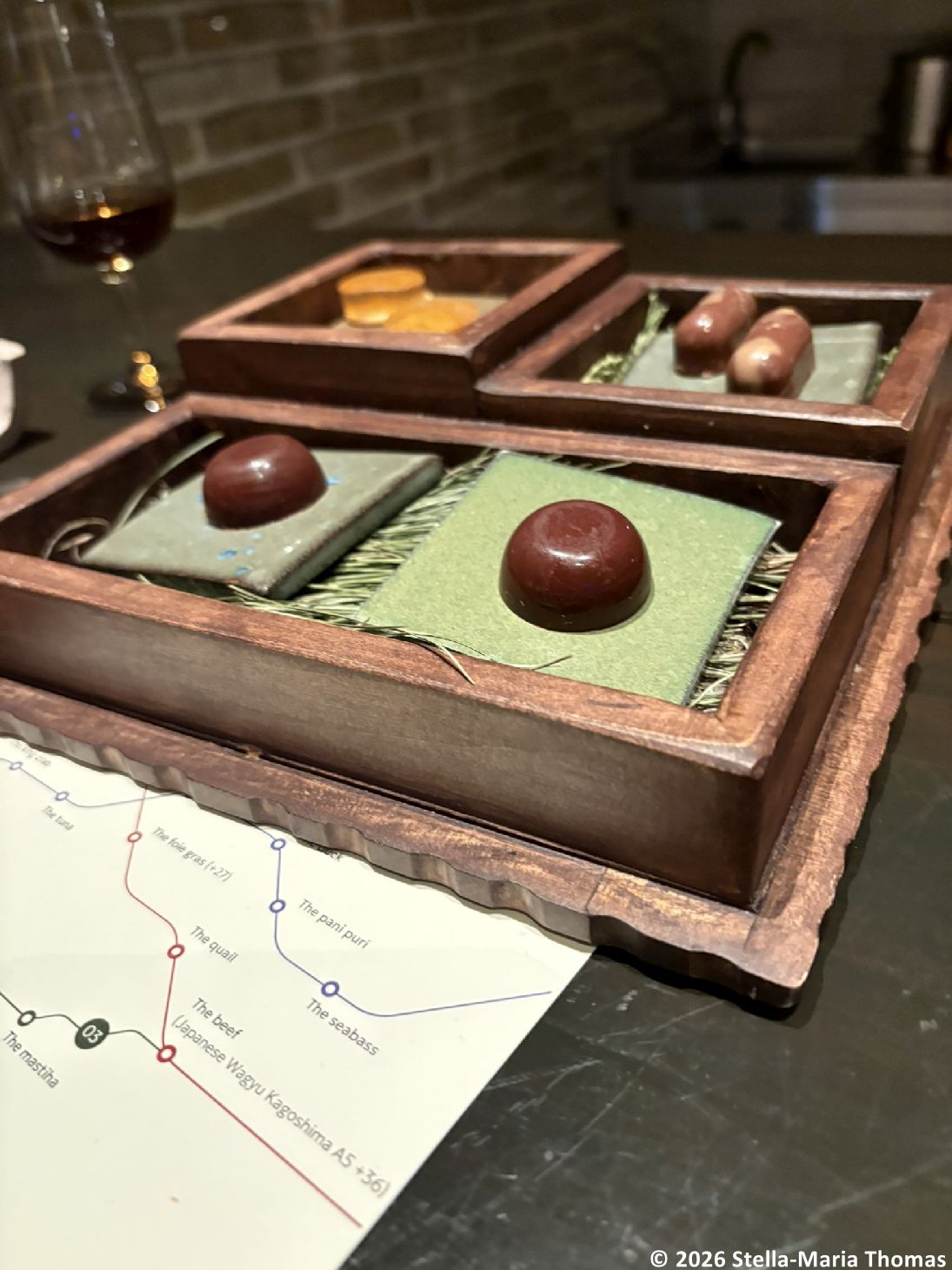
For our final evening in Athens, we went back to Materia Prima for pre-dinners drinks because they had been so welcoming on our first visit, and then headed across town to Herve, a one-Michelin starred establishment very close to one of the Metro stations. We were seated at the counter that overlooks the kitchen, so technically a chef’s table seat and entertained to a series of delicious bites as we worked through the ludicrously inexpensive (at least compared to a similar level place in the UK) menu degustation (a whole €120 each) laid out to resemble the metro system that had got us there.
In order of consumption there was a tiny octopus macaron, a tartlet containing mackerel, and a portion of king crab.
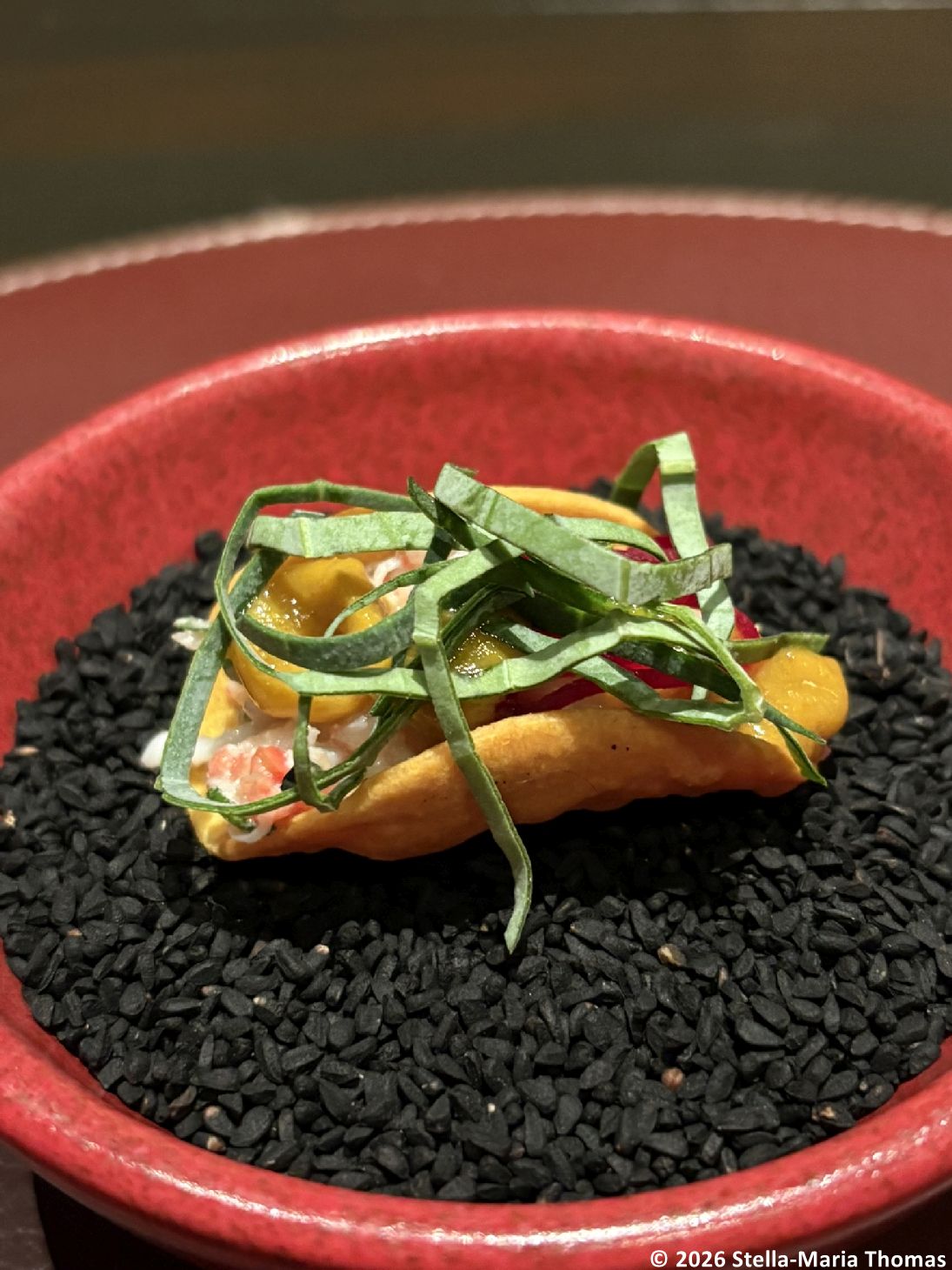
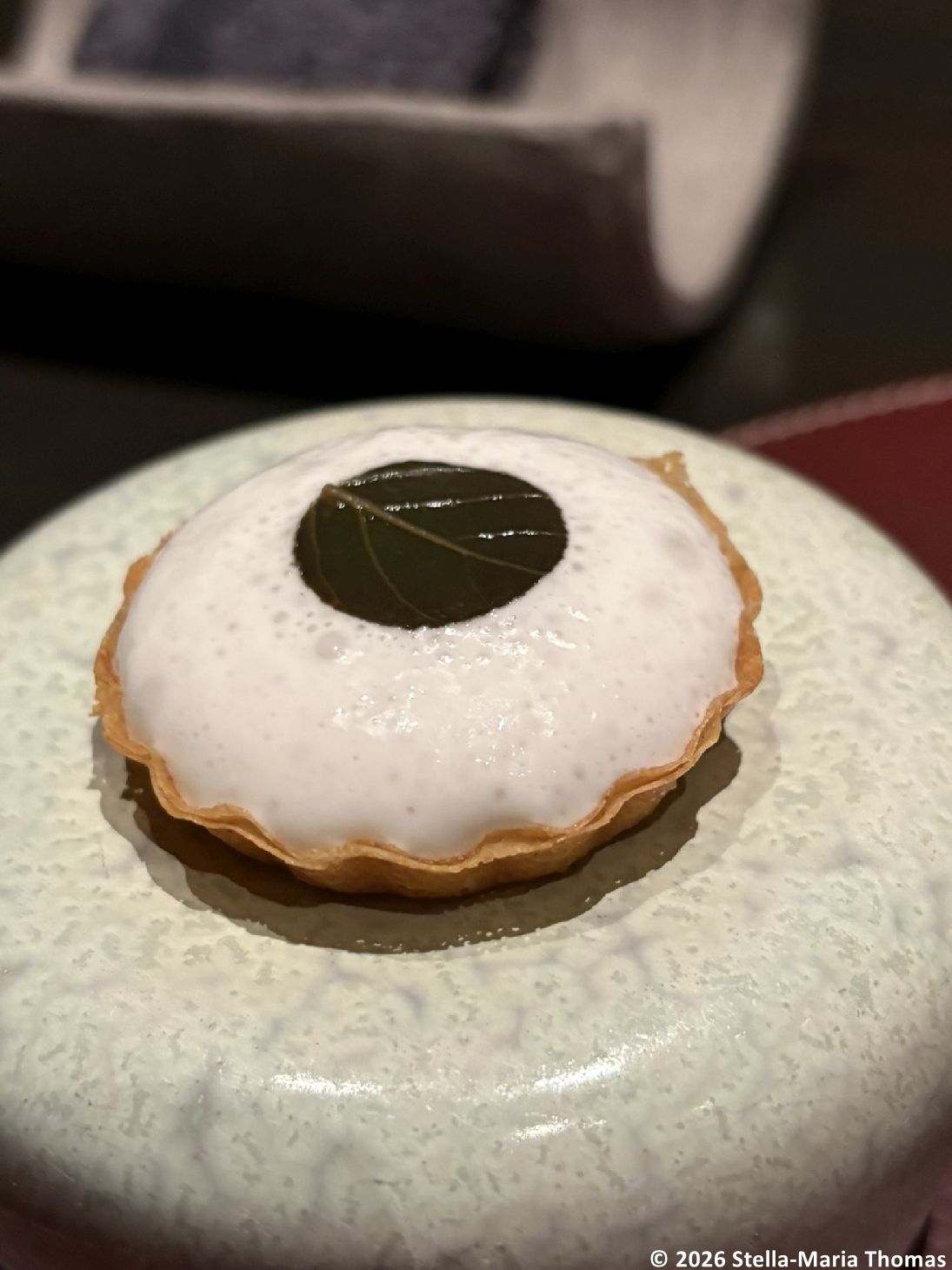
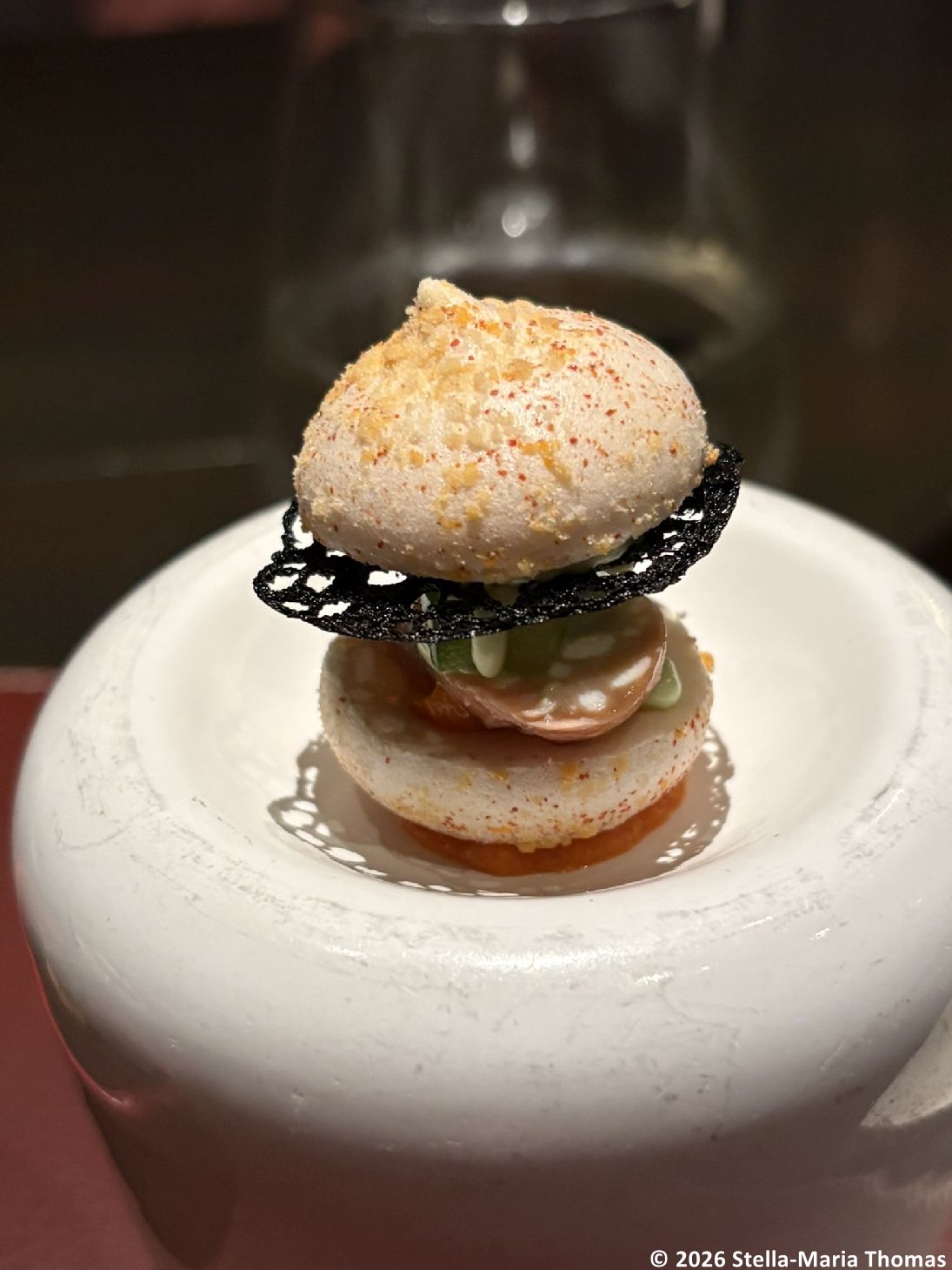
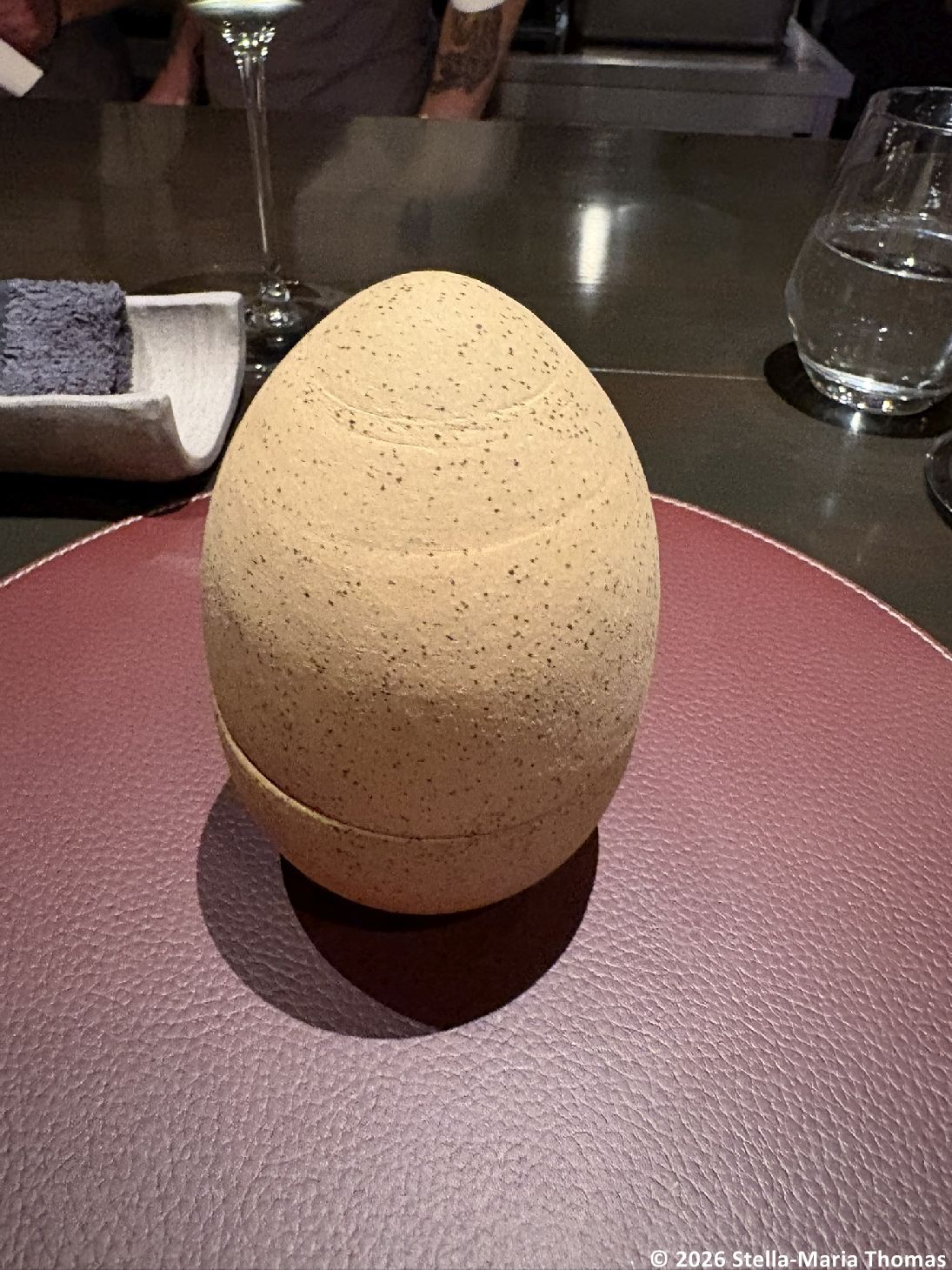
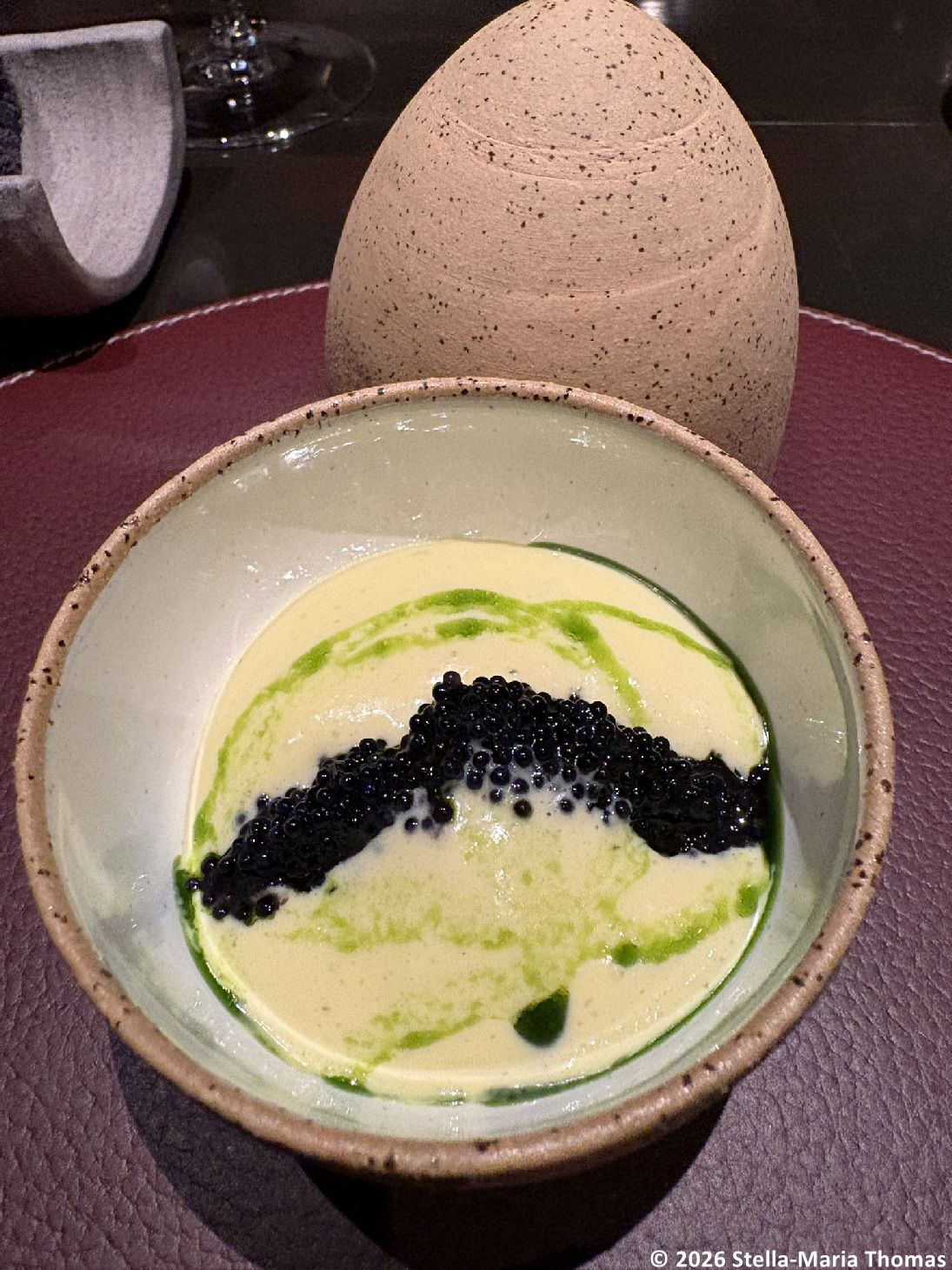
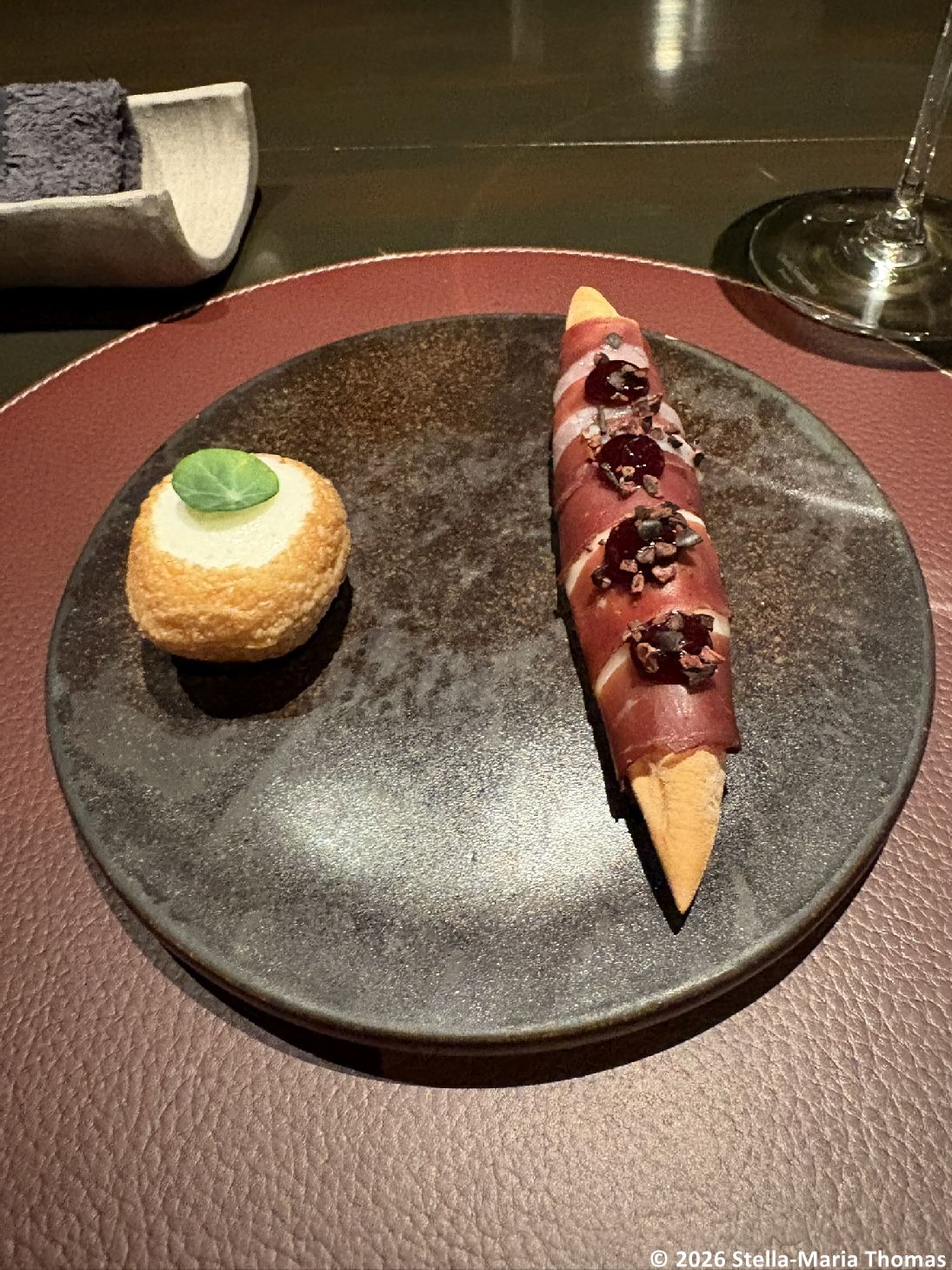
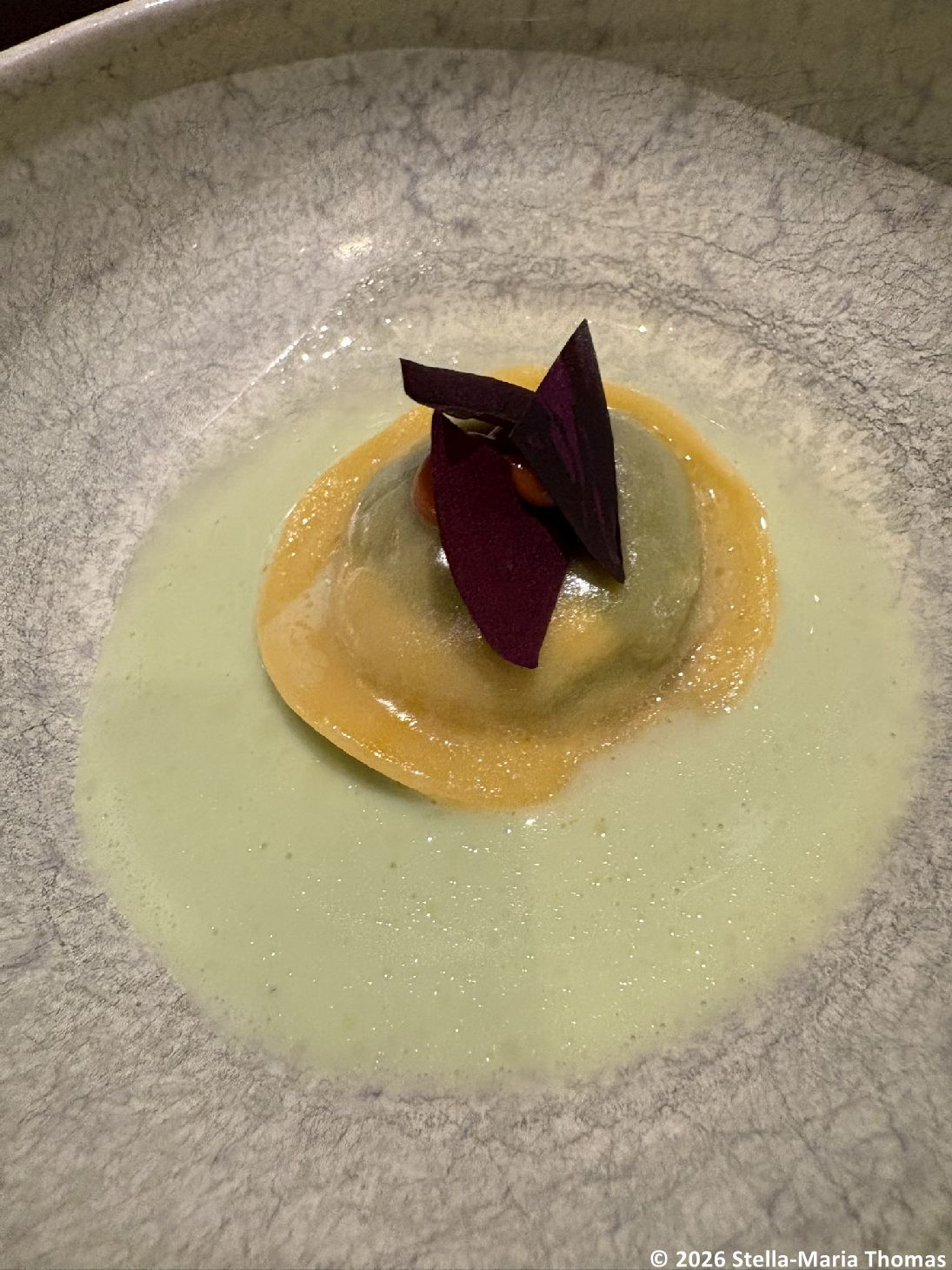
This was followed by their take on a quail’s egg, with spinach, dill, and lump fish roe, duck with port, miso, and cocoa nibs, and the cutest pani puri, with foie gras parfait, eel, and green apple.
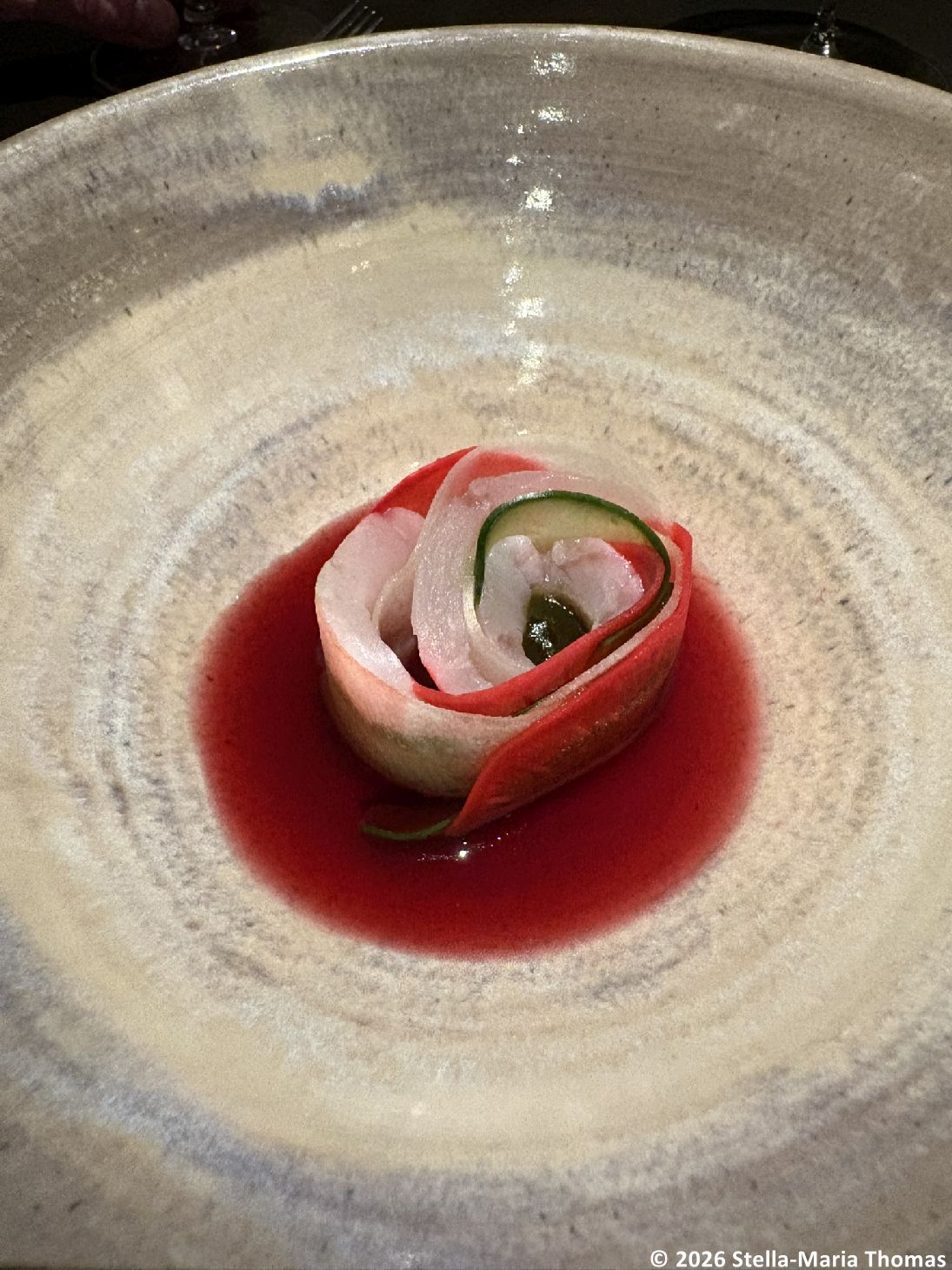
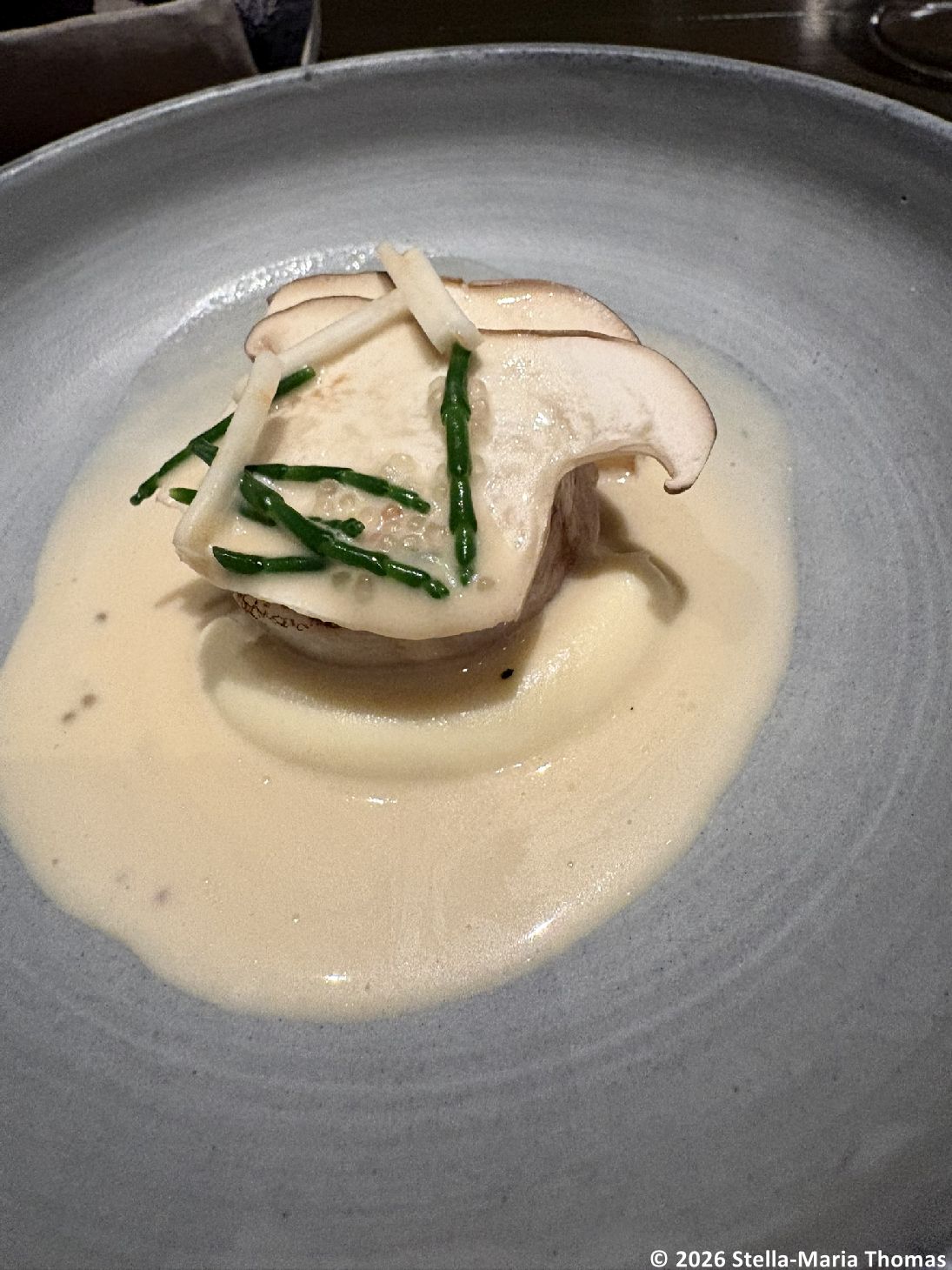
Three fish courses followed, starting with seabass, rhubarb, rose water, and green chili, then a portion of cod, with salsify, celeriac, and king oyster mushrooms, before finally shrimp, with verbena, pepper, and melissa, a herb I had not encountered before.
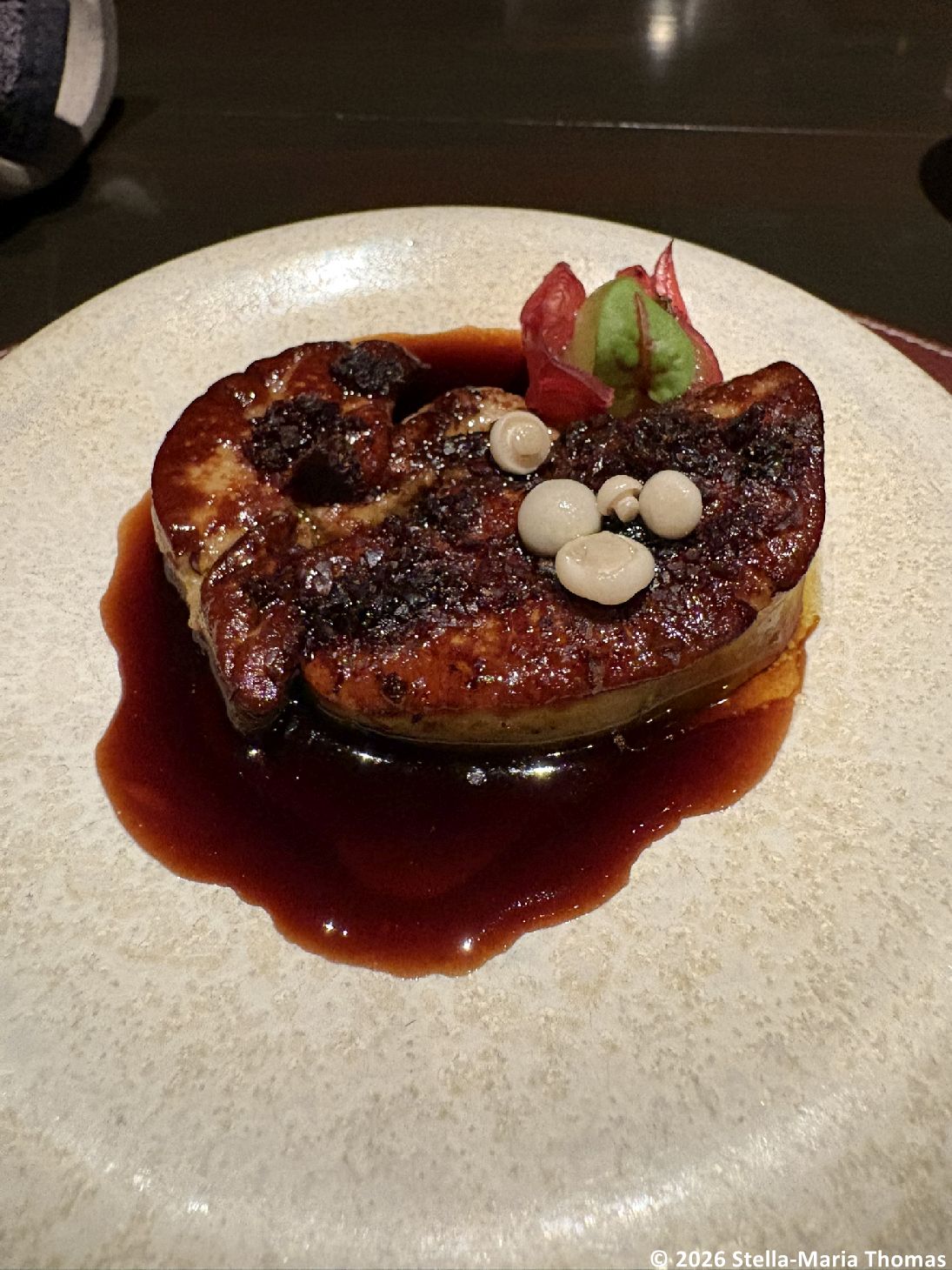
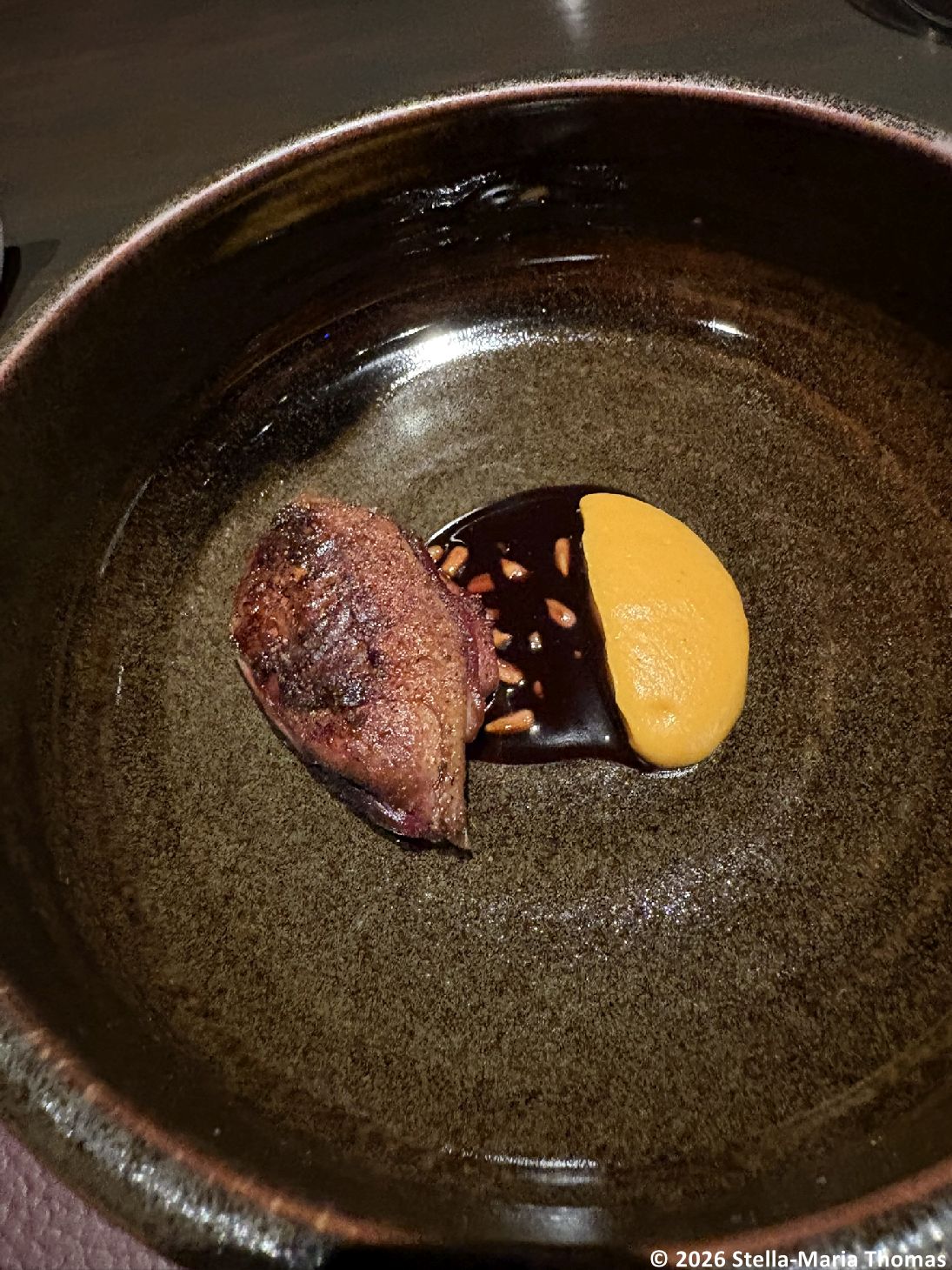
Inevitably, we were then onto meat – starting with an optional course of foie gras, with sudachi, fennel, hibiscus, aged soya, grape, and shimeji mushrooms at an extra €27 each. The came a delicate and beautiful quail, with pumpkin, blueberries, and dates. There was also a beef course, which you could upgrade to wagyu A5 if you wanted to. We figured we’d be fine with “normal” beef, because I’m not sure that by that stage I’d be capable of appreciating the difference! Even without the upgrade it was meltingly tender, served with potatoes, Bearnaise sauce, and elderberries and capers.
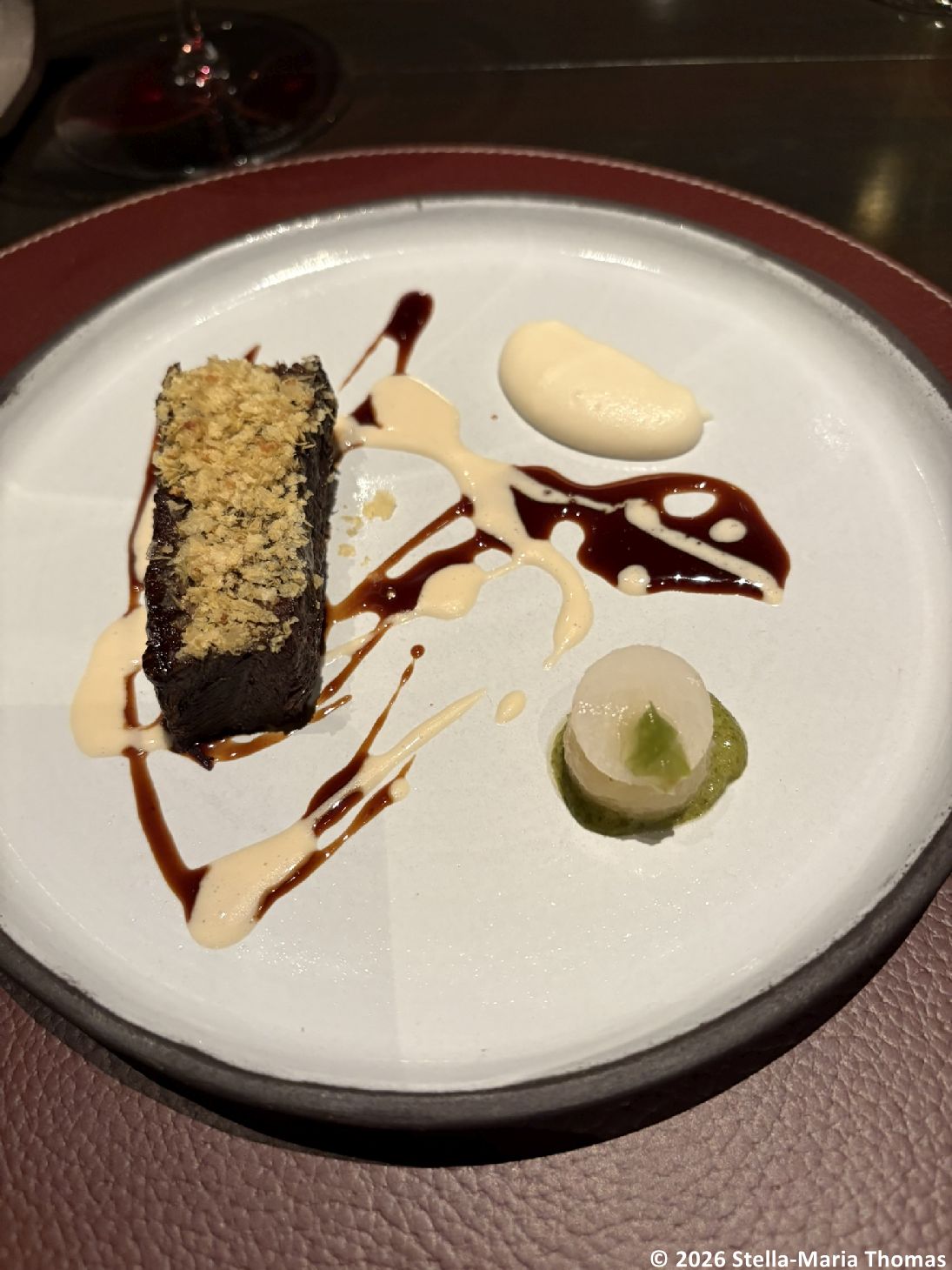
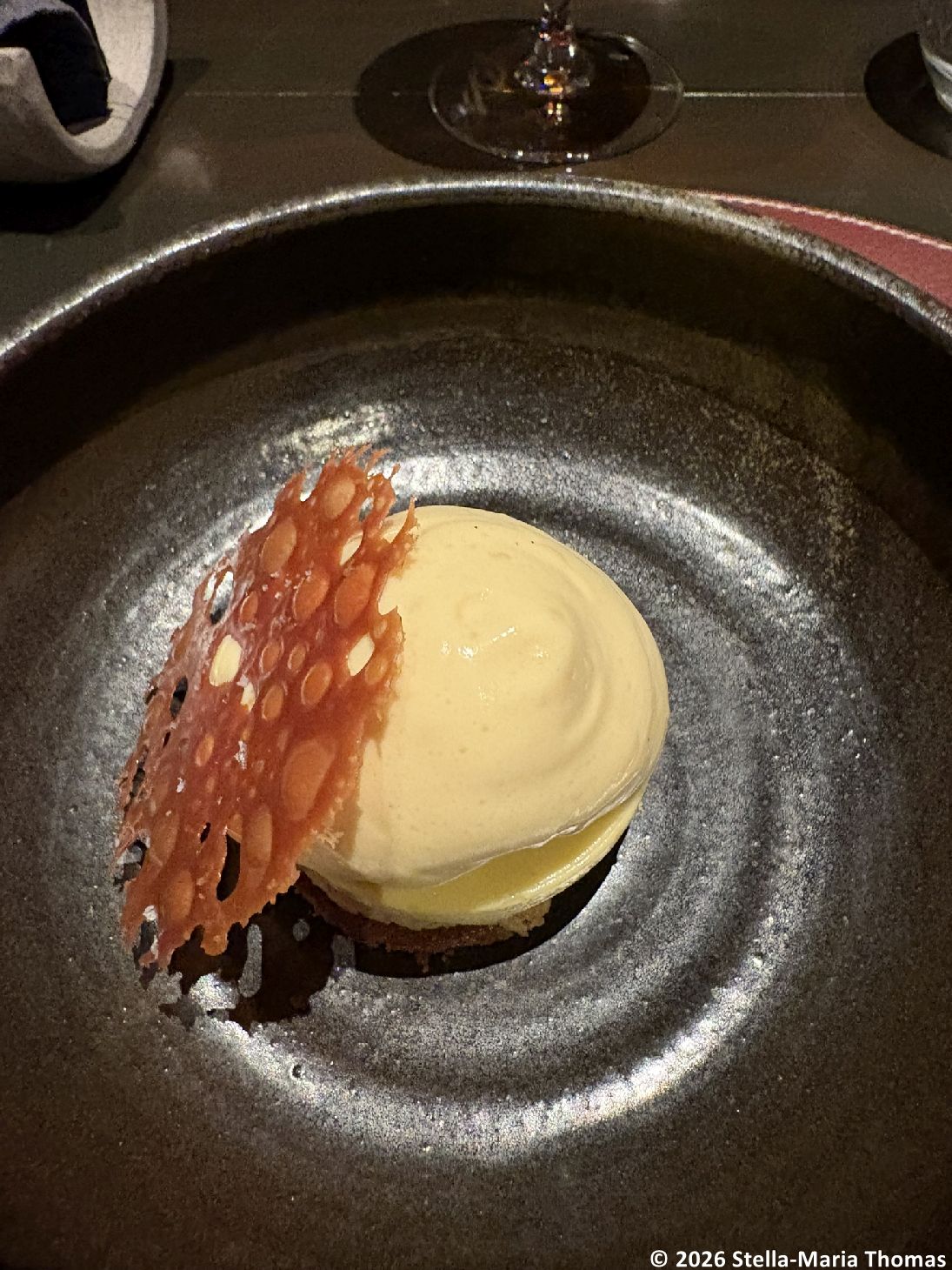
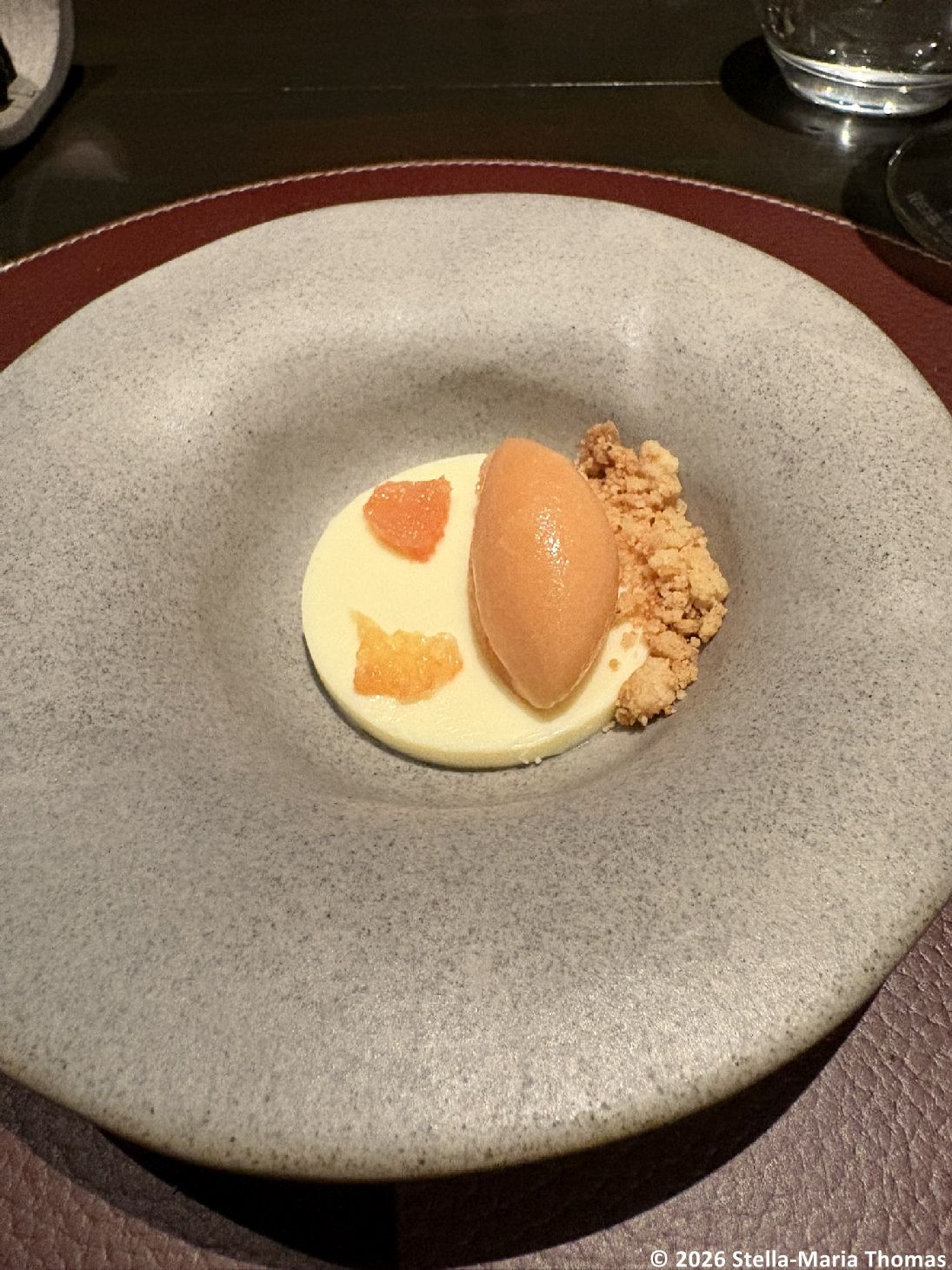
We finished with two desserts, both mercifully small, first the mastiha, with citrus, and verbena, and then the espresso, with caramel, almonds, and chocolate. A final presentation of “mignardises”, covered strawberry, chocolate, and lemon and were the perfect end to an excellent meal. We’d also taken on the wine flight to save having to make our own choices (2024 Sauvignon Blanc, Rimapere Estate, Marlborough; 2023 Noemvris Late Harvest, Moropoulos Winery, Moschofilero, Mantineia; 2023 Rully Blanc, David Moret, Chardonnay, Burgundy; 2008 Liastos, Magoutes Vineyards, Xinomavro/Moschomavro, Macedonia; 2024 Stamna, Mavrodaphne, Sotiriou Winery, Messolonghi; 2019 Fuentelun Reserva, Cruz de Alba, Tempranillo, Ribera Del Duero; 2021 Works and Days, Muses Estate, Savatiano, Boeotia).
Unfortunately, by the time we’d finished, and had a long chat with the staff, the last metro train had long gone, so we had to walk back to the hotel, given the taxi drivers’ strike, which was still dragging on. It should have been a 20-23 minute walk but because we couldn’t find a safe way across the main road, ended up being around 40 (and the reason why when I looked at my Garmin on waking the following morning it already had over 4,000 steps on it)! It was worth it though… The score for the day was 17,346 steps (minus the block needed to get back to the hotel), 13.0 km apparently, and 3,003 calories though we probably ate considerably more than that.

 Smtfhw's Travels