Friday 20th March, 2026 – Athens
Friday would be our final day but at least it would be a relatively full one. With our flight out at 19:50 that night, it meant a hotel pickup at 16:45 so we had time to get to a handful more of the main sights in the city. We had rescheduled the National Archaeological Museum from the previous day when we’d realised we’d be lucky to get more than 45 minutes in the place given its winter season opening hours (Wednesday to Monday: 08:30 – 15:30, Tuesday: 13:00 – 20:00). My advice is to check the opening hours of anywhere you want to visit very carefully when planning your trip.
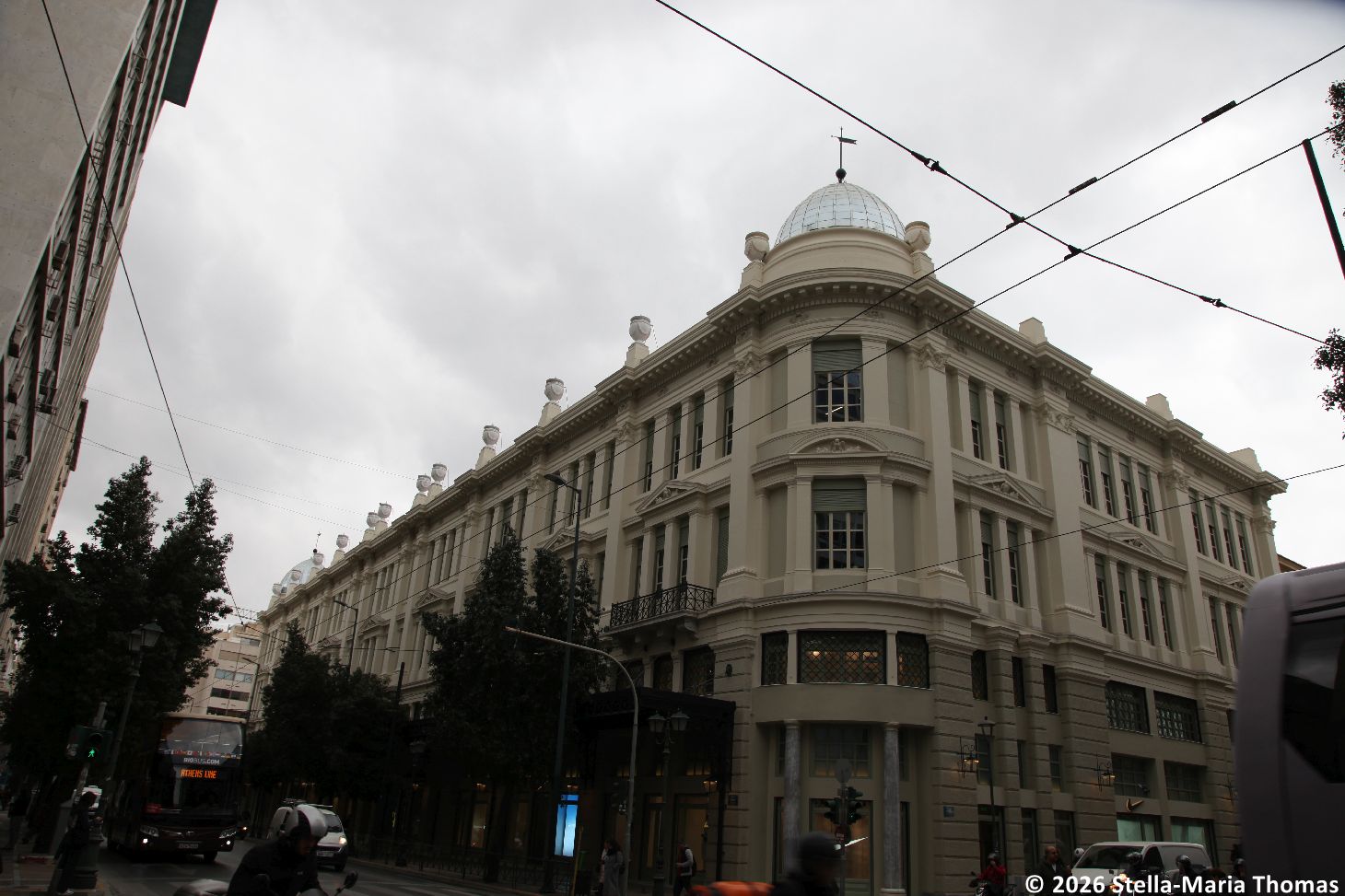
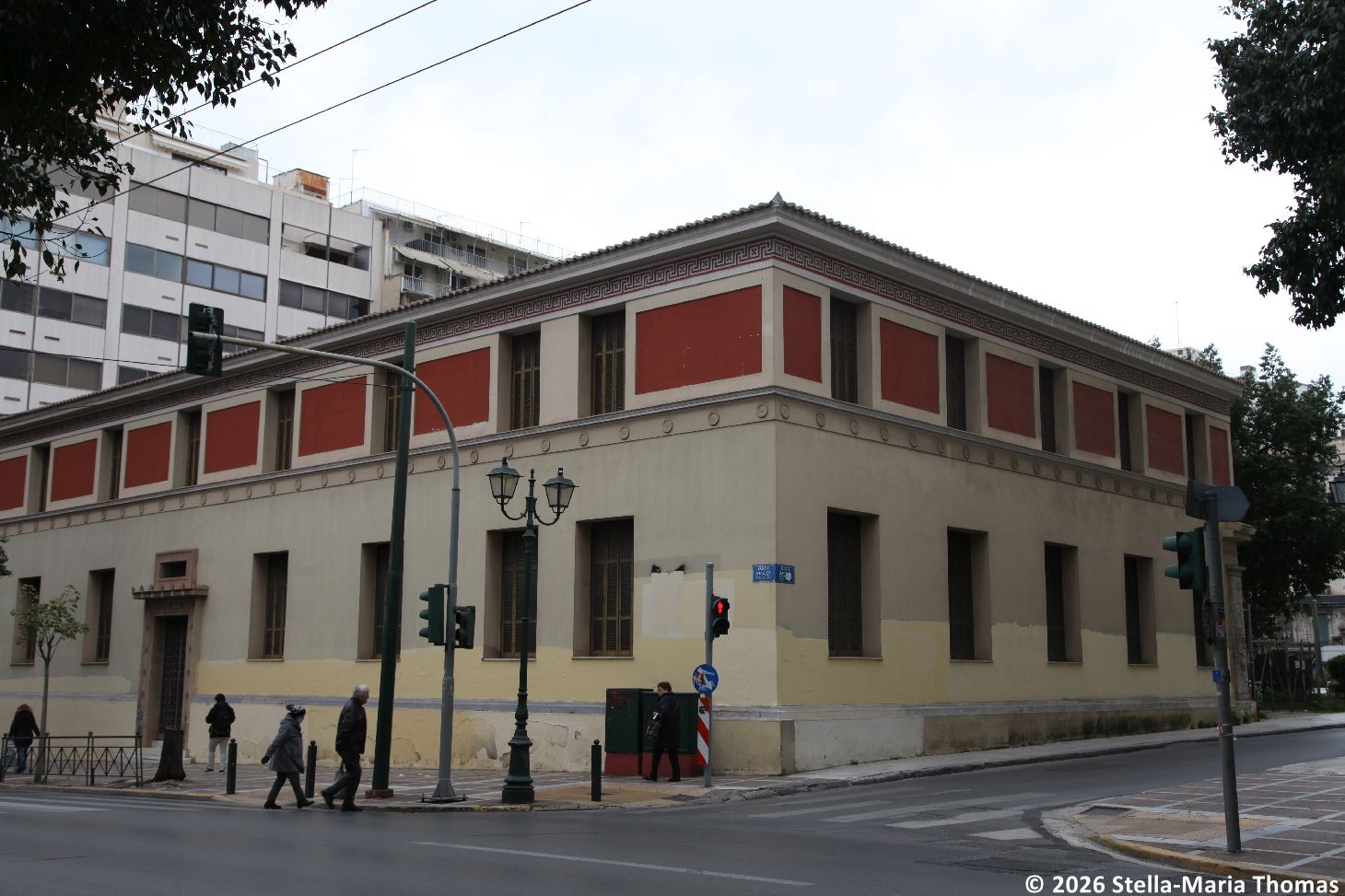
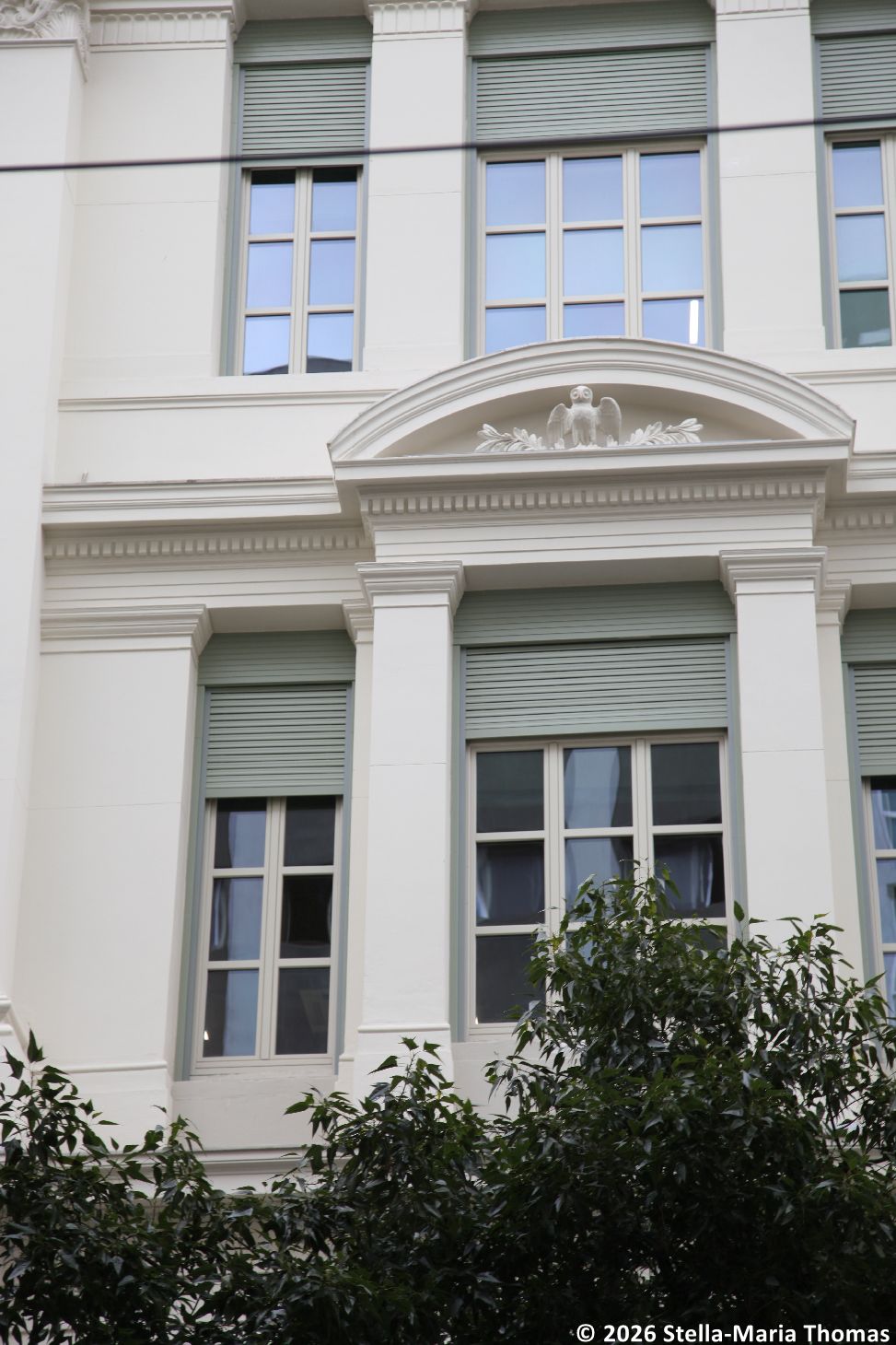
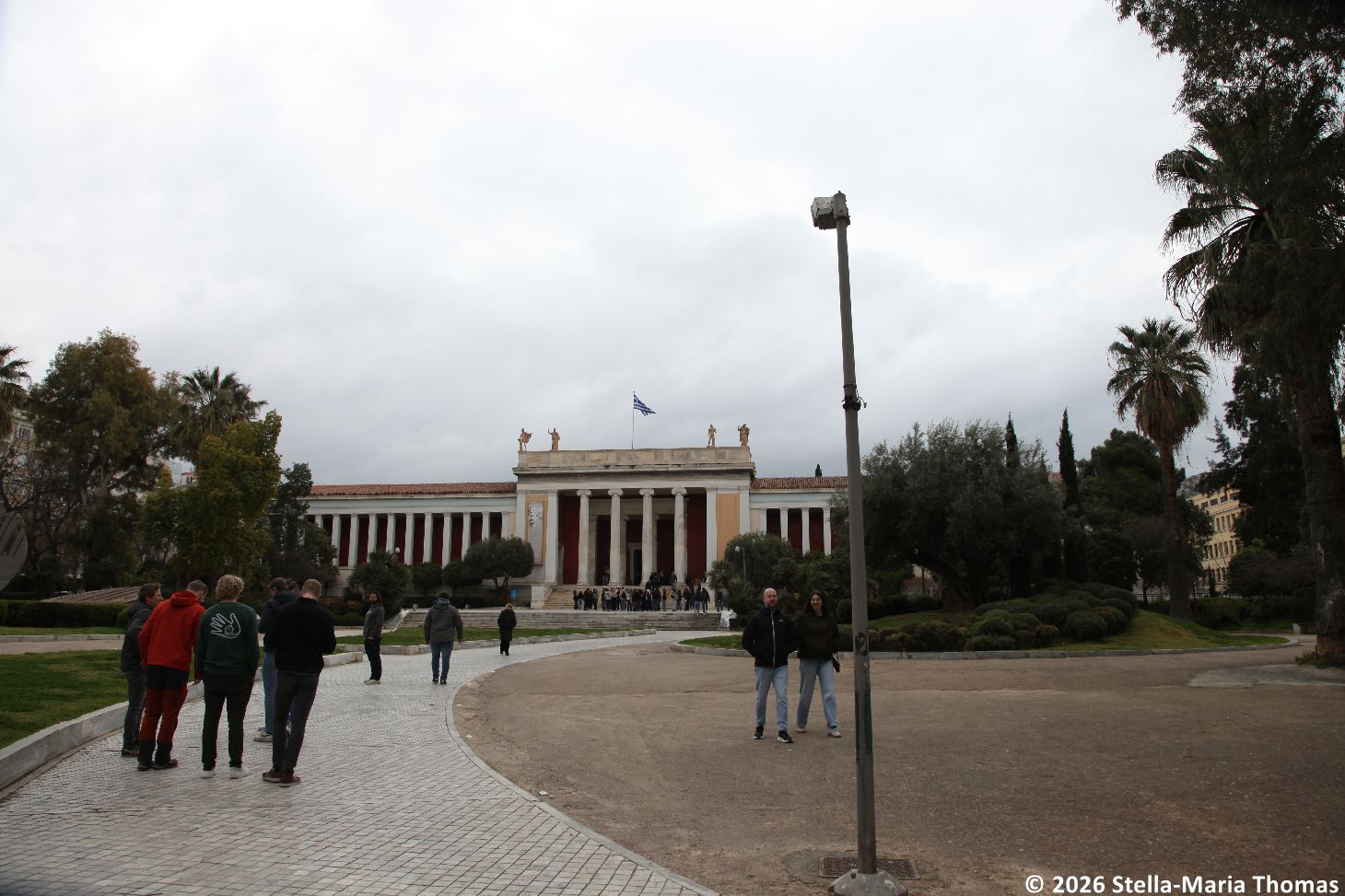
Despite being tired from the long walk back to the hotel the night before, we walked from Syntagma Square, passing several interesting looking buildings, especially the National Historical Museum, but we kept on walking, eventually reaching the main entrance to the museum, where we found a) a queue of people trying to buy tickets and b) the usual “no discount for non-EU pensioners” annoyance due to the stupidity of Brexit. Once in, and having battled our way to the toilets through a disorganised mob of school children, we found ourselves in the ground floor galleries which are simply mind-boggling!
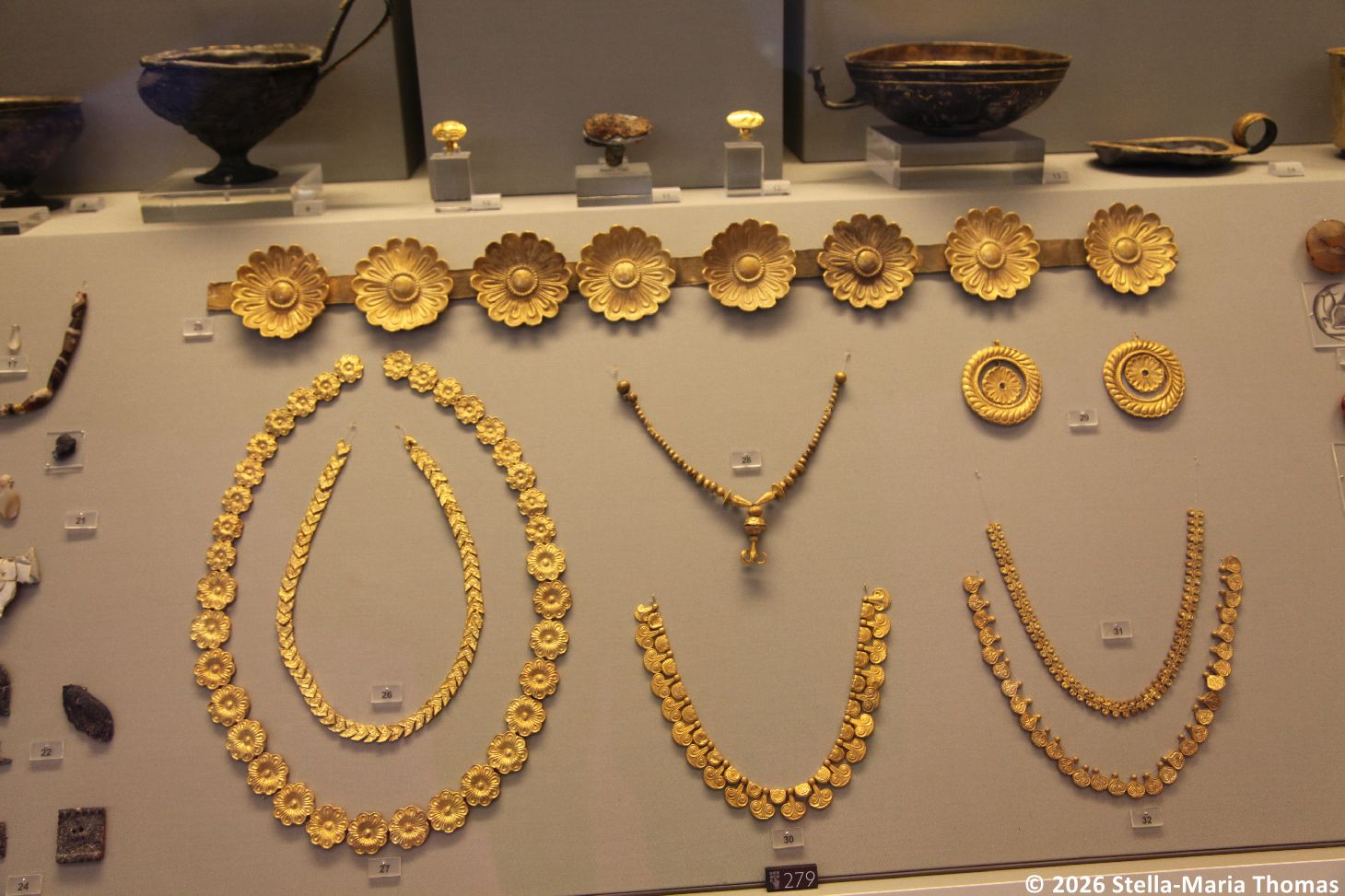
It starts with their Prehistoric Collection, which shows artefacts from the major civilisations of the Aegean, ranging from the 7th millennium to around 1050 BCE. The first rooms cover the Neolithic (6800-3300 BCE), Early Cycladic (3200 – 2000 BCE), Middle Cycladic (2000-1600 BCE), and Late Cycladic periods (1600 – 1100 BCE) with items from mainland Greece, the Aegean islands, and Troy. And once you’ve got to grips with that, you go into several rooms of the most spectacular treasures from the royal tombs of Mycenae (1600-1100 BCE). It’s very, very shiny in there! There are also Linear B tablets, Cycladic marble figurines, and wall paintings from Thera, all with very good placards to give you context and, if you want it, an audio guide too.
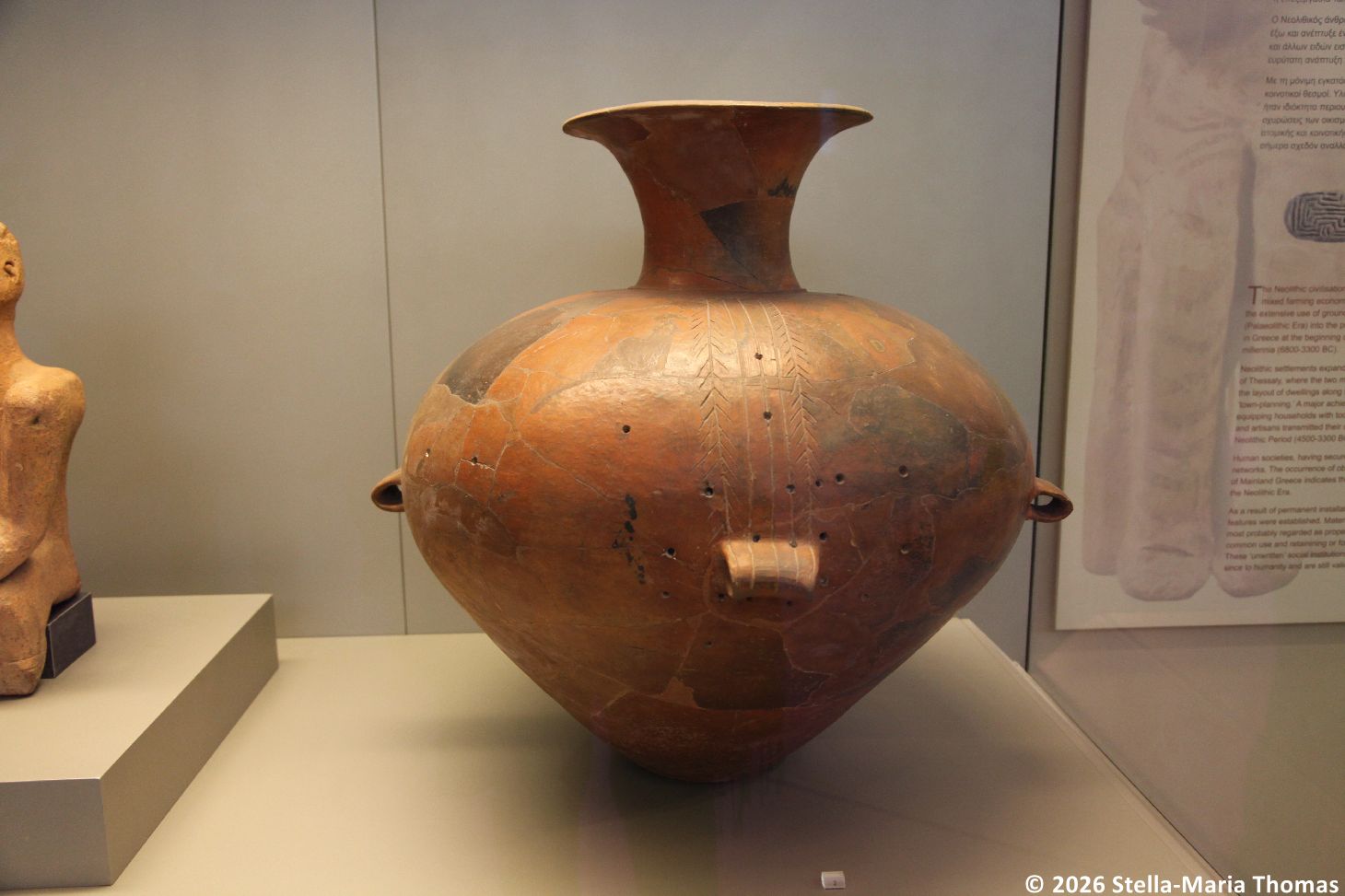
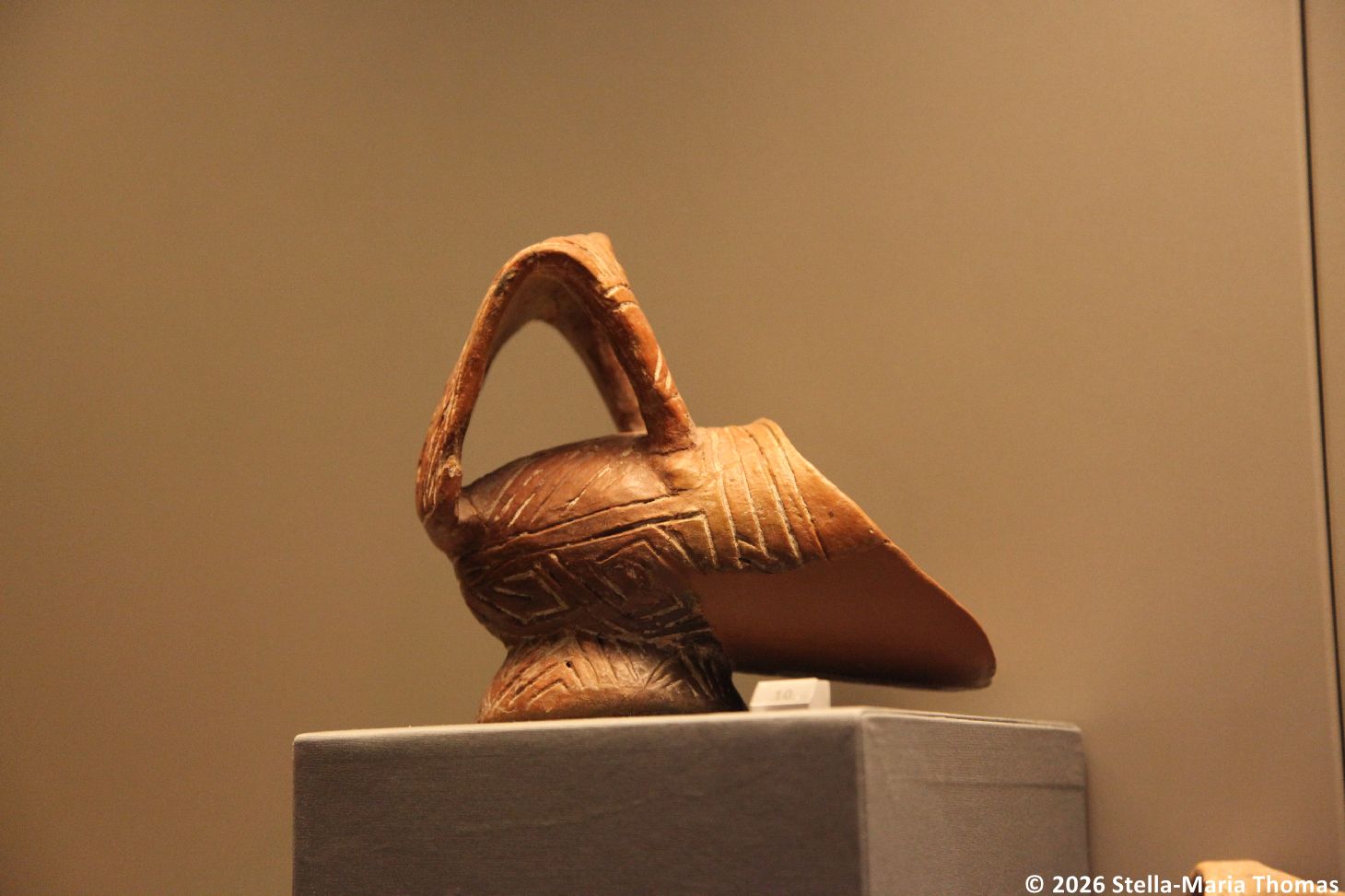
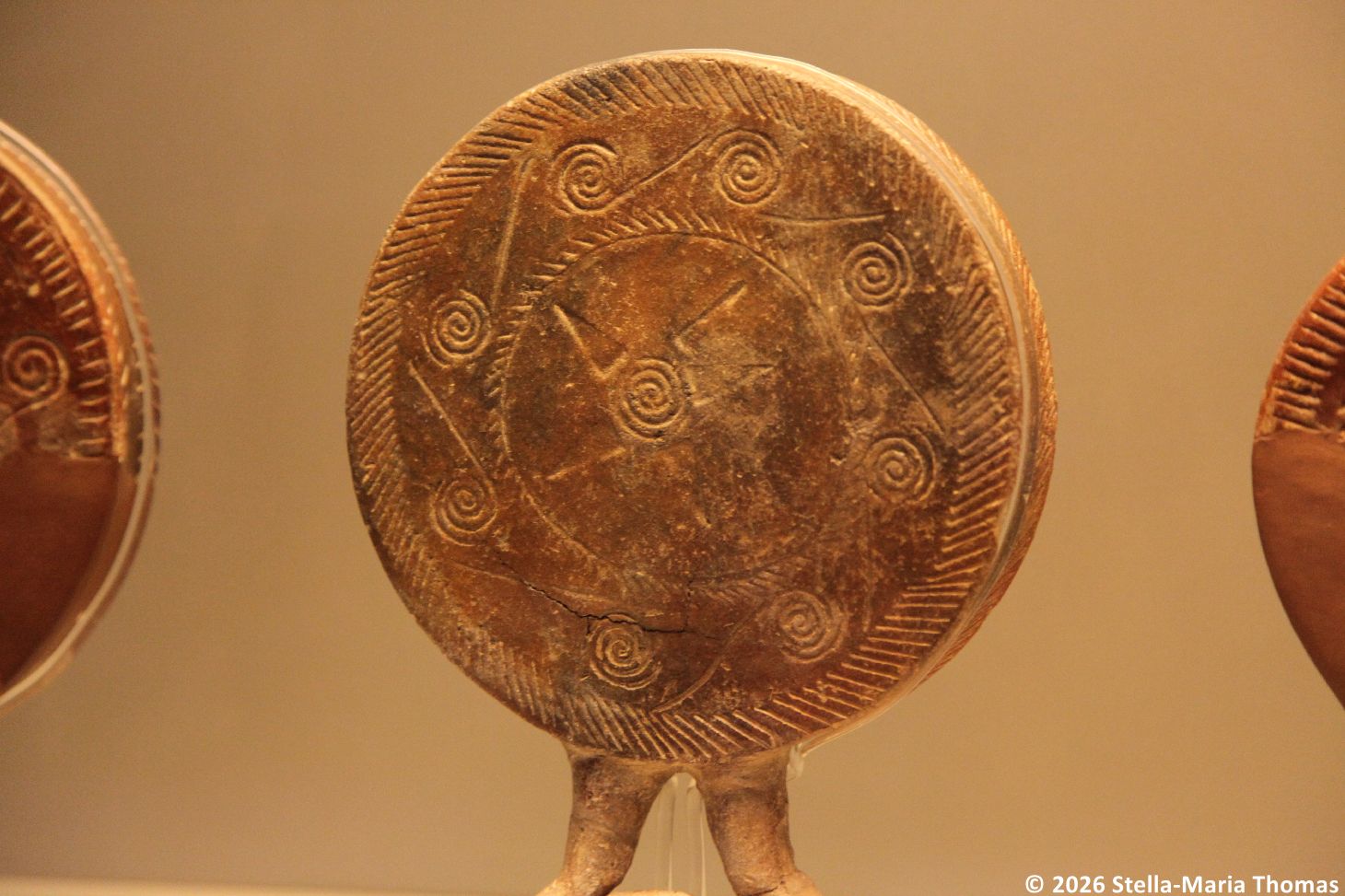
It’s hard to pick a highlight, so here are a few of the things we saw and would have happily taken home! By the time we’d stared intently at all that precious metal, we were feeling a touch tired and much in need of refreshments. We thought about covering more of the museum, but “museum back” had set in for both of us, and I for one didn’t think I could handle much more before a coffee. The lateness of the night before wasn’t helping much either.
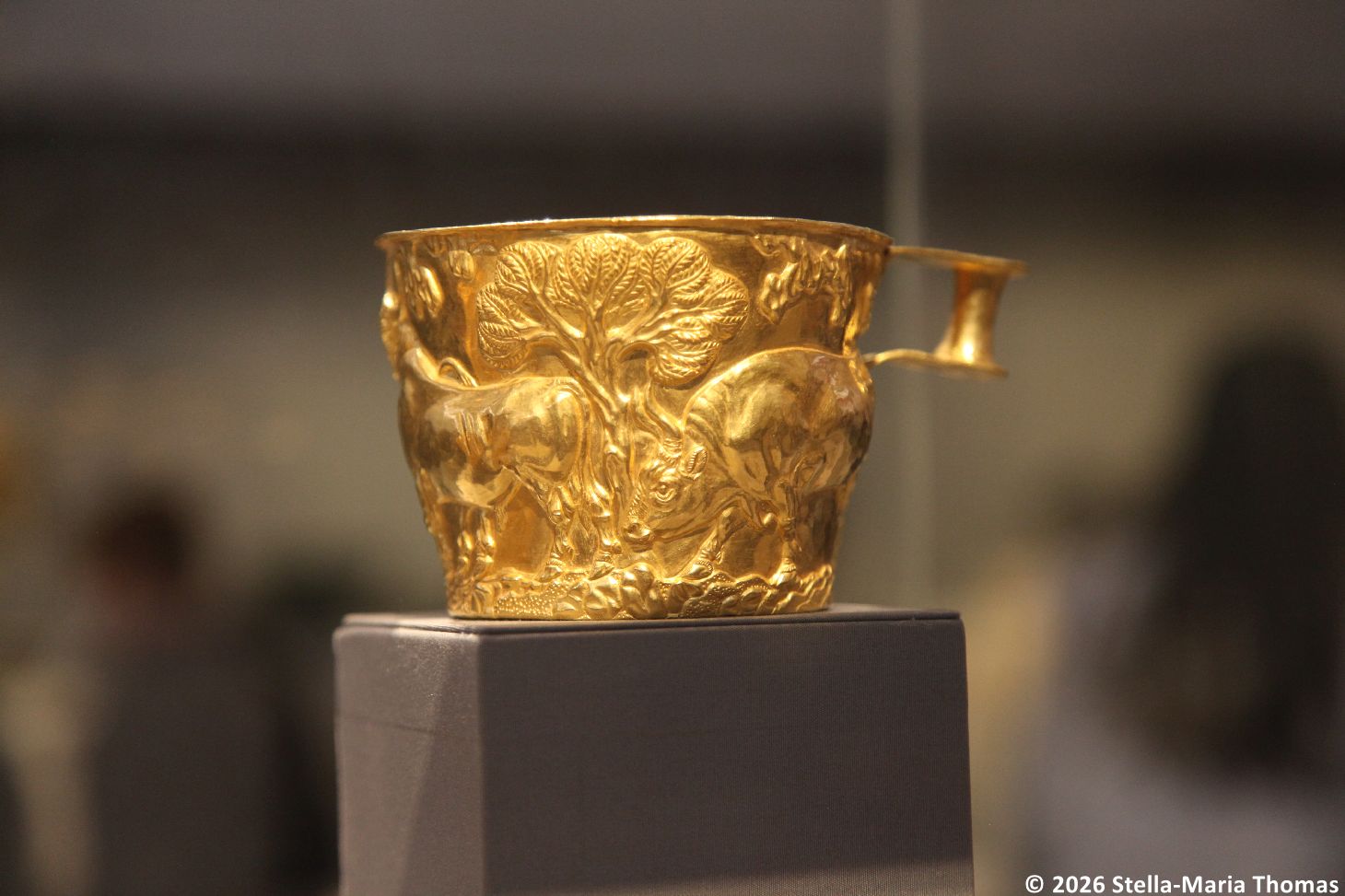
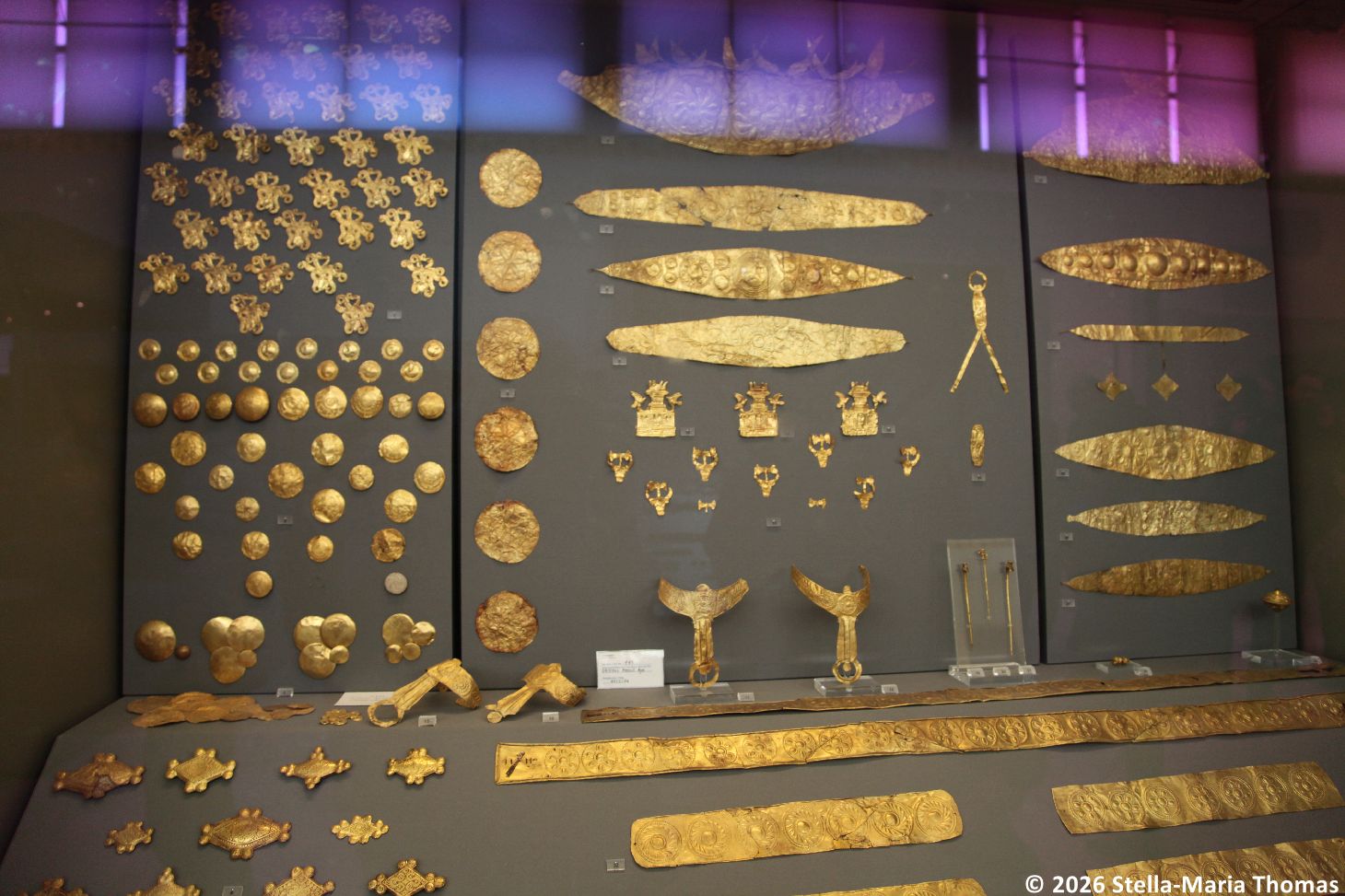
In the museum cafe, we discussed what to do next and decided we’d swing by the shop in search of a fridge magnet, and a museum catalogue and then see if we could also at least fit in the Ancient Agora before we had to go back to the hotel to collect our luggage and catch our ride to the airport. It was time to take to the metro again because if we had to walk we were really going to run out of steam before we were done.
We popped up out of the metro at Thissio and walked to the entrance to the Ancient Agora, where we encountered another queue – it was starting to look like Fridays can be on the busy side in the off season. Eventually we managed to buy tickets and joined the trickle of people making their way towards the main area of the site. Like the Acropolis, which is more than just the Parthenon, the Agora also contains considerably more than you might initially expect. It was also being repeatedly overflown by a selection of aircraft ranging from the highly sophisticated to the vintage. I’m still not sure what was going on, but the planes included an F-16, an EMB-145 electronic reconnaissance aircraft, a C-130 transporter plane, and a Canadian-built water bomber. Apparently the Greek Air Force operates all of these machines.
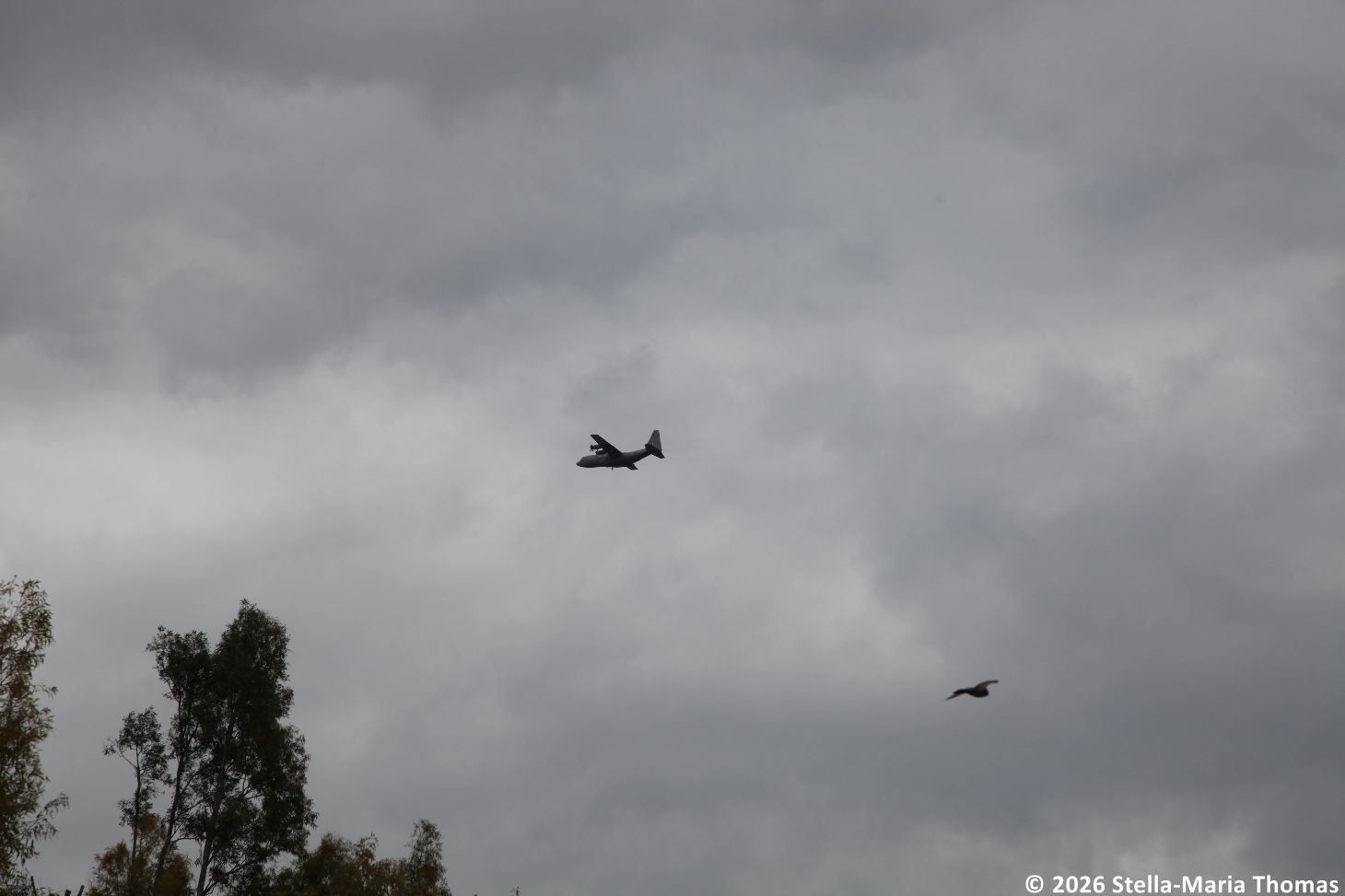
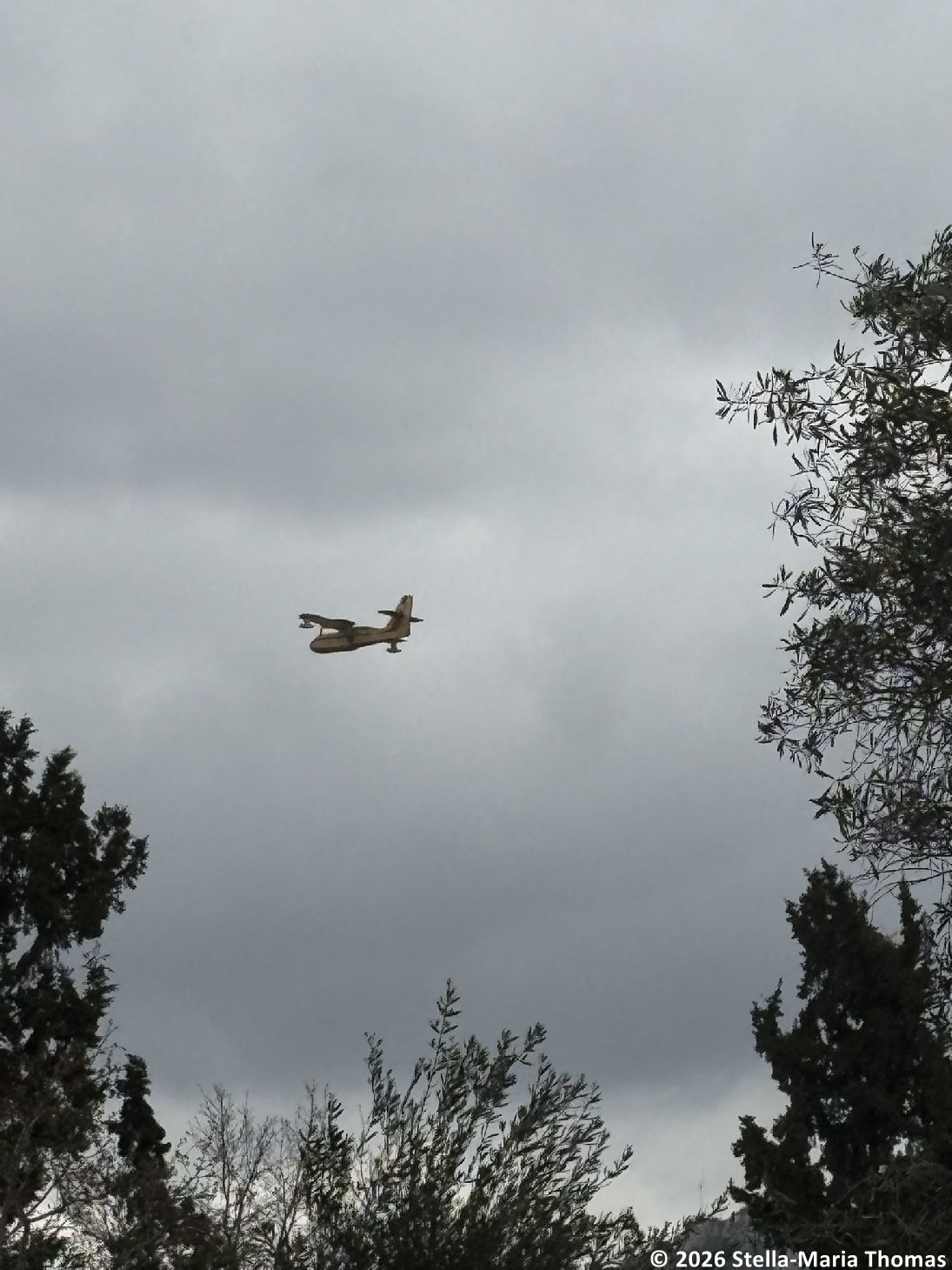
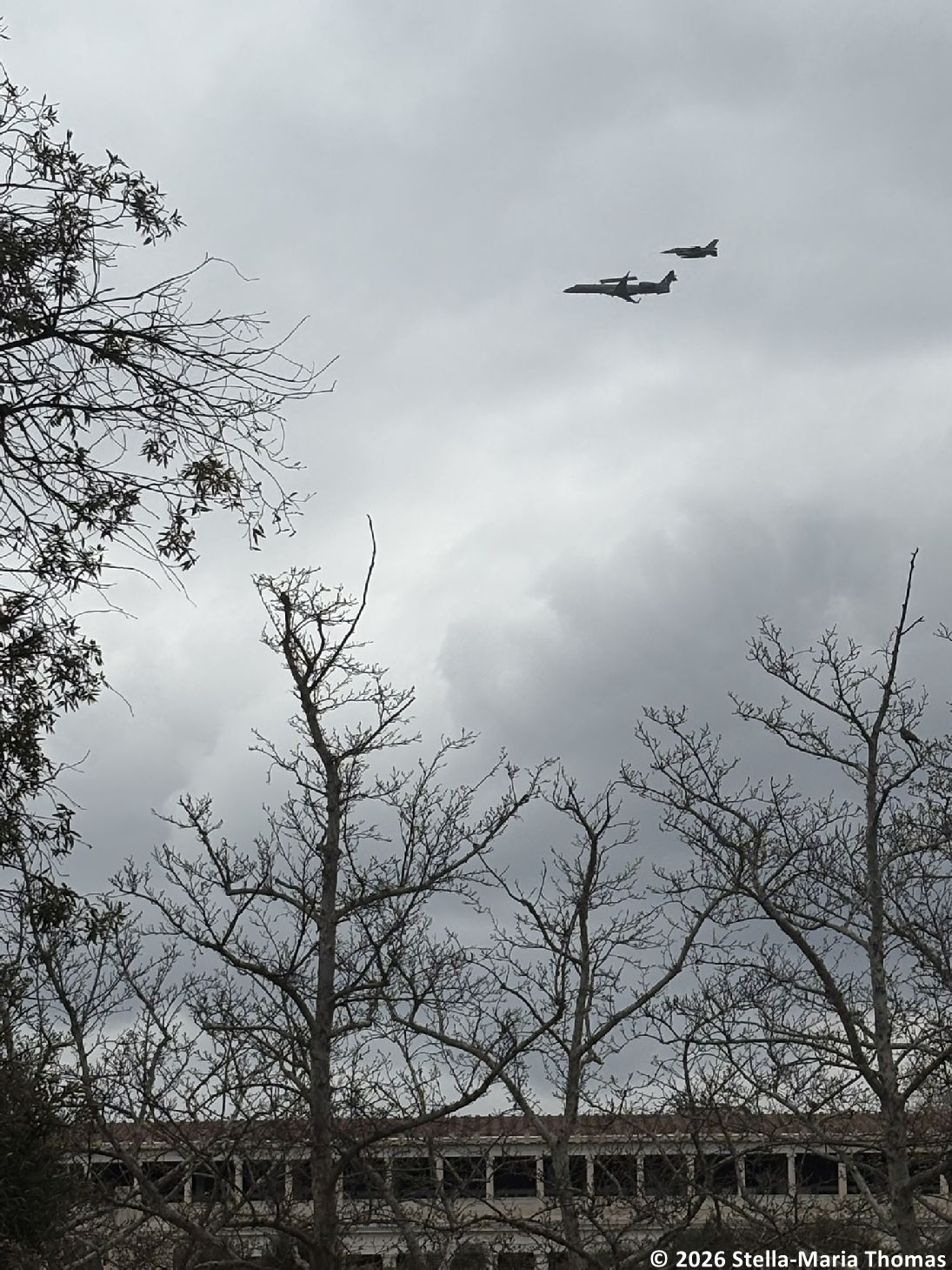
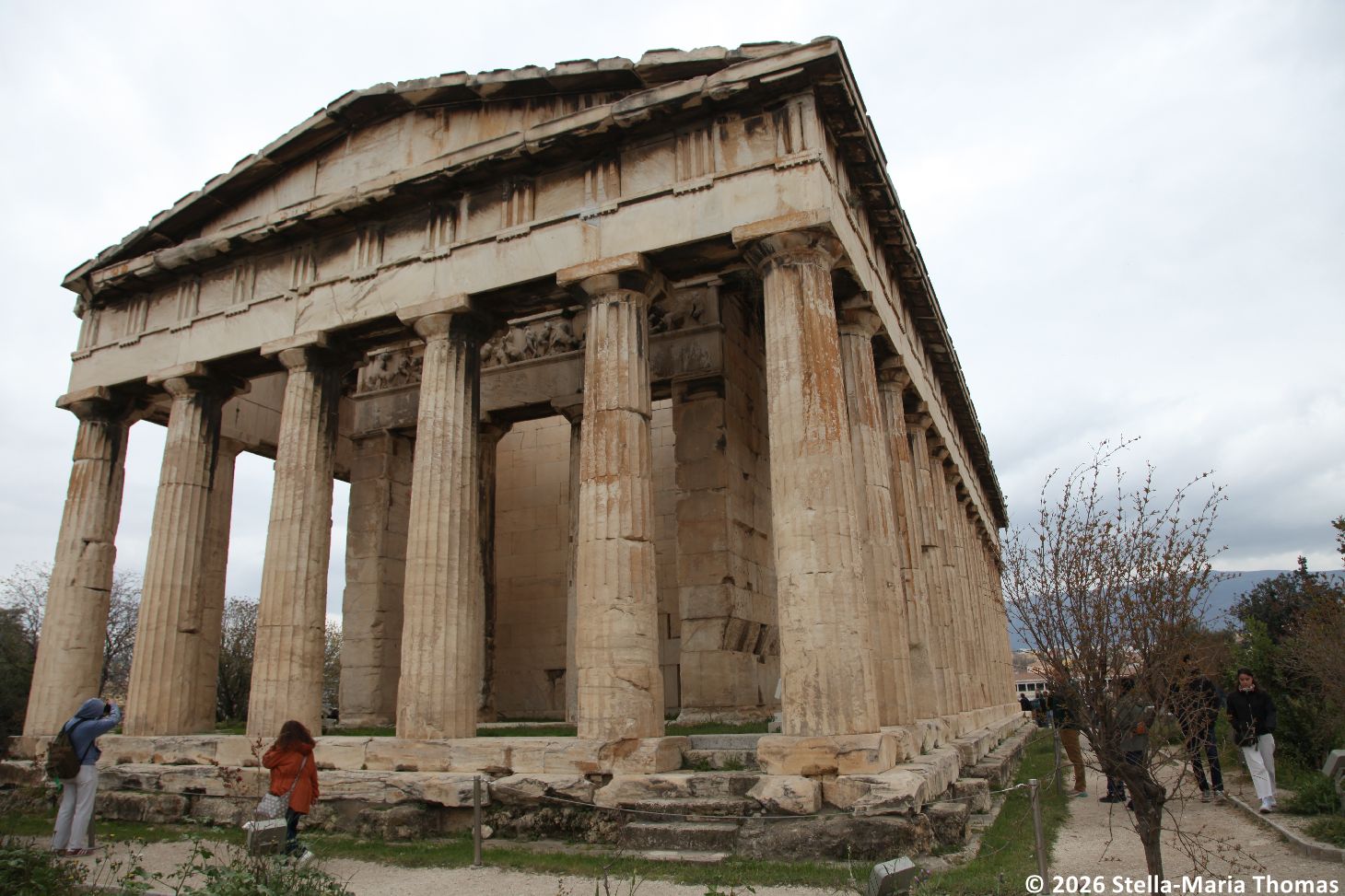
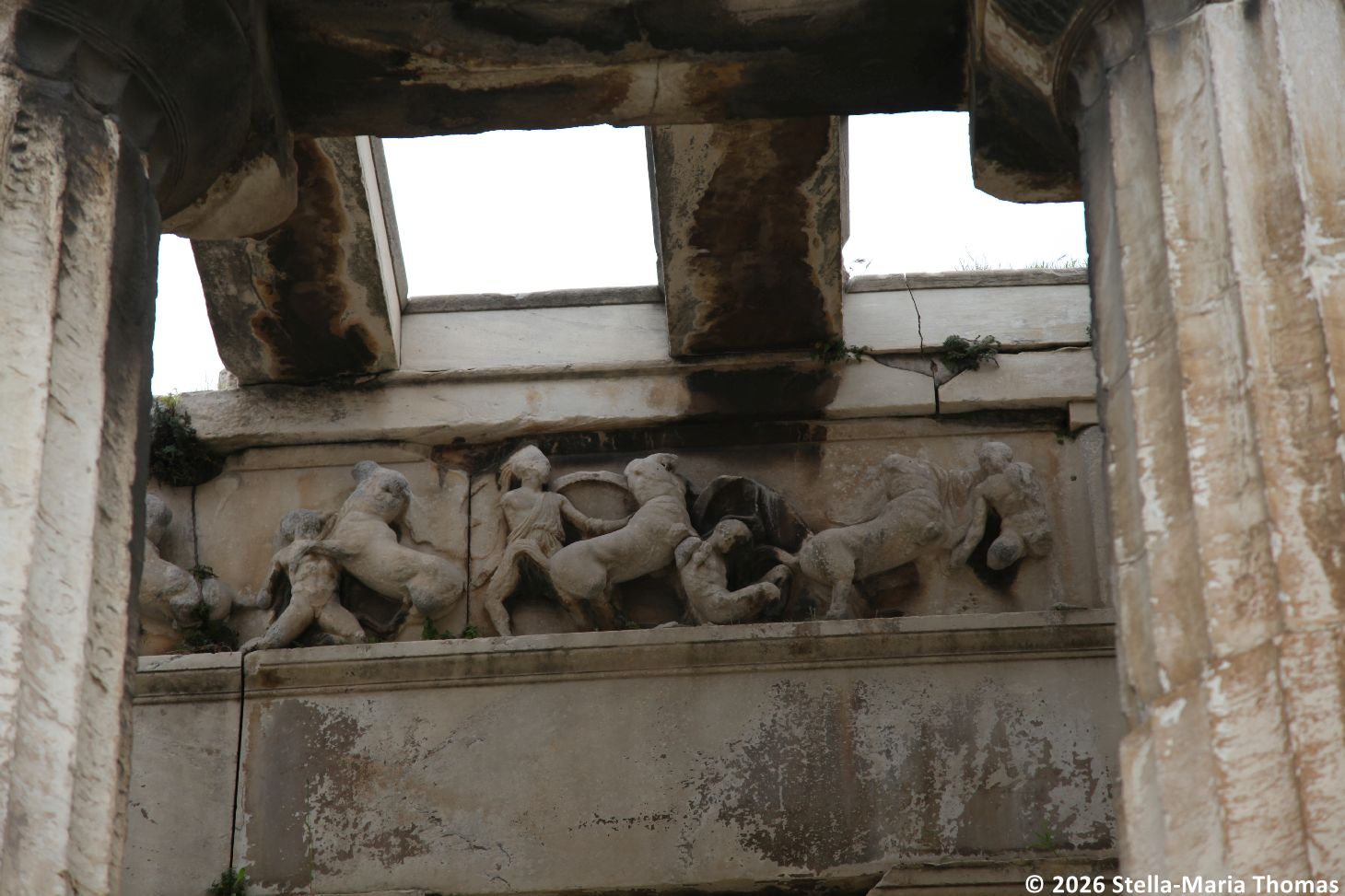
Once they’d settled down and flown off it was possible to concentrate on the archaeology in front of us. Given the site is massive we were never going to be able to give it the full level of attention it deserved, but we tried. For reference, it includes the following buildings and structures (the Stoa Poikile, the Stoa Basileios, the Temple of Aphrodite Urania, the Stoa of Attalos, the Square Peristyle, the East stoa, the Library of Pantainos, the Nymphaeum, the Mint, the Monopteros, the Bema, the Middle stoa, the Southwest Temple, the South-east Fountain House, the South Stoa, the Aiakeion, the Strategeion, the Agoraios Kolonos, the Tholos, a Boundary stone, the Monument of the Eponymous Heroes, the Metroon, the Bouleuterion, the Temple of Hephaestus, the Temple of Apollo Patroos, the Stoa of Zeus, the Temple of Zeus Phratrios and Athena Phratria, a statue of the Roman emperor Hadrian, the entrance to the Odeon of Agrippa, an Altar of Zeus Agoraios, the Temple of Ares, the Odeon of Agrippa and accompanying gymnasium, and possibly the remains of a synagogue). It’s way bigger than you might expect from some of the guidebooks. We started at the top at the Temple of Hephaestus, which is a lot more intact than many. From there we made our way down towards the museum, passing many of the named structures on the way and being glared at by a number of neighbourhood cats for our troubles.
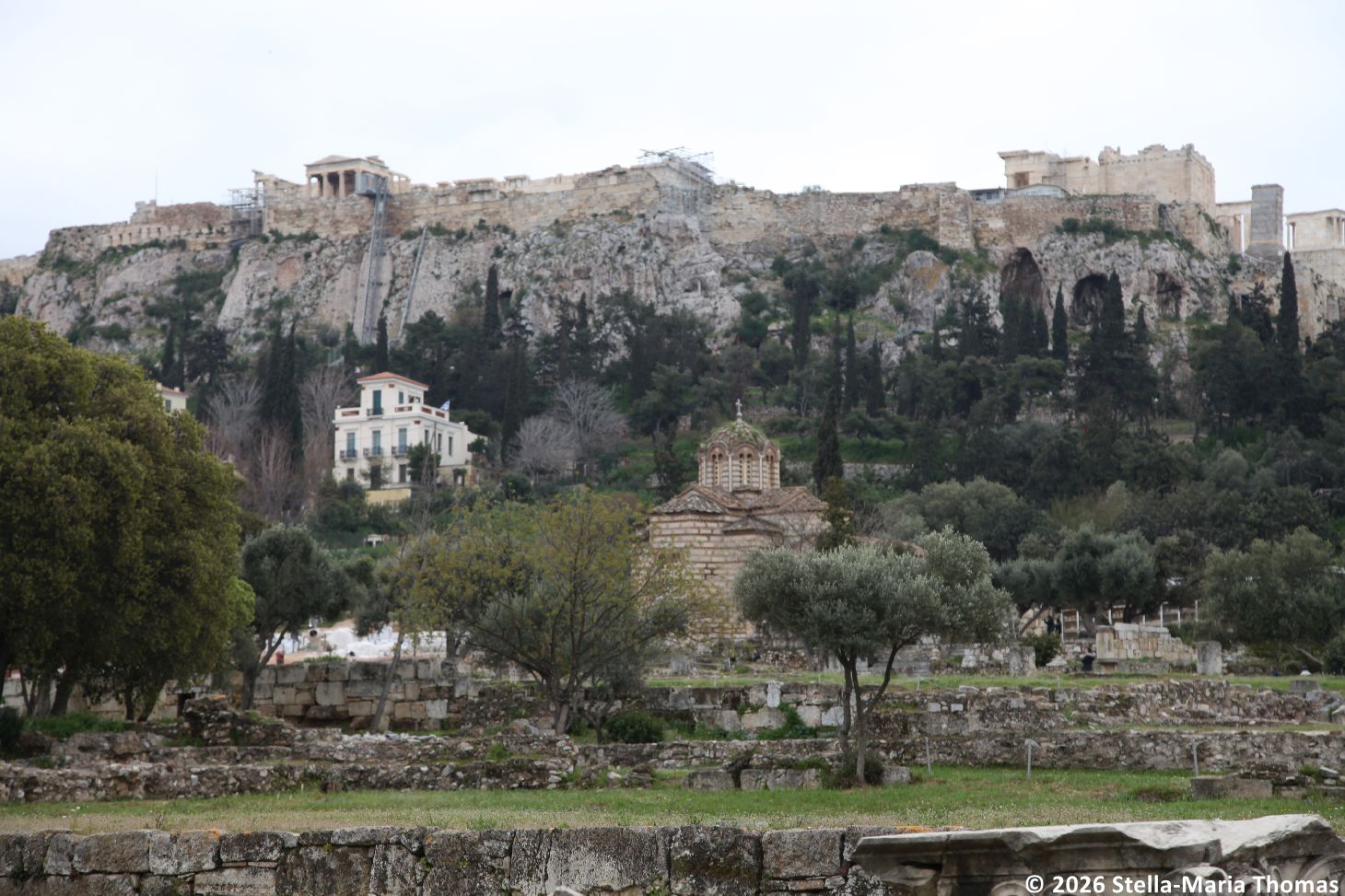
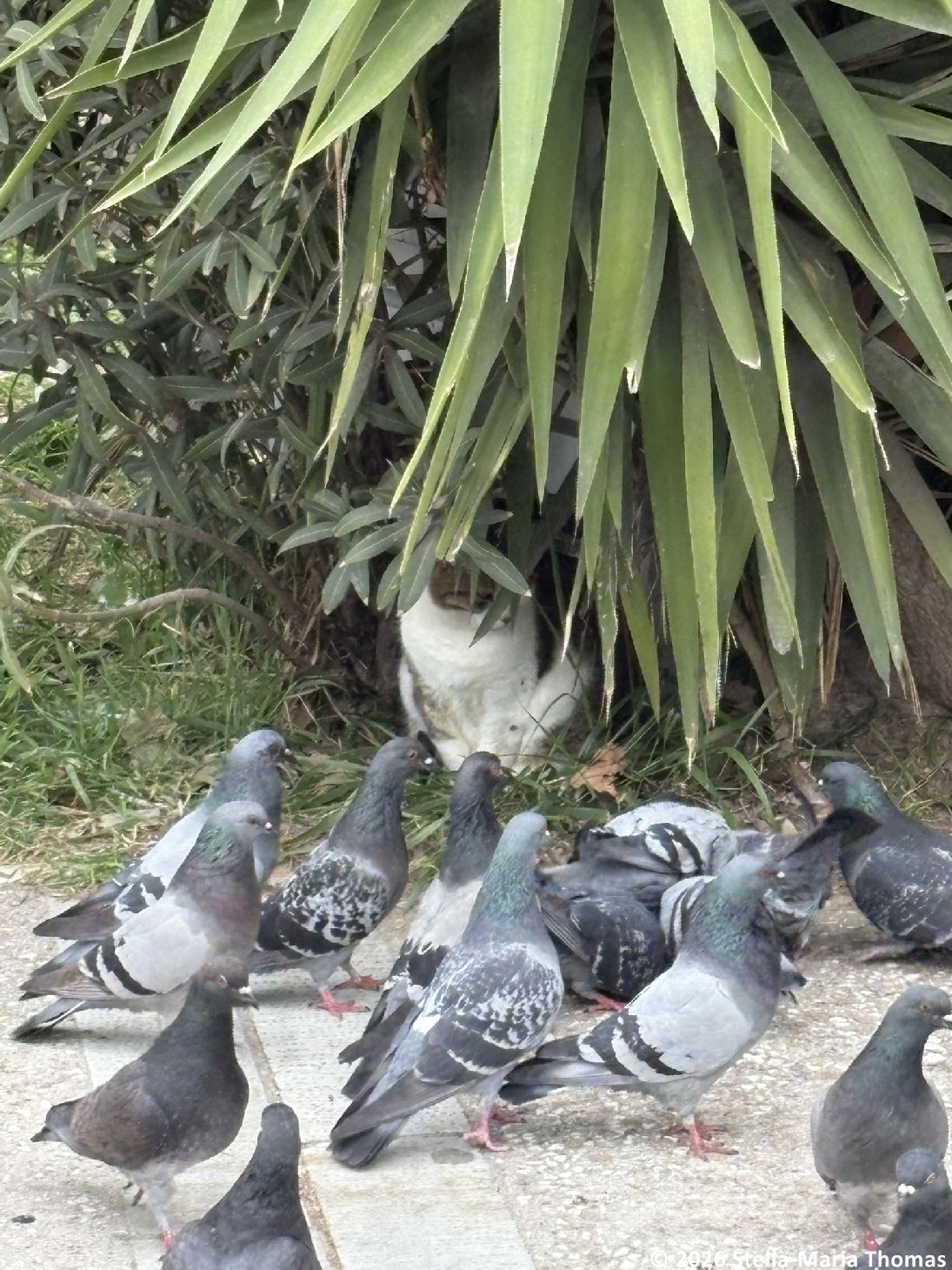
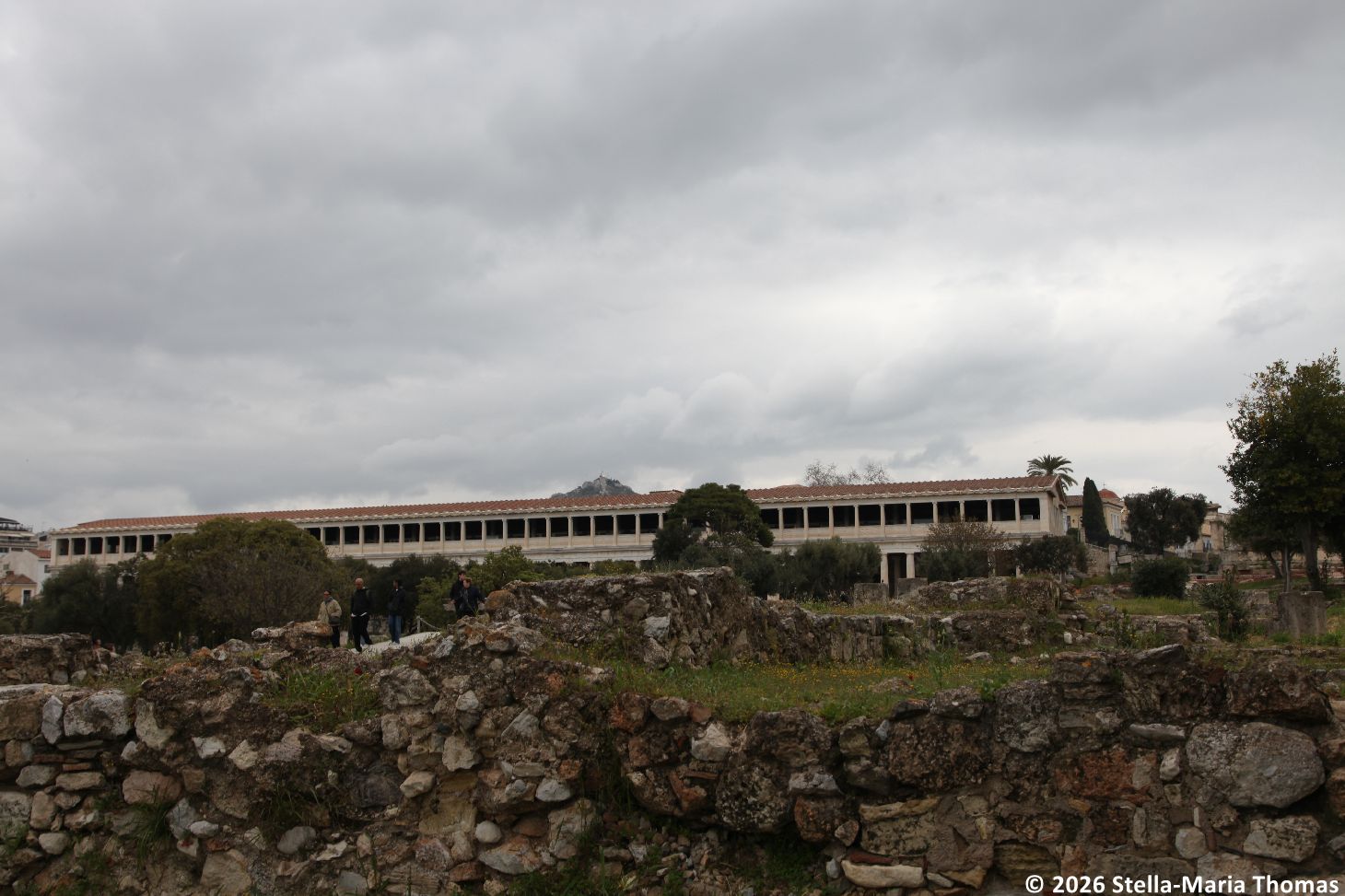
The Museum of the Ancient Agora is housed in the Stoa of Attalos, and is all about Athenian democracy. I’m sure it would have been well worth going in, but by now we really were running out of time. We needed to get to the hotel and Lynne gets anxious if we’re not sufficiently early for her liking. We would have to leave it, instead walking back to the metro and being entertained by the pigeons that were hanging about in dangerously close proximity to some of the cats, apparently with intent to steal any of the felines’ food that didn’t get eaten quickly enough.
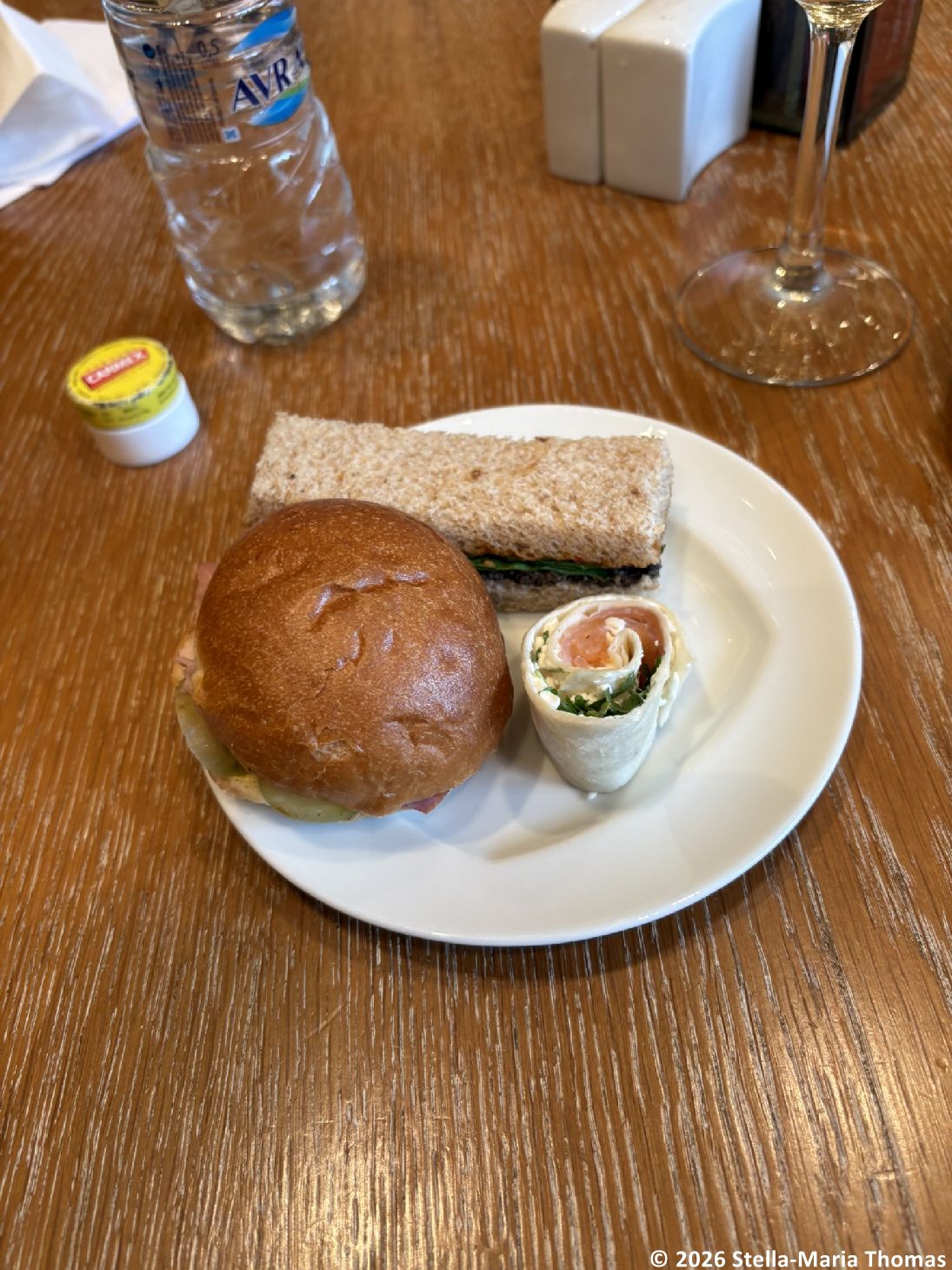
Back at the hotel we treated ourselves to one final use of the Club Intercontinental where we tested the afternoon tea. It might not be on a par with what is served at the Hotel Grande Bretagne, but it filled a gap usefully and would keep us going until we made it to the airport and could relax in the lounge ahead of our flight.
Although – for a variety of reasons – relaxing was not what happened. Checking in was easy enough, and apart from a poorly organised group of American children ahead of us, so was getting through security. However, halfway to the lounge, I got a phone call saying that the luggage check meant there was something in my suitcase that could not go in the hold. I was baffled, but went to the gate, and was very surprised to find it was the power bank I’d concluded I must have left it at home. I hadn’t. I removed it, and in doing so managed to lock my passport and boarding pass in my case. I realised as I went back to the lounge. And so back again to the gate to persuade the lovely BA staff to return my case once more so that I could locate my travel documents. I could have done without all of that, though at least it happened at an airport where the staff were helpful, friendly, and didn’t make me feel like the idiot I obviously was.
Finally on board, I slept most of the way back to Heathrow, and then also in the car home, happy to have finally made it to Greece (or at least to Athens).
Friday was 20,258 steps, 15.1 km, and 3,504 calories

 Smtfhw's Travels