Tuesday 15th October, 2026 – San Sebastian / Donostia, Astigarraga
Another early morning run done, because given the lack of sleep as a result of the revellers at Kelly’s, I needed something that would wake me up! We had a plan for the day and we needed to start moving in good time. Today we were going to investigate the cider culture of Basque Country with a visit to a cider museum followed by a “traditional” lunch at a cider house in the small town of Astigarraga. Although I’m not the world’s biggest cider fan, I’m pretty sure you can’t visit this part of the world without trying the local cider and it’s very much a part of the culture in these parts.
We decided we’d get a bus again if we could and after a brief false start when Apple Maps misled us into getting onto the wrong bus, we were soon on our way, climbing up from the coast and towards our destination. We were too early so we ambled around, had a coffee, and eventually made our way towards the museum.
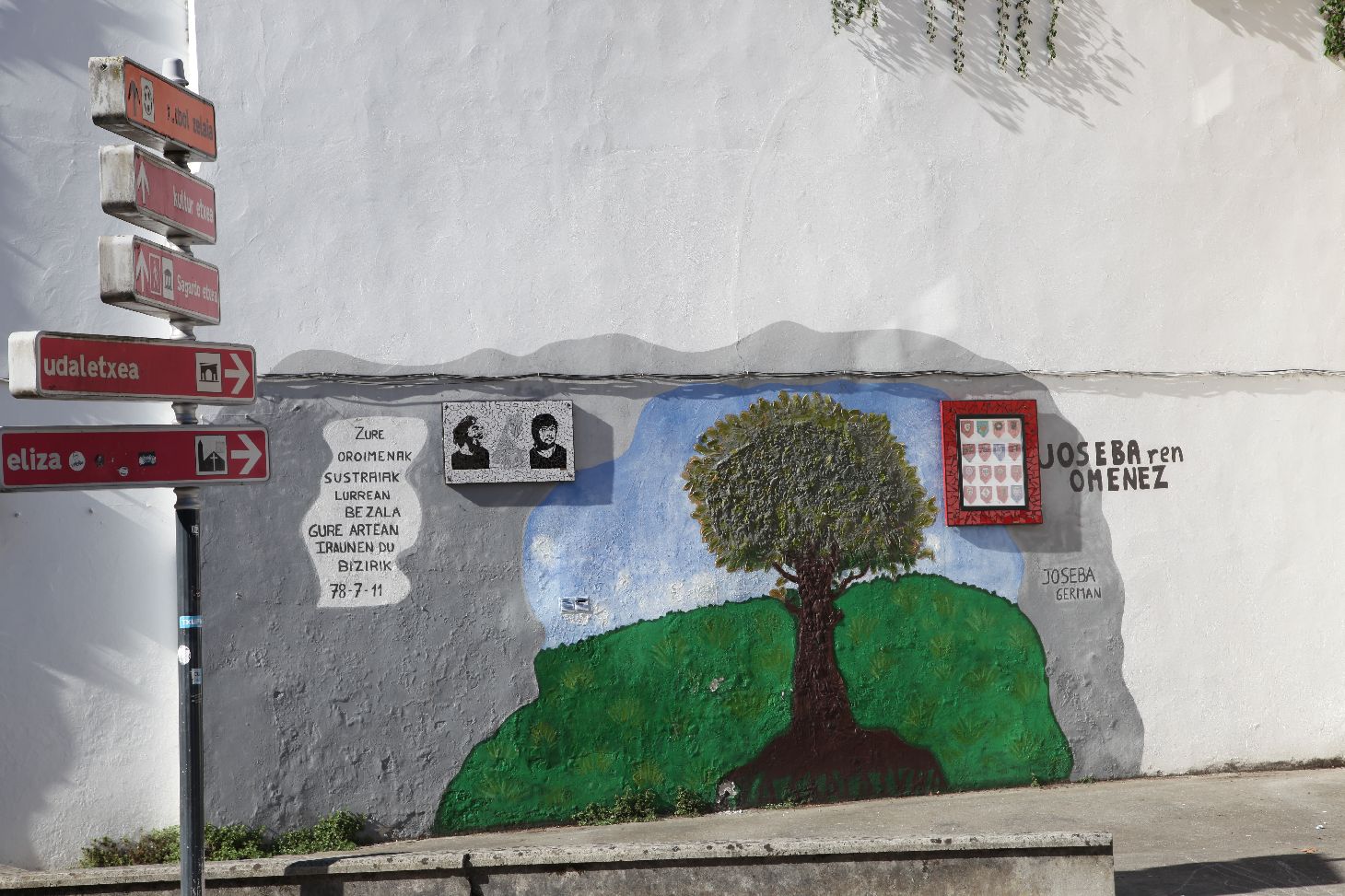
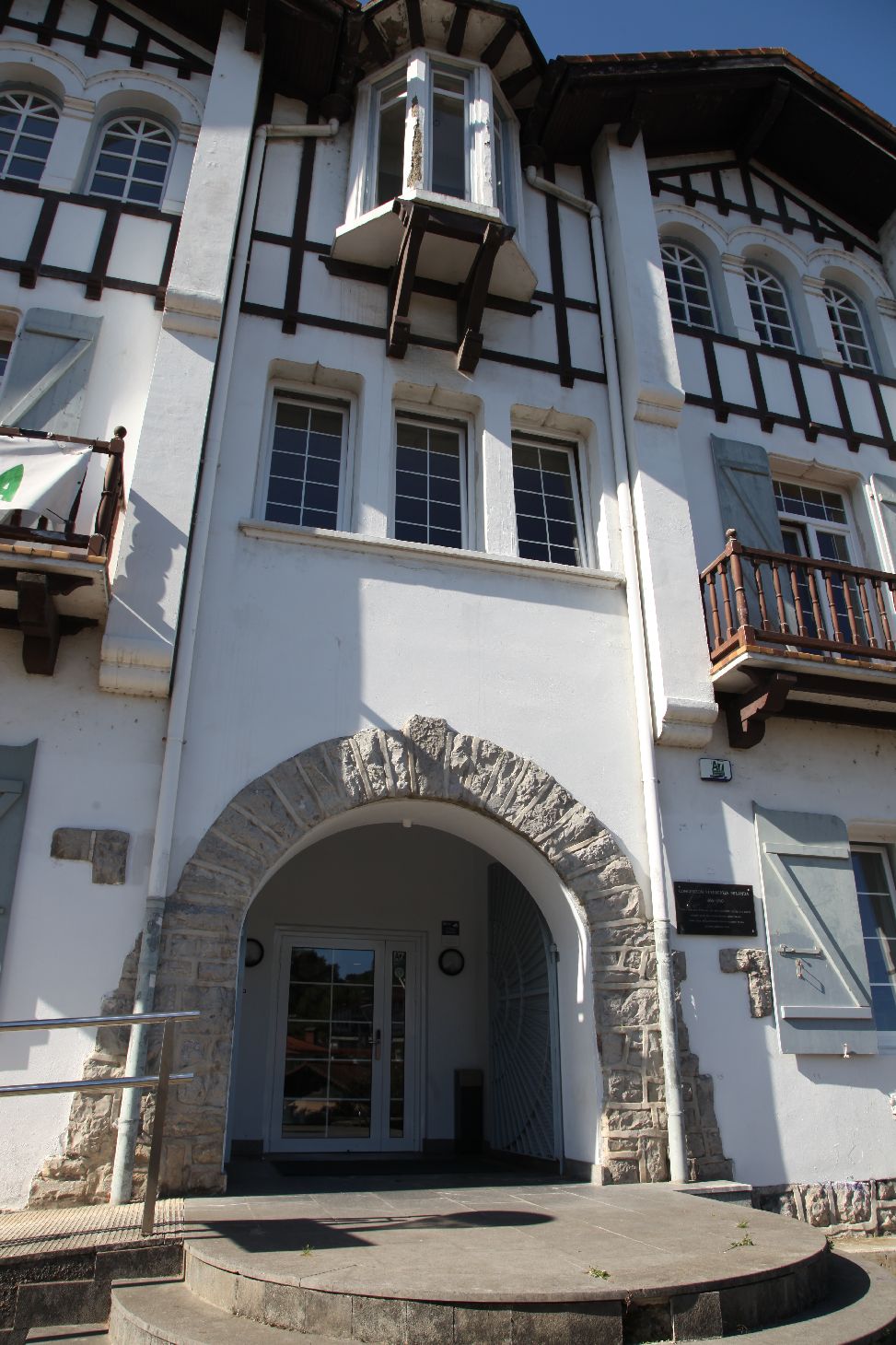
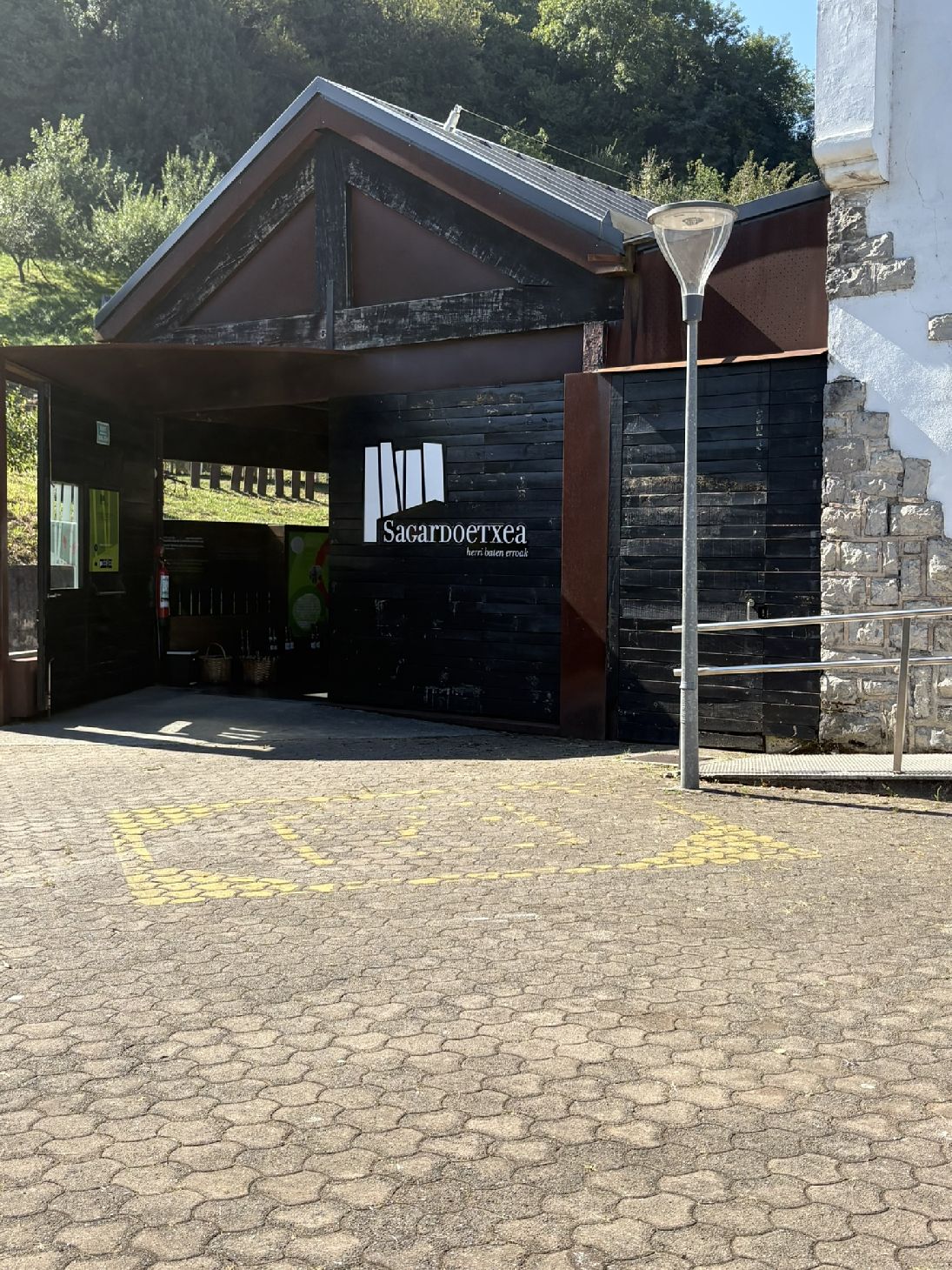
Astigarraga bills itself as “the home of cider”, and so we found ourselves in a very sleepy little place (if you discounted the workmen who were doing some very heavy duty work on the pavements). The two is pretty much two districts bolted together, with an area down by the river Urumea, and an upper town that centres on a chapel dedicated to St. James the Apostle which provides unbeatable views from the summit. Also in the upper part of town is the Sagardoetxea (Cider House) of Astigarraga which is a museum dedicated to cider, and which includes its own apple orchard, an interpretation centre, and a tasting area where you can be introduced to the practice of cider tasting (and the shouting of “Txotx!” which accompanies the opening of a barrel.
I’d wondered if the guided tour and lunch would be value for money (you can’t do the museum without a guided tour), but we’d chosen to do it partly because A absolutely loves cider, so we duly handed over €53 per person and were ready and waiting when our guide came out to greet us just before noon for a tour in English. There were around 10 of us for the museum part of the tour and we started in the museum’s orchard, where she explained that this year’s harvest had not been a good one for several reasons and so they’d had to buy in apples to make cider. Partly it was a result of the fiercely hot and very dry summer, and partly it was because apple trees tend to fruit well every other year.
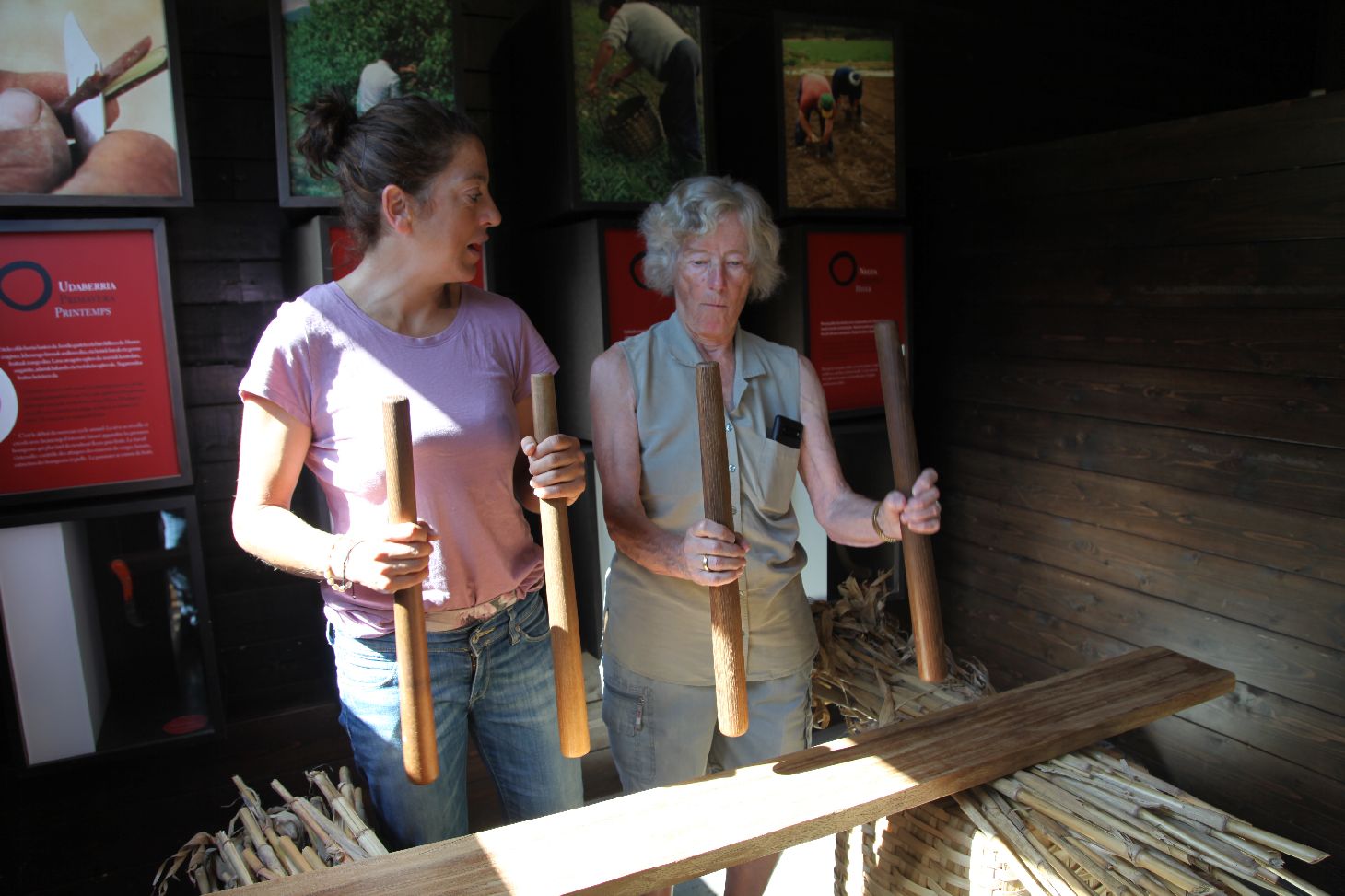
She showed us how the apples were harvested, and the use of an alarmingly spiky tool to pick up fallen fruit, before taking us inside to show us how the apples become cider. This included some time spent beating out a rhythm with two very solid “sticks” known as “baquetas” which some of us had a go at, proving beyond any shadow of a doubt that the English have no sense of rhythm! Apparently these are played as part of the local folk scene’s bagpipe ensembles and are part of the famous rhythmic traditions surrounding Asturian cider culture. I was better at it than A was, but then I’m not entirely English…
After all the fun and games we were taking to the tasting room on the ground floor of the museum where we were first given a number of different bottled ciders to try. The iced cider in particular proved a hit with us, being spectacularly good. And then we got to another joint participation stage of the tour, with an introduction to the Txotx (pronounced choch) and how to do it!
Txotx is the traditional Basque cider ritual and invitation to taste new-season natural cider directly from large wooden barrels (kupelas) in a cider house (sagardotegi). Basically someone shouts “Txotx!” and opens the barrel, while everyone else queues up at a sensible distance, holding their glasses low and as far away from their shoes – and their clothes – as they can. You then take turns to catch around an inch of the cider as it arches out of the barrel. Why do they do it like this? It’s to aerate the cider (a process called “eskanziatu”) and thus serve it at its best, rather than because it’s scarily strong. That’s why you only take a small amount because the aeration doesn’t last and thus you have to drink it fast and not in large quantities. Oh, and by the way, it’s actually called “txotx” because that is also the Euskaran word for the small wooden bung that plugs the barrel shut. We all proved pretty good at the catch, and no one ended up soaked in cider, so that was a plus. Although A was horrified by what she saw as the waste involved, and would become more so as the week wore on…
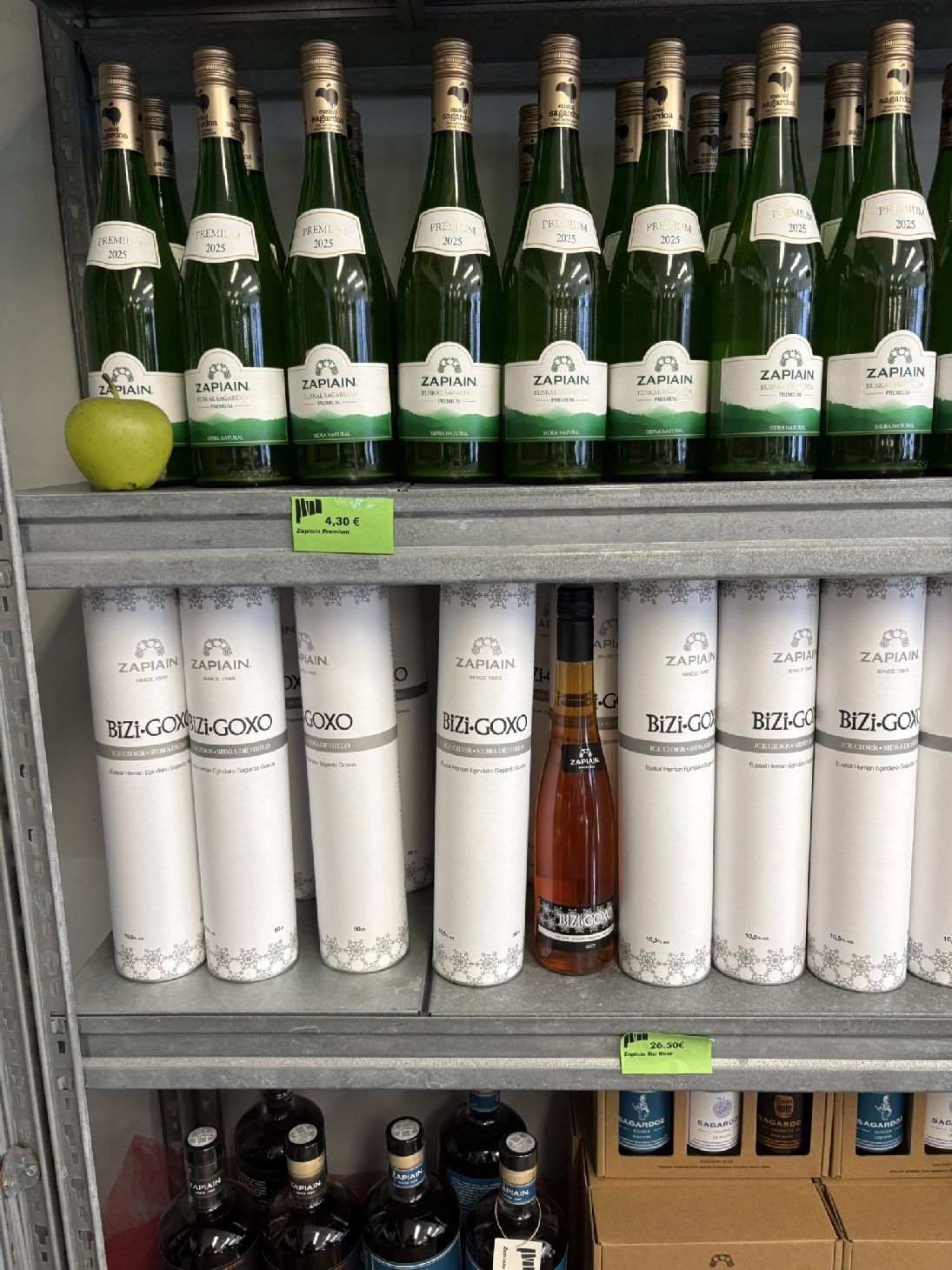
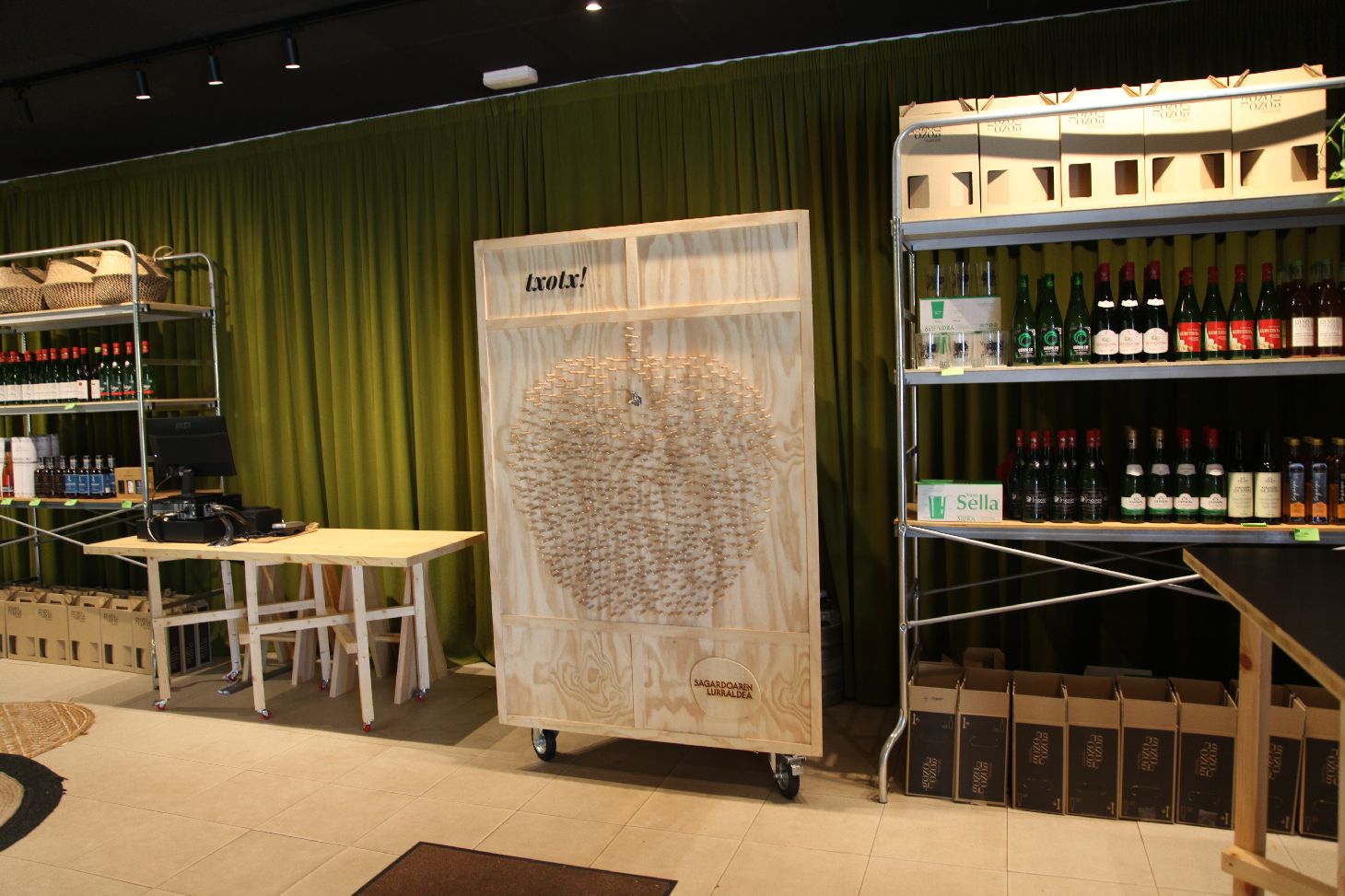
After we’d tasted we headed over to the office and shop where I bought an ice cider and a vermut made with cider and oranges to bring back to the UK, and we were handed our vouchers for the cider house where we were to have a “traditional” lunch. Initially we though it was going to be just the four of us, but we were joined by two much younger visitors, a Chinese woman who worked for a French company and was using her most recent business trip to Paris to add on some holiday time, and an American man who arrived on a hired bicycle from San Sebastian. They proved very good company as we made our way to downhill to Cider house Alorrenea.
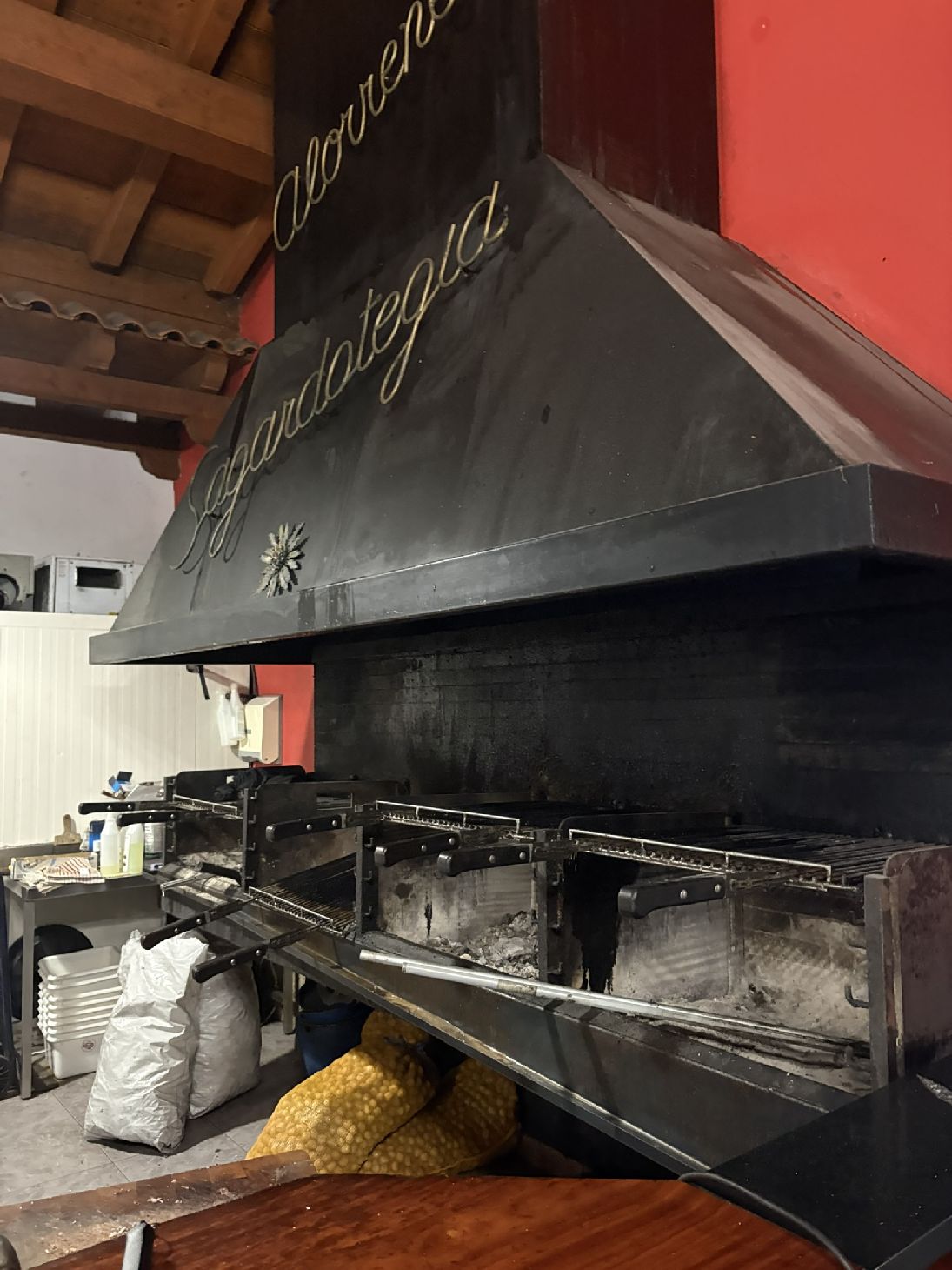
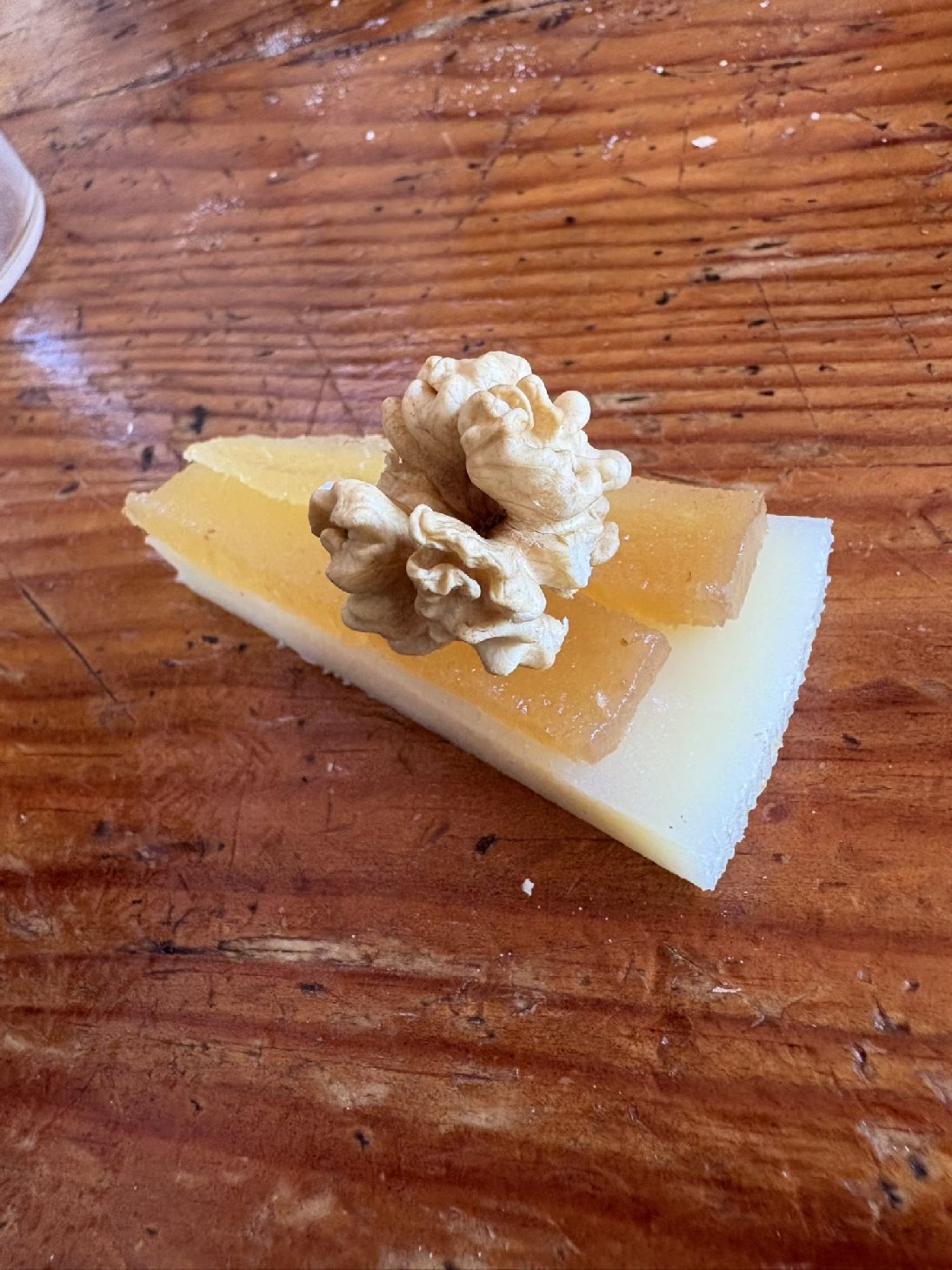
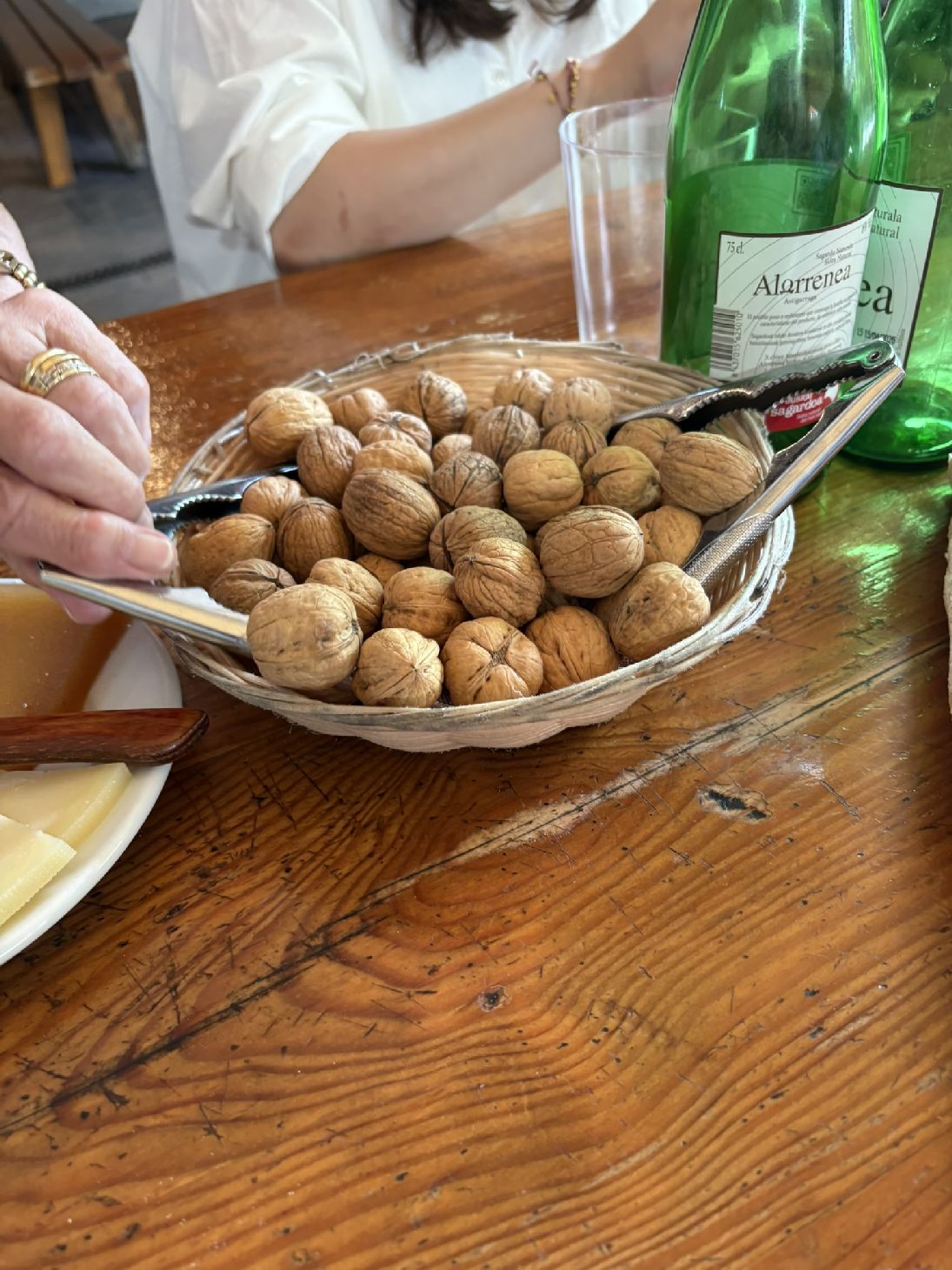
Here we were soon settled at a table outside in the sun, where we could watch the world go by – or at least a lot of men with obviously physical jobs call in for lunch. We were served a lot of bottle of cider, along with a very substantial lunch that was indeed the traditional cider house menu. This always consists of a tortilla de bacalao (cooked runny and full of salt cod), fried cod with green peppers, and then a charcoal-grilled txuleta (a frankly huge bone-in rib-eye steak), finishing with Idiazabal cheese with membrillo (quince paste) and fresh walnuts which you crack yourself.
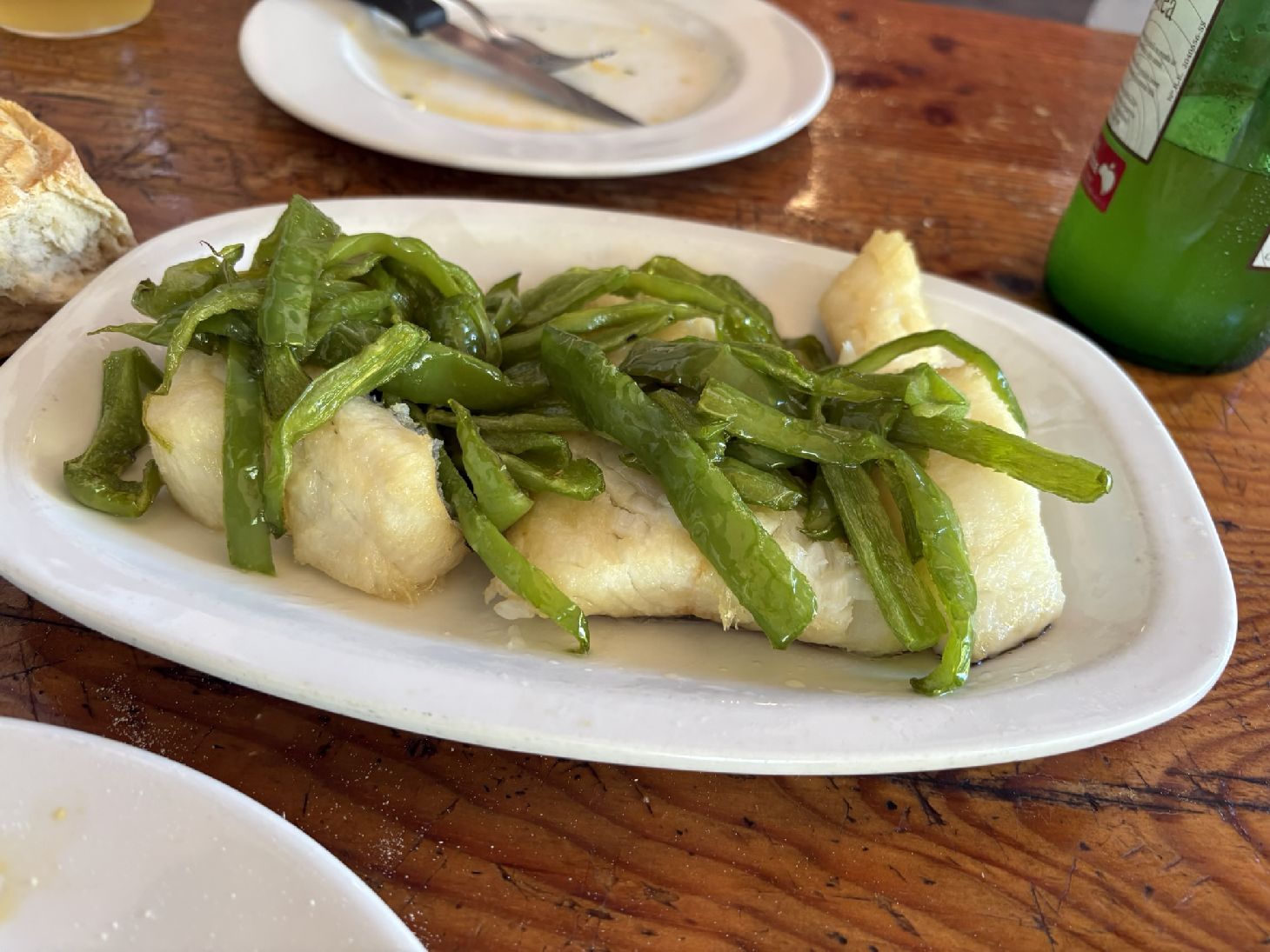
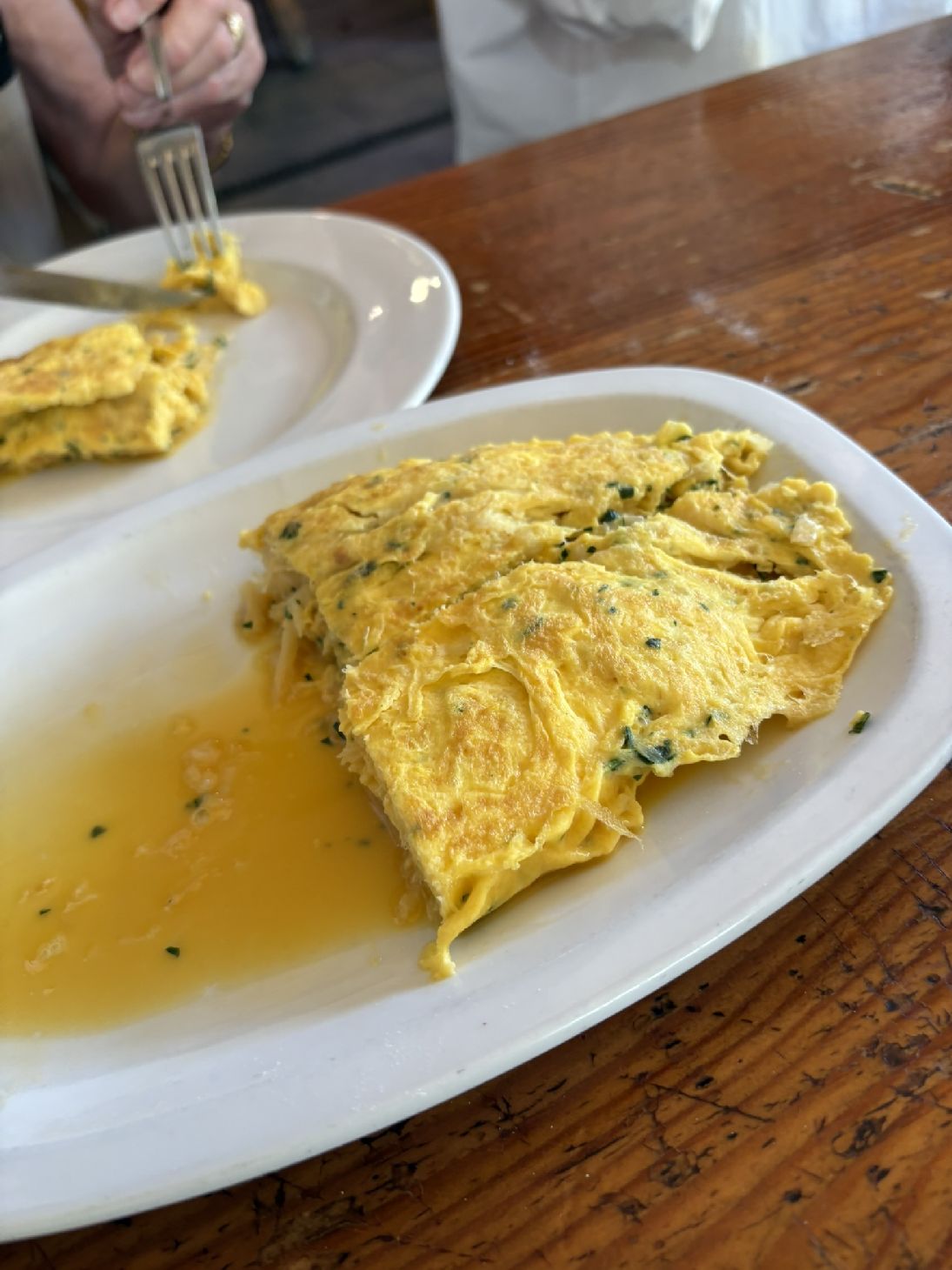
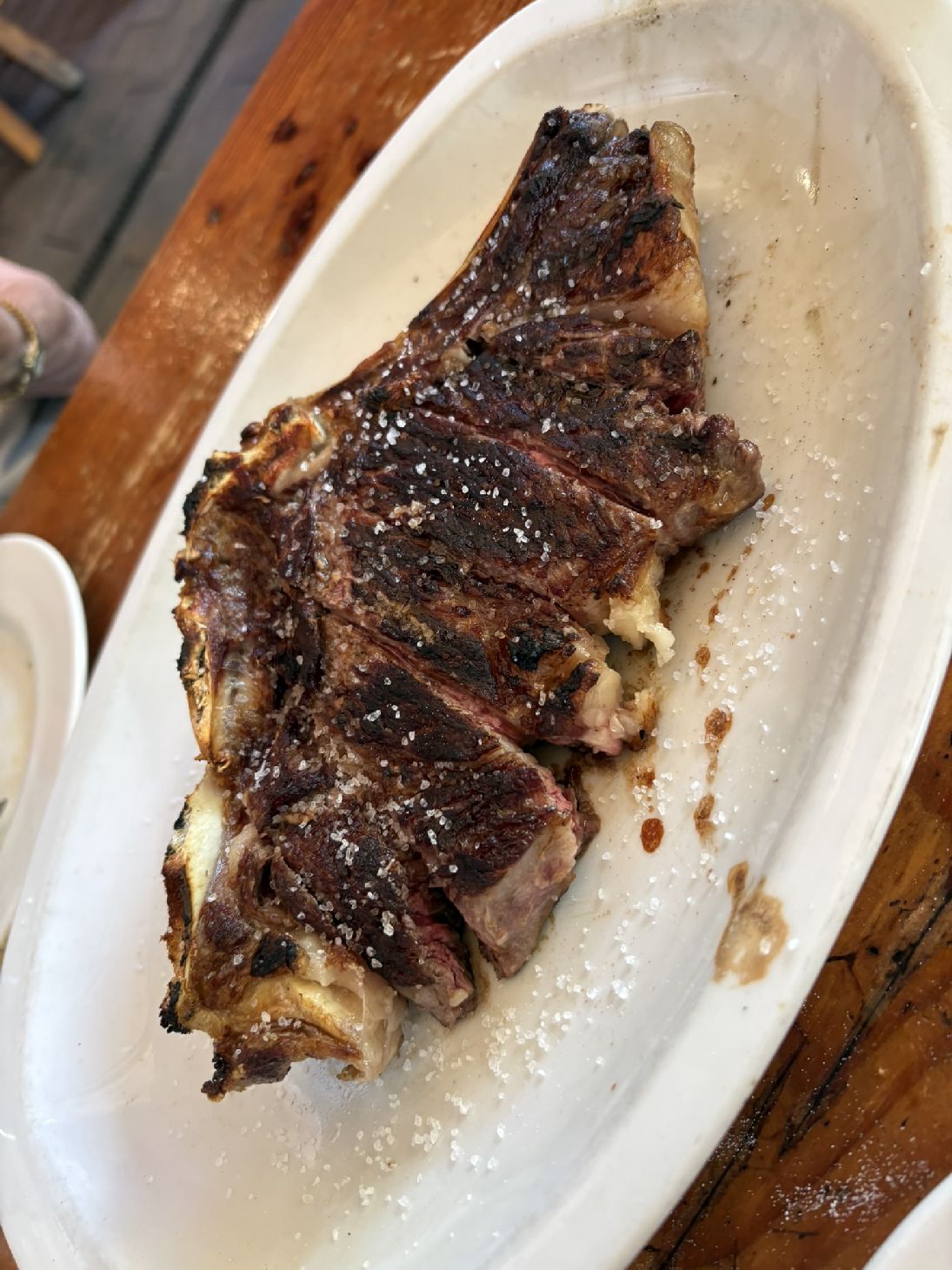
The food ranged from good (the omelette) to perfect (the txuleta), which may well be the best steak I have ever eaten. We tackled two between six of us, and even then it was a bit of a struggle to finish it, but it was worth the effort. The whole point of the meal is to leave you capable of walking away after huge amounts of 6% cider. It did it’s job…
About all we were now capable of was catching the bus back to San Sebastian, making sure that our new Chinese friend also got on the right bus so she could travel on to Bilbao later on. The bus didn’t arrive on time, but we really didn’t care by this point. We found ourself crammed in with the school run kids, and it wasn’t exactly a comfortable ride back, but it was cheap and did the job.
Back at the apartment, Lynne and I decided we’d go out for a couple of vermuts somewhere, while A opted to stay in and relax. R joined us eventually over at the Hotel de Londres Y Inglaterra, where we had to take to the Lounge Bar rather than sitting out, because the weather had changed drastically as the evening rolled in.
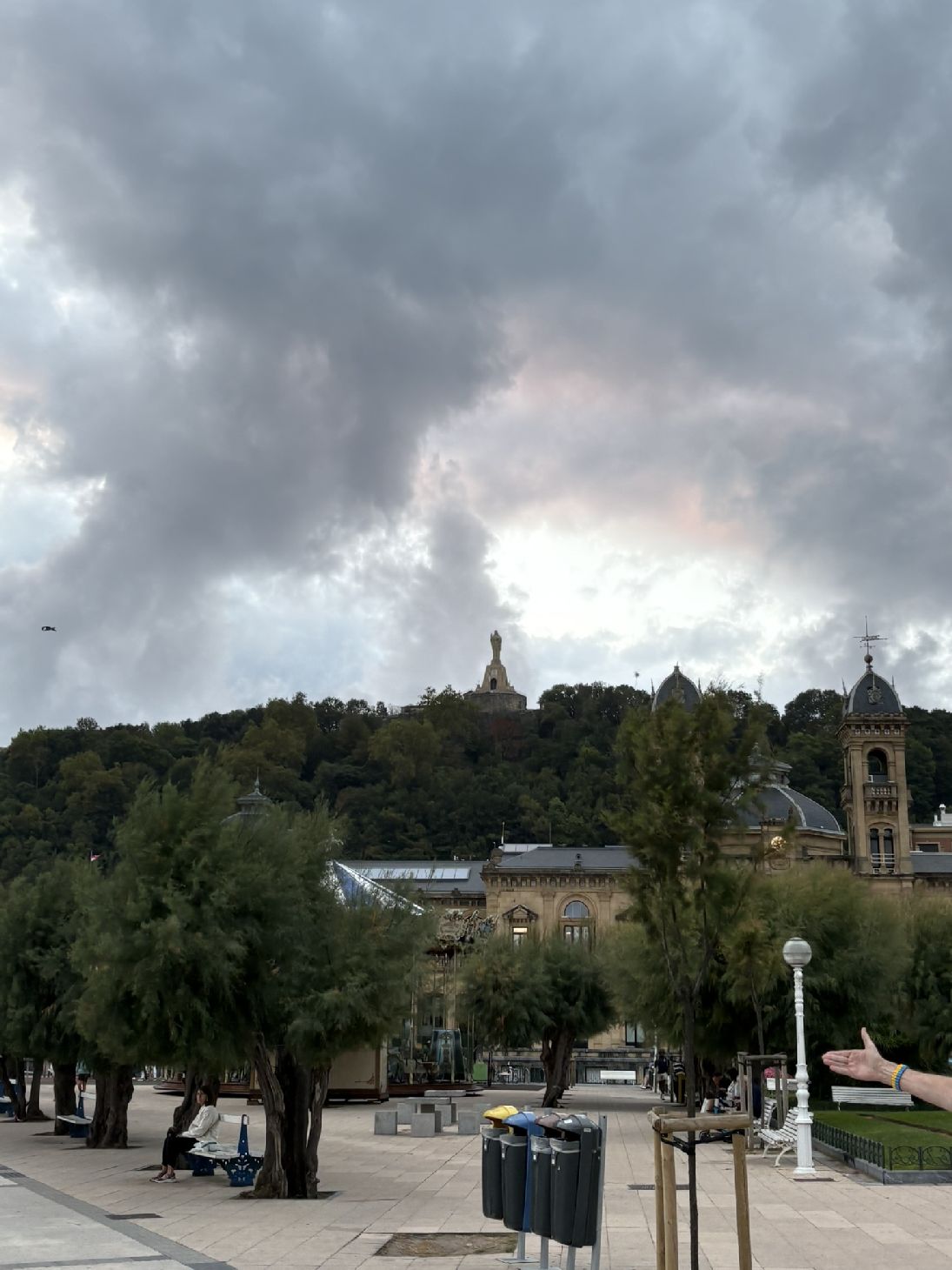
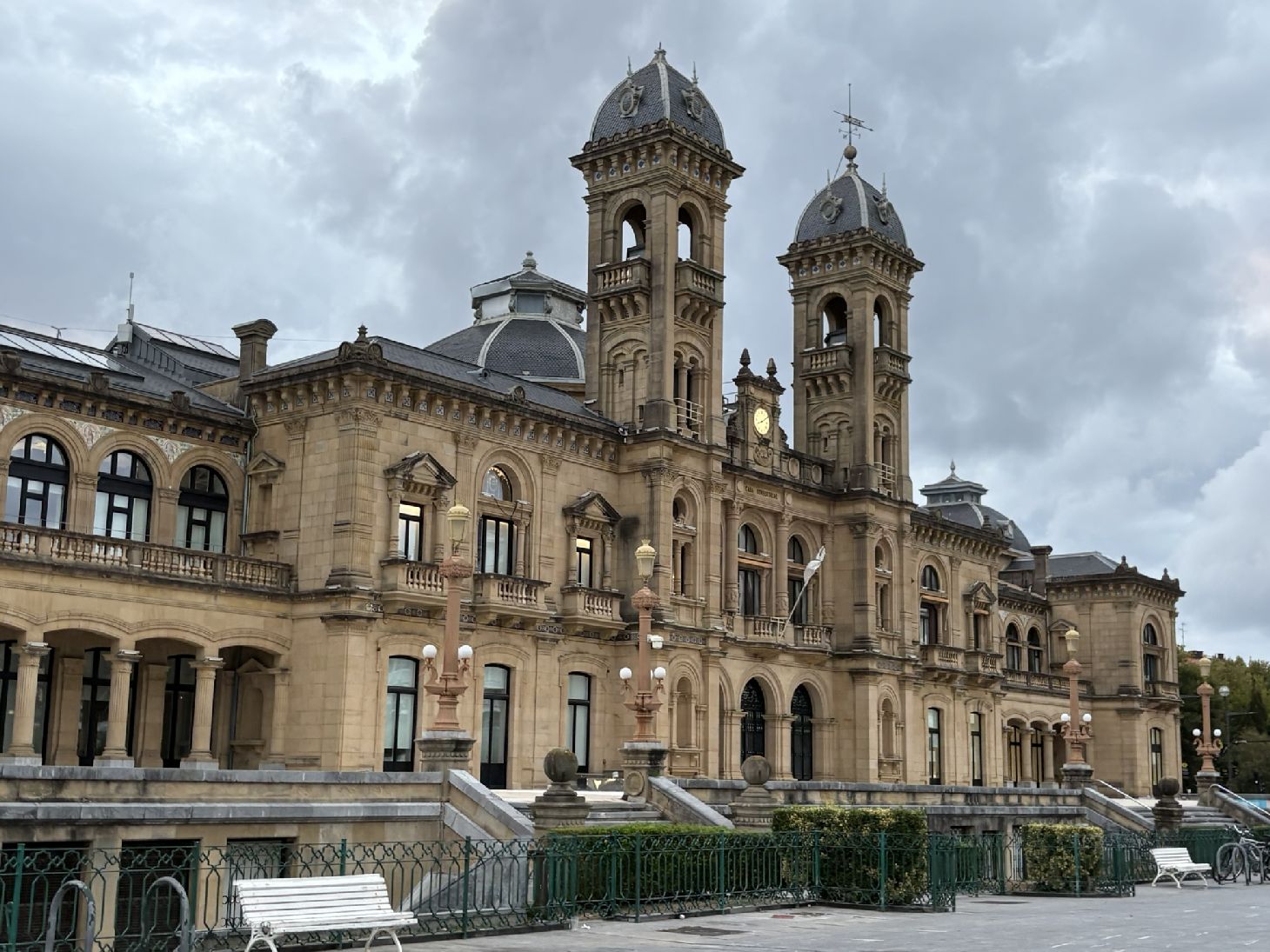
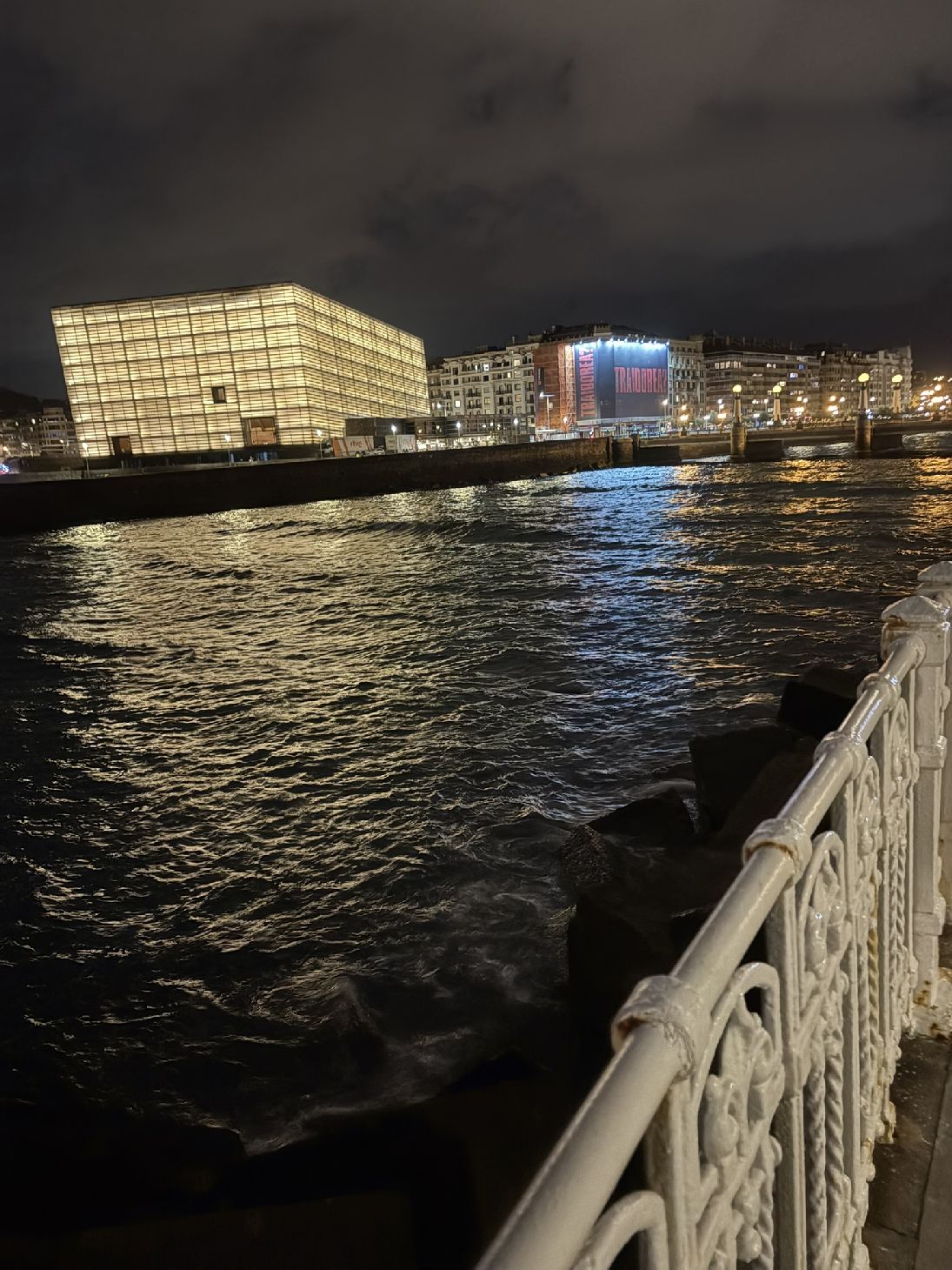
It was blowing a hooligan over La Concha and although there were still runners out there, they were struggling against the wind.
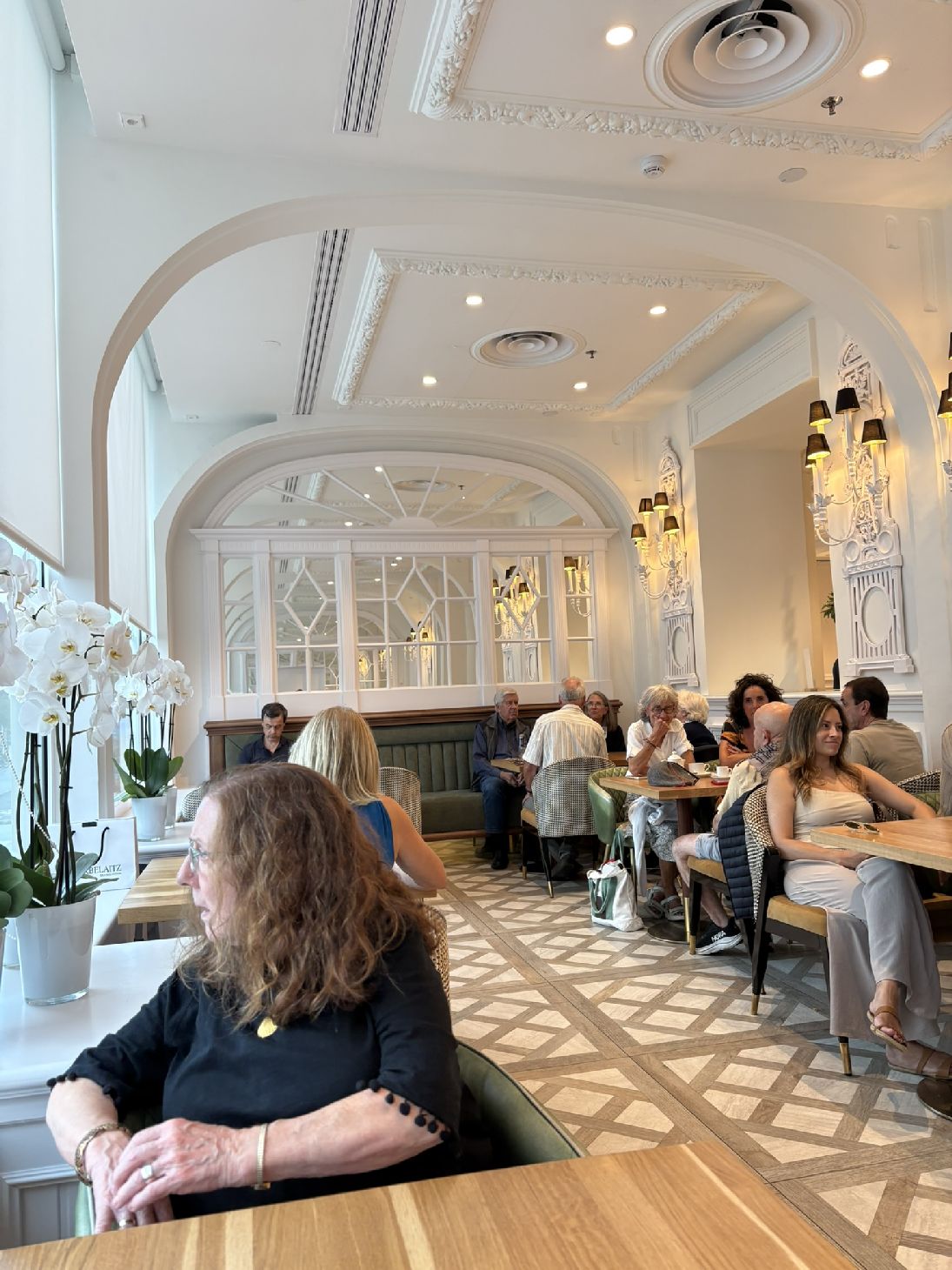
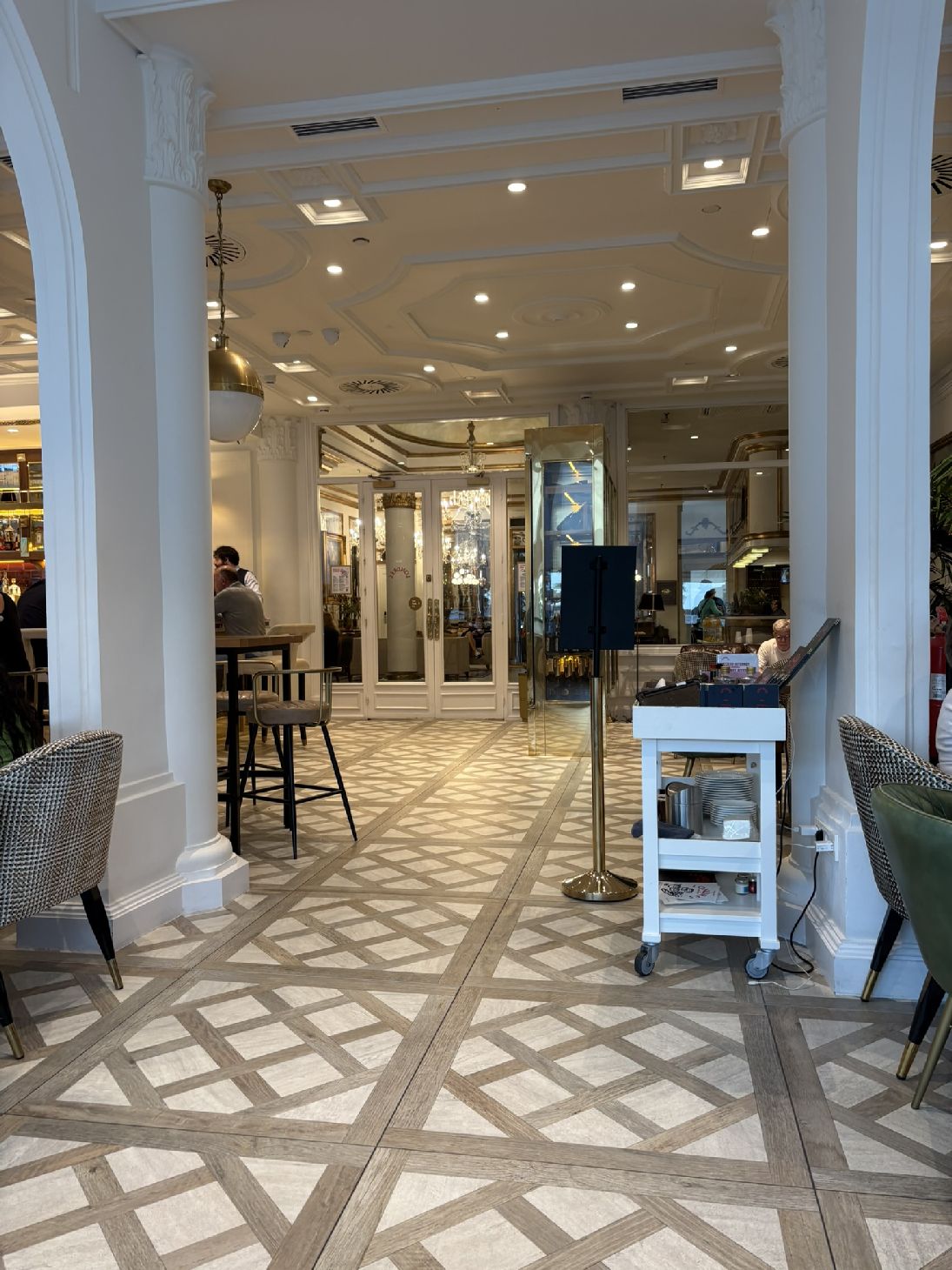
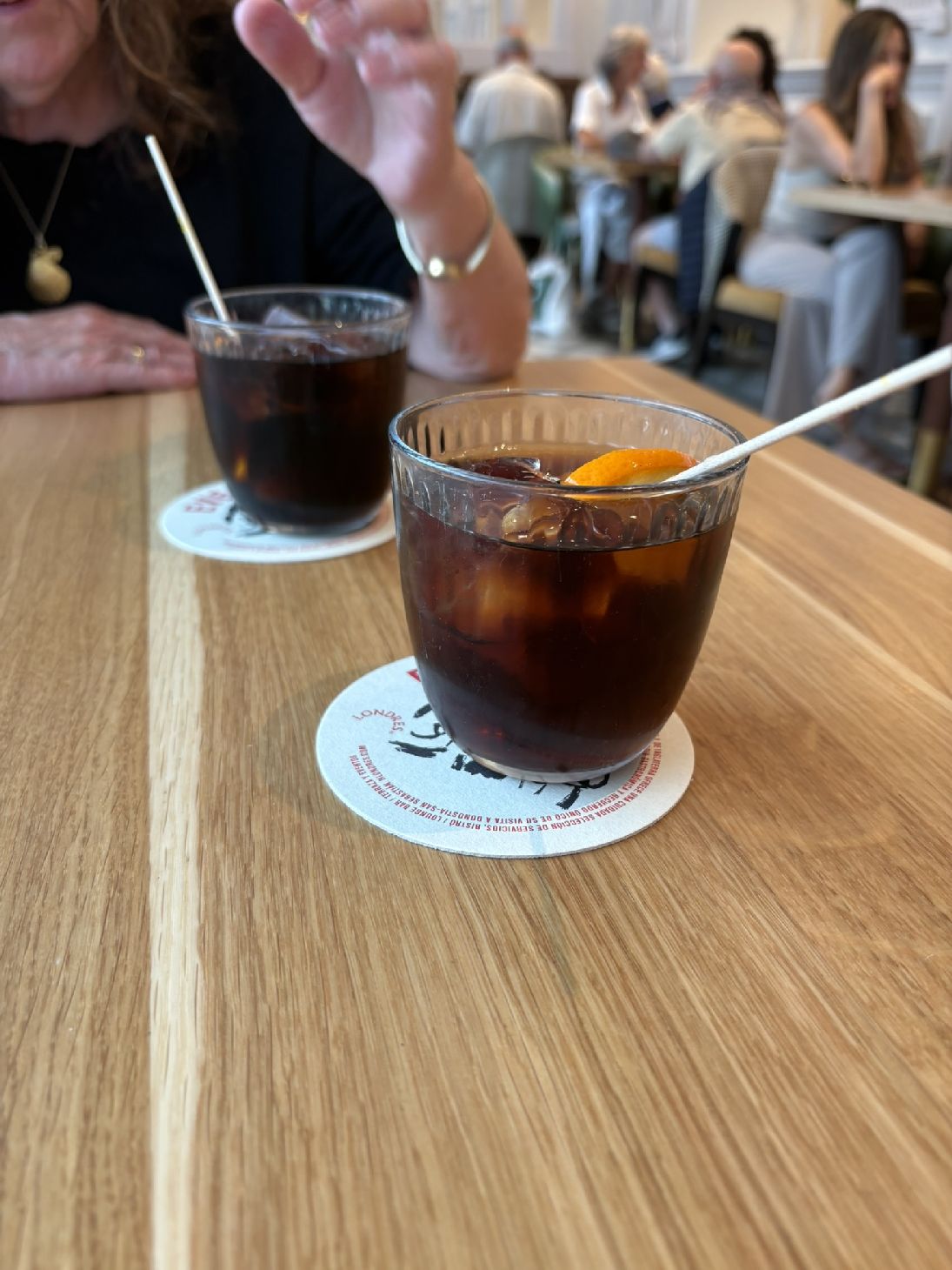
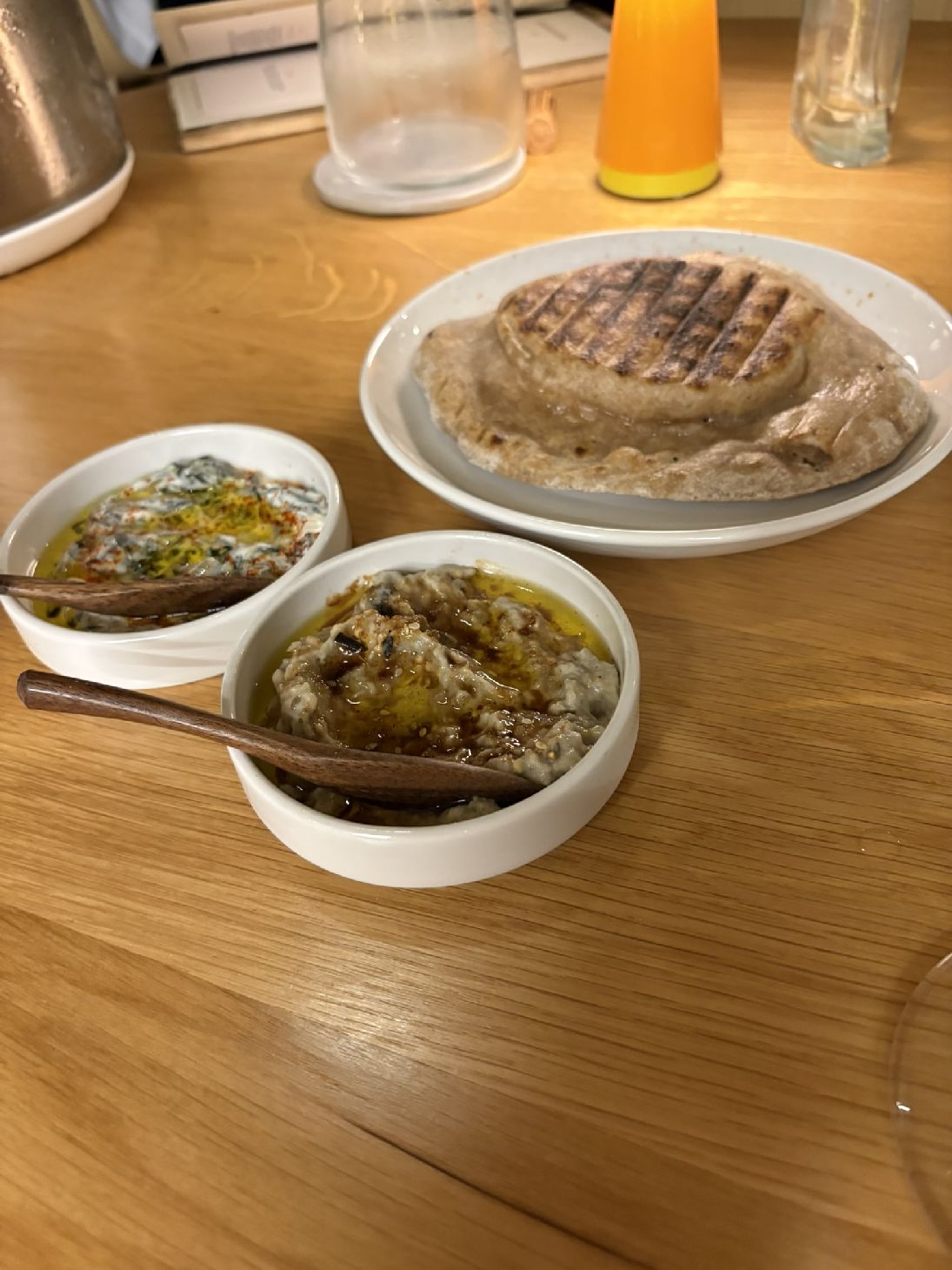
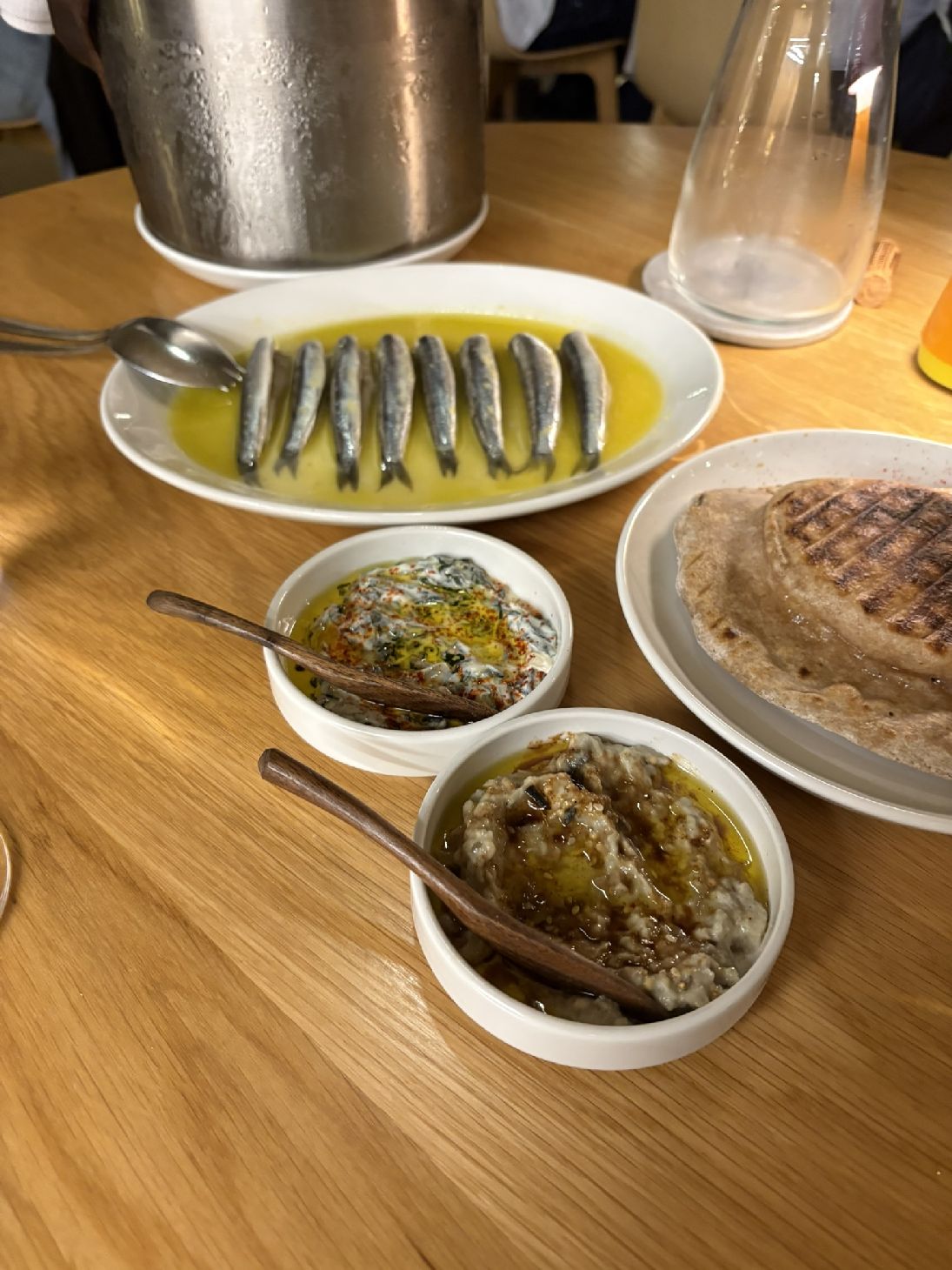
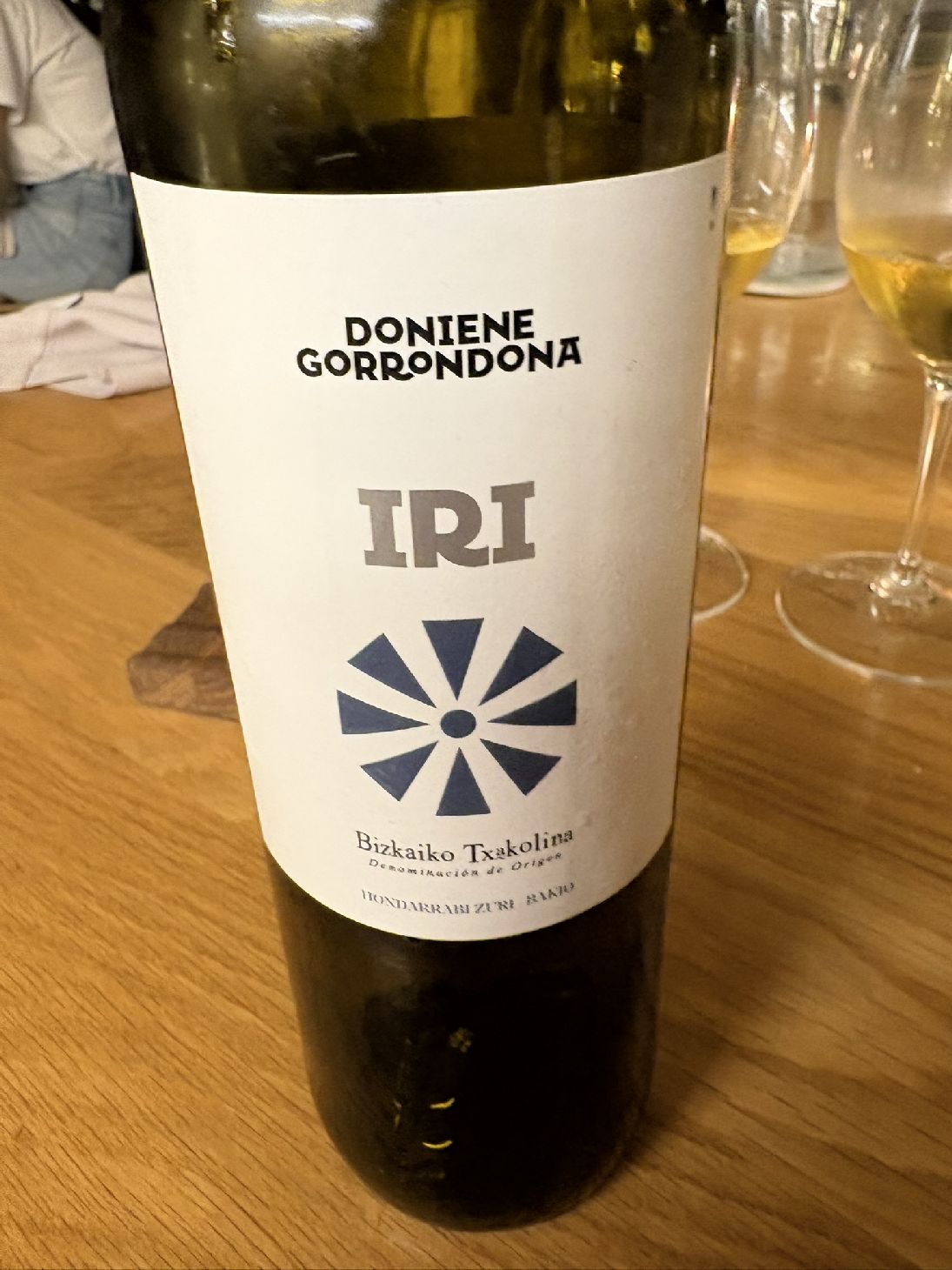
We had two drinks and then decided a light dinner was needed, so was walked back towards the apartment and stopped off at Sua,Muka on the edge of the Kursaal, where the posters for the Film Festival were now going up all along the billboards in the middle of the road. We shared a bottle of wine, and some flatbread with a spinach and yogurt raita-like dip, a roasted aubergine, and their fantastic anchovies with a lemon and garum sauce, followed by a portion of red prawns (painfully expensive but also very, very good). And that was enough for us. It was time for bed and a blissfully quiet night because the weather had also cleared the terrace at Kelly’s.