Saturday 13th June, 2026 – Copenhagen
Saturday was also fine, no matter what the weather forecast suggested, and so I was up early with the intent to run Amager Fellaed parkrun, it being nearby, easy-ish to get to, and not one that I’ve run before. I made my way across, and managed to collect a couple of other parkrun tourists from England en route. The park is a rambling stretch of common land with all sorts of animals in small enclosures (some more surprising than others) and the start is not easy to find if you don’t know where you’re going. I’ve been there before as a volunteer so I knew how to find it.
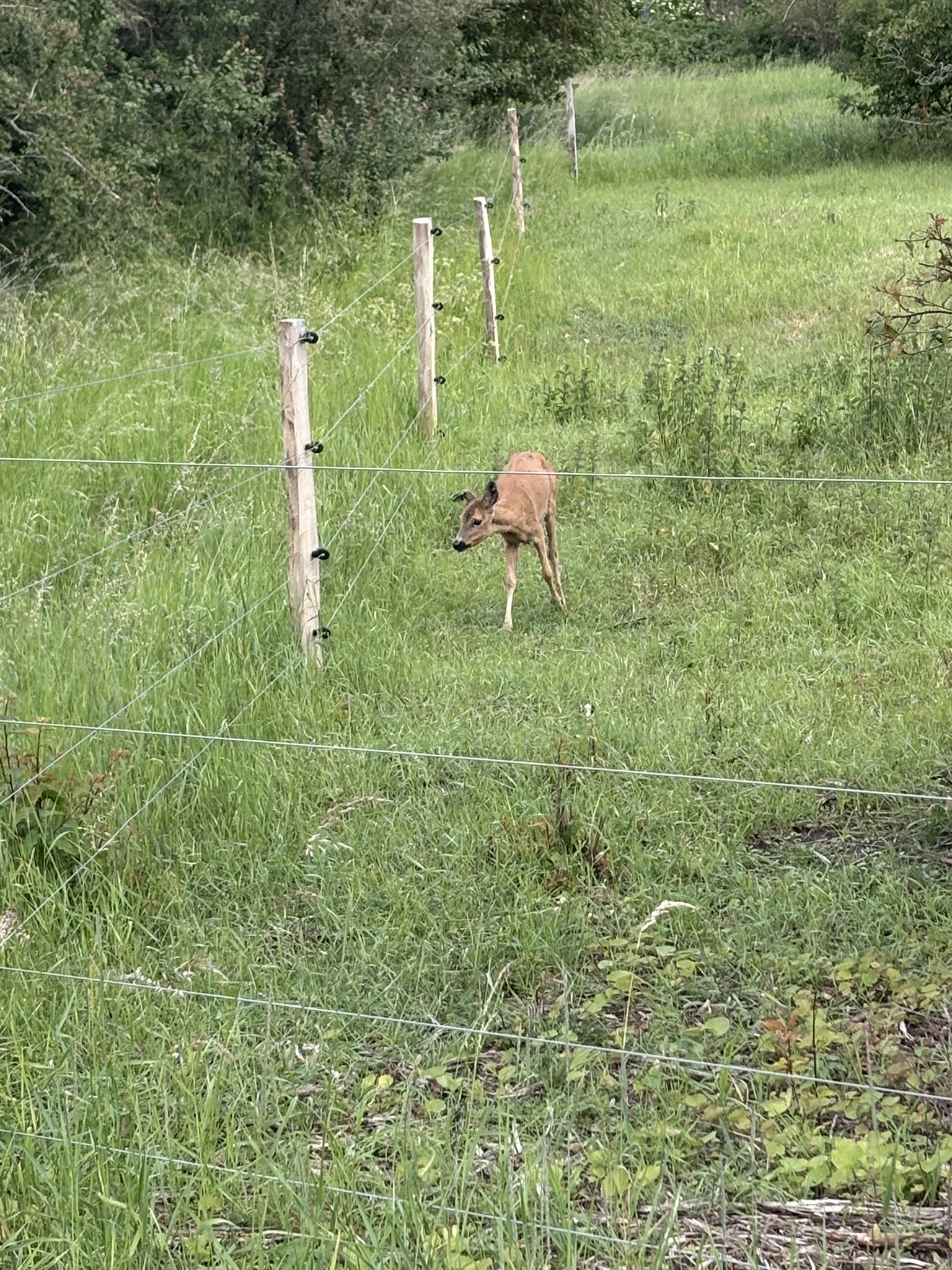
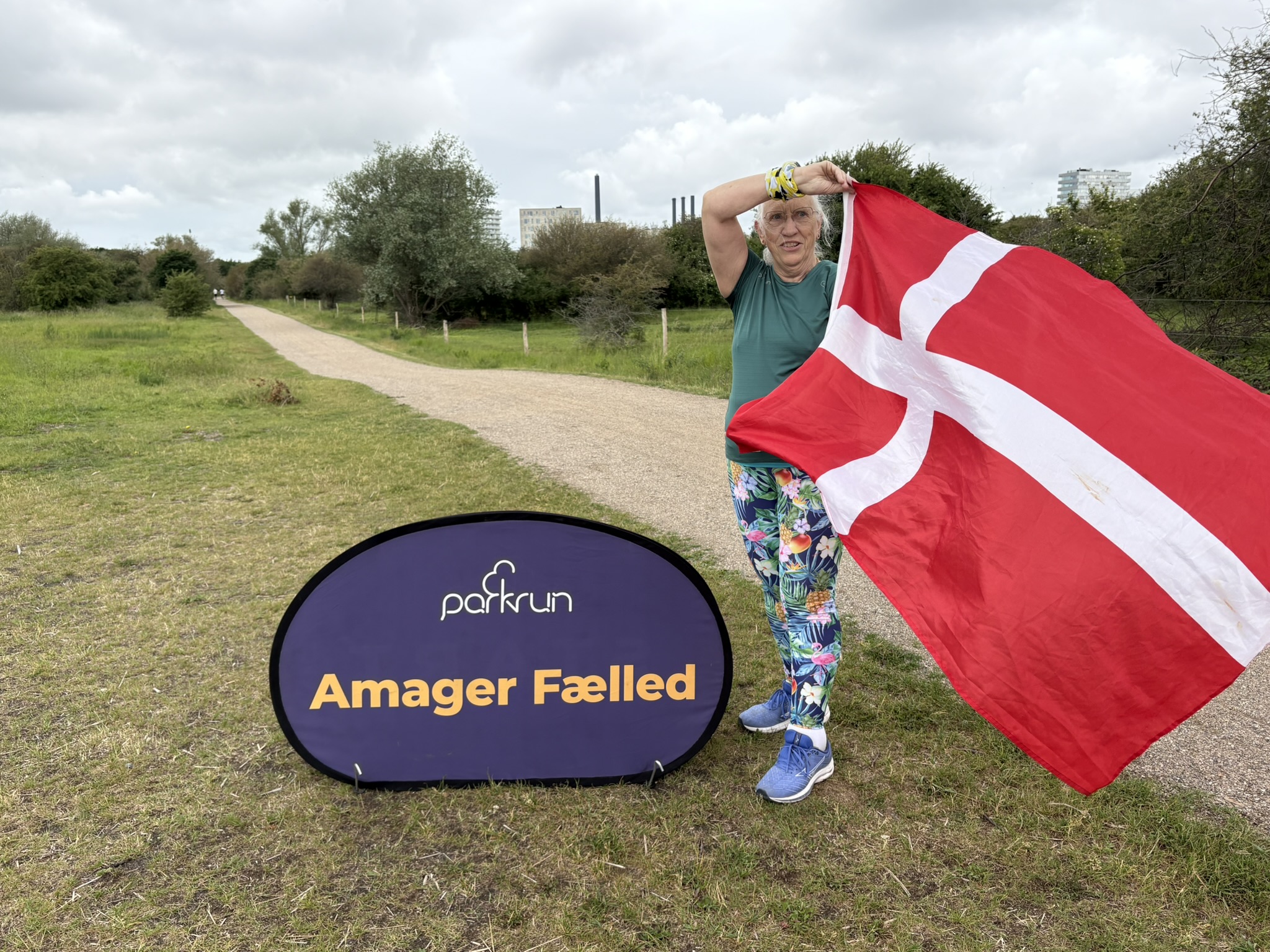
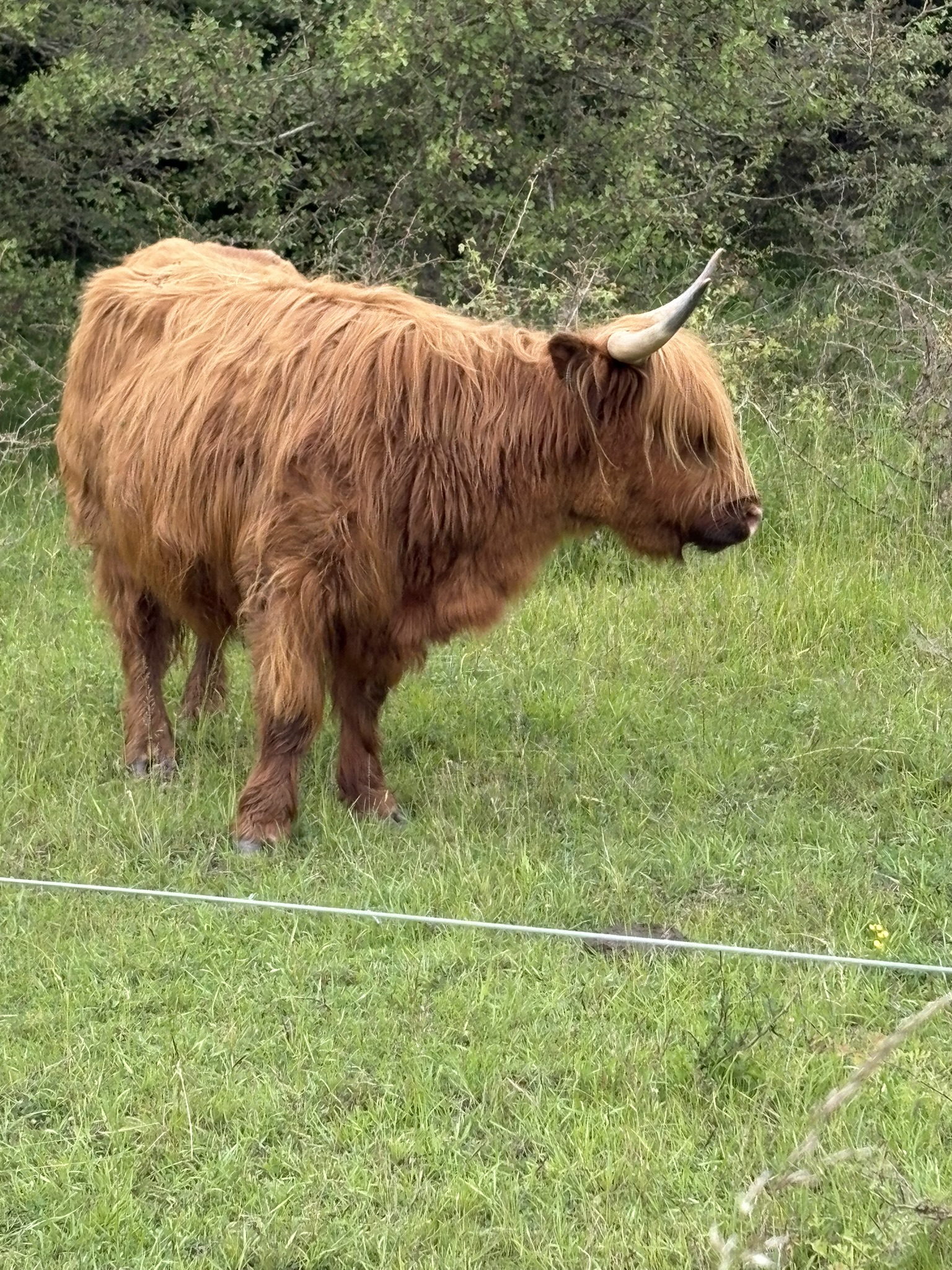
There was some posing around with the Danish flag to be had, and eventually, about 10 minutes late, we were underway. The first lap was fine but from my point of view the wheels came off on lap 2 when I somehow managed to miss one of the flour direction arrows and eventually made my way to the finish line a lot later than I’d hoped for and having covered rather more than the normal 5k. It could have been worse. At least I was able to find the nearest metro station and was soon back at the hotel in search of breakfast and then a shower.
After a very good selection of yogurt, fruit, and seeds, and then some sourdough bread, butter and cheese I was ready to head out and so was Lynne. We had decided that today would be all about the Ny Glyptotek, a block away, and somewhere I’d never been to despite numerous visits to Copenhagen. More formally, the Ny Carlsberg Glyptotek, it contains ancient and modern art in a purpose-built home founded in 1897 by brewer Carl Jacobsen, son of J.C. Jacobsen (him again) who seems to have remodelled massive swathes of the city during his time. As the Visit Copenhagen website has it: “The Department of Antiquities houses excellent collections of Egyptian, Greek, Etruscan and Roman art, providing a delightful journey through 3500 years of art and history. Stroll the hallways lined with marble statues, and you can imagine yourself in Ancient Greece, Egypt or Rome.”
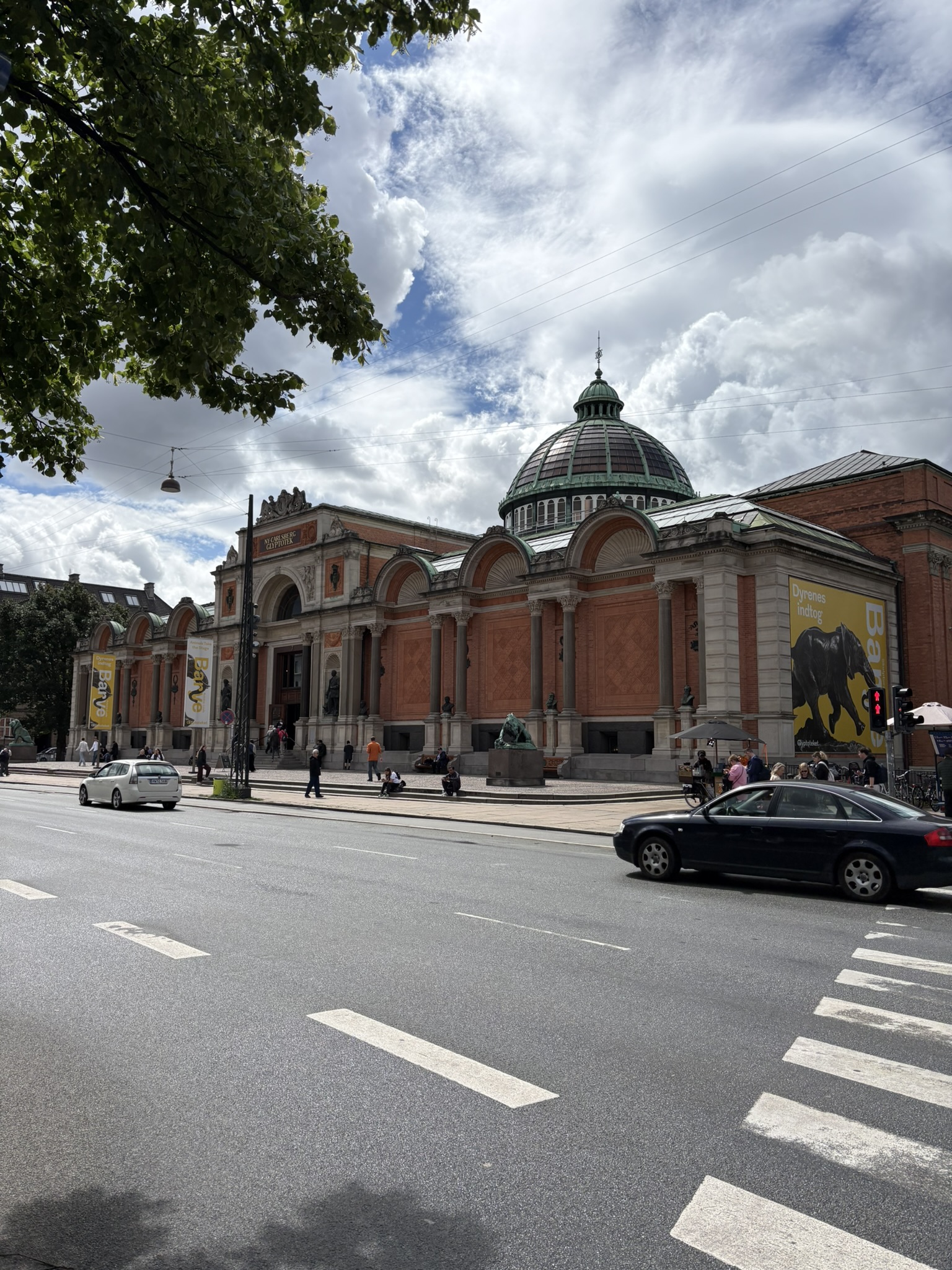
It’s not all that’s in the sprawling structure. A modern department has Danish and French painting and sculpture from the 19th and 20th centuries including more than 40 works by Gauguin, and the complete series of Degas’ bronzes and 35 sculptures by Rodin. Carl seems to have been something of a magpie, albeit a very specialised one. He also seems to have felt that while he couldn’t match the Botanical Gardens, he could still have a lovely plant-filled space of his own. Hence the beautiful Winter Garden, where the Café Picnic is situated. We claimed a table in there and waited for my colleague Karen to arrive. She was on time, so we had a quick coffee and then got stuck in to the collections.
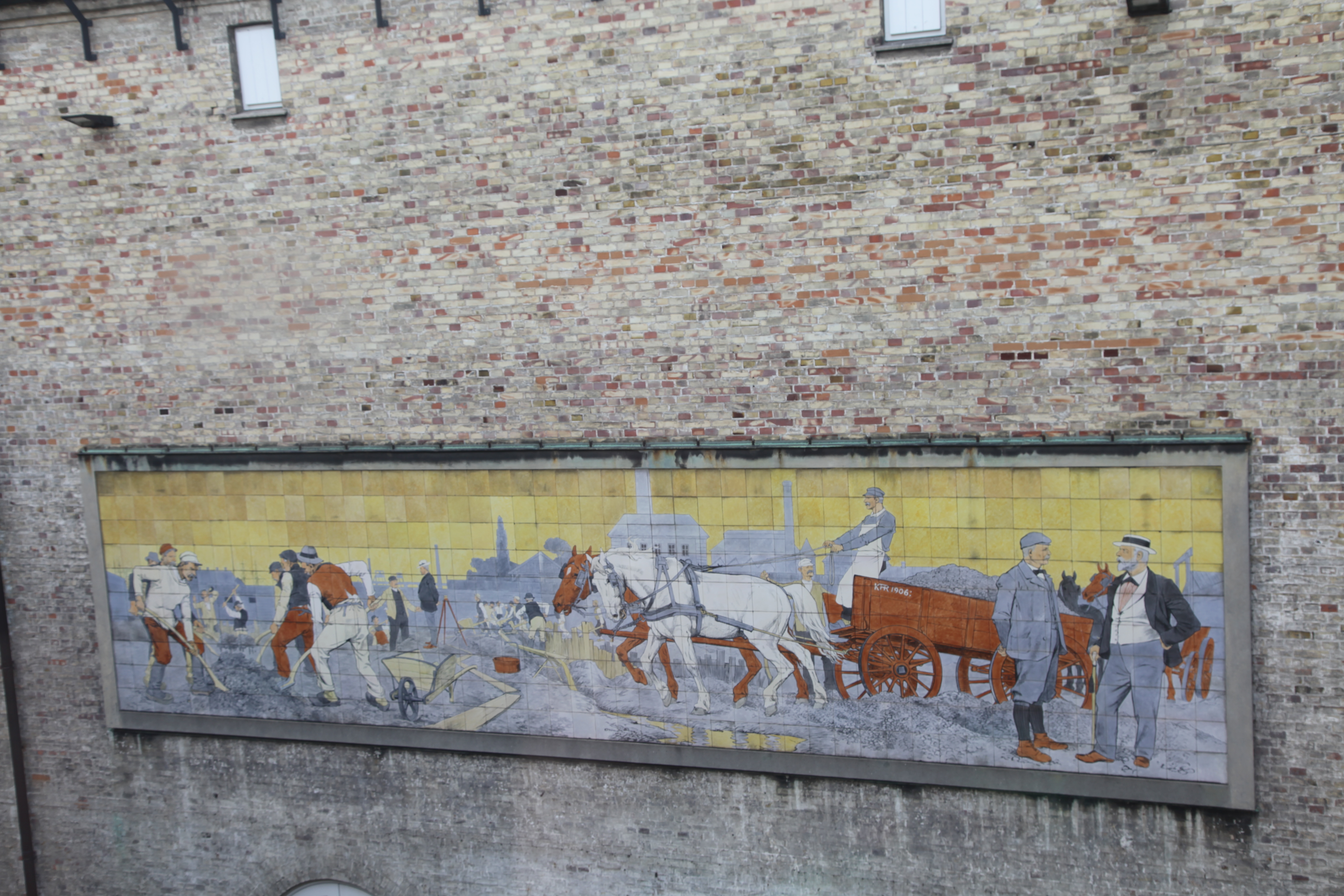
If you do go, I would highly recommend not planning to do anything else in the same day because there is a lot to see, even with the Roman section being mostly closed off while a special exhibition was either being set up or closed down. We started with some of the paintings, which were interesting enough though I’m not sure I’d have gone out of my way for them with French Art 1800-1925 and Danish Art 1780-1930 making up most of what is on show here.
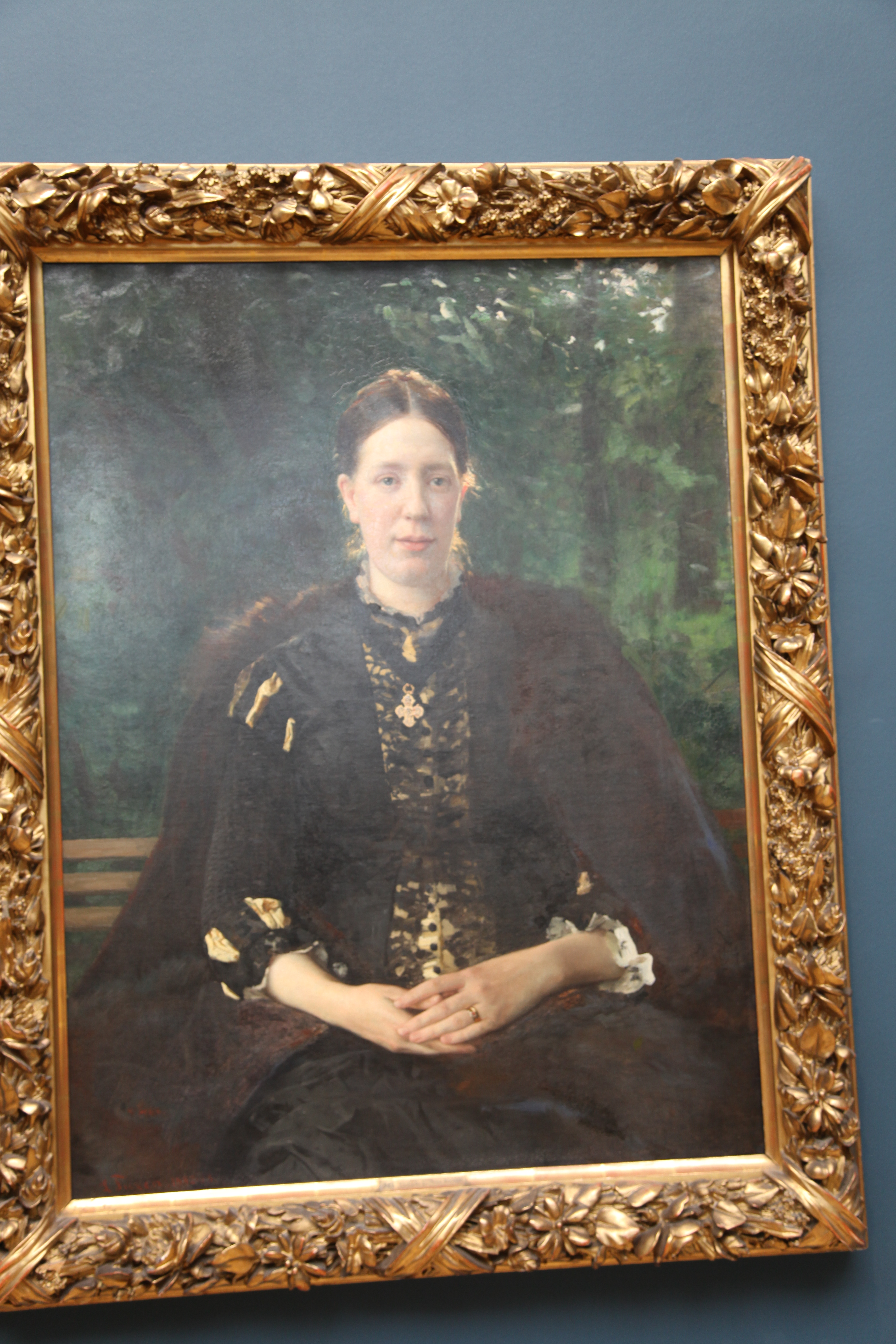

Also of interest is the permanent exhibition “Behind the Façade – Discover the Architecture of the Glyptotek” which sets out not only the architecture but the history of the building that Carl and Ottilia Jacobsen had built to house the art collection they had amassed over the years which they had now donated to the public. Even at the start it wasn’t big enough so you do wonder how the couple had coped with their treasures before opting to hand them over. I do wonder if there was some final straw that made one of other them think “either this lot has to go or I do!”?
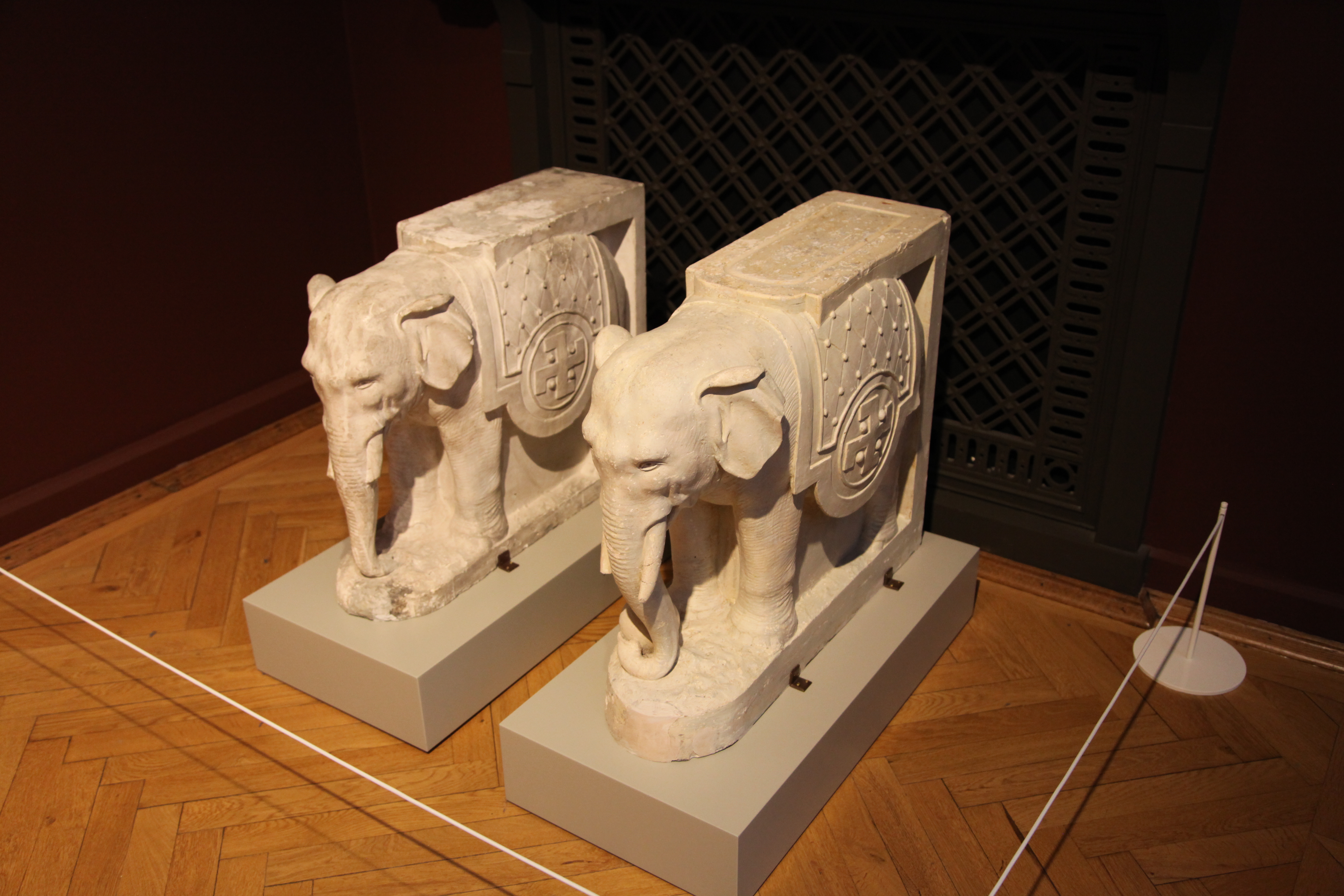
Anyway what happened quite quickly was the construction of the Winter Garden in the centre of the original building, which is a lovely location for the Café Picnic, the bookshop and a small souvenir shop. In addition, in 1906, Jacobsen inaugurated an extension designed by the architect Hack Kampmann, as well as the Winter Garden (designed by Vilhelm Dahlerup). Probably unsurprisingly, that was not the end. In 1996 there was another extension, designed by the Henning Larsen company. The upshot of this is that there’s a lot of museum to get round!
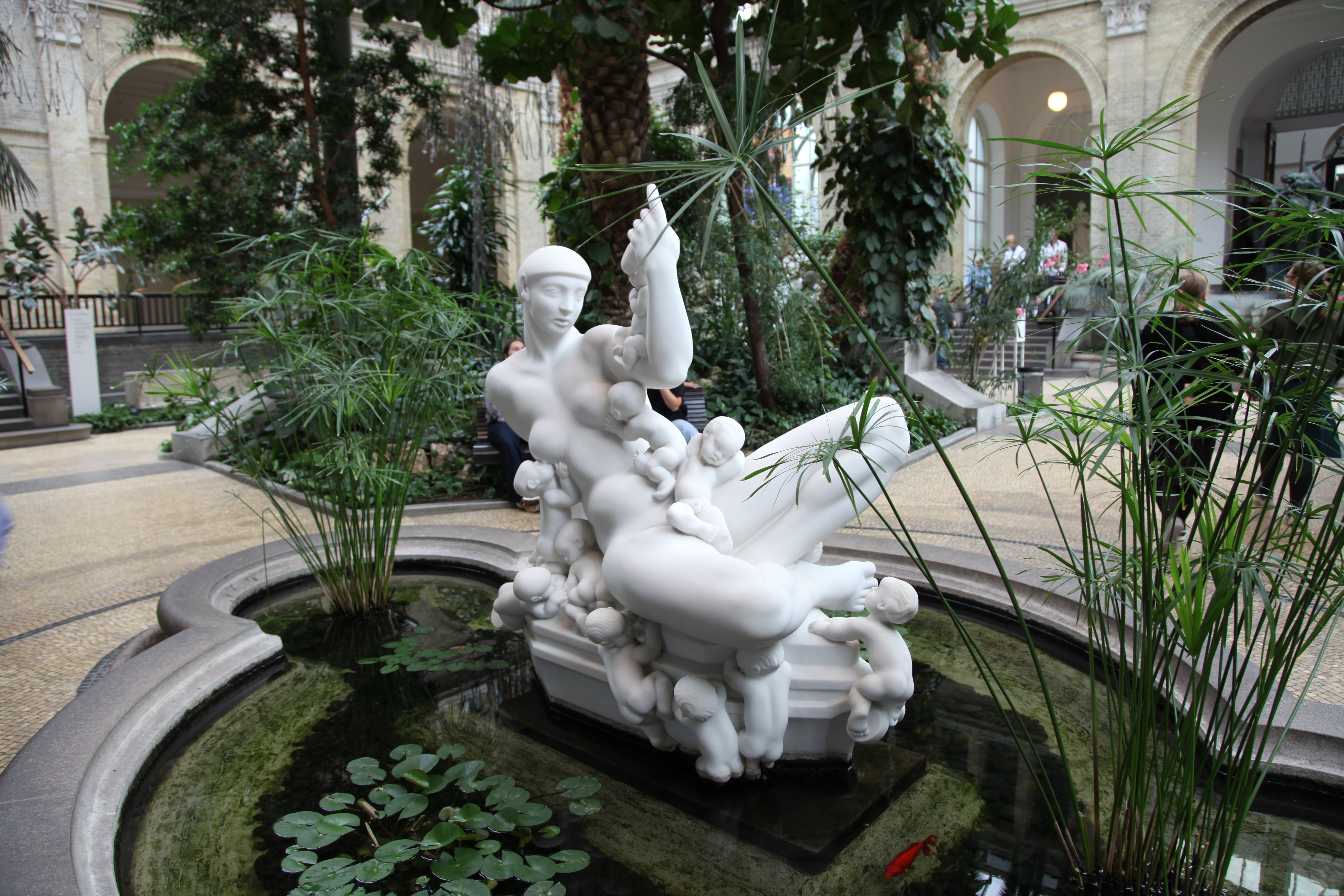
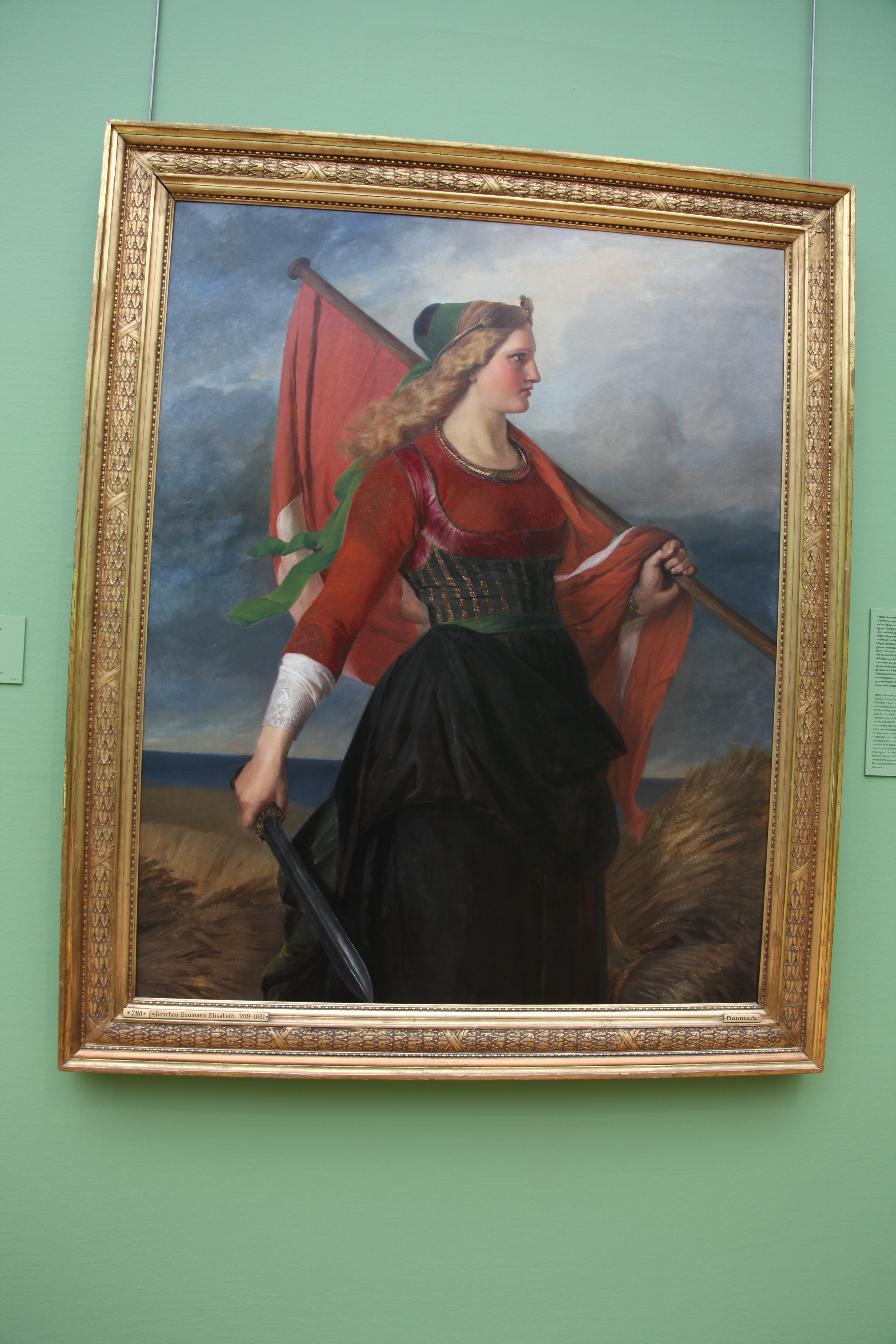
I was however, quite taken with a new acquisition by Elisabeth Jerichau Baumann, a painter of whom I knew nothing. It’s a portrait of her daughter, Sophie Dagmar Elisabeth, who married Christian Frederik Emil von Holstein-Rathlou in November 1878. he was the Master of the King’s Hunt and “Sofy” as she was known had just been awarded the title of Mistress of the King’s Hunt when the painting was made. They were, by all accounts, a somewhat eccentric couple but it’s a lovely portrait. As is this, by the same artist:
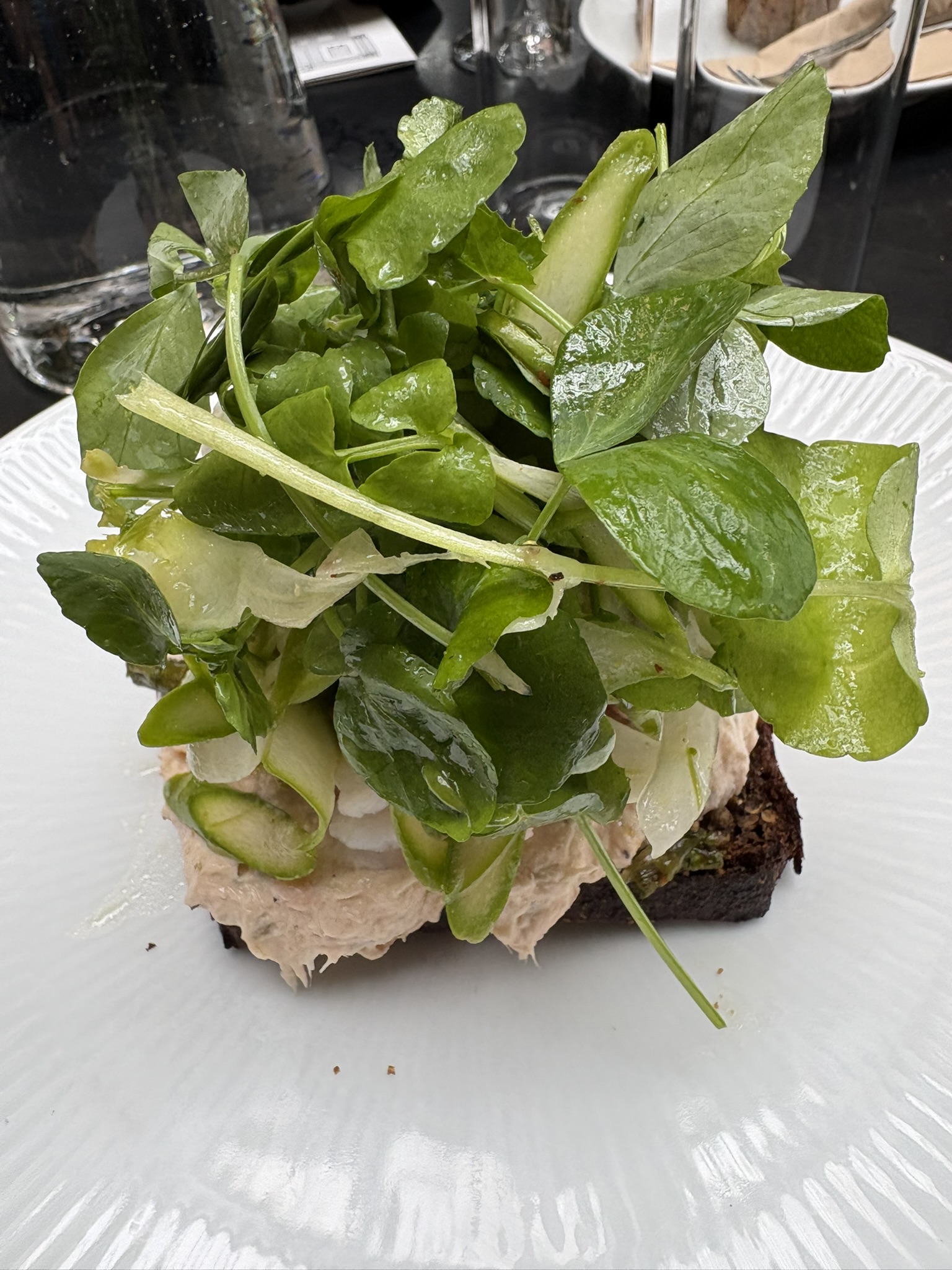
It was to the Winter Garden that we repaired next in search of sustenance, settling for cake, trifle, and in my case a smørrebrød, entitled “Carl’s great love” (salmon rillette on rye with fresh and
grilled asparagus, citrus and herbs, and added shrimps, because who doesn’t love added shrimps?).
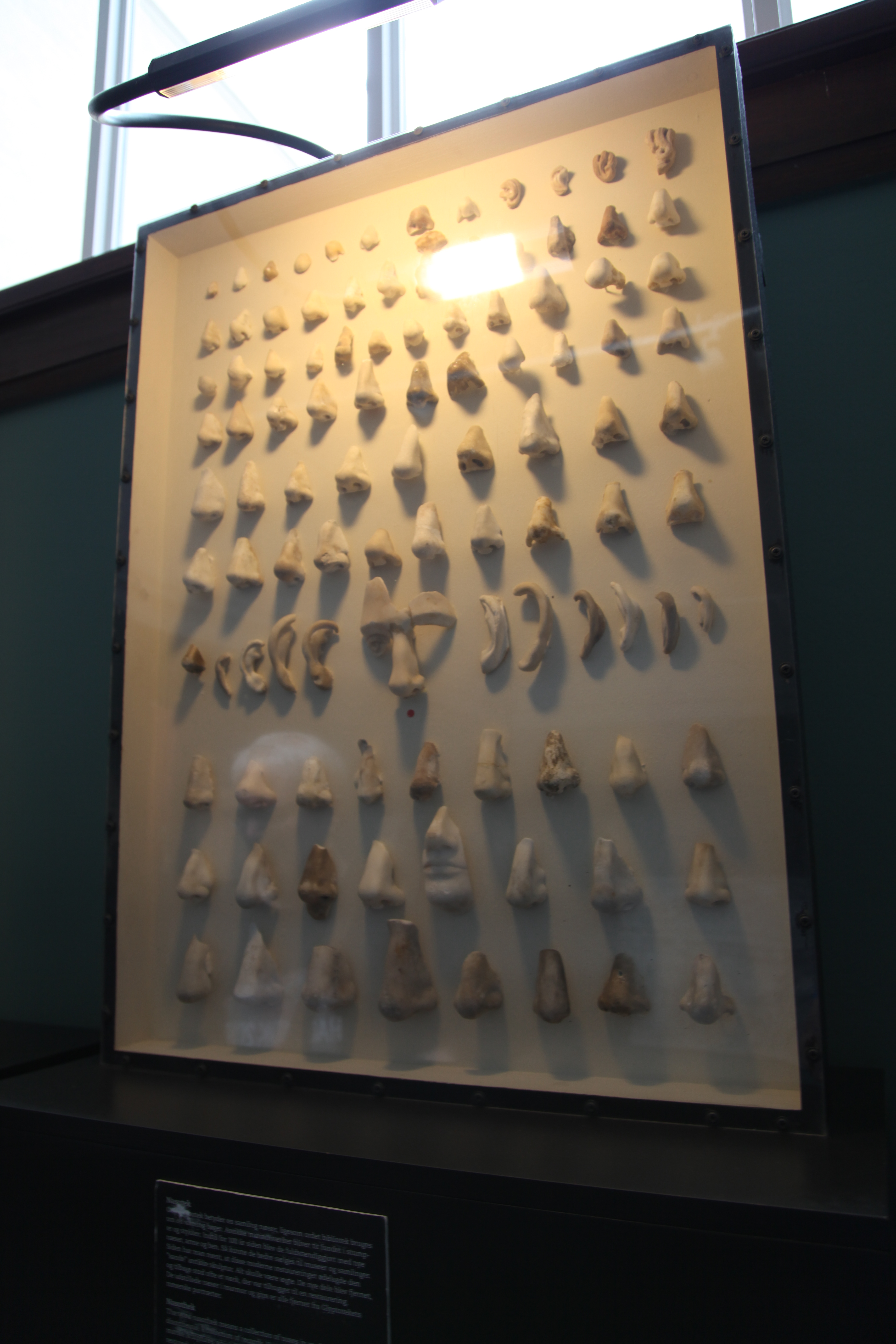
Suitably fortified we set off back into the depths of the galleries, starting with the Greek and Roman sculpture galleries. These are full of works that range from the stunning, to the occasionally bizarre! The collection of noses (yes, lots of noses, and a small smattering of ears), is quite strange in its own macabre way and it makes me wonder where the faces these used to be attached to have ended up!
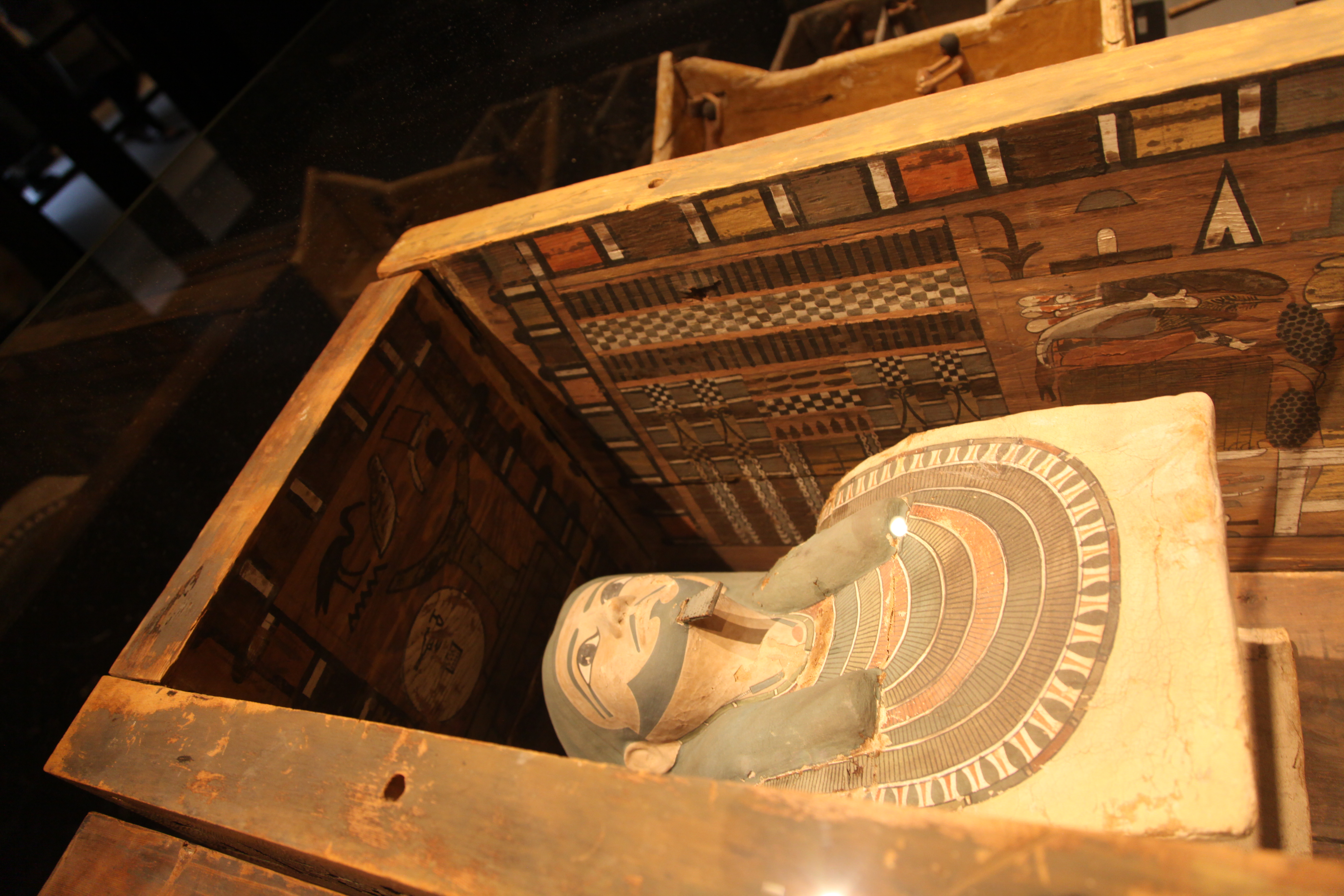
We next headed into the depths of the Egyptian section which is fascinating if more than a little disturbing given the nature of what’s on display, especially the mummies and sarcophagi. It feels oddly disrespectful somehow to take photos. Though obviously the subjects don’t care!
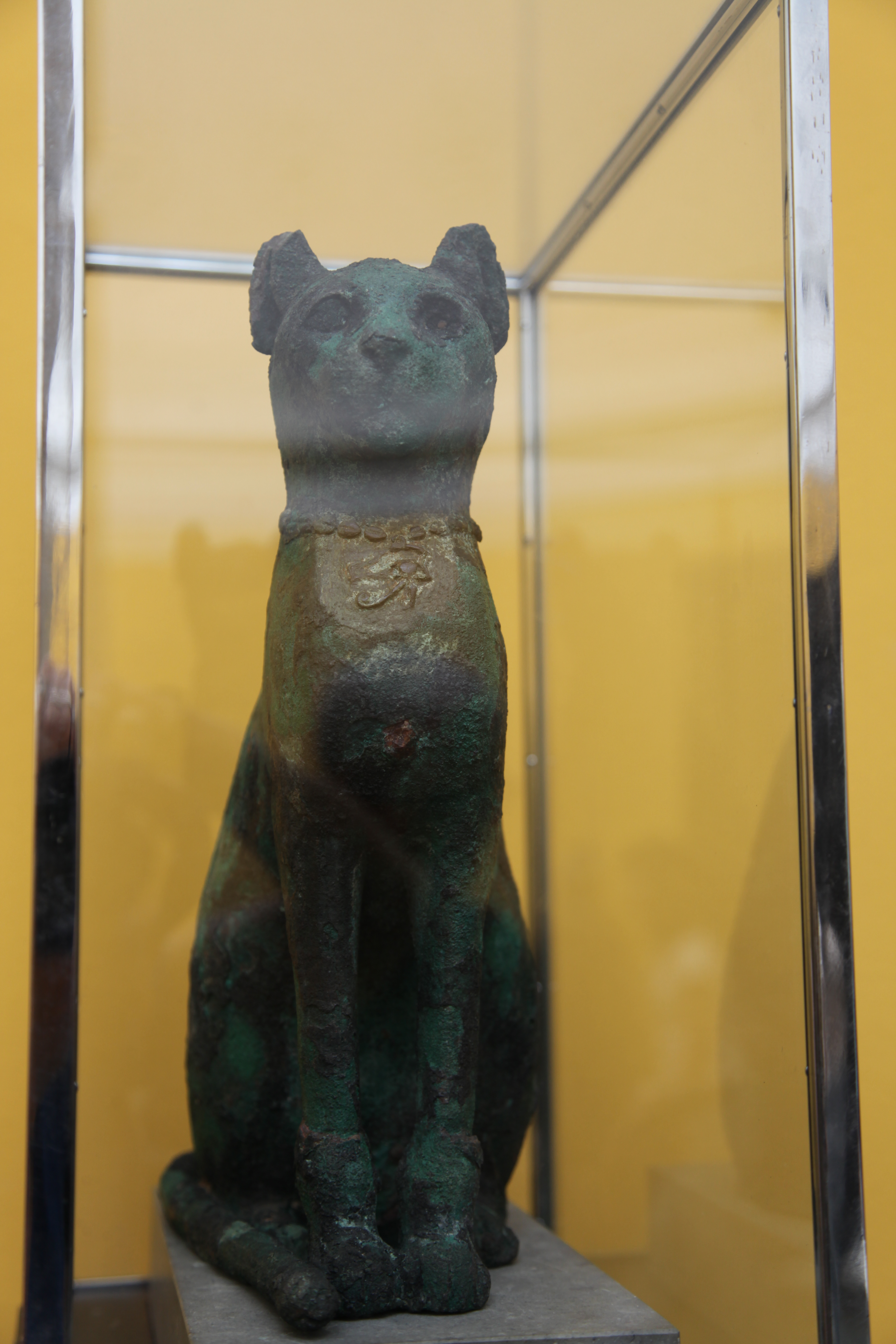
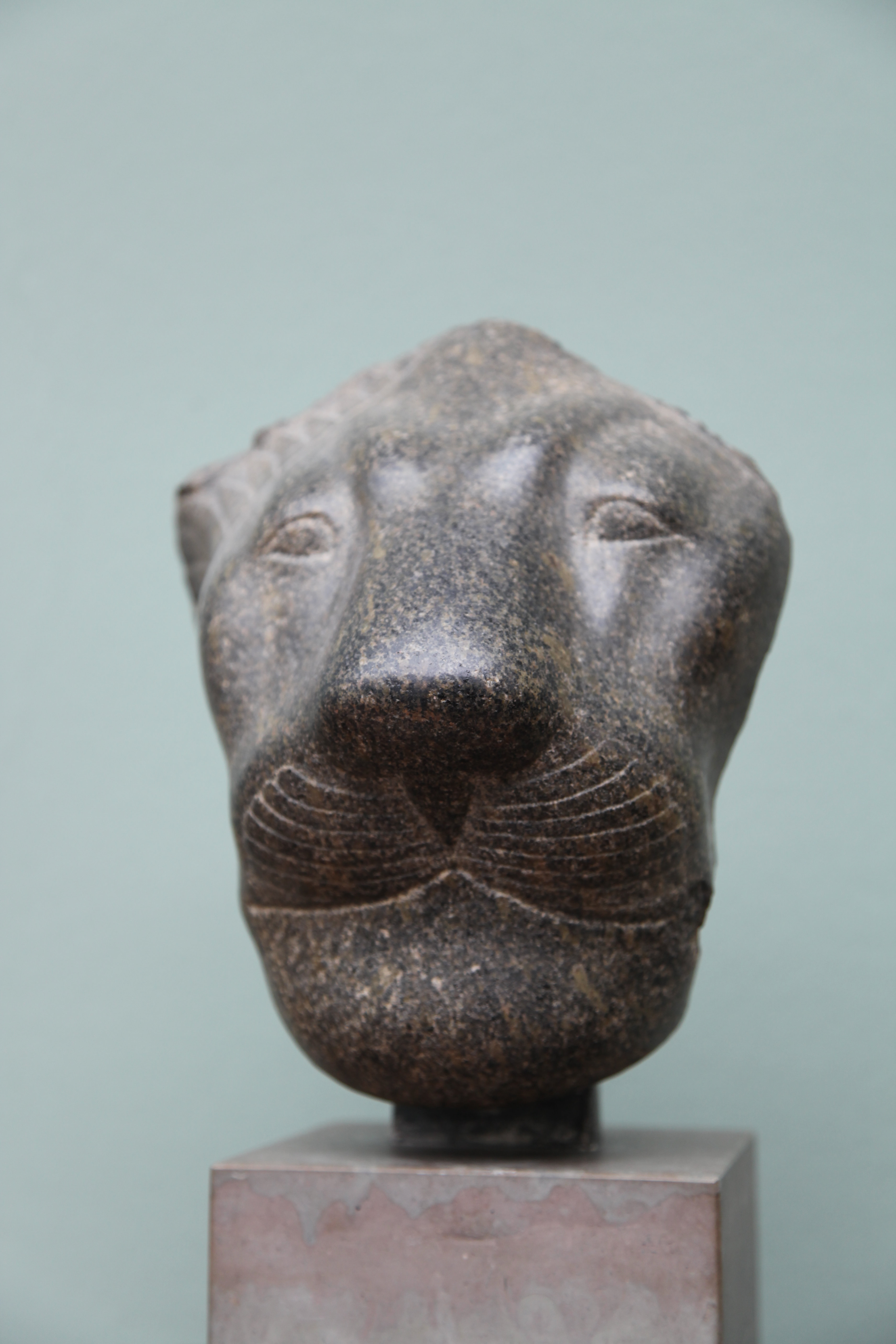
And of course being an Egyptian collection, there are cats of varying types… Because as we all know, cats were regarded as gods by the Egyptians, and cats have not forgotten.
However, by now we were starting to feel the old museum back kicking in (pretty sure the cause is walking around very slowly and bending over to look closely at what’s in the display cabinets). It was somewhere around 4 and a half hours after we’d gone in and we needed to sit down for a while. Karen agreed to come back to the hotel so we could all have a drink in the rooftop bar, but first there was some not entirely unexpected excitement. We knew the Copenhagen Sprint, a cycle race, was being held between Roskilde and Copenhagen over the course of the weekend. It was why we’d decided to save our planned trip to Roskilde for the Monday in case our visit would be hampered by a whole load of Lycra-clad athletes on scarily fast bikes. As we stepped out of the main doors of the Glyptotek, it was clear that they’d be coming down the road in front of us any time soon. We decided we’d hang around for a few minutes, while vast amounts of idiot pedestrians crossed the road despite the protestations of the route marshals. They were still doing it when the first of the course cars came through at speed, followed by a tightly grouped pack of competitors that were round the corner and gone before we could take stock of what we’d seen.
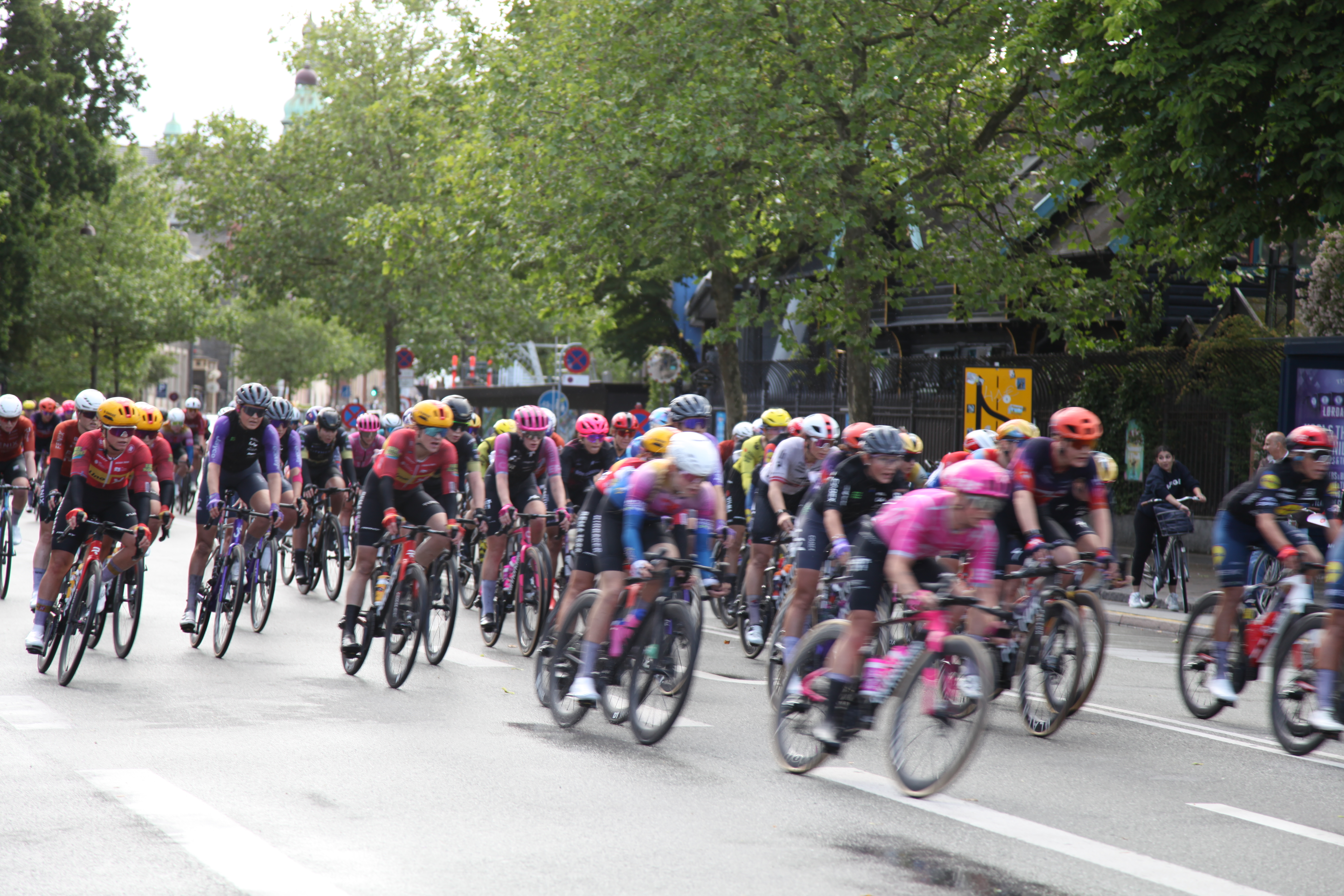
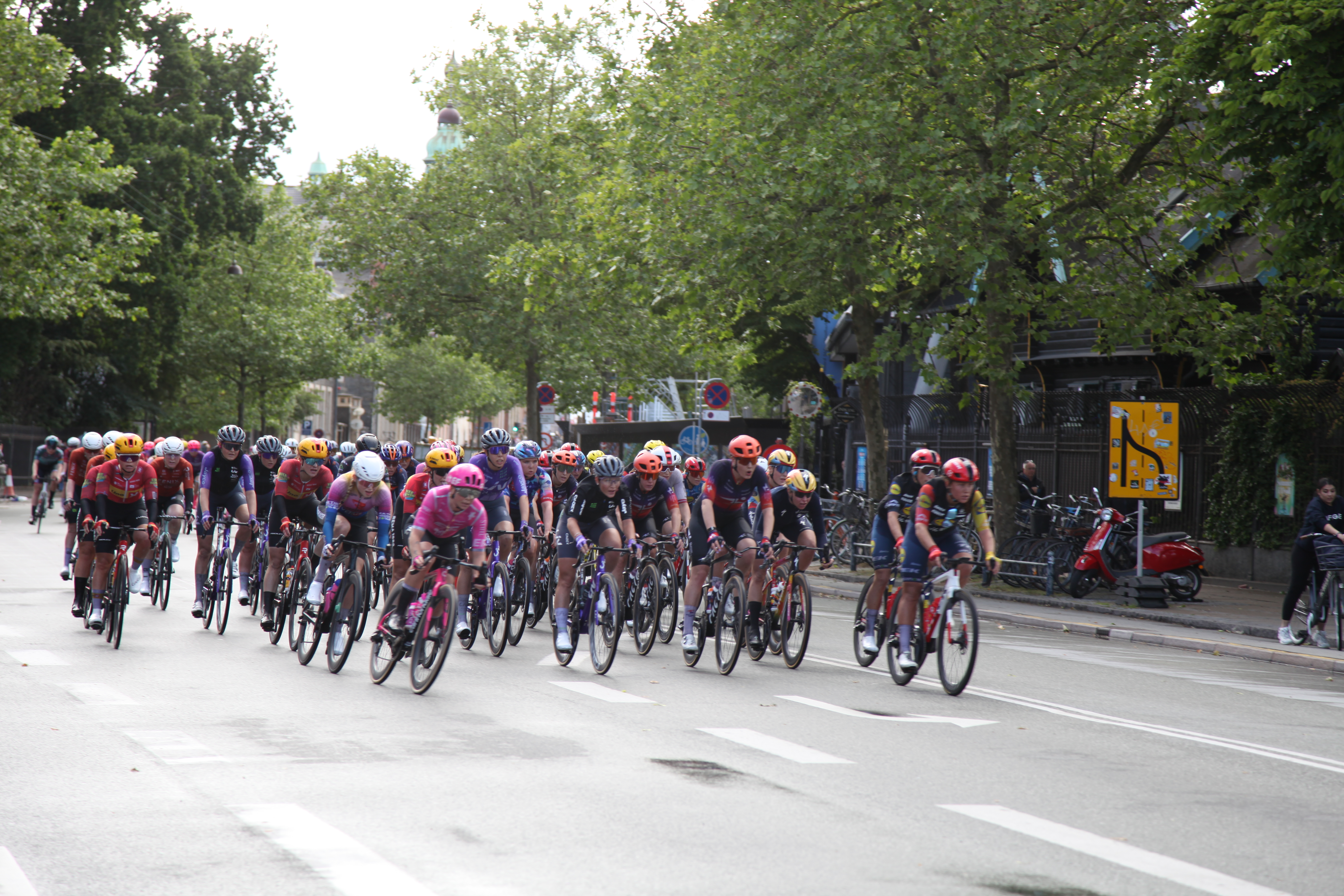
There were several more support vehicles, then a lone cyclist who had seemingly dropped away from the main pack, and then they were gone. It had rained while we were in the museum, as can be seen in the photos, and it also briefly came down as we took a break in the rooftop bar. We didn’t mind; we were under a large umbrella! Karen left us after that and we headed out for drinks and dinner, this time heading towards the canal and Gammel Strand.
Our bar of choice was Ruby this time. It was very busy but we were able to get a table that we could have until our restaurant reservation was due. I started with a Golden Slumbers, made with orange gin, saffron, vanilla and lime leaves. I liked it so much that I stayed with it and would definitely recommend it. If your tastes do not stretch to the exotic in cocktails, they will also happily supply you with a classic of your choice, ingredients permitting.
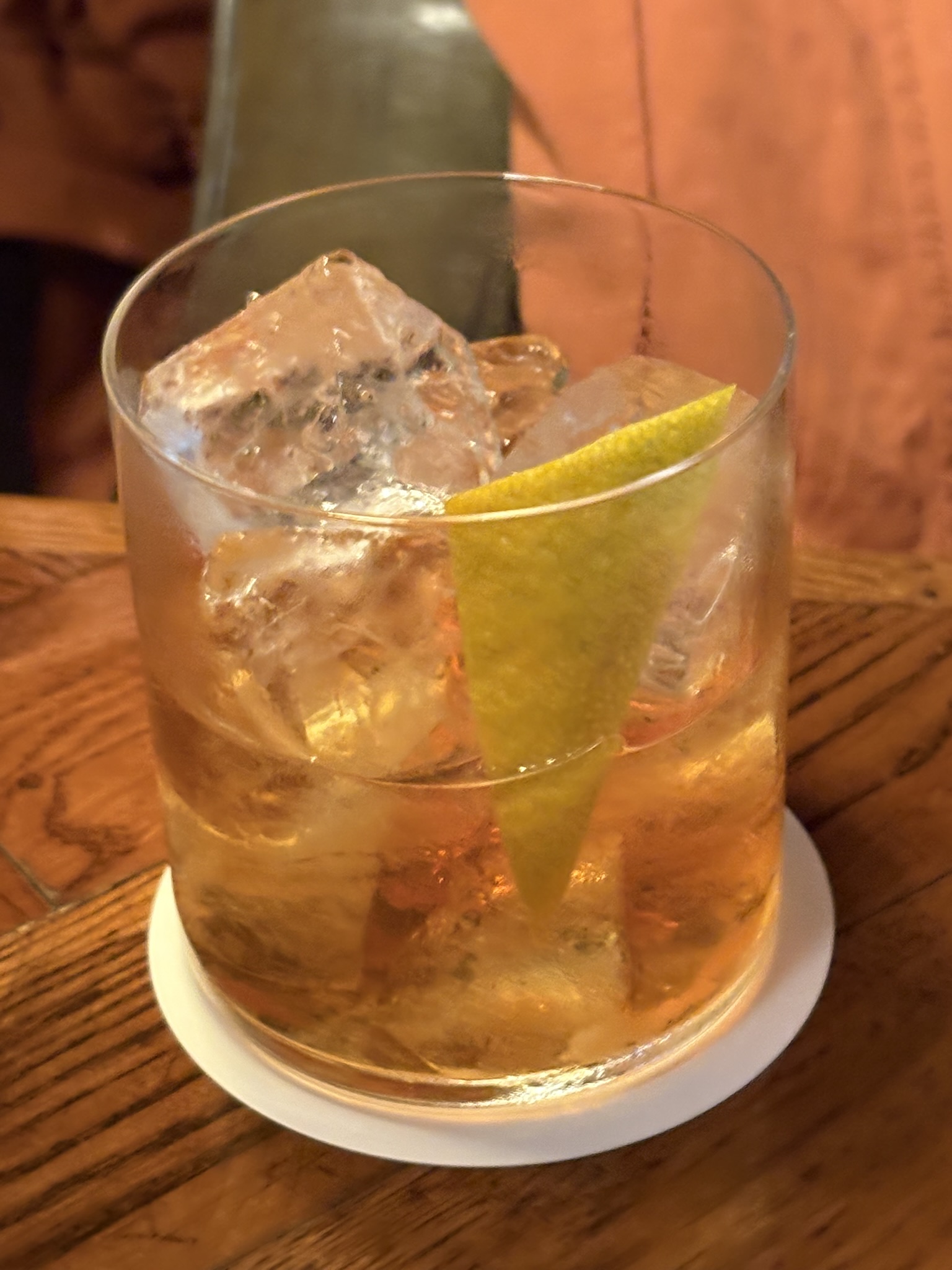
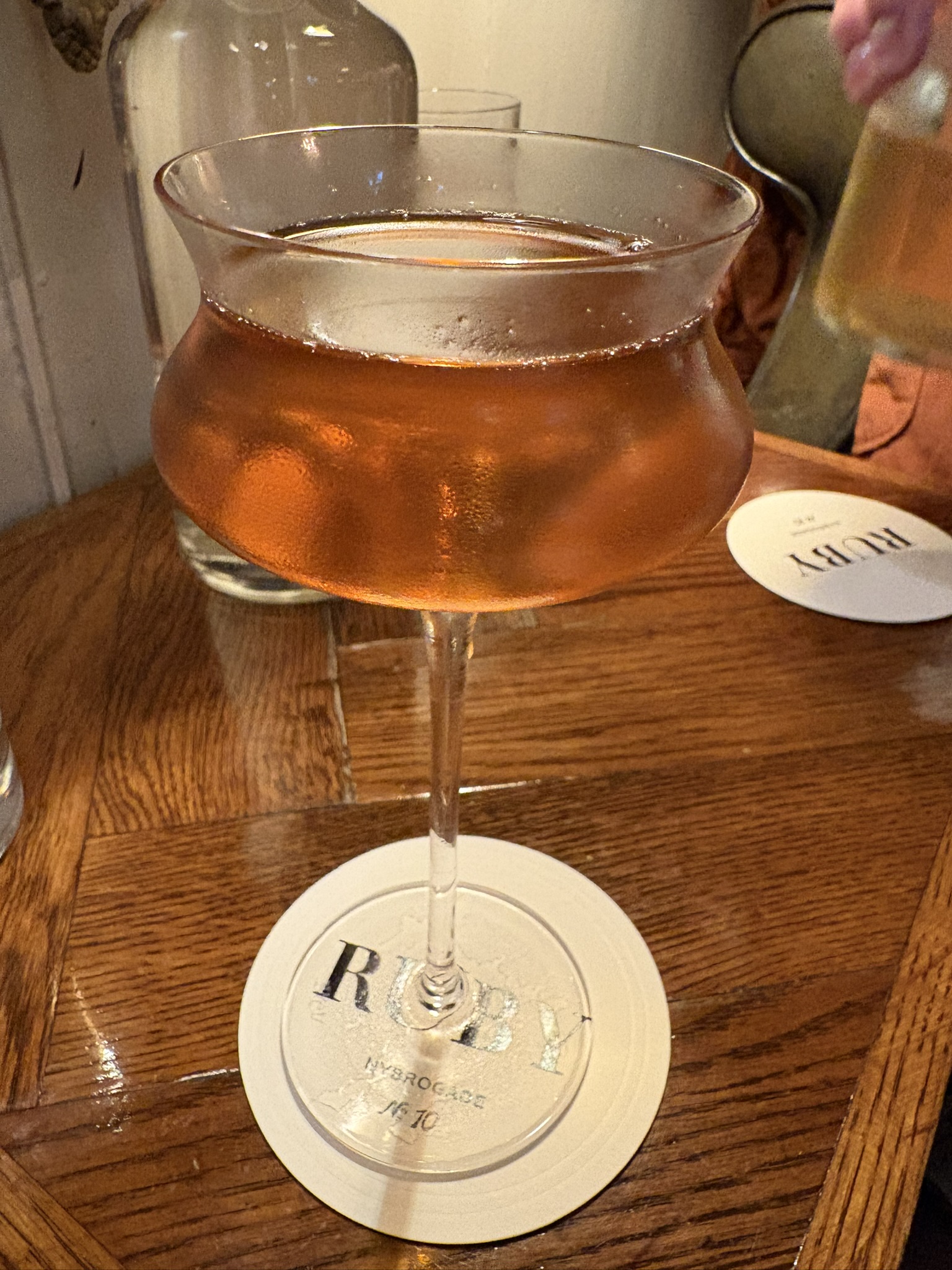
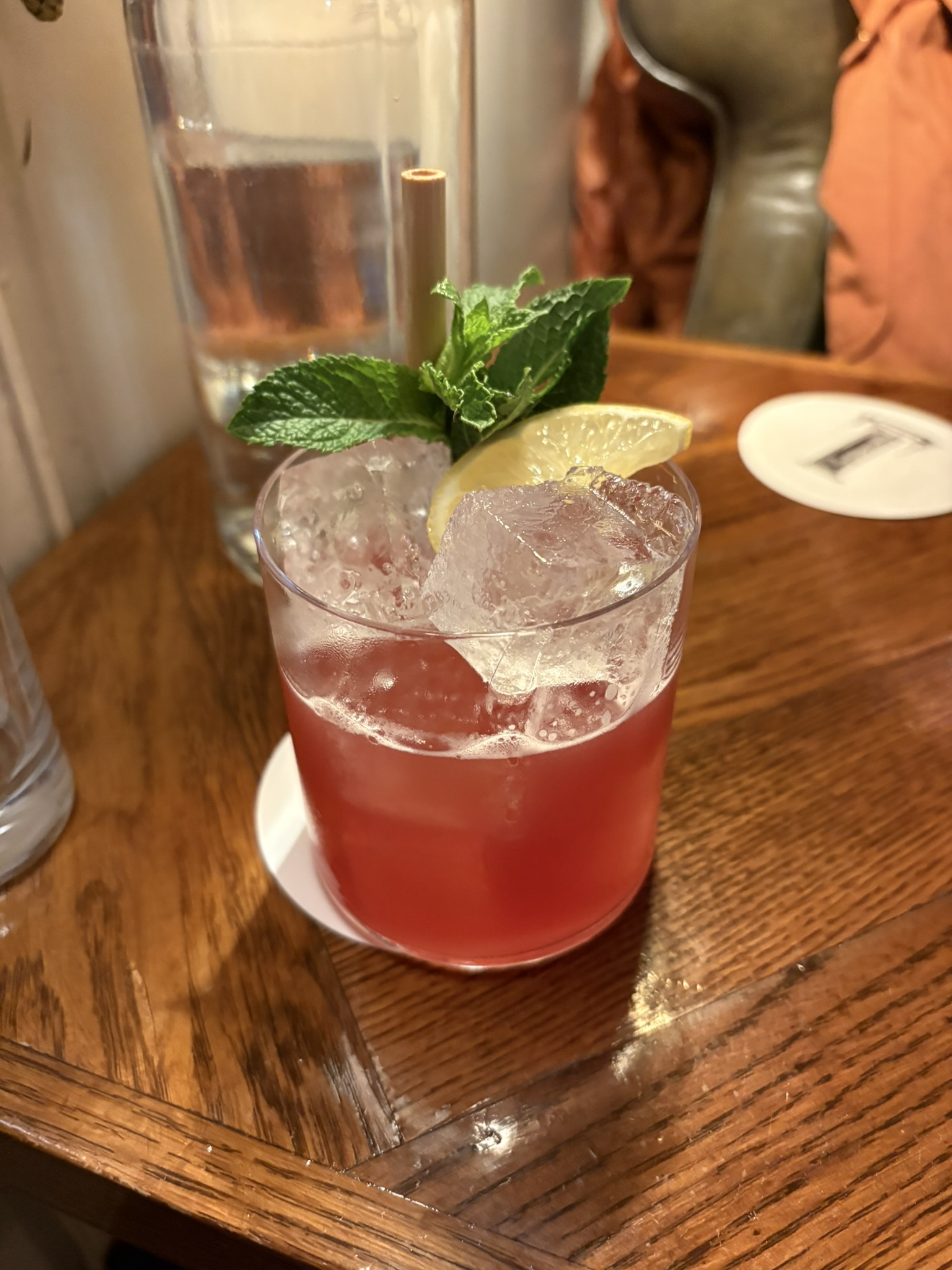
From there it was time to eat. Norrlyst was just the next block over, so once again we’d chosen our locations well. The space is a semi-basement, with white walls, and tables set fairly close together, which was how we found ourselves in conversation with the people on the next table. The service is efficient, friendly and not too fast. The menu is a four-course semi-tasting menu, with a couple of items attracting a supplement (lobster, venison, that sort of luxury ingredient).
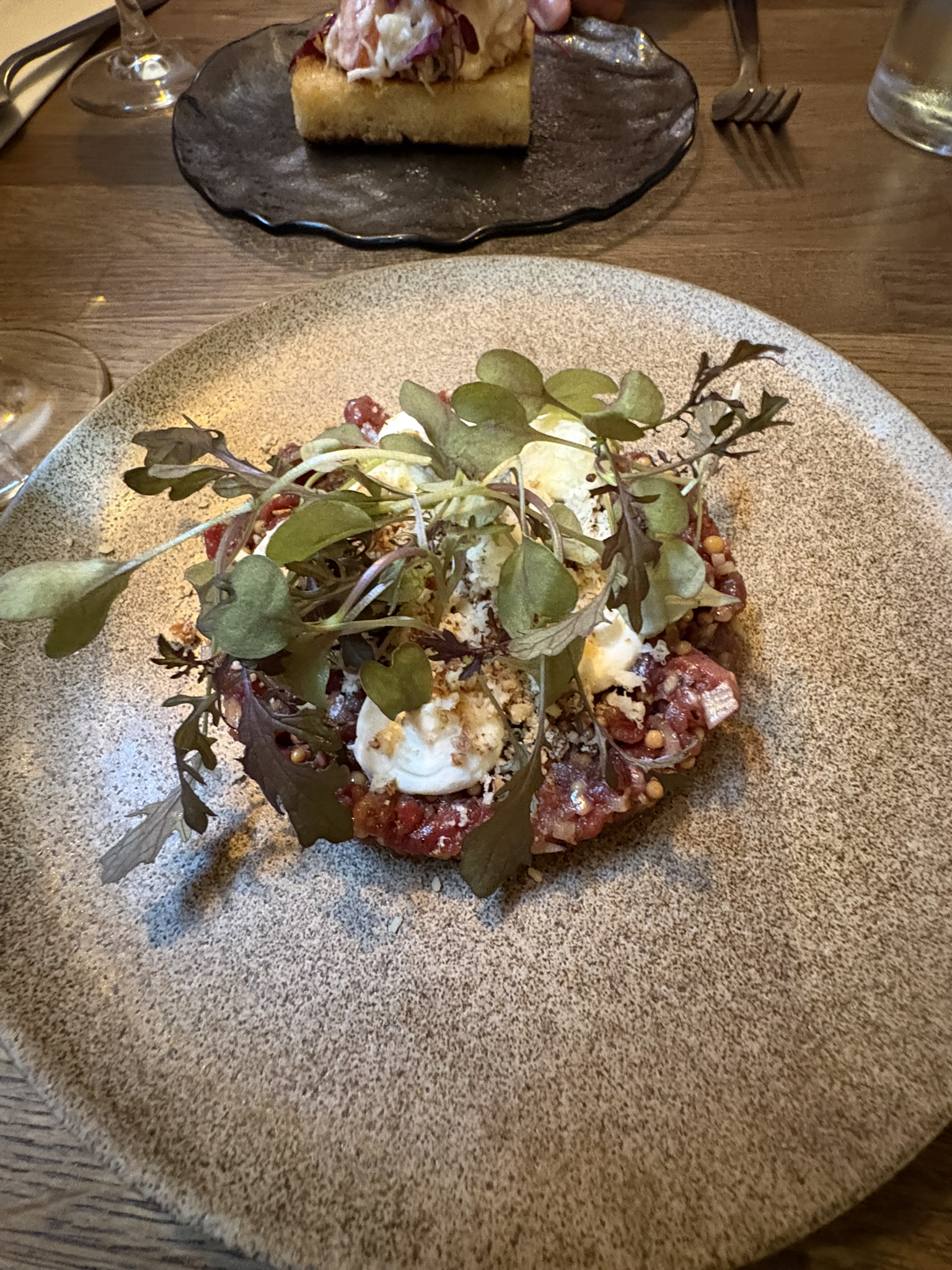
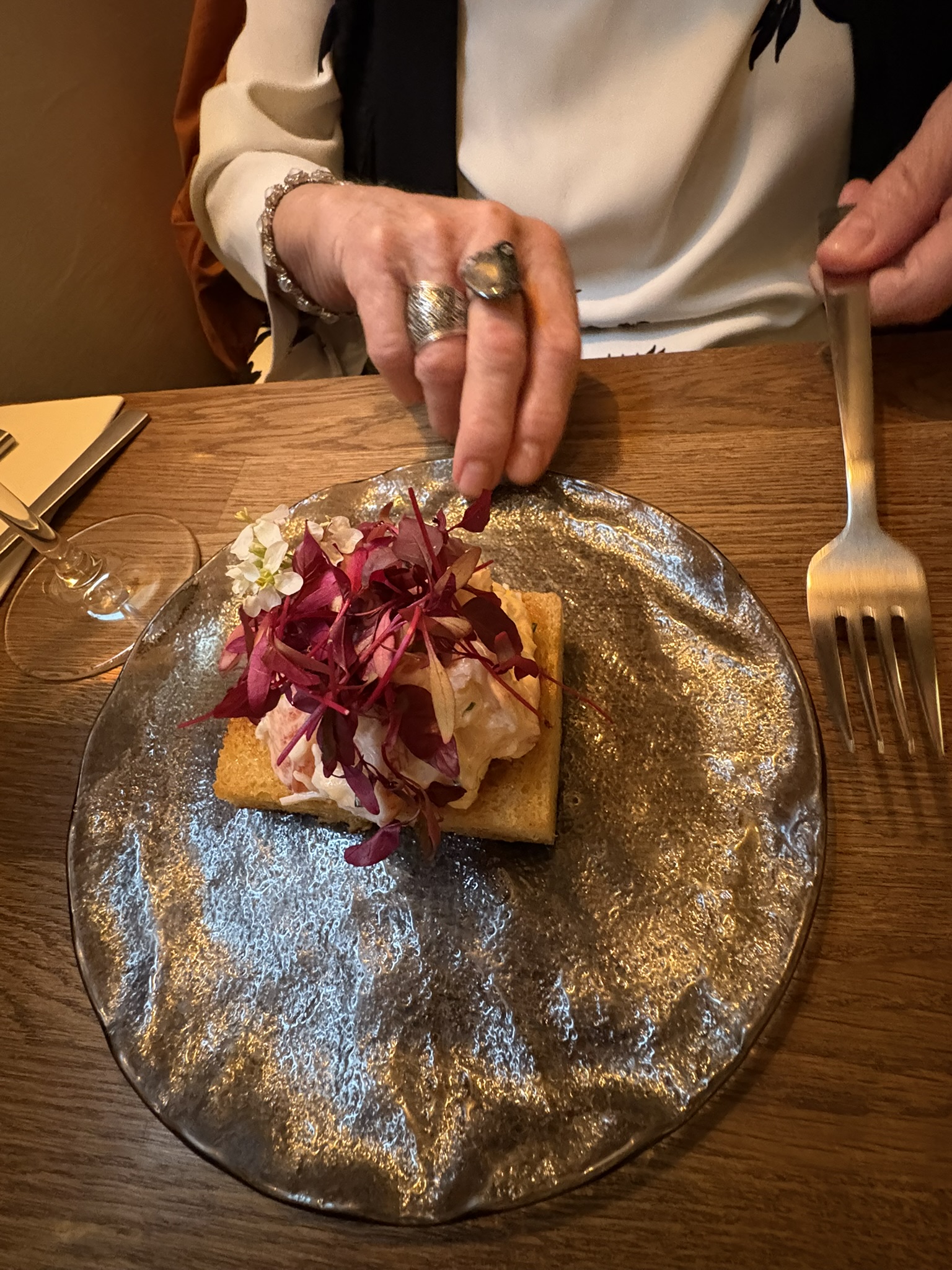
We did our usual trick of ordering two different dishes for each course and then sharing them half-and-half. This meant we started with the Norrlyst signature tartare of beef, cream kefir, horseradish, aromatic herbs and smoked almonds and a lobster salad, with crispy brioche and bitter herbs. Both were delicious with an excellent quantity of luscious, juicy lobster. The tartare was perfectly seasoned and cut too so we were off to a very good start.
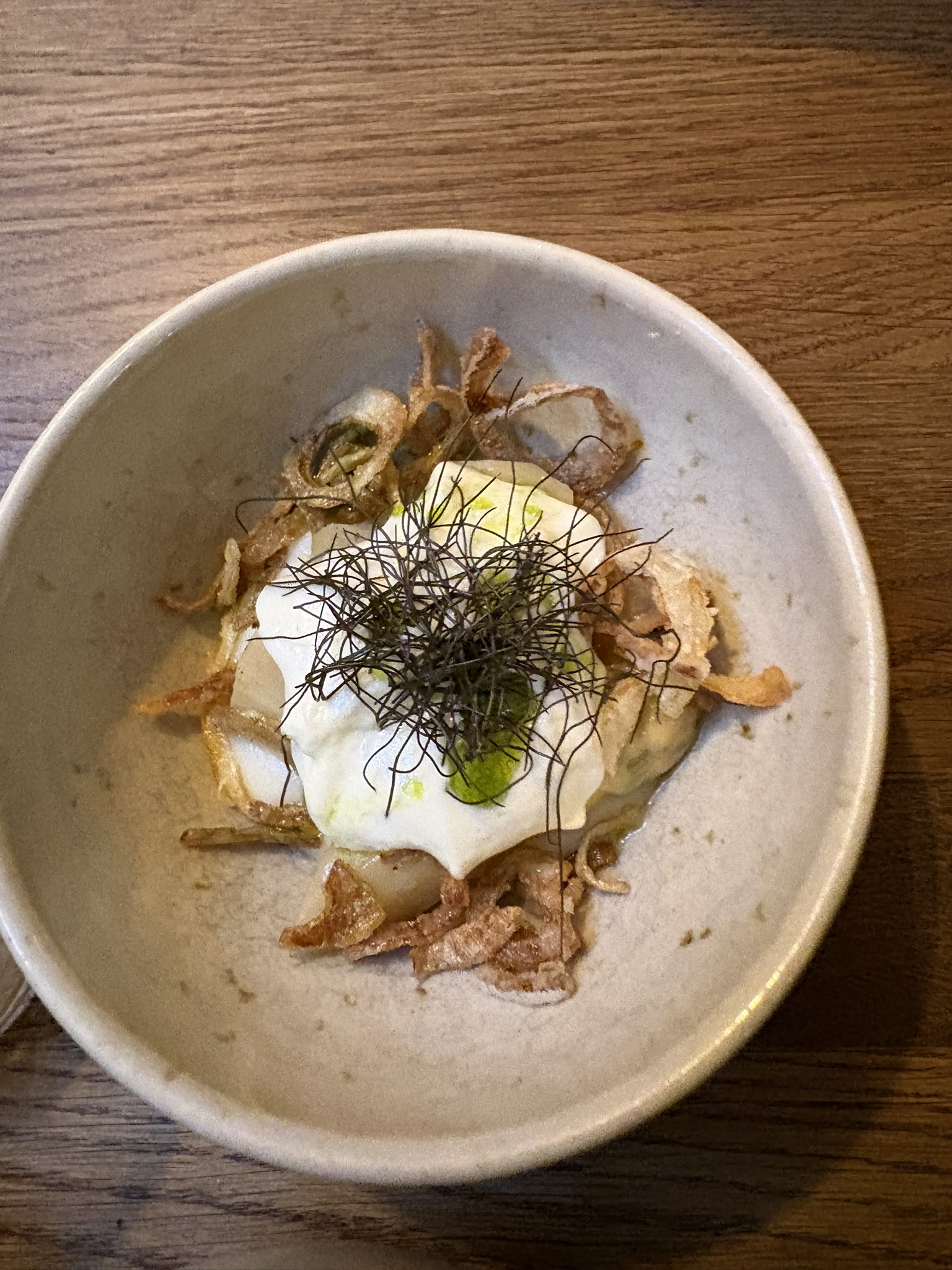
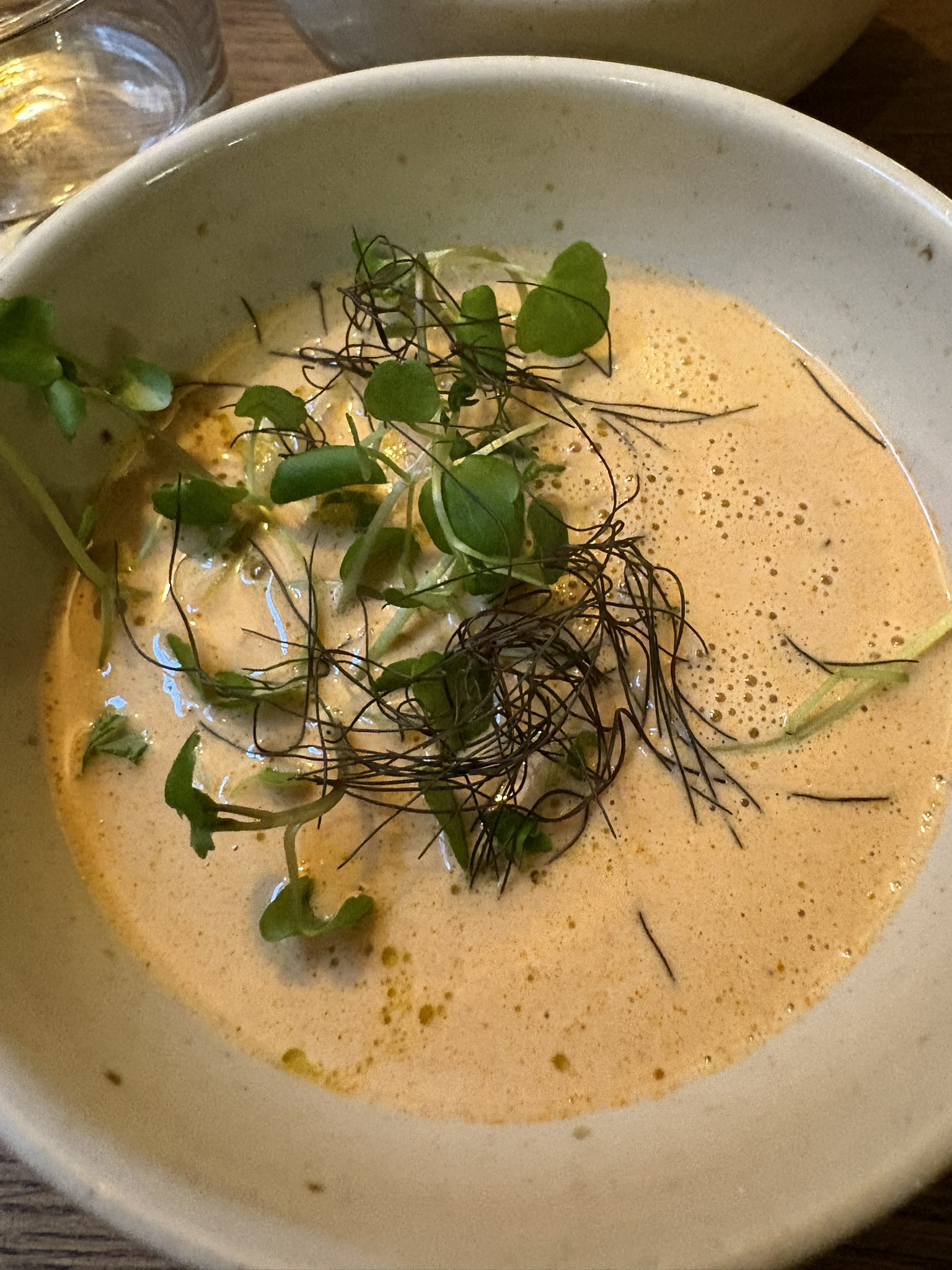
Next up was an aromatic bisque of shore crabs, pickled celeriac and tart apples, and a very spring-like dish of fried white asparagus, cauliflower cream, crispy onions and aromatic sauce with lemon and thyme. Again, it was all very well executed, and delicious. The bisque was a good as anything I could make myself, and I learned to make bisque at the cookery school at Le Manoir aux Quat’Saisons back in the day (or at least back in 2009).
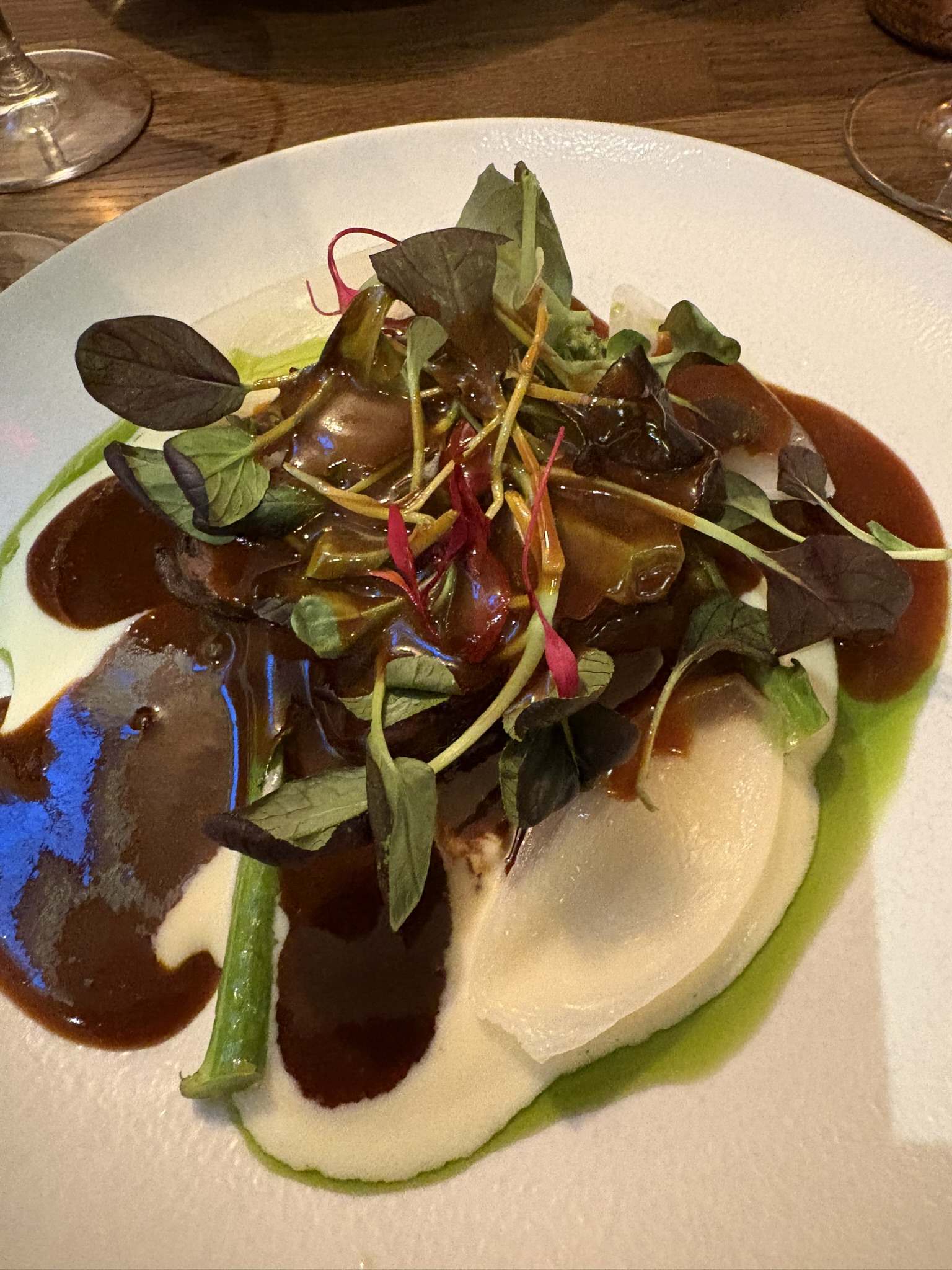
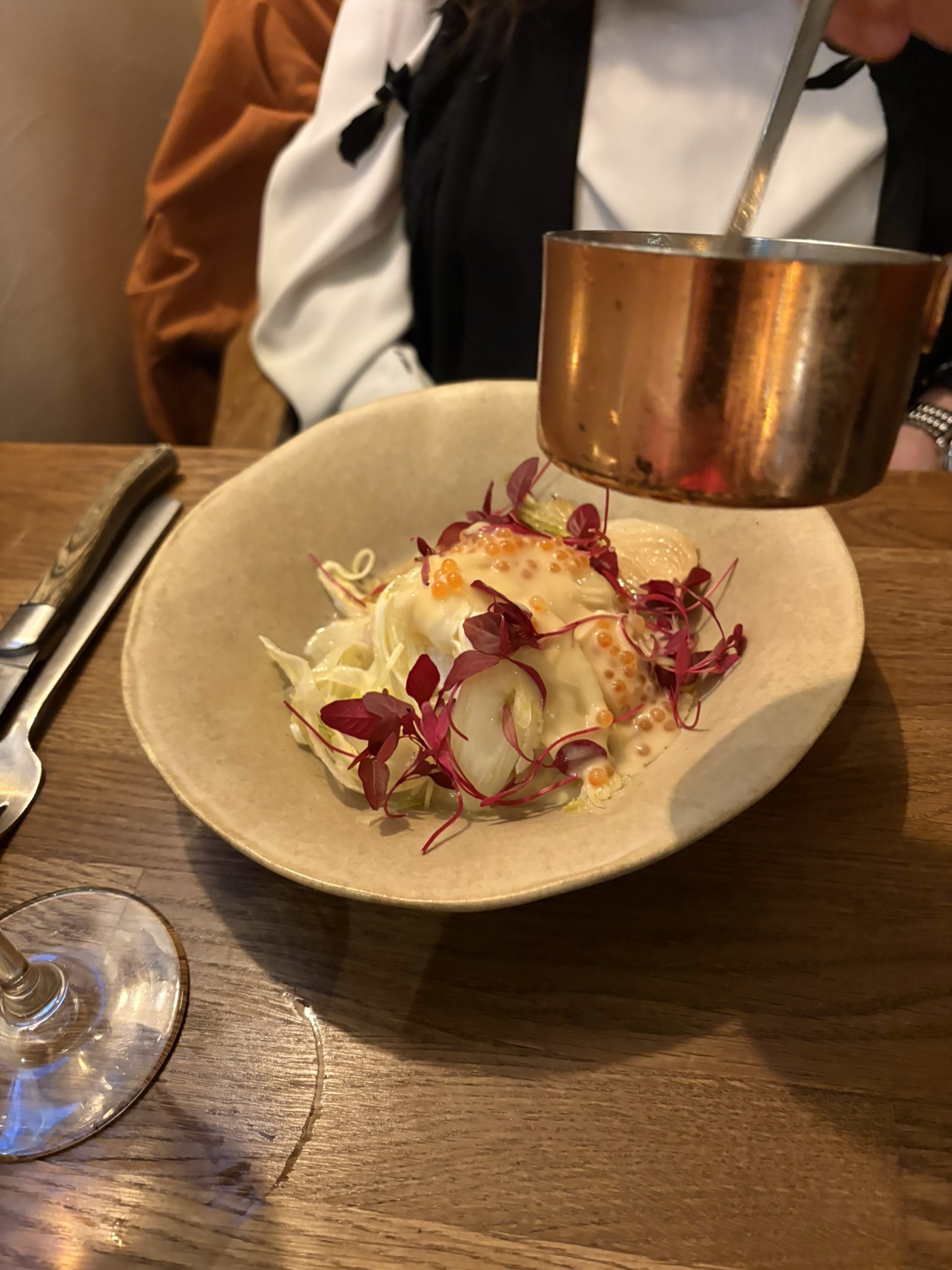
The mains were up next, and we’d chosen the fish (halibut), which was butter poached, with grilled spring onions and a beurre blanc-style sauce on a bed of mussels, garnished with trout roe. The other plate was a tender striploin of red deer, with potato and wild garlic cream, fermented onions, and smoked marrow sauce. The sauce with the deer was stunningly good and so glossy you could almost see you face in it! The fish was also gloriously and generously sauced and not a morsel was left afterwards.
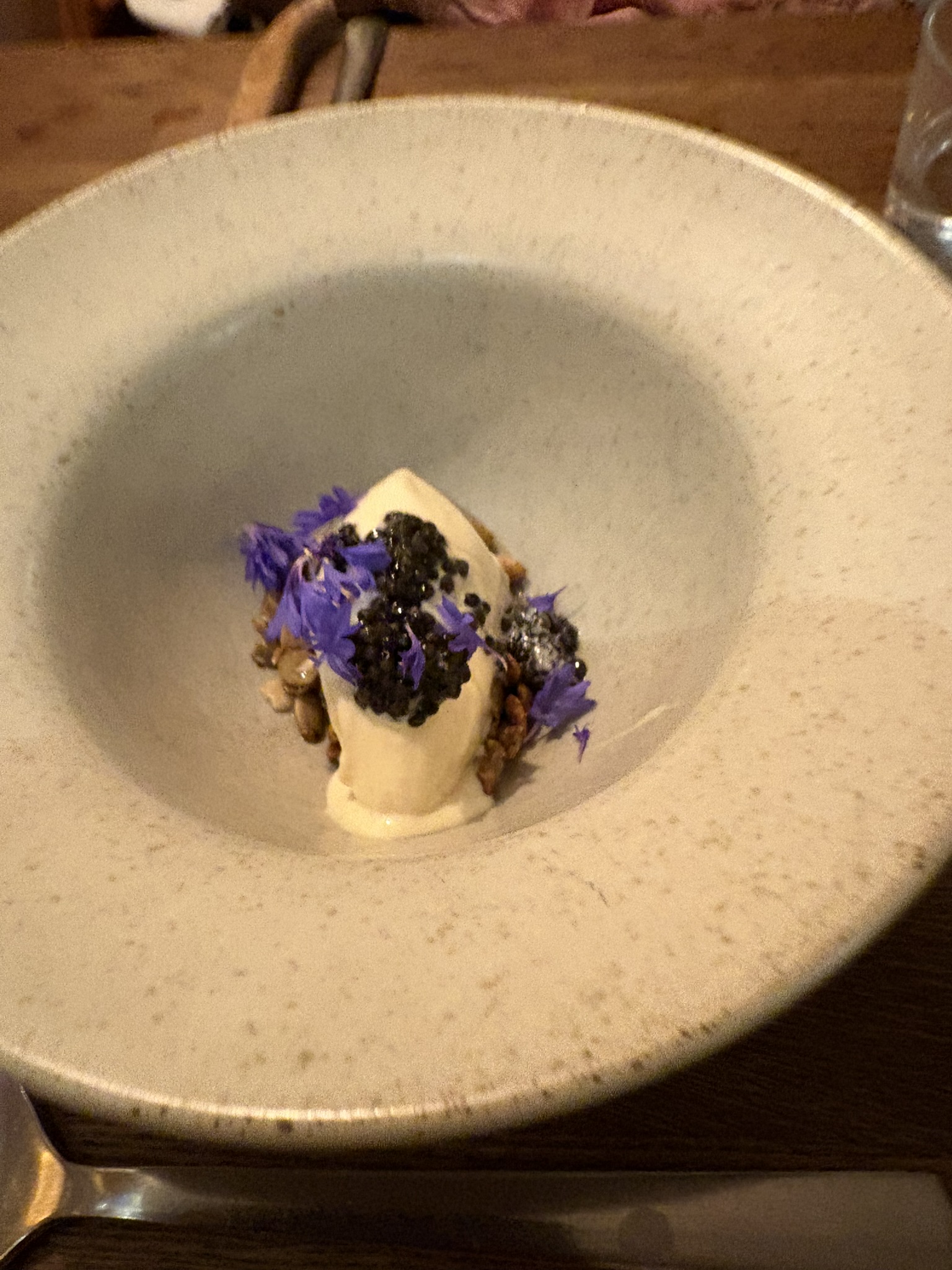
All we could manage after that was the world’s best vanilla ice cream, which came with caviar, cold pressed almond oil, and roasted pumpkin seeds. All we could manage thereafter was to finish our wine, and then walk slowly home to the hotel for a good night’s sleep.

 Smtfhw's Travels