Sunday 14th June, 2026 – Copenhagen, Helsingør
There was always a possibility that we would head out of town at least once on this trip, though we were taking a view of the weather before deciding. When we’d set off from home, the long range forecast suggested that it was going to rain every day. Well it rained briefly on Day 2 while we were inside the Glyptotek, and there was a very brief short sharp shower later that day too, but otherwise it had been fine, and Sunday dawned beautifully clear and sunny. So we decided to make the most of our Copenhagen Card and head off to Helsingør (otherwise known as Elsinore if you’re an English speaker and/or a Shakespeare fan). Being both, I should probably go with the English version but I think it’s more polite to call it by its Danish name!
To get there it’s a short-ish train ride up the coast, stopping at numerous attractive looking small towns on the way, including some with tourist attractions of their own, including the Royal Deer Park, the Karen Blixen Museum, and Louisiana, a massive modern art museum. I’m pretty sure there’s more besides, but Helsingør it was for us. It’s just under an hour to get there, and once we got off the question of how do we find Kronborg, the castle where the play is set, was very easily resolved. You walk out of the station and you really can’t miss it!
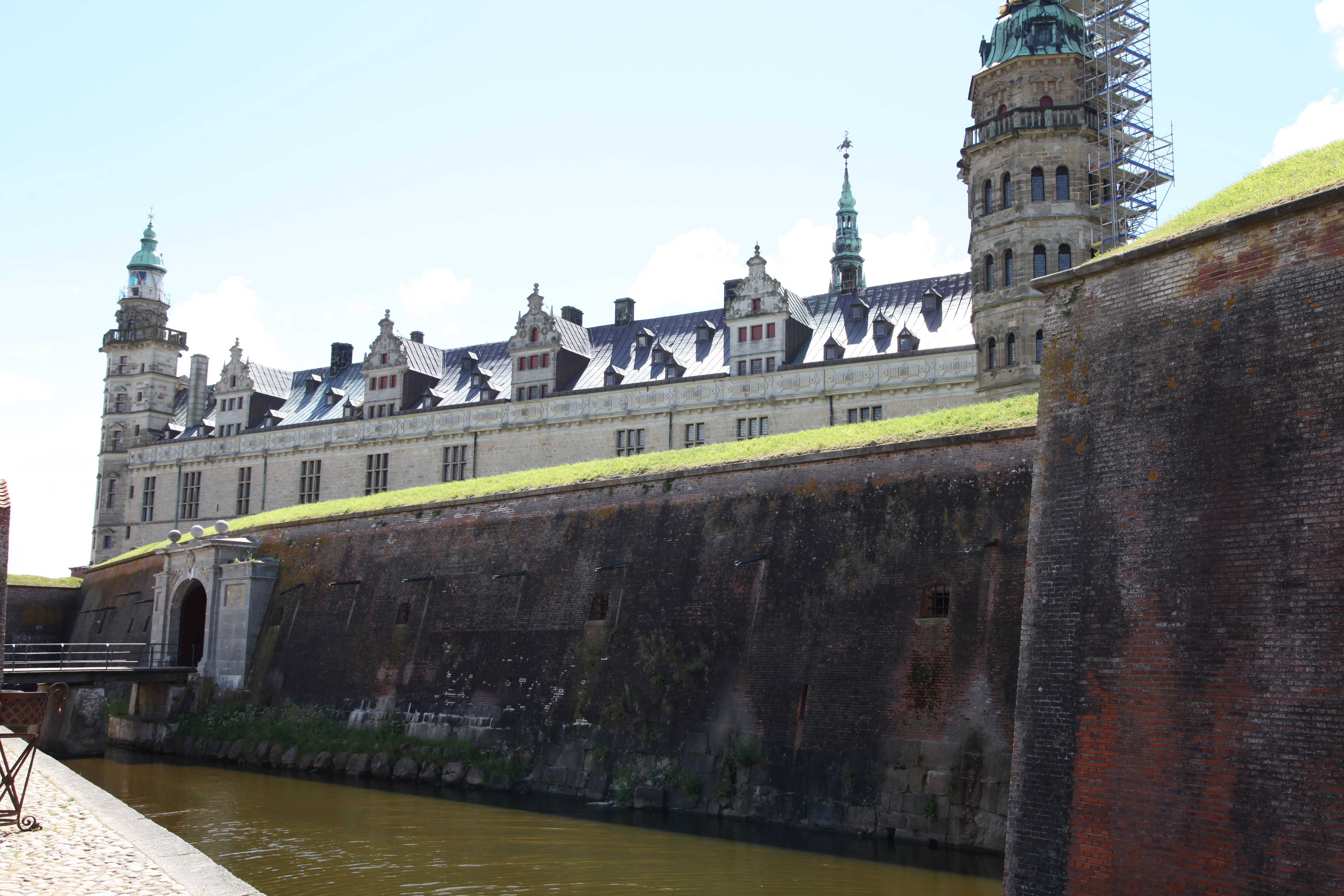
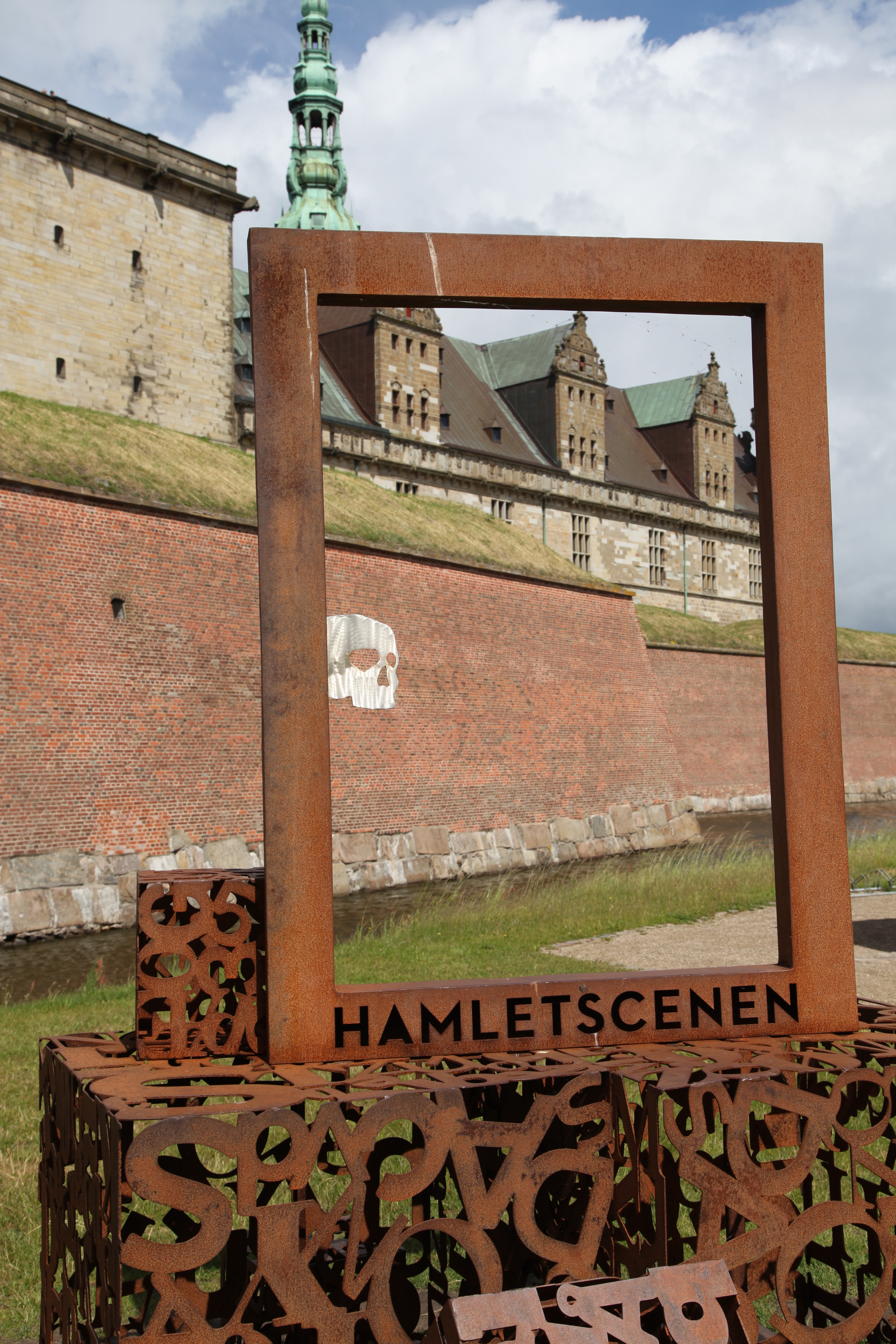
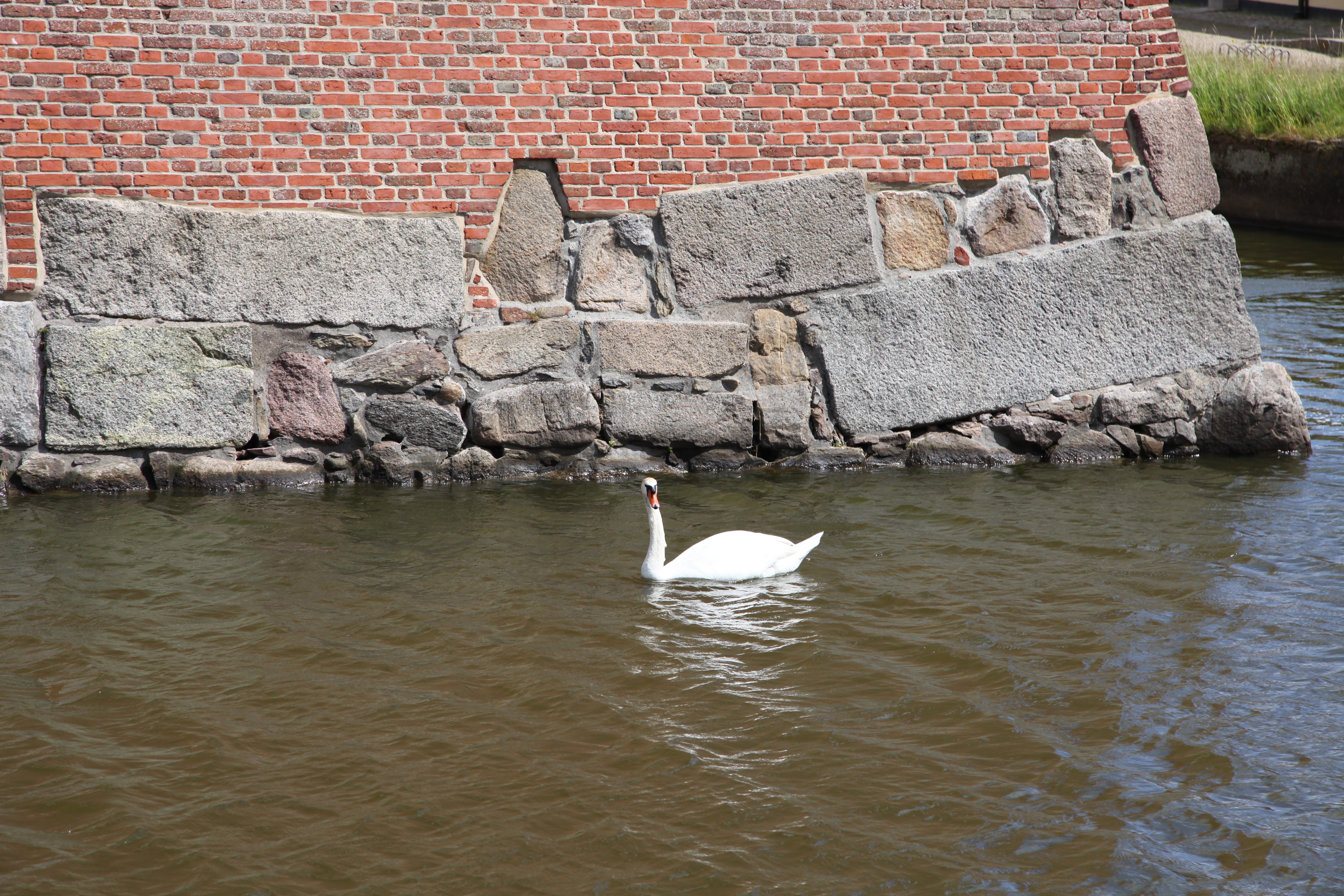
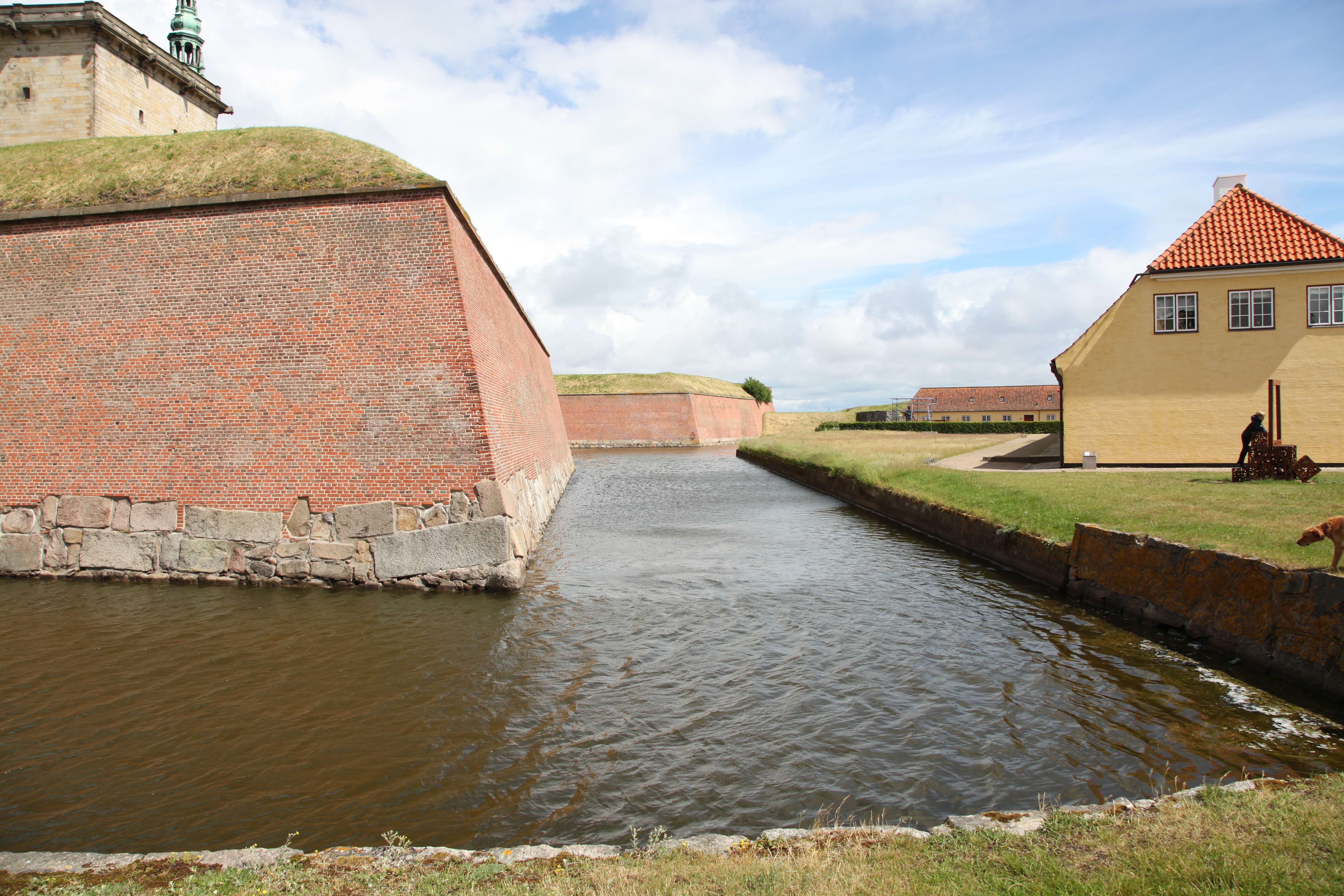
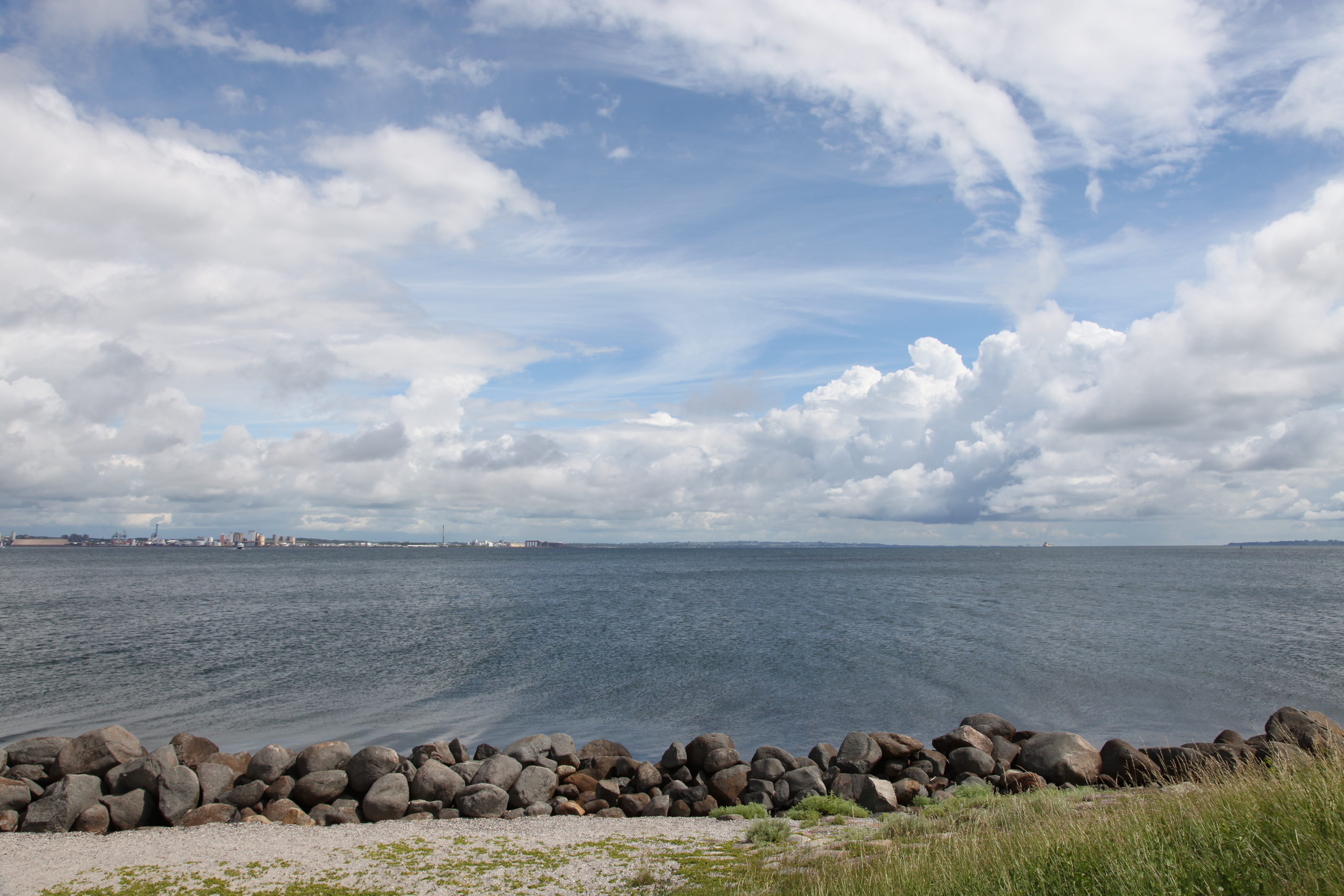
We decided that our first stop would need to be for refreshments, and we struck it lucky inside the walls, where a new café had opened in one of the stable or barracks buildings. The owner told us she’d only opened for the first time on Friday, so we were her first customers for day 3. Revaerk is the name of the establishment, and it was very pleasant sitting out in the garden at the back to drink tea and fortify ourselves to visit the castle itself. It’s UNESCO World Heritage Site and we do like to collect as many of those as we can. From the castle, it’s also easy to see why it was built here, because it controls the narrowest point of the seas between Sweden and Denmark.
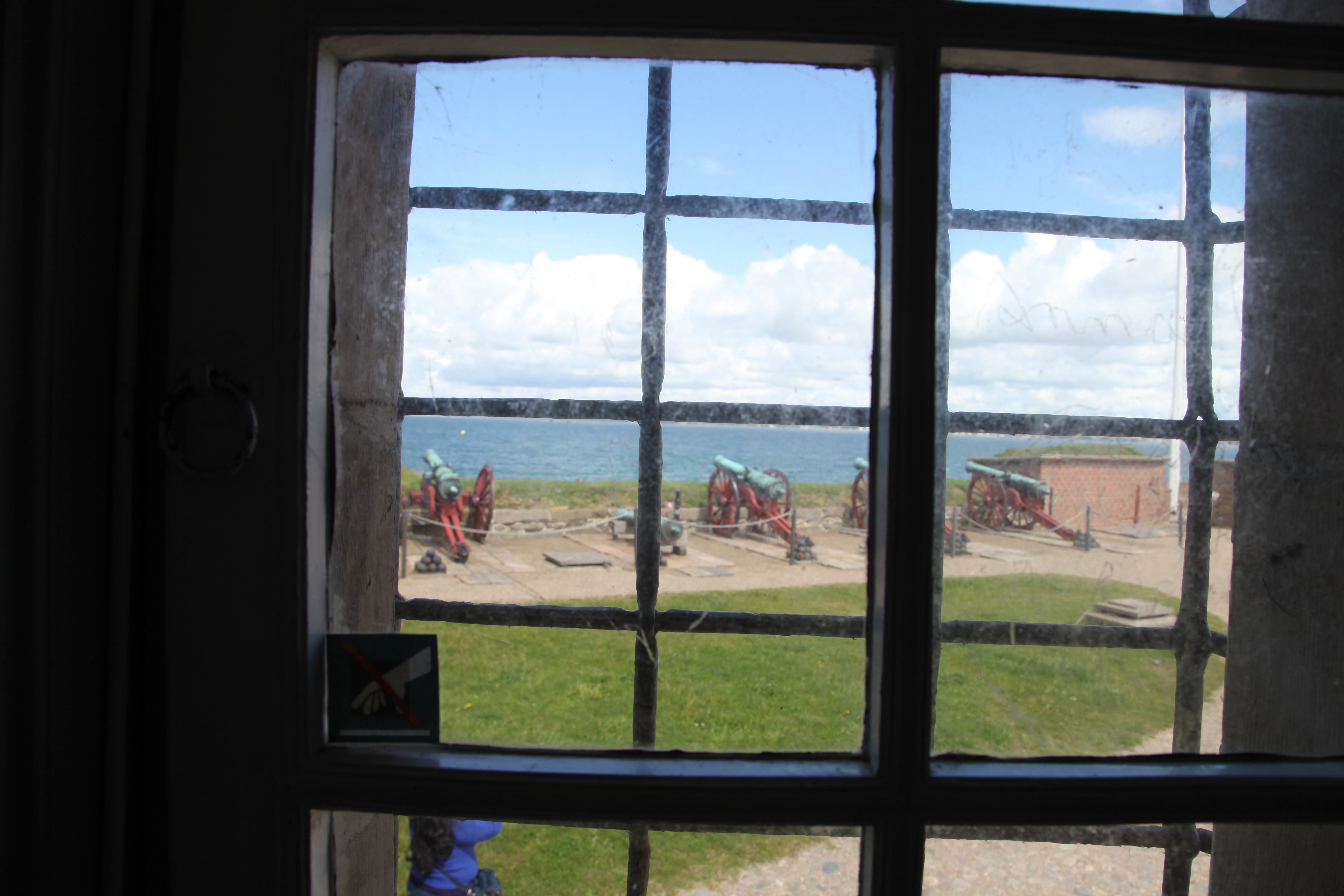
It was built initially in 1420 by Eric of Pomerania (originally called Bogusław until his Aunt Margaret called him to Denmark to rule alongside her), who decided he wanted to control the entrance to the Oresund so he could collect tolls from passing ships. These tolls continued to be collected for the next four centuries, though Eric didn’t get to collect them for very long! He managed to fall out with his own nobles, and when they refused to ratify his choice of Bogislaw IX, Duke of Pomerania as the next king of Denmark, Erik left Denmark in response, after which he was deposed, and took up permanent residence at Visborg Castle, from where he practiced piracy in the Oresund.
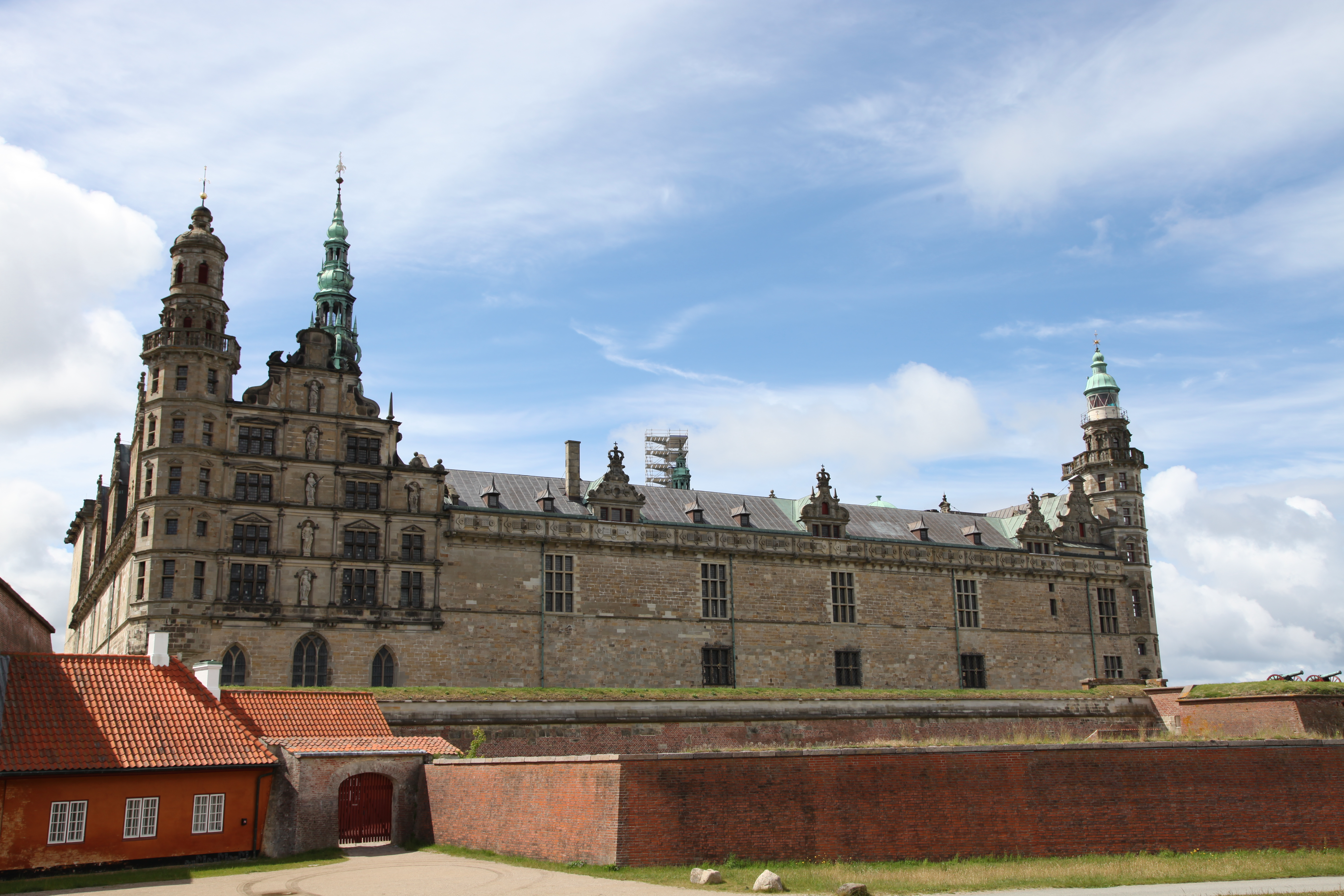
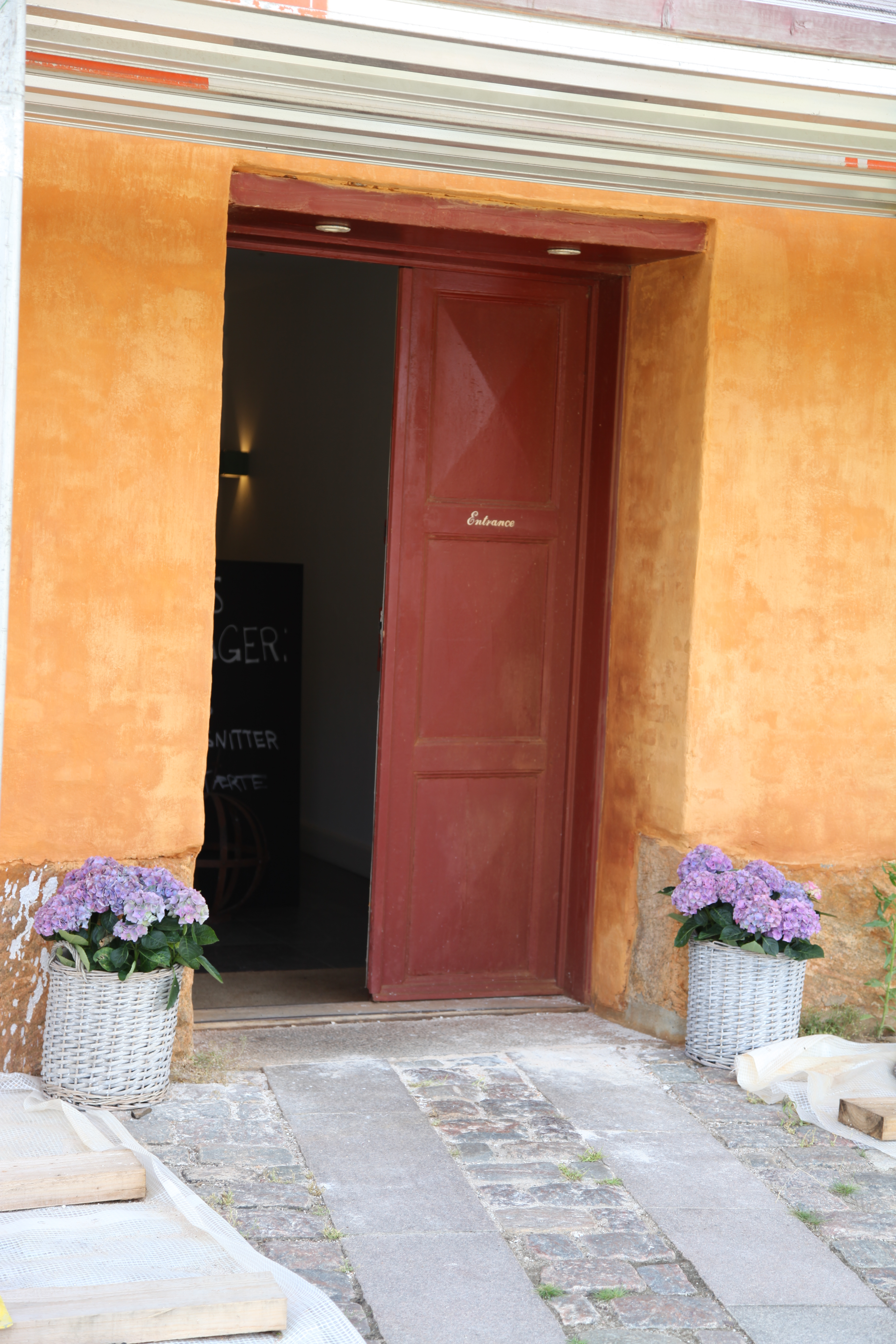
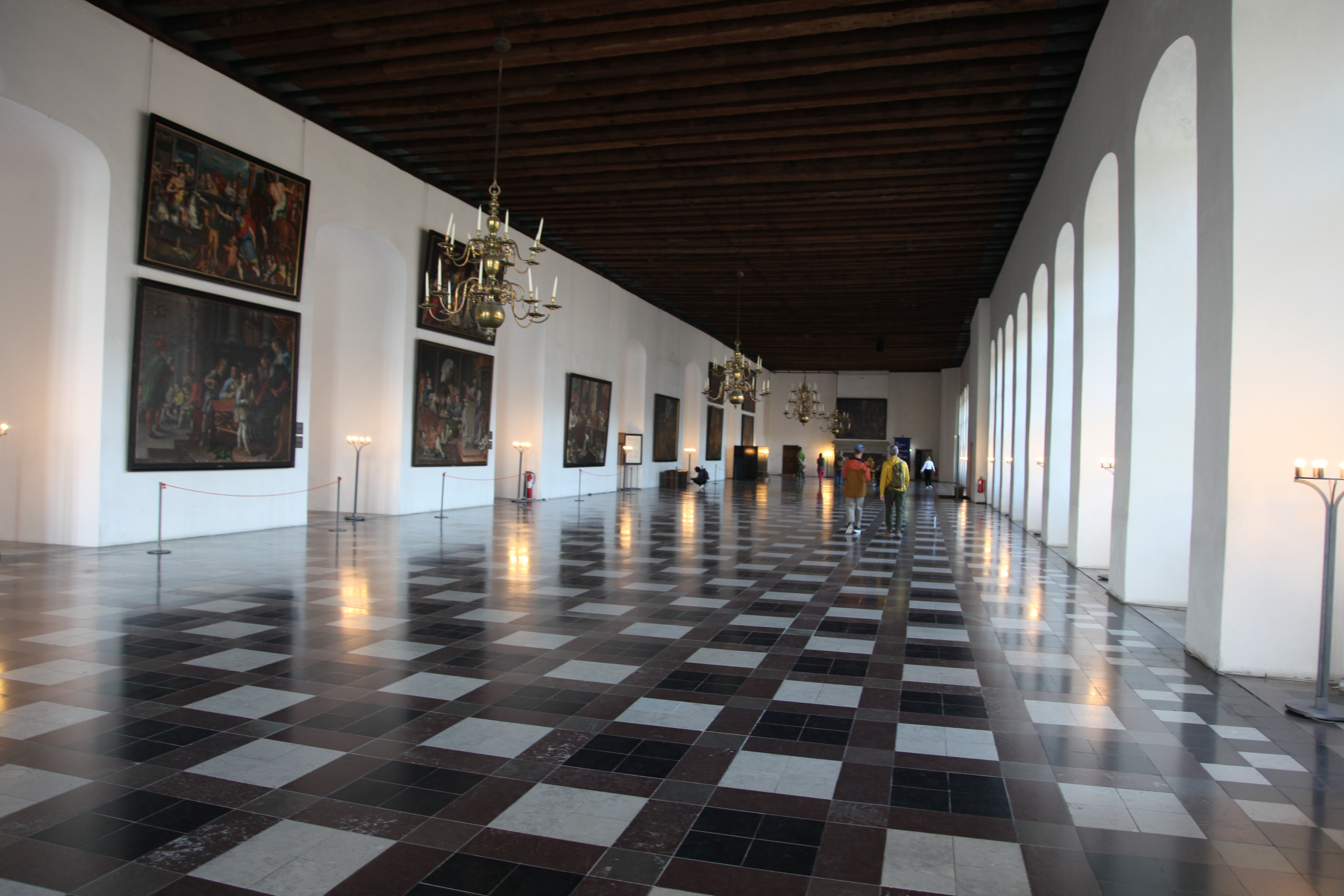
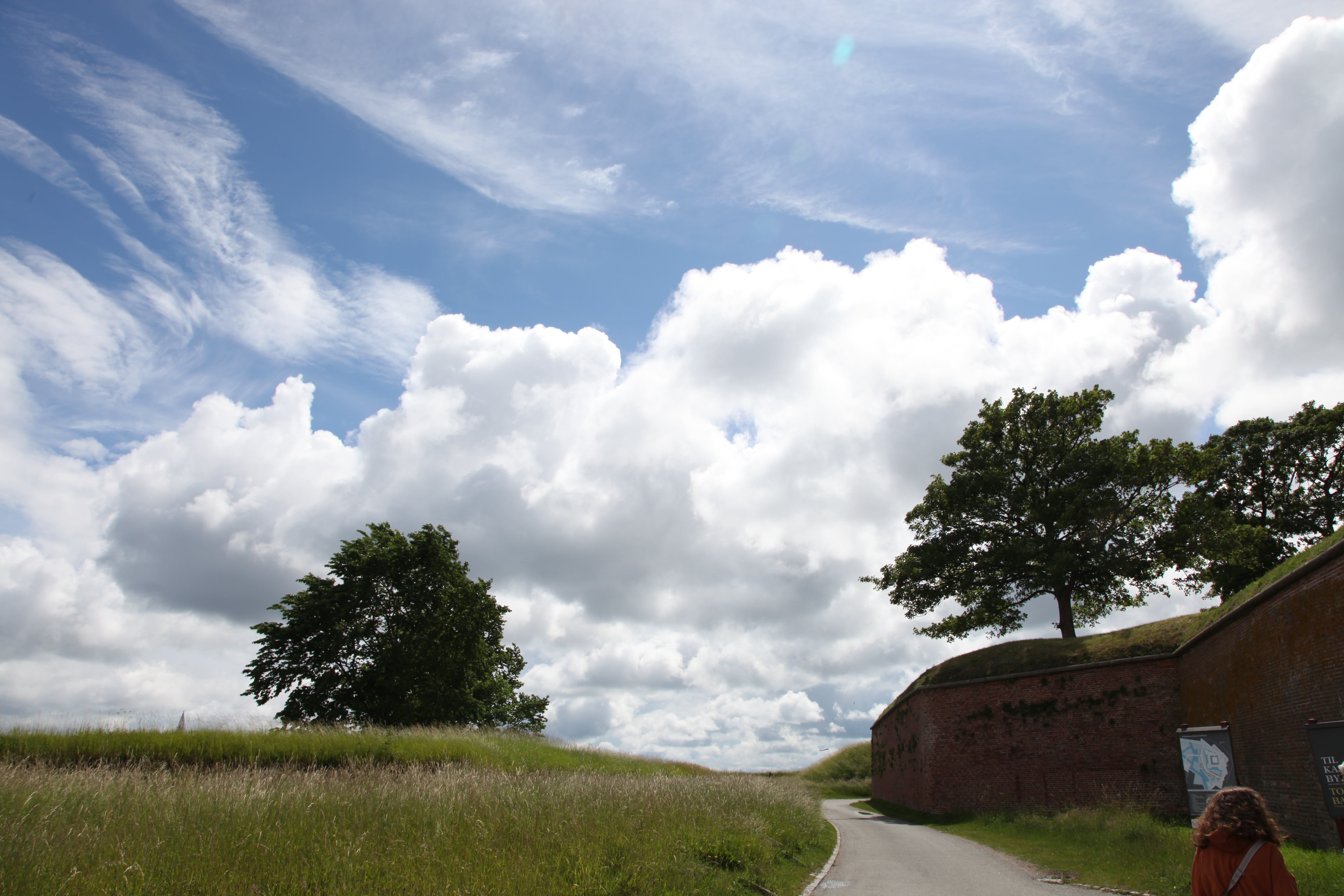
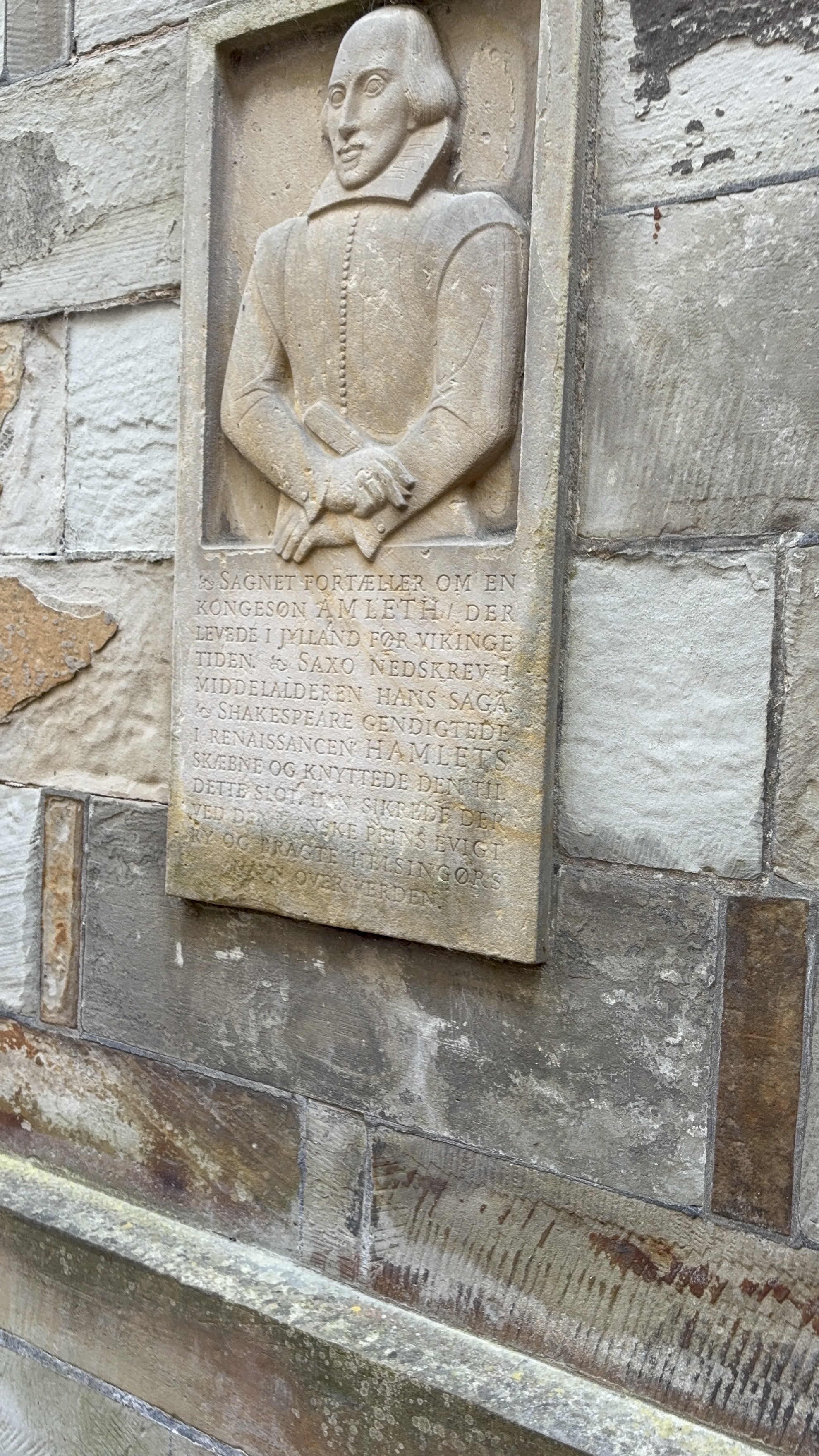
The original castle was replaced with a new one, built between 1574 and 1585, at the behest of Frederik II. The dues from the shipping traffic financed the towers and steeples, copper roofs, and sandstone ornaments. It didn’t, by all accounts, do the town any harm either making it a very rich place. And then, in a scenario familiar to all historians of medieval towns, it burned down. The chapel survived but nothing else. Christian IV had it reconstructed, but in 1658 Swedes bombed and occupied it, stealing many of the art works. It was fortified by Christian V in 1690, but that was pretty much the end of royalty living there. From 1785 until 1923 it was a military base and it was only restored to its original glory after the military moved out.
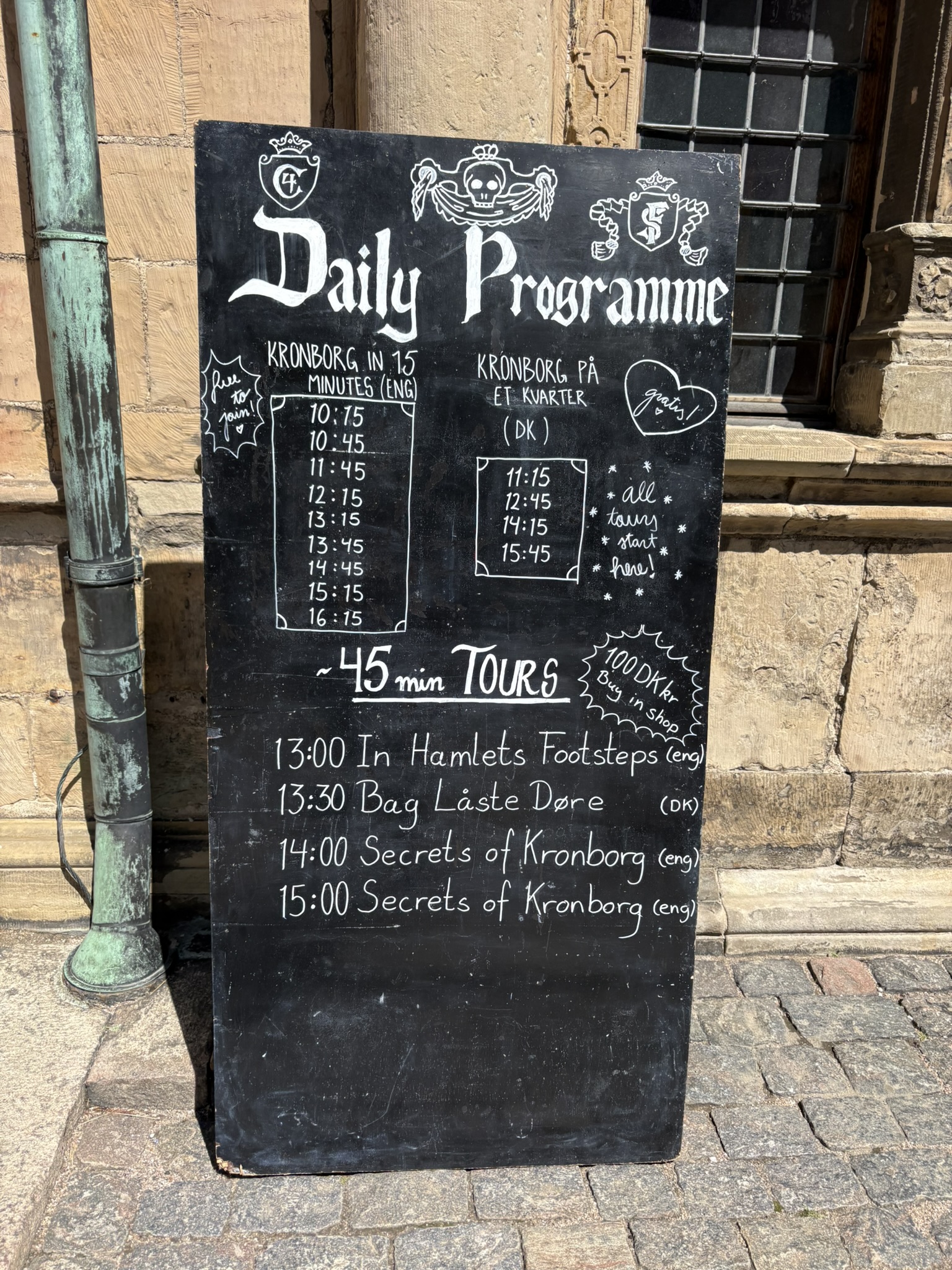
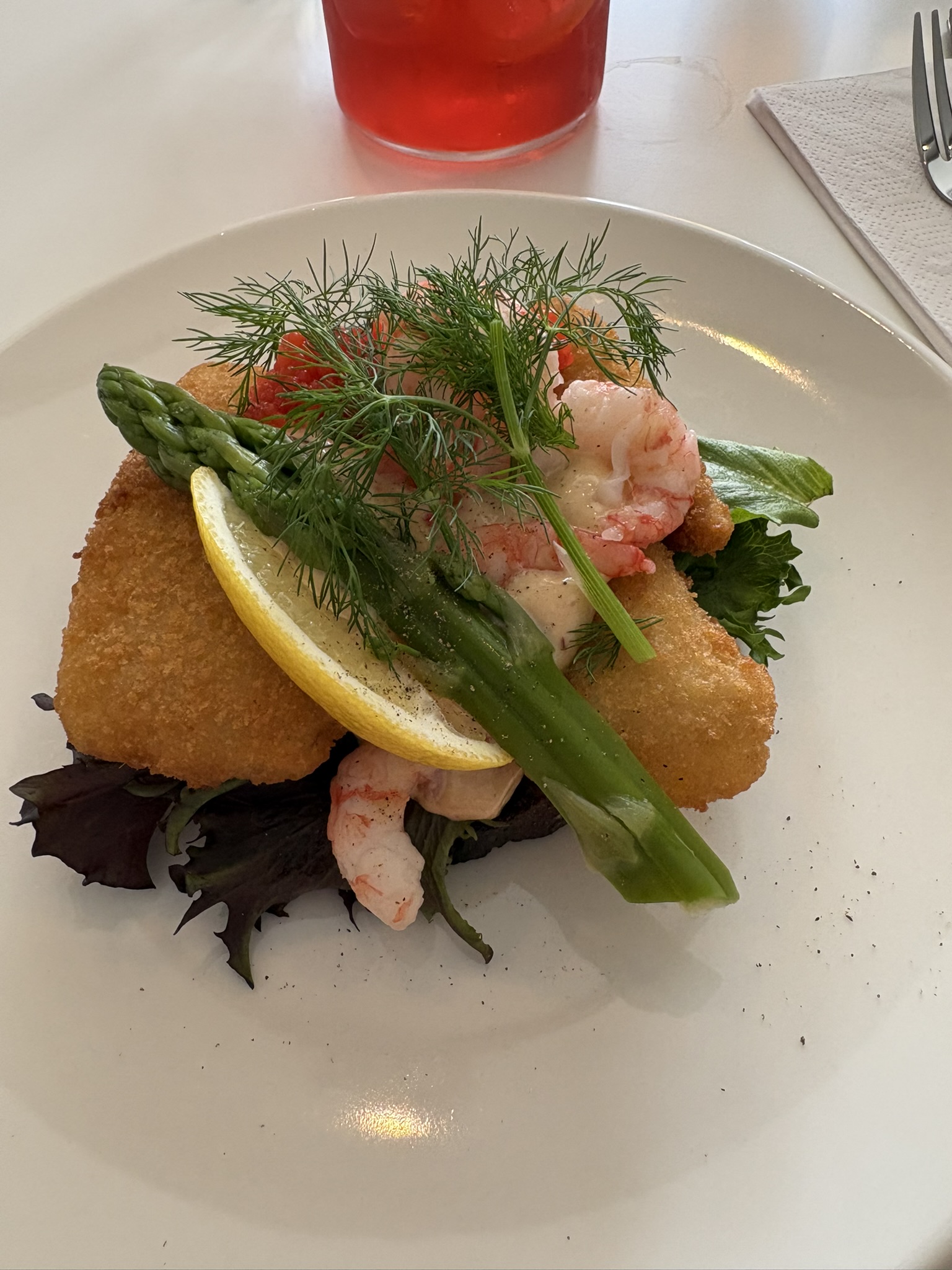
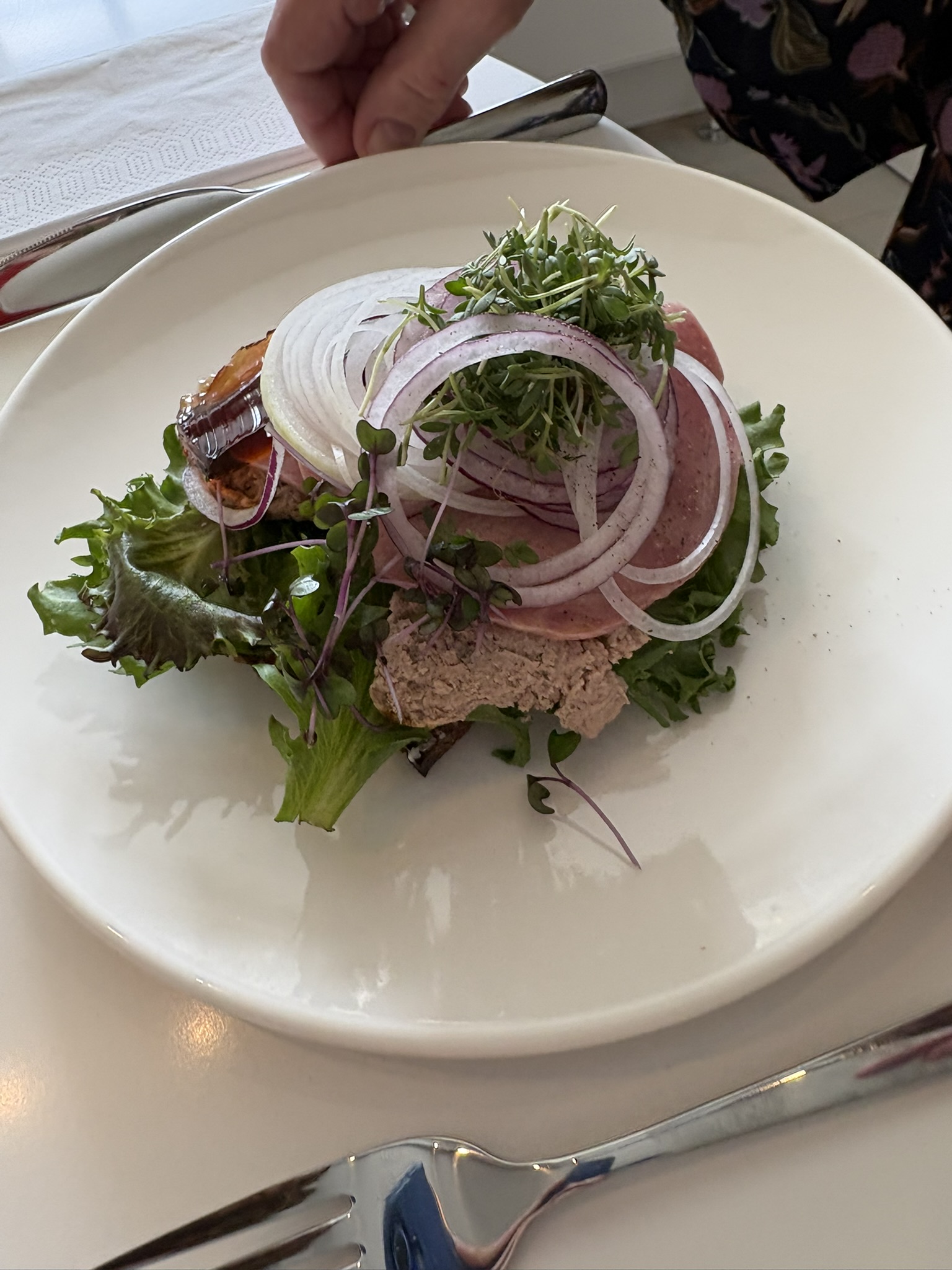
We spent 15 minutes getting our bearings on the 15 minute free tour with a very enthusiastic English speaking guide, before being cast loose to investigate under our own steam. It’s a slightly confusing layout, and there’s a lot to see. Because we didn’t want to miss anything we kept needing to double back on ourselves. As a result we went through the long gallery three times in the right direction, and once the wrong way. We also ended up going through the gift shop four times too! After we’d seen almost everything we opted to return to Revaerk for a light lunch before we headed into the town to nose around. Very traditionally, we hit the smørrebrød again, this time with a venison sandwich and a “star fish” one, which turned out to be breaded fried till crispy plaice. It was all very good and I would definitely recommend the café to anyone wanting a break and some good food. They may even get time to set up a website some day.
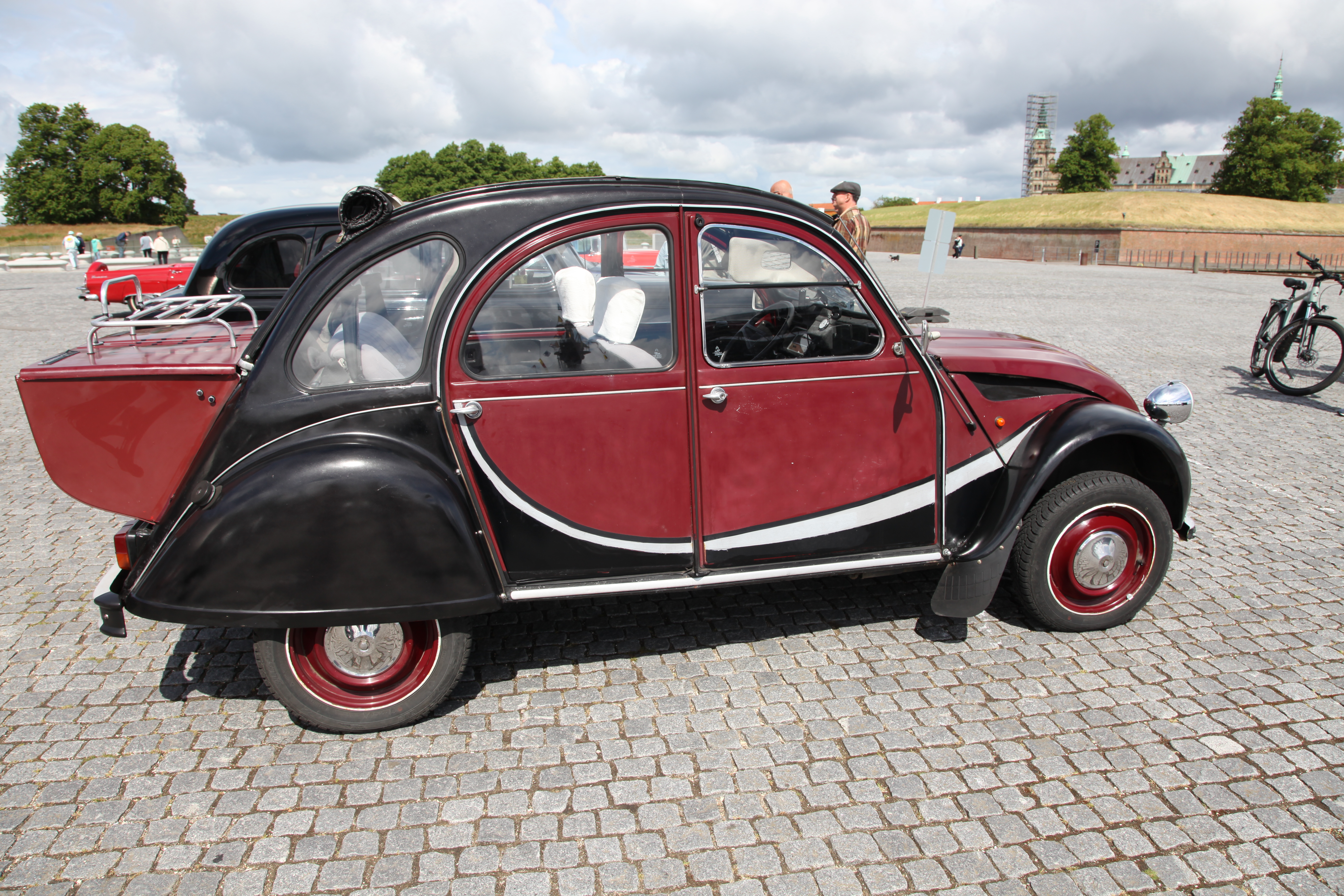
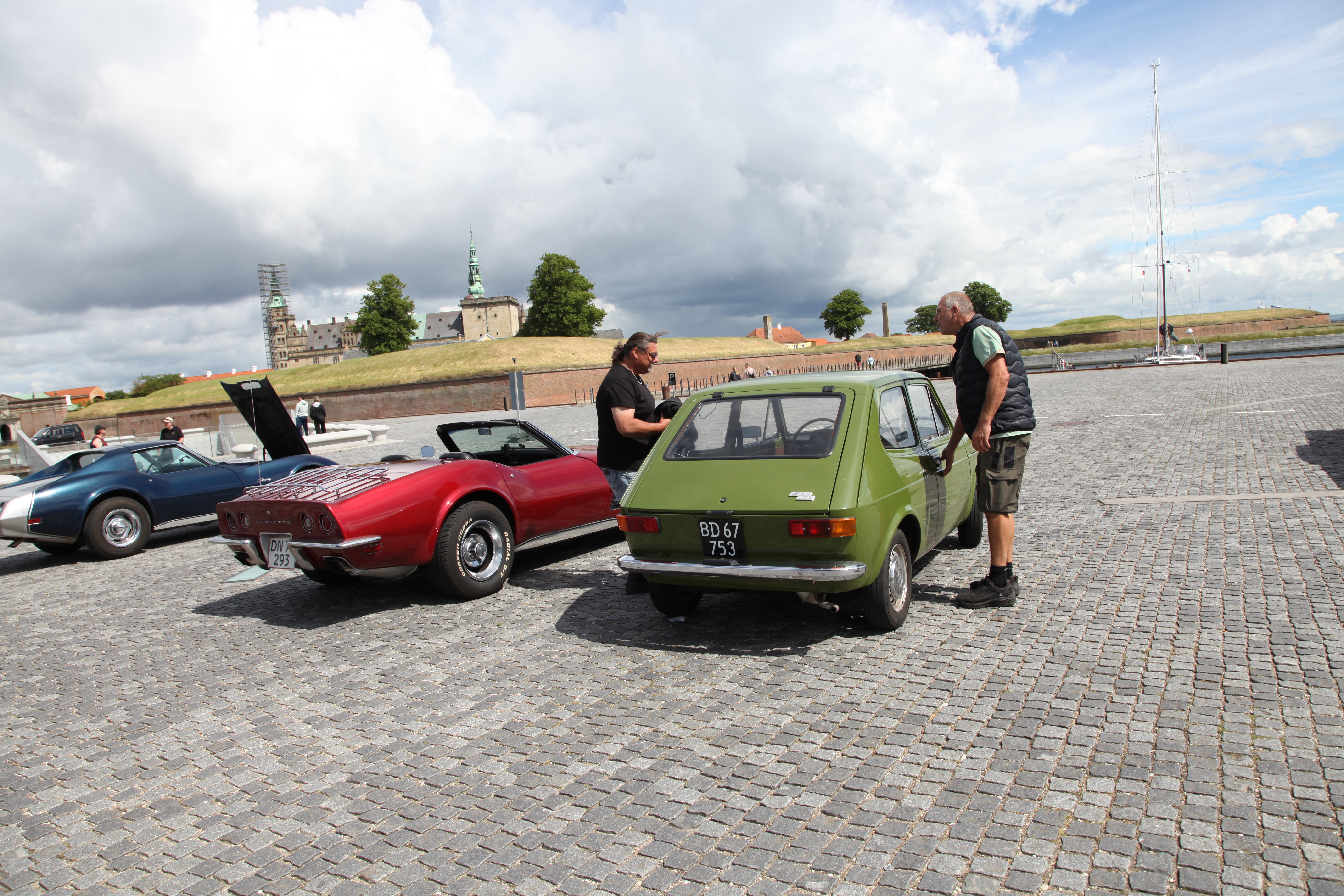
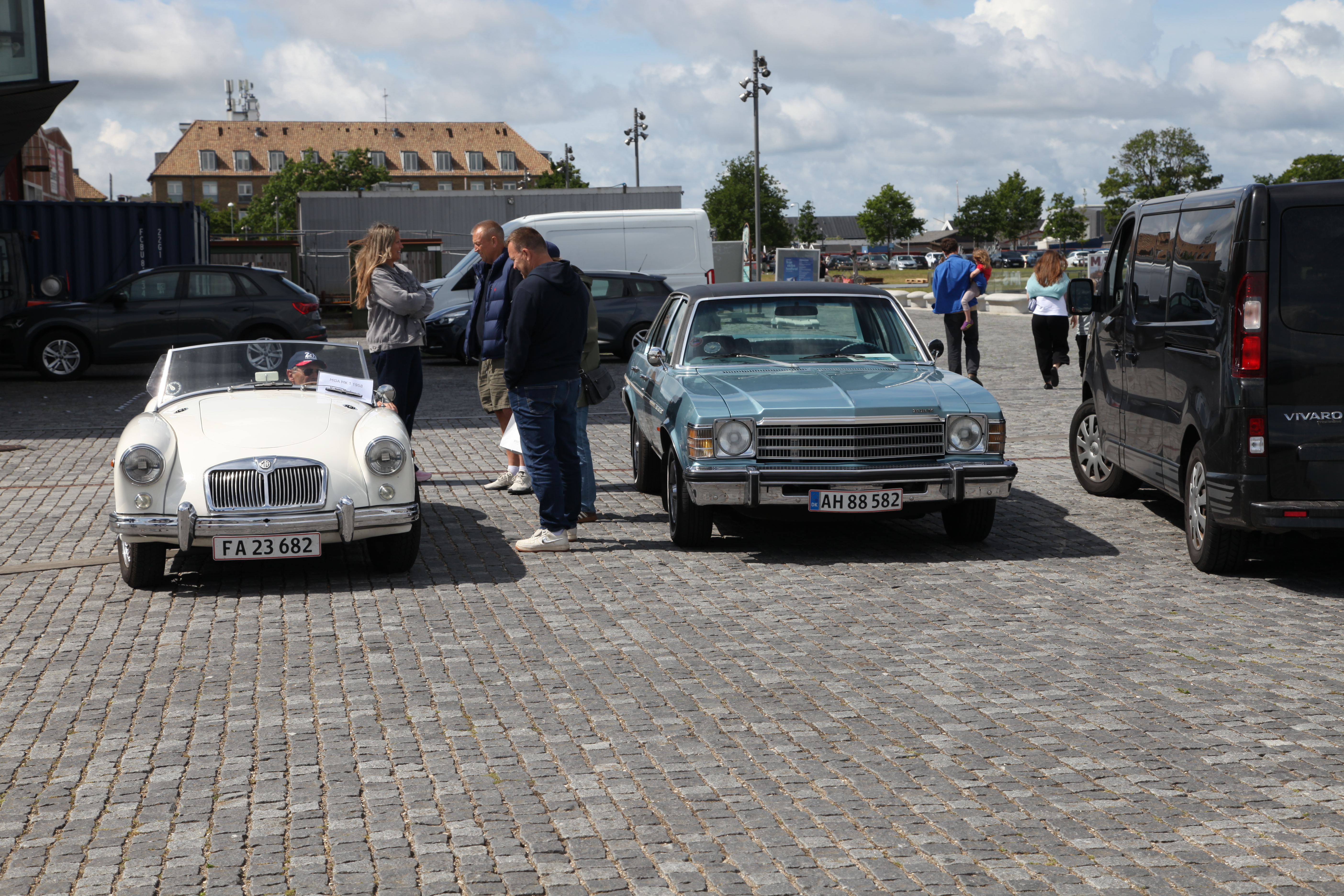
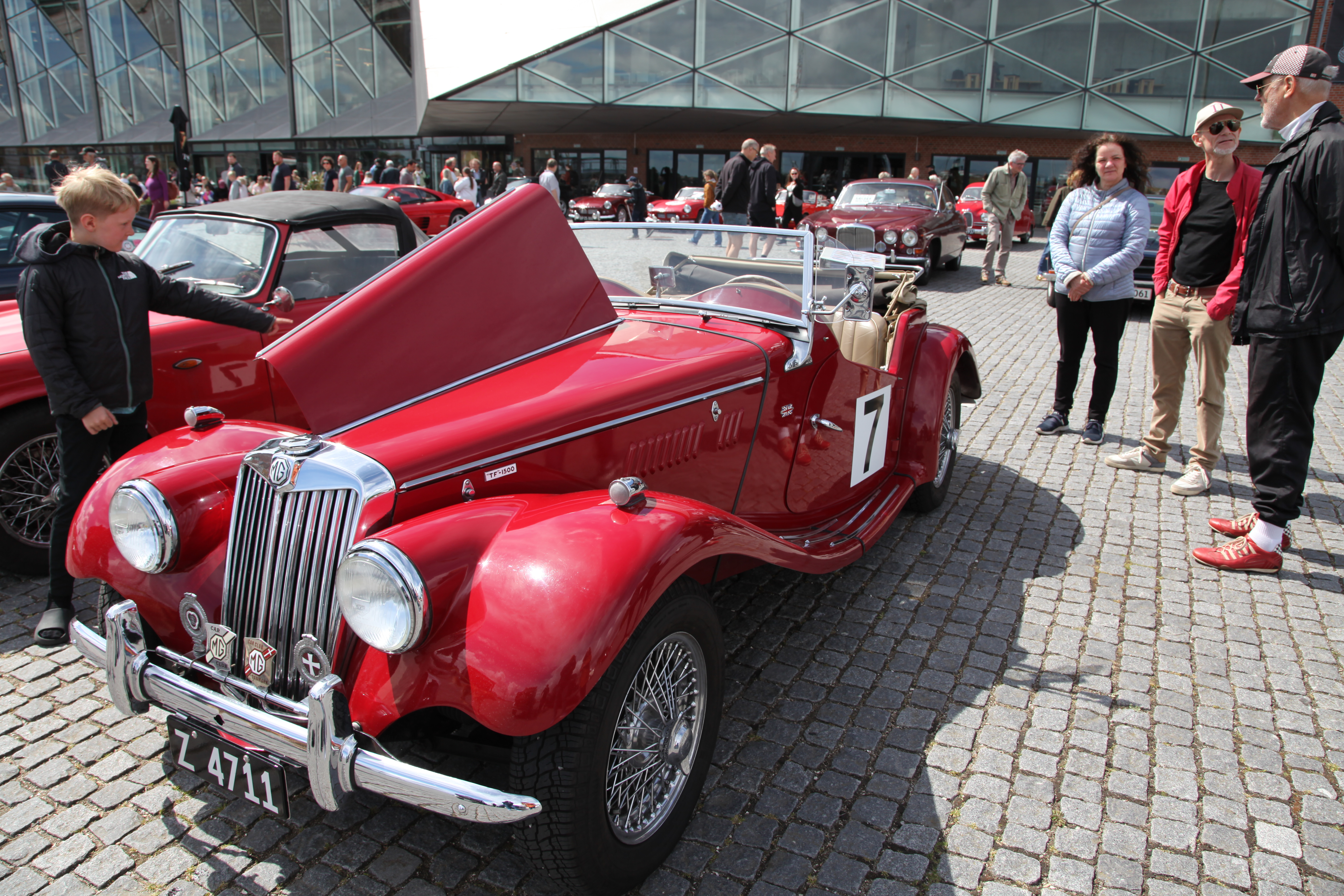
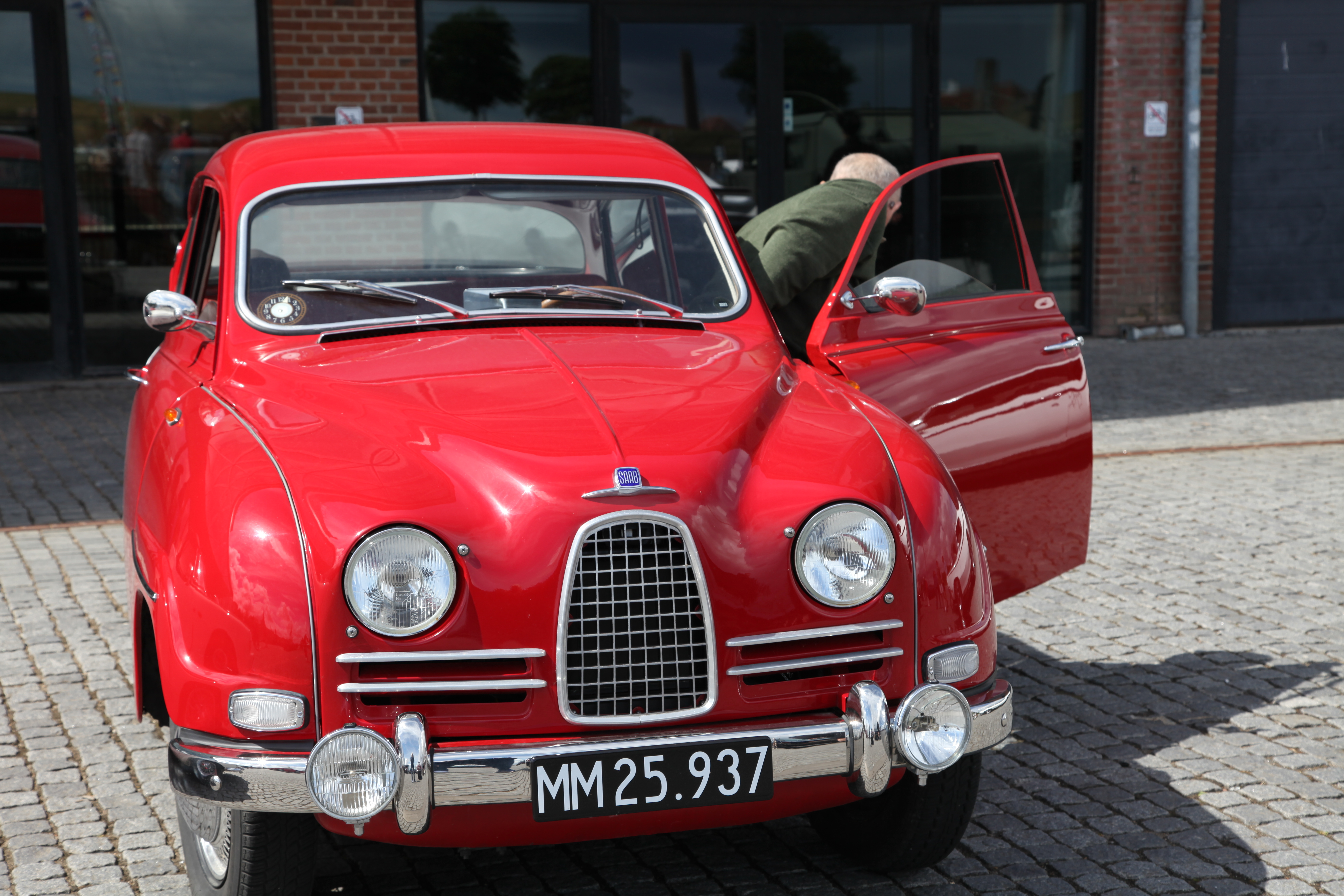
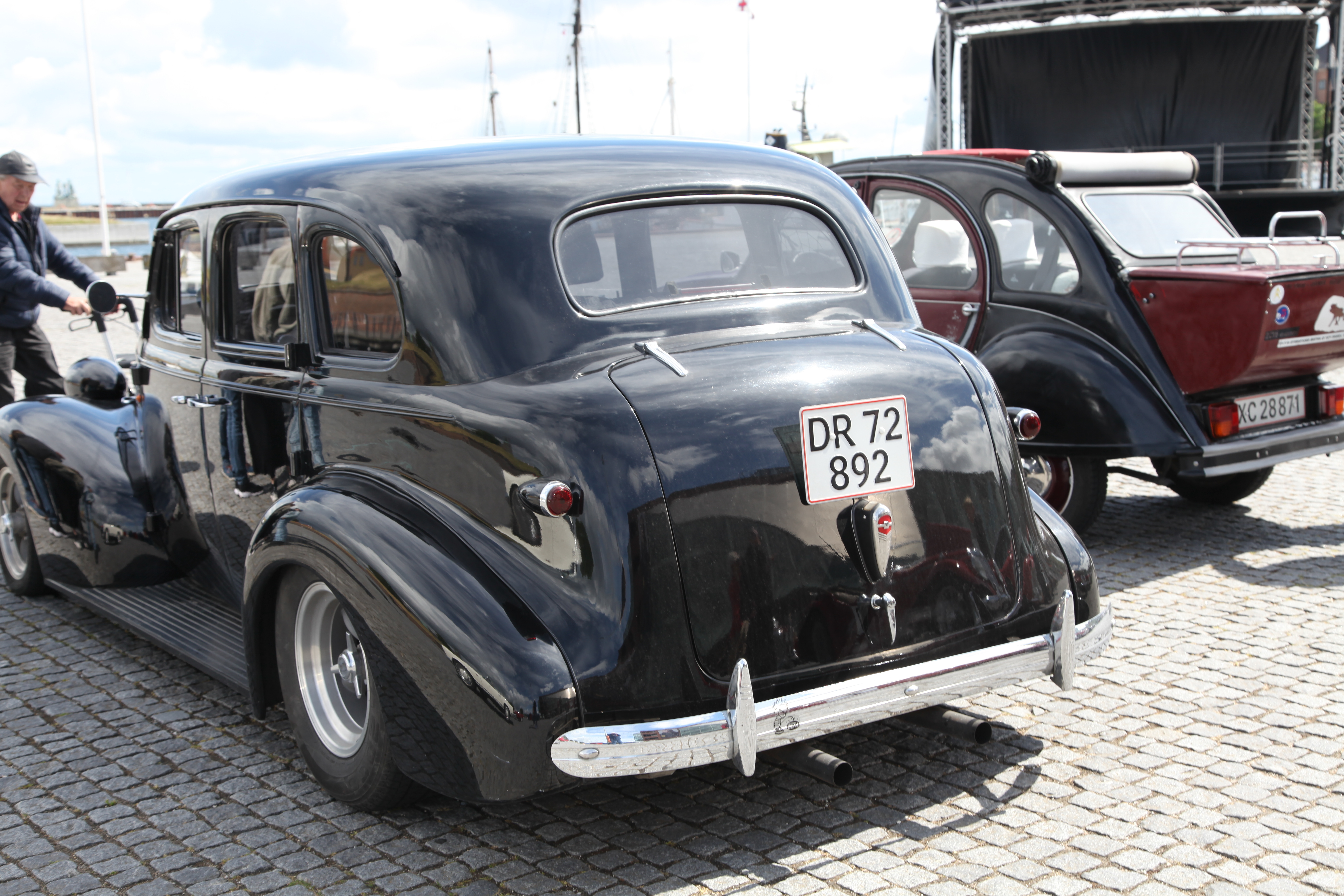
We then debated whether to go into the Maritime Museum which has been recommended to us by friends. However, we decided we’d prefer to take a look at the historic buildings in the town. We were briefly distracted by a collection of classic cars that had parked up outside said museum. It was a very mixed bag of vehicles but no one seemed interested in talking to anyone outside their own group, so we went on our way.
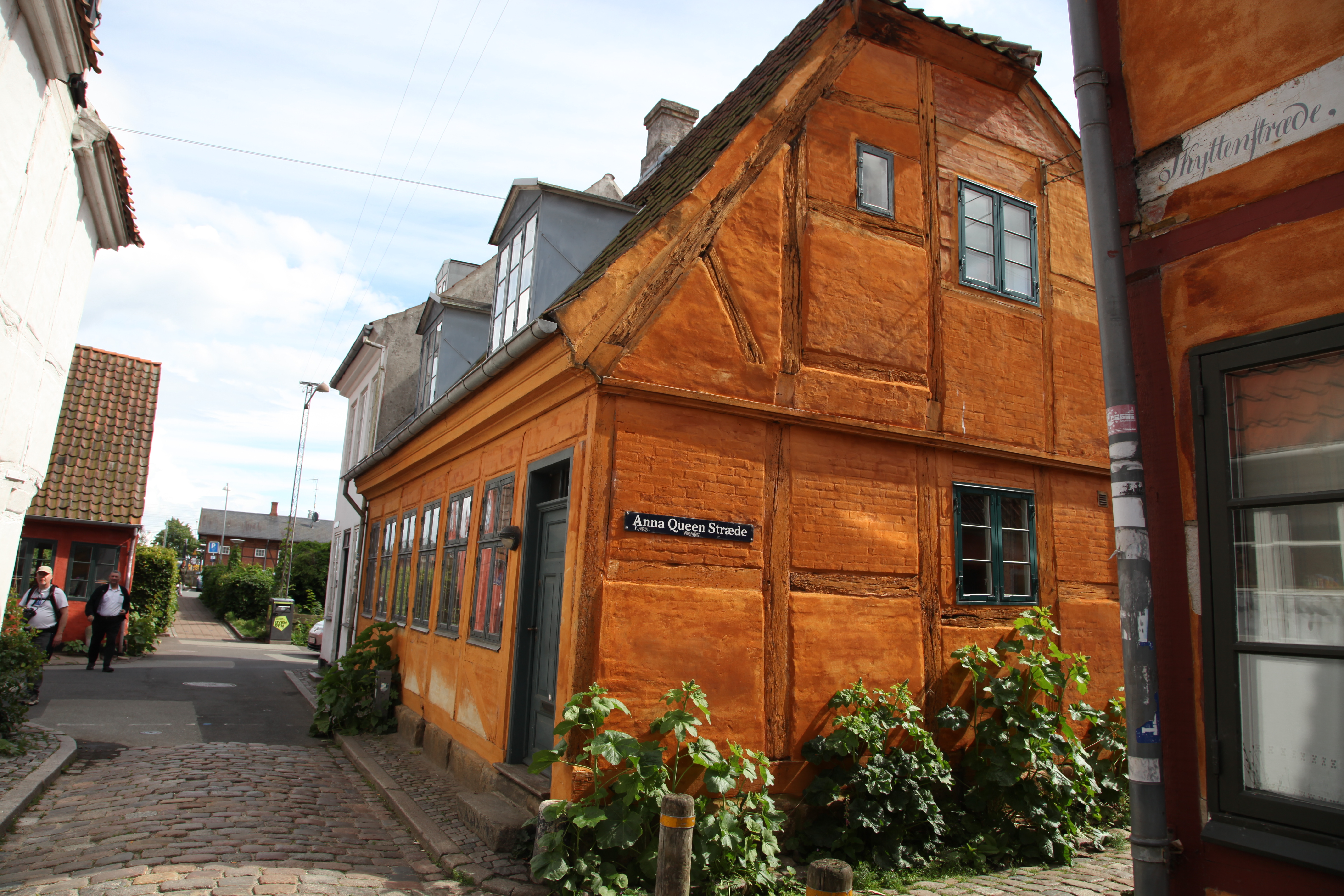
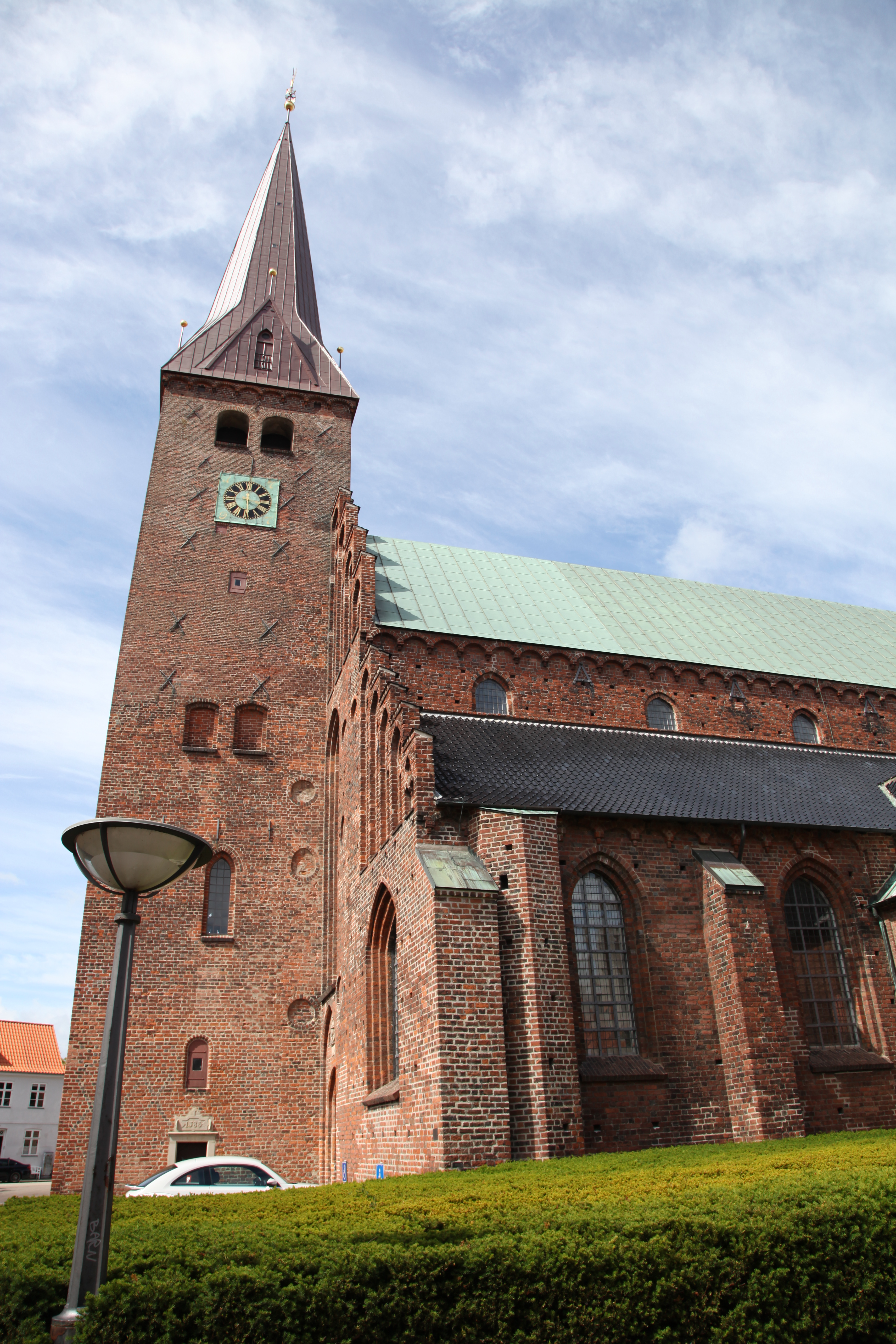
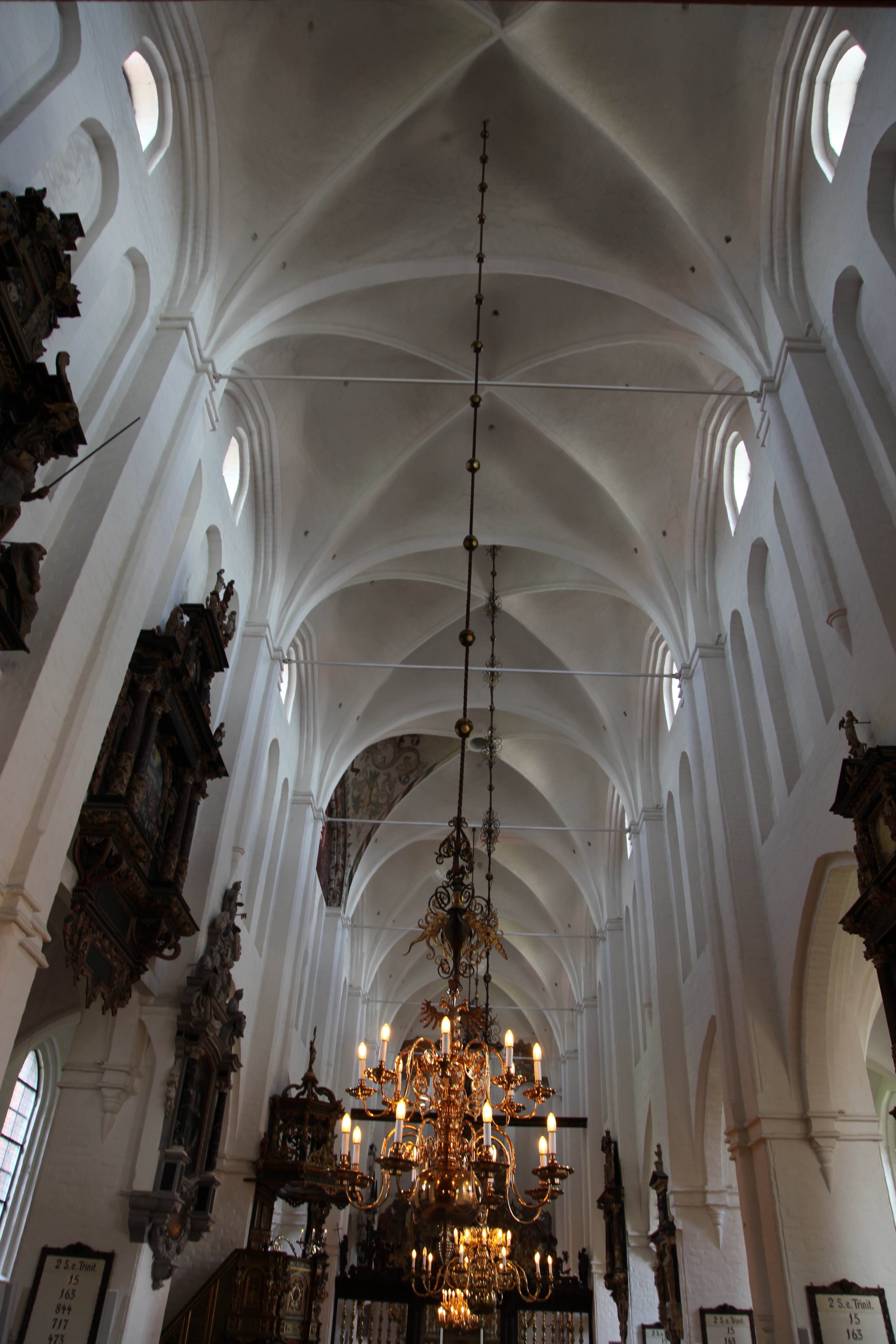
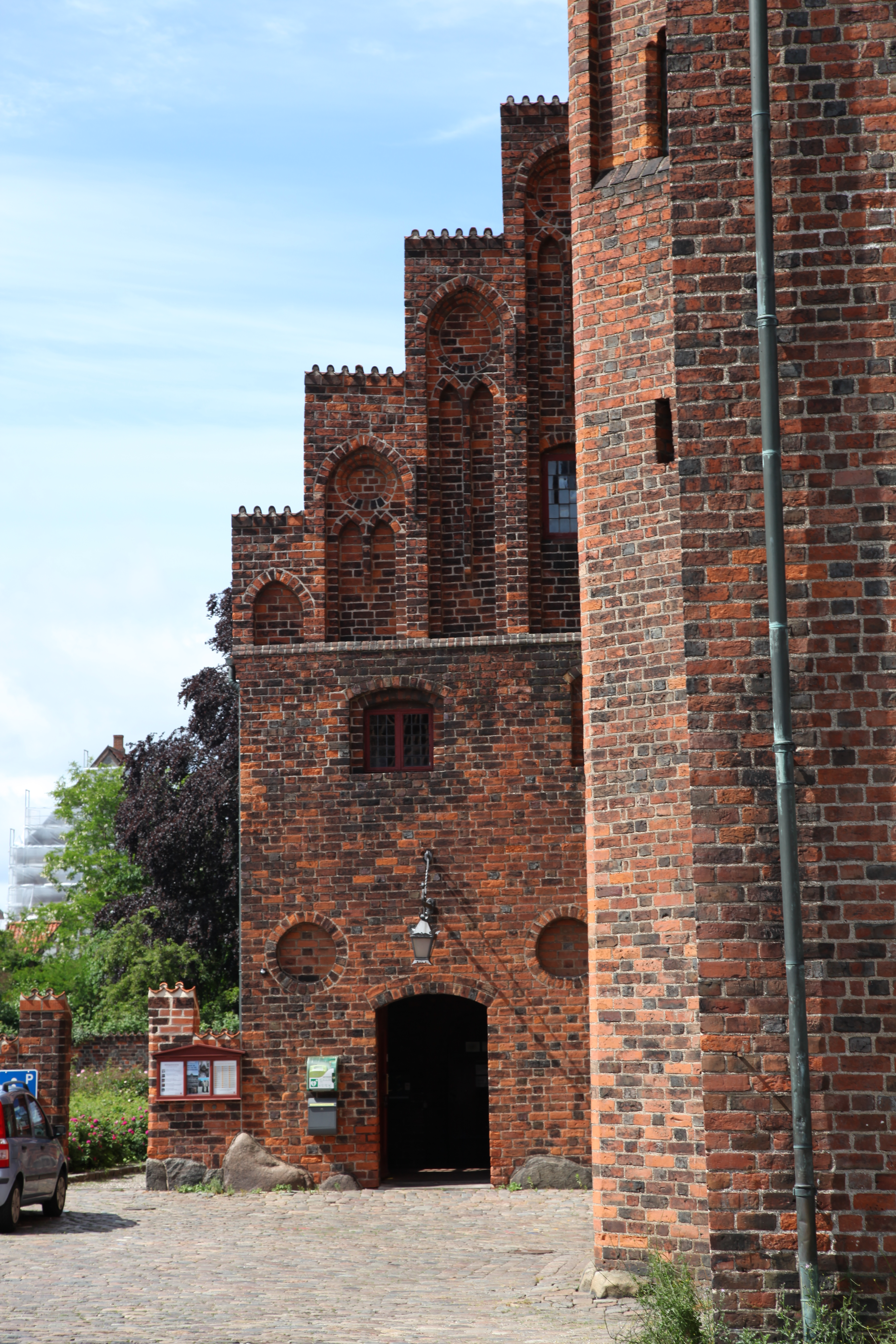
If you can find it, there’s self-guided town walk available to lead you through Helsingør’s historical development. We failed to find it but we enjoyed pottering around anyway, starting with Saint Olaf’s Church, built around 1200. It’s brick built and quite splendid, being the cathedral of the Diocese of Helsingør. The oldest parts date to the 13th century and show that the fishing village had grown to become a town of importance. However, most of the current building was completed in 1559. In 1961, the church was given the status of cathedral in connection with the establishment of the Diocese of Helsingør. The church was rededicated in 1521, possibly after a fire, and Saint Andrew and Saint Vincent were mentioned as patron saints. Because many of the ships passing by were British, a community of Scots settled in the town in the early 16th century and dedicated an altar to Saint Jacob, Saint Andrew and Saint Ninian. It had disappeared by 1858, although it was stated that the hospital should reserve a bed for a Scot in need!
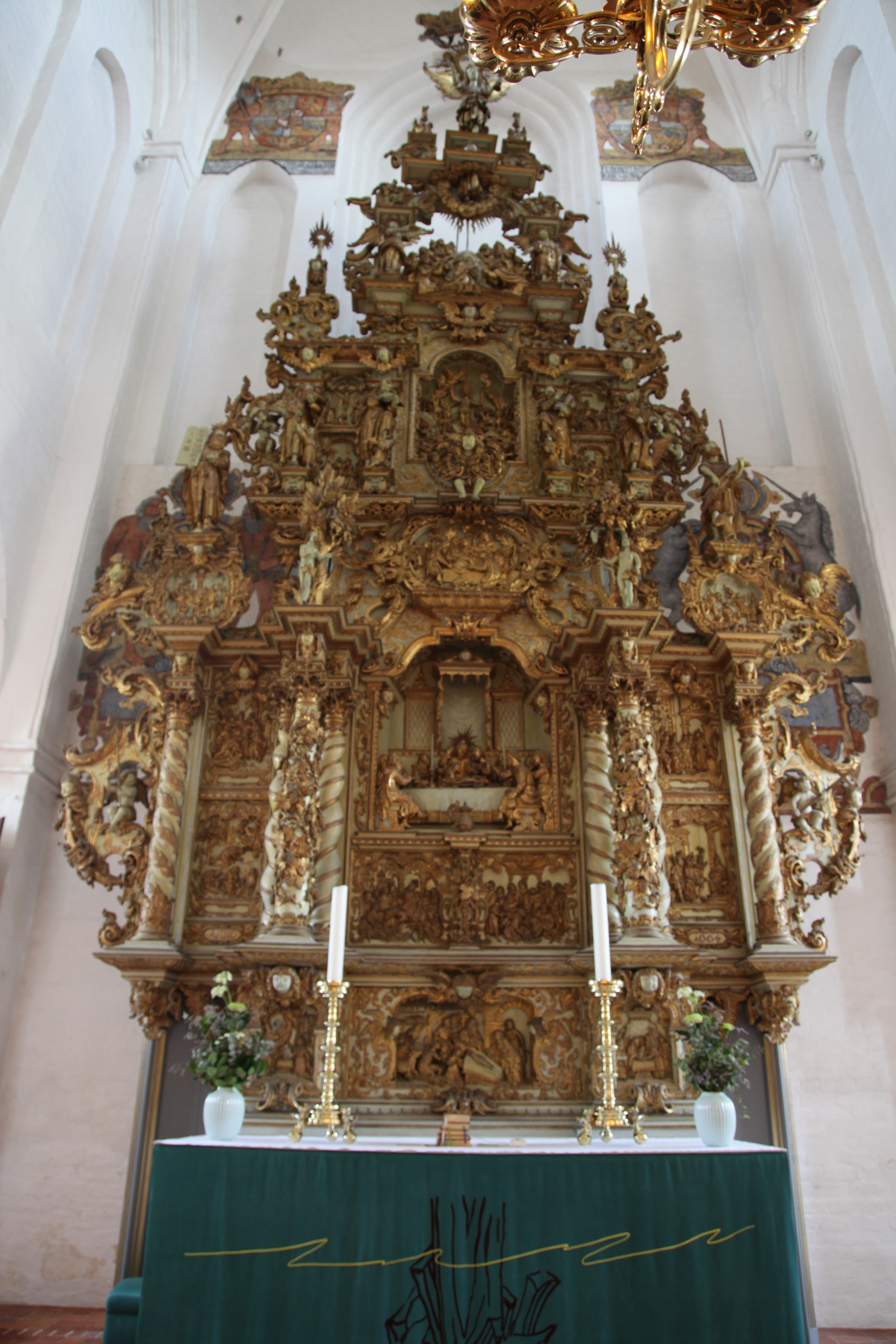
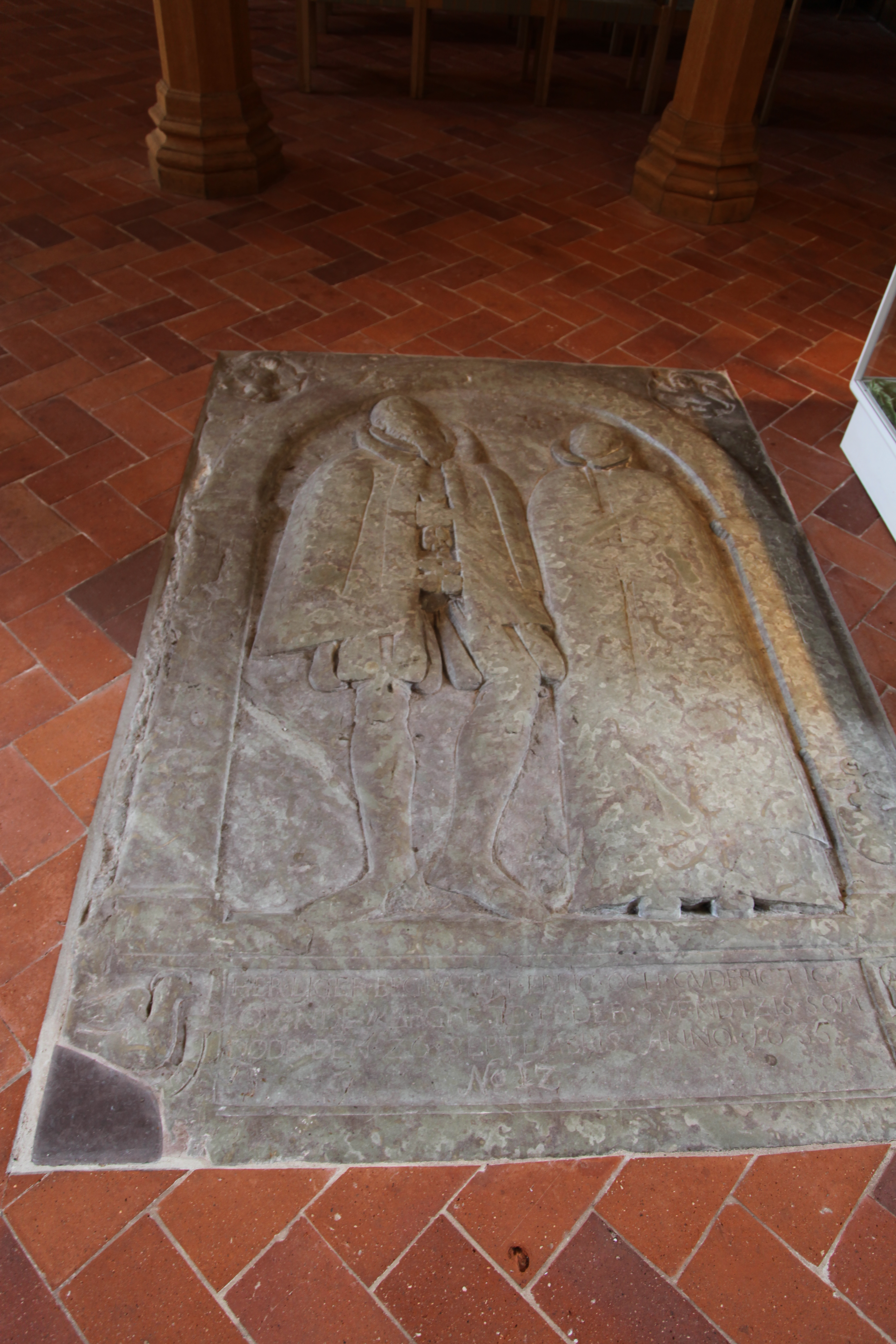
You can see parts of the original Romanesque building, but in the 15th century it was extended westwards in the Gothic style. The porch was added in 1579 and a tall, slender spire (known as the Virgin of Helsingør) was fitted in 1615. It blew down in a hurricane in 1737, destroying the porch, and today’s spire was designed by H.B. Storck in 1898 – it’s spectacular. The interior contains two small Dutch alabaster altarpieces, a carved pulpit created by Jaspar Matiessen in 1567 with a canopy from 1624, and a Baroque altarpiece (c. 1664) designed by Lorentz Jørgensen. Ad if that’s not enough there’s a Baroque rood screen (1653), and a wrought iron baptismal font (donated in 1579). There are also mid-16th century frescoes, notably the decorative painting with flowers and leaves on the nave’s fourth vault.
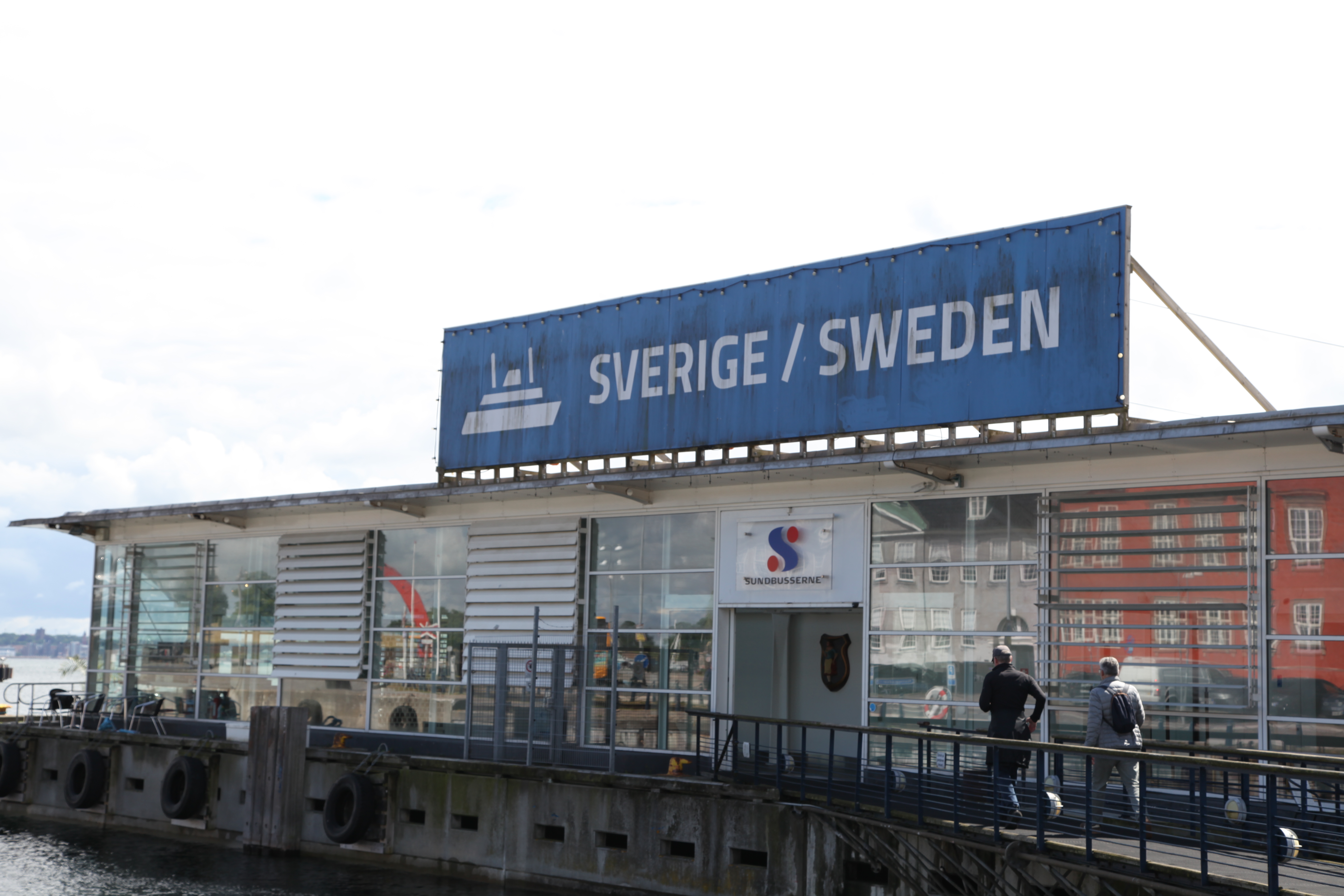
During World War II, Helsingør was one of the most important transport points for the rescue of Denmark’s Jewish population during the Holocaust. Using the name Elsinore Sewing Club as a cover for messages, the Danish population moved Jews away from the closely watched Copenhagen docks to spots further away, especially in the north of Sjælland, including Helsingør. It was just two miles across the Øresund to Helsingborg in neutral Sweden. Over the course of three nights, the Danes smuggled over 7,200 Jews and 680 non-Jews (family members of Jews or political activists) across the Øresund to safety in Sweden. You can still cross to Sweden, though obviously under far better circumstances, by using what is claimed to be the busiest car ferry line in the world. The route is known as the HH Ferry route and is connected to the town’s main railway station, though there’s reported to be a plan to build a tunnel as part of a proposed series of tunnels under the Øresund between Helsingborg in Sweden and Helsingør, and one tunnel between Landskrona and Copenhagen. The connection is planned for passenger trains, and other proposals for the tunnels include freight rail and road tunnels. However, it’s not been decided whether this will ever go ahead as far as I can tell.
We were running out of both steam and time after that so we meandered reasonably purposefully towards the railway station and a return to Copenhagen in time for a swift Wine o’Clock at the hotel before going out for drinks and dinner.
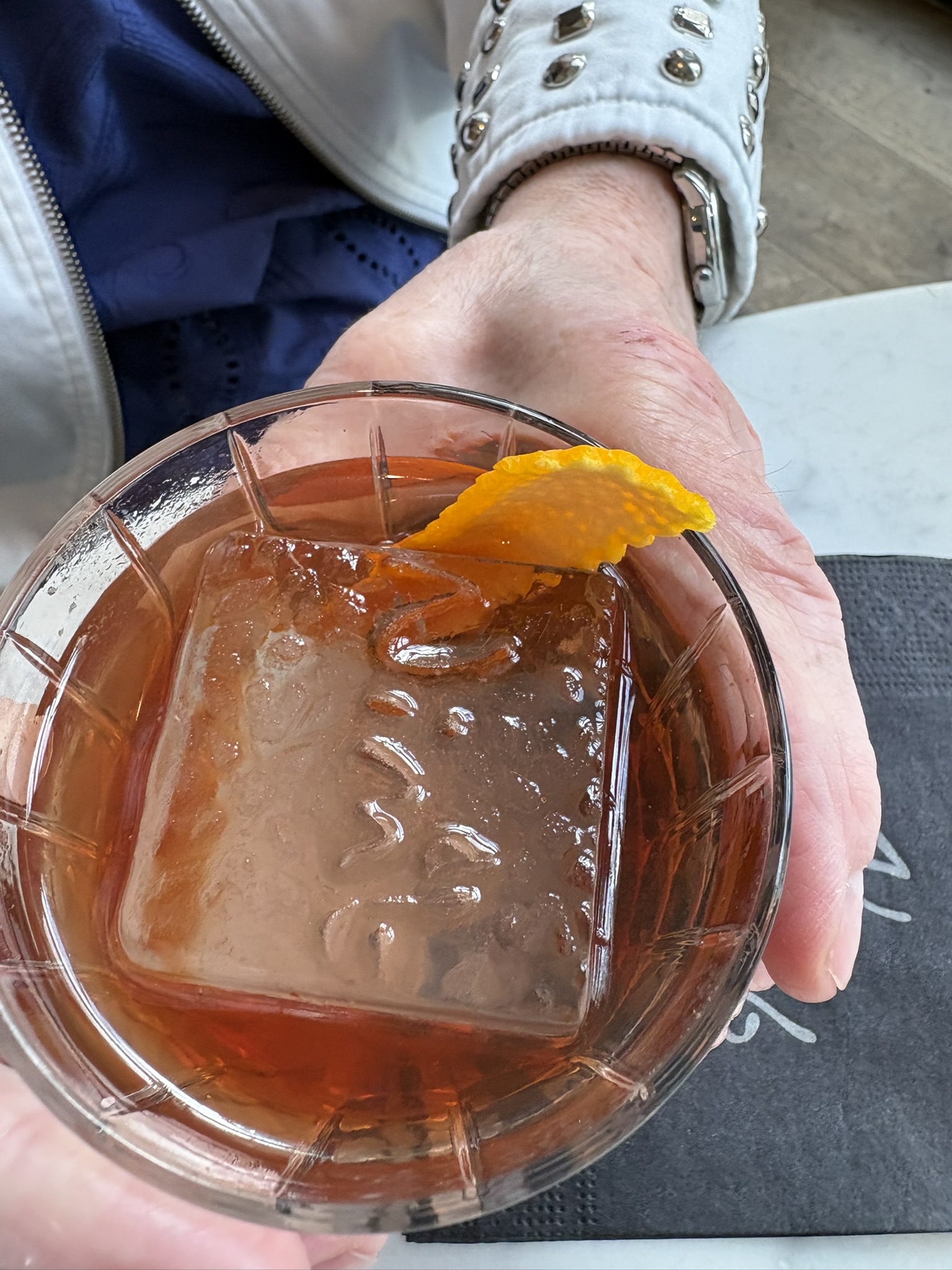
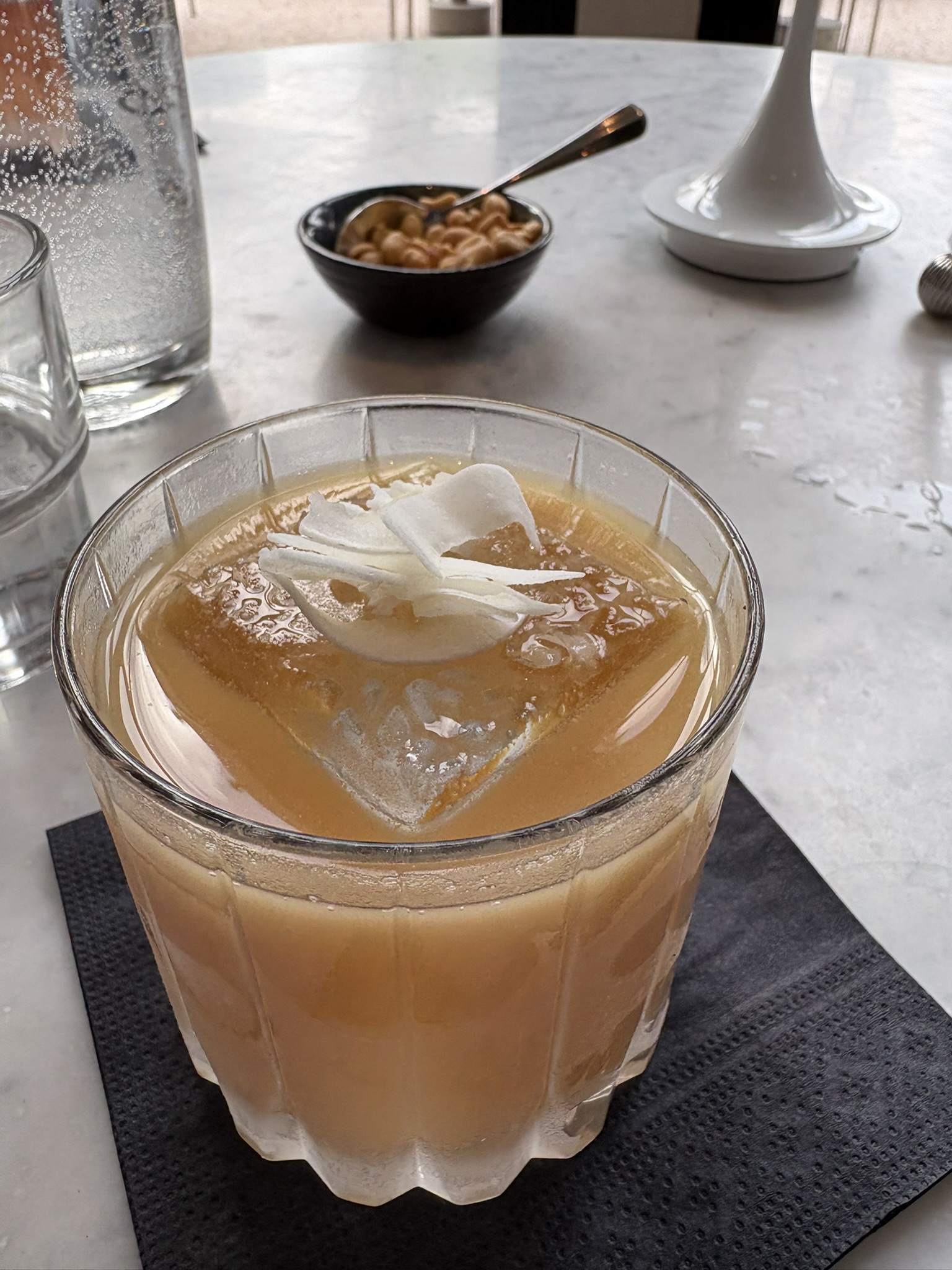
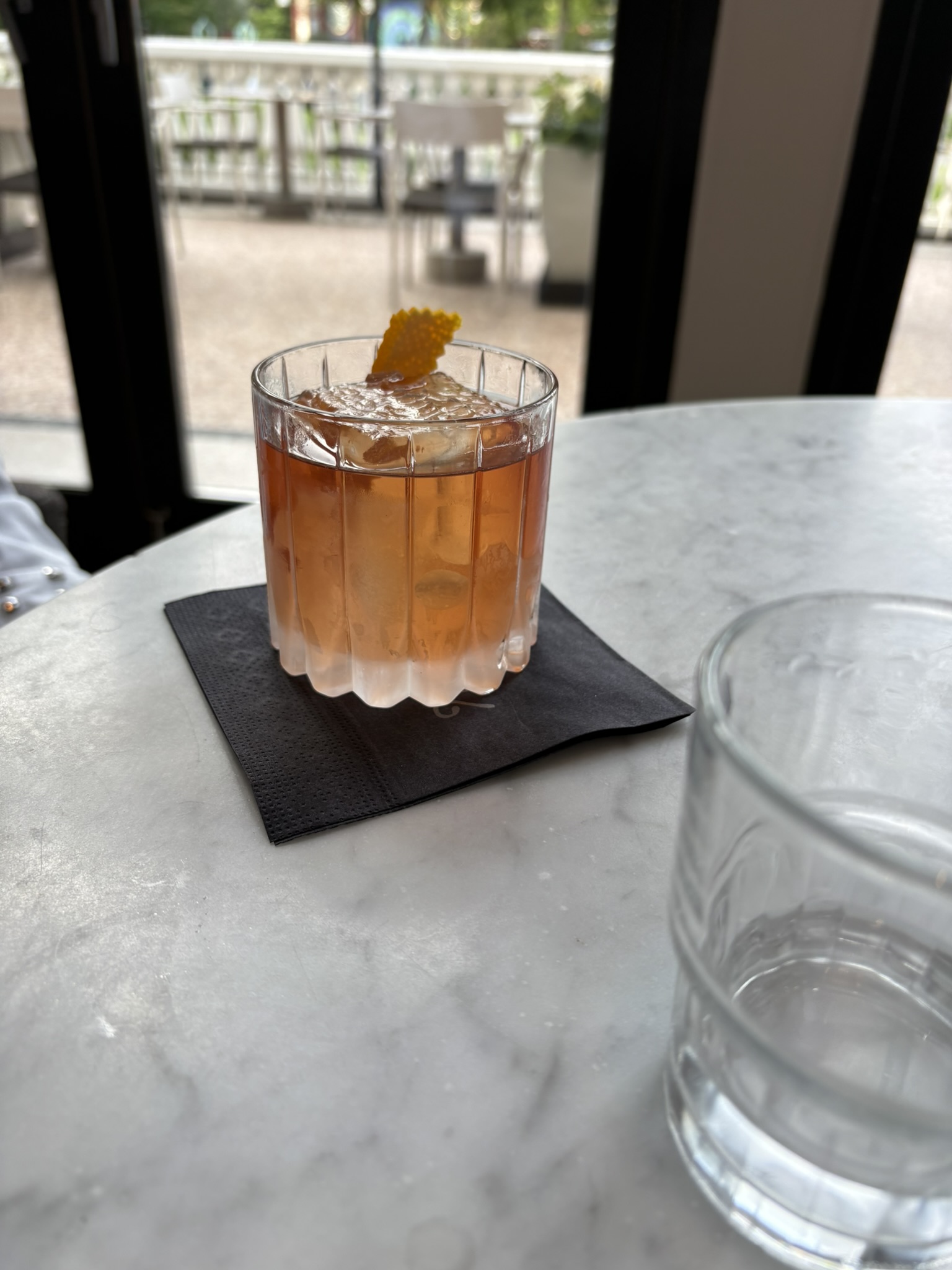
This time we were returning to a tried and tested favourite (and in fact the restaurant I try to get to whenever I’m in Copenhagen), so we headed for a bar we’ve also tried before, stopping off at the glorious Hotel Nimb to have cocktails in the American Bar. It has the advantage that in good weather you can sit outside and overlook the gardens of Tivoli. It’s lovely, and a great place to people watch. It was a touch too blustery to sit out there, so we took a table by the window instead. The cocktails aren’t any more expensive than anywhere else in town, and they are very good. In addition, the bar staff are utterly charming and a lot of fun.
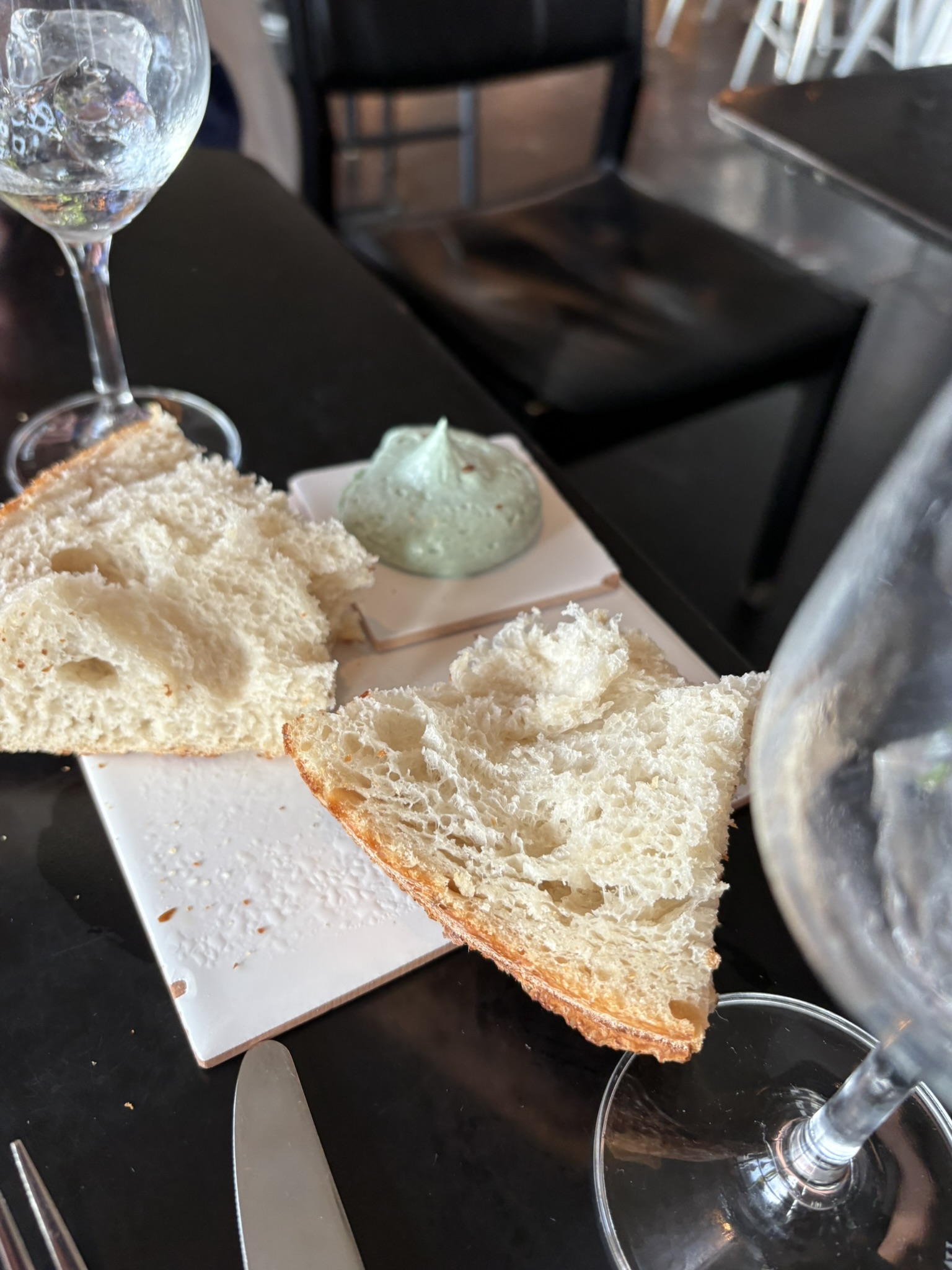
Afterwards, we headed to the ever-reliable and much recommended Fiskebar for dinner. As one of a reduced number of places that are open on a Sunday, it was heaving, but I’d booked so it wasn’t a problem. Occasionally, I’ve been known to fetch up on my own without a reservation when I’m there for work, which normally means a seat at the bar, but we were over near the kitchens this time. I’ve never been able to resist their sourdough bread, which is dangerously moreish, and which always arrives with some kind of whipped butter, usually flavoured with seaweed. It doesn’t last long, because once you start on it you really can’t stop! Tonight was no exception.
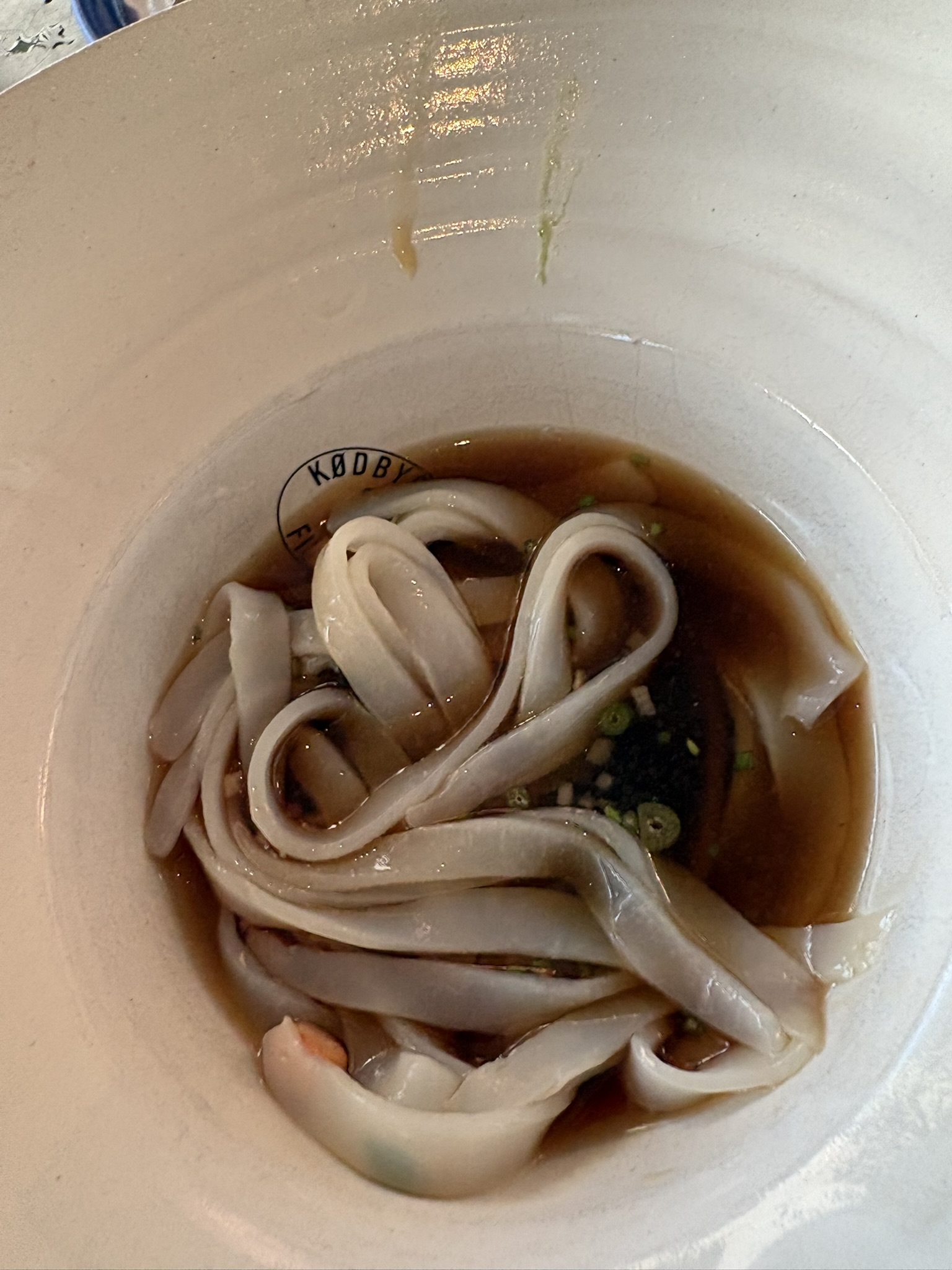
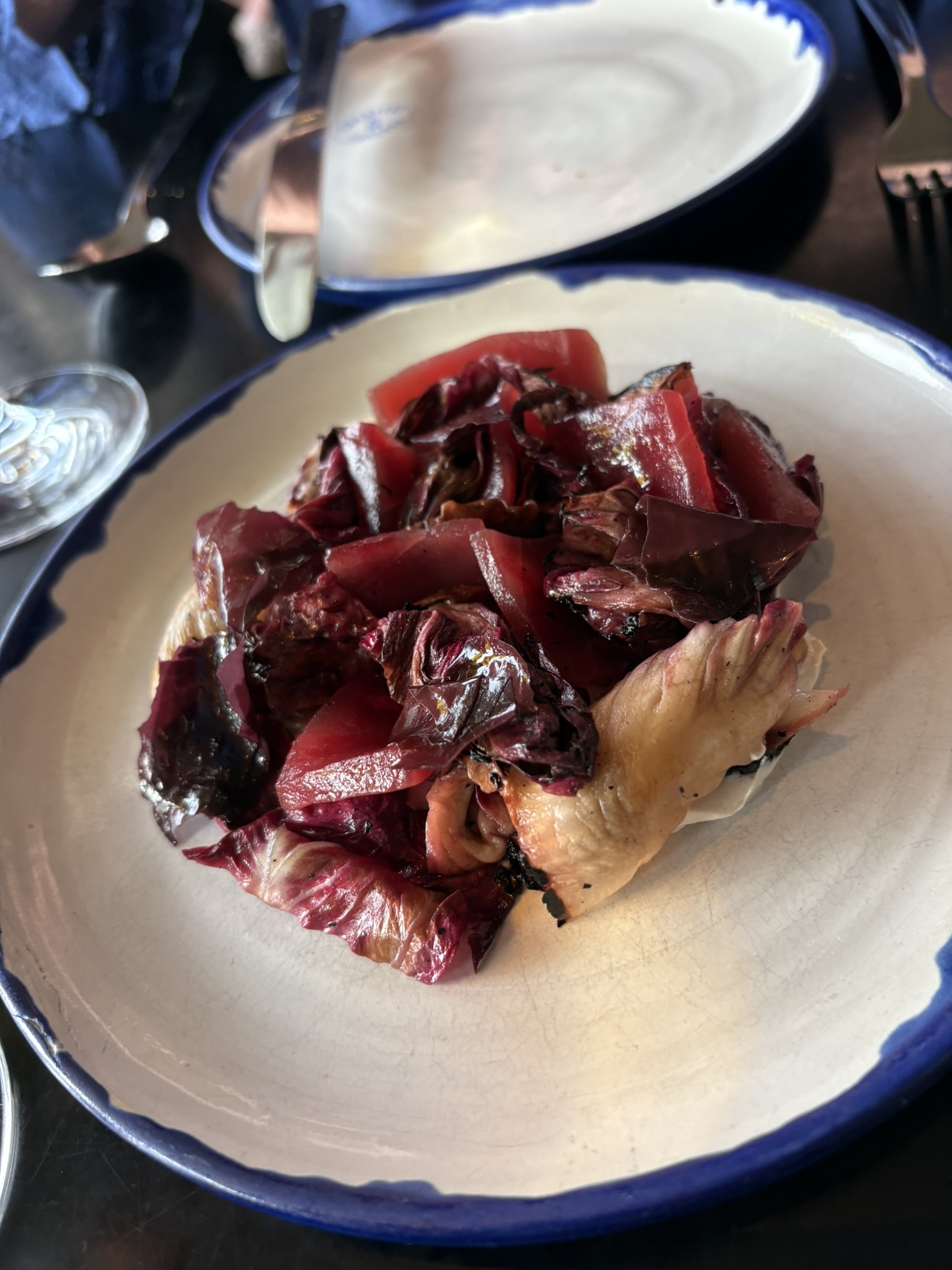
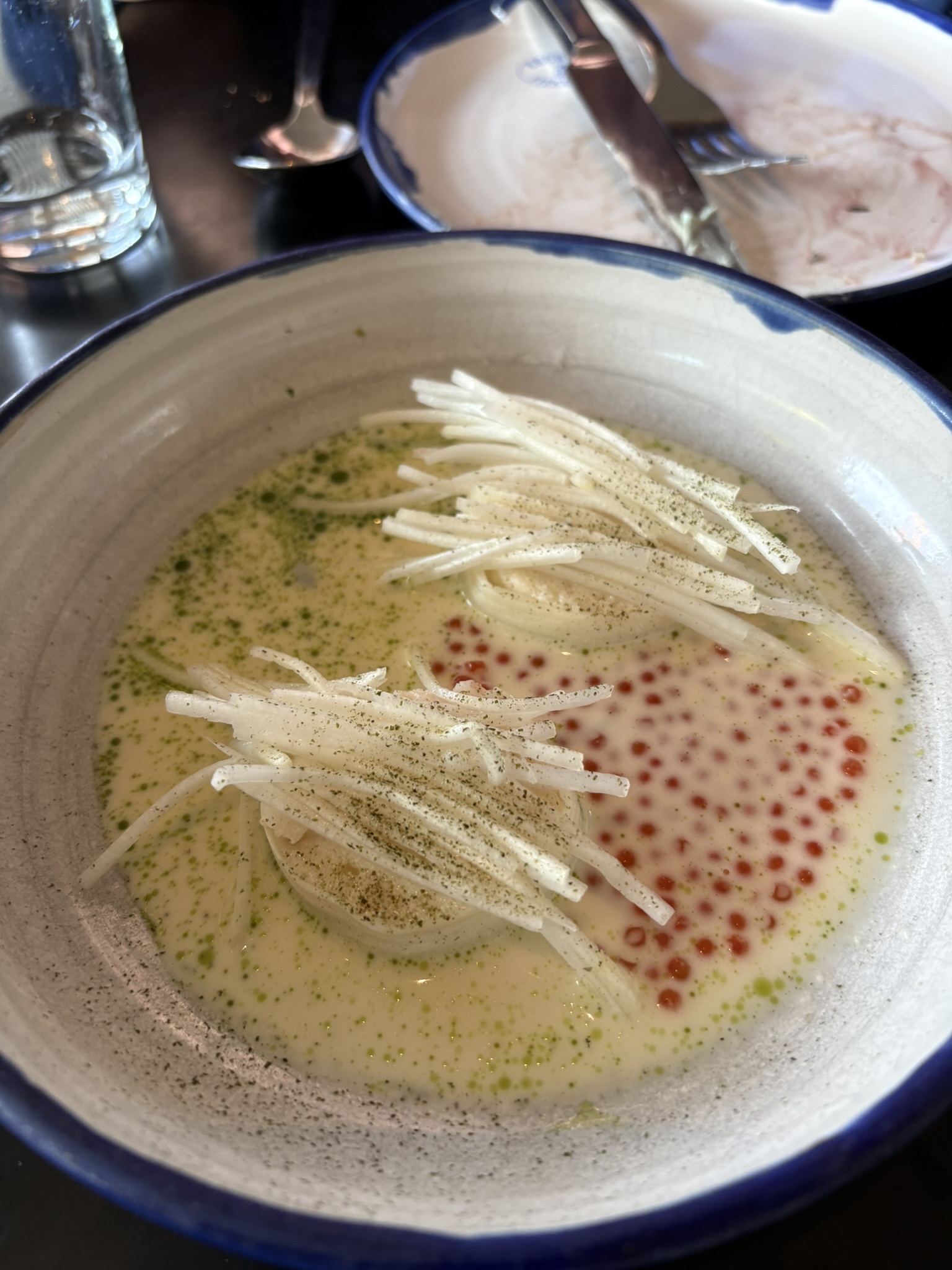
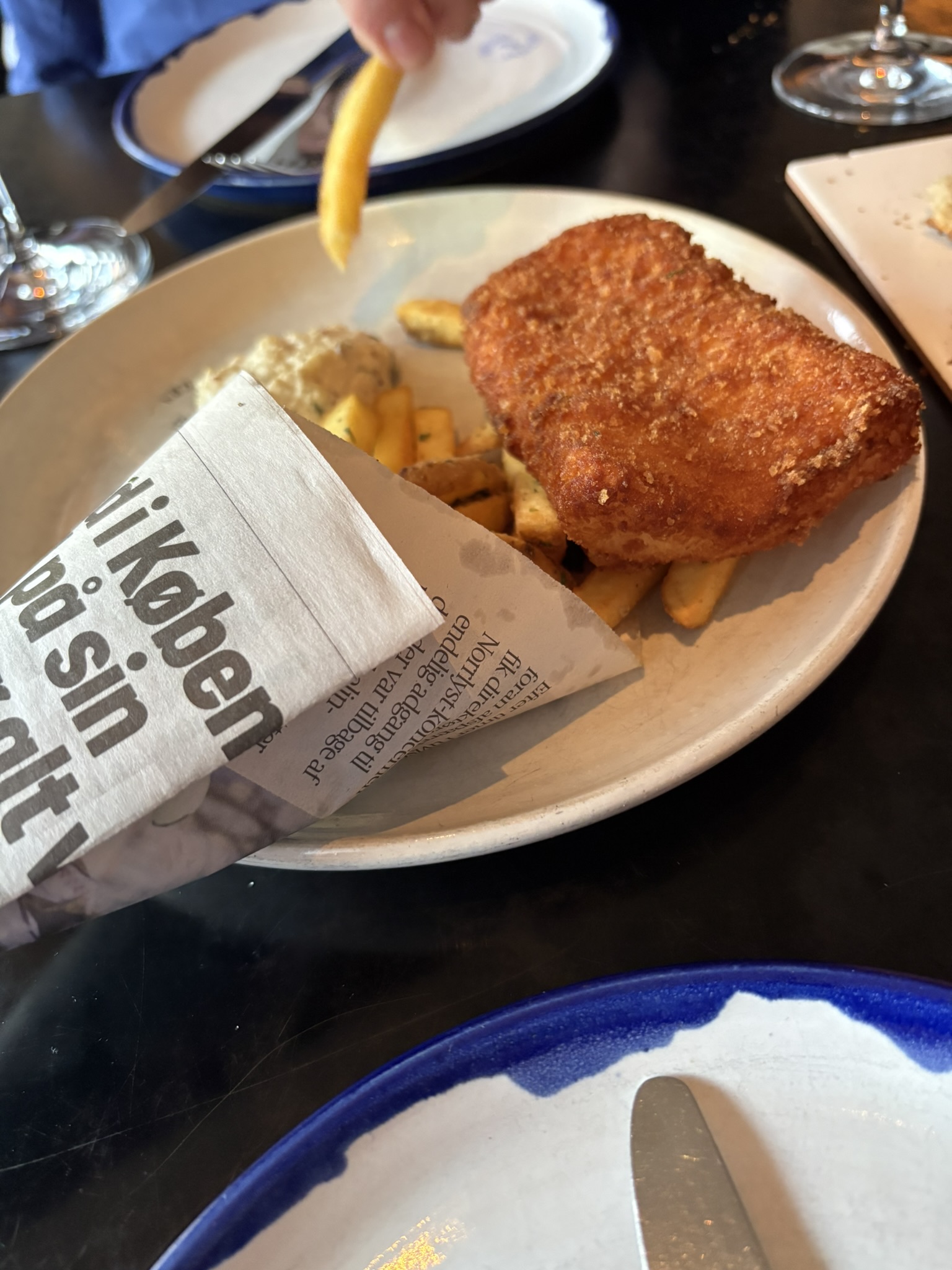
It was followed by a gorgeous slab of tuna loin, as we drank some of their more interesting wines. The white asparagus and langoustines was fantastic too, and then we hit the dishes I so often end up going for regardless of what else is available. These are – in no particular order – the squid in dashi, which they cut to look like pasta, and which is an absolute knockout. If you go, and it’s on the menu, then you really must order it. The other plate, which we finished off with, was their iconic fish and chips, which comes with home-made tartare sauce, and is made with smoked cod, breadcrumbed and fried till crispy. The chips are pretty damn good too!
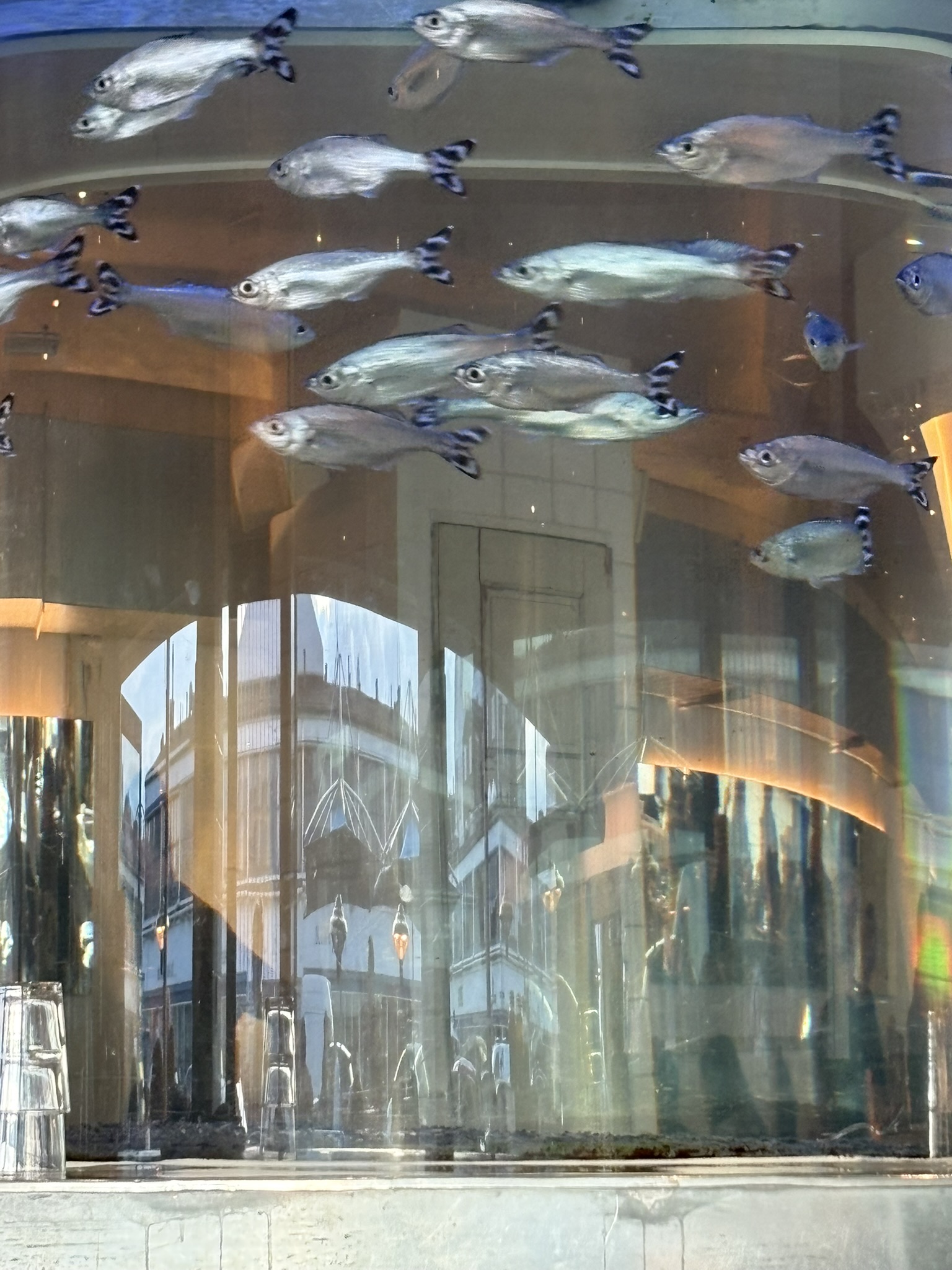
We ended the evening with a tour of the kitchens, possibly as a reward for putting up with the two extremely drunk Frenchmen on the next table who kept trying to engage us in conversation, but who were nor making much sense. Given how many empty bottles there were on the table when they got up to leave, I’m surprised they were able to walk out of the restaurant! We were halfway back to the hotel when the heavens opened, very briefly, but enough to drench anyone who couldn’t find any cover, so we dived into the nearby Metro station to travel on stop. Normally, we’d have walked but not if we were going to get soaked. It stopped almost as soon as it had started but we were committed to public transport by then.


