Friday 18th October, 2026 – Oviedo / Uviéu
In a bit of a switch about on Friday morning A and I were the only people keen to head out and check out the market hall in Oviedo. The Mercado el Fontán, which was where we were headed, has a very long history in Oviedo. After a catastrophic fire on December 24th 1521 which destroyed a large part of the town, the area was in crisis. Responding to this, perhaps somewhat belatedly, on September 10th 1523, Emperor Charles V granted Oviedo a free market, to be held every Thursday starting in January 1524. This market still takes place in the Fontán area, which used to be a lagoon until it was drained leaving behind only the current Caño del Fontán.
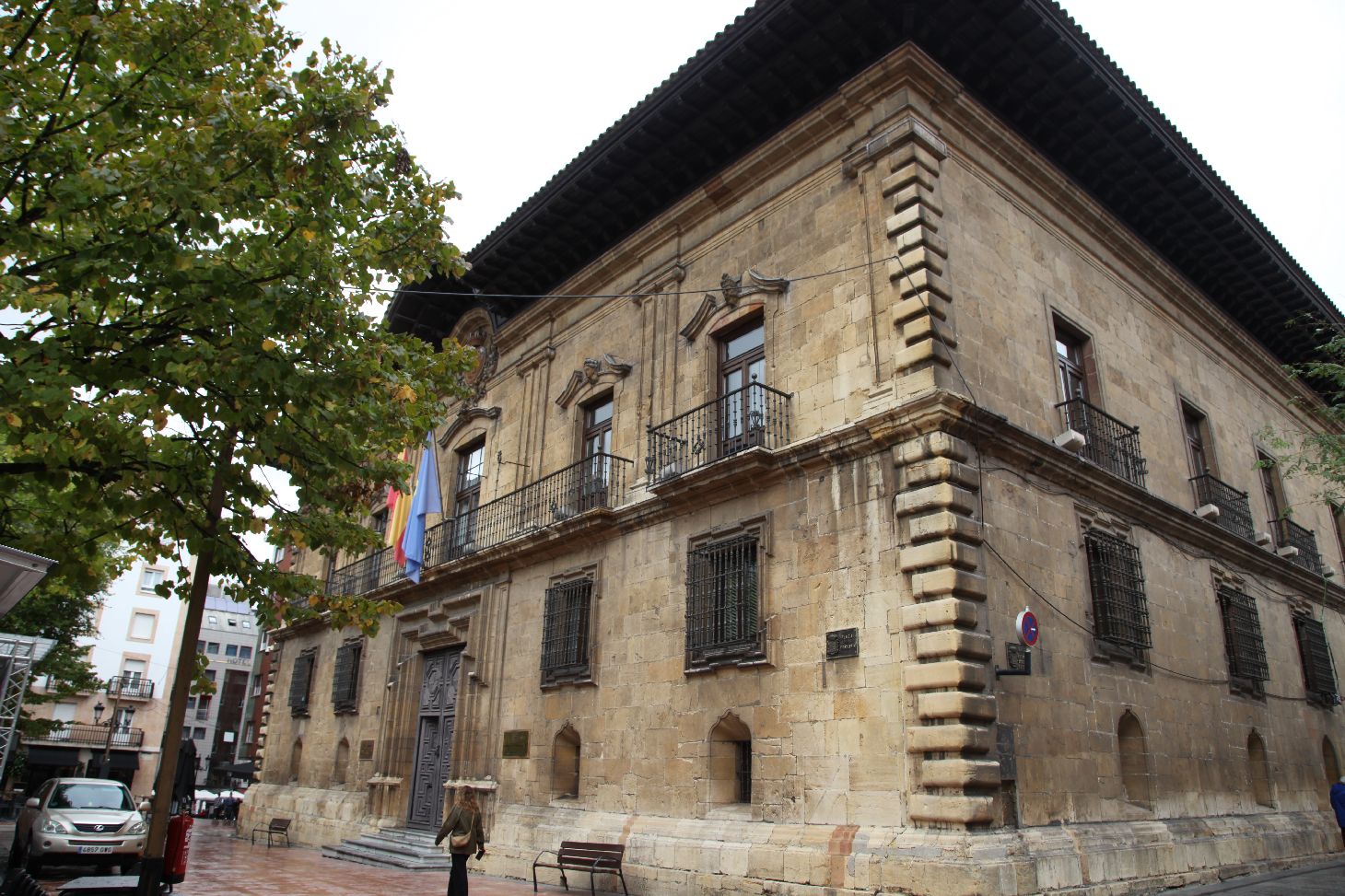
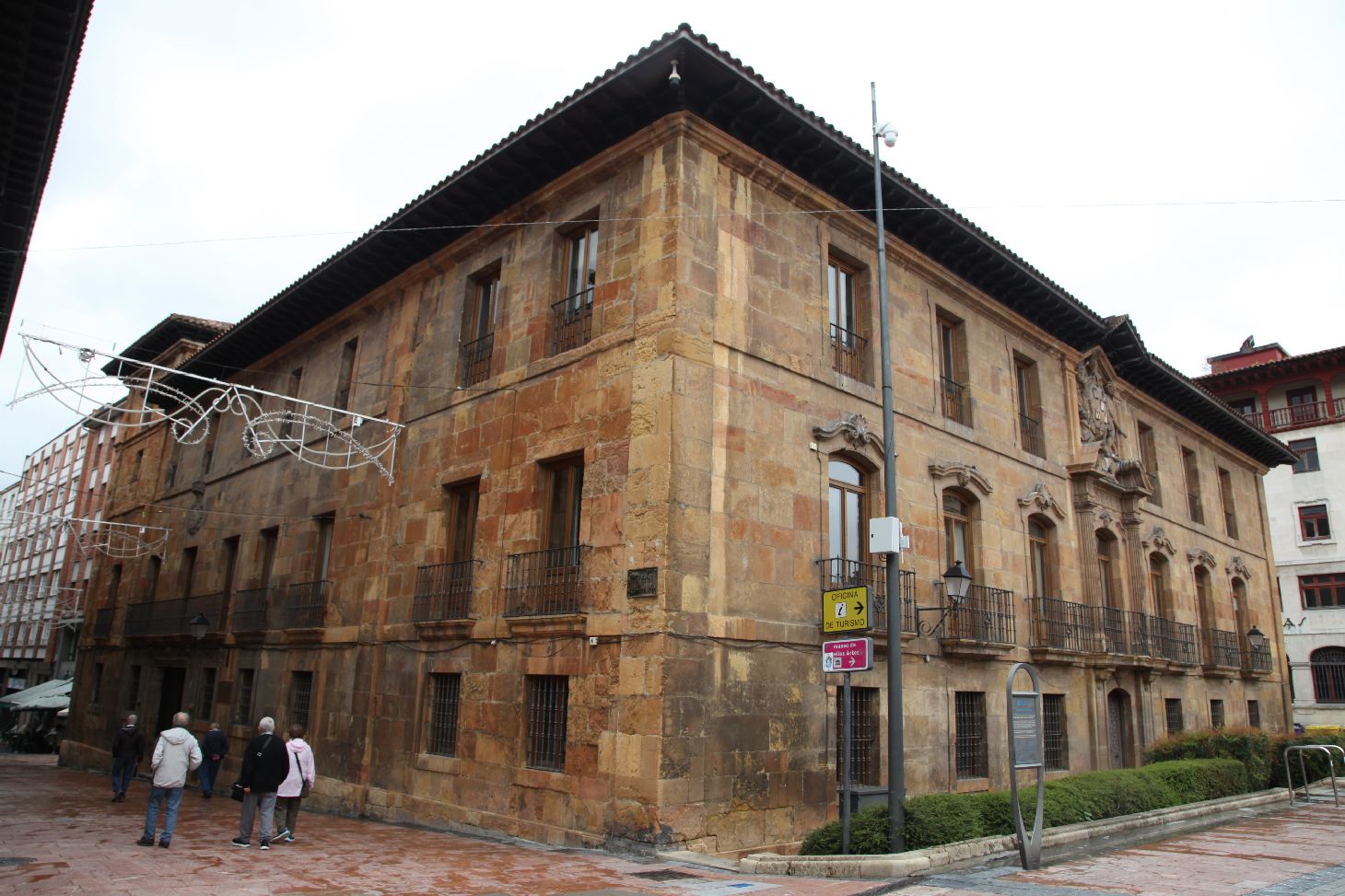
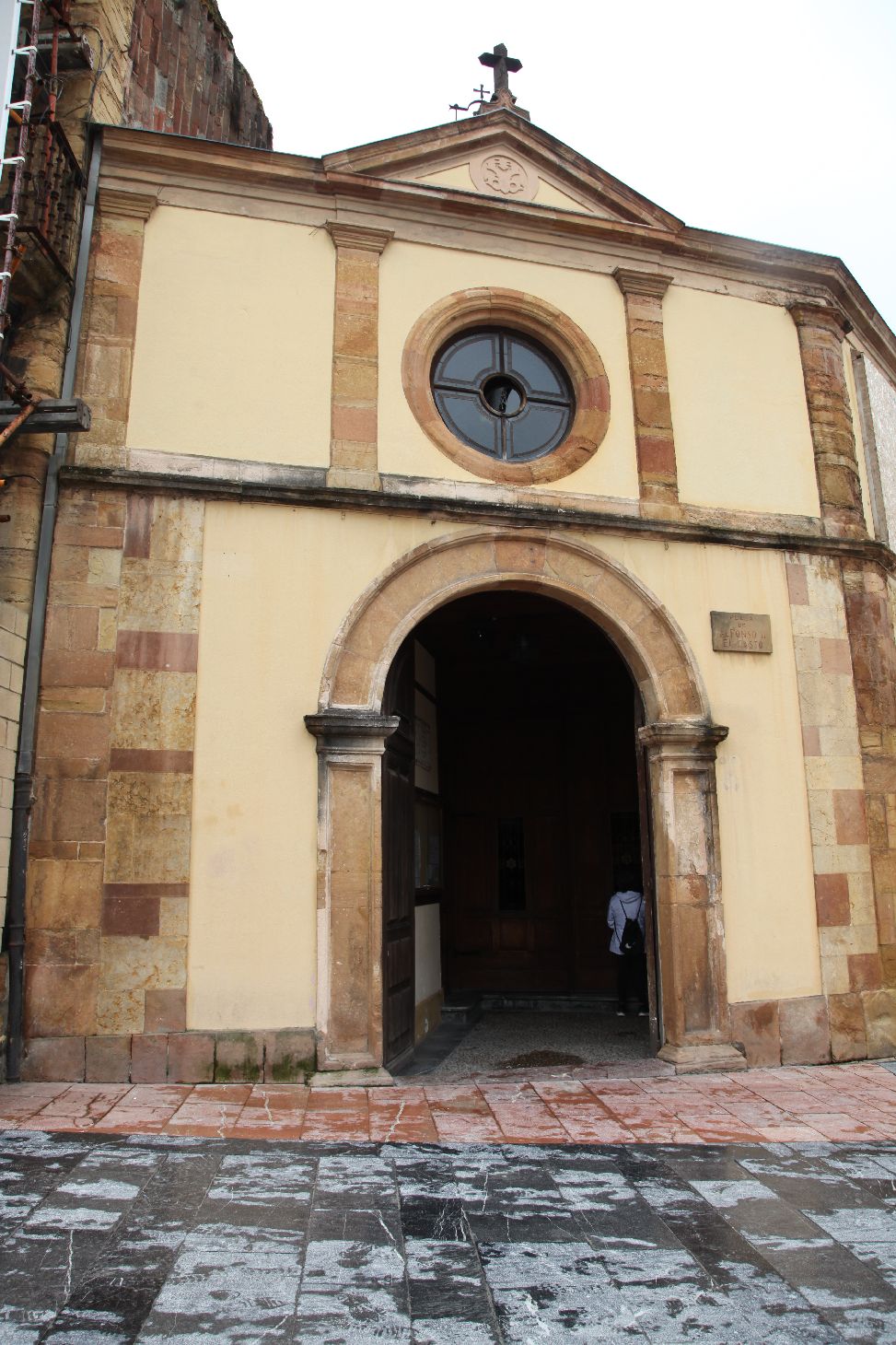
The Caño del Fontán itself is located in the Fuente Caño del Fontán and there you can see how water shaped settlement patterns from Roman times onward. There are stone channels and basin remnants that reveal successive phases of construction, as well as the fountain itself. It is still a public water point with the remains serving as an integral part of a small public square.
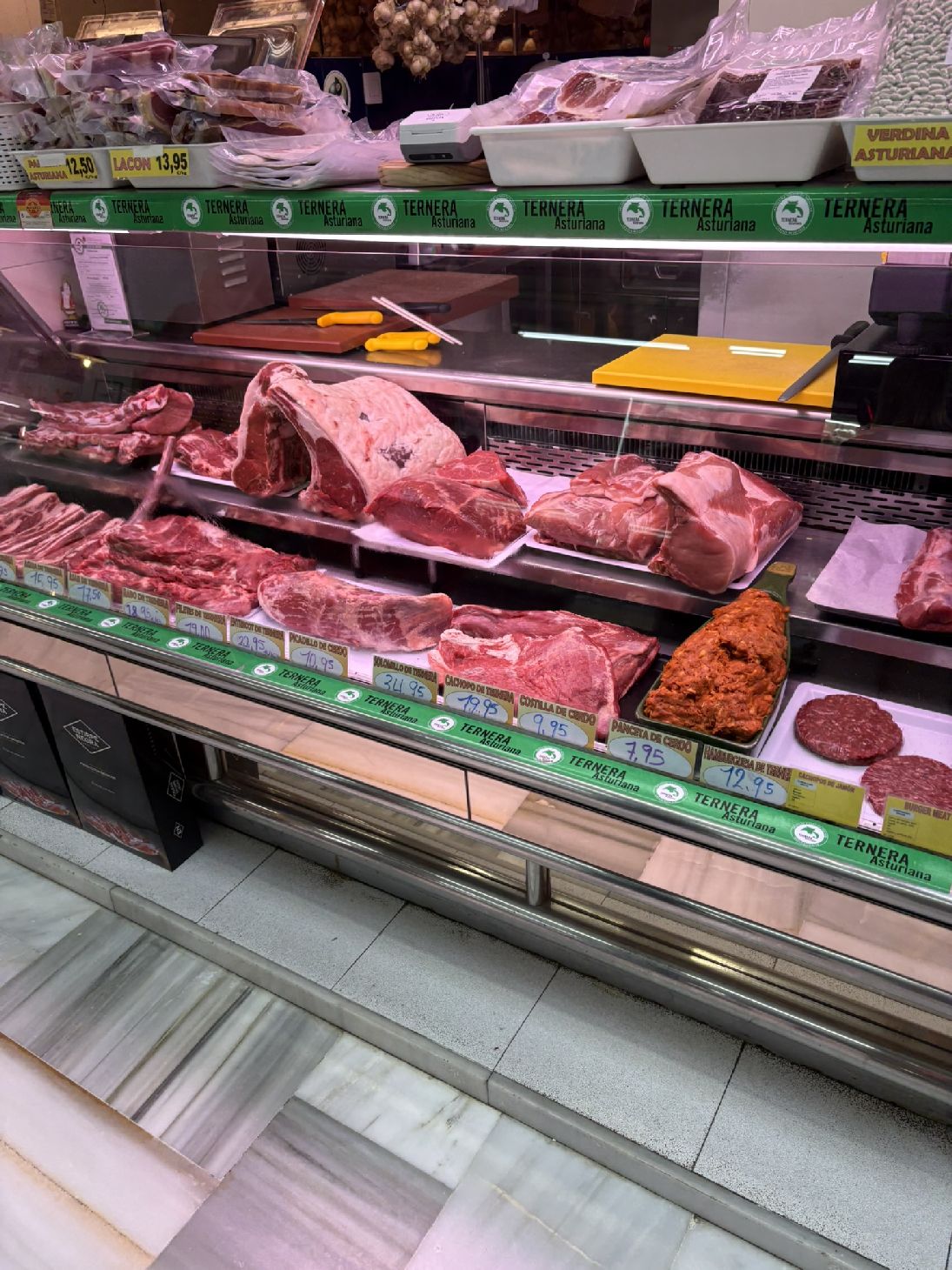
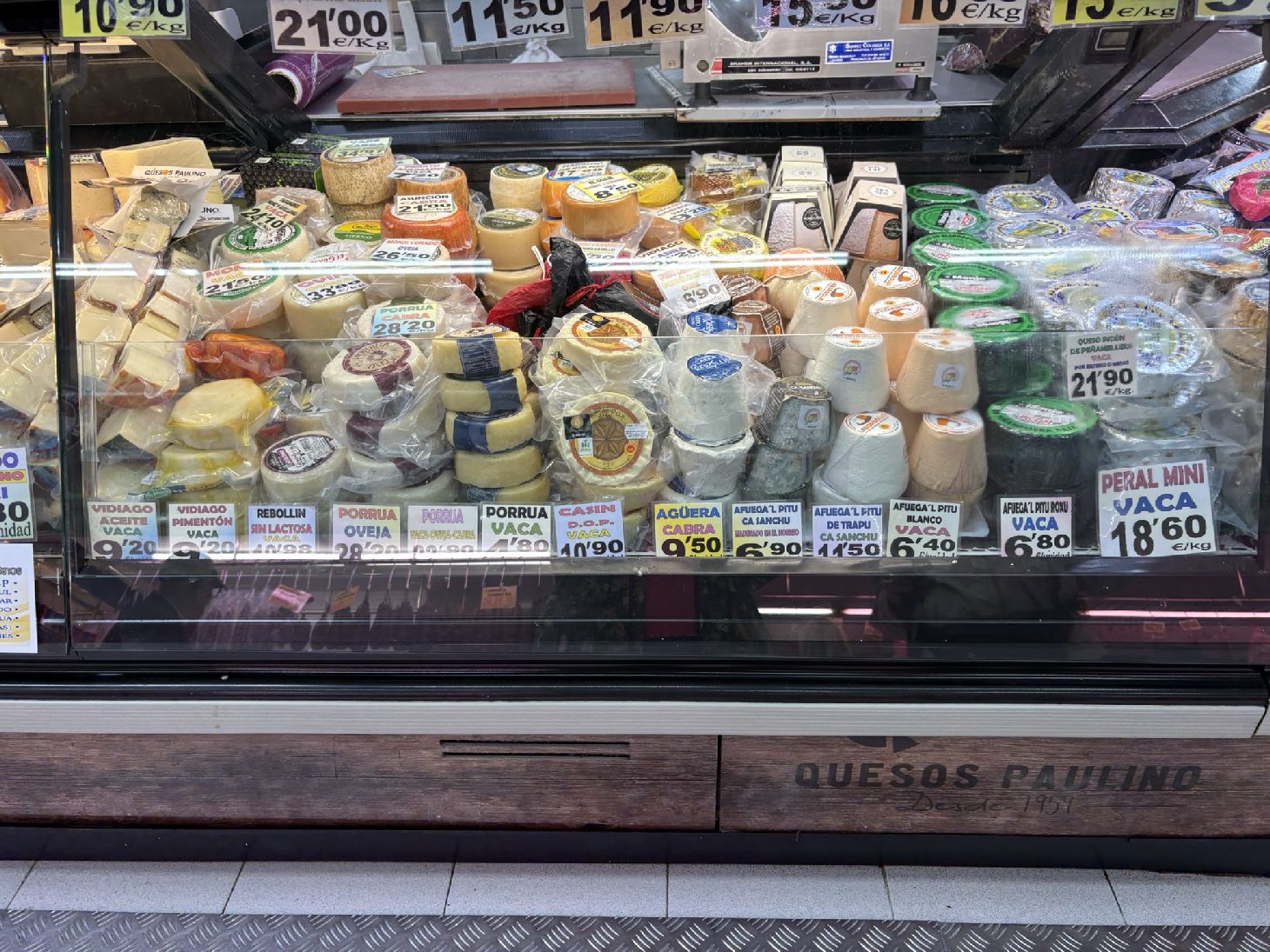
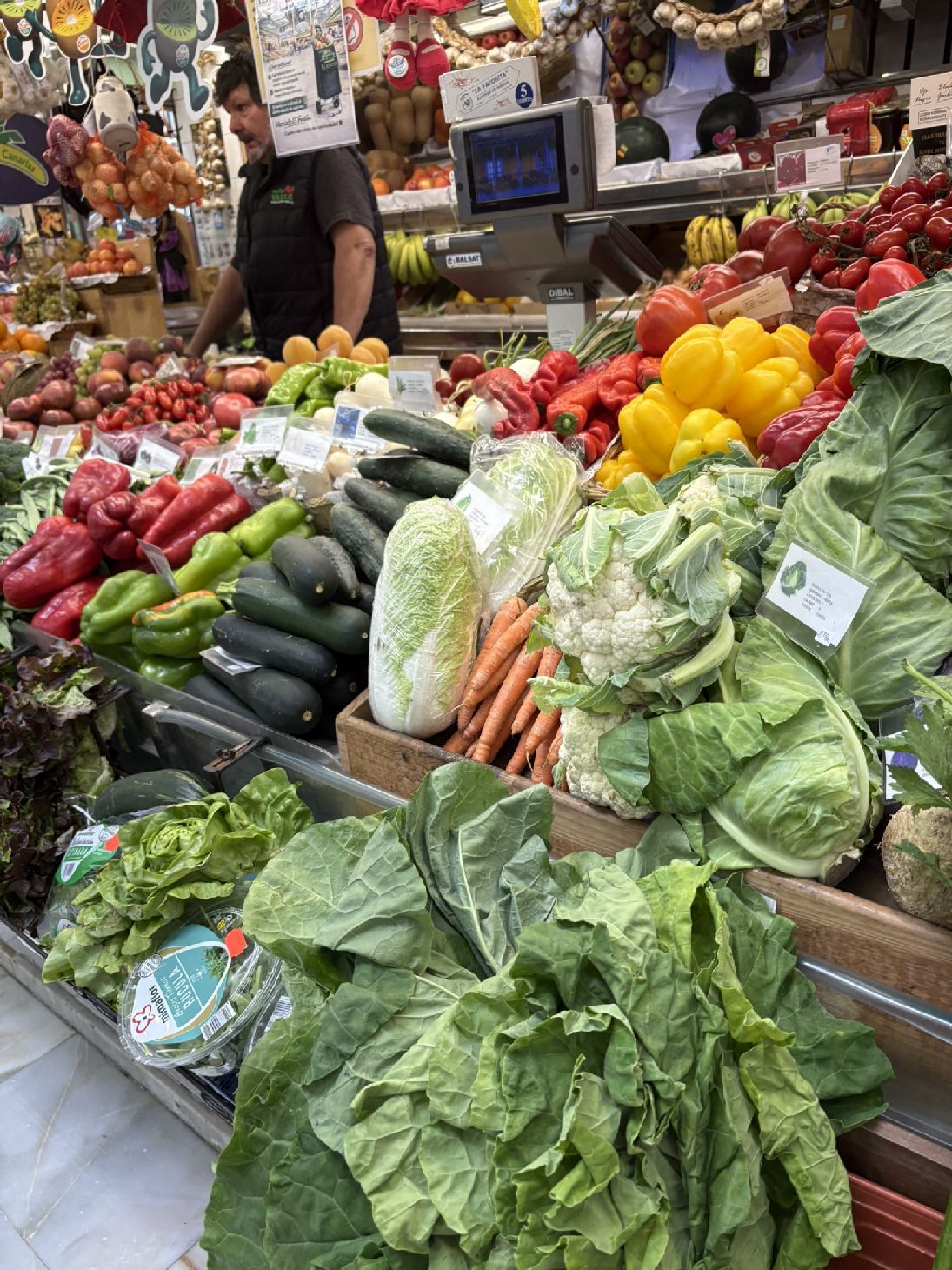
There is now an outdoor market, a Sunday flea market, and the indoor market in the 1885 building designed by Javier Aguirre. A protected building, it was thoroughly renovated in 1994 and is a lovely place to shop for supplies, even if all the stalls, whatever else they sell, seem to carry the same range of tinned local specialities. If we had been staying longer, I would have been down there regularly sourcing supplies. It’s open Monday to Friday 8 am till 8 pm, and on Saturdays until 3:30 pm should you find yourself there.
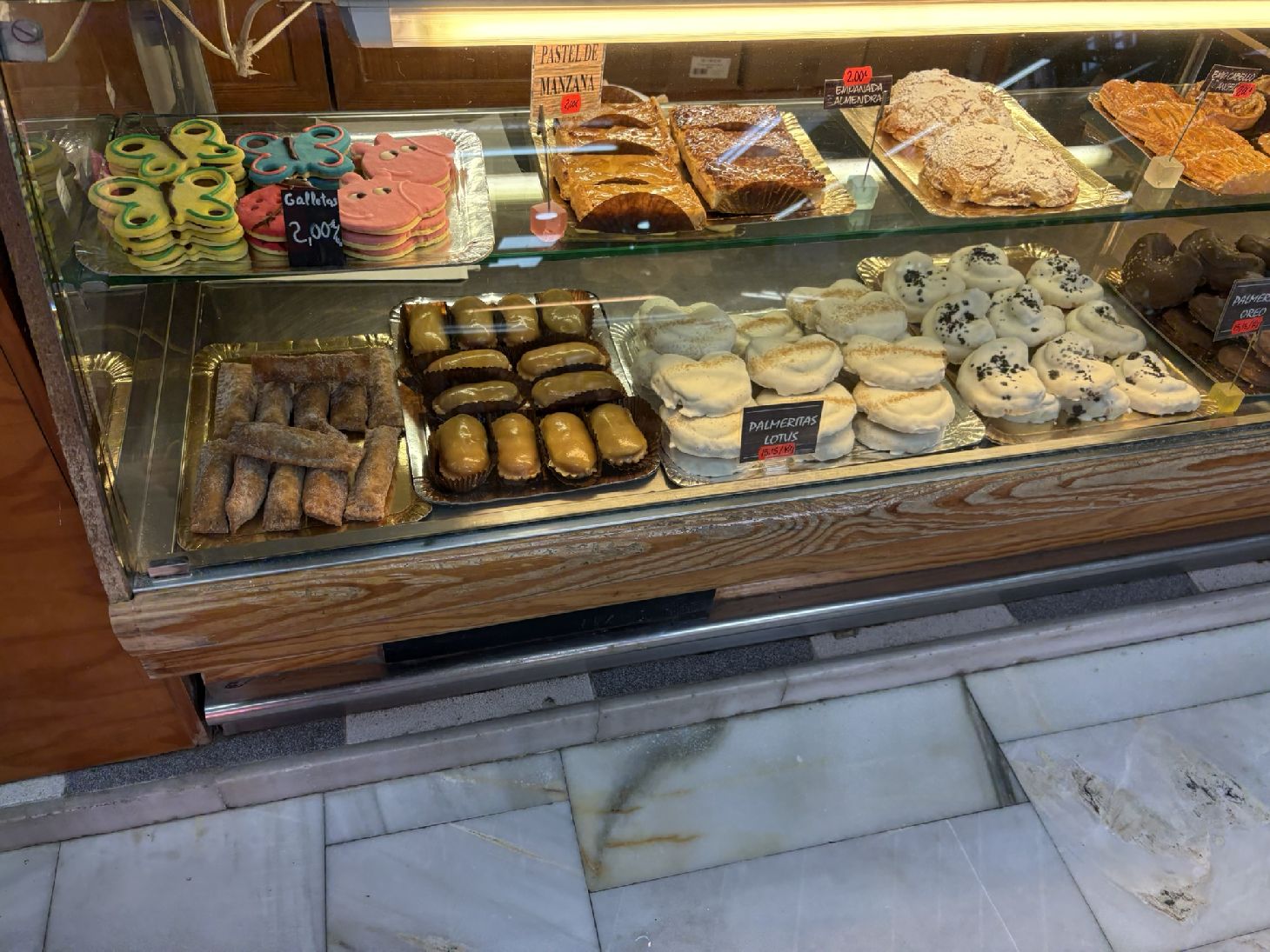
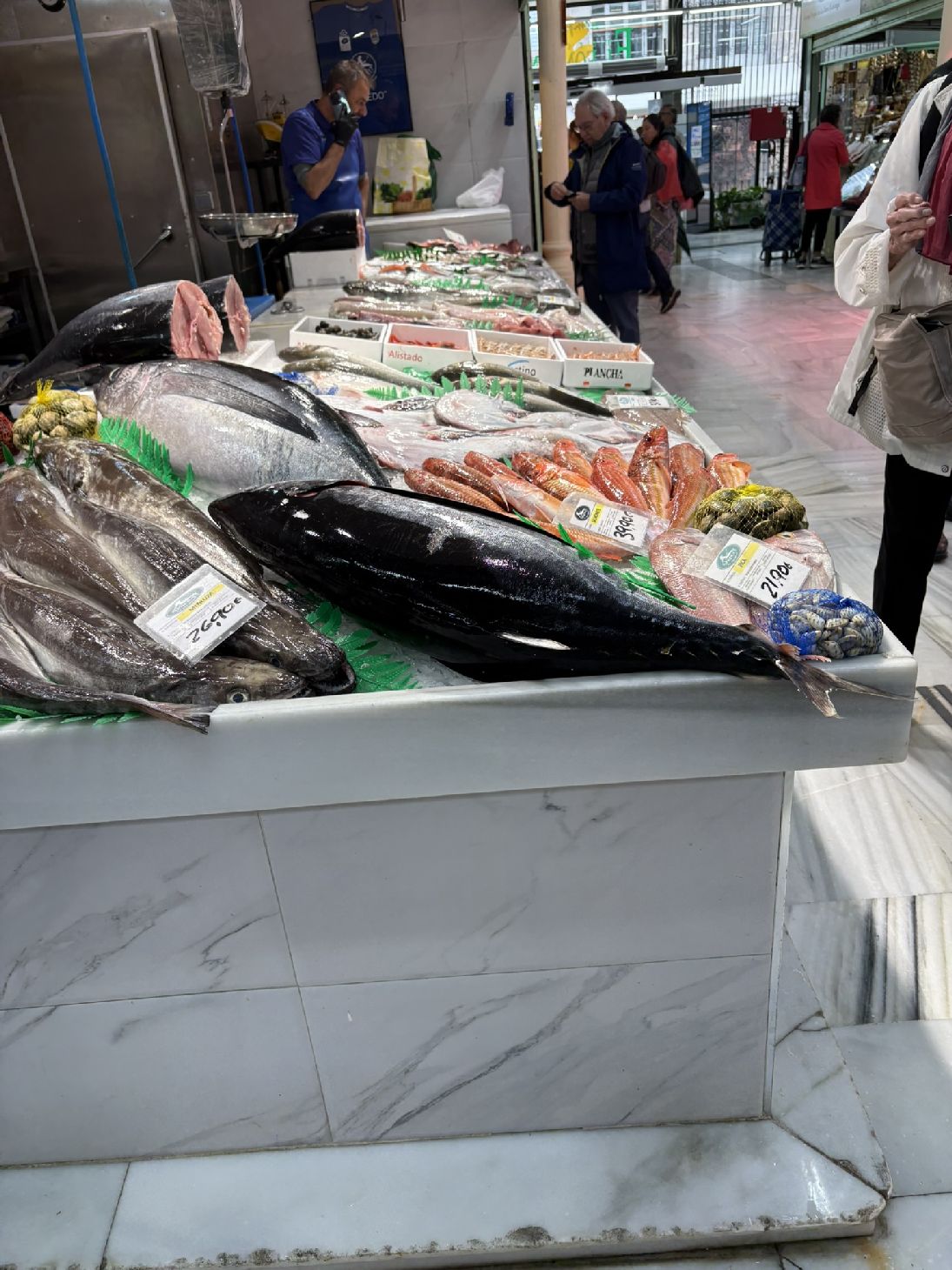
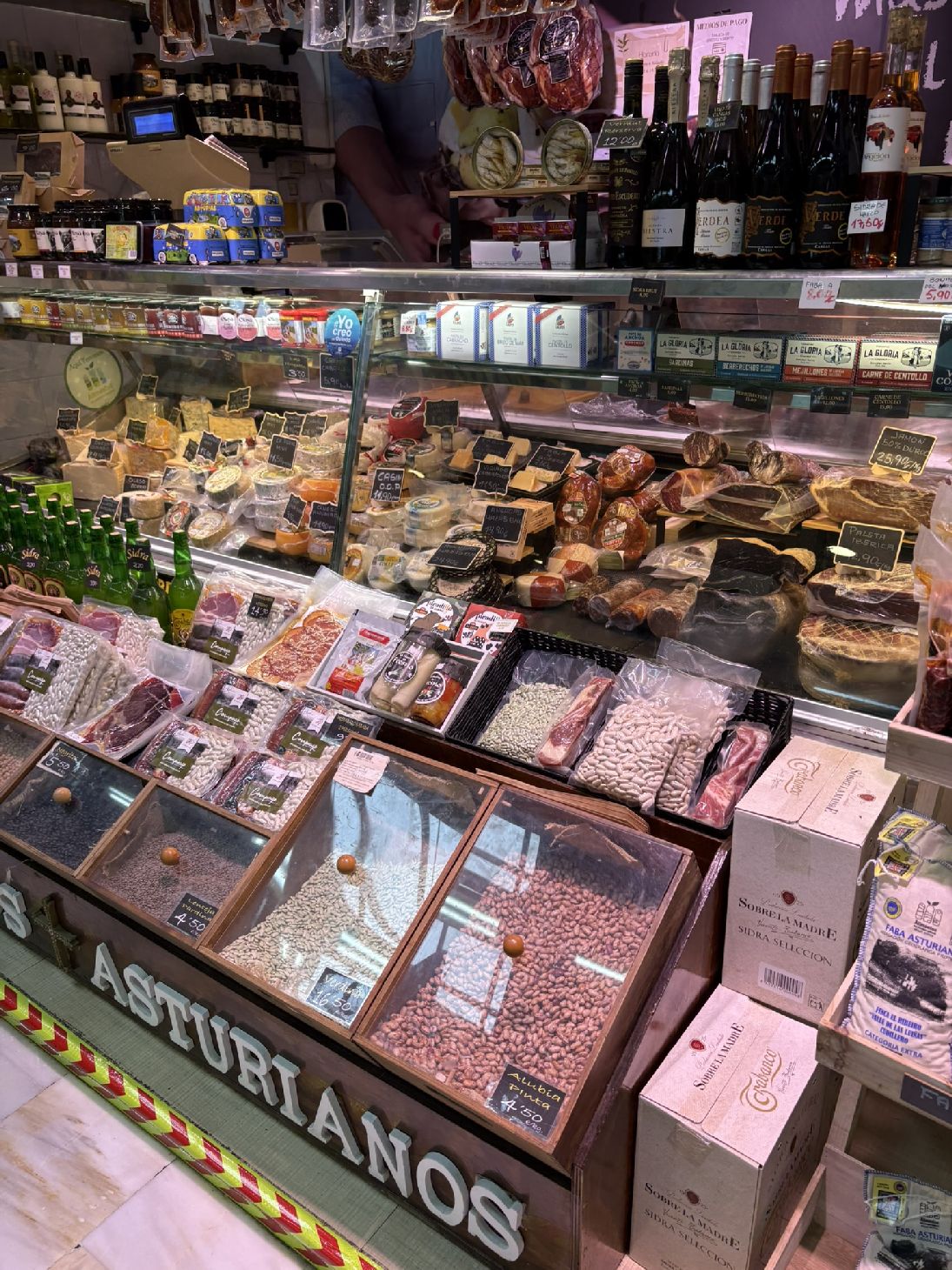
After a nose around we both agreed it was a splendid market, but we opted not to buy anything given we had plans for dinner that night. We headed back to the apartment to collect the other two and then took a walk down to the Museu de Bellas Artes de Asturias (known in English as the Fine Arts Museum of Asturias) only to find it firmly closed to all and sundry till far too much later in the day. We took as swift coffee stop to consider our actions. Or rather we eventually made a stop once we could find an establishment that was willing to serve us just a coffee.
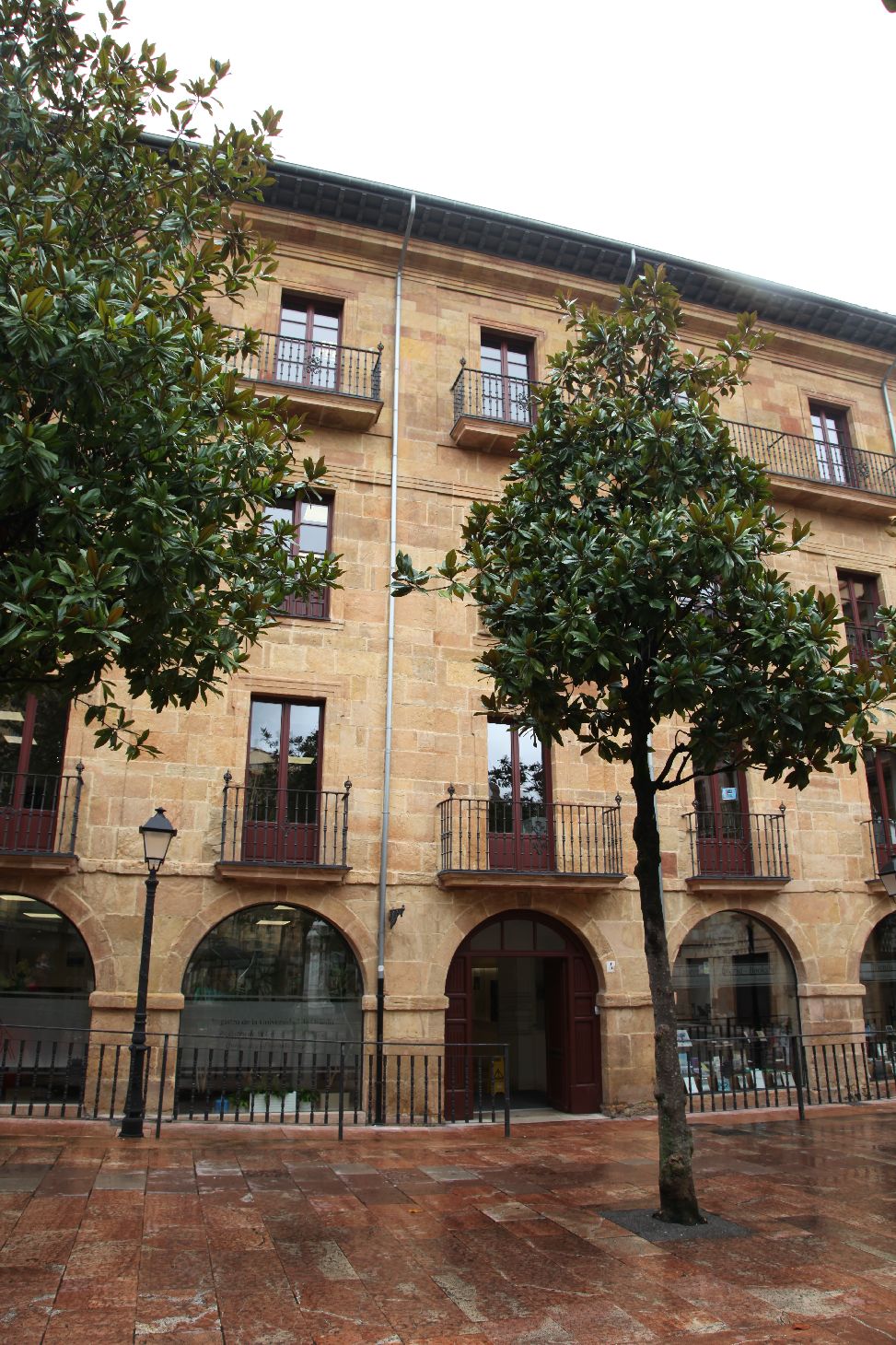
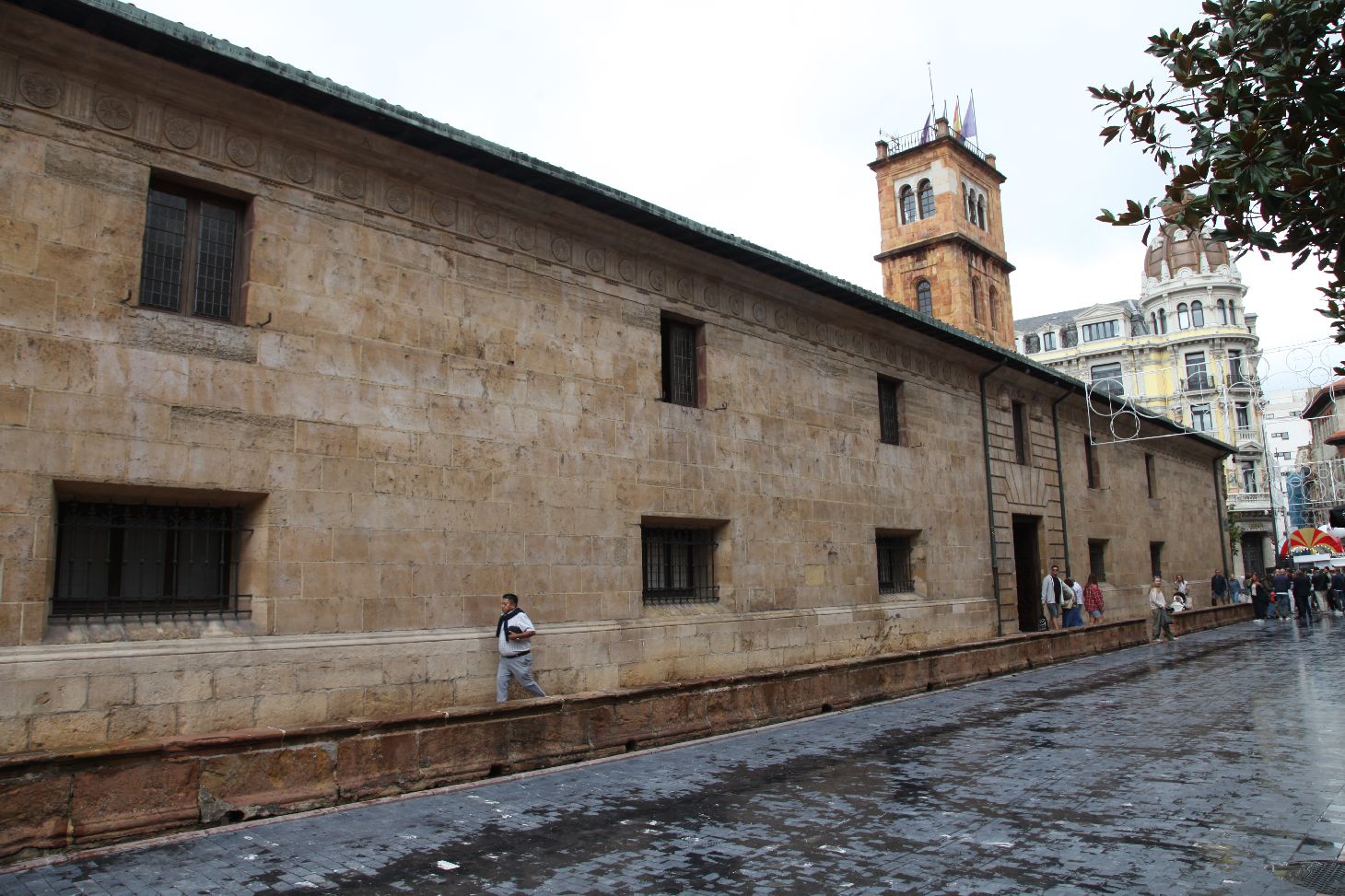
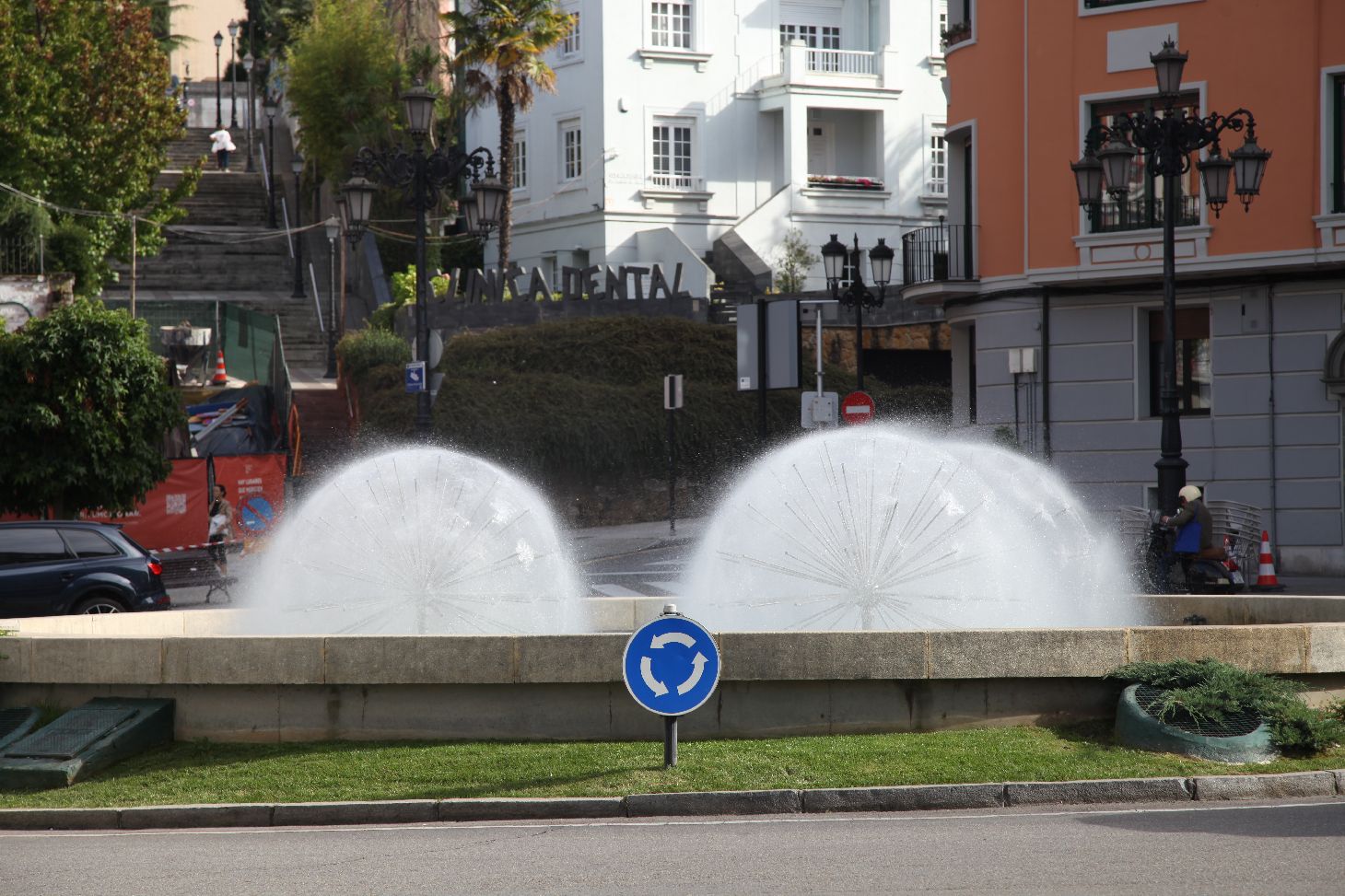
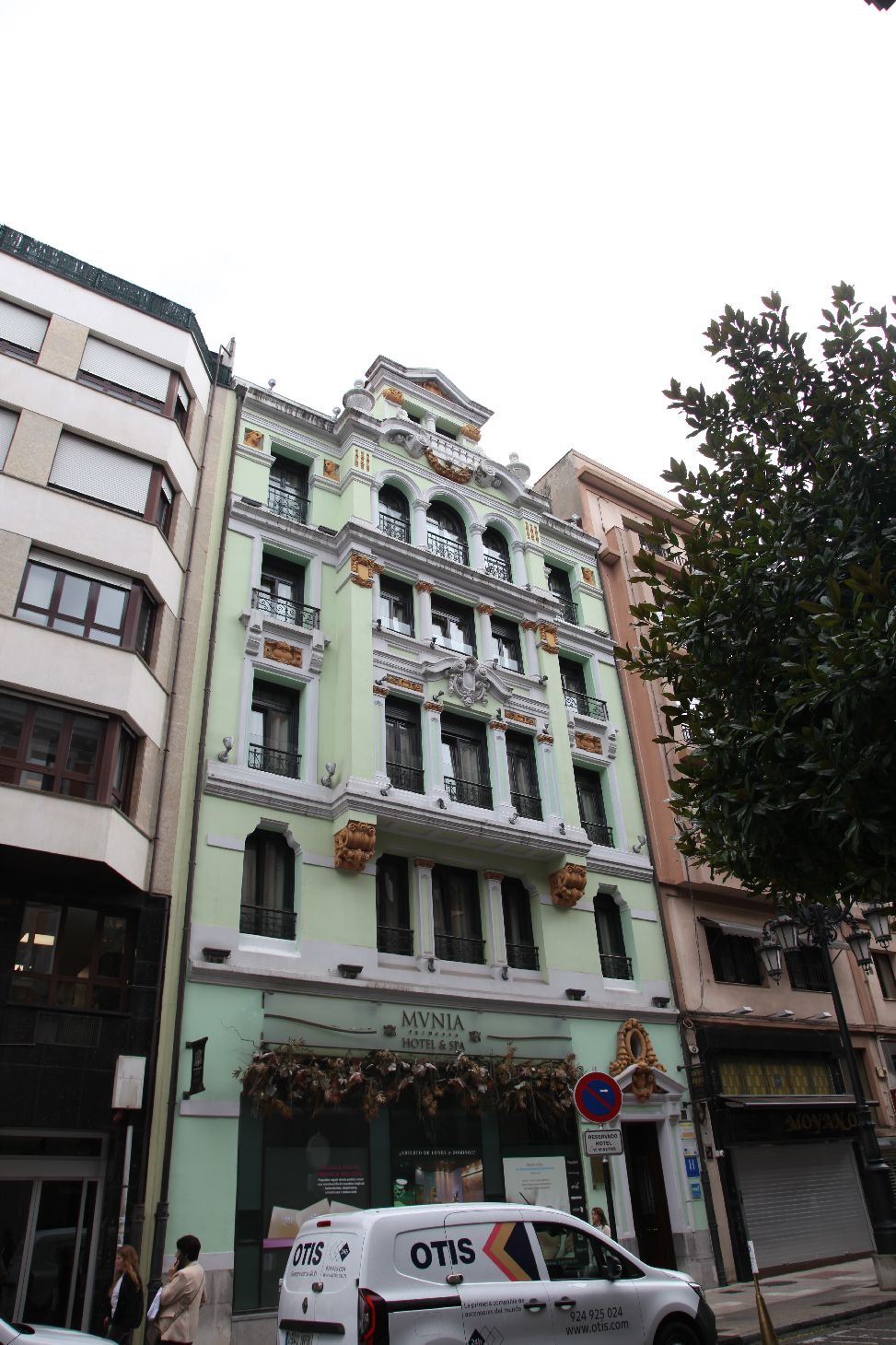
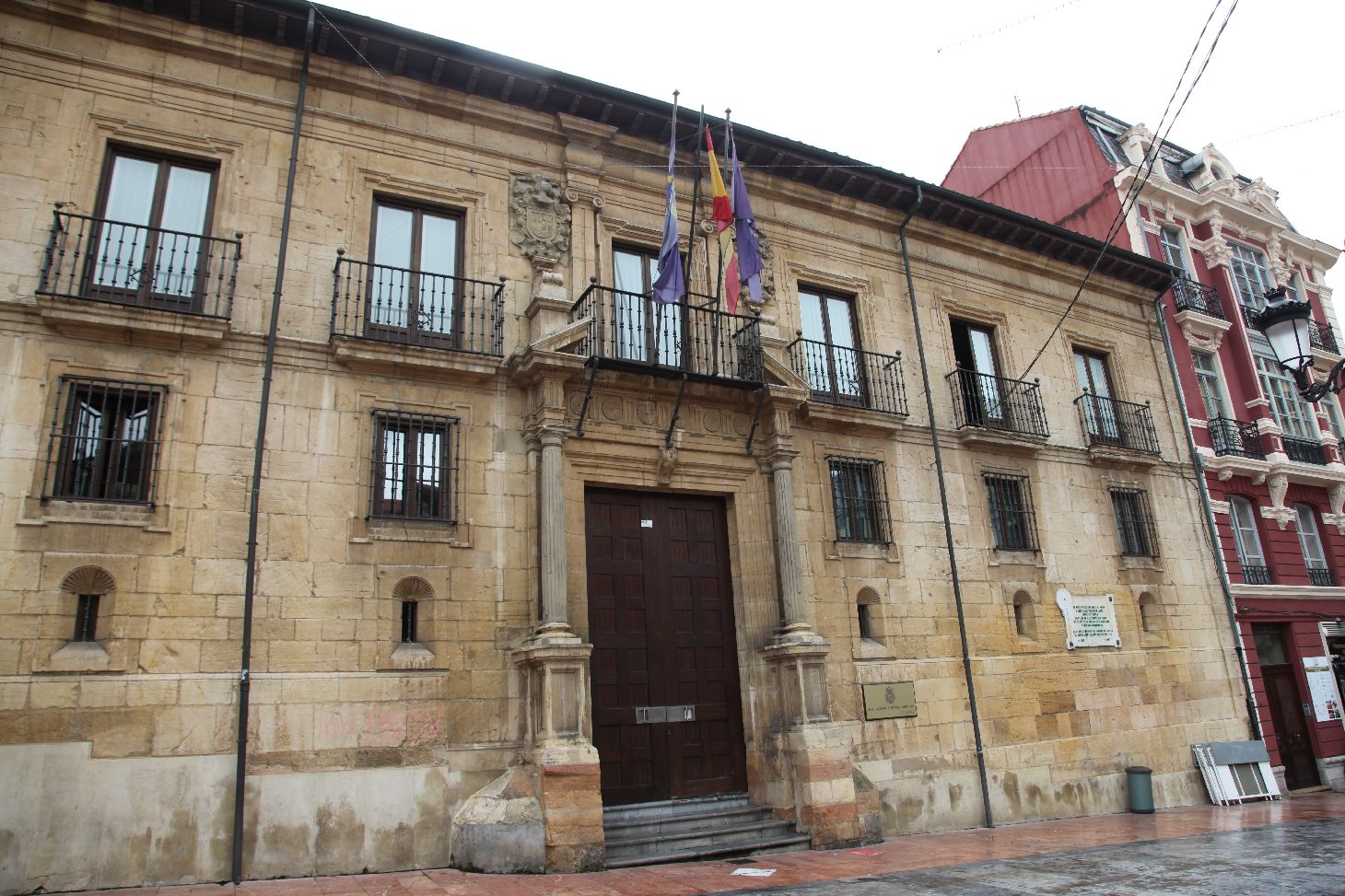
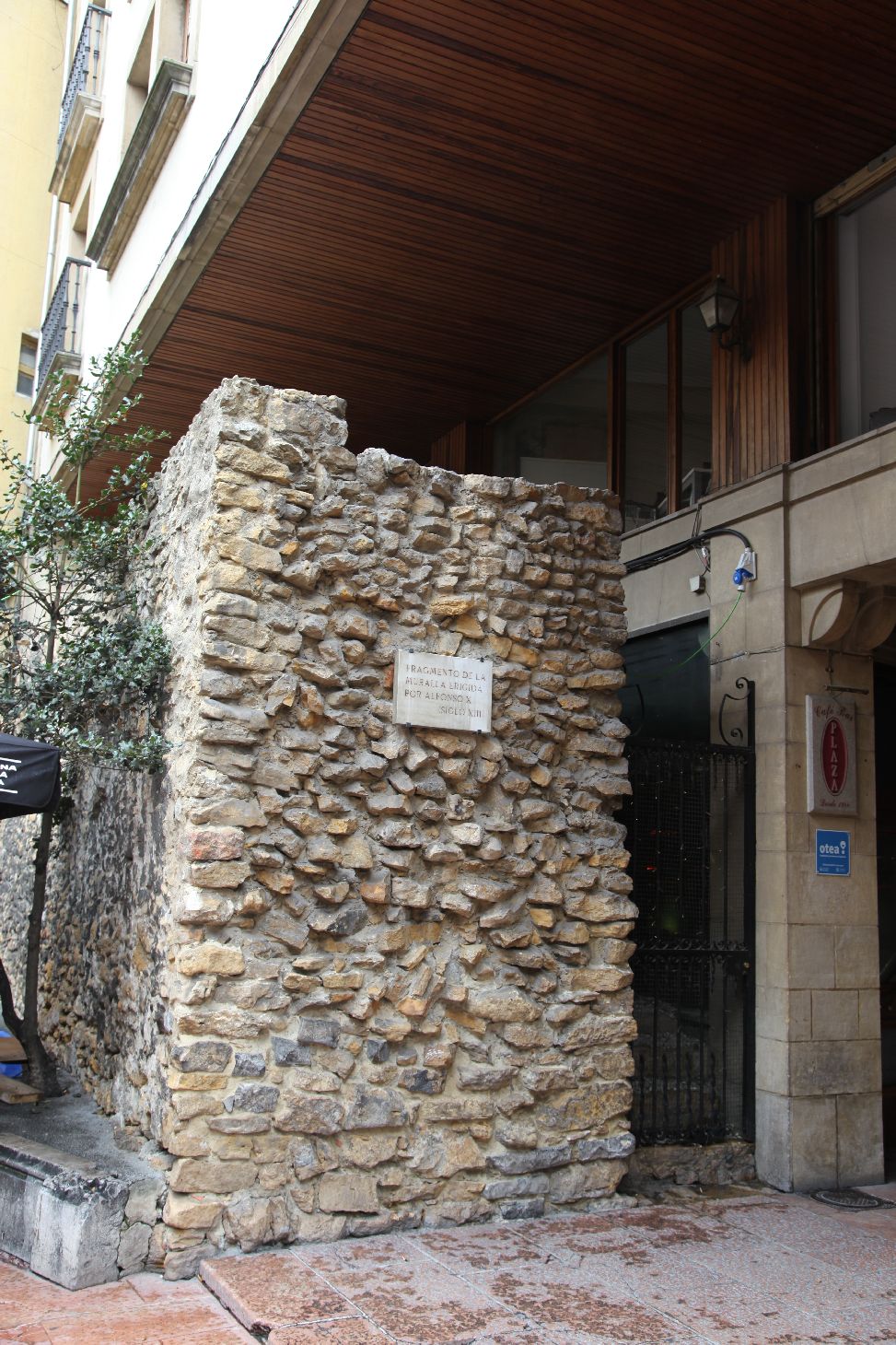
Three places point blank refused to let us just have coffee despite having empty post-rain terraces. Their loss was the 4 Calles who were happy to help and – bonus – were giving away miniature cachopos! And in case you didn’t know, a cachopo is usually two large veal fillets, with Serrano ham slices and cheese in between, paneed in flour, eggs and breadcrumbs, before being fried. These were thankfully an inch across and very tasty. It’s apparently an Asturian staple. We made a note to go back and try their vermuts later in the trip. We wouldn’t be returning to the other three places.
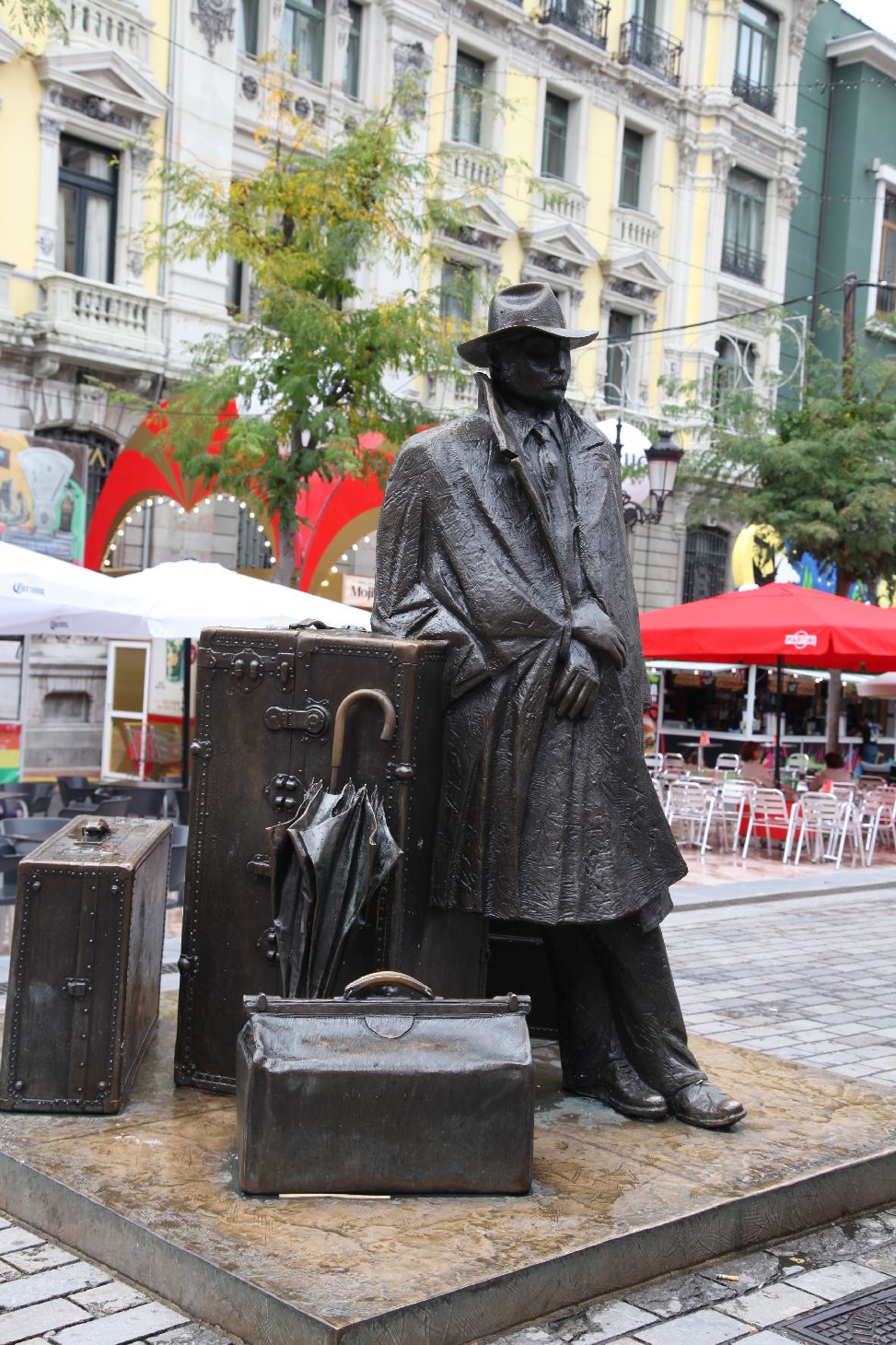
We reconsidered our plans and decided we would do what we had planned for the following day and catch a bus out to the north of Oviedo to go and see what UNESCO has classified at the “Monuments of Oviedo and the Kingdom of the Asturias”, the churches of San Miguel de Lillo, and Santa María del Naranco, which are around 300 metres apart up in the hills.
Here’s what UNESCO have to say: “In the 9th century the flame of Christianity was kept alive in the Iberian peninsula in the tiny Kingdom of the Asturias. Here an innovative pre-Romanesque architectural style was created that was to play a significant role in the development of the religious architecture of the peninsula. Its highest achievements can be seen in the churches of Santa María del Naranco, San Miguel de Lillo, Santa Cristina de Lena, the Cámara Santa and San Julián de los Prados, in and around the ancient capital city of Oviedo.”
We arrived at the bus stop well ahead of the time the bus was supposed to arrive only to find it didn’t. In the end we figured it had either already gone or it simply wasn’t going to show up. I promptly ordered an Uber. The driver turned up quickly and we all happily squeezed into quite a small Toyota for the trip. The driver didn’t speak much English but was nonetheless very helpful, showing up where to find the bus stop for our return journey and letting us know that getting a taxi or an Uber up at the sight would be difficult. We figured that as it was downhill from there it wouldn’t be too bad if we had to get back under our own power.
These two buildings date from the 9th century, and are in an innovative Pre-Romanesque architectural style, of which the Churches of Santa Maria del Naranco (built between 842-850 under Ramiro I) and San Miguel de Lillo (also built under Ramiro I are the most representative examples. The architecture of Santa Maria del Naranco takes its inspiration from Late Antiquity and Paleo-Byzantine, while San Miguel de Lillo “retains a decor that reflects a complete record of traditions, expressed in the first original sculpture of the Kingdom of the Asturias”.
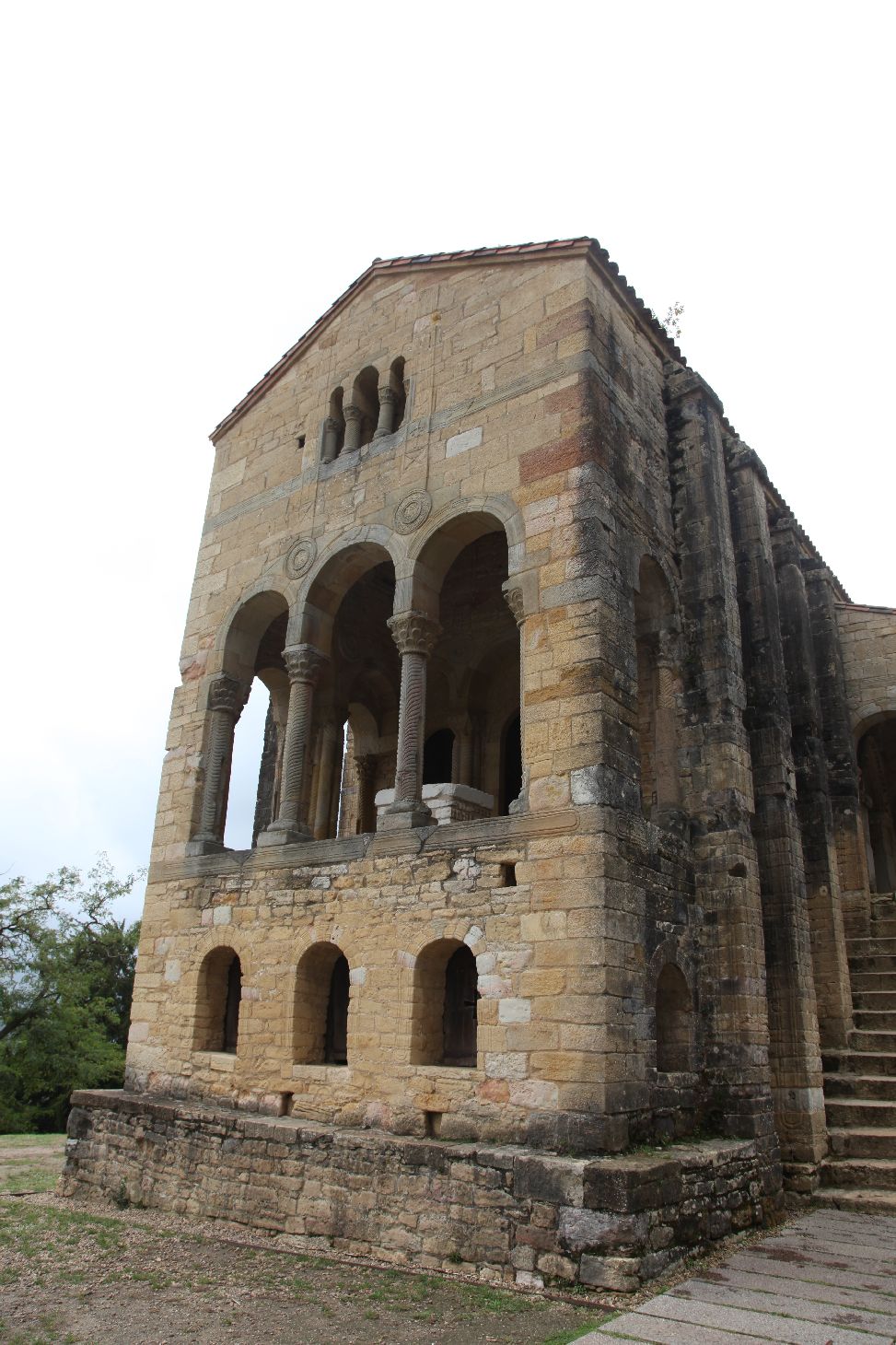
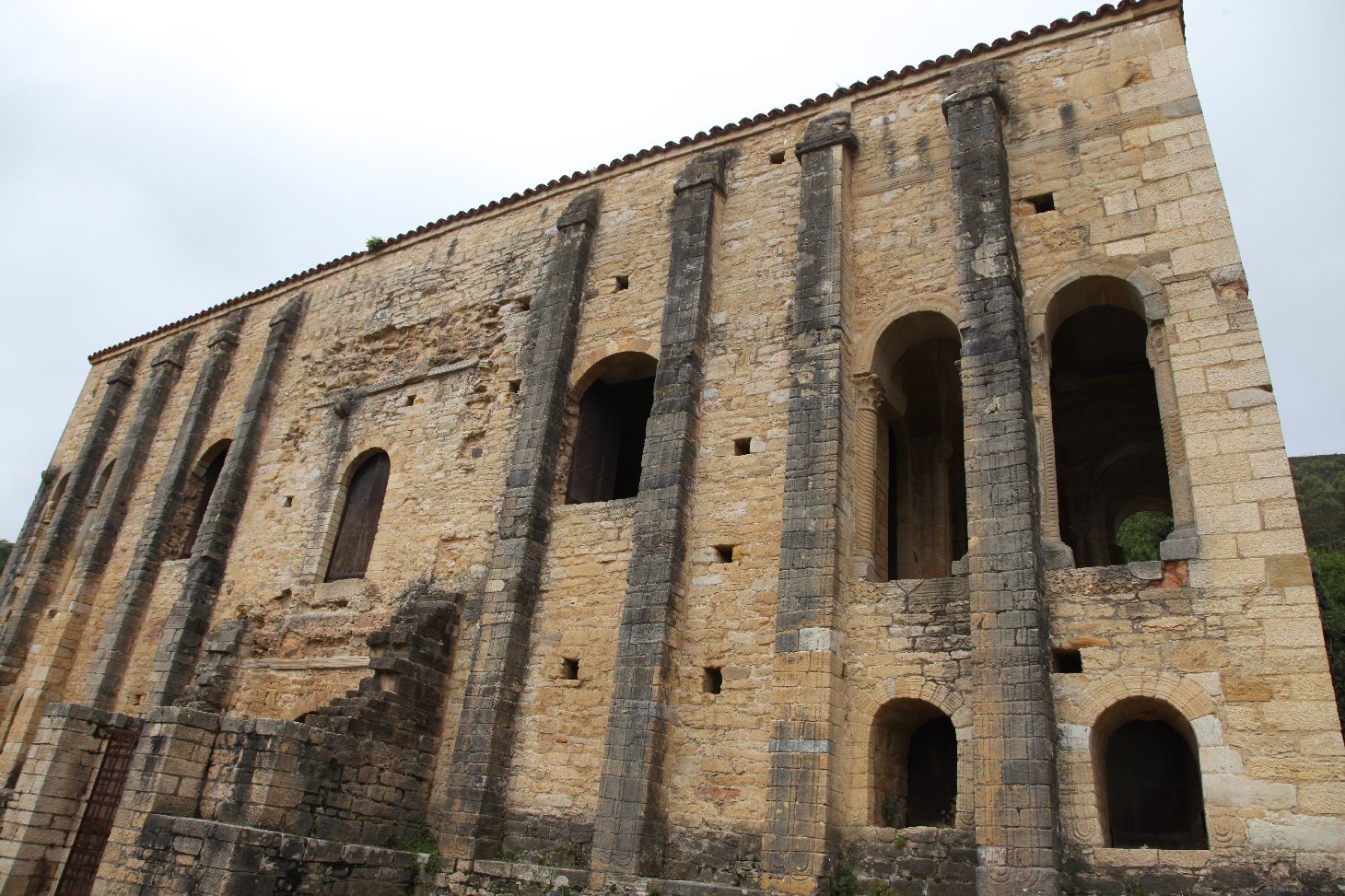
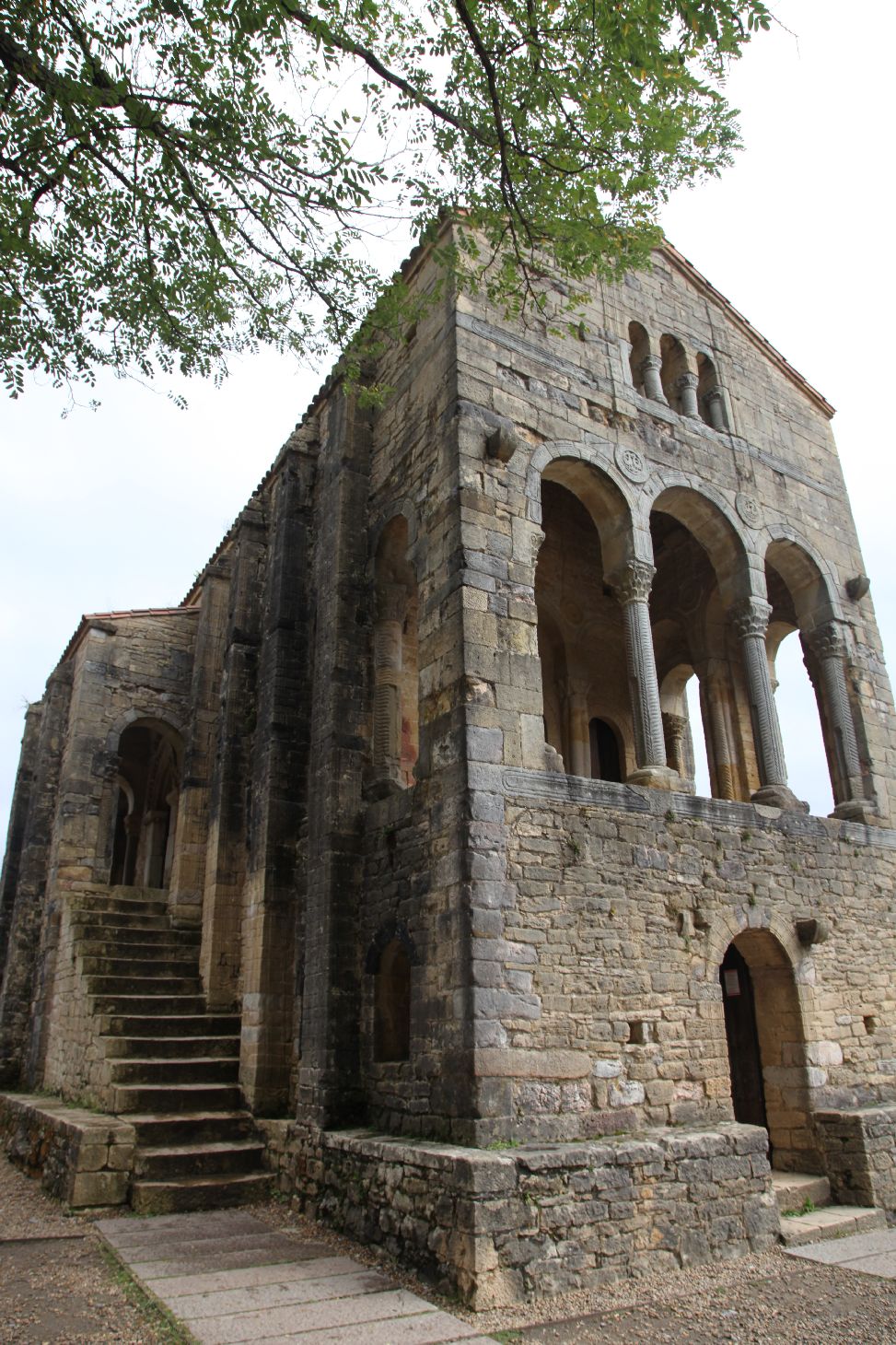
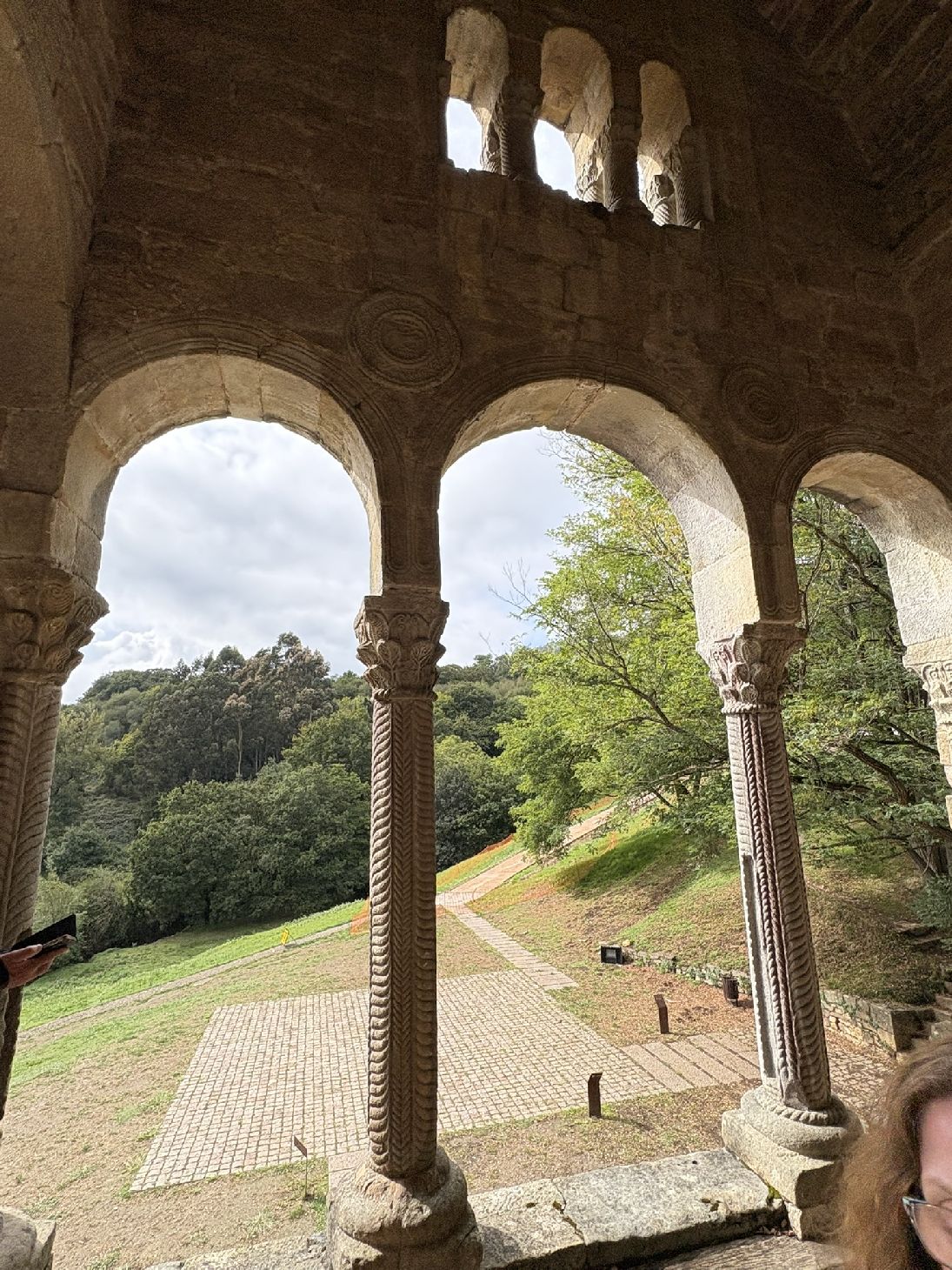
You can only visit the interiors as part of a guided tour (which is only available in Spanish). Despite our lack of fluency we decided to take the tour anyway, and all I can say is I am very glad we did. It wasn’t expensive and I would have nbeen very sorry to have missed either of the insides. The tour starts in Santa Maria del Naranco which is a repurposed former royal residence on two levels. Excavations in the 1930s revealed the existence of baths in one of the lower rooms which make it clear that it hasn’t always been a church. The palace which was converted into a church between 905 and 1065 and has exterior stairways at the north end and a balcony at the south end. It opens to the east and west through lookout points set up on bays with openings on all three sides. It’s stunningly beautiful and, apart from the addition of an oriel window, remains much as it would have been when it was first converted.
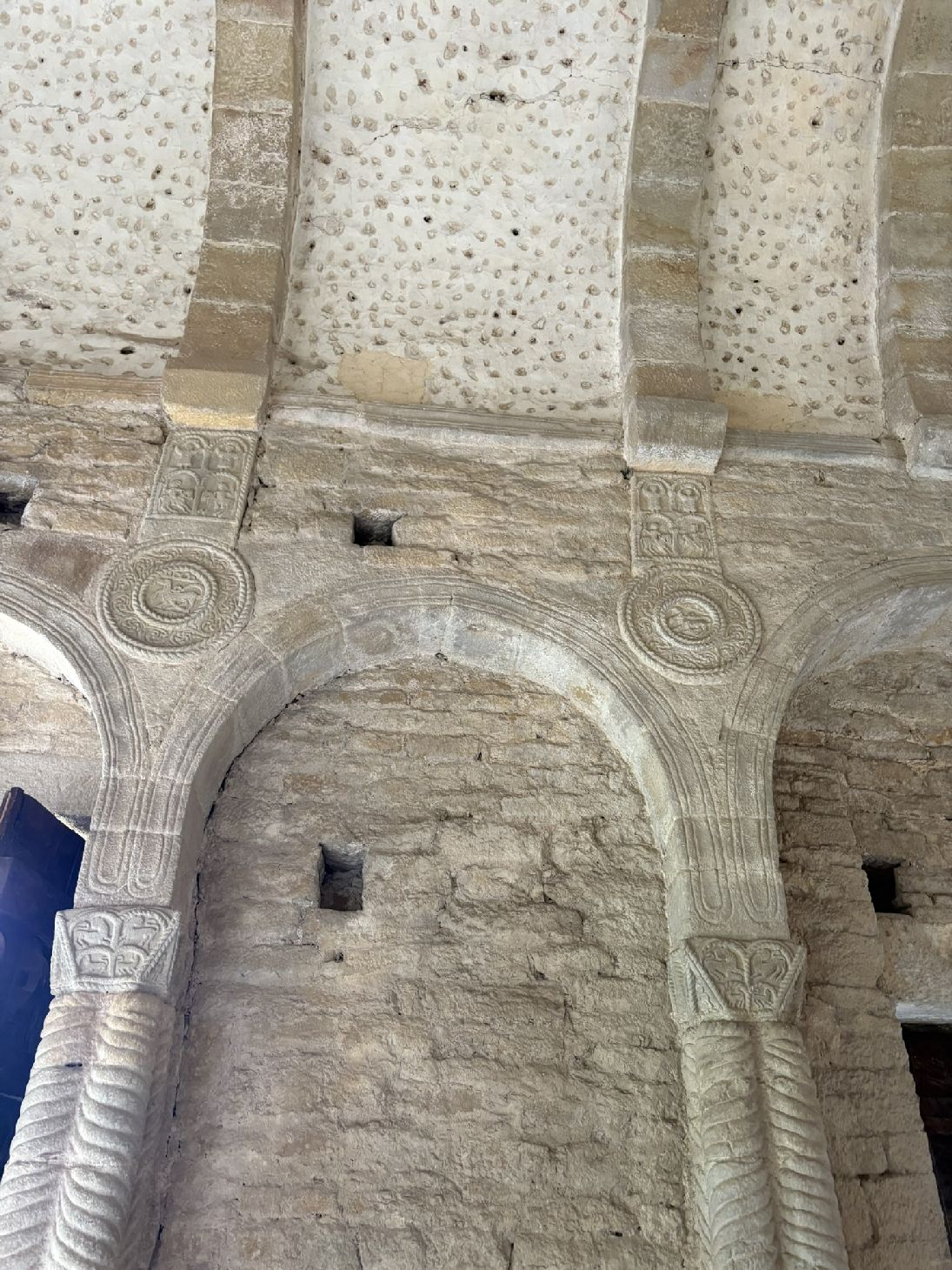
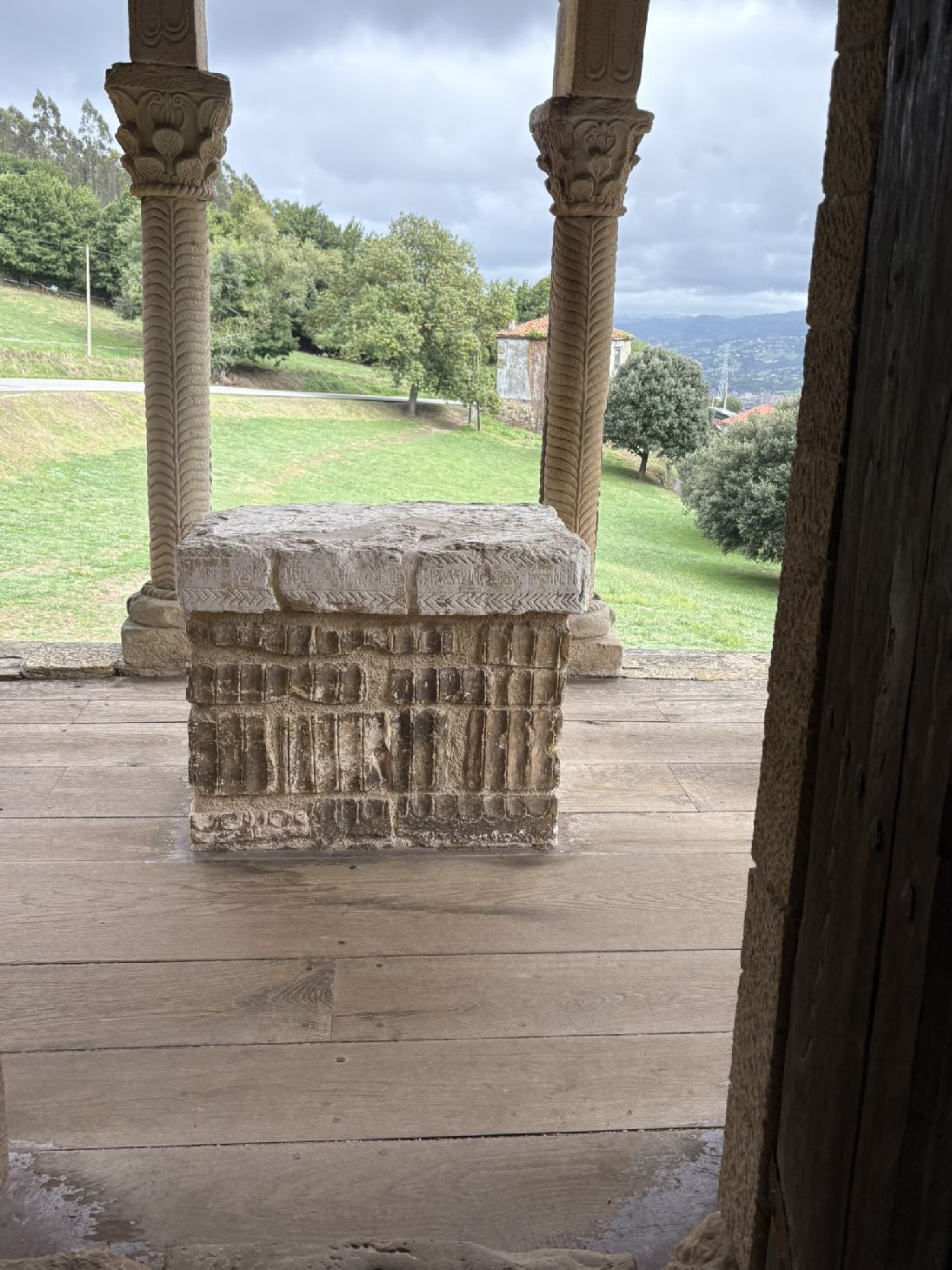
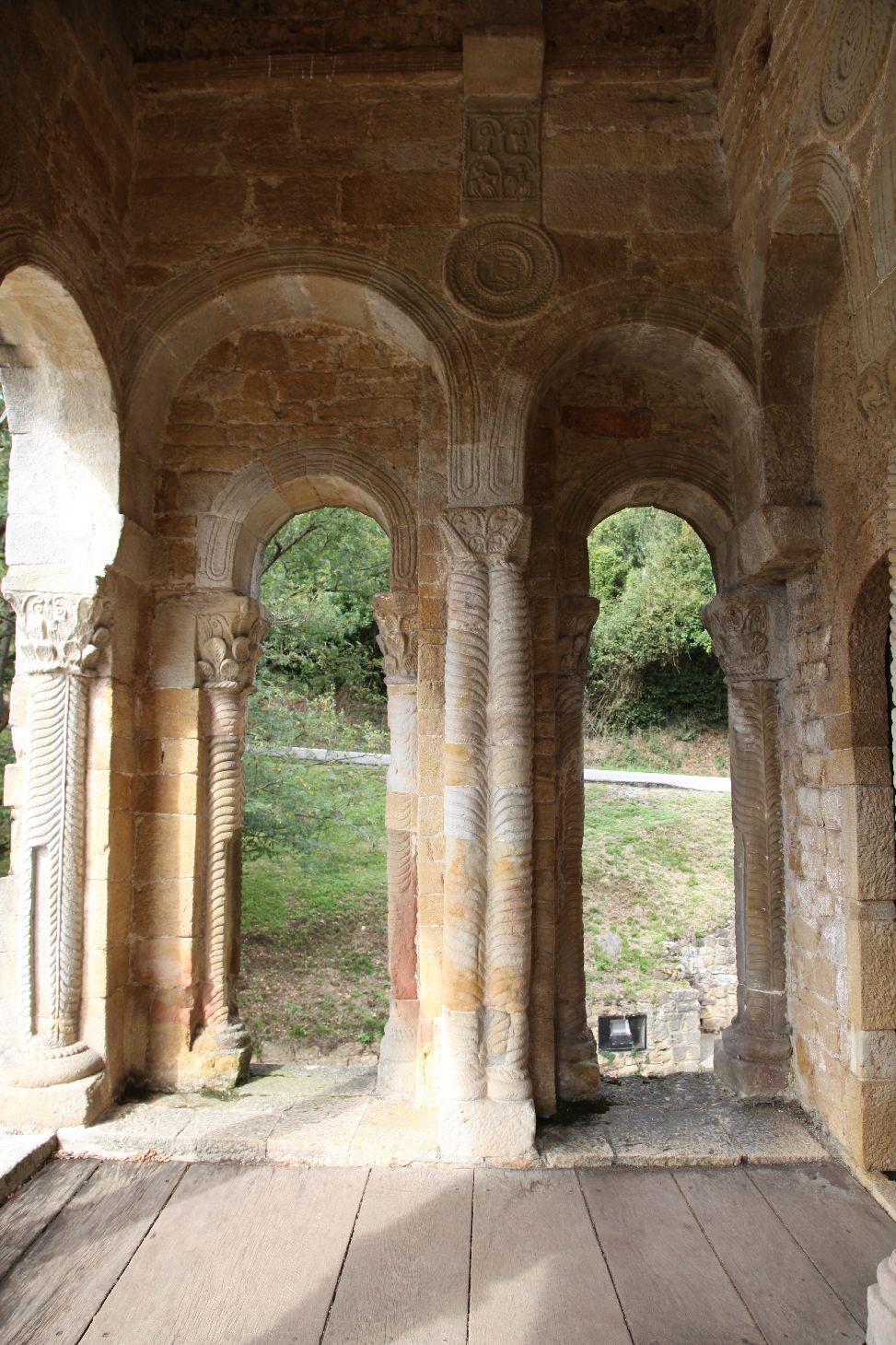
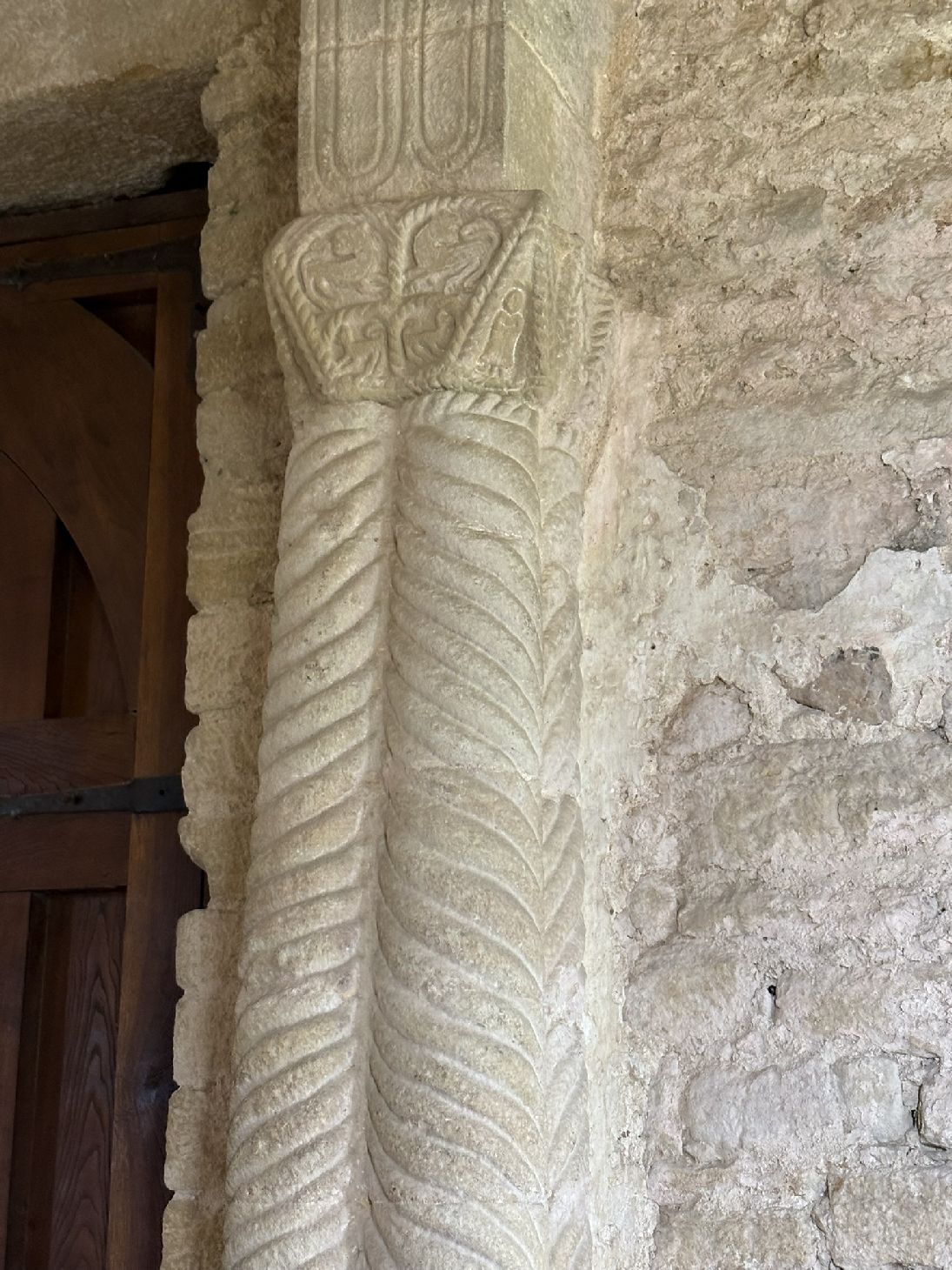
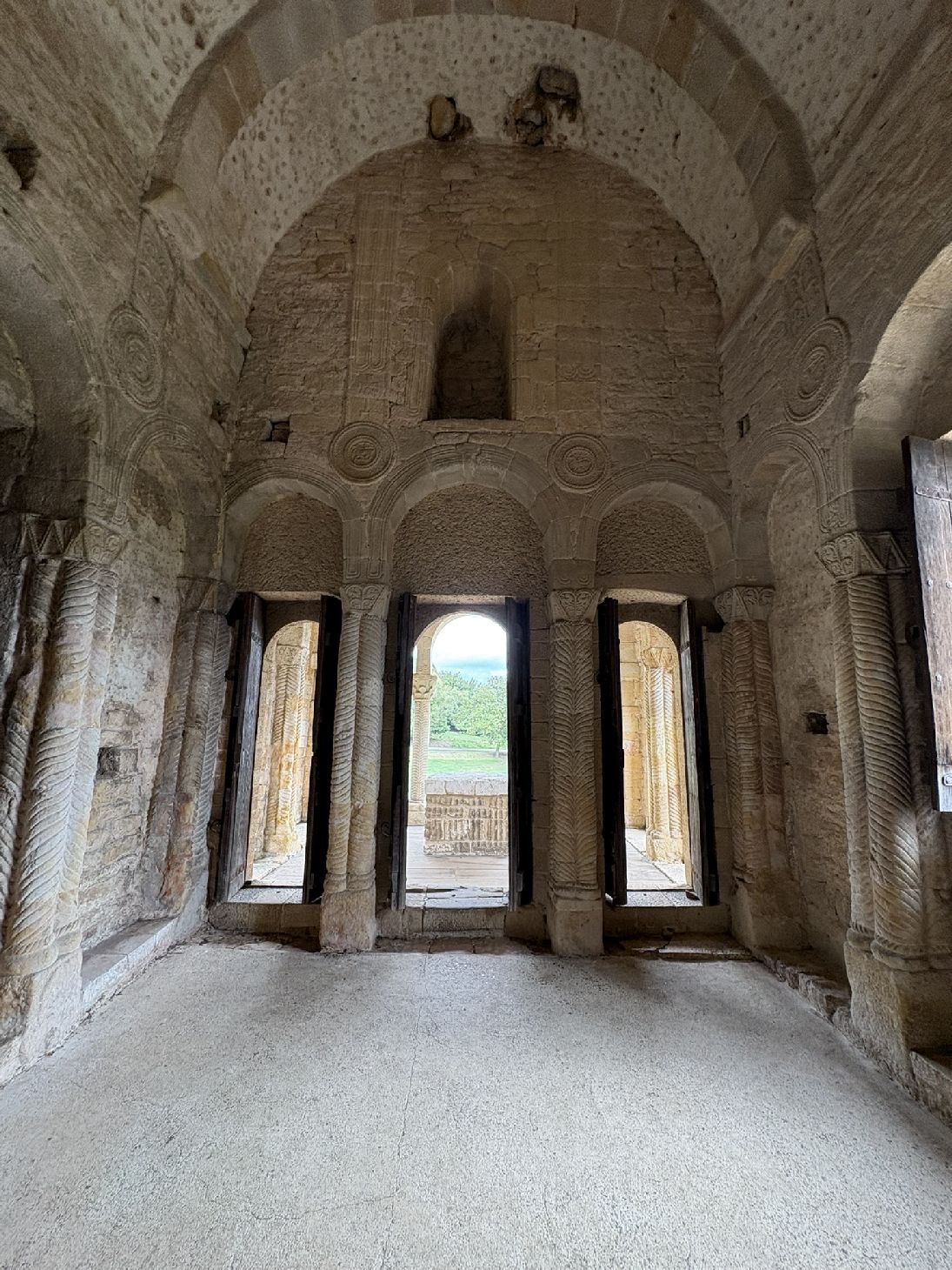
San Miguel de Lillo on the other hand has always been a church. It was bigger originally and only retains the first two admirably balanced bays of an ambitious building which once bore a strong resemblance to the Naranco Palace. It fell into ruin towards the end of the 11th century, which is why only a third of the original structure survives.
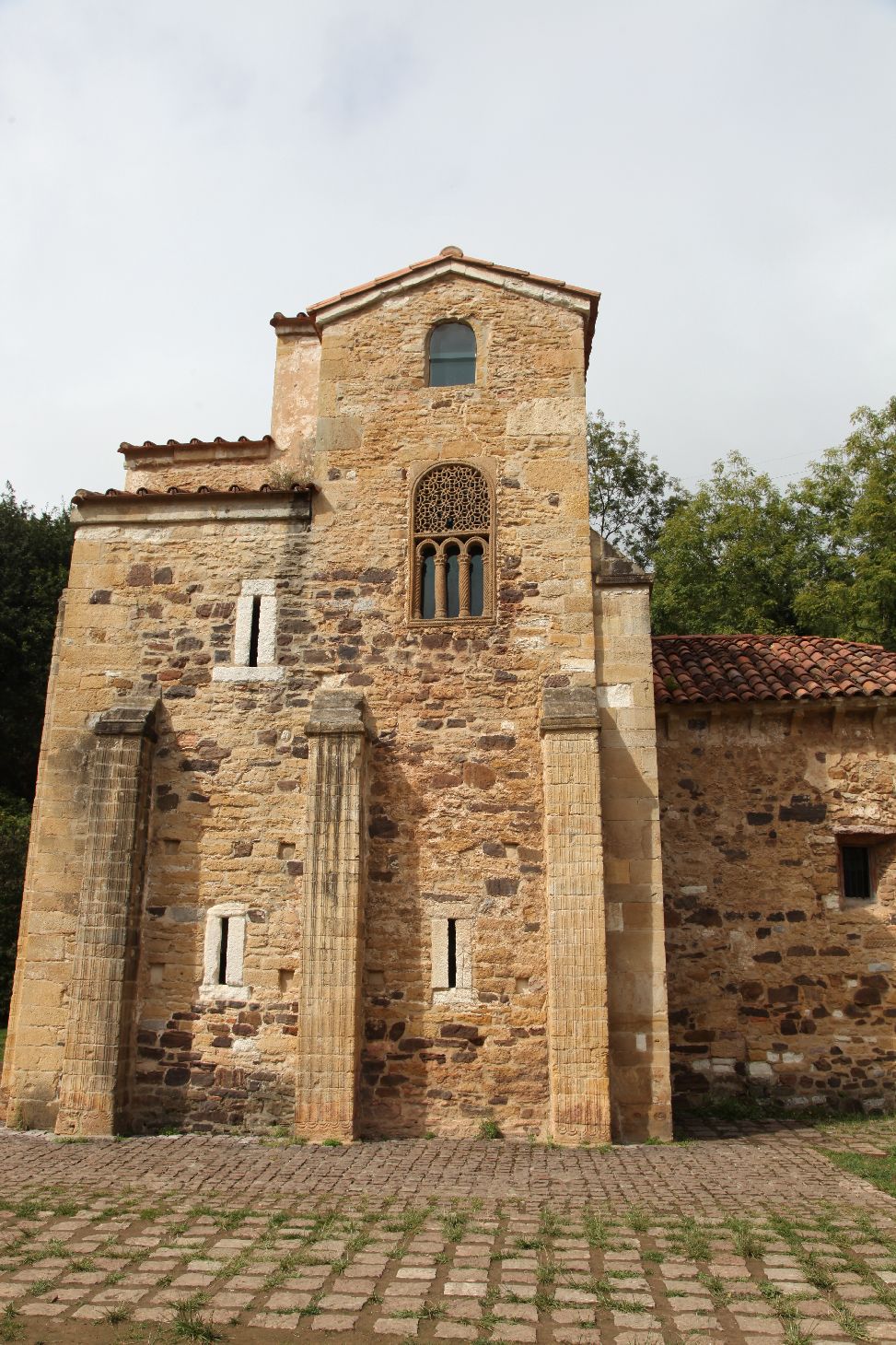
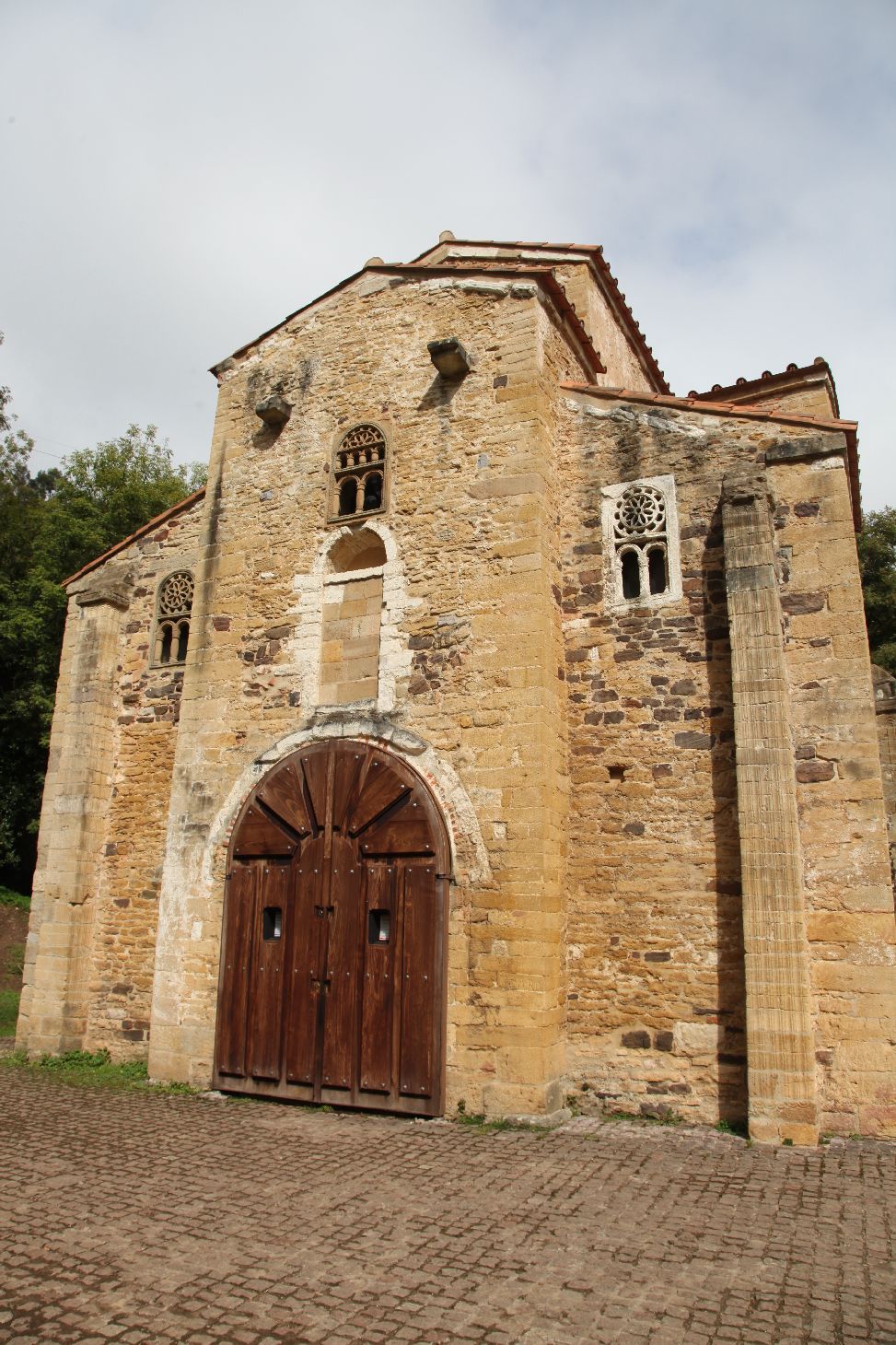
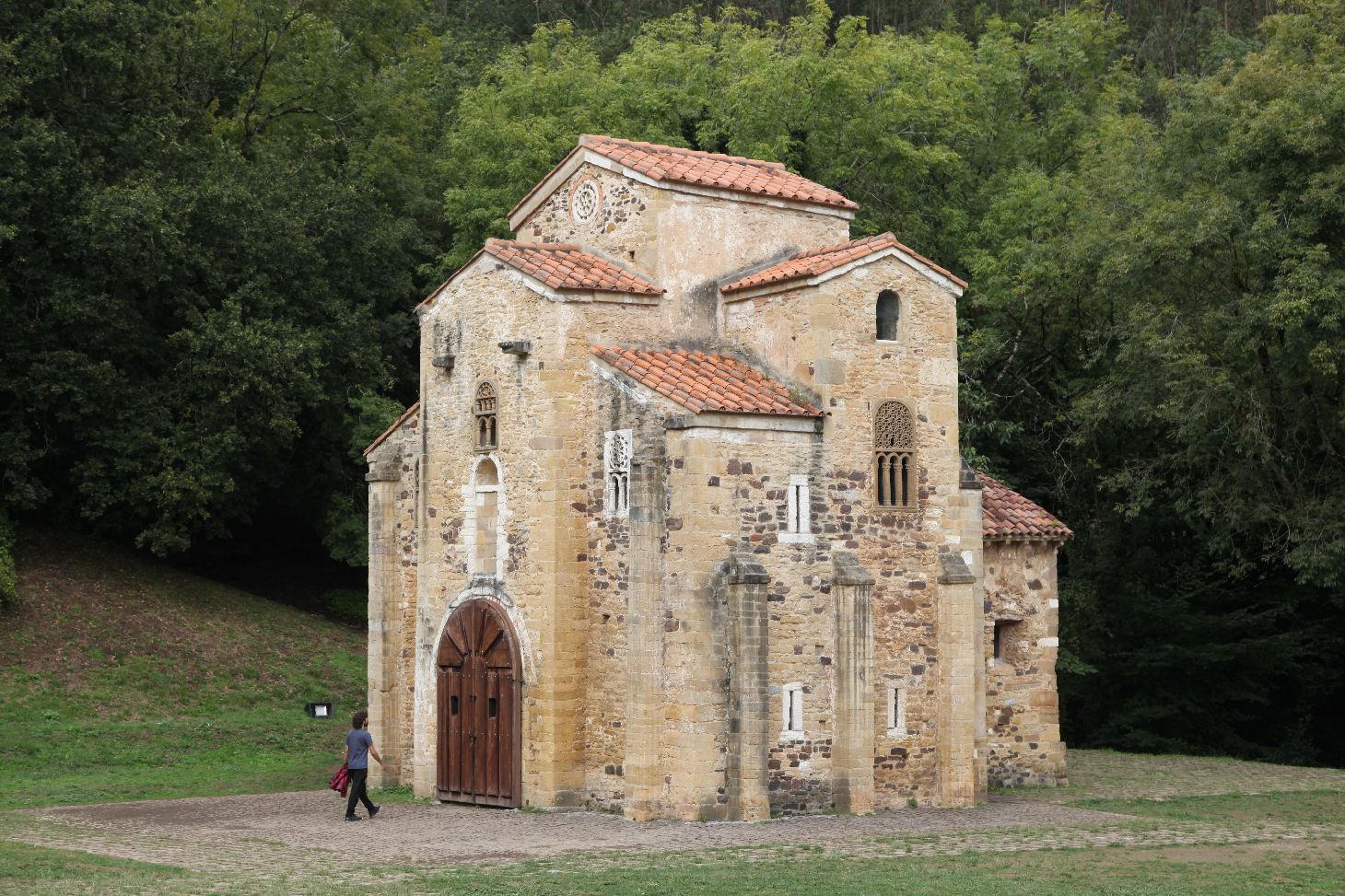
The original Eastern section and the centre are long gone, and a 12th century chapel was added on that side. It seems to have started out as the church for the palace, rather than an additional church. In 848 it was consecrated by Ramiro I of Asturias and his wife Paterna, and was dedicated to St. Mary until this worship passed to the nearby palace in the 12th century, leaving this church dedicated to Saint Michael. It too is well worth your time and I would strongly urge you to take the tour.
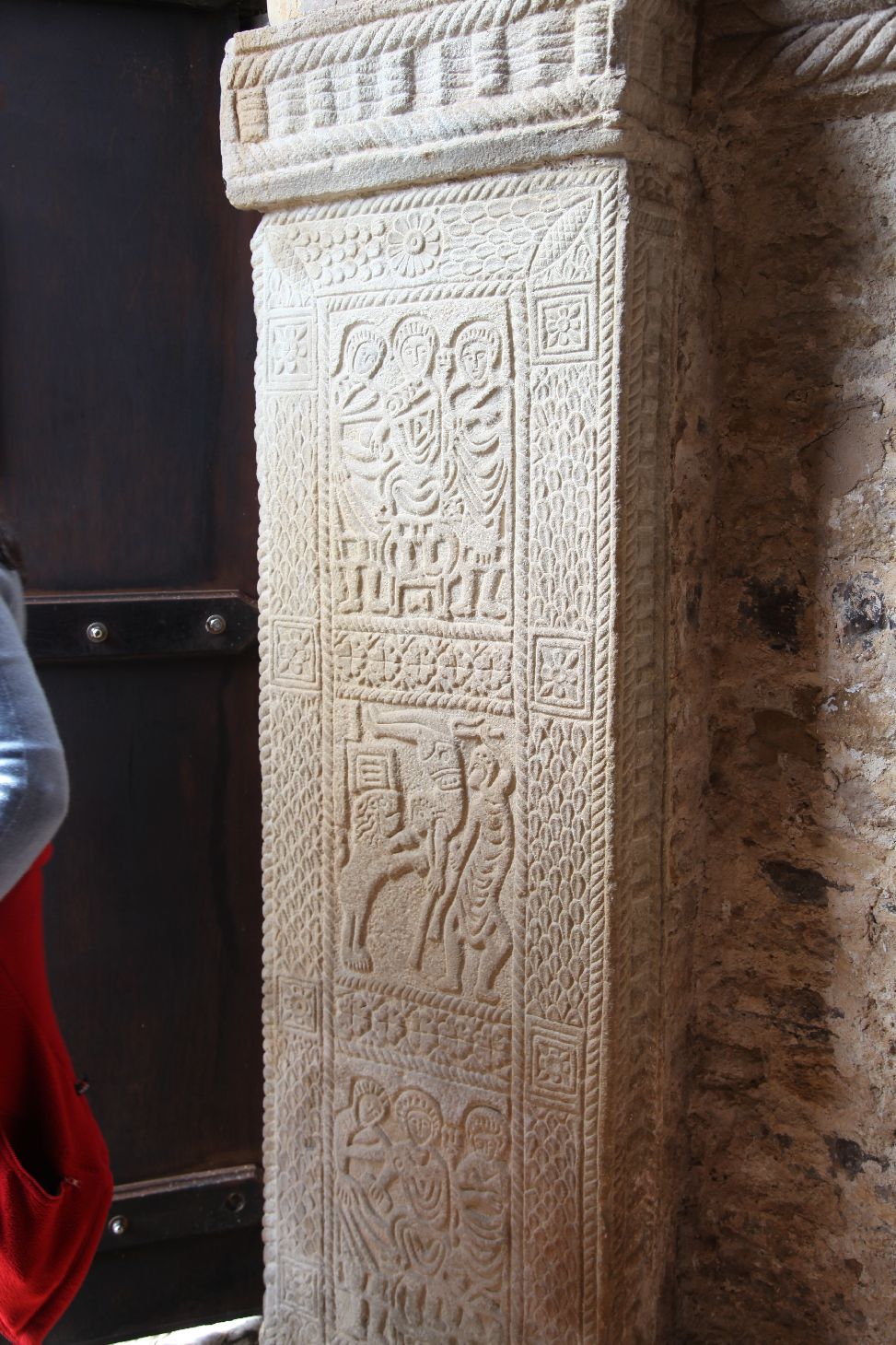
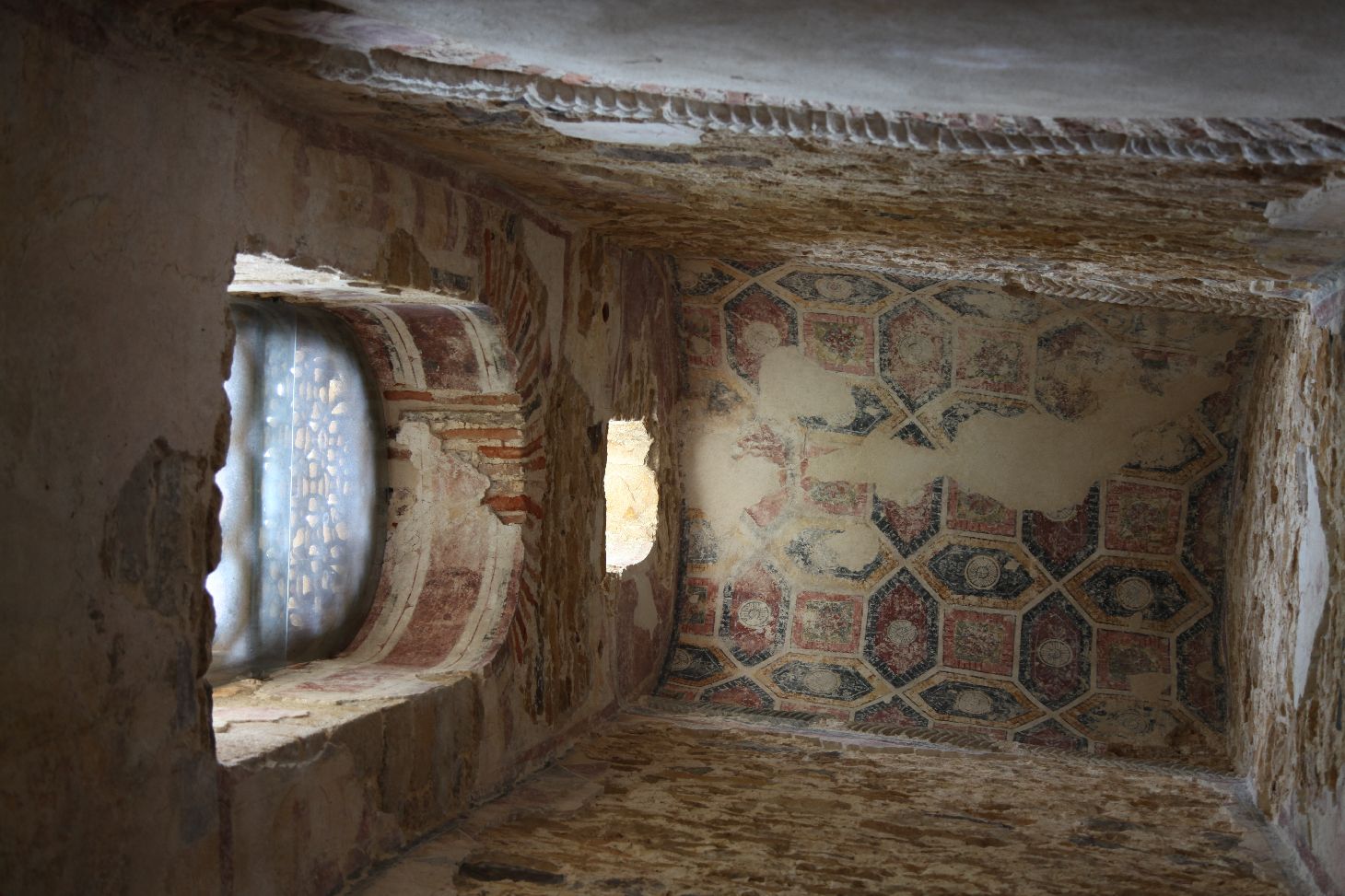
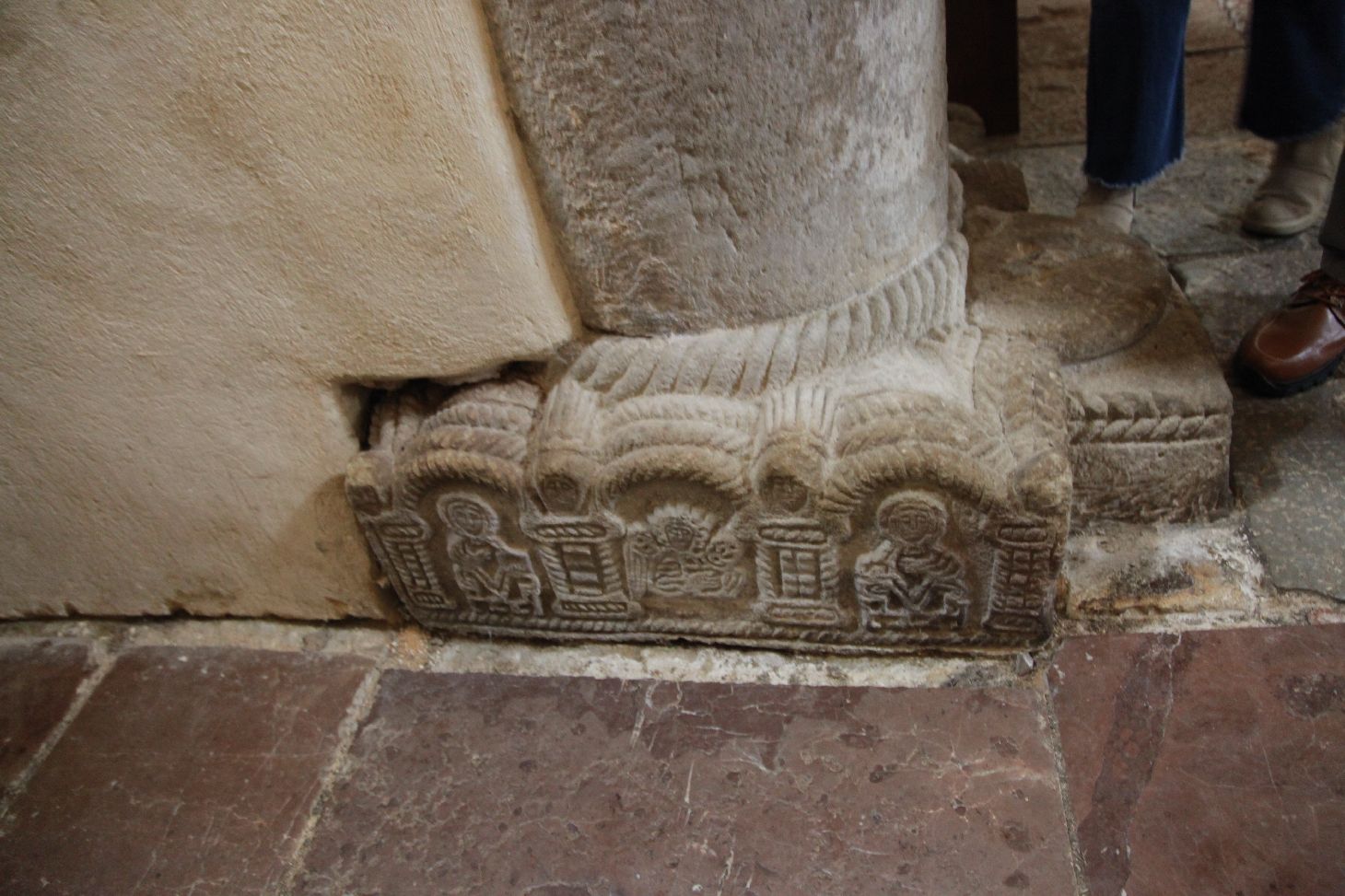
There was some work going on to create a new path between the two buildings and it’s rumoured that there is also an interpretation centre somewhere nearby (or possibly there will be eventually). I’m just glad to have seen both buildings.
After the tour ended and we used the time the guide had given us to take photos we headed down the hill towards the bus stop. And that was when we got a little closer to untangling the mystery of the missed bus earlier. Despite being only the third stop on the route, and being in the middle of nowhere, the bus arrived 9 minutes ahead of schedule. Luckily we’d got there 12 minutes ahead so we were able to get on. By the time it was supposed to have left our embarcation spot it was halfway back to town. This realisation made us suspicious of bus timetables for the remainder of our trip and explained why we’d not seen the bus to get up to the site despite it being scheduled according to the internet!
Back on “home” turf we were soon ready to go out for what would prove to be the best of our dinners in Oviedo (and we’d already had one extremely good one). We had a booking at Casa Firmin, a place with a long history, having first opened in 1924. MIchelin say: “Here, options include a classic-traditional à la carte that makes full use of top-quality ingredients, a tasting menu, plus an impressive wine list. Make sure you try the CasadiellesFermín, the restaurant’s reinvented signature dessert!” More to the point, a month out it was also still possible to get a table.
First, though, we needed to try and figure out Oviedo’s recycling system. We’d seen different-coloured empty bins being placed on the pavements by a lorry load of workmen on the first evening, and they’d all vanished by the time we were walking back from dinner. We weren’t certain how it worked because the colours were a little confusing to us but some research soon told us that we needed the brown bins for organic waste, grey ones for non-recyclable stuff, yellow for plastic, tins and cartons, blue for newspapers, paper and cardboard, and green for bottles. If we’d known that at the start we could have complied. As it was, apart from the green bin, we hadn’t sorted the rest. We did what we could and resolved to drop the dead bottles off on our way out.
After vermuts in the apartment, we battled our way down to the restaurant, having quite the job to squeeze through the San Mateo crowds as the festival seemed to have ratcheted up a couple of notches or more with the arrival of the weekend. The streets were chaotic but we were soon safely installed in a calm, white-walled space, where everything was crisp and clean and fresh, ready for an influx of diners. After the now customary claim that no one could speak English, one of the waiting staff was found who did, though she claimed not to be very good (she was actually very good and it was way better than my Spanish) we were soon settled and enjoying a superb dinner.
We had considered the tasting menu, which seemed like phenomenally good value at €90 a head, but then decided it would probably prove too much. A la carte allowed us to stay with our particular interests so was probably a better choice though if it had just been Lynne and I we’d have taken the menu.
A white tuna and green olive tartare, and an octopus rice made excellent starters, though the best (and by far the prettiest) was a cold almond and garlic soup, which came with fruits and slushes of black garlic and cucumber. It looked and tasted glorious.
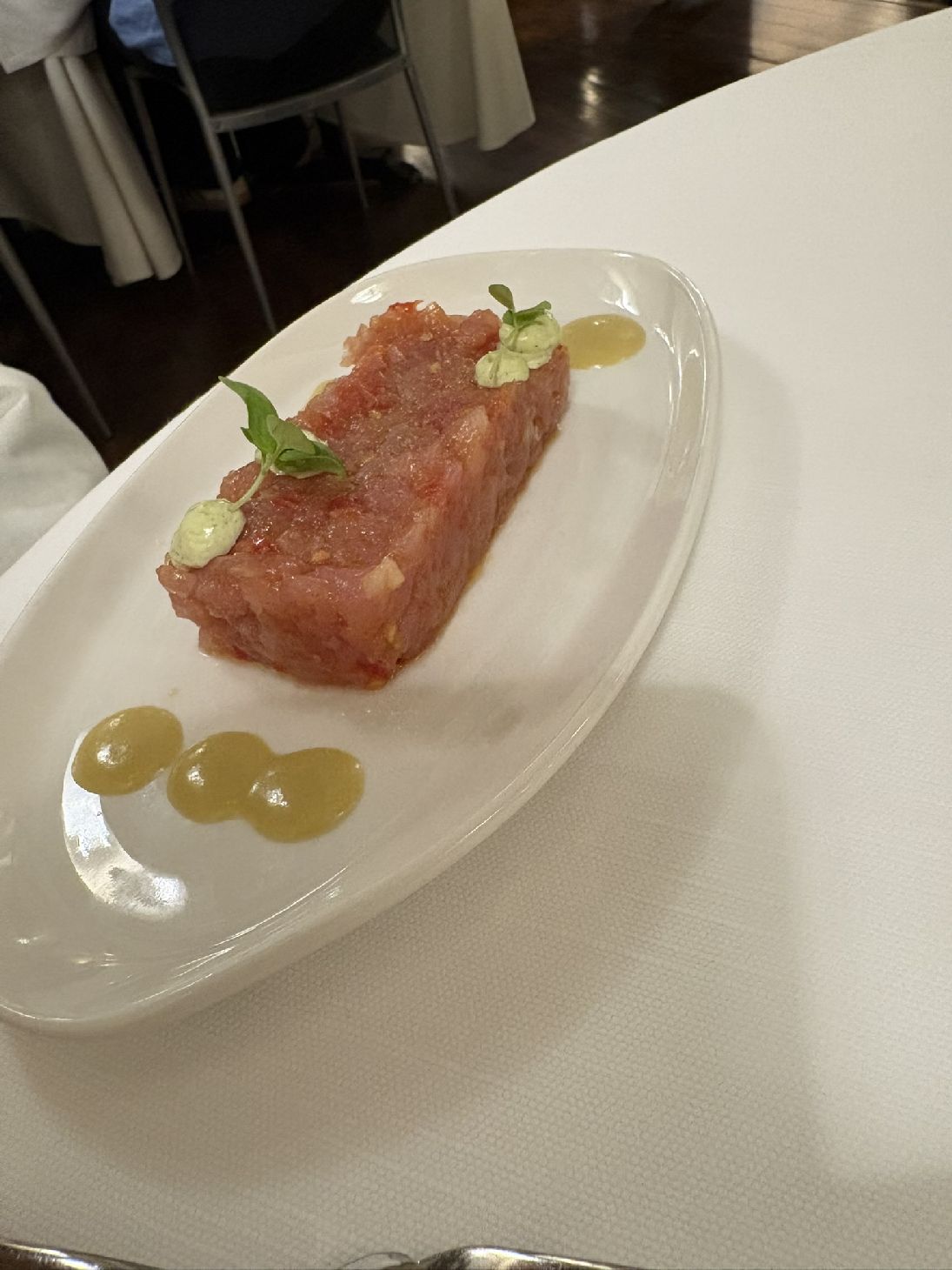
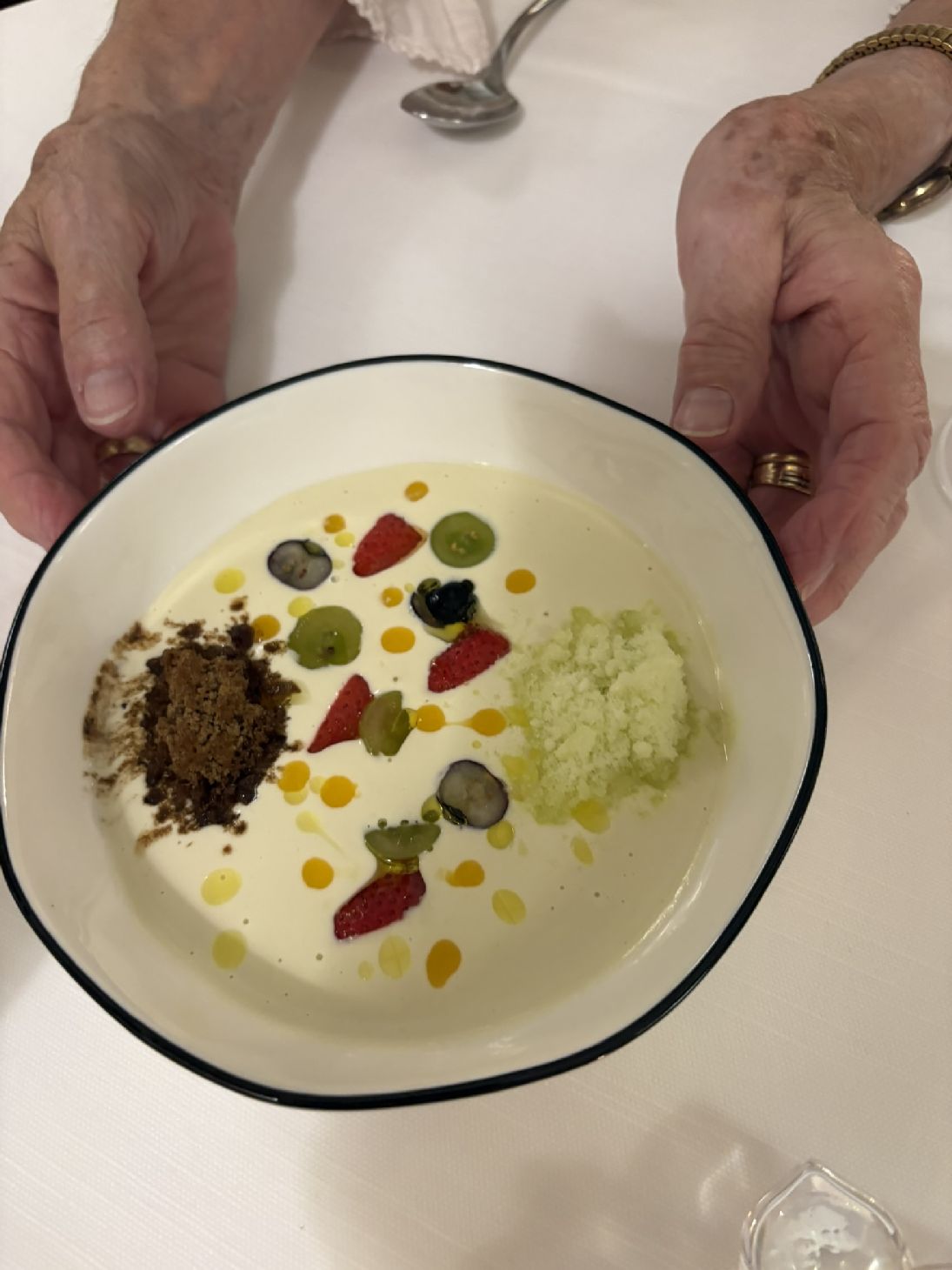
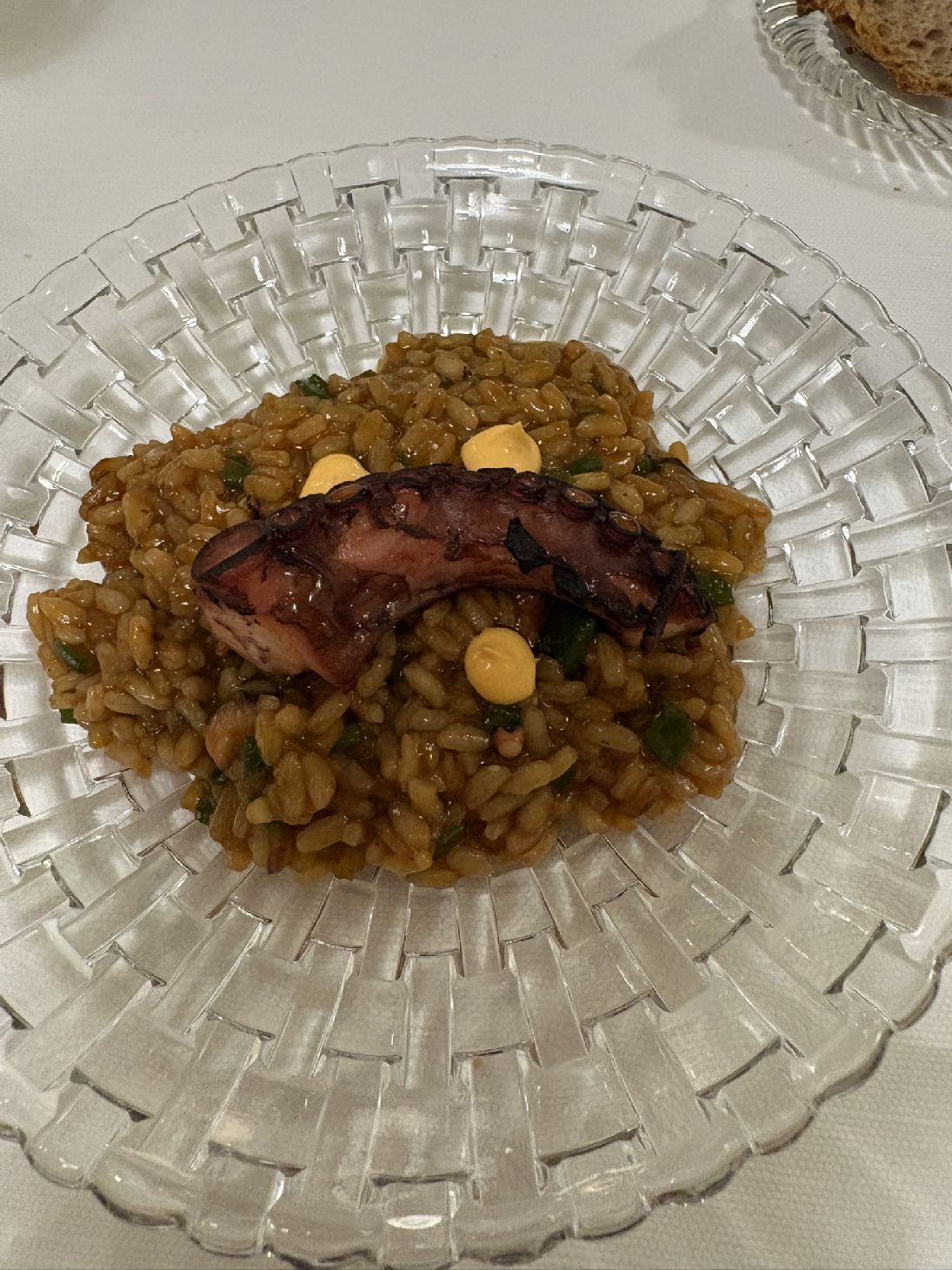
Mains were substantial (as seems to be the way in Asturias), with “Premium cow” entrecote proving a hit with A, R enjoying suckling pig confit, and Lynne and I sharing monkfish in cider sauce, and tiger king prawns in a cheese sauce between us.
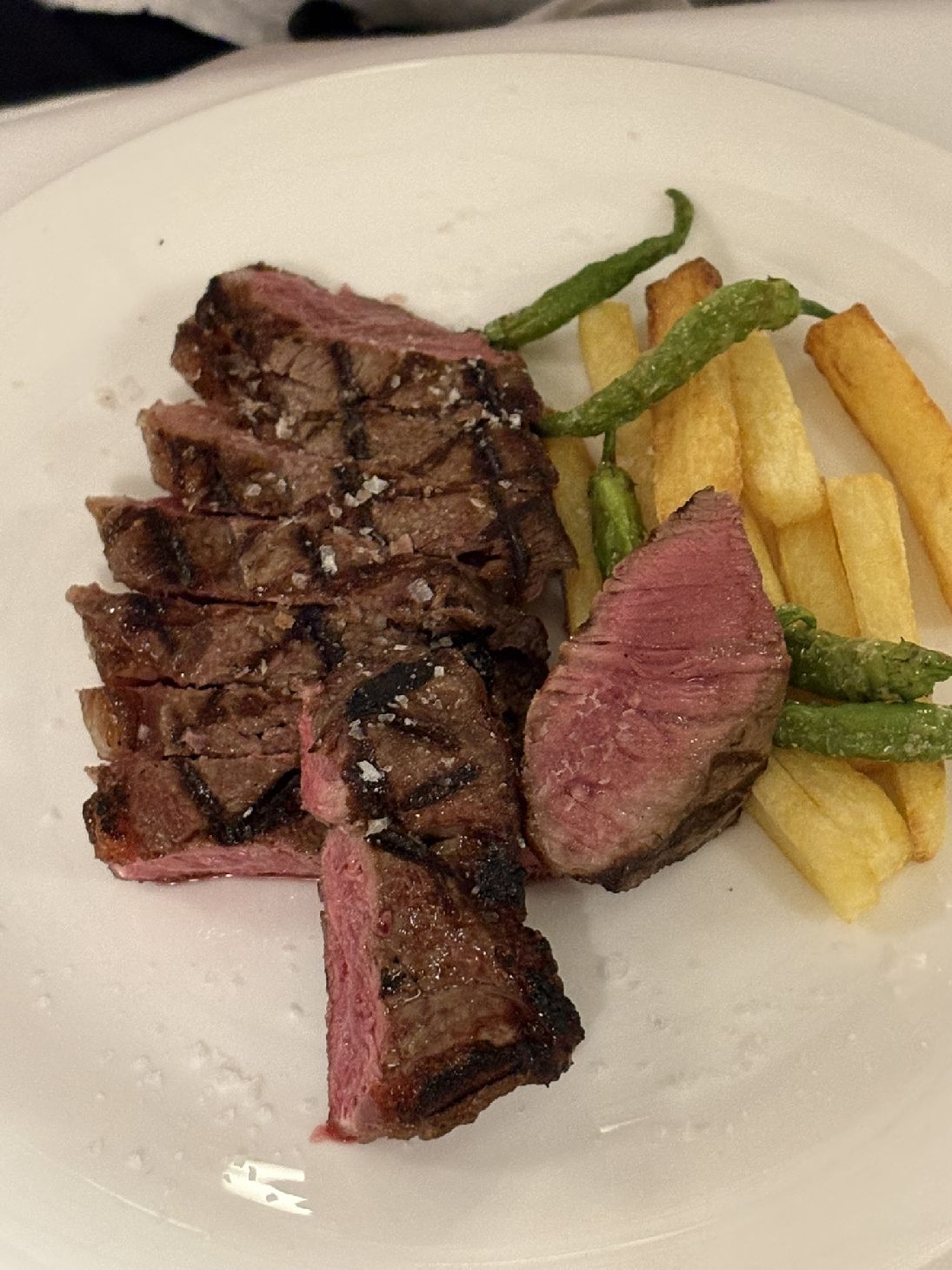
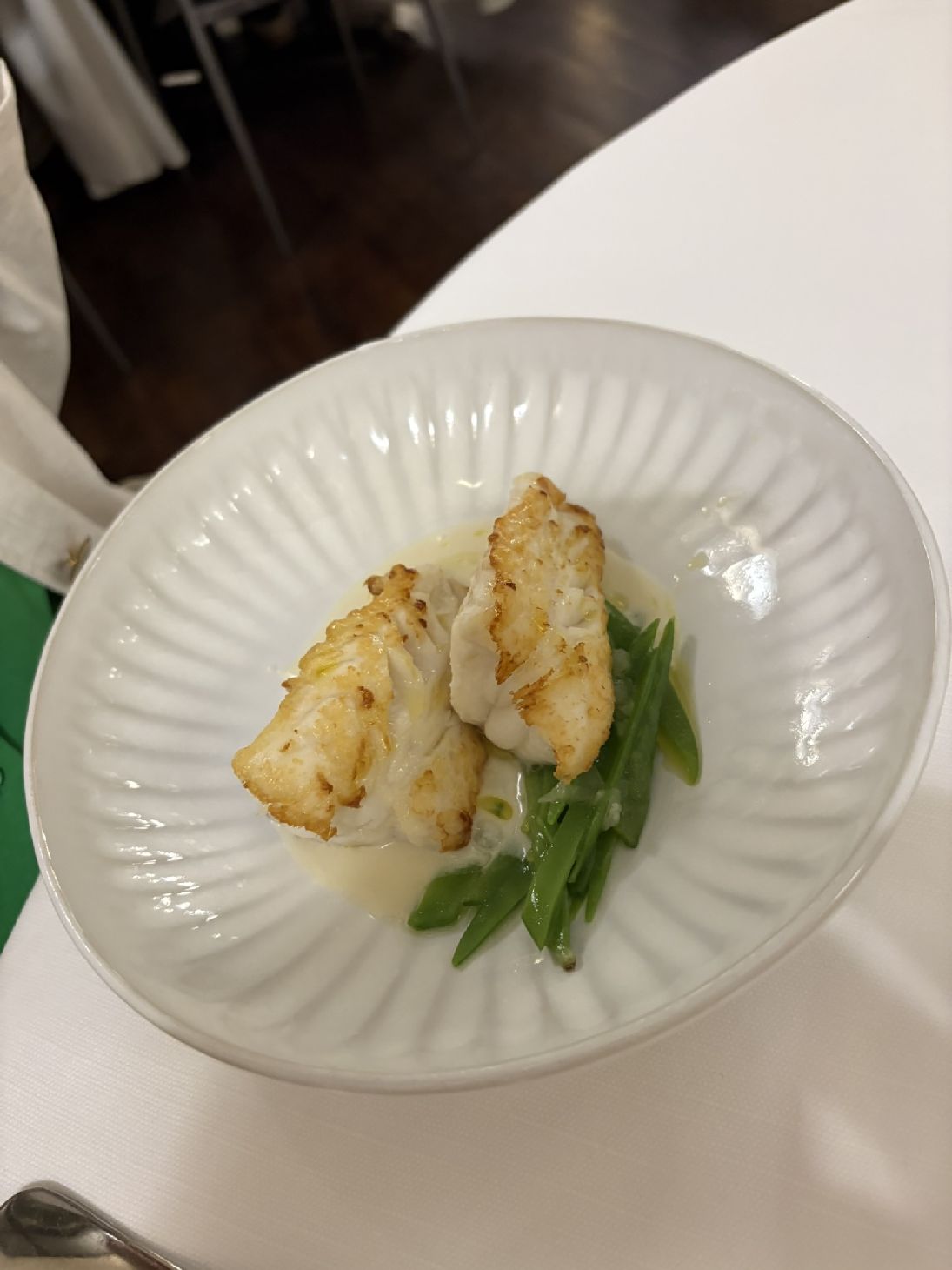
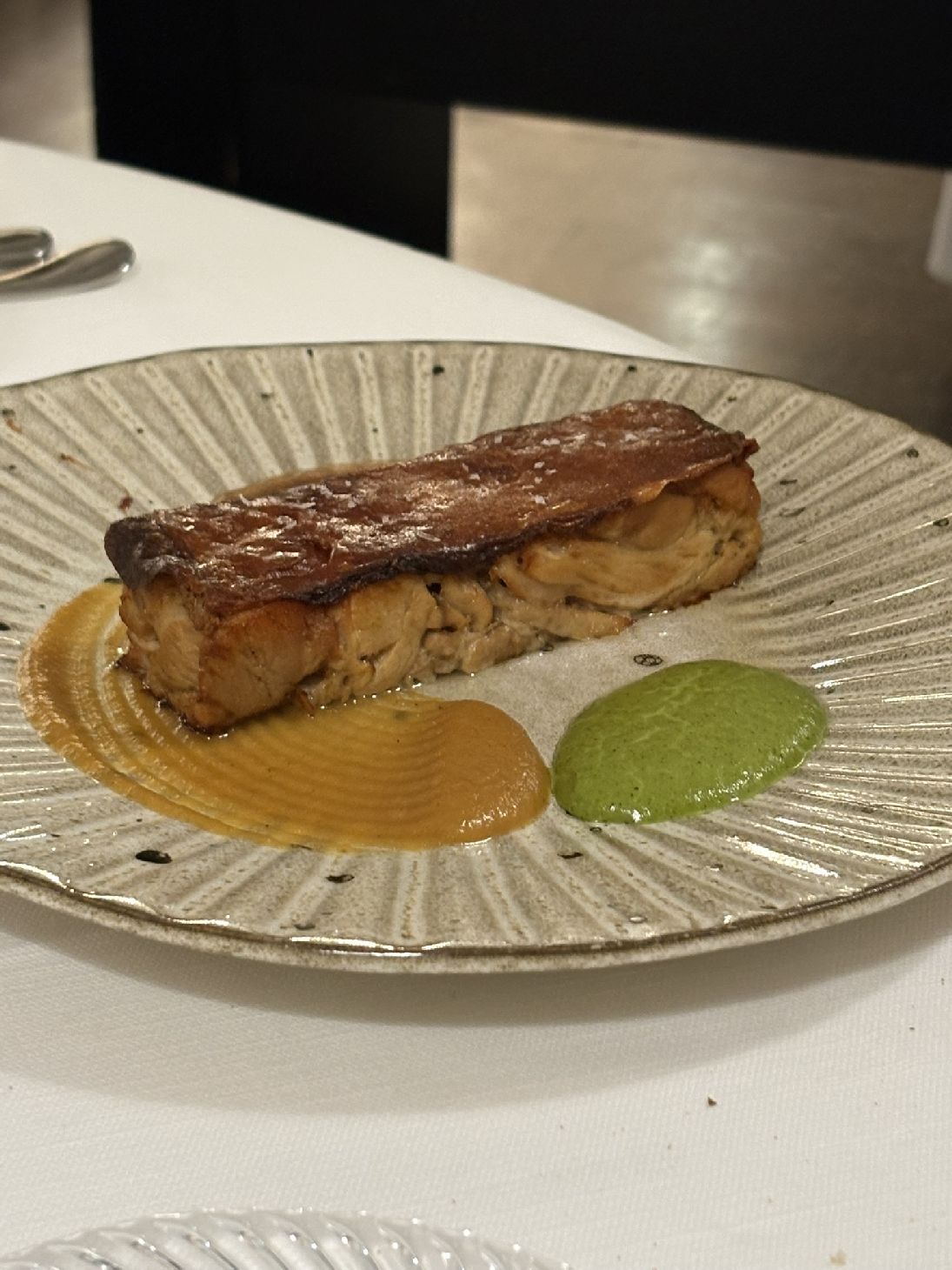
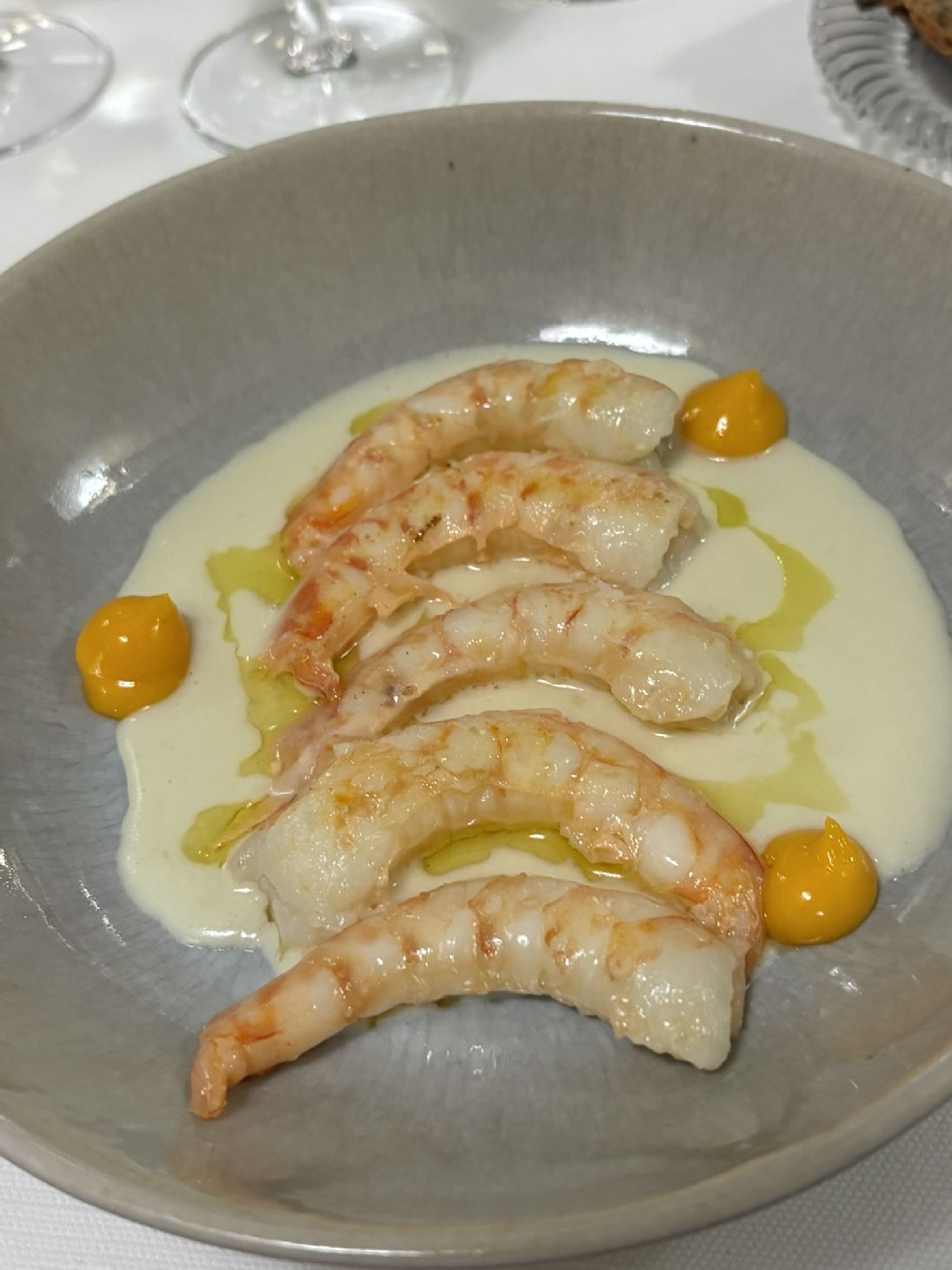
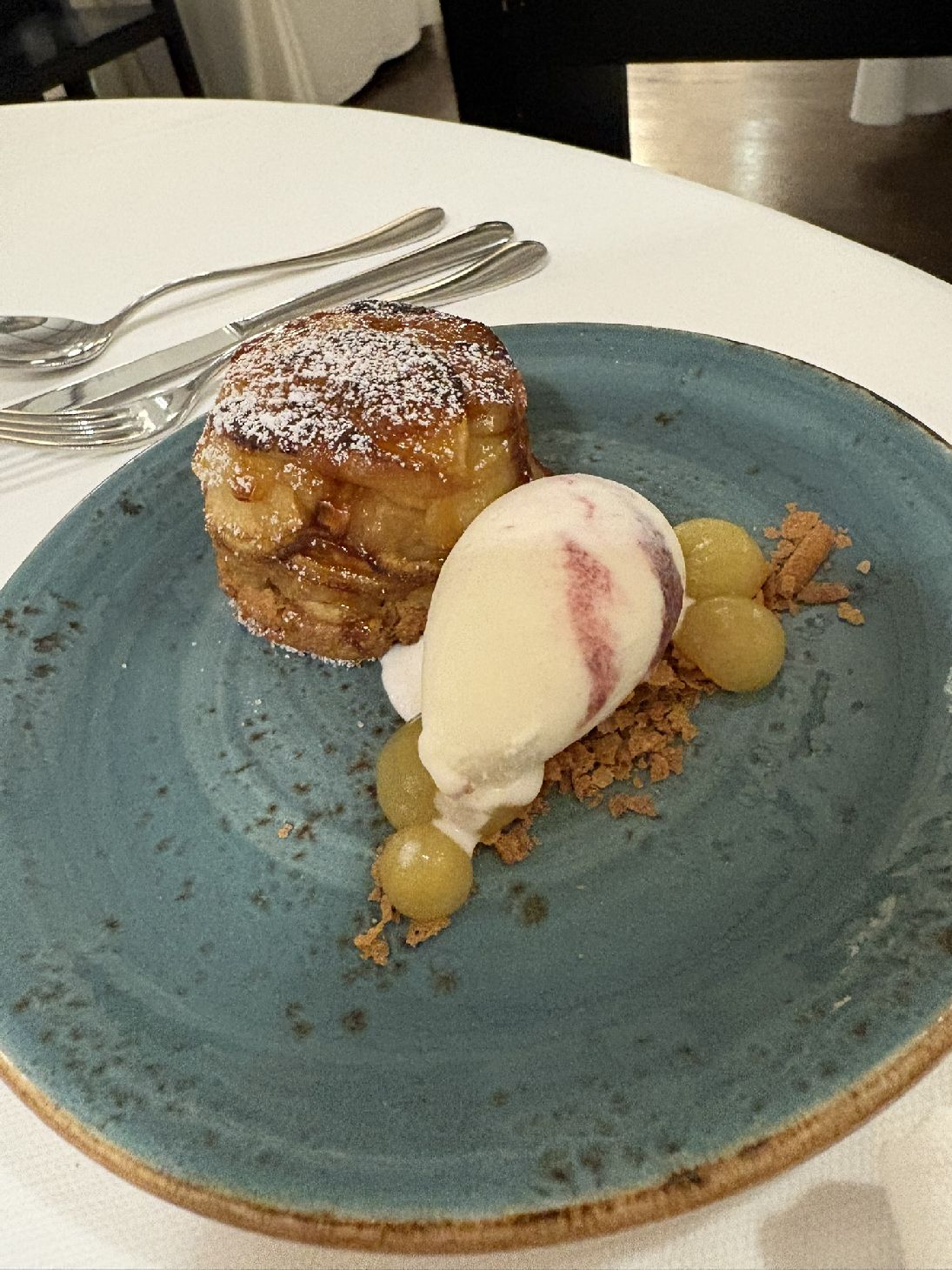
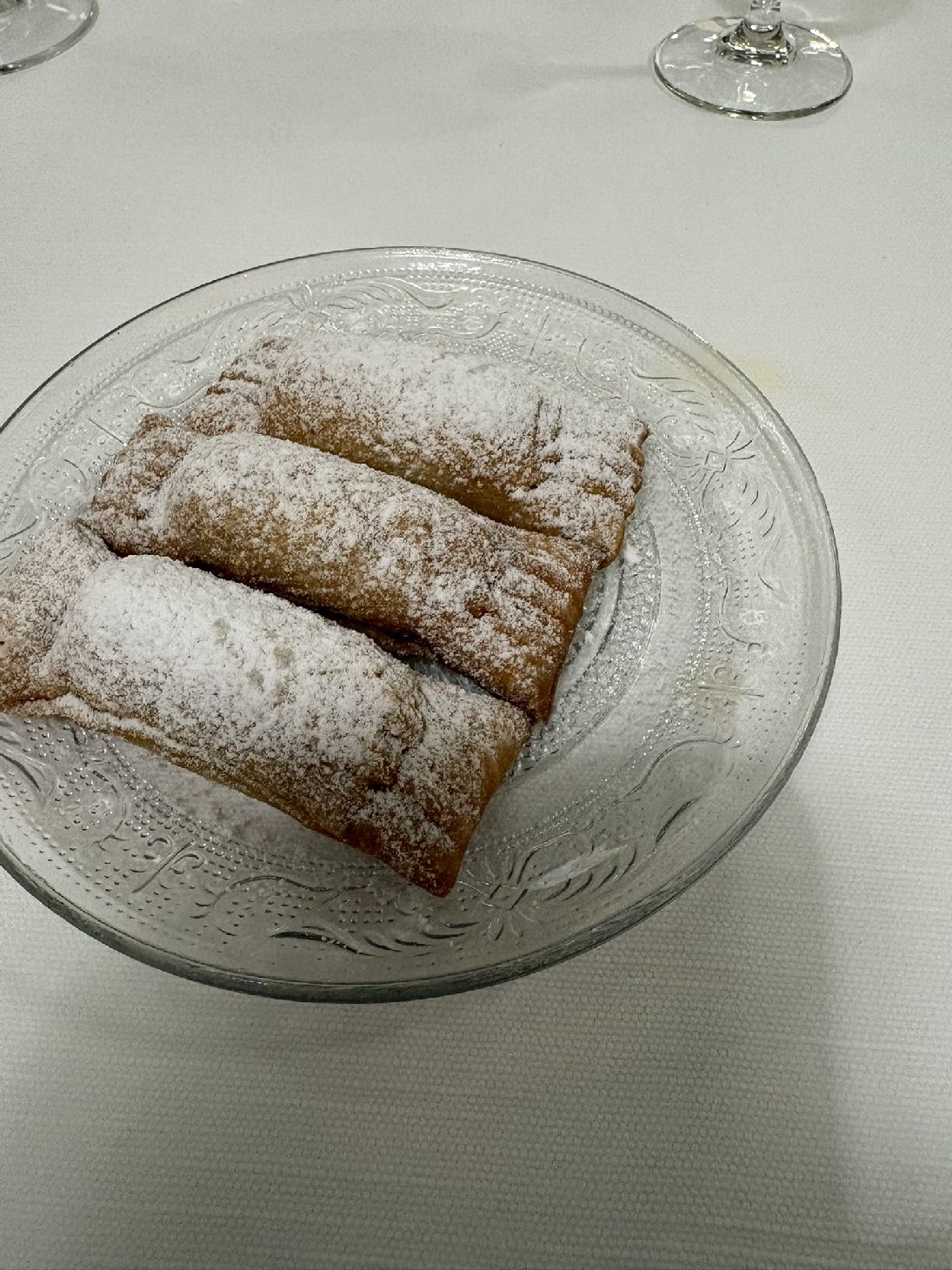
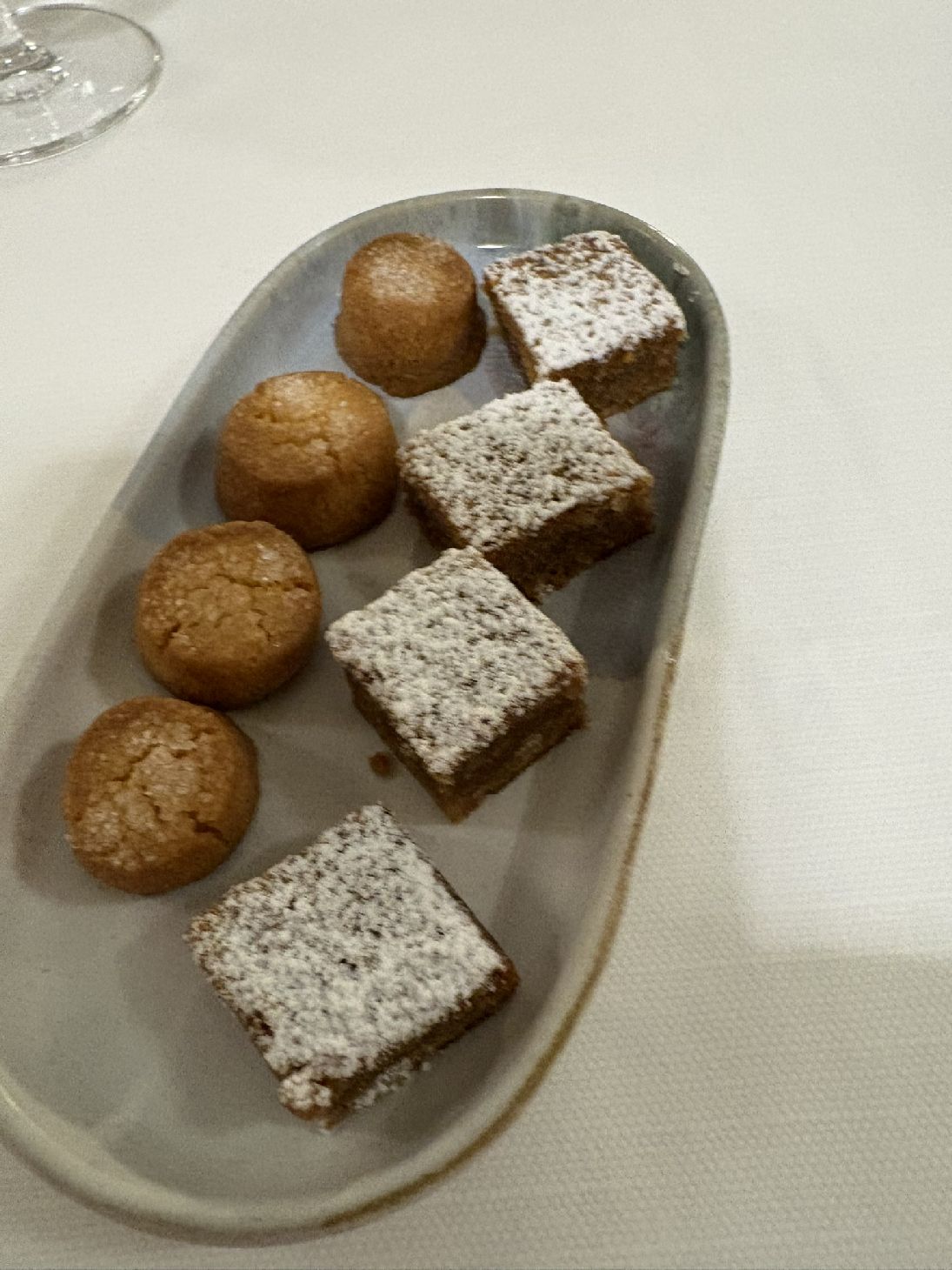
To end the meal I took Michelin’s advice and ordered the casadielles, a typical Asturian dessert. These are fried pastries filled with a toasted nut paste (usually walnut) and sugar that’s flavoured with Anis de la Asturiana (Anise liquor) or wine. They are tubular and the ends are closed off using the tines of a fork to press the pastry down. They’re also very good and you can buy them by the box to take home, so I did. The apple pie also proved to be a fine choice, and then they made us eat petit fours!
The evening ended with another battle through the crowds out on the streets, where I managed to trip over a kerbstone and bang my knee good and proper. The people of Oviedo – at least the ones closest to us – were very concerned and very helpful but I was fine, just a bit battered. I can’t imagine that amount of care being shown to someone tripping in the street in an English town late on a Friday night, so it made me like the place even more, despite the resulting broken phone screen.


