Monday 14th October, 2026 – San Sebastian / Donostia, Hondaribbia
After another night of not very good sleep thanks to the denizens of Kelly’s, we fancied an outing to somewhere outside town – especially as many things are closed on a Monday in San Sebastian. There were several options so we had a look to see how easy they would be to get to without needing to extract the car from the underground car park across the road from the apartment. It turned out we could get to Hondaribbia by bus in well under an hour, and even more fortuitously the bus stop we needed was just around the corner from us. We got our act together quickly and headed out to try our hand at Spanish public transport.
The bus showed up roughly when we expected, though the driver flat out refused to accept card payment despite having a card machine right next to his seat. Luckily we had cash so we were soon on our way. It turned out that he was in the wrong because a furious German woman got on at the hospital stop and had no cash. She wasn’t getting off, and in the end he gave in, told her to wait, and booted the machine up. Given this is also the bus for the airport it seemed a bit short-sighted to be so resistant to card payments.
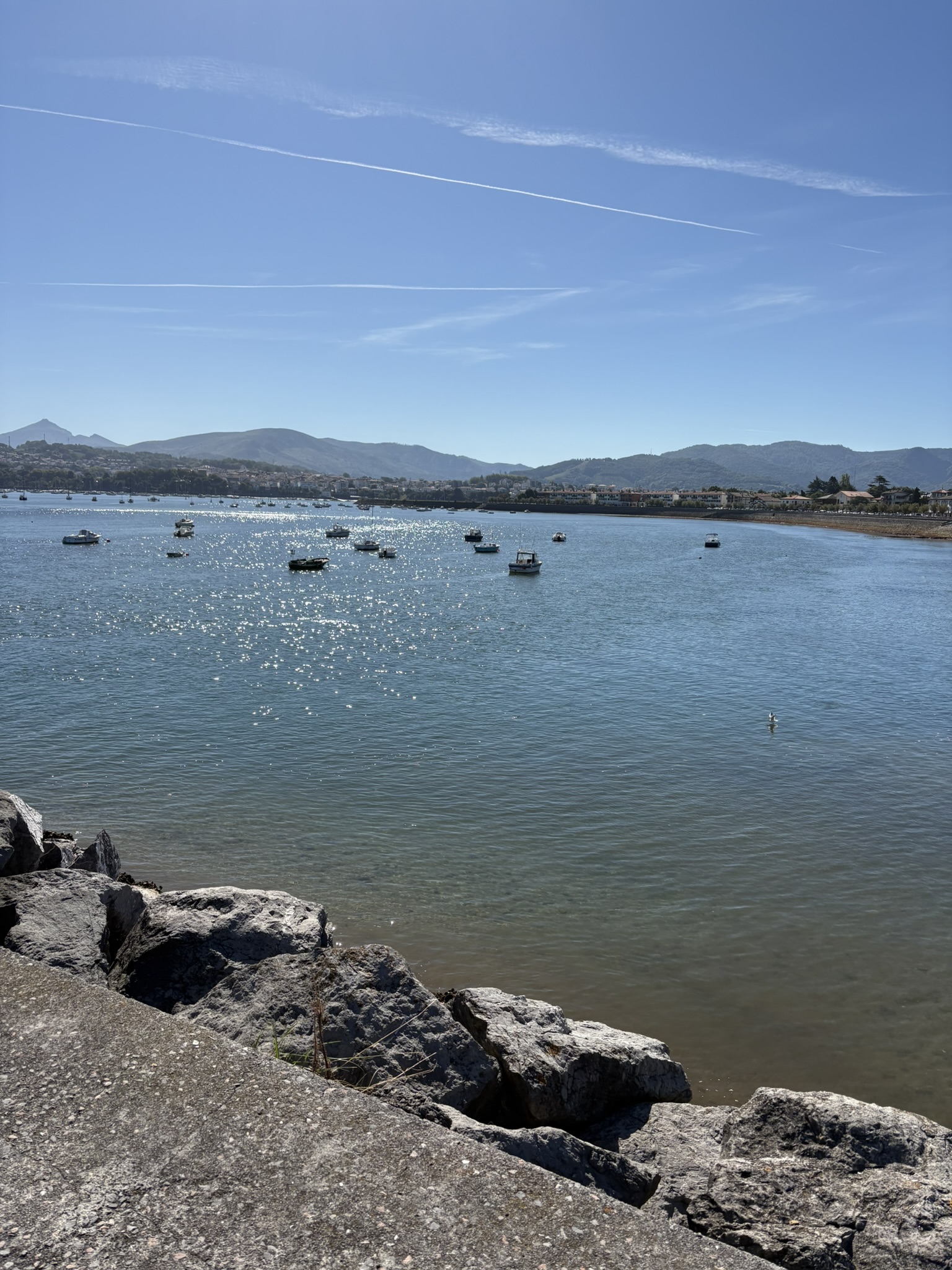
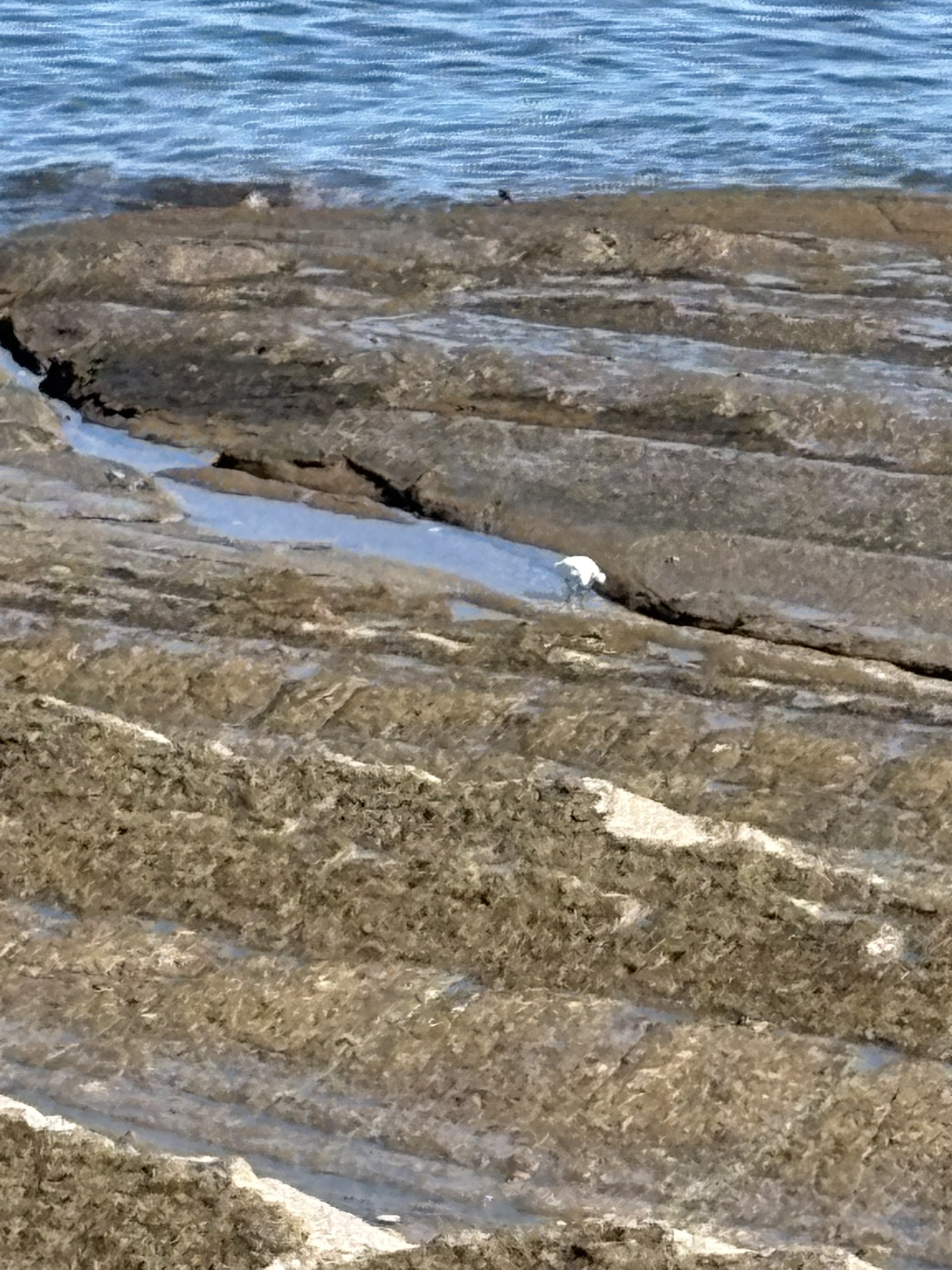
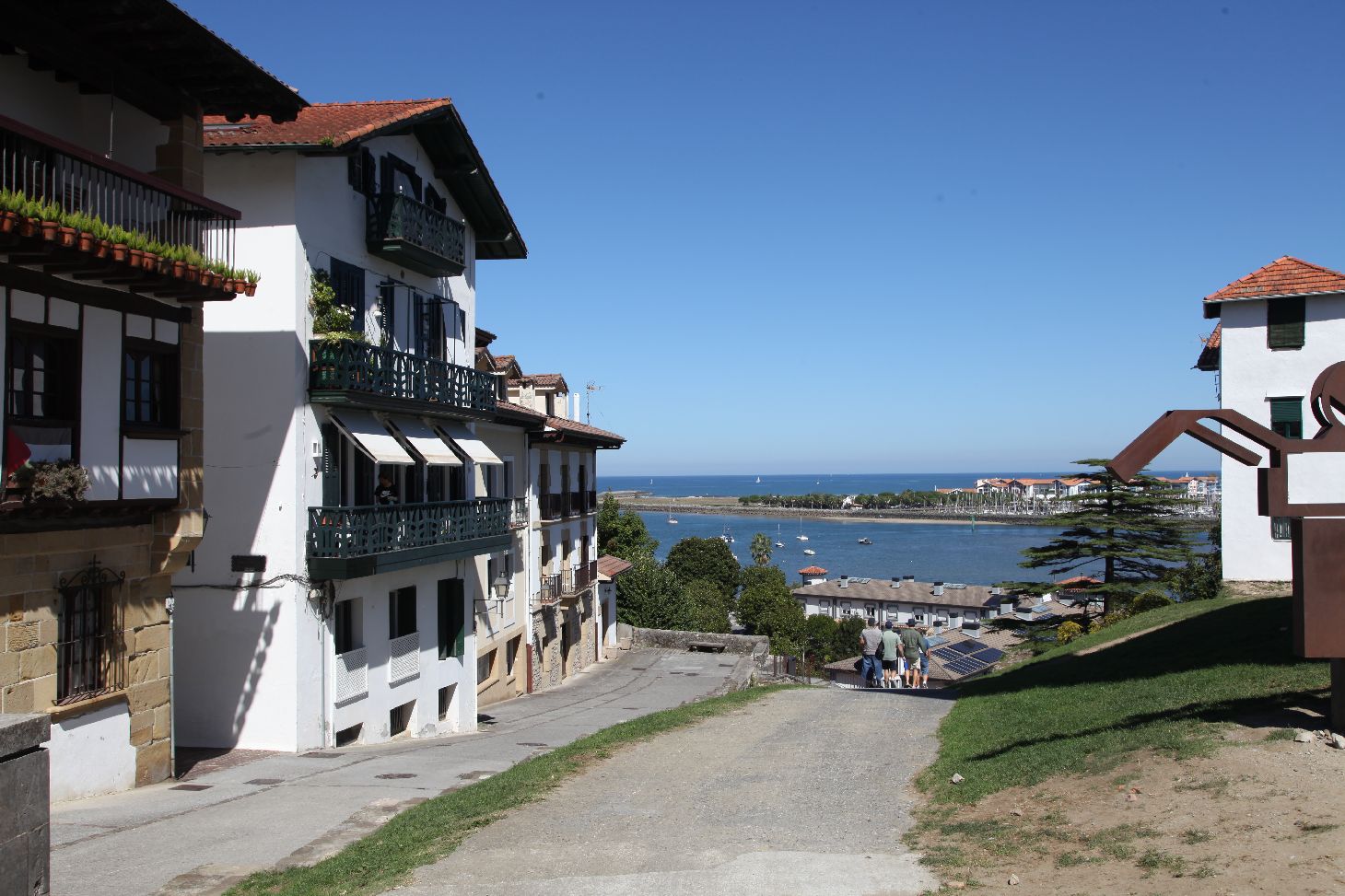
We made a mental note in case we found ourselves short on cash at any stage of the trip. The bus parked up in Hondaribbia around 35 minutes after we set off and hunted down a coffee shop to grab a quick reviving café con leche and get our bearings. It was getting close to lunchtime so we enjoyed a stroll along the seafront, admiring the view over to Hendaye in France which is not exactly far away, and watched a man taking his dog for an enthusiastic swim in the bay. There was also a little egret happily standing around in a rockpool. It wouldn’t be the only one we saw and it made me feel right at home.
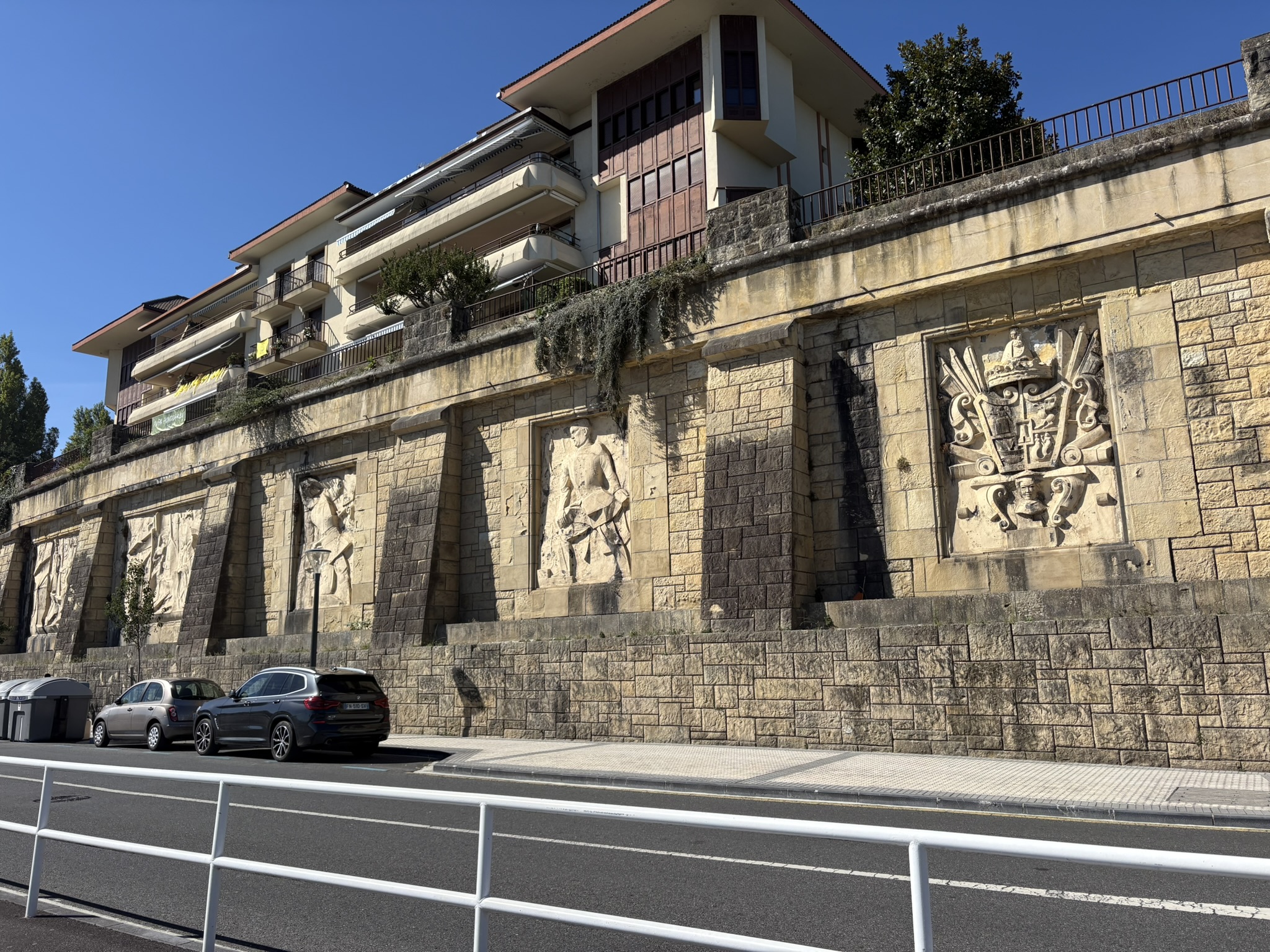
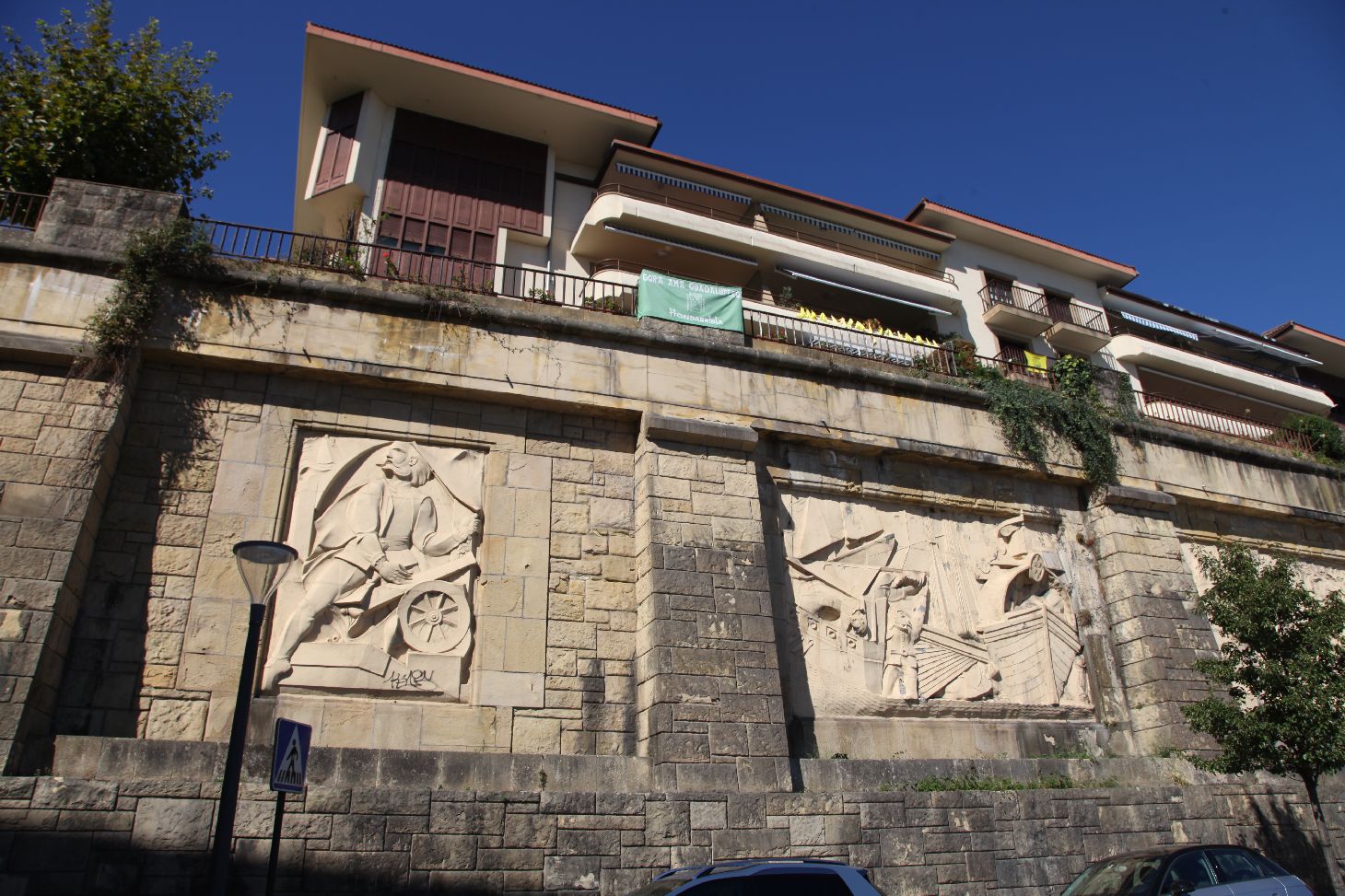
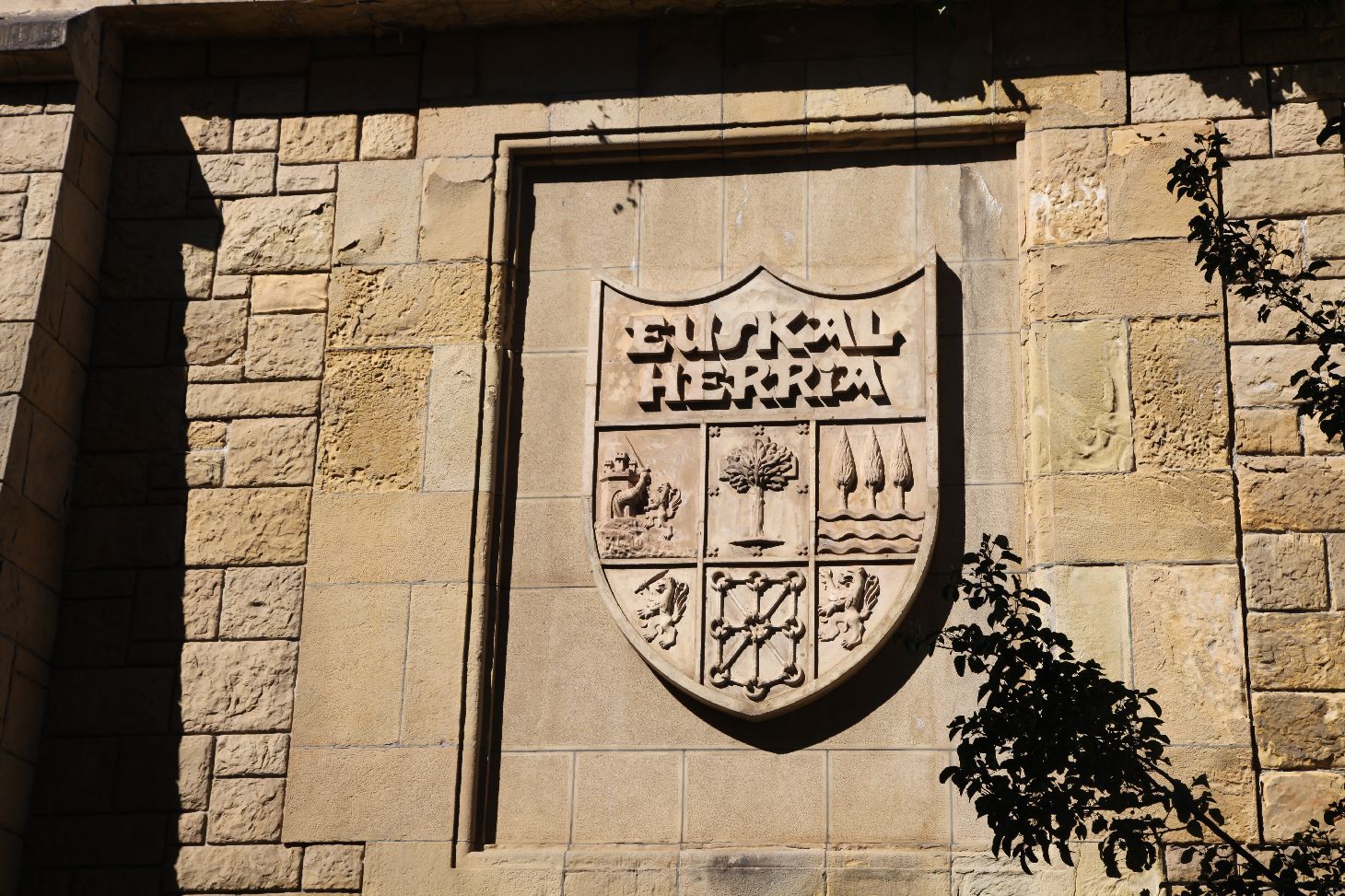
A funfair of some sort was busy packing up, and so we ambled as far as the boatyard and then headed back towards the old town. Almost the first thing we encountered was what appeared to be a massive decorative wall that was clearly modern compared to the bastion we’d spotted from the bus. It’s covered in friezes of Basque history but I have been unable to find any information about it anywhere no matter what search terms I use. It’s odd because you really can’t overlook it…
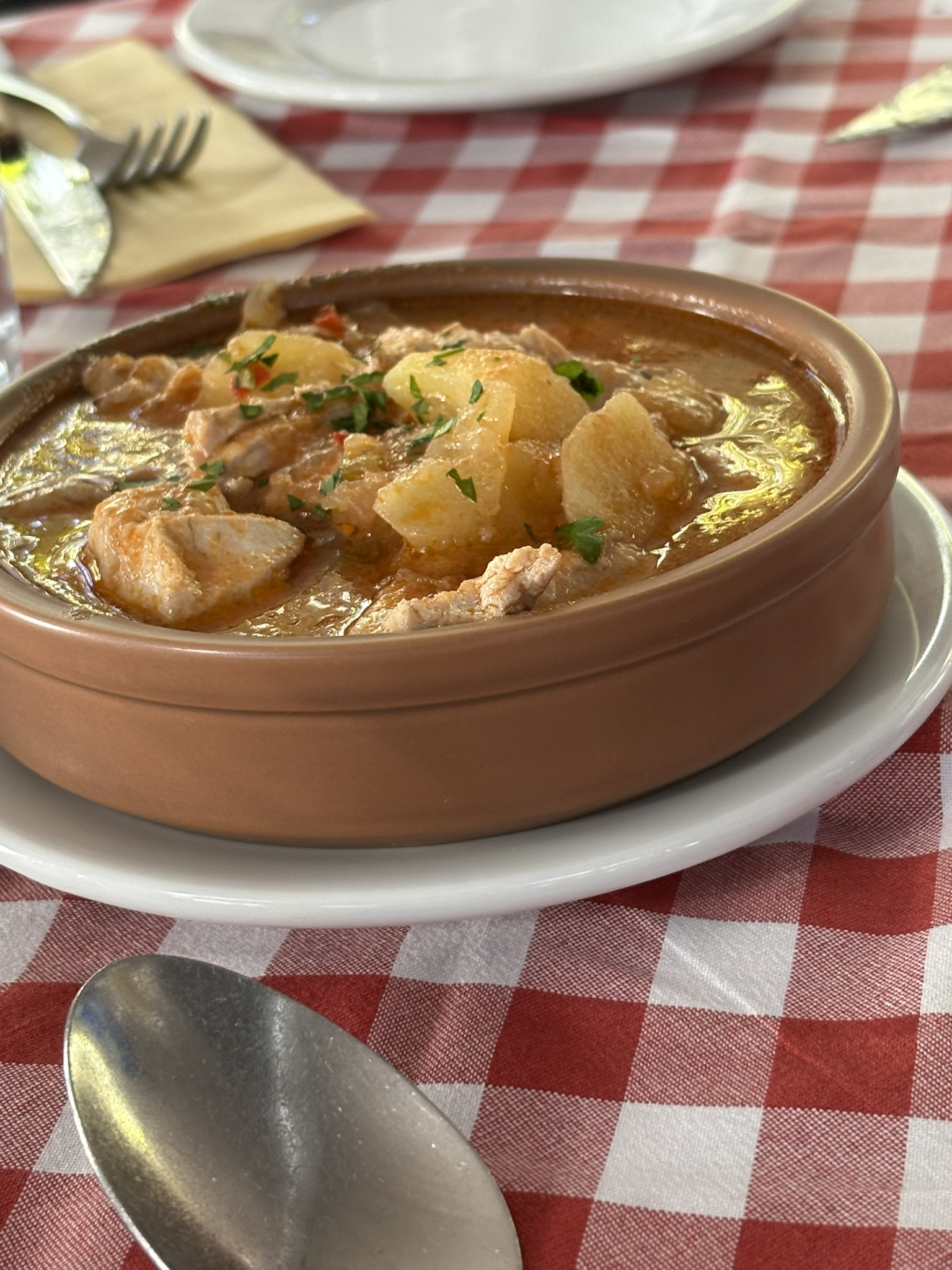
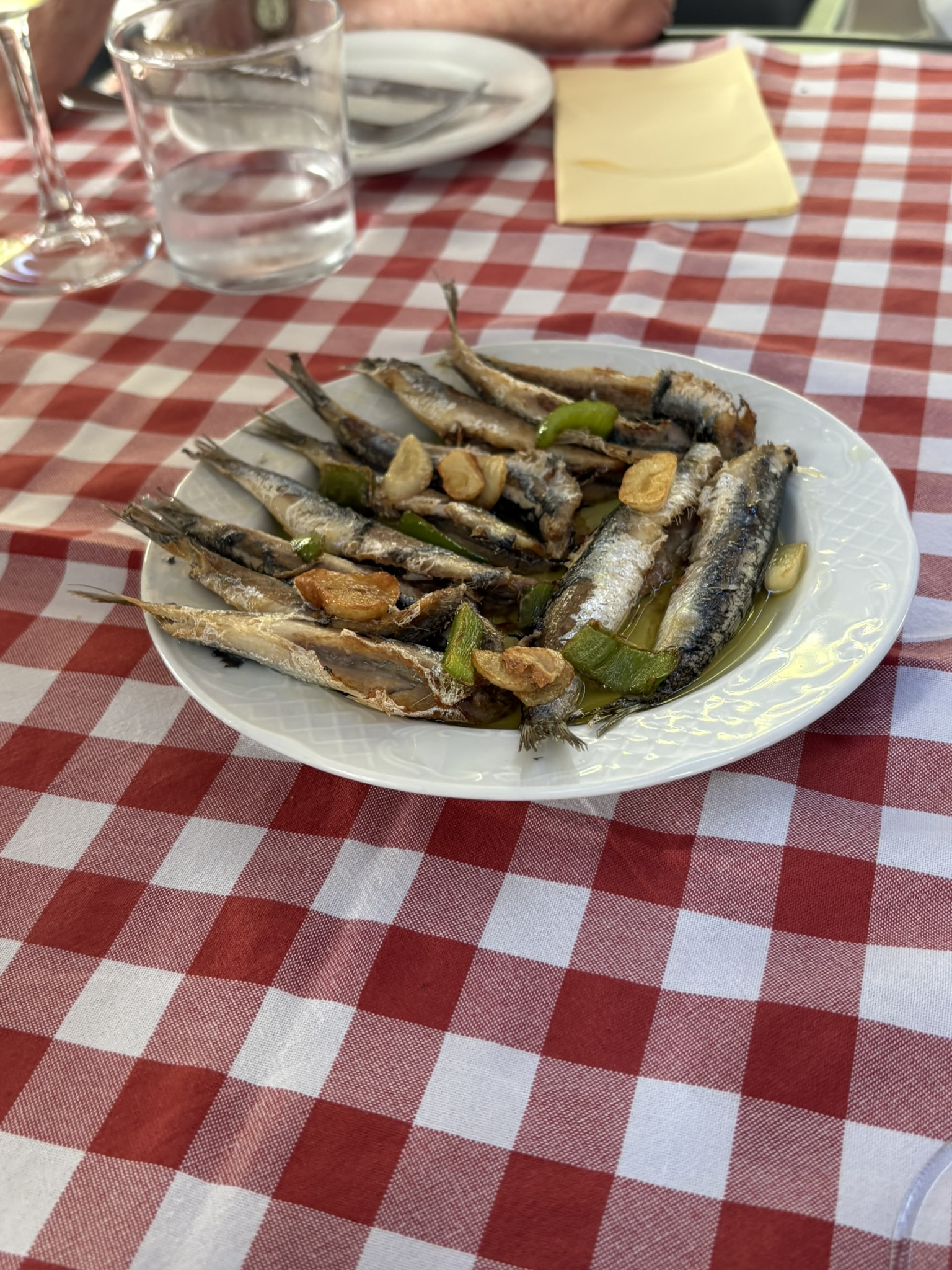
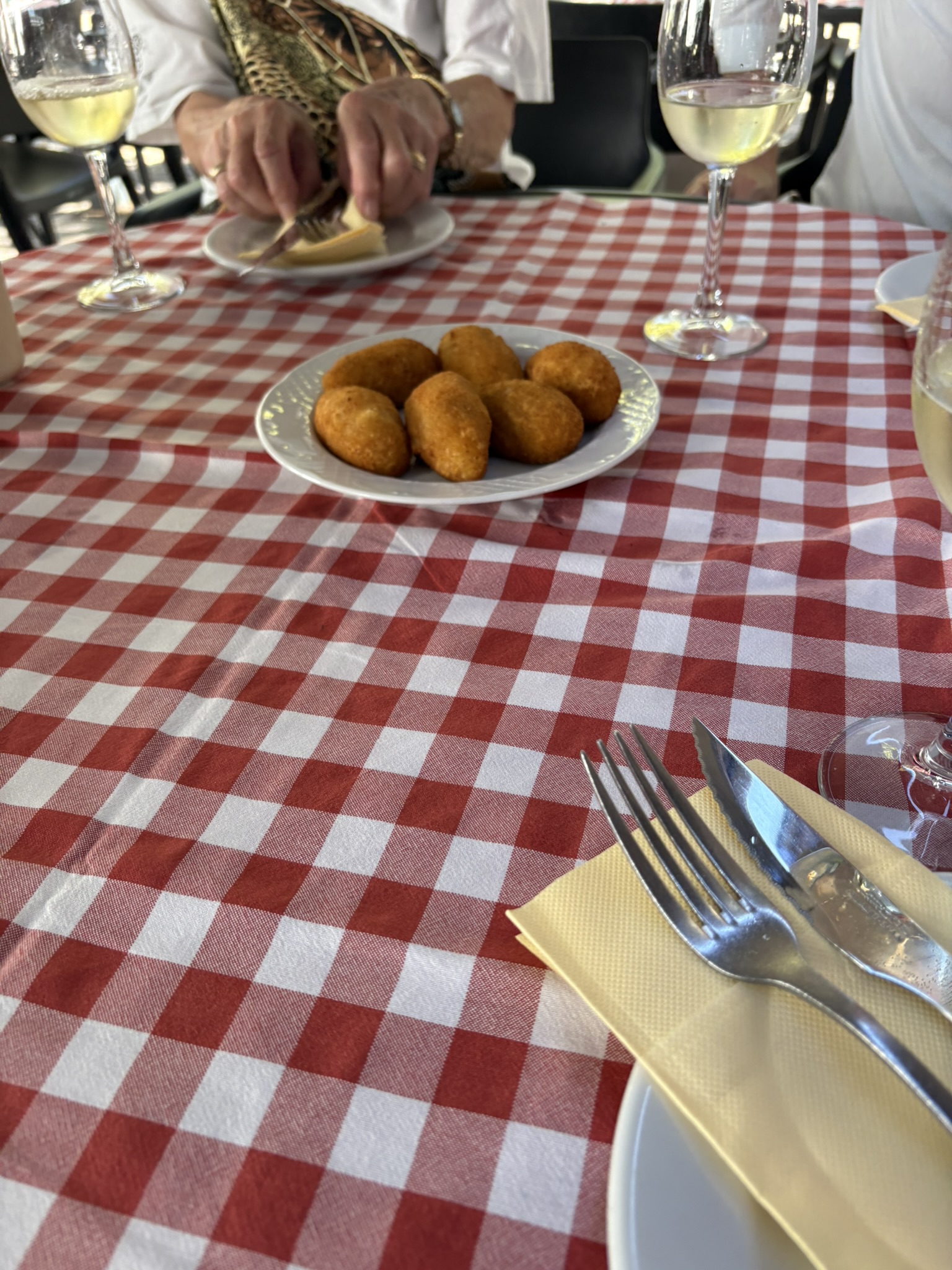
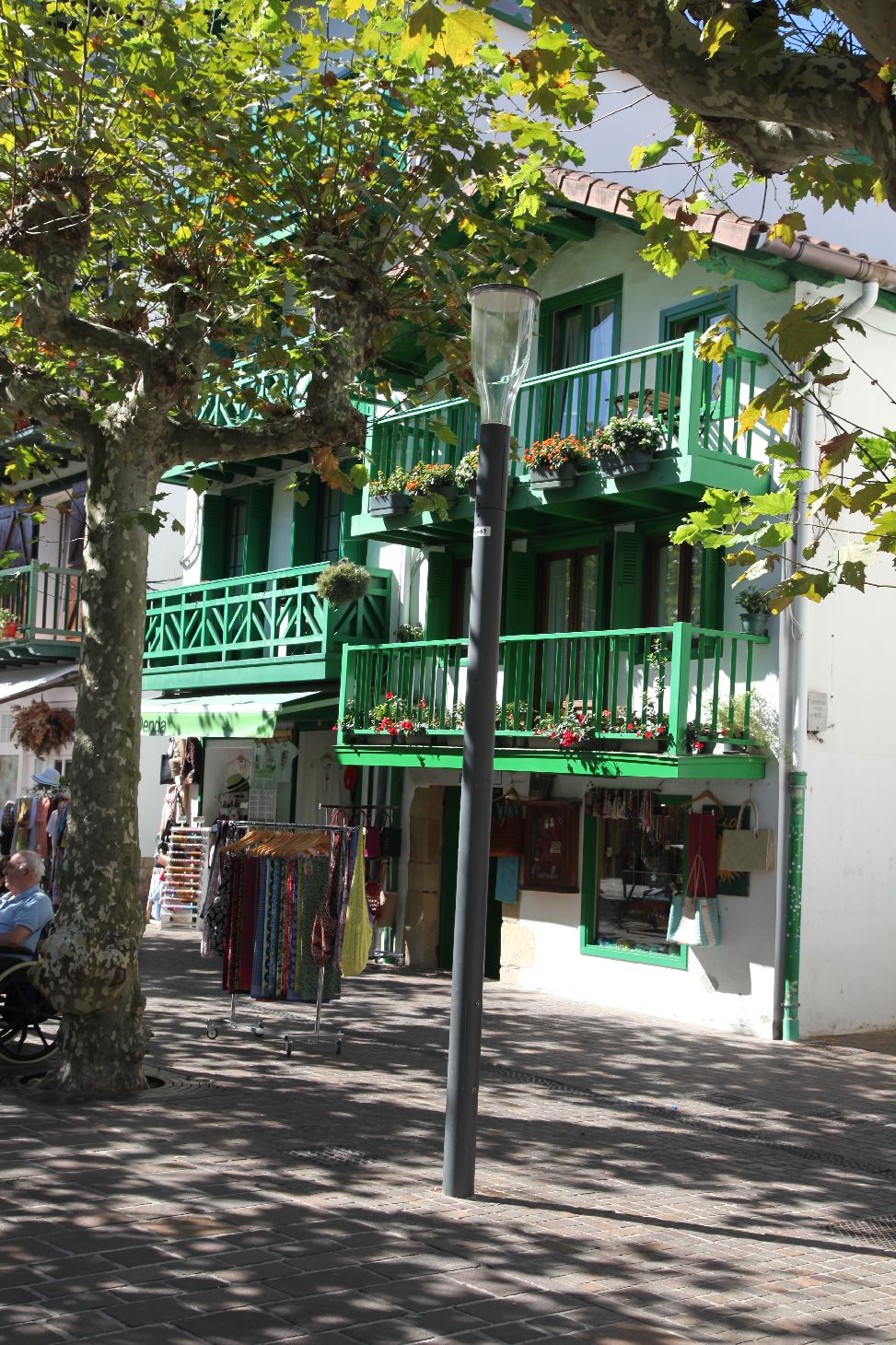
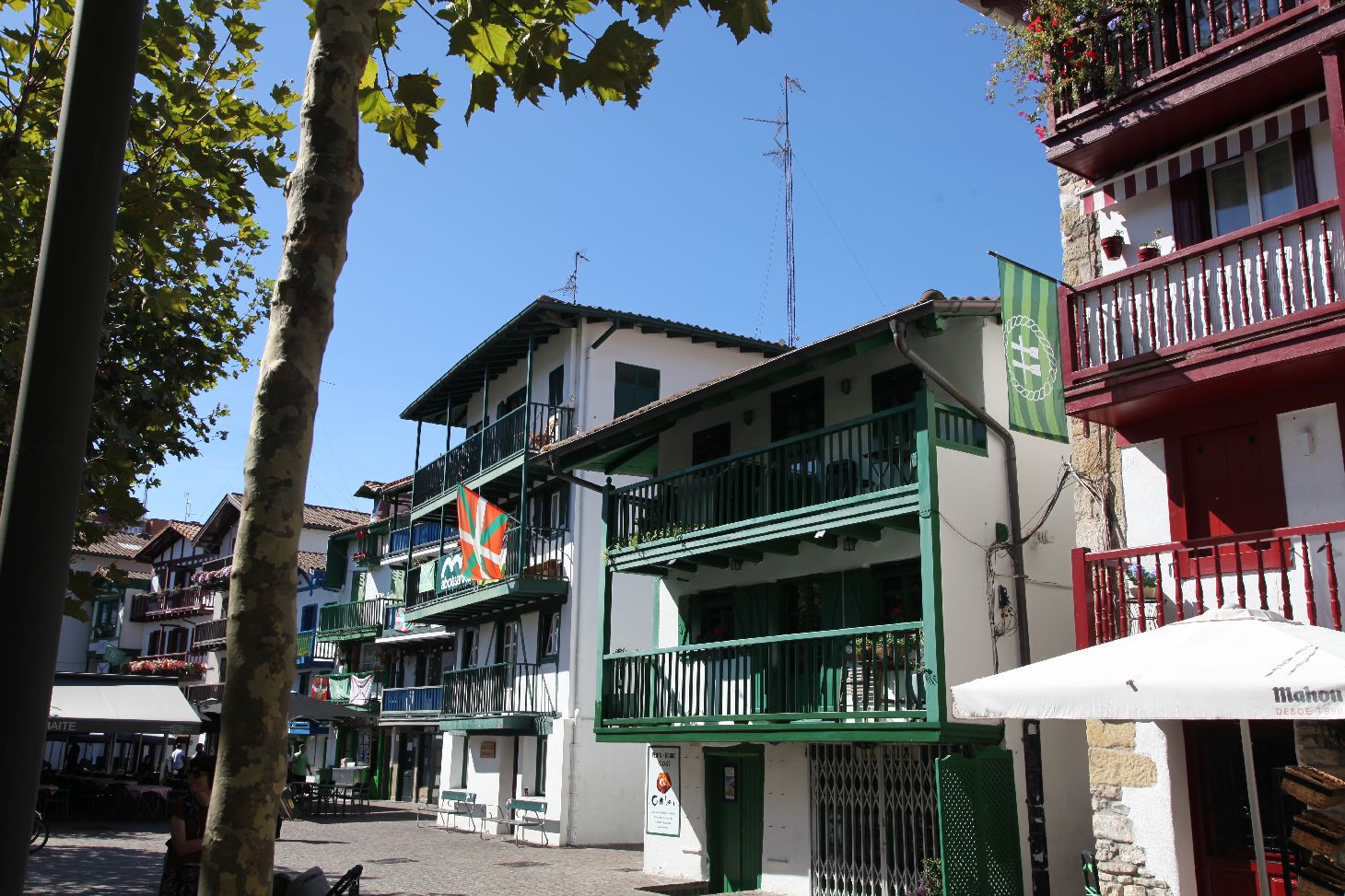
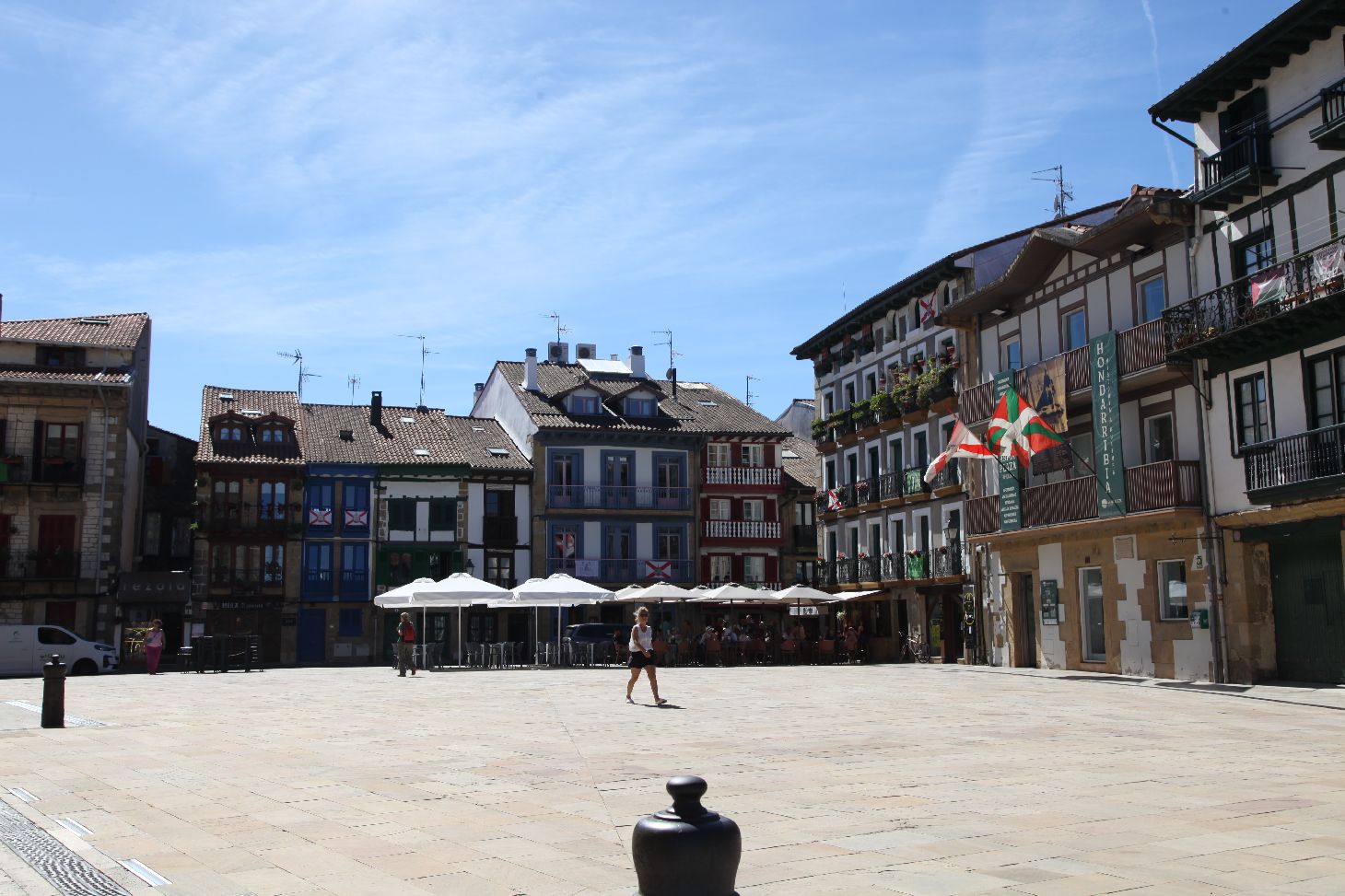
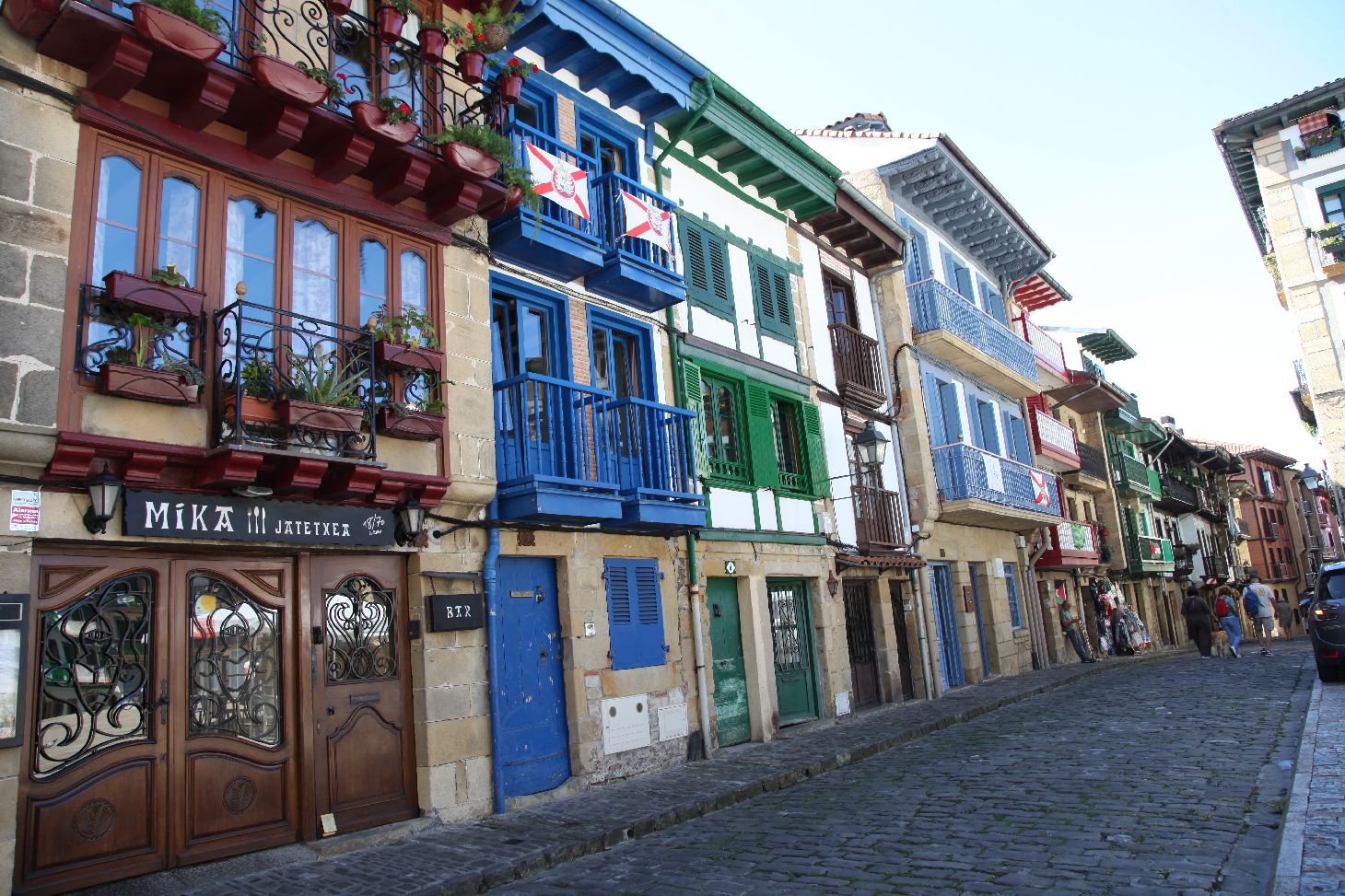
In the aftermath of the previous day’s regatta in San Sebastian there were a lot of flags draped on the delightful characteristic fishermens’ houses that line the streets and the market square in what I suppose we must call the new town. The square was full of restaurant tables, all set up to tempt a hungry passers by, and I must admit we succumbed, falling for the charms of Bar Maite and sitting down to a relatively light lunch and a bottle of local wine. A marmitako, some sardines, and a portion of croquettes were just what the doctor ordered.
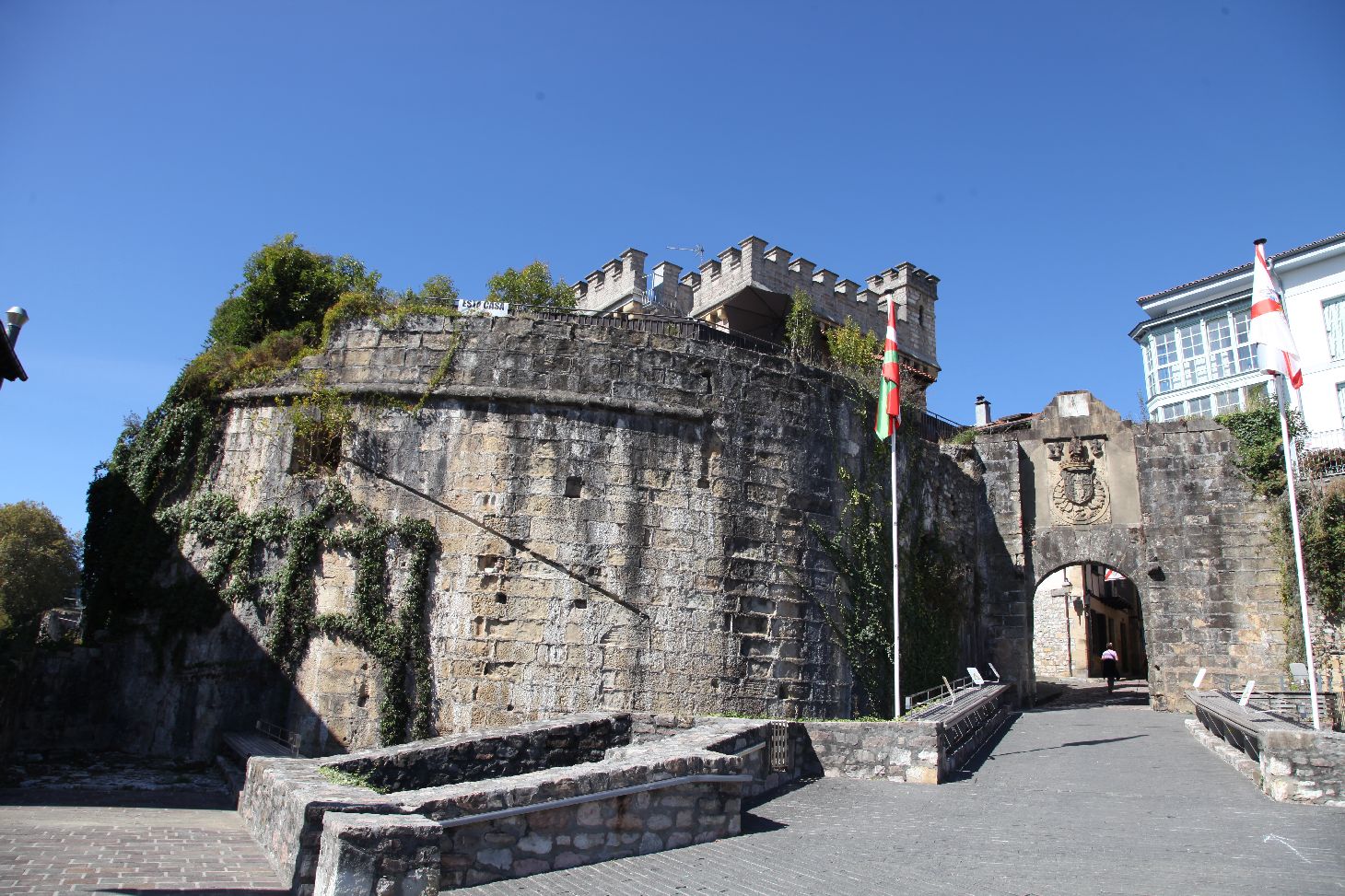
Once we’d eaten we headed towards the old town, entering via one of the two remaining gates. The medieval city is, I am told, part of the Network of Medieval Cities and Towns, which is “a tourist initiative that brings together eleven towns in Spain and Portugal with an important heritage relating to this period of history… Hondarribia offers more than 20 vestiges of its medieval past, the city walls, the Gates of Santa María and San Nicolás, the two entrances to the town, as well as the Calle Mayor. Note the imposing eaves of houses with wrought iron balconies and sometimes adorned with coats of arms.”
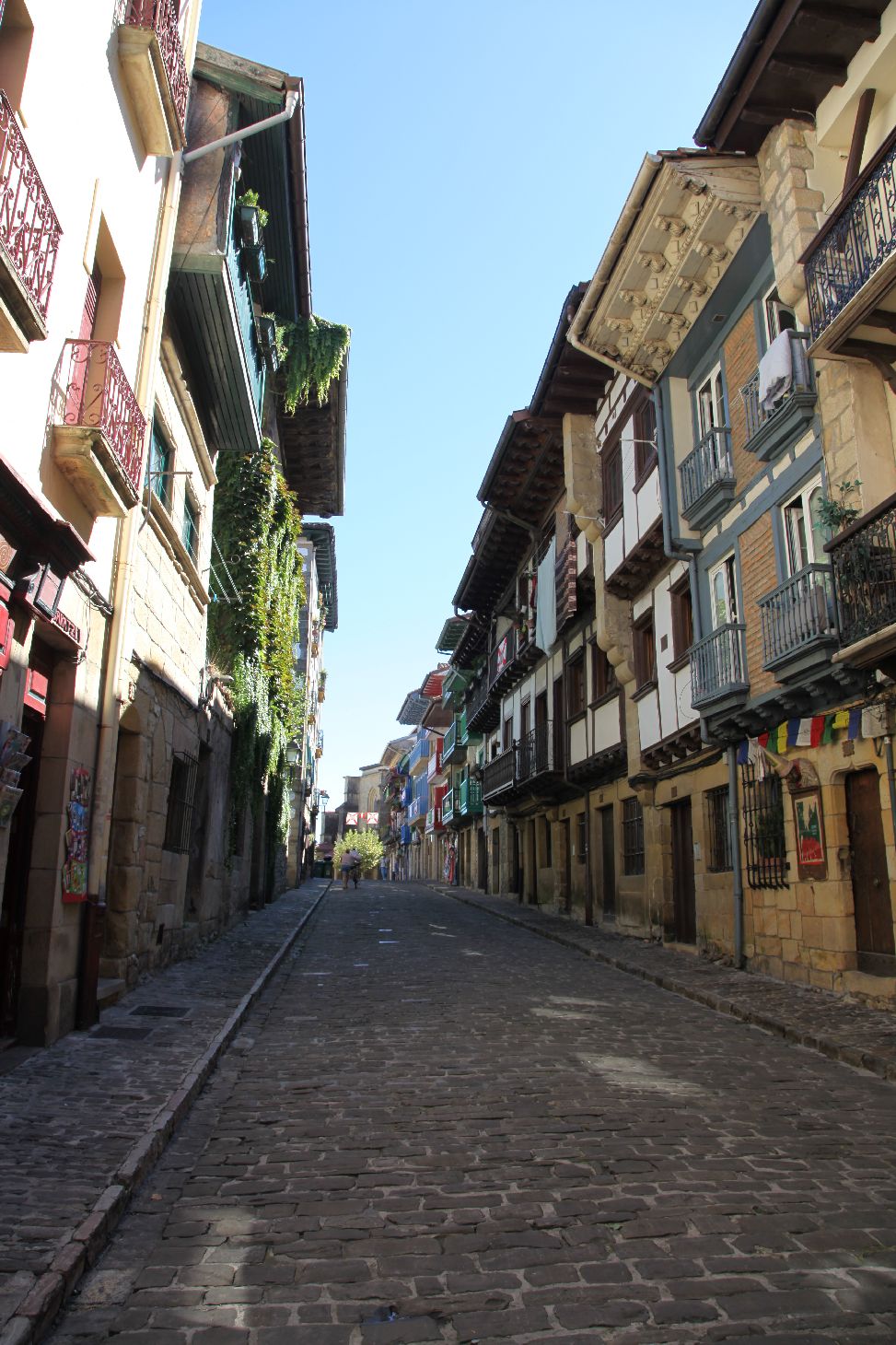
We walked up the narrow streets to the wide open Plaza de Armas, where proclamations, receptions, and other popular festivities took place, and from where there is a most impressive view out across the waters. It also contains the Tourist Information office, which proved most helpful, and the cannon-ball pockmarked Castle of Charles V, which is now a Parador – a state-owned hotel – and where I would have booked accommodation if I’d realised how easy it was to get to San Sebastian. Ce la vie. The castle dates back to the Goths and was used as a palace as well as a fortress, the latter being why the French army destroyed part of the building in 1794, and you can still see where they tried to complete the job from the cafe terrace opposite. It’s been a Parador since 1968. We decided that if we couldn’t get in to stay we could at least stop for a coffee break in their cafe/bar and take a look around that way.
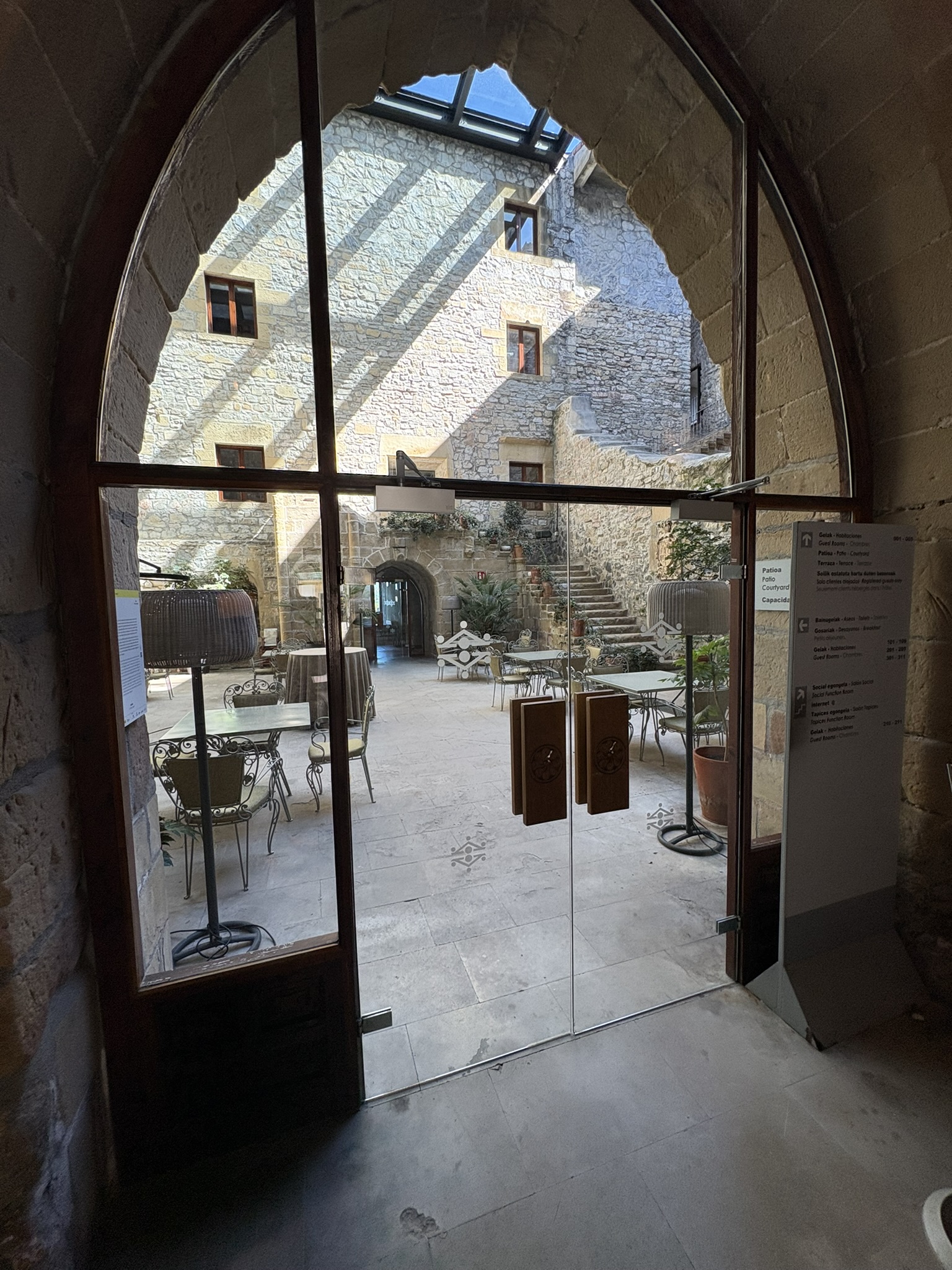
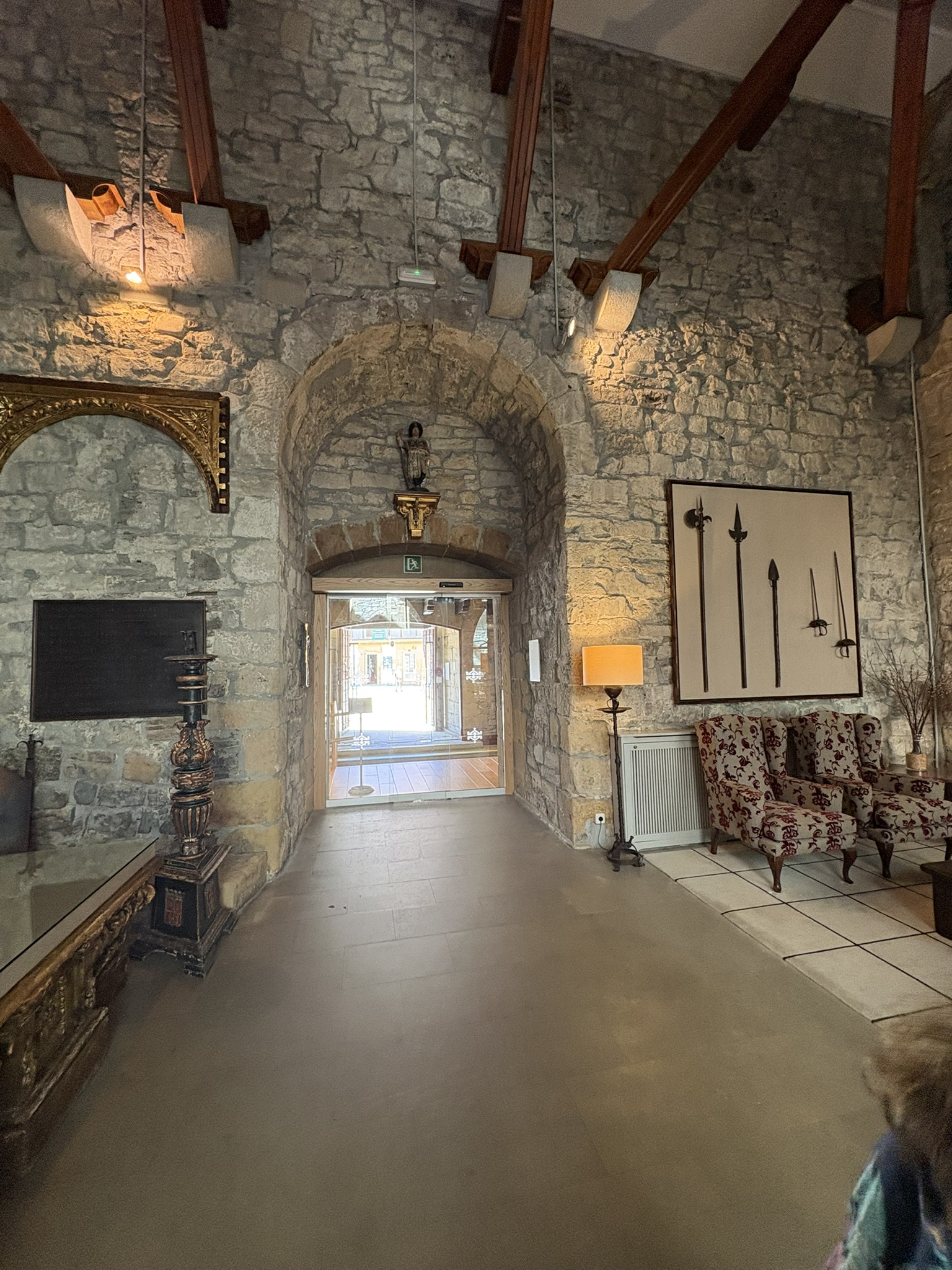
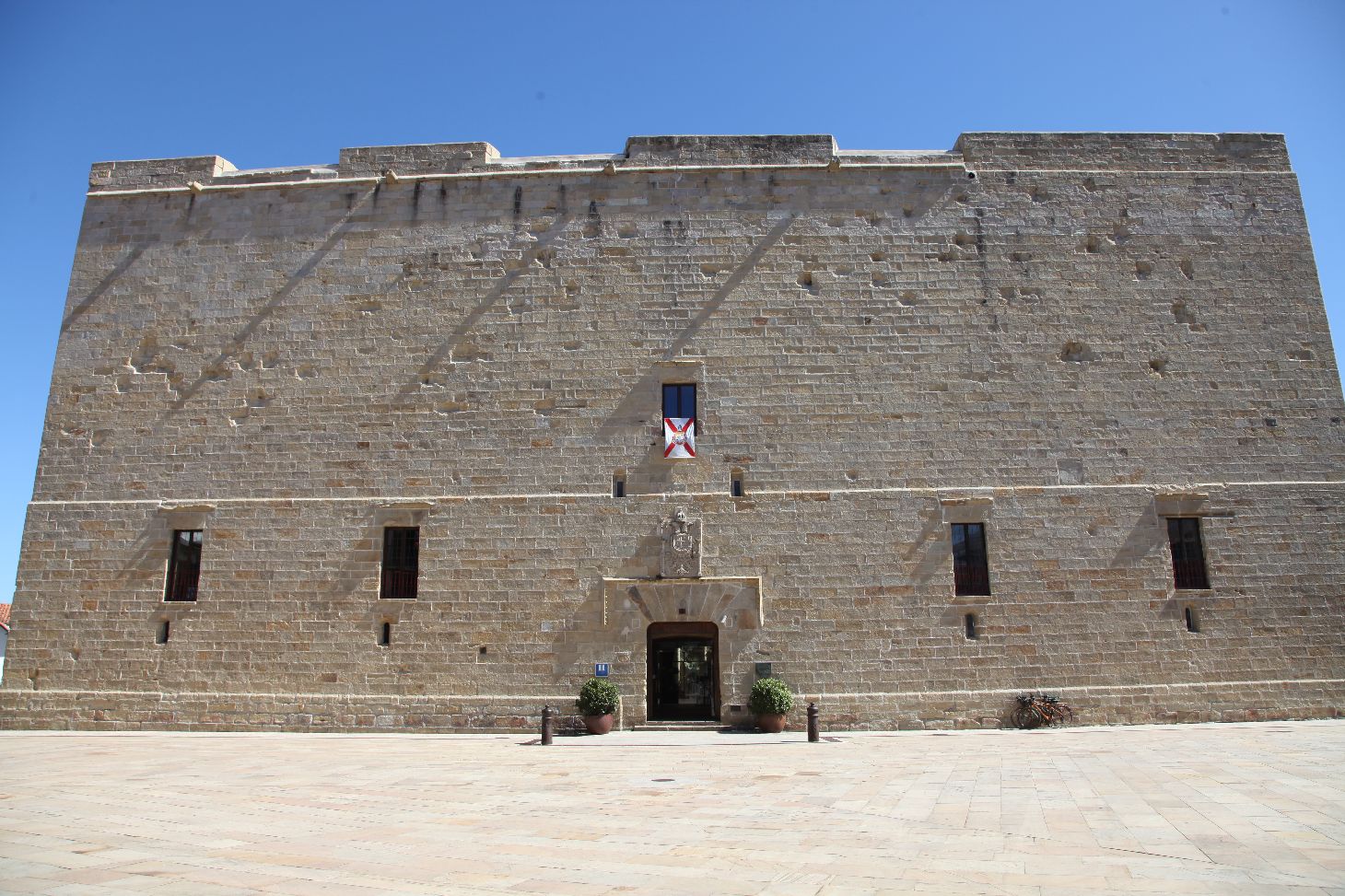
There were notices for a Smithsonian Travel Group scattered around the foyer so they clearly know how to get to the best places!
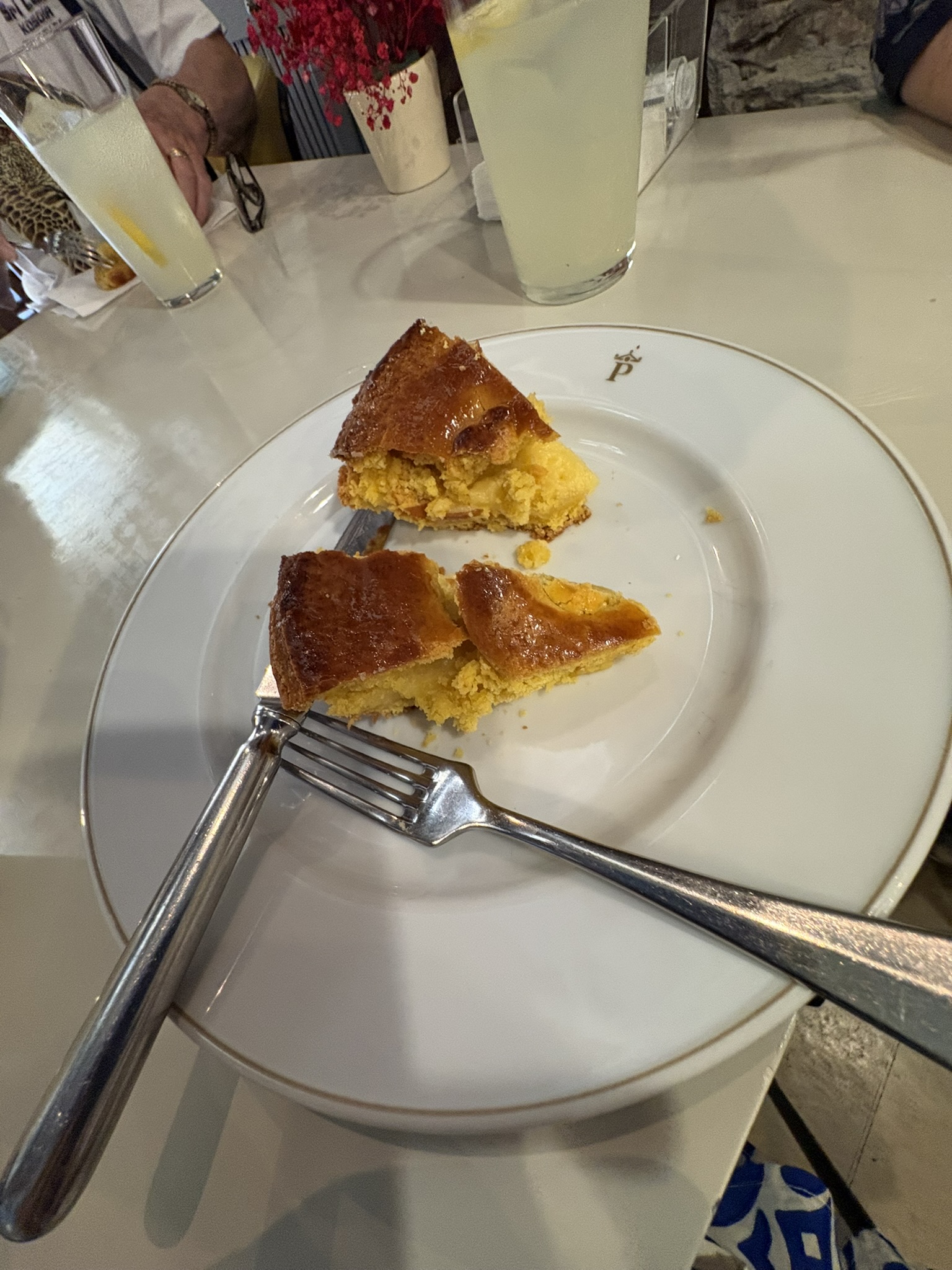
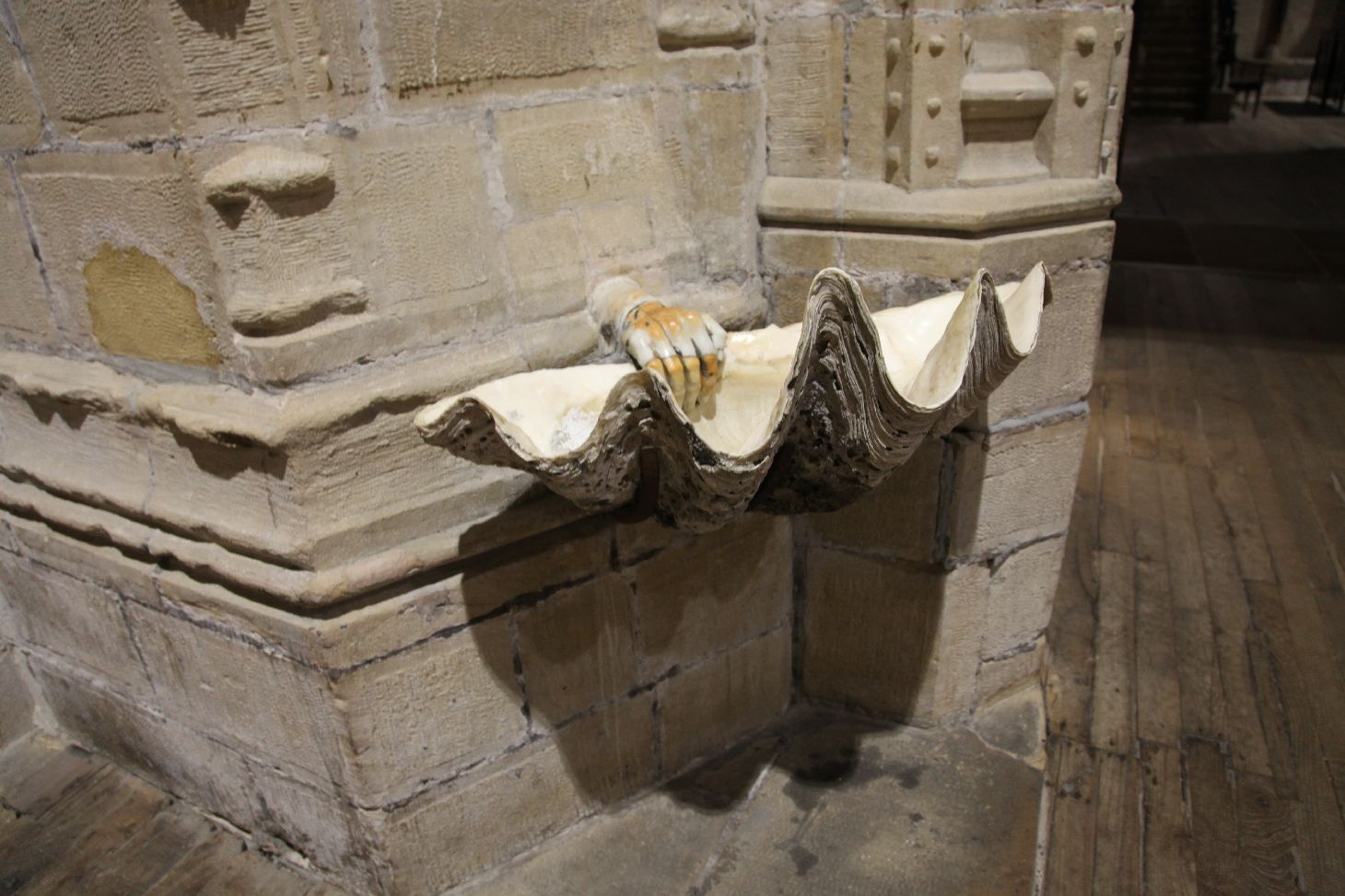
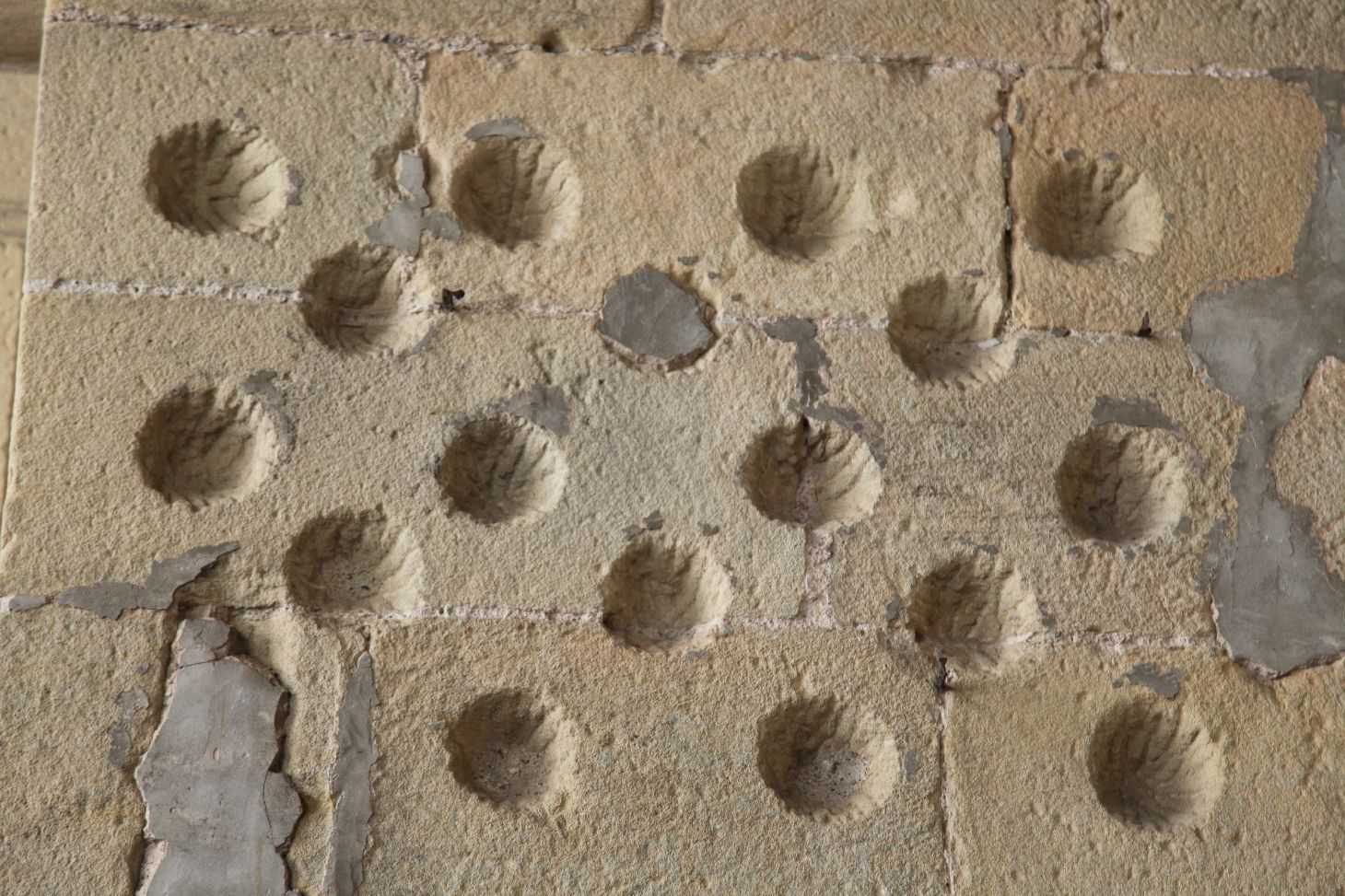
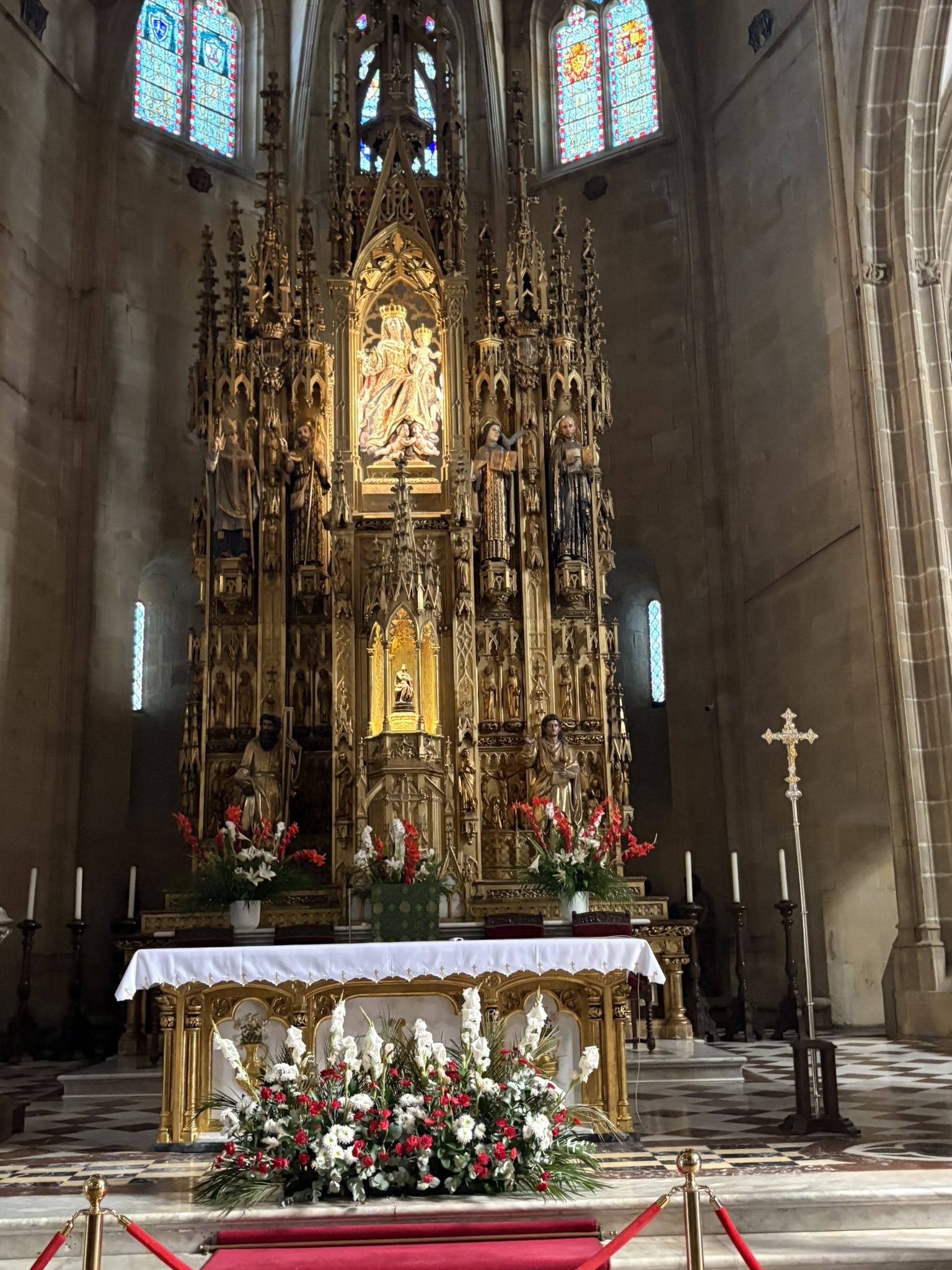
In between the coffee on the Plaza and another drink in the Castle (plus a shared portion of a very good if very dense Pastel Vasco), we visited the church of Nuestra Señora de la Asunción y del Manzano. The church is 16th century, and has Gothic, Renaissance and Baroque architecture. “The church’s plan is Latin cross-shaped and has three uneven naves as well as three polygonal apses leaning on the naves’ top. The naves are covered with very varied groin vaults. Particularly notable is the vault leaning on an arch decorated with religious and heraldic icons.” There’s an over the top Neo-Gothic altar in the the high chapel which dates from 1910. There are also scallop shell decorations because we are of course on the pilgrims’ way to Santiago de Compostela (this also explains why pretty much every pharmacy we walked past had prominent displays of blister treatments and Compeed right by the door).
We also found the Polvorín, one of the city’s powder warehouses, and stuck our heads into an interesting building on the Calle Mayor that was being worked on. I even managed a photo or two before the builders spotted us and shouted at us to go away. So we did. It was time to find a bus back to San Sebastian anyway.
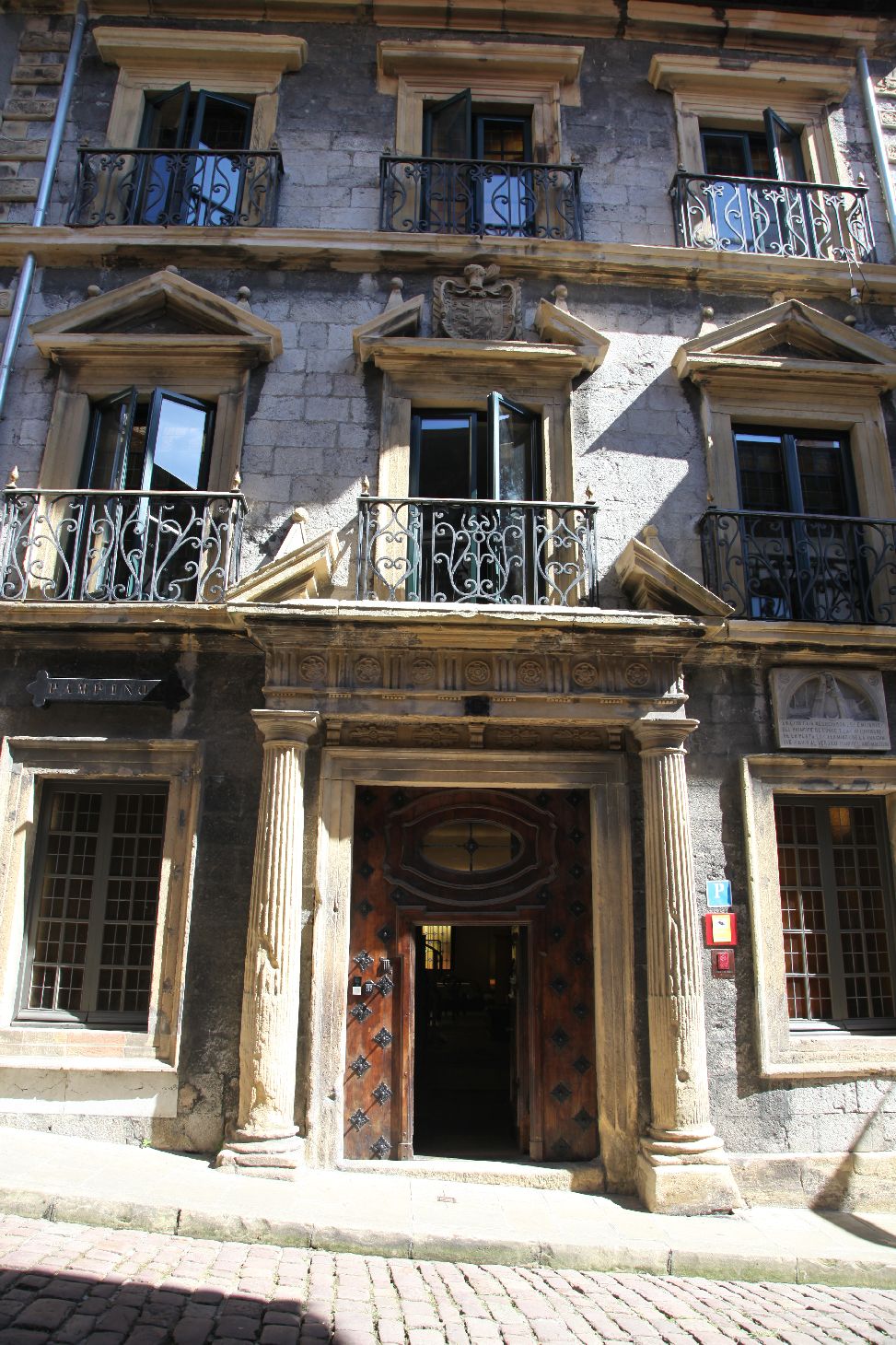
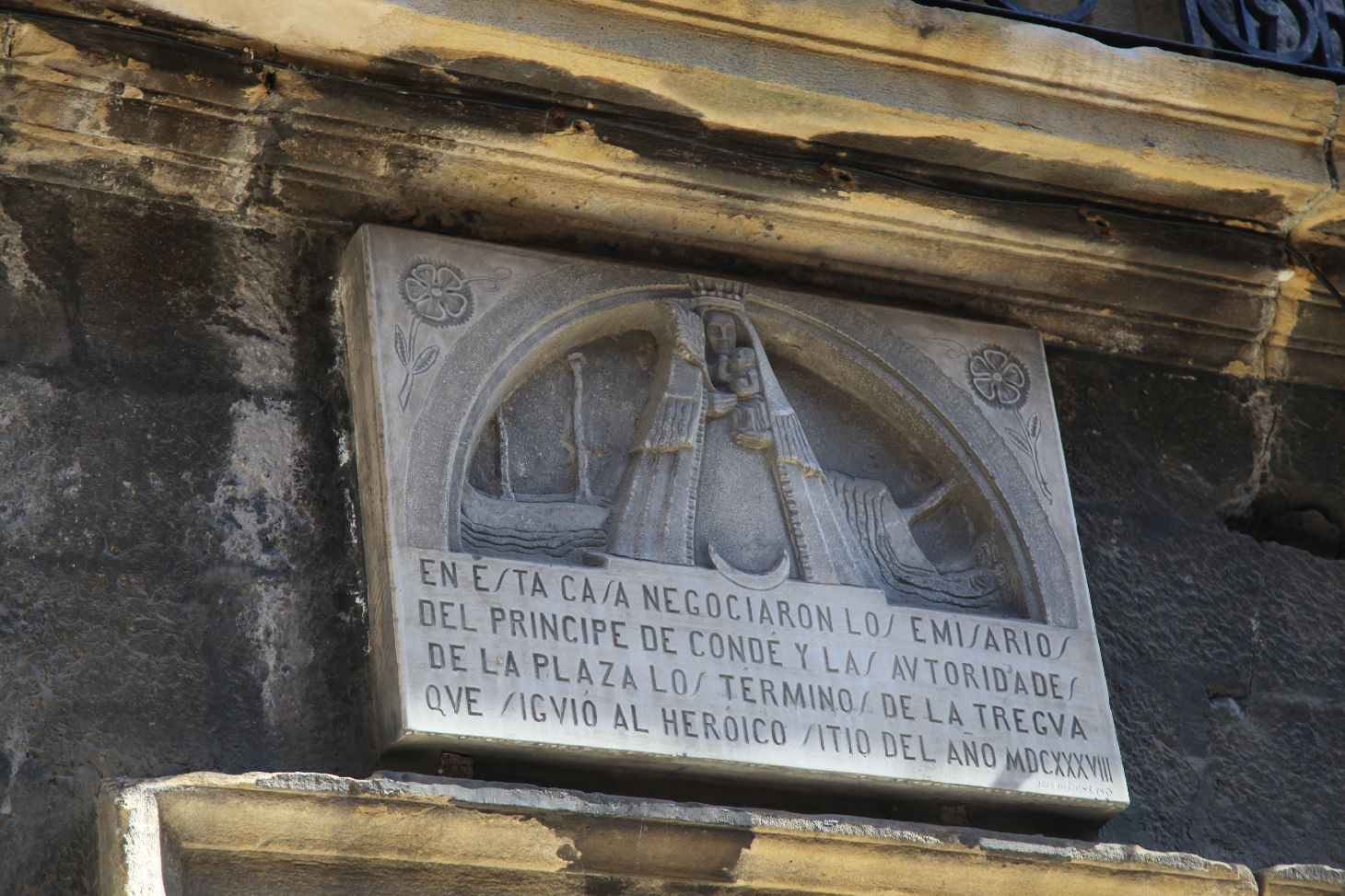
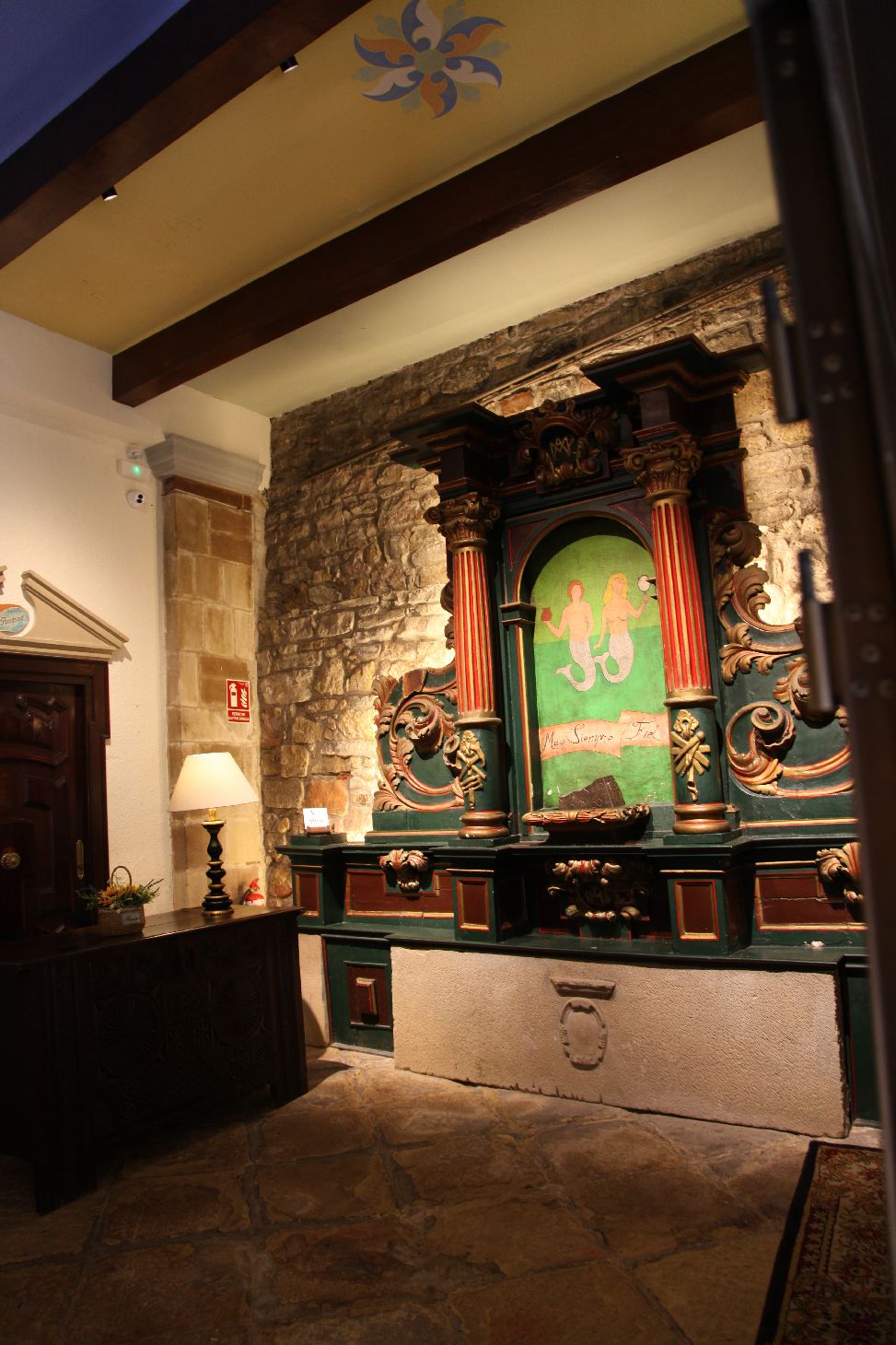
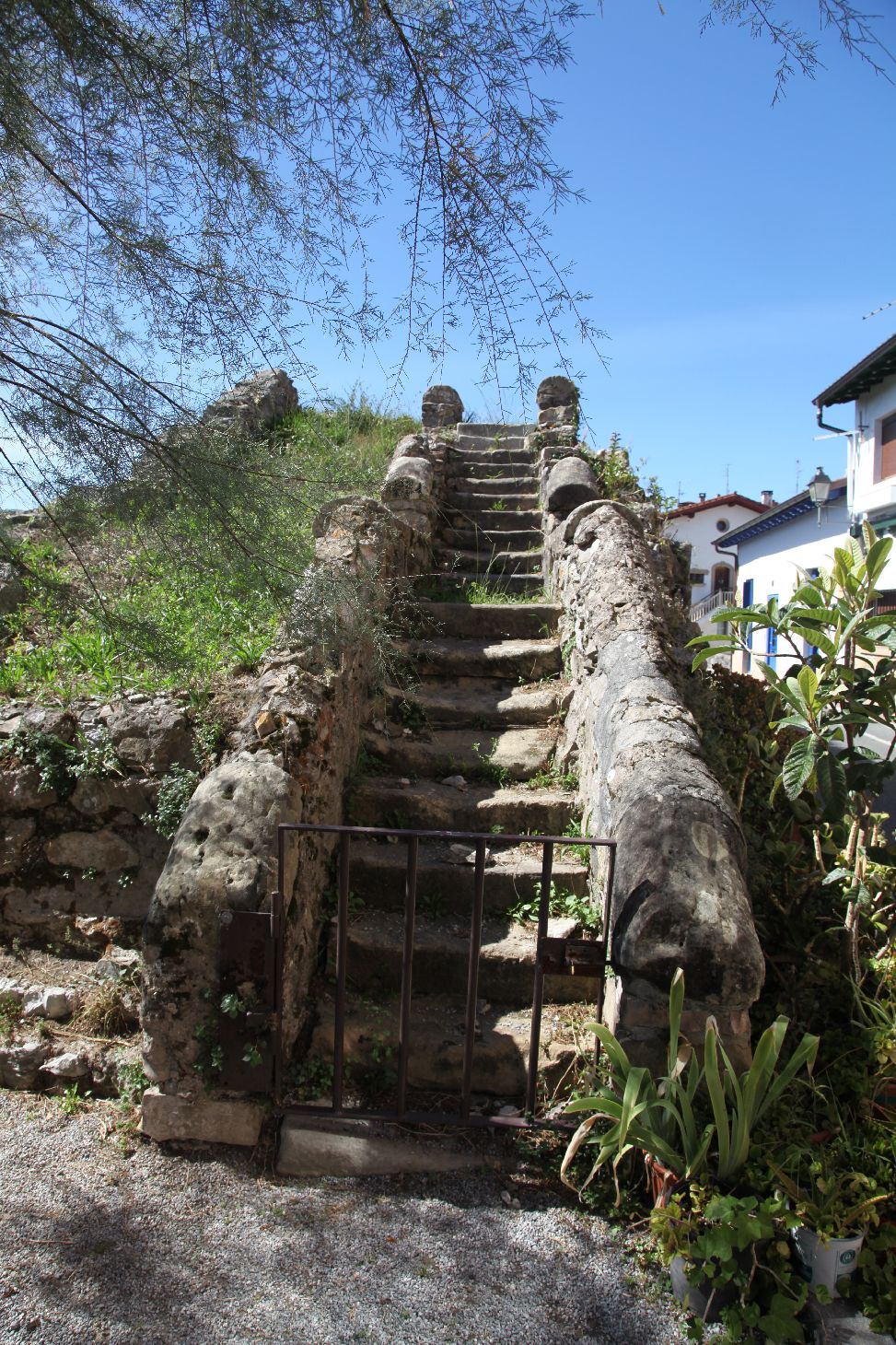
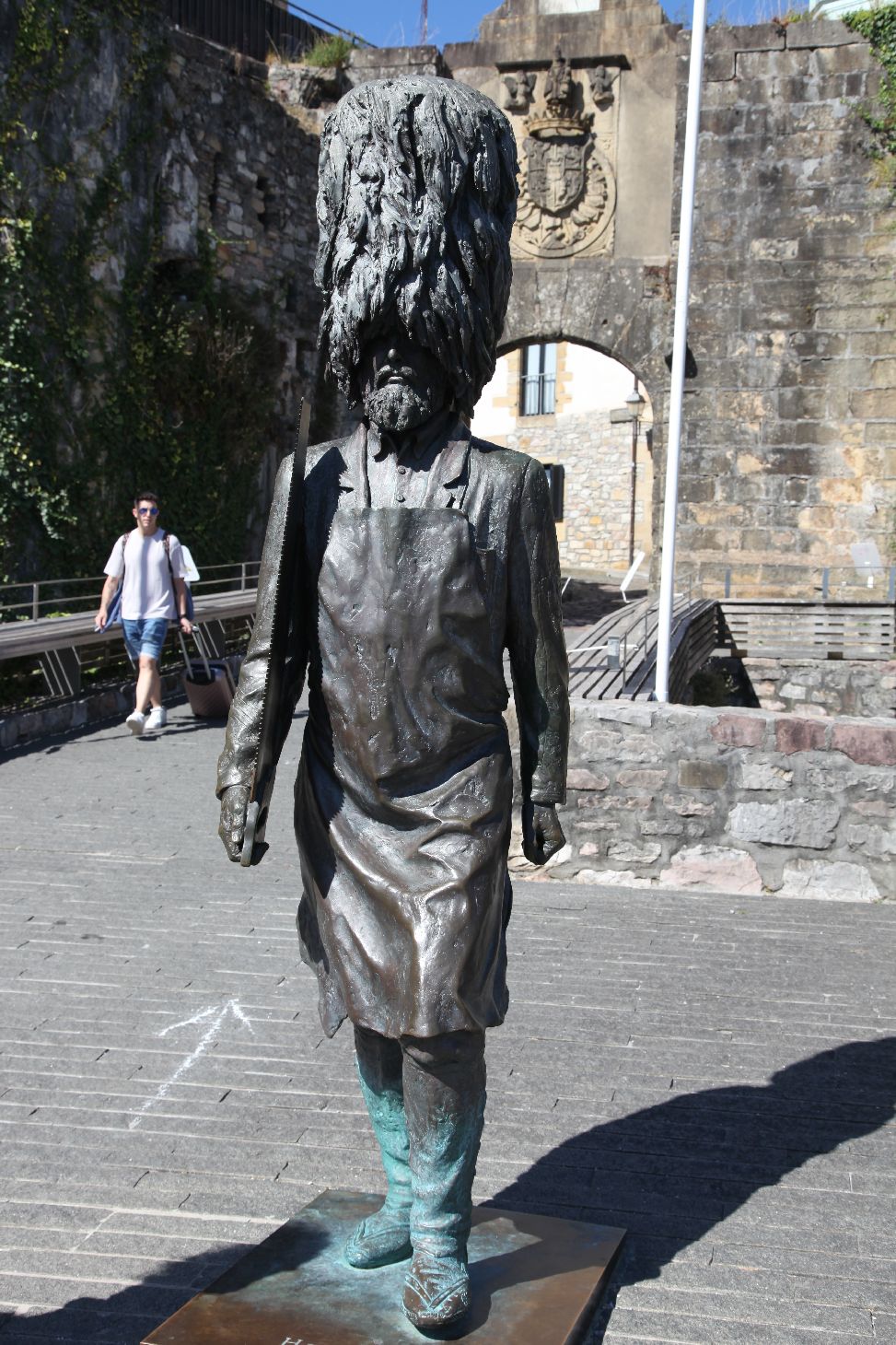
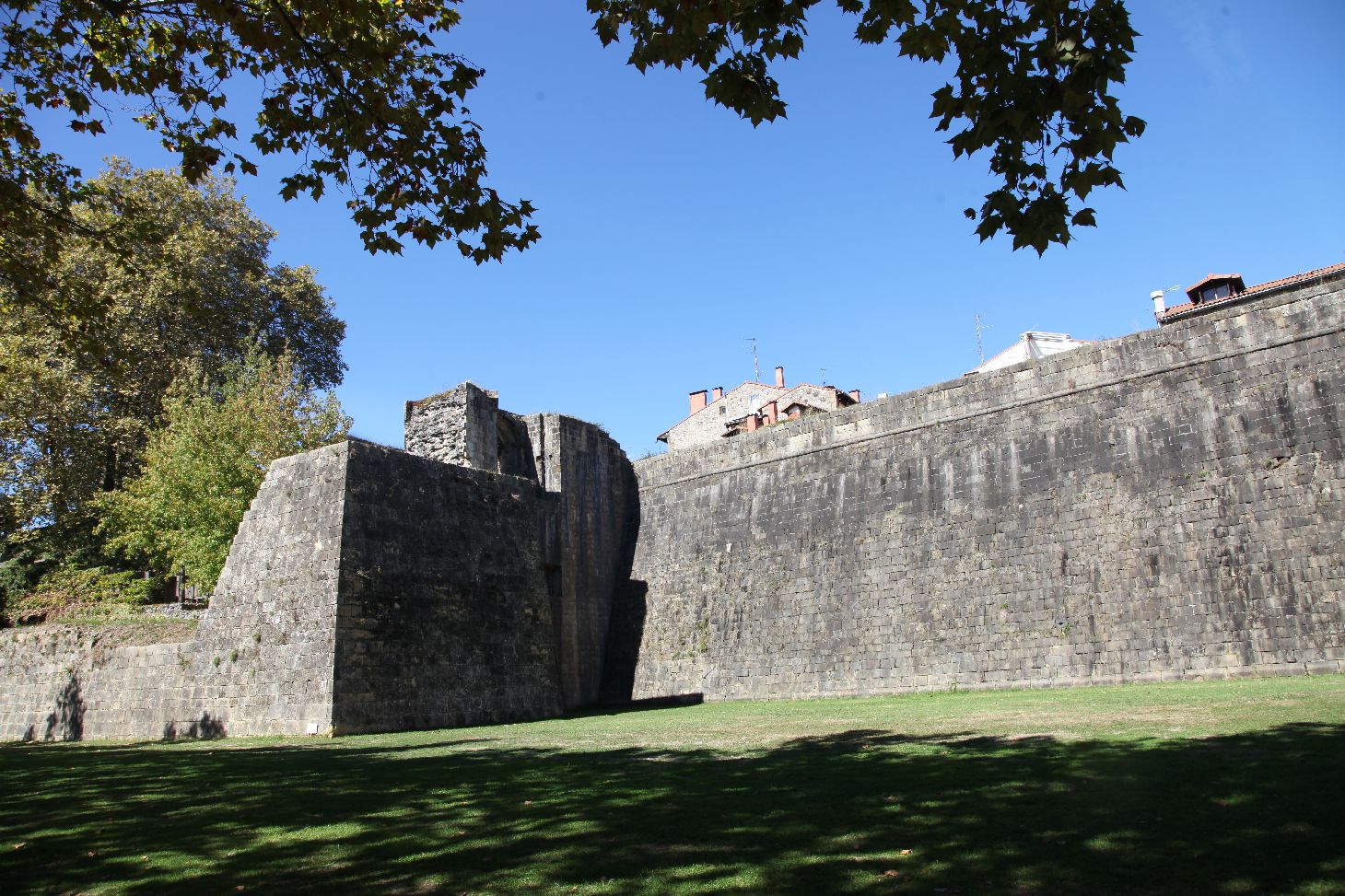
On the way to the bus stop we walked a little more of the ramparts and enjoyed seeing all the medieval buildings that make this such an intriguing place to visit.
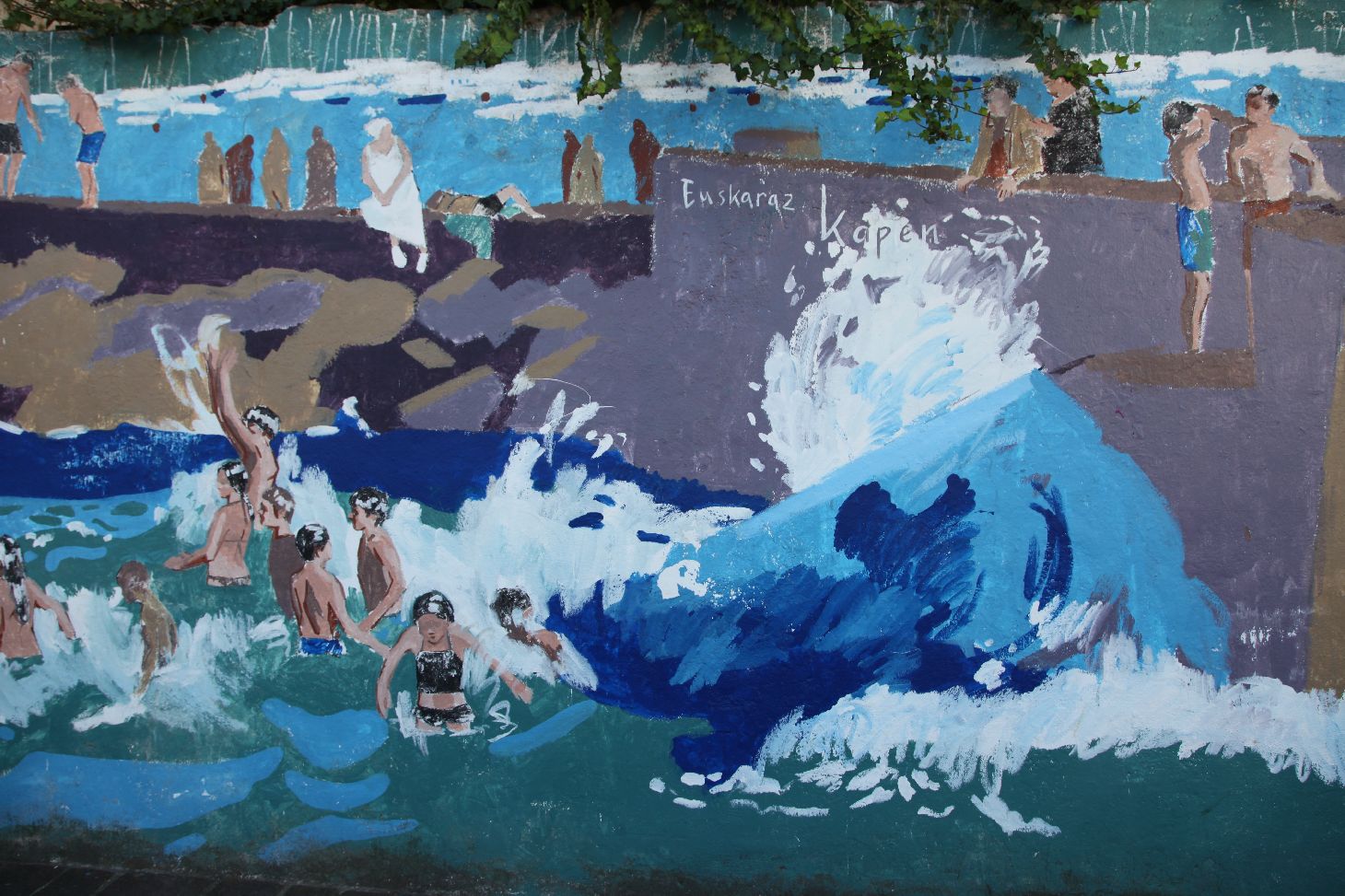
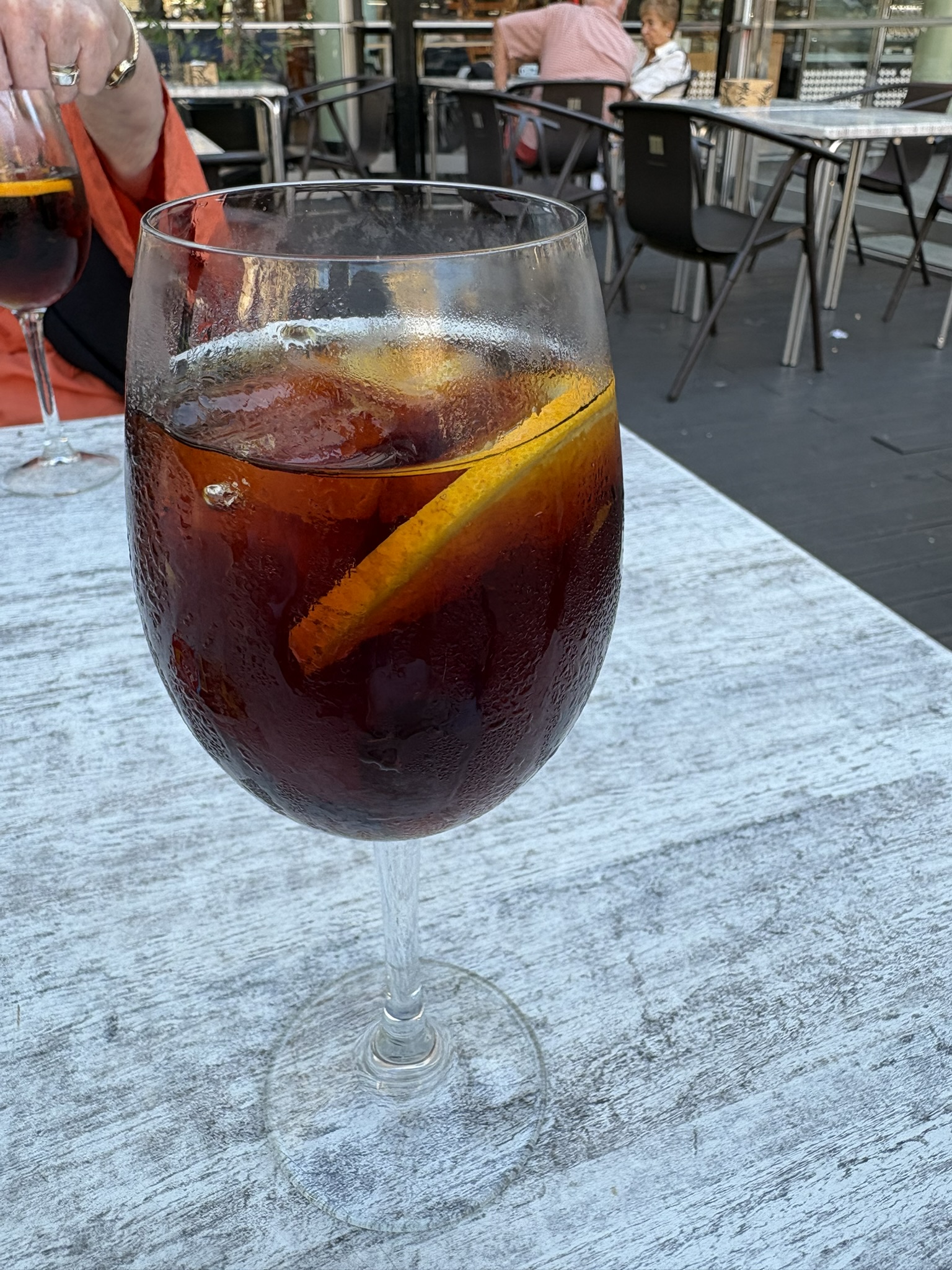
That evening we picked another local bar for a pre-dinner vermut, Bar Barkau, which seemed to be very much geared towards serving the locals.
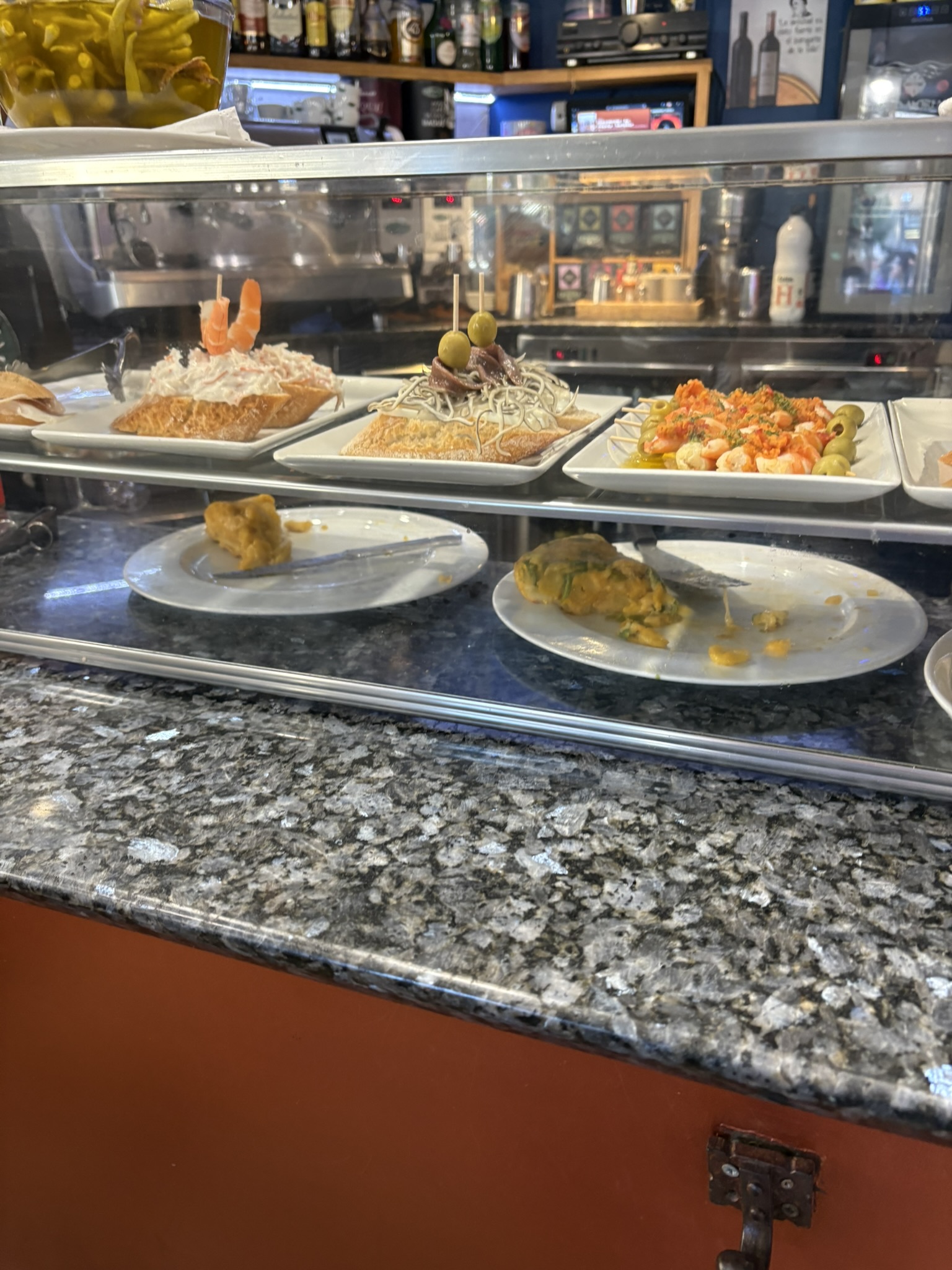
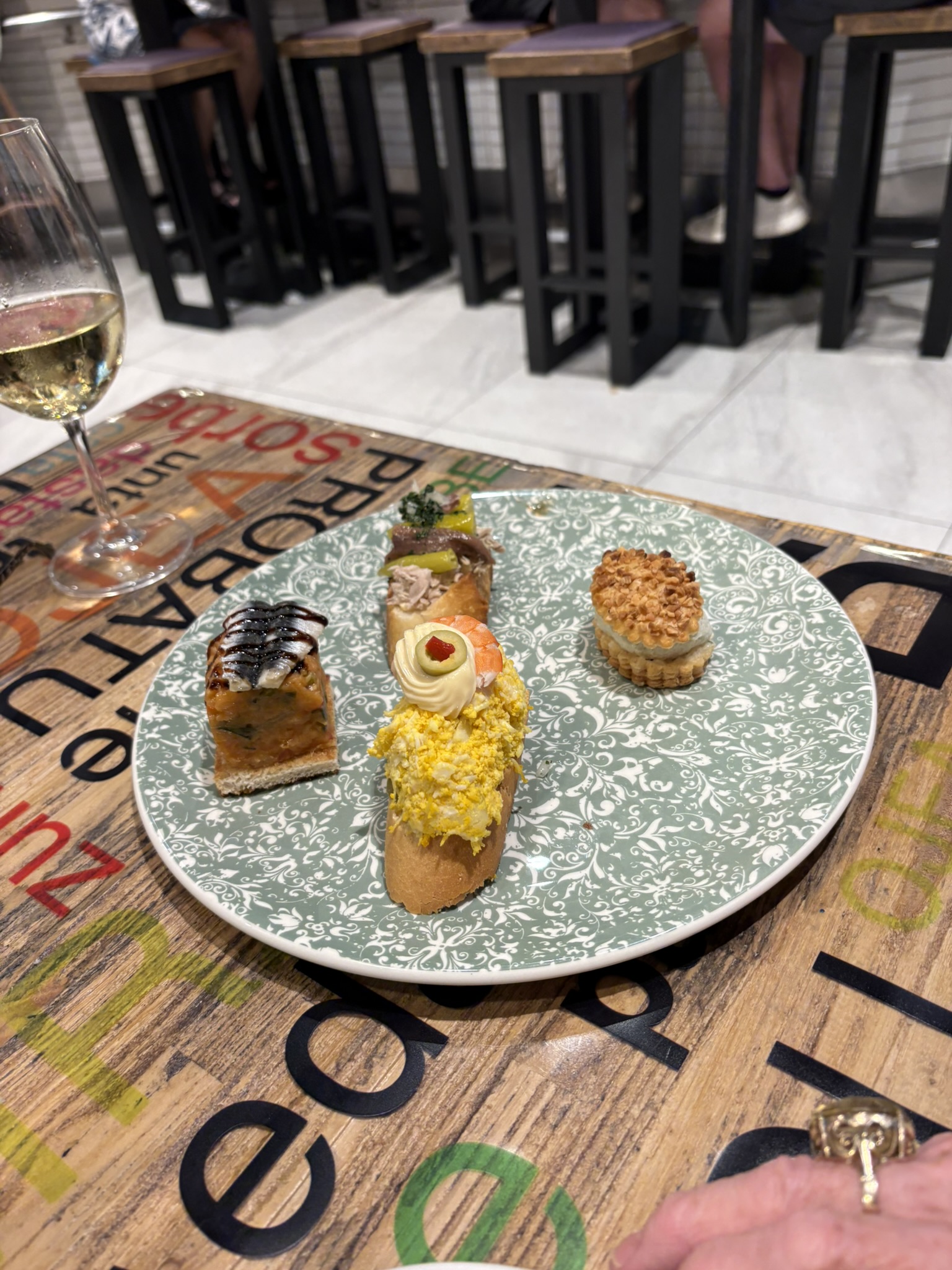
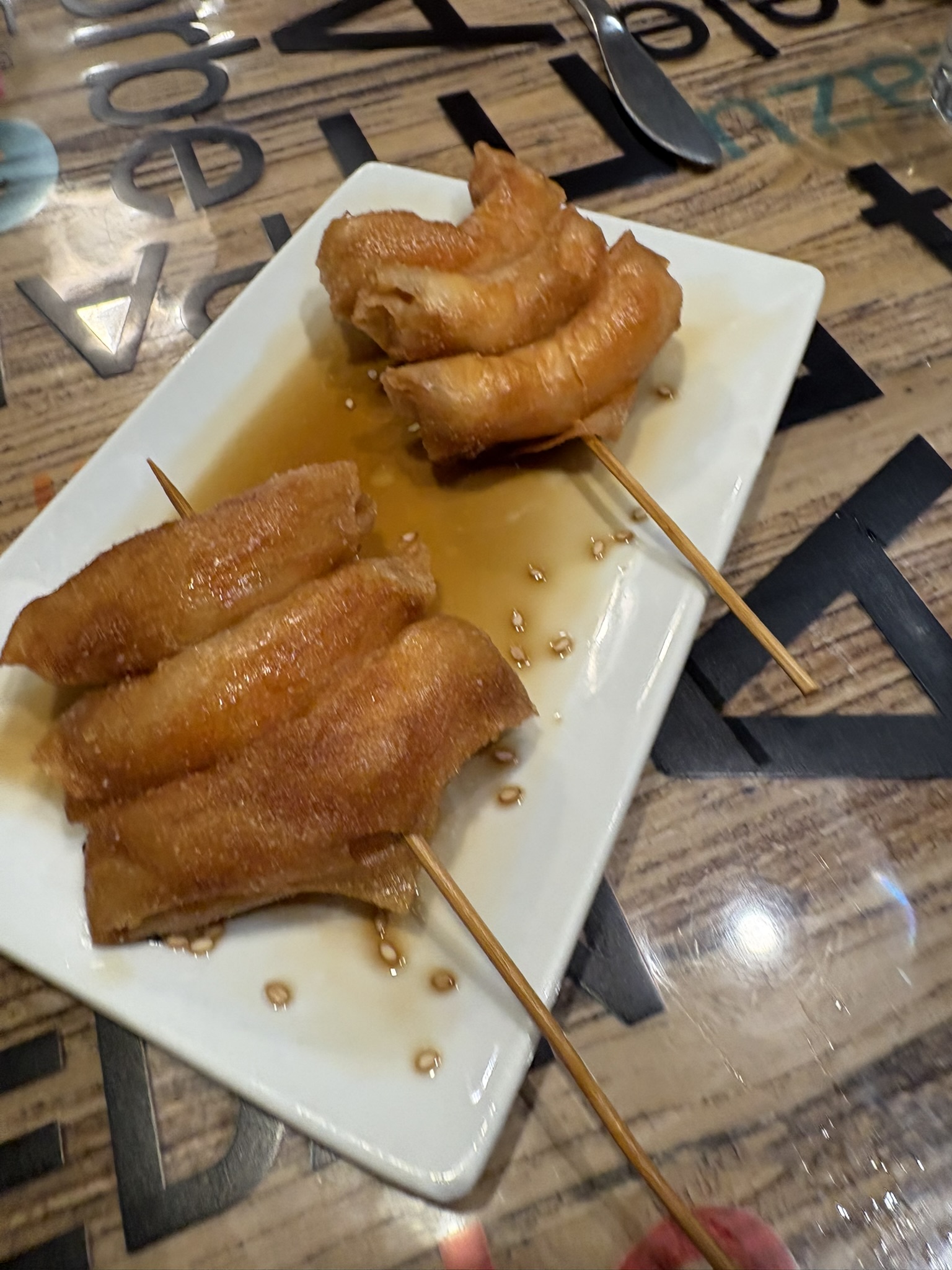
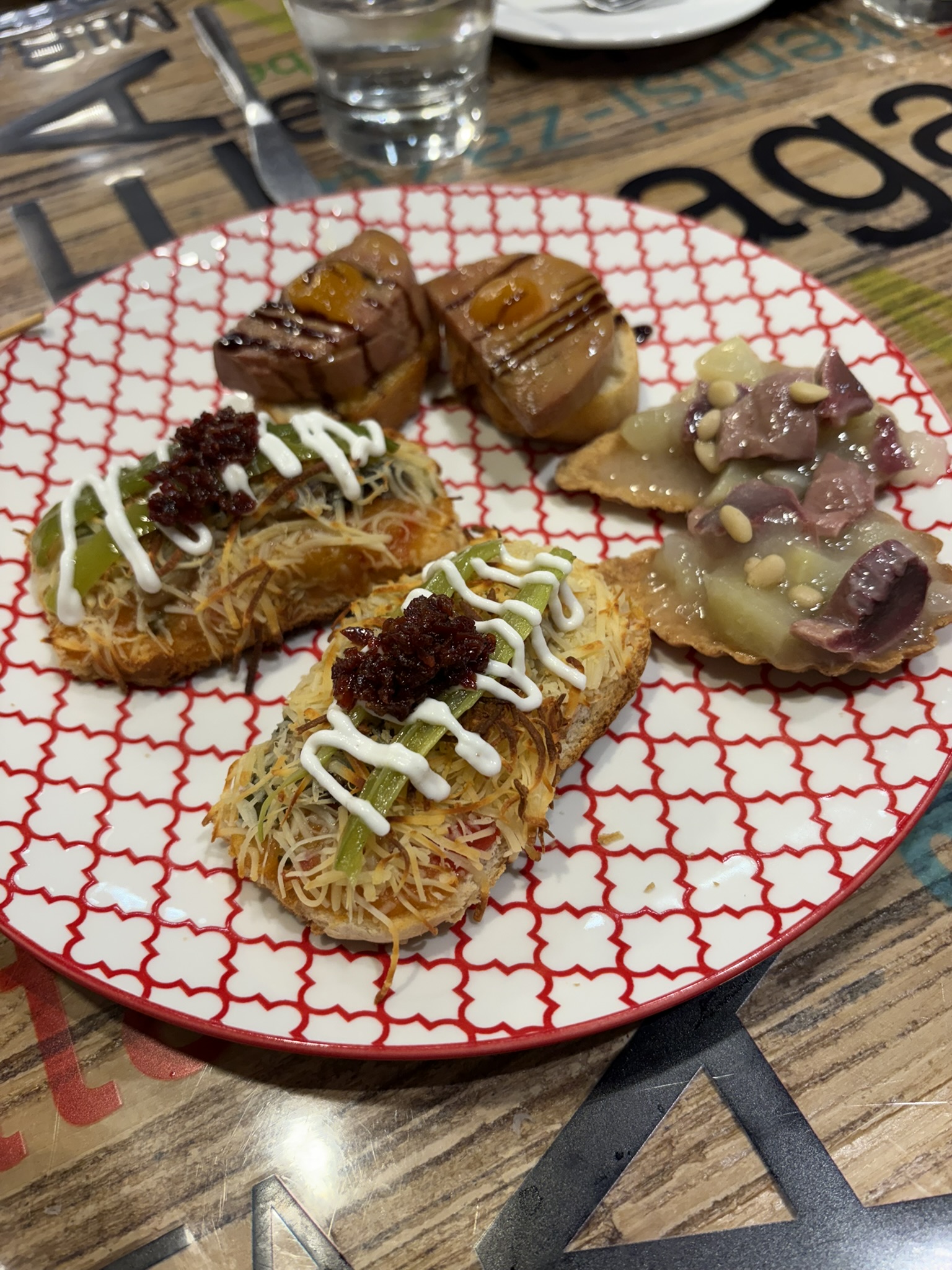
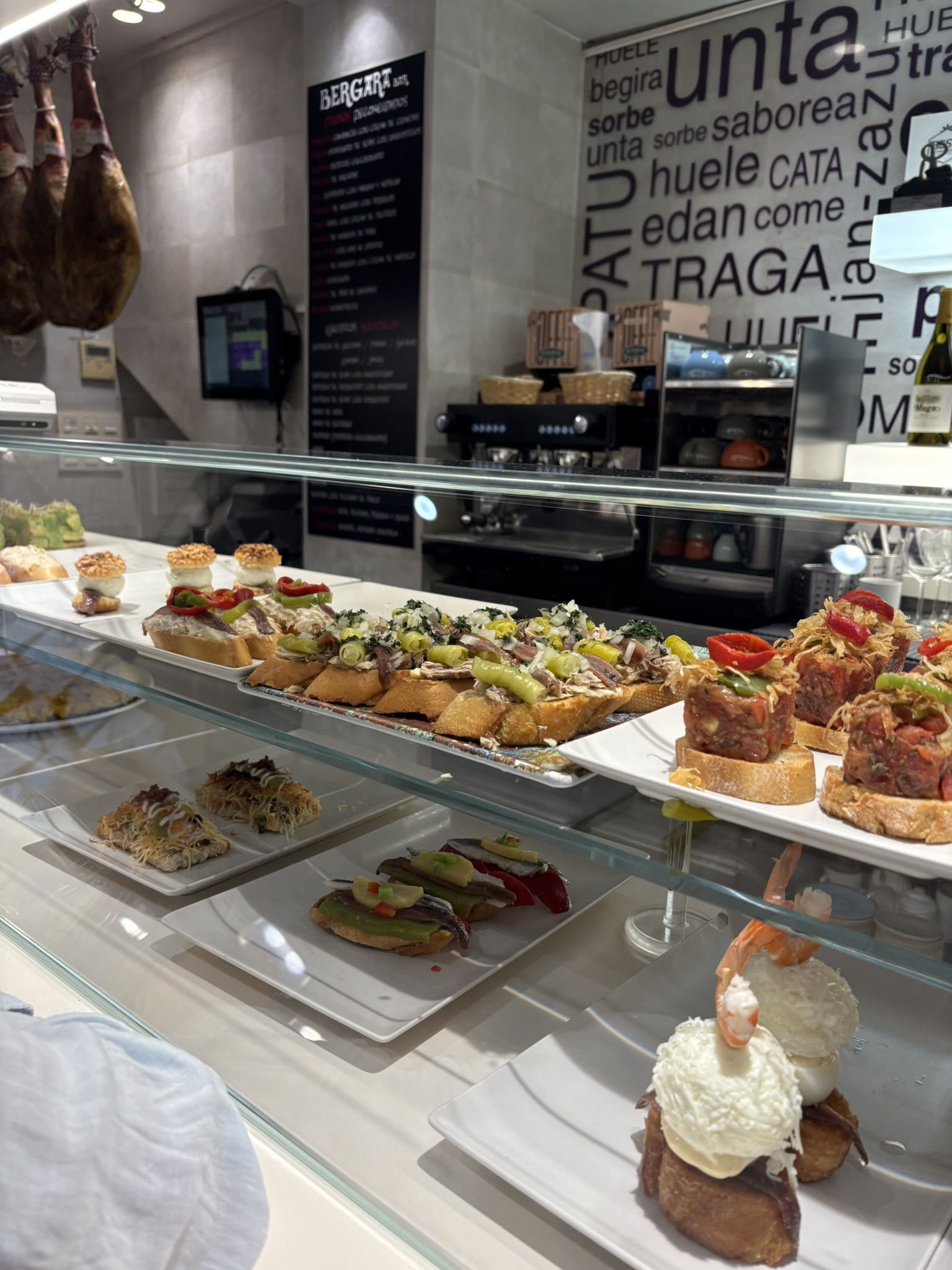
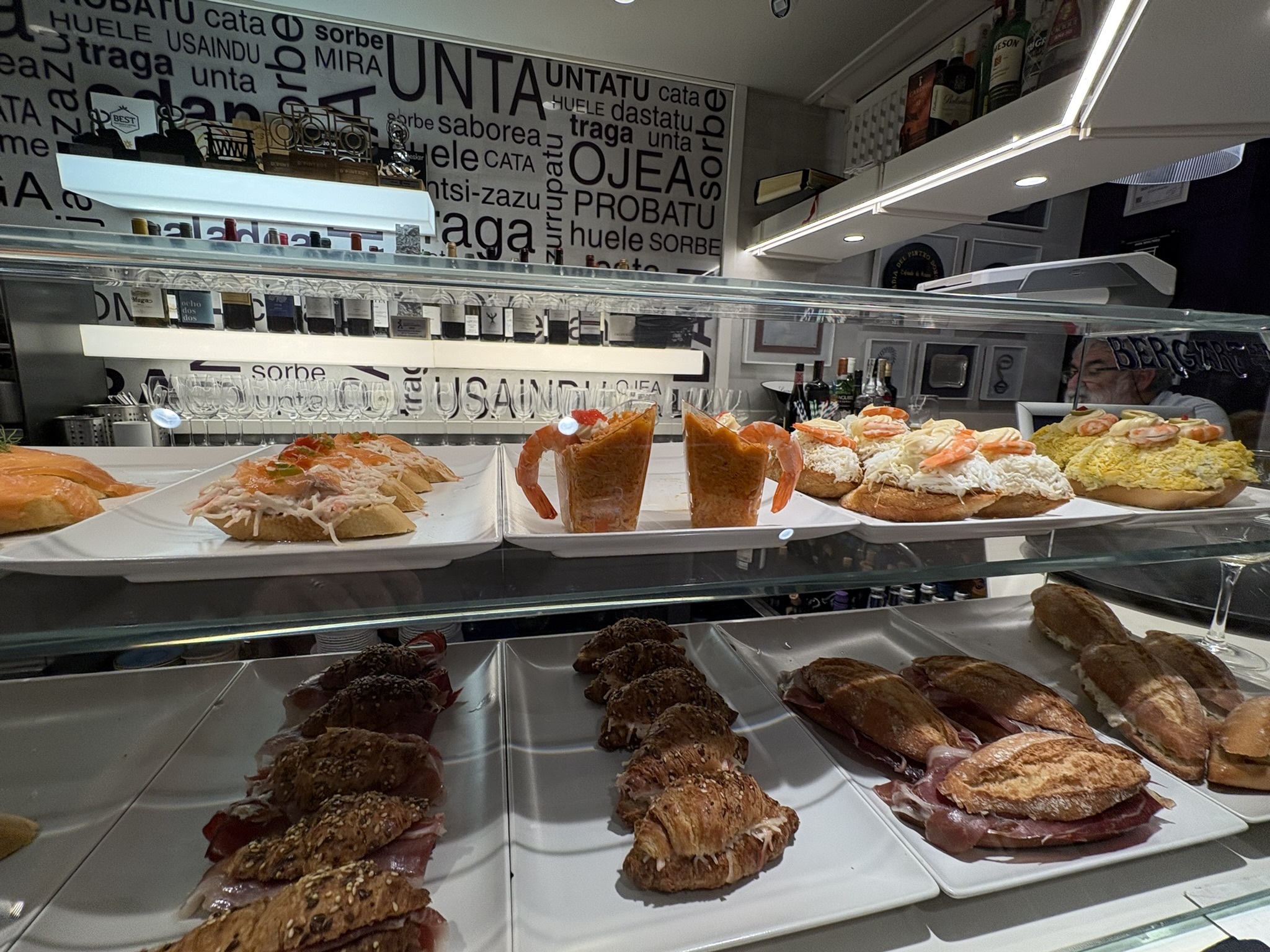
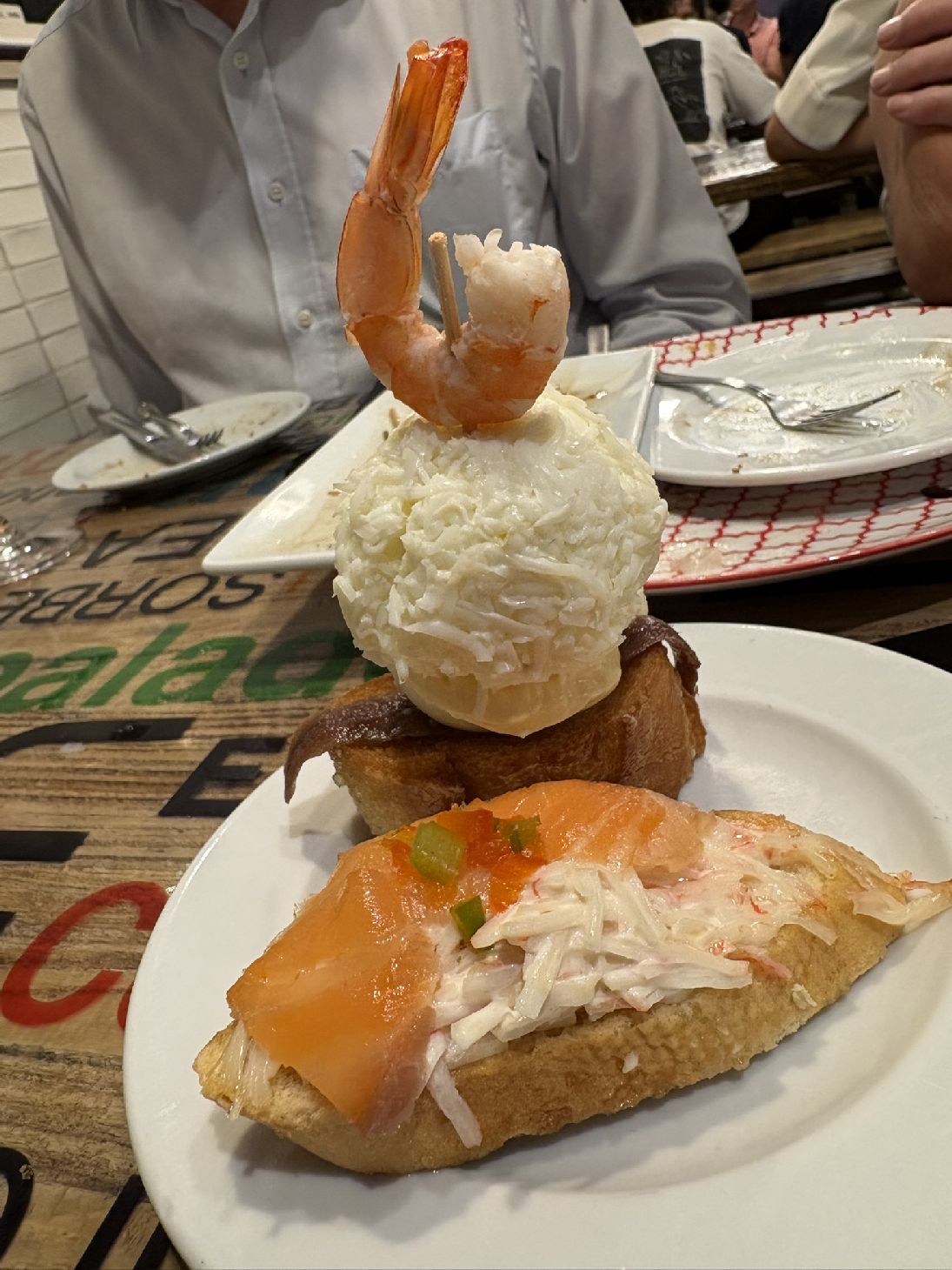
After that we went for dinner at Bar Bergara, very much also local to the apartment but also very much Michelin-recommended. It was superb with some excellent and imaginative pintxos on display in the glass cases that surrounded the bar area. Service was also very good though our lack of Spanish was hampering us somewhat. We were starting to pick up a few words but it really wasn’t enough to be useful – and I was cursing the fact that I’d just not had time to learn any in the run up to the trip. I kept finding myself lurching into French or Italian, with the former having been very useful in Hondaribbia at least.